
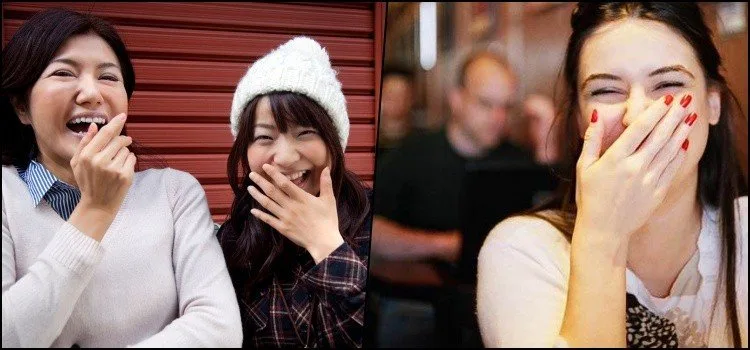
If you live with Japanese people, you may notice that most women tend to cover their mouths when they laugh or even when taking photos. It seems that they are embarrassed by their smiles. There is a historical reason behind this, and more than one living habit still keeps the hand there.
Nowadays, many Japanese women treat the gesture as polite etiquette. Some also do this to hide teeth they dislike. Crooked or overlapping teeth are common, and that discomfort is one reason the hand goes up. This is so common that some girls even pay to make a fang-like yaeba look, overlapping upper canines sold as cute. Other women say they hide a wide laugh because Japanese society still frowns on a noisy, open-mouthed display.

Another thing that influences this practice is the fact that laughter in Japan is usually quiet. Japanese people do not tend to shout or laugh loudly. That can be viewed negatively among women, which is why they cover their mouths. Once some Japanese women had this practice, others copied it, and it became a standard. Nowadays, putting a hand over the mouth when smiling is seen as something graceful and cute.
Historical reasons for covering the mouth
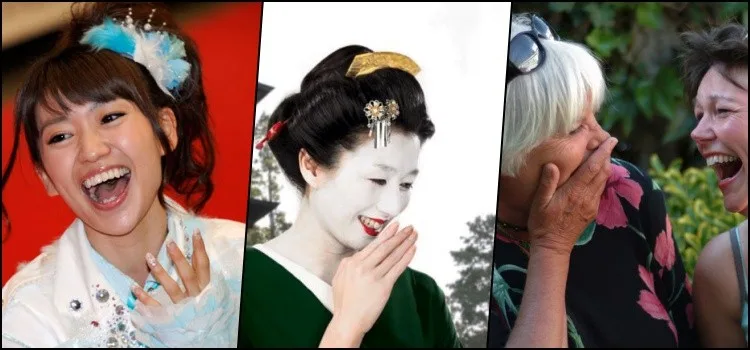
Some claim that the custom of covering the mouth when laughing dates back to the Kofun period (250-538). We do not know exactly when it started, and that early date is poorly documented. Later court manners are clearer: showing the inside of the mouth was crude, so a small smile was safer in public than a wide one.
This custom of dyeing teeth black was called ohaguro (お歯黒). It counted as beauty and adulthood. Many did this because white makeup on the face made yellow teeth obvious, and a glossy black coating looked elegant while also protecting the enamel. Black teeth became fashionable among aristocrats in the Heian period (794-1185) and later among married women in the Edo period. Some women still preferred not to flash that black interior when they laughed, and covering the mouth spread well beyond the dye itself. In the 1870s the Meiji government discouraged ohaguro, and Empress Shōken appearing with white teeth helped the everyday dye fade. The modest laugh stayed.
Other reasons and facts about covering the mouth
Covering the mouth when smiling can also be something natural. A common reaction is to put a hand over the face or mouth when a person is surprised or embarrassed, and that happens well beyond Japan. Nowadays, it is common for Western women to feel awkward opening a loud laugh in public, or they simply find it cute and graceful when girls cover their mouths while smiling.
Embarrassment and shyness also have a significant effect on this custom. We can see that many Japanese women like to post photos covering their faces. Some even have the habit of wearing masks even when they are not sick. Other people simply feel embarrassed to laugh and cover their faces. You can notice that even with a hand over the mouth, you can still see the person's smile.
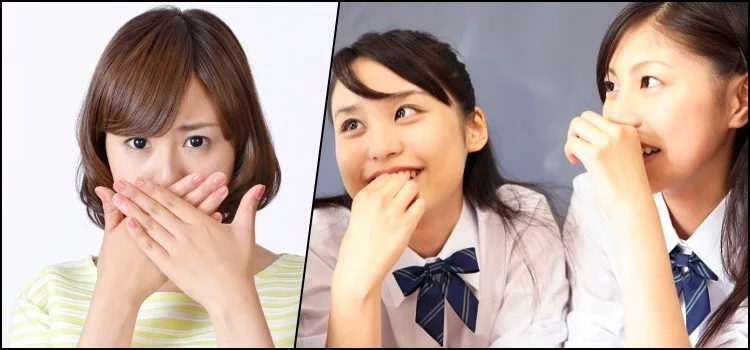
Do men also cover their mouths when laughing? Yes. Women simply do it more often, because they are still taught a narrower range of public display. The same gesture appears in other countries. In Japan it became a recognizable etiquette habit. Many times it will depend on the situation and the subject. Some find it rude to laugh openly in public, while some Japanese women do not follow this custom.
The covered laugh stacks etiquette, leftover beauty rules, and ordinary shyness. If you cover your mouth too, you already know the mix: politeness, teeth, and not wanting the whole room to hear the laugh. And you? What do you think about this subject? Do you find it polite? Strange? Do you usually cover your mouth? Do you find it attractive and graceful?





Community
Comments
0 comments
There are no published comments in this language yet.
Send comment