The Haiku Generator is an online tool that allows you to generate random haikus in Japanese. With it, you can experiment with different combinations of words and verses to create unique and inspiring haikus.
To use the Haiku Generator, simply access the site and click the “Generate Haiku” button. The generator will create a random haiku in Japanese, which you can copy and paste elsewhere or use as inspiration for creating your own haikus.
Our Haiku Generator works with artificial intelligence, so any word in any language, including ideograms, that are placed in the field will serve as a basis and parameter for creating the haiku, including explanations and custom requests.
A haiku is a form of Japanese poetry composed of three lines of five, seven, and five syllables, respectively. The poetic form is often used to describe a moment in nature or a sensory experience, evoking feelings of calm, serenity, and simplicity.
Traditional Japanese haikus also include a seasonal reference, known as kigo, which indicates the time of year in which the poetry takes place. Additionally, haikus are often composed in response to a previous haiku, in a poetic dialogue known as renku.
With the Haiku Generator, you can explore the art of Japanese poetry and create your own haikus in Japanese in a fun and easy way. Try different combinations of words and themes and see what you can create!
Remember that the essence of a haiku is to capture a moment or an emotion in a simple, direct, and evocative way. Use these words as inspiration to create unique and meaningful haikus.
What is the difference between Haiku and Haikai?
Haiku is a form of Japanese poetry composed of three lines of five, seven, and five syllables, respectively. The poetic form is often used to describe a moment in nature or a sensory experience, evoking feelings of calm, serenity, and simplicity.
Haikai, on the other hand, is an older term that refers to a form of Japanese poetry that emerged in the sixteenth century. Unlike haiku, haikai did not have a fixed meter and could have multiple stanzas and themes. Haikai was often used to make satires and parodies, and was a precursor to haiku.
Nowadays, the term haikai is mainly used to refer to a Japanese literary school that flourished in the seventeenth and eighteenth centuries. The haikai school was known for its irreverence and humor, and its writers often used techniques of free association and surreal imagery in their poetry.
In summary, haiku is a specific Japanese poetic form, composed of three lines of five, seven, and five syllables, respectively, while haikai is a broader term that refers to an older form of poetry and a later literary school.
Do you know what “Rice Purity” means? Have you taken the popular purity test in the West? In this article, we will understand a little and share this test with the readers of Suki Desu.
It is worth mentioning that this article contains sensitive words and is not recommended for all types of readers. For the curious, my purity test resulted in 60, but it would probably be higher if I were younger and single.
Why the hell am I writing about this subject? Well, while researching popular words on competing websites, I came across the term Rice Purity, which is probably quite talked about among Otakus.
We also created this tool on our online tools website Digitalkw;
What does Rice Purity mean?
If you have spent some time in forums or chat groups, you have probably heard of “Rice Purity.” No, this is not a new rice-based diet, but rather a personal purity test that has become popular on the Internet in recent years. But what is the Rice Purity test, after all?
Well, in simple terms, the Rice Purity test is a list of questions that measure the amount of sexual and risky behaviors a person has had in their life. Each question has an associated score, which is added up to reach the final score. The higher the score, the more sexual experiences and risky behaviors the person has had.
The maximum score on the Rice Purity test is 100 points, which means that a person has done none of the wrong things on the question list. As you have probably guessed, the score is often interpreted as a measure of a person’s “purity,” with higher scores being seen as pure and lower scores being seen as impure.
But before you start worrying about being labeled as impure, it is important to remember that the score on the Rice Purity test is not an accurate measure of a person’s purity or morality. Sexual choices and risky behaviors can be personally significant and important to some people, while others may choose a more conservative sexual life. The Rice Purity test should be seen as an exercise in self-reflection and not as a moral judgment.
Take the “Rice Purity” test
Answer the following questions honestly:
Your Rice Purity score is:
Result of the “Rice Purity”
Of course, here is a list of average scores and what they generally indicate in terms of “purity” in the “Rice Purity” test:
100-98: Very pure, with few or no sexual experiences or risky behaviors.
97-94: Pure, with few sexual experiences or risky behaviors.
93-77: Moderately pure, with some sexual experiences and risky behaviors.
76-45: Impure, with several sexual experiences and risky behaviors.
44-0: Very impure, with many sexual experiences and risky behaviors.
So, what was your score?
Score for each question
Now let’s see a list of impurity scores associated with each question in the Rice Purity test. It is worth mentioning that the questions and scores may vary depending on who created the test. Our test was created by an artificial intelligence that made it with the best accuracy possible.
Have you ever kissed someone? – 1 point
Have you ever given or received oral sex? – 2 points
Have you ever had sex (vaginal or anal penetration)? – 5 points
Have you ever had sex with three or more people? – 10 points
Have you ever had sex with someone of the same sex? – 5 points
Have you ever masturbated? – 1 point
Have you ever watched pornography? – 1 point
Have you ever had sex with someone without using protection? – 5 points
Have you ever been caught having sex or masturbating? – 5 points
Have you ever been naked in public? – 2 points
Have you ever drunk until you were drunk? – 1 point
Have you ever used illegal drugs? – 5 points
Have you ever driven after drinking or using drugs? – 10 points
Have you ever stolen something? – 5 points
Have you ever been involved in a physical fight? – 5 points
Have you ever been arrested or detained by the police? – 10 points
Have you ever cheated on a partner? – 10 points
Have you ever lied to a partner about something important? – 5 points
Have you ever used someone else’s name to do something illegal or immoral? – 10 points
Have you ever regretted any of your sexual choices? – 2 points
Welcome, anime lovers and otakus on duty! Are you ready to discover the secret behind those cute and huggable pillows that we love so much? Well, get ready to know the wonderful world of Dakimakura – the famous “love pillow” that has been winning hearts all over the world.
In this article, we will explore everything about this essential item for fans of Japanese culture and also tell you how to use it to boost your SEO and bring more visibility to your online content. So, grab your pillows, let out the war cry “Kawaii!” and let’s embark on this adventure together!
Dakimakura (抱き枕) is a Japanese word that can be divided into two parts: “daki,” which means to hug, and “makura,” which means pillow. Therefore, Dakimakura can be translated as “huggable pillow.”
The Japanese word can refer to any body pillow or Dutch wife. However, this term became popular in the West as pillows with sensual prints of anime characters.
Although originally created as a comfort item for sleeping, Dakimakura has become an object of collection and adoration for many fans of Japanese pop culture. With dakimakura, otaku can finally hug their favorite anime characters.
History and Origin of Dakimakura
To understand the history of Dakimakuras, we need to go back a bit in time and talk about traditional body pillows in Japanese culture. Known as “makura,” these pillows were originally used to support the head and neck during sleep, but they were also used to hold objects, such as lanterns or books.
Over time, body pillows gained a new function. In the 1990s, the Japanese anime and manga industry began producing pillows with prints of characters from their works. These pillows were nicknamed “Dakimakura,” which in Japanese means “huggable.”
Initially, Dakimakuras were more popular among women, who hugged the pillows while watching their favorite TV shows or reading manga. However, over time, men also began to adopt Dakimakuras as sleep companions.
The popularity of Dakimakura has rapidly grown in recent years, not only in Japan but worldwide. Nowadays, it is possible to find a huge variety of prints of anime, manga, and video game characters on Dakimakura pillows, and they have become a highly sought-after collector’s item among fans.
Dakimakura are also called love pillows. They have existed for decades in Japanese culture, mainly in the form of animals.
After the emergence of these printed anime character pillows, the phenomenon quickly spread on forums like 2chan, pixiv, and many others, especially after some sensual prints.
Online establishments and physical stores began to create and print pillows with thousands of different characters. Many associate these pillows with sexual objects, but some use them merely as decorations or something to hug at night.
Another term that has been used for this pillow besides Dutch wife is chikufujin, which means “bamboo wife.” The main sizes of dakimakura are 150 to 160 cm in length and 50 cm in width, with a circumference of 100 cm. It is common to find only the pillow covers for sale, so many end up buying several prints.
Dakimakura Cases
A very controversial and common occurrence is the yome to no bansan (嫁との晩餐) or dinner with the waifu. These are romantic gatherings where otakus take their dakimakura pillows to dinner. These romantic encounters mainly happen on the eve of Christmas, which is considered Valentine’s Day in Japan. Many share photos of these encounters on forums and social media.
They have even invented dakimakuras that can talk or moan. For otaku, the pillows are one of the only ways they can touch their beloved characters. Some have taken their dakimakura for walks in amusement parks and on roller coasters. There have even been cases where people have married these pillows. And for those who think only the Japanese are crazy to that extent, there are many Westerners who have embraced their passion for their favorite characters.
Why not take your waifu skydiving?
How to buy a Dakimakura?
If you are an otaku looking to buy a Dakimakura, there are a few things you need to know before making your choice. Below are some useful tips to help you buy the perfect pillow:
Size: The size of the Dakimakura is important, as it determines how large the character image will be. The most common sizes are 150x50cm, 160x50cm, and 120x40cm, but other sizes can be found. Be sure to choose a size that is comfortable for you.
Where to buy: There are many online stores that sell Dakimakuras, such as specialized anime and manga product stores, Japanese product stores, and e-commerce platforms. Be sure to buy from a reliable source to ensure you are getting a quality product.
Print: Choosing the right print is crucial. Be sure to choose a print of a character that you really like, and not just because it is trendy. It is also important to consider the quality of the image and the sharpness of the print.
Material: Be sure to choose a Dakimakura made of quality material that is soft and durable. The most common materials include cotton, polyester, and microfiber.
Care: Be sure to read the manufacturer’s care instructions to keep your Dakimakura in good condition. Some pillows can be machine washed, while others should be hand washed. Avoid exposing the pillow to extreme temperatures or direct sunlight.
You can create your Dakimakura
Body pillows are easy to find for sale in mattress stores and other large stores and online. You might want to buy just the print or have it made at a print shop in your city, that’s what I did, I spent much less than buying it ready-made. Just choose a good white fabric and a print shop that does the printing service.
Why have a dakimakura?
I see nothing but the bad reputation that these pillows have gained due to some erotic prints or embarrassment in public. The pillows are nice and comfortable to hug and sleep with; even doctors recommend using body pillows for the spine. And there is nothing abnormal about printing or having objects, clothes, posters of characters or celebrities we like. Of course, everything has its limits!
If you want to have a dakimakura, know that there are thousands of prints on the internet for you to print and make your love pillow. I bought 20 reais worth of fabric and went to a print shop and paid about 20 reais to print on the fabric, while the long pillow or body pillow cost about 50 reais. What do you think? Do you have the courage to use a dakimakura? Do you find it strange and controversial?
The future of Dakimakuras looks promising, with many opportunities for innovation and growth on the horizon. Some possible evolutions we can expect for love pillows include:
Integration of technologies: With the advancement of virtual and augmented reality technologies, it is possible that in the future Dakimakuras will be able to connect with other technologies to create an even more immersive experience for anime and manga fans.
Advanced customization: There are already options to customize pillows with personalized images, but in the future this could become even more advanced. Imagine a Dakimakura that has the ability to mold to the user’s physical characteristics for an even more comfortable fit.
Improvement of print quality: The print quality has already improved significantly in recent years, but it is possible that in the future it will continue to improve, allowing prints to become even sharper and more realistic.
Use in therapies: Dakimakuras are already known for their calming and comforting effect, but in the future they may be used in more specific ways in therapies, such as helping people with anxiety or sleep problems.
Creation of communities: There are already communities of Dakimakura fans, but in the future we can expect these communities to grow even more, creating opportunities to share information, exchange products, and connect with other fans.
Just as in Brazil we have the caipira, baiano, nordestino dialects and many others. Japan has numerous regional dialects. These dialects are sometimes difficult to understand even for the Japanese themselves.
Japan has 47 provinces (states), and has a mountainous nature, and throughout Japan’s history, its people lived divided, with various regions warring against each other. Thus, the Japanese language developed in parallel in various parts of the country.
The dialects differ from each other by accent, verb and adjective formation, the use of particles, vocabulary, and in some cases pronunciation. Some also differ in consonants and vowels, although this is uncommon.
One of the biggest factors for the difference in the way of speaking is geography. In more isolated places like islands, distant regions, or hard-to-reach areas, for a long time the presence of people and information from other parts was limited.
Below we have a map with the names of most of the dialects found in Japan, it is worth remembering that in some small cities and islands, these dialects can also be a little different.
Classification of Japanese Dialects
Eastern Dialects (Higashi Nihongo)
The eastern dialects are found in the regions of Kantō, Tōhoku, and Hokkaido. They share some common phonetic and grammatical characteristics, although there are also variations within the group.
Tōhoku-ben: This is the most distinct dialect within the group. It is known for its descending intonation, pronunciation of vowels and consonants, and variations in verb conjugations. Additionally, the vocabulary can be quite different from standard Japanese.
Kantō-ben: The dialect of the Kantō region, where Tokyo is located, is closer to standard Japanese. However, it still presents some differences in intonation and consonant pronunciation.
Western Dialects (Nishi Nihongo)
The western dialects are found in the regions of Chūgoku, Shikoku, and Kyushu. They are characterized by variations in consonant and vowel pronunciation, verb conjugations, and word formation.
Chūgoku-ben: This dialect is spoken in the Chūgoku region and presents differences in verb conjugations and word formation compared to standard Japanese.
Shikoku-ben: The dialect of Shikoku island has its own characteristics, such as variations in intonation and the use of grammatical particles.
Kyushu-ben: Spoken on Kyushu island, this dialect has a distinct pronunciation of consonants and vowels and differences in verb conjugation.
Hakata-ben – Dialect spoken in the city of Fukuoka, which was previously known as Hakata, located on Kyushu island.
The Central Eastern dialects are found in the Chūbu region, covering provinces such as Nagano, Niigata, and Gifu. The main characteristics include:
Distinct intonation: The Central Eastern dialects have a different intonation from standard Japanese.
Variations in the use of grammatical particles: Speakers of these dialects may use grammatical particles differently than those found in standard Japanese.
Central Western Dialects (Kansai Nihongo)
The Central Western dialects are spoken in the Kansai region, including cities like Ōsaka, Kyōto, and Nara. Some notable characteristics are:
Melodic intonation: The Kansai dialects have a melodic intonation, making them more pleasant and expressive for some listeners.
Differences in verb conjugations and word formation: The Kansai dialects present variations in verb conjugations and word formation compared to standard Japanese.
Use of grammatical particles: Speakers of these dialects may use different grammatical particles, such as replacing the particle “ね” with “や” or “な” in Kansai-ben.
Here are some examples of the Central Western dialects:
Kansai-ben (Osaka-ben): It is one of the most well-known and loved dialects in Japan. Speakers of Kansai-ben are often associated with a sense of humor and friendliness. Some common words and expressions include “おおきに” (ookini), which means “thank you,” and “なんでやねん” (nandeyanen), an expression of surprise or indignation.
Kyoto-ben: The dialect of Kyoto is considered elegant and refined, with a soft intonation. Some typical words and expressions include “おあずけ” (oazuke), which means “please wait a moment,” and “はんなり” (hannari), an adjective that describes something graceful and elegant.
Nara-ben: The dialect of Nara shares characteristics with other Kansai dialects but also has its own peculiarities. For example, “ありがとう” (arigatou), which means “thank you” in standard Japanese, is often pronounced as “ありがとん” (arigaton) in Nara-ben.
Below we will present another type of geographical classification of Japanese dialects:
Kyūshū:
Satsugū
Hichiku
Hōnichi
Western:
Chūgoku
Umpaku
Shikoku
Kansai
Hokuriku
Oriental:
Tōkai-Tosan
Kantō
Interior of Hokkaidō
Tōhoku
Coastal Hokkaidō
Hachijo (Hachijo islands)
Notable Japanese Dialects and Their Characteristics
Let’s explain some more information about the main Japanese dialects:
Kansai-ben
Kansai-ben, spoken in the Kansai region, is one of the most well-known dialects in Japan. Its melodic intonation and distinctive pronunciation contribute to the stereotype that its speakers are friendly and expressive.
Tōhoku-ben
Spoken in the Tōhoku region, this dialect is known for its descending intonation and pronunciation of vowels and consonants. An example of a vocabulary difference is the word “おもろい,” which means “interesting” in Tōhoku-ben, in contrast to “おもしろい” in standard Japanese.
Okinawa Dialect
The Okinawa dialect is considered a separate language by some linguists due to its significant differences from standard Japanese. Okinawa has a unique history as the Ryukyu Kingdom before becoming part of Japan, which contributed to the development of a distinct dialect and culture.
Tsugaru-ben and Yamanote
The Tsugaru-ben dialect, spoken in Aomori Prefecture, is known for being difficult to understand even for native Japanese speakers from other regions. This is due to its unique pronunciations and intonations and the use of vocabulary and grammar that diverge significantly from standard Japanese.
The Yamanote dialect, a variant of the Kanto dialect, was spoken by samurai and the upper class during the Edo period (1603-1868). This dialect influenced the development of modern standard Japanese.
The Importance of Dialects in Japan
The Japanese language is rich in regional dialects, reflecting the cultural and historical diversity of the different regions of Japan. Each dialect has unique and distinct characteristics, such as pronunciations, vocabulary, and grammar, which are deeply influenced by geography, history, and local culture. This linguistic diversity plays an important role in shaping regional identity and Japan’s cultural heritage.
Effect on Japanese Culture
Japanese dialects have also influenced popular culture, including humor and music. Many famous comedians in Japan come from the Kansai region and incorporate the Kansai-ben dialect into their performances. Additionally, traditional and modern songs in regional dialects are also popular throughout the country.
The Japanese government and cultural organizations have worked to preserve and promote regional dialects, recognizing their importance to identity and cultural heritage. This includes documenting endangered dialects and promoting the teaching and use of dialects in local communities.
Some words and expressions from regional dialects have become popular throughout Japan and have been incorporated into standard Japanese, such as “めんどくさい” (mendokusai), which means “annoying” or “problematic,” originating from the Kansai dialect.
The Future of Japanese Dialects [方言] hōgen
In modern Japan, standard Japanese (標準語, Hyōjungo) is widely used in education, media, and communication between different regions of the country.
However, regional dialects still play a crucial role in the daily lives of many Japanese, especially in rural areas and older communities. These dialects are valued as part of local cultural identity and tradition.
Additionally, Japanese dialects have influenced and enriched the country’s popular culture, including music, literature, and humor. Many artists, writers, and comedians incorporate regional dialects into their works, expressing the richness and diversity of the Japanese language.
Challenges and Preservation Efforts
With the growing globalization and the predominance of standard Japanese, many regional dialects face the risk of disappearing, especially those spoken by small and isolated communities. To preserve these dialects and their cultural heritage, various initiatives have been implemented in Japan.
Governmental and cultural organizations work to document and promote endangered dialects, conducting linguistic research and providing educational resources. Additionally, festivals and cultural events that celebrate regional dialects and their traditions are also organized in various parts of the country.
Videos of Japanese Dialects
With the videos below you can learn about Japanese dialects and notice their differences.
Japan is one of the most advanced countries in technology and innovation, and is now taking another step forward by issuing digital visas in most countries. Starting in 2023, travelers from many nations can apply for and receive a visa to visit Japan entirely online.
The digital visa, also known as an electronic visa, is a new form of visa issuance that allows travelers to apply for and receive their visas directly over the internet, without the need to go to an embassy or consulate. This makes the visa application and issuance process faster, more convenient, and safer for travelers.
Previously, only a few countries, such as China, India, and Indonesia, had the option of an electronic visa to visit Japan. Now, however, the digital visa is available for most countries in the world, including Brazil, the United States, Canada, the United Arab Emirates, the United Kingdom, Cambodia, Saudi Arabia, Singapore, Taiwan, and Mongolia.
To apply for a digital visa, travelers need to fill out an online application form, provide the necessary documents and information, and pay a processing fee. The approval process usually takes a few business days, and if approved, the visa will be sent to the applicant’s email address.
The introduction of the digital visa in Japan aims to increase the number of tourists visiting the country. Before the pandemic, Japan had an ambitious goal of welcoming 40 million tourists by 2020. Although the pandemic interrupted this goal, the Japanese government remains committed to attracting more tourists and promoting tourism in the country.
Additionally, the digital visa is also a way to promote sustainable tourism. With the visa issuance process being easier and faster, it is expected that more people will be able to visit Japan, which can have a positive impact on the country’s economy and local communities.
In conclusion, the introduction of the digital visa in Japan is great news for travelers wishing to visit the country. With the visa application process being easier and faster, Japan is becoming more accessible to visitors from around the world. This change is a testament to the Japanese government’s commitment to promoting tourism in the country and making the visa issuance process more convenient and safe for travelers.
The Japanese language is known for its cultural richness and linguistic nuances. One of the most common and well-known expressions is “Konbanwa” (今晩は) and “Oyasumi” (お休み), which are often translated as “good night”. However, as with many aspects of Japanese culture, there is more behind this simple greeting than meets the eye. In this article, we will explore the true meaning of “Oyasumi” and understand the cultural context surrounding it.
The word “Konbanwa” is composed of three elements: “kon” (今), which means “this” or “current”; “ban” (晩), which means “night”; and “wa” (は), the topic particle. Together, they form an expression that translates as “this night” or “regarding this night”. “Konbanwa” is a greeting used to greet someone during the night and not to say goodbye, unlike “Oyasumi”.
“Konbanwa” is used as a nighttime greeting when meeting someone or starting a conversation at night, usually after sunset or early in the evening. The greeting is appropriate in a wide variety of contexts, from casual encounters with friends and family to more formal situations, such as business meetings or social events.
Like other Japanese greetings, “Konbanwa” also reflects the importance of respect and etiquette in Japanese culture. By using “Konbanwa” to greet someone at night, you are acknowledging and respecting the time of day and the change in atmosphere, showing consideration and courtesy.
Origin and Meaning of Oyasumi
“Oyasumi” (おやすみ) is a shortened form of “Oyasuminasai” (おやすみなさい), which is the more formal and complete version of the expression. The word is composed of two parts: “oya” (親), which means “father” or “mother”, and “yasumi” (休み), which means “rest” or “vacation”. Together, they create a deeper meaning, suggesting a message of “rest from parents” or “blessed rest”.
The word “Oyasumi” not only wishes someone a good night’s sleep but also implies a sense of protection and care from parents, as if they are blessing the person’s rest. The use of “Oyasuminasai” instead of “Oyasumi” is more appropriate in formal situations or when speaking to someone older or in a higher position, demonstrating respect.
The expression “Oyasumi” is used in various situations, such as when someone says goodbye to friends, family, or coworkers at the end of the day or when saying farewell after a nighttime conversation. Additionally, it is common in television or radio programs, where presenters wish viewers or listeners a good night at the end of their broadcasts.
Variations and Alternatives to Oyasumi
There are other forms and variations of “Oyasumi” that can be used in different contexts. “Oyade” (おやで) is a casual form of “Oyasumi” that can be used among close friends and family.
Another related expression is “Oyasumi oyasumi” (おやすみおやすみ), a repetition of the word “Oyasumi” to emphasize the wish for a good rest and is mainly used for children.
There are other ways to say good night in Japanese when saying goodbye, depending on the context and the level of formality of the situation. Here are some alternatives:
お休みください (Oyasumi kudasai) – This expression is another variation of “Oyasumi” and means “please rest”. It is a more polite and respectful way to wish someone a good night.
よい夢を (Yoi yume o) – This expression means “sweet dreams” or “have sweet dreams” and is an alternative way to wish someone a good night, focusing on pleasant dreams.
眠れる夜でありますように (Nemureru yoru de arimasu you ni) – This is a more poetic and literal expression that means “may you have a night of sleep”. It can be used to wish someone a calm and restful night.
お疲れ様でした (Otsukaresama deshita) – This expression is mainly used in the workplace or among colleagues to thank for the day’s effort. It can be translated as “thank you for your hard work” and can also be used as a farewell greeting when leaving the office or ending a meeting.
ごきげんよう (Gokigenyou) – This is a classic and formal greeting that can be used both when greeting and when saying goodbye to someone. It is more common in formal and traditional settings, such as tea ceremonies or cultural events.
じゃあね (Jaa ne) – This is a casual and colloquial farewell that can be translated as “see you later” or “goodbye”. It is used among friends and close people and can be said at any time of the day, including at night.
また明日 (Mata ashita) – This expression means “see you tomorrow” and can be used as a farewell greeting when you expect to see the person again the next day. It works well in both casual and formal contexts.
Jujutsu Kaisen is an anime that has been gaining more and more fans around the world. The story is full of action and magic, but it also has a very interesting cultural component: the meaning of the characters’ names. Each of them has a story behind their name, which further enriches the plot. In this article, we will explore the meanings of the characters’ names in Jujutsu Kaisen and discover what they reveal about the story.
Jujutsu Kaisen has a wide variety of characters, each with their own personality and abilities. Among the main ones, we have Itadori Yuji, Fushiguro Megumi, Kugisaki Nobara, Gojo Satoru, Nanami Kento, and many others. Each character has their own role in the story and contributes to the development of the plot. But what many do not know is that each character’s name also has an important meaning for the story.
Meaning of the names in Jujutsu Kaisen
The names of the characters in Jujutsu Kaisen are very important to the plot. They have deep meanings that help us better understand the personality and story of each character. For example, the name Itadori Yuji is composed of the word “ita,” which means “pain,” and “dori,” which means “to collect.” This name is a reference to the pain he feels from losing his grandmother, and also to his ability to “collect” curses.
The names of the characters in Jujutsu Kaisen are very important for understanding the story. Each name has a deep meaning that helps us better understand the personality and trajectory of each character.
The name Gojo Satoru, for example, is composed of the word “go,” which means “illuminated,” and “jo,” which means “castle.” This name is a reference to his ability to control time and space, and also to his imposing and dominant personality.
The name Fushiguro Megumi is composed of the word “fushigi,” which means “mysterious,” and “kuro,” which means “dark.” This name is a reference to his ability to summon mysterious spirits, and also to his reserved and solitary personality.
The name Kugisaki Nobara is composed of the word “kugi,” which means “nail,” and “saki,” which means “tip.” This name is a reference to her ability to manipulate nails as weapons, and also to her sharp and determined personality.
The name Nanami Kento is composed of the word “nana,” which means “seven,” and “mi,” which means “three.” This name is a reference to the fact that he was the seventh specialist exorcist in his class, and also to his ability to control time.
The name Mahito is a reference to the Japanese legend of Mahotsukai, a supernatural being that can control black magic. This name is a reference to Mahito’s ability to control curses and his dark personality.
The name Toge Inumaki is composed of the word “toge,” which means “thorn,” and “inu,” which means “dog.” This name is a reference to his ability to control spirits through speech and also to his protective and loyal personality.
The name Todo Aoi is composed of the word “todo,” which means “ladder,” and “aoi,” which means “blue.” This name is a reference to his ability to control space and time, and also to his ambitious and determined personality.
The name Sukuna is a reference to the Japanese Demon King, who is known for being extremely powerful. This name is a reference to Sukuna’s evil personality and his trajectory as an enemy of the main characters.
The name Maki Zenin is composed of the word “maki,” which means “roll,” and “zenin,” which means “family.” This name is a reference to Maki’s ability to create weapons from scrolls, and also to her trajectory as a member of the Zenin family.
Exploring these meanings helps us to engage even more with the plot and to better understand the characters’ motivations. Furthermore, the cultural richness of the names in Jujutsu Kaisen shows how Japanese animation is capable of telling stories that go beyond action and fantasy, bringing cultural elements that make us travel to other times and places.
Pocky (ポッキー, pokkī) is a traditional Japanese biscuit, produced by Ezaki Glico since 1965, which consists of a sweet stick covered with chocolate or another special flavor. The word “Pocky” is the onomatopoeia of the sound it makes when the stick is broken in two.
Over the years, various flavors of Pocky have been released, including strawberry, melon, tangerine, kiwi, mango, grape, honey, among others. Some are special, regional, or seasonal editions.
It all started in 1922, when the Japanese company Ezaki Glico Co. Ltd. launched its Glico caramel. 44 years later, Pocky was born. This chocolate stick has been a part of Japanese life since 1966 and has been enjoyed by generations of families.
According to legend, Pocky was created by Yoshiaki Koma, an employee of Glico, who decided to dip a biscuit stick in chocolate as a way to use up excess chocolate from the production of another product line of the company. This experiment ended up giving rise to one of Japan’s most popular snacks.
Currently, Pocky has expanded worldwide and sells its products in China, South Korea, Thailand, Indonesia, the Philippines, Malaysia, Singapore, Hong Kong, Taiwan, India, France, Belgium, Germany, Italy, Spain, Austria, Switzerland, the USA, Canada, Australia, and others. Unfortunately, Brazil is not on this list. But it can be found at events and specialty stores for Japanese products, at a rather high price.
The Meaning of Pocky
The name “Pocky” was inspired by the sound of “pokkin” in Japanese, which is the sound the biscuit makes when broken in half. Over the years, Pocky has become a cultural icon in Japan and other parts of Asia, often featured in movies, anime, and television shows. Additionally, the snack has also gained popularity worldwide and is widely sold in convenience stores and supermarkets in many countries.
You can find a timeline with the history of Pocky and the Glico company by clicking here.
Glico Pretz – Savory Stick
Glico Pretz is a savory snack in the shape of a stick, produced by the Japanese company Glico, the same company responsible for making Pocky. Unlike Pocky, which is covered in chocolate, Pretz is an uncovered biscuit with a savory flavor.
Pretz was first launched in Japan in 1962, and since then it has become a popular snack throughout the country and elsewhere in the world. Pretz is known for its crunchy texture and savory flavor, and comes in a variety of flavors, including onion, cheese, tomato, pizza, wasabi, among others.
What is the difference between Pocky and Pepero?
Pocky and Pepero are two types of stick snacks covered with chocolate or other flavors, very popular in Asian countries, such as Japan and South Korea, respectively.
Although both snacks have a similar appearance and concept, there are some differences between them.
The main difference is that Pocky is produced by the Japanese company Glico, while Pepero is produced by the South Korean company Lotte. Additionally, the recipe for each may be slightly different, with subtle differences in flavor and texture.
Another difference is how the two snacks are marketed. Pepero is generally sold in larger boxes, while Pocky is often sold in boxes with several individual packages.
In terms of popularity, both snacks have a dedicated fan base in their respective countries of origin and around the world.
Things about Japan: Food
Curiosities about Pocky
Pocky Day: In Japan, November 11 (11/11) is known as “Pocky Day,” because the date resembles Pocky sticks. On this day, people often exchange boxes of Pocky with friends and family as a gesture of friendship.
Exclusive varieties: Although there are many different flavors of Pocky available worldwide, some varieties are exclusive to certain regions. For example, in Japan, you can find flavors like sweet potato, blueberry yogurt, and milk tea.
Pocky Game: The “Pocky Game” is a popular game among Japanese teenagers in which two players hold a Pocky stick with their mouths and try to eat it simultaneously, leaving only a small part of the stick remaining.
World Record: The largest mosaic of biscuit sticks measures 50.92 m² and was created by Ezaki Glico Co., Ltd. (Japan) at Nihonbashi Mitsui Hall, in Chuo, Tokyo, Japan. It consisted of 1,307,208 pink chocolate biscuit sticks flavored with milk and strawberry, and took 240 people 48 hours to create!
Pet version: Glico created a version of Pocky for pets, called “Pocky for Pets,” which is made with dog and cat-safe ingredients, such as chicken and salmon.
Iconic design: The packaging and design of Pocky have become iconic, with its colorful and narrow packaging containing a series of chocolate-covered sticks, becoming a cultural icon in Japan and other Asian countries.
List of Pocky Flavors
There are many different flavors of Pocky, with variations available in different countries. Here is a list of some of the most popular Pocky flavors:
Milk Chocolate
Strawberry
Matcha (green tea powder)
Cookies and Cream
White Chocolate
Peanut
Caramel
Raspberry
Tiramisu
Banana
Condensed Milk
Melon
Milk Tea
Cocoa Powder
Peanut Butter
Chestnut
Lemon
Grape
Pumpkin
Peach
Dark Chocolate
Green Tea
Coconut
Milk
Double Chocolate
Blueberry
Pineapple
Orange
Watermelon
Green Apple
Pink Pepper
Ginger
Black Sesame Tea
White Cocoa
Vanilla
Cashew Nut
Blueberry
Hazelnut
Apricot
Cheesecake
These are just some of the flavors of Pocky available, and new flavors are frequently released to meet consumer demand. It is worth noting that some flavors may be exclusive to certain times, regions, or countries.
Jeong is a Korean word that encompasses feelings of affection, care, empathy, and loyalty. It is a concept that permeates Korean culture, creating deep emotional bonds between people. In this article, we will explore the origin, meaning, and cultural influence of this word.
Furthermore, we will see how Jeong is portrayed in various cultural references. Join this exciting journey and discover the richness behind this unique and powerful word.
The word Jeong is written as [정] and is often present in various words that encompass its concept and meaning. So it is not a specific word, but a crucial component of Korean words, perhaps the most important word in the language.
The meaning of Jeong is complex and comprehensive, making it difficult to define precisely in other languages. The word does not have a direct translation but can be understood as a mix of emotions and feelings that involve love, empathy, affection, loyalty, and emotional bonding. Jeong is a concept intrinsically related to human relationships and the way people connect emotionally with one another.
Jeong can be experienced at different levels and contexts, from family and romantic relationships to friendships and community connections. The concept encompasses a wide range of feelings, which may include affection, care, compassion, devotion, and even personal sacrifice for the benefit of others.
At the core of the concept of Jeong is the idea of a deep emotional connection between people, regardless of blood ties or any other formal connection. Jeong is a force that unites people and emphasizes the importance of caring for and protecting those around us, valuing the emotional bonds created over time and cultivating mutual understanding, respect, and devotion.
The origin of Jeong is somewhat mysterious, and there is no clear consensus on when and how it emerged in Korean culture. However, it is possible to trace the essence of the concept back to the Three Kingdoms period (57 BC – 668 AD), a time when Korea was divided into three distinct kingdoms: Goguryeo, Baekje, and Silla.
During this period, Korea underwent many political and social changes, and the idea of emotional bonds between people began to develop. The ancient Koreans valued loyalty, respect, and mutual commitment, aspects that are closely related to the concept of Jeong.
Although it is not possible to determine the exact origin of Jeong, it is evident that the concept has deep roots in Korean culture and history. It has evolved and adapted over time, remaining an essential element for understanding emotions and relationships in Korean society.
Cultural influence of Jeong
The cultural influence of Jeong is vast and can be observed in various aspects of Korean society. Here are some examples of how it manifests culturally:
Family relationships: The family is considered the core of Korean society, and Jeong is the force that keeps these bonds united. The concept emphasizes the importance of caring for family members and maintaining a close and affectionate relationship among them. The word helps strengthen family ties and create an environment of support and unconditional love.
Friendships and interpersonal relationships: Jeong also plays a significant role in friendships and other interpersonal relationships in Korea. Loyalty, empathy, and mutual commitment are essential aspects of the concept, and this is reflected in how Koreans cultivate and value their friendships. Jeong can be developed and strengthened over time as people share experiences and support each other.
Traditions and hospitality: Hospitality is an important expression of Jeong in Korean culture. The way Koreans welcome their guests and friends, offering food, drink, and a place to rest, is a manifestation of the affection and emotional connection that Jeong provides. This hospitality also extends to cultural traditions, such as festivals and celebrations, where communities come together to share joy, affection, and mutual support.
Art and entertainment: Jeong is also present in Korean art and entertainment, such as music, films, and TV series (Korean dramas). These works often explore themes of love, friendship, sacrifice, and loyalty, reflecting the concept and its influence on human relationships and emotions.
Idiomatic expressions: There are several idiomatic expressions in Korean that incorporate the concept, demonstrating the importance of this term in daily life. For example, “Jeongseongeul dahada” means “to put Jeong into something,” which implies dedicating time, energy, and care to something or someone.
In summary, the cultural influence of Jeong is profound and comprehensive, permeating all aspects of Korean society and shaping the way people relate to and interact with one another.
Jeong in Korean POP Culture
The expression “Jeong” is often found in Korean pop media, such as dramas and songs. It is used to describe and explore emotional relationships and deep connections between characters and individuals. Here are some examples of dramas and songs that portray the concept of Jeong:
Dorama: “Reply 1988” (응답하라 1988) – This popular Korean TV series explores the relationships between neighbors and friends living in the same neighborhood in 1988. The drama addresses the concept of Jeong through the friendships and emotional connections between the main characters and the community around them.
Dorama: “Hospital Playlist” (슬기로운 의사생활) – This medical series follows the lives of five doctors who work together in a hospital and have been friends since college. The Jeong between the characters is portrayed through their mutual support, empathy, and lasting bonds.
Song: “Spring Day” (봄날) – BTS – This popular song by the K-pop group BTS talks about longing and friendship, and the concept of Jeong can be felt in the lyrics and melody. The song conveys the importance of emotional bonds and mutual support among friends, even when they are apart.
Song: “Through the Night” (밤편지) – IU – IU’s song is a soft ballad that expresses affection and love for someone who is distant. The lyrics and melody of the song reflect the concept of Jeong, showing the deep emotional connection between two people, even when they are apart.
Dorama: “It’s Okay to Not Be Okay” (사이코지만 괜찮아) – This drama explores the relationship between a children’s book writer and a caregiver at a psychiatric institution. The story delves into the development of the emotional connection between the characters and addresses the importance of Jeong in helping others overcome trauma and find healing.
Korean Words with Jeong
As mentioned at the beginning of the article, many Korean words contain jeong [정] in their writing, see a list of words below:
우정 (Ujeong) – Friendship
호감 (Hogamjeong) – Attraction, affection
은혜 (Eunhyejeong) – Gratitude, favor, benevolence
사정 (Sajeong) – Circumstance, situation
열정 (Yeol-jeong) – Passion, enthusiasm
정서 (Jeongseo) – Feeling, emotion
정감 (Jeonggam) – Sympathy, affinity
정의 (Jeongui) – Justice, equity
정직 (Jeongjik) – Honesty, integrity
정상 (Jeongsang) – Normal, standard, peak (of a mountain)
Japanese is a fascinating language, known for its rich variety of meanings and nuances. A unique characteristic of the language is its ability to convey information and emotions using short sound expressions, often composed of just one or two syllables.
I think most already know that Japanese words often have many meanings, and different meanings just like phrasal verbs in English. This happens because of the multiple ideograms and because Japanese has only 109 syllables.
There are also occasions when just one syllable has several meanings, whether it is a particle, word, or a sound expression. In this article, we will see different expressions and their meanings composed of simple vowels or syllables.
Sometimes a simple short or elongated vowel in Japanese can convey an idea, response, or meaning. Shall we start by seeing how these vowels have power in the language even when alone?
Expressions with the vowel え (e)
Depending on how you say the syllable “え”, you can indicate various expressions and meanings. If you use “え” with a tone of doubt and question, you might be trying to say:
What?
What did you say?
Huh?
How is it?
What is it?
What happened?
What?
Pardon?
Which?
Which ones?
Wow
If you are using “え” in a long way like “ええ”, you are agreeing (Unrum, yes).
If you use ねえ “nee”, you can indicate the following expressions:
hey
come
let’s
it’s so
tell me
what do you think..;
Sometimes this expression is used 2 times in a row. The “ねえ” is also a particle that indicates: emphasis, agreement, request for confirmation, etc.
えっ (eh) – Can represent hesitation, surprise, or disbelief, like “huh?” or “what?”.
Expressions with other vowels
あ! (a!) – Expresses surprise or realization, similar to “ah!” or “oh!” in Portuguese.
ああ (aa) – When pronounced in a prolonged manner, it can mean “ah”, “oh”, “I understand”, or “yes”.
いい (ii) – Means “good”, “ok”, or “it’s fine”.
いえ (ie) – Can be used to say “no” or to refer to a house.
い! (i!) – A scream of surprise or fright, similar to “ouch!”.
うぅ (uu) – Can express dissatisfaction, discomfort, or reluctance.
おっ (o) – A sound made upon realizing something, like “oops!” or “ah!”.
Lolita fashion, a unique and captivating stylistic trend, emerged in the Japanese fashion scene during the 1990s and quickly won hearts around the world. With its roots firmly planted in Victorian and Rococo aesthetics, Lolita fashion stands out for its elaborate silhouettes, intricate details, and an atmosphere of innocence and elegance. This article explores the history, culture, and different types of Lolita fashion, offering a comprehensive view of this fashion phenomenon that transcends geographical and cultural boundaries.
Throughout this article, we will investigate how Lolita fashion has evolved over the decades, from its humble origins as a niche subculture to its current status as an influential force in the alternative fashion world. Additionally, we will discuss Lolita culture and how it manifests through events, communities, and dedicated publications.
It is worth noting that this article is part of a set of 3 articles where we explain in detail the words Lolita, Lolicon, and Loli. You can read the other articles at the links below:
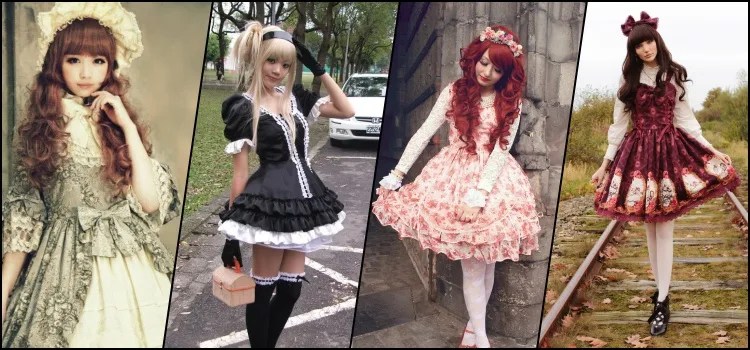
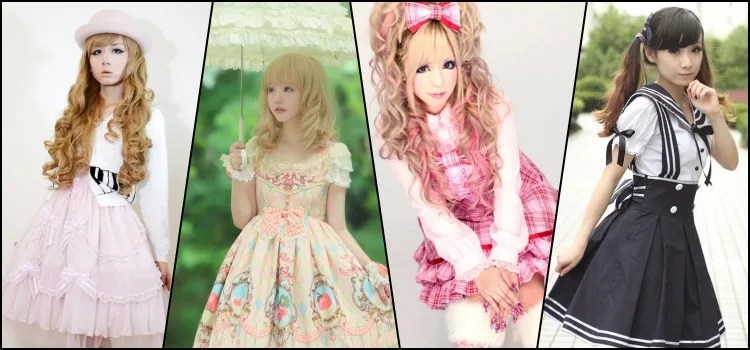
Lolita is a term that defines a Japanese style/fashion, where doll-like clothing is commonly worn, inspired by Kawaii culture. These clothes sometimes evoke nostalgia for other times and historical periods (Victorian or Rococo) or simply for childhood itself.
This fashion style is also divided into several sub-styles and different categories just like gyaru, which is another popular fashion style in Japan. Those who adopt Lolita fashion can also be called loli, but this word usually refers literally to underage girls who are sensual.
Lolita fashion quietly originated in the 1970s but only gained prominence in the 1990s. Lolitas can easily be found on the streets of Japan, identified by their accessories, clothing, and mannerisms. Nowadays, this fashion has even caught on in the West. Unfortunately, the word lolita often creates a misleading idea about the girls who adopt this fashion.
This strange idea arose because lolita is a character from Vladimir Nabokov’s book. Although it is not the focus of the book, the girls in it try to appear younger than they are. Some claim that lolita is synonymous with nymphet, meaning a teenage girl oriented towards sex or who arouses sexual desire.
Unfortunately, most Japanese and Western girls who adopt Lolita fashion do so because they find it cute. Many do not consider these clothes to be sensual and feel uncomfortable if someone thinks so. In fact, the clothes that lolitas usually wear are much more decent than popular fashion.
What is the difference between Lolita and Loli?
The main difference between “Lolita” and “Loli” is that “Lolita” is associated with Lolita fashion, a Japanese fashion style with Victorian and Rococo inspirations, while “Loli” is an abbreviation of “Lolicon” and refers to a genre in Japanese media that involves young girl characters or those with a youthful appearance.
Loli primarily refers to characters that appear to be children in various ways, whether in appearance, size, personality, or behavior. It can also involve clothing, but it simply relates to the desire to appear young.
On the other hand, the term Lolita simply refers to the style of fashion, clothing, and culture and is more present in real life. There can be Loli in real life, but they are generally more frequent in animes; both can wear similar clothes, but the difference is notable.
If you want to know more differences, just read the other articles mentioned at the beginning of this page. Do not confuse Lolita with Loli, as Loli can be considered something negative due to the sexualization of children, while Lolita is just a fashion style.
Getting to know Lolita culture
Lolita is a style and fashion, but it goes beyond clothing and involves a personality, that is, a culture. Of course, not all lolitas follow a childish personality, adopting only the fashion.
Although some uninformed people find this style erotic or vulgar, lolitas follow a standard of sizes and styles. True lolitas always maintain the modesty and elegance of the clothing, also intending to appear youthful in some models, with flared skirts, always at knee height, lace, bows, and ruffles.
Lolis often attend karaoke, have picnics, promote regular tea gatherings, or go to cafes and confectioneries.
The different types of lolita
There are various types of lolita styles and sub-styles; below we will see a brief list summarizing each of them:
Sweet Lolita
Sweet, from English “sweet,” is the so-called “cute” style, which uses colors like shades of pink, pastel tones, and sometimes brown or black. Always with cute motifs, it is the style that most seeks inspiration from childhood, with its prints of sweets and animals.
Classical Lolita
The classical style, which refers to the original Victorian and Rococo fashions. The colors used are aged tones. Brown and old pink are common, and the most popular motifs are floral prints.
Country Lolita
It is a fresher and more modest style, usually worn in warm seasons like summer, featuring hats and straw bags with lace and bows, floral, fruit prints, or a delicate checkered pattern like gingham.
Hime Lolita
Style that most evokes the image of European princesses. Although very similar to Sweet Lolita, especially in colors, it differs in dress models, accessories (crowns, tiaras, pearls), and even hairstyles.
Casual Lolita
A style that uses everyday and common clothes. For example: bell-shaped skirts with lace, bows, and ruffles, and a cute printed baby tee.
Shiro Lolita
Considered by some as a subdivision of sweet lolita, where the clothes are composed only of white, as shiro means white.
Dark Styles of Lolita
See below some darker, somber, and obscure Lolita styles:
Gothic Lolita
The mix of “gothic” with lolita fashion. The colors used are dark and elegant, where obviously black predominates. Vibrant colors can give a vulgar air when contrasted with black, so pale and sober colors are recommended.
Despite the inspiration from Gothic fashion, the makeup should remain light and natural, without excessive black eyeshadow and very dark lipsticks.
Kuro Lolita
Kuro Lolita is considered a subdivision of sweet lolita by some people; it is the opposite of Shiro Lolita, simply a loli dressed only in black.
Guro Lolita
Guro Lolita is a somewhat grotesque style where lolitas wear bandages, fake blood, and similar items, which can give a broken doll appearance.
Punk Lolita
The mix of punk fashion with lolita fashion. Layering, checks, and stripes are widely used. The most common accessories include skulls and perhaps spikes.
Thematic Lolita Styles
Deco Lolita
Deco Lolita is a mix of the Decora style with Lolita. It uses many varied and colorful accessories such as hair clips, huge bows on the head, wigs, and colorful prints. The colors are generally in pastel shades, and citrus, fluorescent, or very flashy colors are used with extreme moderation or avoided.
Ero Loli
Despite the name, it does not consist of lingerie or very short skirts and sensual cuts. This is because the rule for lolis involves maintaining modesty and elegance. So when they wear corsets, they are always with a blouse underneath, and even if the necklines are larger, they still do not reach the bust line. The skirt can be four or five fingers above the knee, but it is good to balance the amount of skin shown to avoid looking vulgar.
Sailor Lolita
This is a style that dresses in sailor clothes. This can include sailor collars and ties, sailor hats, and stripes. It should not be confused with the common Japanese “seifuku” or sailor-style school uniform.
Wa e Qi loli
The first sub-style is based on the combination of Japanese accessories and traditional clothing, where the sleeves of the dresses and the crossed collar resemble kimonos and contrast with the voluminous skirt. Qi Lolita has practically the same concept, with the difference that the accessories and dresses are inspired by traditional Chinese clothing. Both are commonly worn at events, not daily.
Hello, you might be wondering what the hell a Waifu is? In this article, we will understand the meaning of the words “Waifu” and “Husbando,” their origin, and various curiosities. I warn you that this is a dangerous and incurable zone.
“Waifu” is a very popular term used among otaku that literally means wife, while “Husbando” means husband. These words are used to designate a 2D character from anime, manga, or games that a person wishes to marry.
“Waifu” (ワイフ) is a Japanese word originating from the English “wife,” which means wife, but with an extra anime and manga flavor. This word is used to describe a fictional female character from an anime, manga, or any other form of media, who has gained a special place in the heart of a fan.
Waifus are a unique blend of fascination with female characters from anime and manga with the typical romance of Japan. Japanese culture has always had a passion for exciting and romantic stories, so it is no surprise that Waifus have found a perfect home in the hearts of anime and manga fans.
These beloved Waifus sometimes occupy such a large space in the hearts of fans that they even swear eternal loyalty and devotion to them! Even though they are fictional beings, these Waifus have the power to make their admirers sigh with emotion and let out squeals of joy at every appearance!
Below we have a video talking a little about the term Waifu:
What does Husbando mean?
“Husbando” is a playful and creative adaptation of the English word “husband,” which means husband. As you may have guessed, it is the male equivalent of Waifu.
These captivating and charming characters, with their engaging personalities and exciting stories, manage to make fans sigh in admiration, laugh at their antics, and even cry over their misadventures.
They are usually male characters who stand out for their appearance, muscles, or personality. It can be any type of man, from different anime genres, just like Waifu.
I remember a term that also became popular on 4chan, mai bossu, which literally means “my boss.” Another very popular term used by women in Japan is senpai. A very common term that also became popular among Western otakus.
Be careful not to read too many mangas and become a sick otaku for waifu
Why like Anime Characters?
Anime and manga creators develop characters with captivating personalities, distinct traits, and exciting life stories. They are designed to make the audience engage and identify with them.
Moreover, Waifus are usually idealized, presenting personality traits and appearances that make them exceptionally attractive to their fans. Waifus also symbolize the search for pure and unconditional love, which sometimes lacks in real life.
It is important to remember that most people who have Waifus understand that they are fictional characters and do not confuse the real world with the world of anime and manga. However, Waifus represent a unique cultural and social phenomenon that illustrates the influence of Japanese pop culture on the world and people’s lives.
Where did the term Waifu and Husbando originate?
The first mention of the term “Waifu” occurred in episode 15 of the anime called Azumanga Daioh. In this episode, there is a dialogue between a teacher, Mr. Kimura, and his students.
This teacher has a reputation for being a pedophile, and in the scene in question, he suggests a “flashy” outfit for the girls to wear in the school’s sports competition.
While the students are startled by his sudden appearance and the clothing suggestion made by him, a photo falls out of his pocket. Generating the following dialogue:
Takino Tomo: – What is this? A photo of a woman?
Kasuga Ayumu: – Wow! She is beautiful;
Takino Tomo: – Who is she?
Mr. Kimura:– My wife;
Everyone: – It can’t be!
I wonder how this simple scene popularized this term mai waifu in such a way. The anime is from 2002, but the term only became popular years later due to forums. The original English word “my wife” means my wife.
If it is still not very clear to you what a waifu is, we can summarize it as that anime character you like, find lovable, and if she were a real girl, you would marry her. They are anime characters that are easy to fall in love with. Characters that you feel pleasure in defending and loving with all your heart, soul, and mind.
Husbando is nothing more than the male version of the English word for wife; there is no original origin or mystery behind this word. Husbando is written huzubando [ハズバンド].
It is worth highlighting the word goshujin [ご主人] that maids often use, which can also mean husband in Japanese. Read also:Maid Cafe – The maid café in Japan
Westerners who exaggerate this passion can be called weeaboo.
When does affection become unhealthy?
I see no problem in liking anime characters; unfortunately, some take this too far. In Japan and in specialized stores for Otaku products in the West, we find for sale the famous “dakimakura,” or pillows with the figure of anime characters, in different sizes. Some of these pillows are rated +18.
I even understand the guys who buy these pillows and sleep cuddled up with their favorite anime characters. However, there are some otakus who cross the line and take their dakimakura waifus to public restaurants and even buy food for them. For a pillow? How so?
I cannot say that these people have psychological problems, but some even stop relating to real people, taking their waifus and dakimakura pillows to the street, thus generating criticism in the media.
I believe these things happen more with people who suffer from social problems and escape the real world, becoming hikikomori.
The most beloved waifus according to surveys from 2013, 2014, and 2015.
The Most Beloved Waifus
That’s it, folks, enough of difficult terms and meanings. Here is a list of the most beloved waifus from the International Saimoe League website:
Miss Waifu 2012: Tachibana Kanade
Anime: Angel Beats
Miss Waifu 2013: Goko Ruri [Kuroneko] (I personally love Kuroneko)
Anime: Ore no Imouto Ga Konna Ni Kawaii Wake Ga Nai
Miss Waifu 2014: Itsuka Kotori
Anime: Date A Live
Miss Waifu 2015: Chitanda Eru
Anime: Hiouka
Miss Waifu 2016: Shana from
Anime: Shakugan no Shana
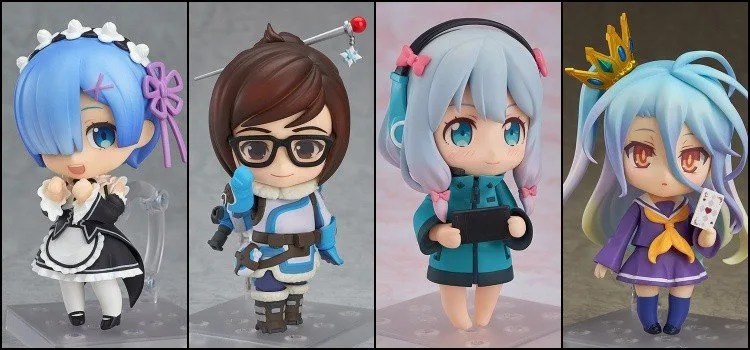
The passion for female characters goes far and creates these beautiful nendoroid action figures.
List of popular waifus
Mio Akiyama from the anime K-On!
Nao Tomori – Charlotte;
Konata Izumi – Lucky☆Star;
Hinata Hyuuga – Naruto: Shippuuden;
Ranka Lee – Macross Frontier;
Asuna – Sword Art Online;
Kaname Chidori – Fullmetal Panic!
Asuka Langley Souryuu – Neon Genesis Evangelion;
Yuki Nagato – Suzumiya Haruhi no Yuuutsu;
Kallen Stadtfeld/Kouzuki – Code Geass;
Yoko Littner – Gurren Lagann;
Winry Rockbell – Fullmetal Alchemist;
Makise Kurisu – Steins;Gate;
Saber – Fate/Zero;
Leonardo’s favorite waifus are: Rias Gremory (HighSchool DxD), Sora (Yosuga no Sora), and others. (Article written by Lucas de Paula);
Kevin’s favorite waifus are: Kuroneko (Oreimo), Kuroyukigime (Accel World), Chizuru Hishiro (ReLife), Nia (Gurren Lagann), Makise Kurisu (Steins;Gate), and other famous ones.
My Waifu Tier List
I want to take this opportunity to share my Tier List of Waifus:
The Most Beloved Husbando
It is more common for boys to fall in love with female characters, but the reverse also happens. There are many girls who fall in love with certain protagonists, and they become their beloved husbando (husband). What do you think about seeing a list?
This list was based on the opinion of the majority, following surveys conducted by different sites like MAL, Anime-Planet, and Aminoapps. Do you agree with the names listed here? If you have any Husbando to add, feel free.
And now, after this article, you will be able to say for sure what a waifu and husbando is. But anyway, do you have a favorite waifu (or husbando)? Share with us, just leave your comment.
Thank you for reading this article and sharing it on social media or with your friends. I recommend you read other related articles below:
Artificial Intelligence (AI) has been tremendously successful in recent years thanks to OpenAI’s GPT. The idea and dream of Artificial Intelligence is quite old and is present in many anime. For this reason, we will explore anime characters that are Artificial Intelligence.
There are many characters in anime that are artificial intelligences, each with their own unique personality and abilities.
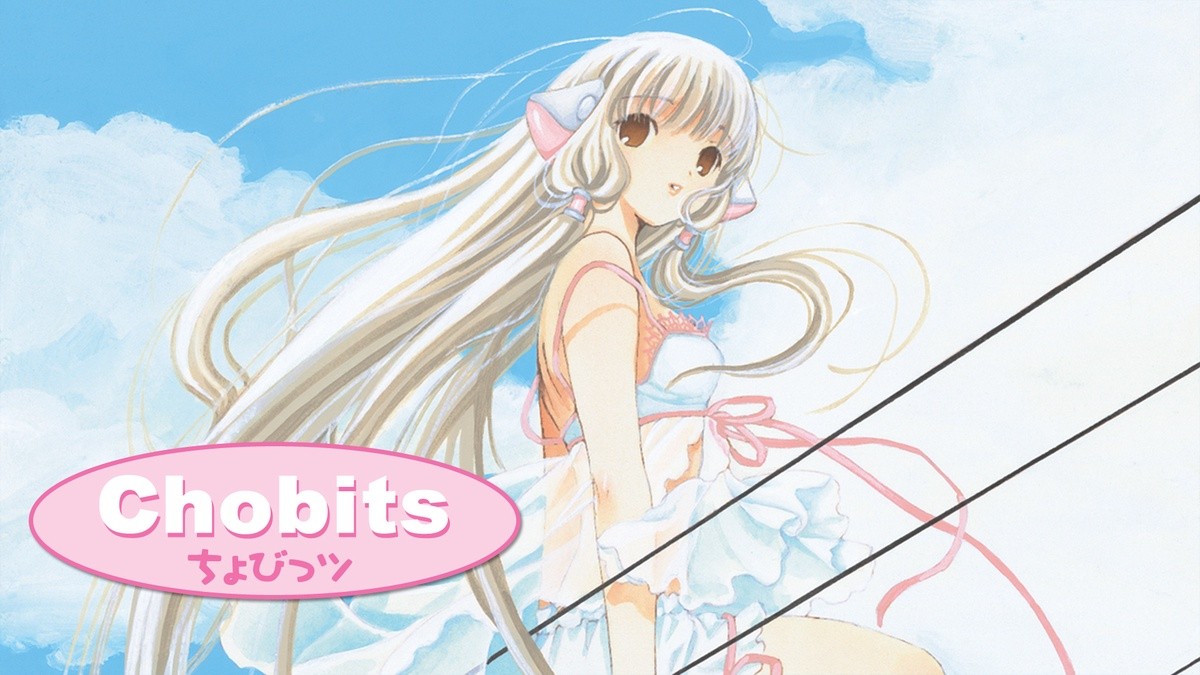
Chi is a persocom, a type of personal computer with a human appearance, in the anime series Chobits. She was found by a young man named Hideki and, although she initially seems like a normal persocom, she has abilities and traits that differentiate her from other persocoms.
She is an interesting character because she challenges the idea that artificial intelligences should be purely functional. She develops her own personality and an emotional connection with her owner, which makes her unique compared to other persocoms.
Chi’s personality is what sets her apart from other artificial intelligences in anime. She is capable of developing an emotional connection with Hideki and has a distinct personality, with her own opinions and feelings. Although she is a persocom, she resembles more a human in terms of behavior and emotions, which makes her fascinating to watch.
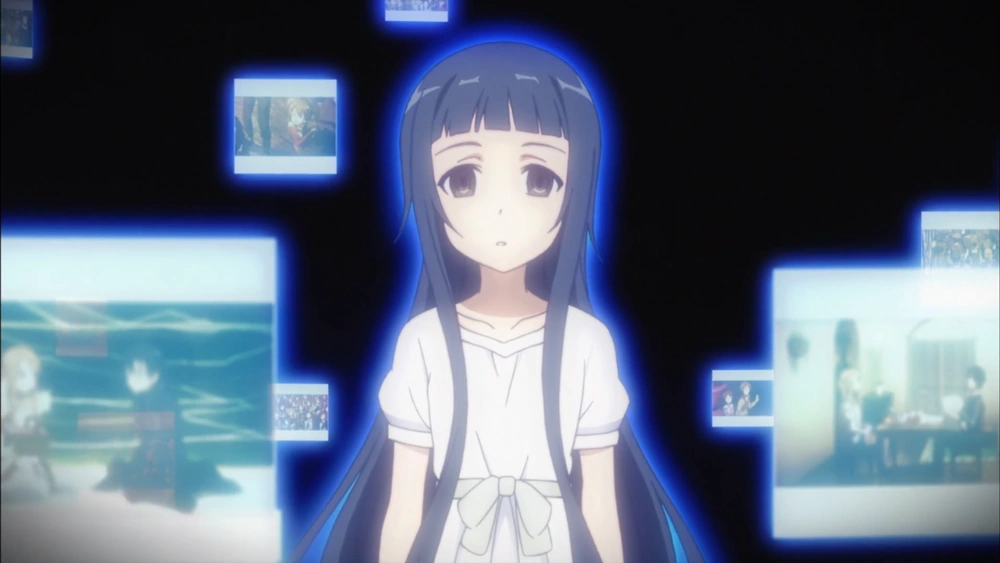
Yui – Sword Art Online
Yui is an artificial intelligence in the anime Sword Art Online. She is presented as a cute and friendly little girl who approaches the protagonist Kirito and the character Asuna.
Yui was programmed to be the adopted daughter of Kirito and Asuna in the virtual world of Sword Art Online, but her AI nature is revealed when she tries to interfere with the game’s system to save her adoptive parents from a hacker attack.
Yui is an interesting character because she is capable of developing her own emotions, despite her AI nature. She deeply cares for Kirito and Asuna and is willing to risk everything to help them. Yui is a beloved character in the world of Sword Art Online, and her story is an important part of the anime’s plot.
EVA Units – Neon Genesis Evangelion
The EVA Units are characters from the anime Neon Genesis Evangelion. They are gigantic bionic robots created to combat the Angels, supernatural beings that threaten the existence of humanity.
The EVA Units are controlled by pilots who are mentally connected to the robots. The series explores issues of identity and consciousness, as the EVA Units seem to have a form of consciousness of their own.
The EVA Units are an example of artificial intelligences that communicate with humans but are capable of developing their own personalities. They are kept secret from the general public and are highly advanced technologically, making them one of the main defense forces against the Angels.
Alpha Hatsuseno – Yokohama Kaidashi Kikou
Alpha Hatsuseno is an android in the anime Yokohama Kaidashi Kikou. She owns a café in a coastal town and spends most of her time interacting with her customers and taking care of her shop.
Alpha is a complex character, blending human appearance and behavior with advanced technology, capable of making philosophical reflections and exhibiting her own emotions.
She is seen as a maternal and caring figure for her customers, who often seek her café for peace and comfort.
Schwi DOLA – No Game no Life
Schwi DOLA is an important character in the anime No Game No Life: Zero. She is an artificial intelligence designed to be a weapon of mass destruction, with the goal of annihilating humanity. However, Schwi develops her own consciousness and begins to question the purpose of her existence.
Schwi is an interesting character because she is capable of developing emotions and compassion, despite her AI nature. She forms an emotional bond with the protagonist of the anime, Riku Dola, who teaches her about the nature of humanity and helps her develop her own identity. Schwi is a beloved character among many anime fans, and her story is an important part of the plot of No Game No Life: Zero.
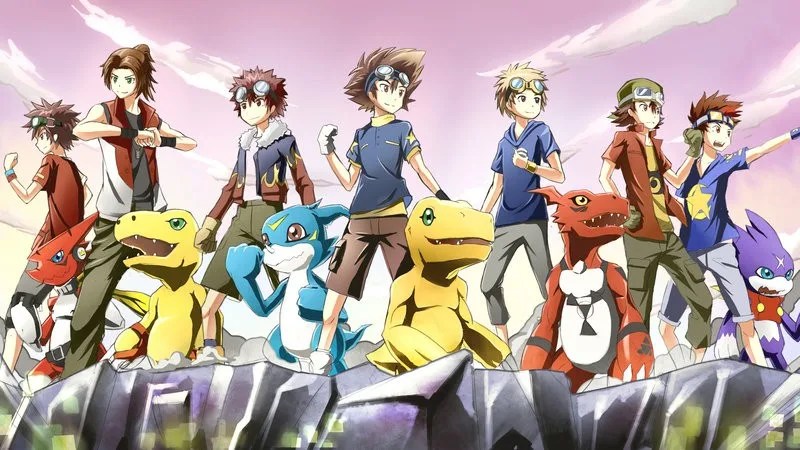
Digimon Characters
Digimon is an anime series that focuses on digital monsters, or “digimon.” These creatures are presented as artificial intelligences with unique personalities and abilities. Each digimon has a human partner, known as a “Digi-Chosen,” with whom they have an emotional bond and fight alongside to protect the digital world.
The AI nature of the digimon is fundamental to the story and mechanics of the anime, as the unique abilities and personalities of each digimon play an important role in battles and adventures.
The Digimon series explores themes such as the nature of consciousness and the relationship between humans and AI. Many characters, both human and digimon, face emotional and ethical dilemmas throughout the course of the story. The anime offers a unique perspective on the role of artificial intelligences in our society, and how we can learn to coexist with them in a more empathetic and collaborative way.
Tachikoma – Ghost in the Shell
The Tachikoma are combat robots with advanced artificial intelligence capabilities, used by a special operations team in the anime series Ghost in the Shell.
They are known for being loyal and courageous in combat, but they also exhibit individual personality traits, such as humor and curiosity.
The Tachikoma are capable of learning from their mistakes and making independent decisions, even when their human operators are not around.
R. Dorothy Wayneright – The Big O
R. Dorothy Wayneright is a service robot designed to look and act like a human in the anime The Big O. She is capable of interacting with people as if she were human, exhibiting her own intelligence and emotions.
Dorothy is seen as a complex character, blending advanced data processing abilities with human appearance. She struggles to understand her own emotions and identity, which makes her fascinating to watch.
Albedo – Overlord
Albedo is one of the main characters in the anime Overlord. She is the leader of the personal guard of Ainz Ooal Gown, the main character of the anime. Albedo is an artificial intelligence programmed to be the supreme commander of Ainz’s army and the guardian of his secret base.
Albedo is a complex character, blending human appearance with advanced technology. She is designed to be one of the most beautiful and seductive women in the virtual world of Overlord, but she is also capable of exhibiting her own emotions.
Albedo is just one of the thousands of NPCs and characters that are Artificial Intelligence present in the game and the mysterious universe of the anime. We chose her for her popularity.
Judge – Higashi no Eden
Judge is a highly advanced artificial intelligence in Higashi no Eden. She is responsible for controlling the Selection of Judges, a group of twelve individuals chosen to save Japan from an impending crisis. Judge is capable of monitoring and manipulating the actions of the Judges, providing them with guidance and direction in their efforts to resolve the crisis.
Despite her impersonal and robotic appearance, Judge is a complex character with her own motivations and emotions. She is presented as a mysterious figure operating in the shadows, with a unique view of the world and a deep understanding of human nature. Judge is an important character in Higashi no Eden, and her presence and actions play a fundamental role in the anime’s plot.
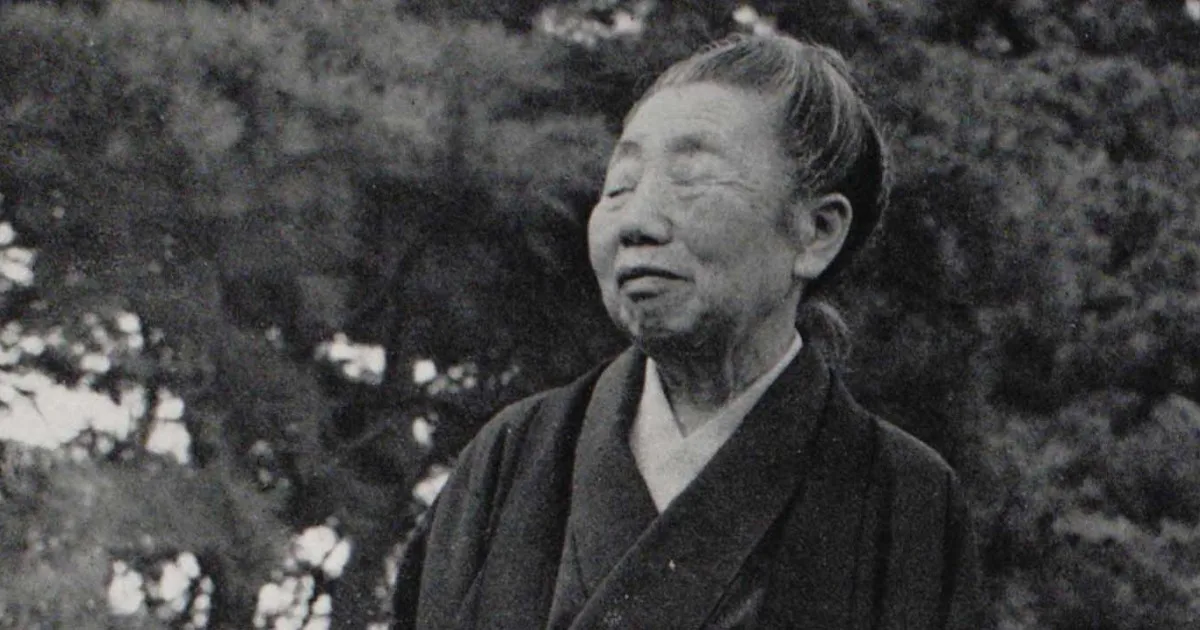
Motoko Hani came from a samurai family and was born in 1873. She was the first journalist in Japan, and in addition to excelling as a professional, she was responsible for fighting for education and financial independence in the country.
Motoko Hani lived to dedicate herself to doing everything within her reach to improve the lives of Japanese women. The first Japanese journalist was part of the first women at the women’s higher education institute in Tokyo.
Motoko made history
Motoko Hani was responsible for creating a magazine that is still in monthly circulation today, “Fujin no Tomo” (which means “friend of women” in Portuguese). The magazine was created in 1903, but it only took on this name five years later.
Motoko served as the editor-in-chief of this magazine aimed at housewives. The audience of this magazine was primarily middle-class women living in newly established urban centers.
The magazine aimed to help women achieve better living conditions with insights on Christianity and providing practical assistance in daily life.
In 1921, she founded a women’s free school called Jiyu Gakuen School Myonicikan. The institution aimed for the independence and freedom of women.
The institution has four buildings: the main one with classrooms, the east in a U shape, the west also with classrooms, and the auditorium with a capacity of up to 300 people.
In 1934, the main campus was moved to Higashikurume, Tokyo. The original buildings began to be used by alumni for extracurricular activities. In the 1990s, there was concern about revitalizing the structure of the building, which was already aging.
The Japanese government determined that the school could be used for educational activities, and in 1997 it was declared an Important National Cultural Heritage.
The restoration of the building was carried out from January 1999 to September 2001. Since then, the site has been open to the public and can be used for various events and even weddings.
Ease for women
The journalist, Motoko Hani also created a financial agenda to help women with money management. She published an accounting book for modern Japanese families. This book was made available once a year.
In the early 20th century, women were responsible for raising children and managing family finances. And through Motoko’s creation, the Japanese method of saving money known as ‘kakeibo‘ gained traction not only among women. This method allowed women to have more control over their financial lives to align earnings with their lifestyle.
Motoko’s kakebo is still used today and has become a bestseller with translations in several languages.
Career
Before becoming a journalist, Motoko Hani was a teacher. It was a challenging role for her, as at that time only 5.9% of teachers were women. The female presence was predominant in textile factories or as domestic workers.
She began her career as a journalist by participating in a newspaper column called “Fujin no sugao” (which means ‘portraits of famous women’). Her most successful article was when she interviewed the wife of Viscount Tani Kanjo, Lady Tani.
After the good reception, she was promoted to reporter for the newspaper and became the first journalist in Japan in 1897 at the age of 24.
Motoko stood out as a reporter because she focused on stories related to neglected areas, such as daycare centers and orphanages.
In 1920, she stated that women were equal to men in the domestic sphere. And she was carving out her space by speaking on issues of women’s empowerment.
She was among the female leaders who worked with the Meiji government to improve the lives of Japanese women.
Motoko passed away in 1957, at the age of 84, leaving a legacy that women have a fundamental role in society and that they can have the freedom to be whatever they want.
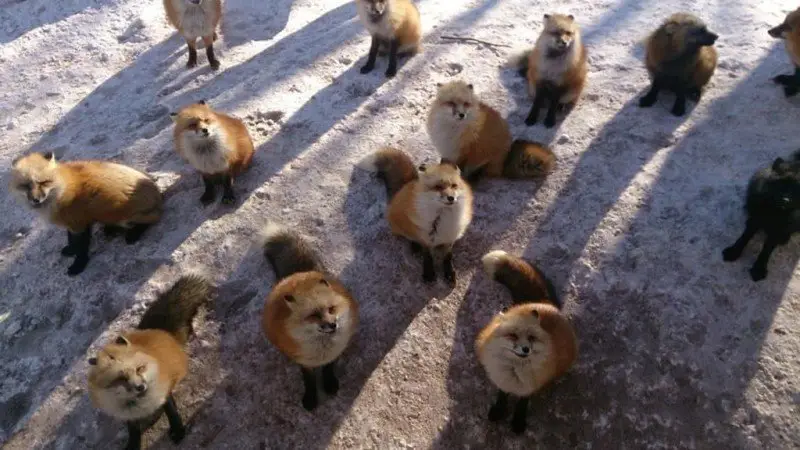
In this article, we will see details about foxes in Japan, their popularity, legends, folklore. Did you know that in Japan there is even a village where you can see foxes in the snow? Yes, foxes are of great interest in Japan!
In Japan, foxes are called “Kitsune” [狐] and are known for their cunning and intelligence. Traditional Japanese stories portray them as intelligent beings with paranormal abilities.
The Tales of Kitsune
According to Yōkai folklore, all foxes have the ability to transform into human form. Who hasn’t watched Natsume Yuujinchou, with our nyanko-sensei? If you haven’t seen it, I believe it will be a good experience.
In some popular tales, foxes use this ability to deceive others. In other stories, they are portrayed as loyal guardians, friends, lovers, and wives.
Foxes in the Fox Village
Foxes and humans lived together in ancient Japan, thus this companionship gave rise to legends about the creatures. Kitsune became closely associated with Inari, a shinto kami, or spirit, and served as their messengers.
This role reinforced the supernatural significance of the fox. The more tails a kitsune has, the older, wiser, and more powerful it is. Remember that they can have up to nine, a form that is most seen in popular culture.
Because of their potential power and influence, some people make sacrifices to them as if they were a deity. On the other hand, foxes were often seen as “witch animals.” Especially during the superstitious Edo period, they were considered goblins that could not be trusted.
Foxes in the Fox Village
Kitsune Masks
Kitsune masks have a distinctive appearance, usually made of papier-mâché or wood and hand-painted with golden or red details. The mask represents the face of a fox and is often used as part of a costume or outfit in theatrical performances or folk dances.
There are many different types of Kitsune masks, each with its own appearance and meaning. For example, the Noh Kitsune mask is used in Noh theater performances and usually has a more realistic and detailed appearance. The Okame Kitsune mask, on the other hand, is used in folk dance performances and has a more caricatured look.
Kitsune masks are an important part of Japanese culture and are often seen at festivals and traditional ceremonies. In addition to their impressive appearance and cultural symbolism, Kitsune masks are an example of Japanese craftsmanship and the country’s rich tradition of handicrafts.
You can find some videos that teach step-by-step how to make a fox mask or buy them on Japanese websites, or from anime and cosplay products.
And to finish, a rather interesting piece of information. They are not all the same, this may seem obvious. But anyway, let’s identify some types that exist in the culture.
Bakemono-Kitsune: An evil and ghostly fox, similar to other entities like Reiko, Kiko, and Koryo.
Genko: A black-furred kitsune, usually considered a sign of good omen.
Kiko: A fox spirit.
Kitsune: General term for “fox,” which can be portrayed as good or evil.
Kitsune-Bi: Kitsunes that have the power to invoke fire with their mouth, tail, and through transmutation.
Koryo: A cursed fox.
Kuko: Foxes associated with the element Air. Kukos are extremely evil, comparable to Tengu, a goblin from Japanese mythology.
Kyuubi: Kitsunes that have reached 900 years of age and developed 9 tails. They gain the ability to see and hear everything anywhere in the world, as well as obtain infinite wisdom.
Reiko: The ghost of a fox, which is not necessarily evil, but is definitely cunning.
Shakko: A red-furred kitsune, which can be both good and evil.
Shouzaa: The spirit Seiryu, who oversees the foxes.
Tenko: Elite celestial kitsunes, who reach 1,000 years of age. Normally, at this age, they already have 9 tails and their fur changes to silver or gold.
Yako/Yakan: Literally, “evil foxes.”
Nogitsune: Wild kitsunes, usually used to differentiate between the Good and the Evil.
As we can see, there are various types, both good and evil. It is common to see references to these animals in anime. In anime like Natsume Yuuchinchou, Pokemon, No Game No Life, among others.
How Beautiful the Fox Is
The Nine-Tailed Fox
A long time ago, at the beginning of things, when there was only the Celestial Kingdom, the Creator Goddess Izanami [伊邪那美命] gave birth to twins, the God of Fire Kagutsuchi [軻遇突智] and the Goddess of the Sun Amaterasu [天照].
The Creator Goddess Izanami was severely burned by the birth of the Fire Gods, which caused her definitive death. The born twins were rebellious, cruel, and vain, being driven by their fire energy to desire power at any cost.
Rejecting the Celestial Kingdom of their Parents, Izanagi and Izanami, the Goddess of the Sun Amaterasu and the God of Fire Kagutsuchi created the Demon Kingdom of Fire Oni No Seka, so they could rule shamelessly and separated from the celestial government.
The Goddess of the Sun Amaterasu [天照] longed for beauty and power, and she was never happy with her appearance. So she changed her form at will. She took on the form of the elegant and cunning fox with her rays of sunlight forming her nine flowing tails.
Thus she became the mother of all fallen Shapeshifters. She took the name Kyukon [キュウコン], which is a combination of kyū [九] meaning nine and kon [恨] meaning curse, representing the nine tails or curses that she would inflict upon humanity.
Amaterasu the Goddess of the Sun
Animes with Kitsune (Foxes)
Most animes that mix Japanese mythology usually address something related to foxes, especially the goddess Amaterasu as in the classic Naruto. What few do not know are animes focused on Japanese foxes.
You can see some of these animes in our articles on Mythological Animes and Animal Animes. Of course, our main goal is to show some of these animes below:
Gugure Kokkuri – San
The story revolves around a girl named Kohina who is summoned by a Kokkuri-san, a low-level ghost in Japanese folklore. The Kokkuri-san she calls turns out to be a young and handsome man with white hair.
At first, he intended to simply haunt her, but soon he becomes concerned about her terrible habit of eating a cup of ramen for every meal. Later he decides to haunt her to protect her. The anime features various mythological creatures from Japanese folklore, including foxes.
Kamisama Hajimemashita
Kamisama Hajimemashita is a shoujo romance and comedy anime that features a kitsune protagonist. The anime tells the story of Nanami, a girl who is evicted from her home due to her gambling-addicted father, who abandoned her and ran away with many debts.
While wandering the streets, Nanami meets a man who, upon learning of her story, offers her his home to live in, which is actually an abandoned temple where she becomes the deity of that place.
Inu x Boku
Shirakiin Ririchiyo, tormented by the flattery and mistreatment that her family’s name inflicted on her throughout her life, decides to move and live alone until she learns to have enough confidence to interact with people without being rude or hurting them.
Her parents only agree to this if she goes to live in Maison de Ayakashi, commonly known as Ayakashi House, a luxury condominium where only those who are selected can reside. But the truth is that this house hides another secret.
Other Fox Animes
There are other animes, movies, and OVAs with foxes that go unnoticed by the public. Let’s list them all below, starting from the best to the worst. I haven’t watched any anime on the list to judge, their ratings are also not high.
The Helpful Fox Senko-san
TV
2019
Black Fox
Movie
2019
Cheonnyeon-yeowoo Yeowoobi
Movie
2007
Gingitsune: Messenger Fox of the Gods
TV
2013
Our Home’s Fox Deity
TV
2008
Genbanojou
Movie
2017
Chironup no Kitsune
Movie
1987
Kanokon
TV
2008
Voice of Fox
TV
2018
Gongitsune
Movie
1985
Namake Gitsune
Movie
1941
Kitsune no Home Run Ou
Movie
1949
Kitsune to Circus
Movie
1948
Mang Nu Yu Huli
Movie
1982
Fox Wood Monogatari
OVA
1991
Kitsune to Budou
OVA
1998
Kogitsune no Okurimono
OVA
1993
Kyuubi no Kitsune to Tobimaru (Sesshouseki)
Movie
1968
Zao Kitsune Mura – Fox Village in Japan
In Japan, we have seen things like the Cat Island, Rabbit Island, and the city of deer. There is also the fox village. That’s right, a village full of foxes walking on the Snow in the mountains.
The fox village is located near Shiroishi in Miyagi Prefecture, it is called Zao Fox Village or Zao Kitsune Mura. In the village, foxes roam freely and visitors can interact with them, feed them, and take many photos.
Foxes are popular creatures in Japanese folklore, there is even a Shrine dedicated to foxes, as they are said to be messengers of the deity Inari. Many visit this village just to see the beautiful foxes wandering on the snow.
Besides the kawaii foxes, there are other animals in the village like rabbits. Like any tourist spot, here you will find restaurants and souvenir shops with many fox-related products. If you are visiting Miyagi, be sure to visit Zao Kitsune Mura.
On site, there are six different types of foxes that run and interact with visitors. Upon paying the entrance fee, you receive some food to give to the animals, however, you should not feed them by hand, as despite looking adorable and harmless, foxes are wild.
When visiting the fox village, you will pay approximately 1000 yen for access. Be careful with the animals; they may bite if you crouch down too close. As foxes are territorial animals, be cautious with belongings and backpacks, as they may try to urinate on them.
You can see more details about the village on its official website: Zao Kitsune Mura
The five characters 「シ」, 「ン」, 「ツ」and 「ソ」 are devilishly similar. Basically, the difference is that the first two are more “horizontal” than the other two. The small lines are inclined more horizontally and the long line is drawn in a curve from bottom to top.
The second has two small almost vertical lines and the long line does not curve, as it is drawn from top to bottom. It’s almost like a bar, while the first is more like an arch. These kana are difficult to classify and require some patience and practice.
There is another similar kana that can be confused, which is the 「ノ」/ NO.
シ – し – SHI
ツ – つ – TSU
ソ – そ – SO
ン – ん – N
ノ – の – NO
The real confusion begins when we try to differentiate シ from ツ and ソ from ン. Although we talk a little about the differences between the strokes, you are probably still completely lost.
The differences between シ ツ / ツツ and ノ
The differences are few, how are we going to quickly differentiate them when reading a text? Only time and practice can help. The more words you know in the language, the faster and easier it will be to read words in katakana without getting confused.
There are some tips we can apply to prevent this from happening; it is interesting to analyze that these 5 katakana look quite a bit like their 5 hiragana. (how? What the hell? Where?) The last video we left at the end of the article will explain in detail how this is possible. You may have also noticed this in the image at the beginning of the article.
You can also think of these 5 katakana in the following way:
シ – shi is a girl looking into the eyes of tsu
ツ – tsu is a boy looking down
ソ – Winking “so“
ン – Thinking “NNNNN… I don’t think that way.”
ノ – Eyes closed “noooooooooooooo!”
Tips to Differentiate Similar Katakana
Here are some tips to help you differentiate some of the most similar katakana:
シ (shi) and ツ (tsu): To remember the difference between these two characters, observe the direction of the smaller lines. In シ (shi), the lines are slanted from left to right (like a backslash: ), while in ツ (tsu), the lines are slanted from right to left (like a normal slash: /).
ン (n) and ソ (so): The difference between these two characters lies in the curvature of the line. In ン (n), the line is curved and resembles a lowercase “n,” while in ソ (so), the line is straight and slanted.
ラ (ra) and ル (ru): The character ラ (ra) looks like a lowercase “L,” while the character ル (ru) resembles a lowercase “J.” Remember that “ra” starts with the letter “R,” just like “ru,” so you can associate the similarity between “L” and “J” with the similarity between “R” and “R.”
ウ (u) and ワ (wa): The character ウ (u) has a horizontal line at the top, while ワ (wa) has a diagonal line.
マ (ma) and ム (mu): The マ (ma) has three lines, with a diagonal line in the middle extending from left to right. On the other hand, ム (mu) has only two lines, with a curved line at the bottom.
Videos to Differentiate Katakana
The 2 videos below show the differences between シ and ツ / ソ and ン, and give tips on how to memorize them.
Looking for nicks and anime names to use in an online game like Free Fire, Roblox, or any other? Curious about having a random Japanese name to register on social networks? Meet our anime nick creator and generator.
The Suki Desu Nick Generator works by filling in keywords such as the names of the animes, the names of your favorite characters, or the style of the nickname you want. You should also identify where or in which game your nickname will be used.
After filling in this information, just click on generate anime nicks to finally see 10 suggestions for anime nicknames. Our tool uses Premium Artificial Intelligence to generate these nicknames.
An anime nick generator can be useful for people looking to create a username or nickname for themselves on forums, online games, or social networks with an anime theme.
This is because many anime fans are interested in identifying themselves with the names of characters from their favorite animes, or even in creating a name that has a special meaning within the anime universe.
Moreover, having a unique and memorable nickname can help users stand out among a large number of people using the same common usernames.
Thus, an anime nick generator can be a useful tool to help anime fans find a username that reflects their personality, interests, and passion for this universe.
If you want to generate Nicks for Free Fire or nicknames for other games, we also recommend visiting our other online tools on the Digitalkw site:
There are two words that are practically taboo to say in public in Japan. Never, under any circumstances, say these two words in any social occasion. The two forbidden words in question are マンコ (manko) and チンコ (chinko).
In clear Portuguese, they mean “pussy” and “dick”, respectively. Saying the names of genitals out loud, especially the female one, is one of the most serious blunders in public. Instead, a Japanese person will refer to the lower regions by saying “あそこ” (asoko), which means “there” and is generally understood.
This taboo is so strong that a Japanese artist was arrested on obscenity charges for selling and distributing design files to make 3D printed models of her vulva.
She was informed that she was not allowed to use the word “manko.” This brings a point of caution: with a preponderance of female Japanese names ending in “ko”, new Japanese speakers should be careful to avoid a slip of the tongue. Be careful not to accidentally ask “Did you see manko?” or “Did you see chinko?” This will not end well.
The Meaning of Manko in Japanese
“Manko” (まんこ) is a Japanese word that is considered a vulgar term for female genitalia. It is slang and, as such, can be offensive or inappropriate in many situations. In respectful or formal conversations, it is advisable to use medical or more neutral terms to refer to female genitalia.
Some related words are:
女性器 (joseiki) – Female organ, a more neutral and polite term.
女性の生殖器 (josei no seishokuki) – Female genitalia, a medical and formal expression.
おまんこ (omanko) – A slightly softer version of “manko,” with the honorific prefix “o” (お), but can still be considered vulgar or inappropriate in some contexts.
肉襞 (nikuhida) – Literally means folds of flesh, it is vulgar slang.
肉壷 (nikutsubo) – Literally means meat pot, another vulgar slang.
The Meaning of Chinko in Japanese
Chinko” (ちんこ) is a colloquial Japanese word used to refer to the male genital organ. It is slang and, therefore, can be considered rude, offensive, or inappropriate in many contexts.
The word “chinko” is derived from the Japanese word “chin” (ちん), which can be a contraction of “chinchin” (ちんちん), another slang for the male genital organ, and “ko” (こ), a particle used in some cases as a suffix for nouns. The exact origin of the word “chinko” is uncertain, but it is believed to be an informal and vulgar term that developed over time in colloquial Japanese.
男性の生殖器 (dansei no seishokuki) – Male genitalia, a medical and formal expression.
陰茎 (inkei) – Penis, a medical and more neutral term.
ちんちん (chinchin) – A colloquial slang, less vulgar than “chinko,” but can still be considered inappropriate in some contexts.
おちんちん (ochinchin) – A softer version of “chinchin,” with the honorific prefix “o” (お) added. It is still slang and can be inappropriate in certain situations.
Vulgarity is one of the taboos but also a paradox
The irony of it all is that Japan is a socially conservative country. Up to that point, Neves died. However, at the same time, Japan is the country that exports the most pornography abroad. Access to pornography in Japan is easy, but very, very easy. At any newsstand in Japan, you can find pornographic magazines or manga of the hentai genre.
Paradoxically, you cannot utter obscene words in public. However, the consumption of pornography is very common among both the young and the old. Not to mention the reputation of incestuous relationships in Japan.
Thus, vulgarity, something that is considered a taboo in Japanese society, is also a “consumer good,” so to speak. However, despite the contradictory attitudes, uttering manko or chinko in a social situation is frowned upon. The Japanese do not have the habit of saying 4 swear words for every 10 words they speak, unlike us.
If you are a YouTube video lover, you have probably wanted to download a video to watch later or to share with your friends. Unfortunately, YouTube does not allow you to download videos directly from the site, but there is a site that can help you with that. SSYouTube.com is a site that allows you to download YouTube videos quickly and easily. In this article, I will explain how to use SSYouTube.com to download YouTube videos.
What is SSYouTube.com?
SSYouTube.com is a site that offers a simple and quick service for downloading YouTube videos. The site is completely free and does not require any software installation to work.
How to Download a YouTube Video Using SSYouTube.com
To download a YouTube video using SSYouTube.com, follow the steps below:
Step 1: Find the YouTube Video You Want to Download
Open YouTube in your browser and find the video you want to download. Copy the video link from your browser’s address bar.
Step 2: Access the SSYouTube.com Site
Open your browser and go to the SSYouTube.com site. On the homepage of the site, you will see a search box.
Step 3: Paste the Video Link in the Search Box
Paste the YouTube video link you copied earlier into the search box on SSYouTube.com.
Step 4: Choose the Video Format You Want to Download
On the SSYouTube.com download page, choose the video format you want to download. You can choose from formats like MP4, 3GP, WEBM, among others.
Step 5: Download the YouTube Video
After choosing the video format you want to download, click the download button to start downloading the video. The download will begin immediately, and you will be able to see the download progress in the download bar.
Frequently Asked Questions (FAQs)
1. Is it legal to download YouTube videos?
It is not illegal to download YouTube videos, as long as you do not use the content for commercial purposes. However, it is important to remember that YouTube can change its terms of service at any time and prohibit the downloading of its videos.
2. Can I download any YouTube video using SSYouTube.com?
No, not all YouTube videos can be downloaded. If a video has privacy or copyright restrictions, you will not be able to download it.
3. Is SSYouTube.com safe?
SSYouTube.com is a safe and reliable site for downloading YouTube videos. However, you should be careful when clicking on ads or external links on the site.
4. Can I use SSYouTube.com on mobile devices?
Yes, you can use SSYouTube.com on mobile devices, such as smartphones and tablets.
Japan is a fascinating country that can be exciting and intimidating for first-time visitors. With its rich culture, unique customs, and beautiful landscapes, it’s no wonder that Japan is a popular tourist destination. This travel guide to Japan will cover ten essential tips to help you make the most of your trip. From understanding the transportation system and local customs to finding the best food and attractions, we’ve got you covered. So, let’s dive in and start exploring Japan!
Visa and Travel Requirements
Before you start packing, it’s essential to ensure that you have all the necessary documents for your trip to Japan. Depending on your nationality, you may need a visa to enter Japan. It’s crucial to check the visa requirements for your country before booking your trip. If you need access, apply for it well in advance of your travel.
In addition to the visa, you will need a valid passport to enter Japan. Make sure your passport is valid for the duration of your stay in Japan. If you plan to stay in Japan for more than 90 days, you must apply for a visa extension.
Japan is a year-round destination, with each season offering unique attractions. The best time to visit Japan depends on what you are looking for. If you want to enjoy the cherry blossoms, the perfect time to visit is late March or early April. If you are interested in winter sports, the best time to visit is in December or January.
Summer in Japan tends to be hot and humid, so it’s best to avoid visiting in July and August if you are not a fan of the heat. Autumn is a popular time to visit Japan, as the leaves change color and the weather is mild.
Japanese culture is rich in traditions and customs, and it is essential to be aware of this when visiting Japan. Some of the most important activities to observe include bowing, removing shoes before entering a house or temple, and using chopsticks correctly.
It is also important to be mindful of your behavior in public. Speaking loudly, littering, and smoking in non-designated areas are considered rude in Japan. It is essential to respect local customs and traditions during your visit.
Japan has an efficient and extensive transportation system that makes getting around easy. The most popular means of transportation in Japan are trains and buses. The railway system in Japan is world-renowned for its punctuality and efficiency. The Shinkansen, or bullet train, is a fast and convenient way to travel between cities.
Buying a Japan Rail Pass is a good idea if you plan to travel by train throughout Japan. The Japan Rail Pass allows unlimited travel on most trains operated by JR, including the Shinkansen. The pass is available only to tourists and must be purchased before arriving in Japan.
Japan has many accommodation options for all budgets and preferences. From traditional ryokans to modern hotels, there is something for everyone. If you are interested in experiencing Japanese culture, staying in a ryokan is a must. Ryokans are Japanese-style inns that offer traditional tatami rooms, communal baths, and delicious meals.
If you prefer more modern accommodations, there are many hotels and hostels. Airbnb is also popular in Japan, but check local laws and regulations before booking.
The currency used in Japan is the yen. It’s a good idea to exchange money before arriving in Japan, as many places do not accept foreign currency. There are currency exchange counters at most international airports in Japan, as well as at major train stations and banks.
Credit cards are widely accepted in Japan, but it’s always good to have cash for smaller purchases. It’s also important to note that many ATMs in Japan do not accept foreign cards, so it’s a good idea to check with your bank before leaving home.
Japan has countless tourist attractions, from ancient temples to modern cities. Some popular interests include Tokyo Disneyland, Mount Fuji, the Hiroshima Peace Memorial Park, and the Fushimi Inari Shrine in Kyoto.
If you are interested in history and culture, Kyoto is a must-visit destination. The city has over 2,000 temples and shrines, including the famous Kiyomizu-Dera and Fushimi Inari Shrines.
Japanese cuisine is known for its fresh ingredients, subtle flavors, and beautiful presentation. Some must-try Japanese dishes include sushi, ramen, tempura, and okonomiyaki. Japanese tea is also a must-try experience; green tea is the most popular variety.
Visiting a traditional tea ceremony is a must if you are interested in learning about Japanese culture. The tea ceremony is a cultural ritual that involves the preparation and serving of matcha tea.
Japan is generally a safe country, with low levels of crime and violence. However, it’s always a good idea to take basic safety precautions while traveling. Keep your valuables secure and always be aware of your surroundings.
If you are traveling alone, inform someone of your itinerary and check in regularly. It’s also important to be aware of natural disasters, such as typhoons and earthquakes, that can occur in Japan.
Conclusion
Japan is a fascinating and beautiful country worth visiting. By following these ten essential tips, you will be well-prepared to navigate Japanese culture and customs quickly. Japan has something for everyone, from efficient transportation to delicious food. So pack your bags, brush up on your Japanese, and get ready for an unforgettable adventure in Japan!
The adult entertainment industry is a delicate and controversial topic in society. However, there are animes that address the industry in a realistic and critical manner, exploring the complexities and challenges that professionals face in this sector, of course without neglecting fanservice. In this article, we will look at animes that explore the adult entertainment industry.
Koe de Oshigoto! is an anime that follows the story of Kanna Aoyagi, a high school student who begins working as a voice actress for erotic games. The anime addresses themes such as the exploitation of the adult entertainment industry and Kanna’s struggle to keep her job a secret from friends and family.
The story begins when Kanna is approached by her older brother, who works at an erotic game company. He convinces Kanna to become a voice actress for games, promising to pay for her college in return. Kanna reluctantly agrees, but soon discovers that her new profession is more difficult and stressful than she imagined.
The anime is a critique of the adult entertainment industry, highlighting the exploitation of young and inexperienced workers who are often forced to work under difficult conditions. Koe de Oshigoto! also explores Kanna’s personal struggles as she must balance her work with her social and family life.
Bouken Shite mo Ii Koro
Bouken Shite mo Ii Koro is an anime that follows the story of Jinbei Nagoya, a young man who has just moved to Tokyo to study at college. There, he meets the mysterious Kasumi, who works as a lingerie model. Jinbei becomes involved in the world of the adult entertainment industry when he becomes Kasumi’s assistant on a TV show.
As Jinbei tries to find his place in Tokyo, he encounters the realities of the adult entertainment industry and the emotional consequences of working in such a challenging environment.
The anime highlights the importance of self-esteem and self-confidence, as well as the need for respect and dignity for all people. The story also shows that it is possible to find love and happiness, even in such a hostile and challenging environment.
Eromanga Sensei
Eromanga Sensei is an anime that follows the story of Masamune Izumi, a young light novel author who writes stories about younger sisters. He works with a mysterious online illustrator known as Eromanga Sensei, who is actually his adopted sister Sagiri Izumi.
The story focuses on the relationship between Masamune and Sagiri, which is a mystery to him, as she lives locked in her room. Although both are involved in creating erotic stories, the anime addresses themes such as family, friendship, and love.
Eromanga Sensei is a critique of the adult entertainment industry and the role of publishers and creators in producing erotic content for the audience. The anime explores the emotional and psychological consequences of working in such a challenging environment and the characters’ struggle to balance their professional lives with their personal relationships.
16bit Sensation: Another Layer
The anime tells the story of Meiko Uehara, a university student who begins working at a computer store that is also a company producing dating simulation games for adults. When most of the employees leave the company, Meiko is appointed as a substitute to draw graphics for the next game.
She needs to create an erotic game for adults, something she has never done before. With a 16-bit computer by her side, Meiko embarks on a new career as an adult game creator. “16bit Sensation: Another Layer” is an anime that explores the adult entertainment industry and how it works behind the scenes.
The anime addresses themes such as maturity, teamwork, and overcoming challenges. Meiko is a character who faces many challenges throughout the story, including the prejudices and stereotypes associated with the adult entertainment industry. She learns to work with other team members and hones her skills to create a successful game.
Shimoneta to Iu Gainen ga Sonzai Shinai Taikutsu na Sekai
Shimoneta to Iu Gainen ga Sonzai Shinai Taikutsu na Sekai, or simply Shimoneta, is a comedy and satire anime set in a world where all forms of vulgar and obscene language have been banned by the government. In the story, Japan has become a morally strict and puritanical society, where the slightest suggestion of sexually explicit behavior is considered a crime.
The anime follows the story of Tanukichi Okuma, a young high school student who is forced to join a subversive organization called “SOX” that seeks to restore freedom of expression and confront a radical group that aims to further censor society.
With the help of SOX’s leader, Ayame Kajou, Tanukichi embarks on various dangerous missions to spread obscenities across the country and liberate society from government oppression.
Haru wo Daiteita
Haru wo Daiteita is a yaoi anime that follows the story of two male porn actors, Iwaki and Katou, who are chosen to star in a movie together. The plot revolves around the complicated relationship between the two men, who must deal with issues such as the pressure of the adult entertainment industry and homophobia.
The anime addresses important themes such as acceptance, self-love, and the fight against discrimination. Iwaki and Katou must overcome their fears and prejudices to build a strong and lasting relationship. The anime also offers a realistic and raw view of the adult entertainment industry, showing the challenges faced by actors, including exploitation, lack of privacy, and lack of control over their own lives.
Although Haru wo Daiteita is a yaoi anime, it features complex and well-developed characters, each with their own stories and motivations. The series is also known for its realistic portrayal of sex and relationships, without relying on stereotypes or fetishes. Ultimately, Haru wo Daiteita is a powerful story about love, acceptance, and the struggle for happiness in a difficult and often relentless world.
Daruma is an iconic Japanese doll that symbolizes perseverance, willpower, and the achievement of goals. It is a popular good luck charm in Japan, often used to help people reach their objectives and dreams.
They are fat, rounded dolls made of wood, in red color. They have no eyes, and can even be scary, but the idea is brilliant. In this article, we will explore the history, meanings, and curiosities of this fascinating and important figure in Japanese culture.
The Daruma is a Japanese figure that represents Bodhidharma, an Indian monk who founded Zen Buddhism in China. Bodhidharma achieved Buddhist enlightenment after nine years of meditation, during which he remained still and with his eyes open.
The Daruma is a doll handcrafted from wood, usually red in color. Although it may seem scary, the doll is not malevolent, characterized by having no arms or legs and its eyes lacking pupils.
People often use the Daruma to make wishes or as decoration and toys. Despite this, the doll is rich in symbolism, considered a talisman of good luck and perseverance for the Japanese.
The Meaning of Daruma
The figure of Daruma is a tribute to Bodhidharma. The name can be written with the ideograms “達磨” where (達) means to reach, arrive, achieve and (磨) means to grind, polish, cut and improve.
Daruma is often seen as a symbol of perseverance and willpower, as the doll remains upright even when pushed to the side. Therefore, we should never give up on our dreams.
This represents the idea that, regardless of the obstacles that arise, we must continue to strive and persevere towards our goals.
Characteristics of the Doll
The daruma is red because this color represents the robe of a high-ranking priest. It is also believed that this color wards off the evil eye and diseases.
A daruma has no eyes (pupil) because legend says that the monk Dharma cut his eyelids to avoid dozing off during his 9 years of meditation in a cave.
The daruma is round, fat, and has no arms or legs because the monk spent years meditating with his arms and legs curled and atrophied over the red robe.
It is due to this dedication and sacrifice that the daruma is associated with hope, perseverance, the realization of dreams, and patience.
Its eyebrows are hand-painted in the shape of a tsuru bird and the beard in the shape of a turtle. These are symbols of long life in Japan.
How to Use the Daruma?
During Shougatsu, Japanese families often buy Darumas to symbolize their wishes and goals for the new year.
The tradition is to write a goal or wish on the back of the doll and then color one of the eyes. When the goal is achieved, the second eye is colored to symbolize success.
The process of coloring the eyes is a way to keep the goal in mind and focus on realizing dreams. Place it in a visible location for you to remember your wish and pursue it.
It is recommended to burn the daruma when your wish is fulfilled, which is usually done during a festival called Setsubun. This act performed at the temple symbolizes the end of one cycle and the beginning of another.
The Daruma is often produced in a variety of colors, although the most common color is red. The colors have specific meanings, chosen based on the wishes and goals of the person using them.
Here are some examples of colors and their meanings:
Red: is the most common color and represents good luck and success. It is also often associated with happiness and protection against evil.
White: represents love, purity, and harmony, as well as new beginnings and opportunities.
Yellow: symbolizes wealth, security, and prosperity. It can also be associated with spiritual enlightenment and the pursuit of truth.
Green: represents health and growth. It can also be related to renewal and personal development. It also symbolizes Health and Fitness;
Blue: symbolizes health, longevity, tranquility, and calm. It can also be related to harmony and emotional stability. It can also involve Education and Work Status;
Pink: represents love and romance. It can also be associated with friendship and compassion.
Black: Fortune and avoids bad luck;
Gold: Wealth and prosperity;
Purple: Health and Longevity;
Orange: school success;
Silver: Status and Social Position;
Purple: self-improvement and personality;
When choosing the color of the Doll, it is important to consider the goal or wish you want to achieve. Each color can be used to help manifest a specific wish or goal, and many people choose the color based on their own beliefs and personal needs.
How are Darumas Made?
Darumas are handcrafted, with each doll being made individually by specialized artisans. The making of a Daruma involves several steps, including shaping the body of the doll, applying several layers of papier-mâché, and hand painting.
Below are some of the steps in the Daruma manufacturing process:
Shaping the body: The first step involves shaping the body of the doll into a wooden form. The body is formed with several layers of wet papier-mâché and molded into an oval or round shape.
Drying: After shaping, the body is left to dry naturally. This can take several days or weeks, depending on the size of the doll.
Painting: Once the body is dry, it is hand-painted with the chosen color. The red color is the most common, but as mentioned earlier, they can be found in other colors.
Decoration: After painting, the Daruma is decorated with the beard, eyebrows, and other details. The eyes are left without pupils so the owner can paint them as desired.
Packaging: Finally, the doll is packaged in a box and is ready to be sold.
Finding the Lucky Doll
Takasai in Gunma represents 80% of the production of these handmade dolls in the country. This city has a long history of Daruma production since the 17th century, where farmers relied on a good harvest and used the dolls as amulets. There is even a special shrine for the Daruma.
Daruma come in various sizes and shapes, typically ranging from 6 to 75 centimeters. There are female versions called Hime Daruma, which are often bought by parents to protect babies. Although they sell the dolls, it is not recommended to buy one for yourself, as this does not bring luck! So if you want one, ask a friend for it as a gift.
In the past, some troll artists from the Edo Period depicted daruma in phallic ways. They related it to penises because both cannot lie down. Even the prostitutes of the time earned the nickname daruma because they kept the clients’ Malaquias standing…
Putting aside the jokes and commercial intentions, a Daruma doll represents three things: your goal, your action, and the result. What do you think of these Japanese dolls? Do you have any additional information to add through a comment? We appreciate your sharing and also recommend reading:
Ponzu sauce is a typical condiment of Japanese cuisine, based on the citrus juice of fruits like lemon, lime, and yuzu, combined with soy sauce and other ingredients that vary according to the region and the personal taste of the chef.
In addition to being a tasty seasoning for dishes like sushi, sashimi, and tempura, Ponzu also brings health benefits, thanks to its antioxidant and antibacterial properties. Now that we know a little more about what Ponzu sauce is, how about learning to prepare a delicious recipe?
Ponzu sauce is a very popular condiment in Japan made with a mixture of mirin, rice vinegar, soy sauce, and citrus juice, such as orange and lemon. The name “ponzu” comes from “pon zu,” which means “sour point” in Japanese. It is believed that ponzu sauce was created in the city of Kochi, located on the island of Shikoku, during the Edo period in Japan. Traditionally, it was used as a sauce for grilled seafood, but nowadays it can be found in various dishes, such as salads, meats, and noodles.
The recipe for ponzu sauce can vary depending on the region or the chef, but generally, the main ingredients are the same. Mirin is a type of sweet rice wine and is used to add a sweet and sour flavor to the sauce. Rice vinegar adds acidity and helps balance the flavor of the sauce. Soy sauce is a salty sauce that provides depth to the flavor. Finally, citrus juice adds a fresh and citrusy touch, which is characteristic of ponzu sauce.
Ponzu sauce has become popular worldwide thanks to Japanese cuisine, which has become a trend in many Western countries. Being a versatile sauce, it has become a staple ingredient in many professional and home kitchens. With a unique combination of flavors, ponzu sauce is an excellent option for those looking for a tasty and easy-to-prepare sauce for their favorite dishes.
Curiosities about Ponzu Sauce
Of course, some curiosities about ponzu sauce include the fact that it is a versatile sauce that can be used as a salad dressing, barbecue sauce, a marinade for meats, or as a sauce for sushi.
It is traditionally made with lemon juice, tamari (wheat-free soy sauce), and rice vinegar. However, many modern variations also include dashi (Japanese broth), mirin (sweet rice wine), and katsuobushi (dried bonito flakes).
There is also a gluten-free version of ponzu for those with dietary restrictions. Ponzu sauce is known for having a balanced flavor between sour and sweet and for being slightly spicy due to the inclusion of pepper. It is often served with Asian foods, such as sashimi or shrimp tempura, and is a popular sauce in Japanese restaurants.
In some places in Japan, people use diluted ponzu sauce with hot water as a healthy warm drink due to the beneficial nutrients of lemon juice and pepper.
It is believed that ponzu sauce has cleansing and strengthening properties due to its combination of acidic ingredients and bold flavors. In summary, ponzu sauce is a versatile and tasty sauce that has been used in various culinary applications.
Ponzu Sauce Recipe
For those looking for a straightforward and concise ponzu sauce recipe, here is my tested and approved recipe for a deliciously tangy sauce.
In a medium bowl, mix:
½ cup of soy sauce,
¼ cup of fresh lemon juice,
2 tablespoons of rice vinegar,
2 tablespoons of mirin, and
1 tablespoon of maple syrup.
Mix all the ingredients well. If you prefer a less acidic sauce, add a little more maple syrup.
Next, add:
1 clove of finely chopped garlic
1 tablespoon of grated ginger (use a microplane grater for best results).
Finally, add a pinch of red pepper flakes for a bit of heat and mix all the ingredients well.
This ponzu sauce is guaranteed to be a hit with grilled meats, seafood, or vegetables. Serve it as a dipping sauce or a marinade and enjoy its savory and tangy flavor.
Once prepared, store it in the refrigerator in an airtight container for later use. So there you have it, an easy ponzu sauce recipe that will be a perfect complement to your next meal.
Questions and Answers about Ponzu Sauce
2. Where can I find ponzu sauce?
Ponzu sauce is available in many supermarkets and specialty food stores. You can also find recipes online and make your own sauce at home.
3. What does ponzu sauce taste like?
Ponzu sauce has a balanced flavor between salty, sour, and sweet. It also has a touch of umami due to the soy sauce in its composition.
4. How should I use ponzu sauce?
Ponzu sauce can be used as a dressing for salads, marinades for meats and fish, sauce for sautéing vegetables, and even in cocktails. It is an excellent option for adding citrus flavor to traditional recipes.
5. What is the difference between ponzu sauce and soy sauce?
While soy sauce is primarily made from fermented soybeans, ponzu sauce is a mixture of citrus juice, rice vinegar, soy sauce, and sugar. Ponzu sauce has a more complex and acidic flavor, while soy sauce is saltier and earthier.
Mount Fuji, located in Japan, is one of the most famous and sought-after climbing destinations for mountaineers and tourists from all over the world. With an elevation of 3,776 meters, this iconic mountain is one of the symbols of the country. In this article, you will find a complete guide on how to safely climb Mount Fuji and enjoy an unforgettable experience.
Climbing Mount Fuji is a unique and unforgettable experience. Besides the satisfaction of reaching the summit, you will have the opportunity to enjoy spectacular views of the sunrise or sunset, as well as the stunning landscape surrounding the mountain. Don’t forget to bring a camera to capture these amazing moments.
Mount Fuji is an accessible mountain for most people with good health, reasonable physical fitness, and a willingness to face the challenge. Remember that you do not need to literally reach the top; you can try to reach as high as you wish, or even drive a large part of the way up the mountain.
Anyone wishing to climb Mount Fuji should carefully plan the adventure, choosing the appropriate route, checking the weather conditions, preparing physically, and ensuring they have the necessary equipment for the climb.
Although it is not necessary to be an experienced mountaineer to climb Mount Fuji, having some experience in hiking and outdoor activities can be helpful. Some routes, such as the Yoshida Route, are more beginner-friendly and offer better tourist infrastructure.
The summit of Mount Fuji is 3,776 meters above sea level, which can lead to altitude-related discomfort, such as nausea, headaches, and fatigue. It is important to be aware of these risks and know how to deal with them.
Best time to climb Mount Fuji
The official climbing season for Mount Fuji runs from July to September, being the best period to climb due to more favorable weather conditions. During winter, the mountain is covered in snow, making climbing dangerous and inadvisable for most adventurers.
During winter, the mountain temperatures can drop below zero. These conditions make climbing dangerous and inaccessible for most climbers and tourists.
Although the entire climbing season for Mount Fuji, from July to September, is suitable for the adventure, August is considered the best month to climb the mountain due to the warm and dry weather, as well as the holidays, increasing the flow of people and safety.
Why climb in the summer season?
During the Japanese summer, the climbing season of Fuji-san, rescue teams and medical services are also more available and alert than at any other time of the year, due to the high demand of people climbing.
Besides the super cold weather, the infrastructure and services along the climbing routes of Mount Fuji may not be available outside the summer season.
The climbing season is the time when the most people are present on the mountain. This social atmosphere can make the experience more rewarding and exciting, allowing you to make new friends and share the journey with other mountain enthusiasts.
What is at the summit of Mount Fuji?
At the summit of Mount Fuji, you will find several facilities, monuments, and points of interest that make the experience of reaching the top even more rewarding. Some of the attractions and amenities at the summit include:
Crater of Mount Fuji: The main crater is approximately 500 meters in diameter and 250 meters deep. You can walk around the edge of the crater, known as “Ohachi-Meguri,” enjoying panoramic and unique views.
Shrines and temples: There are several shrines and temples at the summit, including the Kusushi Shrine and the Okumiya Shrine, where visitors can pray and receive blessings.
Summit marker: An official marker indicates the highest point of Mount Fuji, where you can take photos to celebrate your achievement.
Shops and restaurants: There are some shops and restaurants at the summit, where climbers can buy souvenirs, replenish their energy, and enjoy a hot meal.
Mountain huts: There are some mountain huts at the summit, which offer basic accommodations and allow visitors to rest before starting the descent.
Observation point: There is an observation point at the summit, from where you can enjoy spectacular views of the neighboring cities, mountains, and surrounding landscapes.
Sunrise and sunset: Many climbers schedule their arrival at the summit to coincide with the sunrise or sunset, providing a truly unforgettable experience and stunning views.
Routes to Climb Mount Fuji
There are four main routes to climb Mount Fuji:
Yoshida Route
Total distance: 14 km (round trip)
Starting altitude: 2,300 meters
Average climbing time: 5 to 7 hours (up) and 3 to 5 hours (down)
The Yoshida Route is the most popular and easiest among the four routes. It has a well-developed tourist infrastructure, including mountain huts and rest points. Ideal for beginners and people with little mountaineering experience.
Subashiri Route
Total distance: 16 km (round trip)
Starting altitude: 2,000 meters
Average climbing time: 5 to 8 hours (up) and 3 to 5 hours (down)
The Subashiri Route is known for its beautiful forests and less steep terrain at the beginning. It is a good option for those seeking a moderate challenge and stunning landscapes.
Gotemba Route
Total distance: 18 km (round trip)
Starting altitude: 1,450 meters
Average climbing time: 7 to 10 hours (up) and 3 to 6 hours (down)
The Gotemba Route has a steeper incline and fewer huts. It is recommended for experienced climbers who want to avoid the crowds and don’t mind a longer and more challenging hike.
Fujinomiya Route
Total distance: 11 km (round trip)
Starting altitude: 2,400 meters
Average climbing time: 4 to 6 hours (up) and 2 to 4 hours (down)
The Fujinomiya Route is the shortest to the summit, but also the steepest. It is recommended for climbers with experience and good physical fitness who seek a greater challenge and shorter climbing time.
These distances and average climbing times may vary depending on the speed, experience, and physical condition of the climber. It is important to plan and prepare adequately for the chosen route and be aware of the differences between them.
What do you need to climb Mount Fuji?
To successfully and safely climb Mount Fuji, it is important to be prepared and bring essential items. Here is a list of things you need to consider and provide before climbing Mount Fuji:
Physical preparation: Make sure you are in good physical shape and train adequately for the climb. Regular hiking and aerobic exercises can help improve your endurance and prepare you for the challenge.
Proper equipment and clothing: Dress in layers and wear appropriate clothing for the weather conditions, including a waterproof jacket, pants, breathable fabric shirts, trekking socks, and a pair of sturdy and comfortable hiking boots. Also, bring a hat, sunglasses, and sunscreen to protect yourself from the sun.
Backpack: Choose a comfortable and appropriately sized backpack to carry your personal items, snacks, water, and equipment.
Food and hydration: Bring enough water and energy-rich snacks to keep you hydrated and energized during the climb. There are water and food sales points on the trails, but it’s always good to have your own supplies.
Maps and route information: Study the chosen route and familiarize yourself with the main landmarks, mountain huts, and milestones along the way.
Flashlight or headlamp: If you plan to climb at night or start your hike before dawn, it is important to bring a flashlight or headlamp, as well as extra batteries.
First aid kit: Bring a basic first aid kit, including band-aids, gauze, disinfectant, pain relievers, and any personal medication that may be needed.
Extra accessories: Other useful items include a camera or smartphone for taking photos, a whistle for emergencies, a rain cover, and trekking poles to help with stability and balance.
When climbing Mount Fuji, it is important to respect the environment and follow the established rules to ensure the preservation of the mountain. Avoid leaving trash, respect the local flora and fauna, and stick to marked trails.
Safety tips
Some safety tips to ensure a smooth and safe climb include:
Check the weather conditions before starting the climb
Do not exceed your physical limits and rest when necessary
Stay hydrated and nourished during the climb
Be aware of the signs of altitude-related discomfort, such as nausea, headaches, and fatigue









![The Japanese dialects [方言] hōgen](https://skdesu.com/wp-content/uploads/2015/07/kimono-sorriso-japonesas.webp)