
Shoujo anime has introduced millions of fans around the world to some of Japanese animation's most heartwarming, emotionally resonant, and hilarious stories. Whether you are looking for classic high school romances, sweeping fantasy adventures, or lighthearted comedies, this guide highlights the best shoujo anime of all time, organized by style and theme.
Before diving straight into the recommendations, let us explore what actually defines the shoujo demographic, why it appeals so strongly across diverse audiences, and how the industry has evolved over the decades.
Contents 21
What is Shoujo Anime?
The Japanese term shoujo [少女] translates directly to young girl or young woman. In the anime and manga industry, shoujo refers to a publication demographic primarily aimed at female viewers and readers between the ages of 12 and 18. Despite that initial target, the demographic has long commanded a dedicated following among adult women as well as male anime enthusiasts.
A common misconception is that shoujo represents a single narrative genre defined solely by school romance. In practice, shoujo is a demographic category that encompasses fantasy, historical drama, mystery, science fiction, and psychological drama. While romantic tension and character relationships frequently drive the plot, the artistic scope is virtually limitless.

Many classic series feature elegant visual designs, delicate character linework, and expressive internal monologues. At the same time, numerous titles deliberately subvert traditional tropes. Male leads can be clumsy or deeply vulnerable, while female leads often exhibit tremendous courage, sharp humor, and stubborn independence.
Importantly, demographic categorization in Japan depends primarily on the magazine in which the original manga was serialized rather than strict storytelling formulas. When a manga runs in a publication like Ribon, Hana to Yume, or Bessatsu Margaret, its adaptation carries the shoujo label regardless of how broad its ultimate television audience becomes.
My Experience with Shoujo Anime
Shoujo has remained one of my personal favorite anime categories for many years. Unlike many action-heavy shonen series that rely on constant battle escalations, shoujo anime often grounded its narratives in believable emotional dilemmas, intricate relationship dynamics, and sharp comedic timing.
Even as a male viewer, I found myself repeatedly drawn to these stories because they handled romantic development and personal vulnerabilities with genuine care. The humor frequently felt organic, and the conflicts centered on human connection rather than world-ending cataclysms.

My own gateway into the genre mirrored that of many anime fans during the 2000s, anchored by romantic comedies like Kaichou wa Maid-sama! and Toradora! which captured audiences of all backgrounds.
Throughout my years of watching, several personal favorites stood out and left lasting impressions on me:
- Soredemo Sekai wa Utsukushii: An uplifting fantasy that blends political intrigue with a charming royal romance.
- 3D Kanojo: Real Girl: A grounded, complete story exploring adolescent insecurity and deep mutual growth.
- Ashita no Nadja: A beloved globetrotting historical adventure that formed an unforgettable part of my childhood.
- Nana: Ai Yazawa's masterpiece that bridges mature shoujo sensibilities and josei realism with emotional intensity.
While industry production models have shifted in recent years, sincere character-driven romance continues to thrive whenever studios invest in faithful adaptations.
The Most Popular Shoujo Romance Anime
Romance remains the beating heart of the demographic for many viewers. The following titles rank among the most acclaimed and widely recommended romance series by community ratings on MyAnimeList, showcasing exceptional chemistry and storytelling.
Kaichou wa Maid-sama!
Misaki Ayuzawa serves as the fierce, fiercely hardworking student council president at Seika High School, an institution recently transitioned from an all-boys school. To keep unruly male students in line, she maintains an ironclad reputation. Unknown to her classmates, she secretly works after hours in a Maid Café to help pay off her family's debts. When campus heartthrob Takumi Usui discovers her double life, their dynamic develops into one of anime's most entertaining and well-balanced romantic comedies.

Kimi ni Todoke
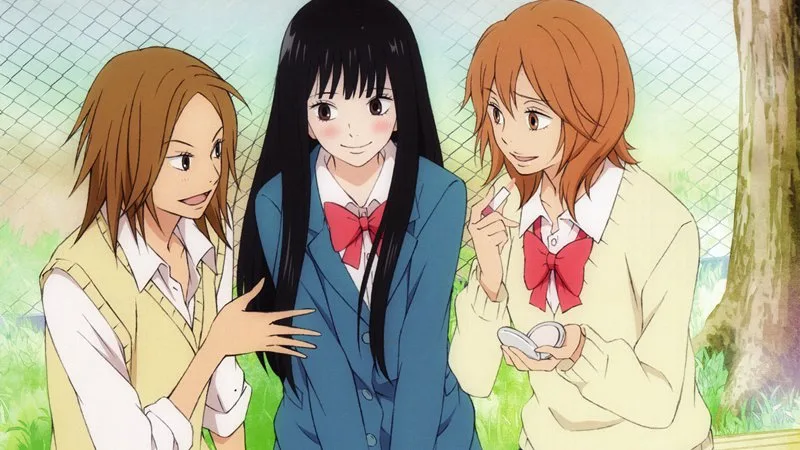
Sawako Kuronuma is an earnest and gentle high school girl who struggles with social isolation because her long dark hair and timid demeanor remind classmates of Sadako from the horror film The Ring. Her entire world begins to open up when she befriends Shota Kazehaya, the most popular and cheerful boy in her class. The series presents a slow-burning, tender portrait of overcoming misunderstandings and building genuine self-confidence.
Ao Haru Ride
Futaba Yoshioka decides to reinvent her image in high school by acting unladylike to avoid female jealousy, leaving behind middle school memories of her first love, Kou Tanaka. When Kou reappears under the surname Mabuchi, both have changed substantially. Dealing with family grief and emotional detachment, the two navigate unresolved feelings in a grounded and sensitive coming-of-age drama.

Tonari no Kaibutsu-kun
Shizuku Mizutani cares almost exclusively about maintaining top academic marks and securing a lucrative future career. Her orderly routine gets completely disrupted when she delivers class notes to Haru Yoshida, an emotionally erratic delinquent who immediately declares his affection and latches onto her. The interplay between Shizuku's pragmatic detachment and Haru's impulsive innocence creates constant comedic charm.

Sukitte Ii na yo
Mei Tachibana spends sixteen years without friends or a boyfriend after being scapegoated by childhood peers for a pet's death. Convinced that trusting people only invites betrayal, she keeps everyone at a strict distance until popular classmate Yamato Kurosawa takes an interest in her genuine personality. The narrative handles themes of self-worth, high school gossip, and emotional intimacy with refreshing sincerity.

Itazura na Kiss
Kotoko Aihara gathers the courage to confess her love to school genius Naoki Irie, only to be coldly rejected. Soon after, an earthquake levels her family home, forcing Kotoko and her father to move in with a family friend who turns out to be Naoki's father. Unlike romances that conclude upon the initial confession, Itazura na Kiss follows the couple through college, careers, marriage, and adulthood, explaining why it inspired numerous live-action television dramas across Asia.

Lovely★Complex
Set against the lively backdrop of Osaka, this beloved classic follows the comedic misadventures of Risa Koizumi, an unusually tall girl, and Atsushi Otani, a notably short boy. Known collectively across school as a bickering comedy duo, their playful antagonism gradually transforms into mutual respect and deep affection, celebrating individuality without taking itself too seriously.

Beyond these primary recommendations, several other romance and school-life shoujo series deserve a spot on your watchlist:
- Ookami Shoujo to Kuro Ouji: A pretend-dating arrangement that slowly sparks genuine emotional consequences.
- Skip Beat!: Kyoko Mogami enters the competitive entertainment industry to extract sweet revenge on her selfish ex-boyfriend, discovering her own formidable talent along the way.
- Watashi ga Motete Dousunda: A hilarious reverse harem comedy where an avid fujoshi suddenly becomes the center of attention among school boys.
- Bokura ga Ita: An emotionally intense, bittersweet chronicle of first love clouded by past tragedy.
- Brothers Conflict: A fast-paced reverse harem scenario full of dramatic household rivalries.
- Fukumenkei Noise: A music-focused melodrama centered around unrequited feelings and expressive rock performances.
- Hana Yori Dango: The legendary high school romance that defined an entire generation of Asian media.
- 12-sai: Chicchana Mune no Tokimeki: A tender look at the early flutterings of adolescent romance among middle schoolers.
- Ashita no Nadja: An orphan dancer travels with a European circus troupe in search of her true heritage.
For more options across every format, you can also consult our dedicated guide to the best romance anime.
Shoujo Anime with Fantasy and Action
The demographic extends far beyond modern classrooms. High-stakes political intrigue, magical kingdoms, and supernatural mysteries have long populated shoujo manga magazines, offering rich worldbuilding and courageous protagonists.
Akatsuki no Yona
Princess Yona leads a sheltered, pampered life in the Kingdom of Kouka until a devastating palace coup led by her childhood love tears her world apart. Escaping into exile with her loyal bodyguard Son Hak, Yona embarks on an arduous quest to locate four legendary dragon warriors, transforming from a naive aristocrat into a fierce, battle-tested leader determined to protect her people.

Akagami no Shirayuki-hime
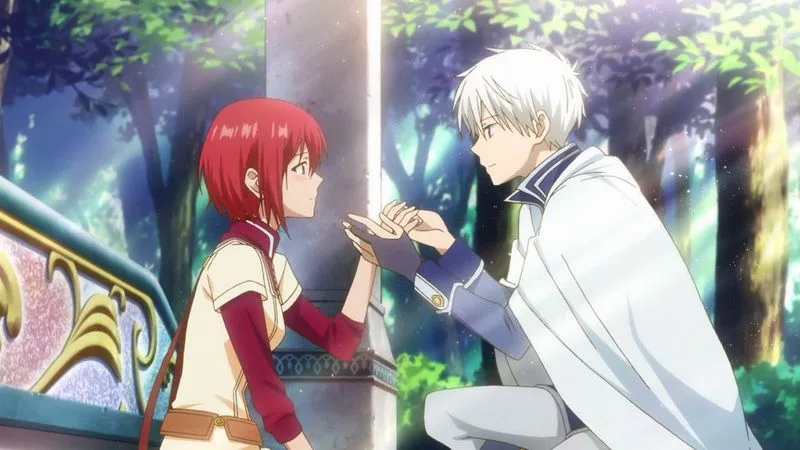
Shirayuki is a skilled herbalist whose distinctive red hair draws the unwanted attention of a tyrannical prince. Refusing to become a trophy concubine, she cuts her hair and flees across the border to the neighboring kingdom of Clarines. There she meets Prince Zen Wistalia, forging an equal partnership built on mutual respect, professional ambition, and genuine companionship.
Cardcaptor Sakura
CLAMP's iconic masterpiece centers on ten-year-old Sakura Kinomoto, who accidentally releases a deck of enchanted Clow Cards from a mysterious book in her father's basement. Appointed as a Cardcaptor by magical guardian Keroberos, Sakura must retrieve each spirit card before they cause havoc across her hometown. To explore the wider universe of magical girl titles, read our full Mahou Shoujo guide.

Soredemo Sekai wa Utsukushii
Nike Lemercier, the fourth princess of the Rain Principality, possesses the mystical ability to summon precipitation through singing. Following a diplomatic treaty, she travels to the Sun Kingdom to marry King Livius I, expecting a formidable tyrant, only to discover he is a young prodigy who conquered the world while hiding deep emotional scars. Their dynamic evolves into a surprisingly mature and captivating partnership.

Here are more remarkable shoujo series that blend fantasy, supernatural mystery, and thrilling adventure:
- Bishoujo Senshi Sailor Moon: The defining magical girl epic that transformed international anime culture.
- Orange: A poignant drama where high schoolers receive letters from their future selves to prevent a friend's tragedy.
- Tokyo Mew Mew: Energetic eco-themed magical girl heroines fused with endangered animal DNA.
- Kamigami no Asobi: Mythological deities enrolled in a supernatural academy to learn human emotion.
- Fruits Basket: Natsuki Takaya's peerless masterpiece exploring generational trauma, family curses, and healing.
- Special A: High-achieving rivals navigating academic competition and romantic confusion.
- Versailles no Bara: Riyoko Ikeda's historical epic set during the French Revolution, centered on Commander Oscar François de Jarjayes.
- Hotarubi no Mori e: A delicate, heartbreaking supernatural romance in a mountain forest.
- Donten ni Warau: Three brothers guarding the supernatural clouds of the Meiji era.
- Shounen Maid: An industrious young boy working as a housekeeper for his wealthy uncle in a warm domestic comedy.
- Vampire Knight: Gothic academy intrigue involving hidden vampire bloodlines and dangerous loyalties.
- Natsume Yuujinchou: A gentle, contemplative journey of a boy returning spirit names inherited from his grandmother.
- Kamisama Hajimemashita: A homeless teenager accidentally becoming the local land god of an ancient shrine.
- Diabolik Lovers: Dark, suspenseful vampire drama inside a secluded manor.
- Ghost Hunt: Paranormal investigations blending folklore, technology, and spiritual mediumship.
- Puella Magi Madoka Magica: A revolutionary deconstruction of magical girl sacrifices.
- Shugo Chara!: Guardian characters born from children's hidden dreams and potential.
- D.N.Angel: A boy whose romantic arousal triggers a genetic transformation into a phantom thief.
- Banana Fish: Akimi Yoshida's gripping gritty crime thriller set on the streets of New York.
- Shoujo Kakumei Utena: Kunihiko Ikuhara's allegorical, avant-garde deconstruction of chivalric fairy tales.
- Tenkuu no Escaflowne: An epic blend of tarot divination, mecha battles, and alternate-world fantasy.
- Full Moon wo Sagashite: A terminally ill singer aided by shinigami to fulfill her lifelong musical dream.
- Kamichama Karin: Ancient divine rings granting celestial powers to young orphans.
- Kyuuketsuhime Miyu: Melancholic dark fantasy following a guardian vampire hunting rogue demons.
Shoujo Stories and Male Perspectives
While the majority of shoujo narratives follow a female protagonist, several notable series place significant emphasis on the male viewpoint or feature male leads. These titles provide a refreshing look into masculine vulnerability, romantic insecurity, and personal maturation.
3D Kanojo: Real Girl
Hikari Tsutsui is a socially awkward high school otaku content with his fictional hobbies, accustomed to being mocked by peers. When he gets assigned pool-cleaning duty alongside beautiful and rumors-plagued Iroha Igarashi, she unexpectedly asks him out. What begins as an improbable pairing develops across two complete anime seasons into a deeply moving exploration of mutual commitment, family honesty, and personal courage.

Ore Monogatari!!
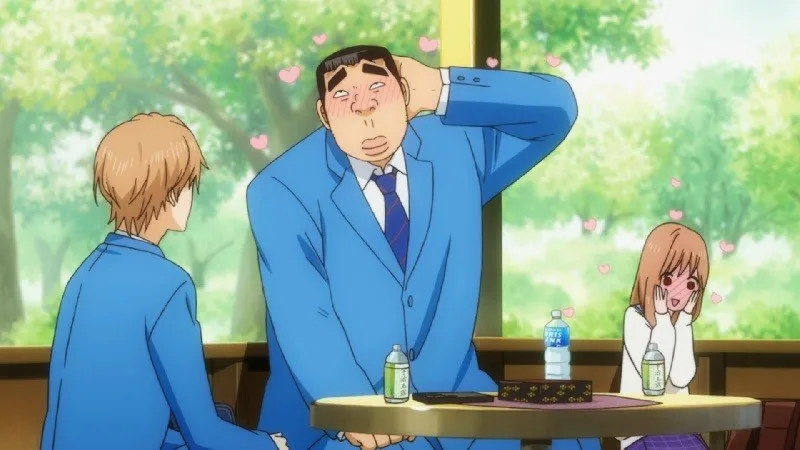
Takeo Gouda is a towering, muscular high school freshman with a heart of pure gold, but girls consistently gravitate toward his handsome best friend Makoto Sunakawa. Everything changes when Takeo rescues petite baker Rinko Yamato from a train groper. Her genuine admiration for Takeo leads to one of the most wholesome, joyful romances in recent anime history.
Nijiiro Days
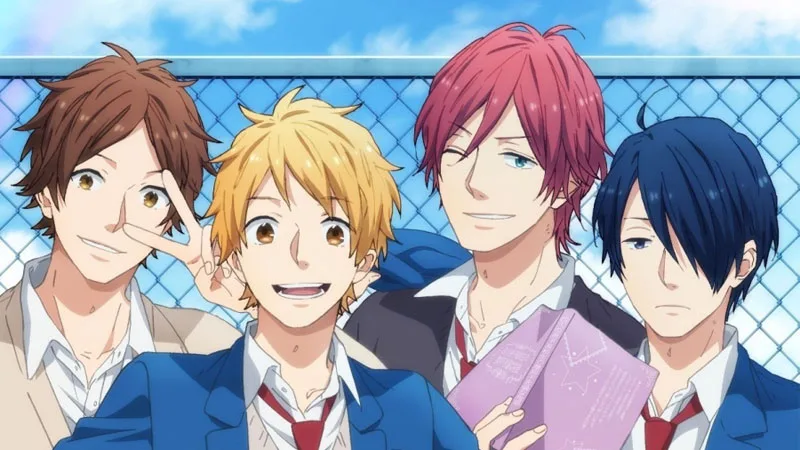
This lighthearted comedy centers on four close male friends, each with wildly contrasting romantic temperaments, navigating adolescent infatuations and high school club life. By framing romantic milestones through masculine camaraderie, the show delivers relatable humor and gentle relationship steps.
Ouran Koukou Host Club
Scholarship student Haruhi Fujioka breaks an eight-million-yen vase at prestigious Ouran Academy and must work off her debt at the eccentric Host Club. Dressing in male clothes and mistaken for a boy, Haruhi grounds the flamboyant club with unflinching practicality, creating a hilarious reverse-harem satire that appeals to viewers of all demographics.

Several acclaimed romantic dramas serialized in shonen or seinen publications capture an emotional resonance and character focus very similar to classic shoujo:
- Toradora!: The fiery dynamic between Ryuji Takasu and Taiga Aisaka remains a benchmark for heartfelt character growth.
- Golden Time: College-age romance handling adult independence, memory loss, and relationship challenges.
- Kimi no Na wa: Makoto Shinkai's breathtaking cinematic masterpiece about intertwined destinies across time and space.
- Clannad: Key's renowned emotional journey detailing family connections, tragedy, and community healing.
- Sakurasou no Pet na Kanojo: Eccentric dormitory residents balancing creative ambitions, talent disparities, and youthful romance.
- ReLIFE: An adult participant returns to high school via a corporate experiment to rebuild his life perspective.
- Hachimitsu to Clover: Chika Umino's introspective look at art school students confronting unrequited love and future callings.
- Nodame Cantabile: Classical music prodigies inspiring and challenging each other across concert halls.
- Uta no Prince-sama: Energetic musical idol romance brimming with colorful character relationships.
If you enjoy romantic narratives exploring bonds between young men, explore our detailed yaoi and boys' love anime guide.
What is Happening with Shoujo Anime Today?
Longtime anime viewers often observe that recent seasonal broadcast schedules feature fewer standalone shoujo adaptations compared to the prolific output of the 1990s and 2000s. It is natural to wonder whether the demographic is fading from the medium.
In reality, the demographic has transformed rather than vanished. During recent decades, commercial anime financing shifted heavily toward late-night broadcast slots, which traditionally target young adult males with merchandise and Blu-ray sales. Consequently, adaptations from shoujo magazines often received smaller production budgets or were channeled into multimedia idol franchises.
Simultaneously, publishing houses diversified their editorial strategies. Many manga that once would have run in traditional shoujo magazines are now serialized in teen, seinen, or digital web manga formats. Romantic comedies frequently aim for broad demographic crossover right from their inception, as evidenced by cross-audience hits like Kaguya-sama and Horimiya.

The appetite for sincere, character-driven storytelling remains as strong as ever. The massive critical success of TMS Entertainment's complete Fruits Basket adaptation and the continued popularity of Kimi ni Todoke prove that audiences still crave thoughtful emotional journeys when studios commit adequate artistic care.
Whether you appreciate shoujo for nostalgic schoolyard memories, high-stakes fantasy rebellions, or heartfelt relationship nuances, the demographic holds some of Japanese animation's most enduring triumphs. Which shoujo anime has left the deepest mark on your journey as a fan? Share your favorite titles and hidden gems in the comments below.


Community
Comments
0 comments
There are no published comments in this language yet.
Send comment