Visual novels started in Japan as story-first games: character portraits, a soundtrack, a wall of text, and — in most titles — a handful of choices that can send a whole route off a cliff. They are no longer an Eastern specialty. Studios in the West now make them too, from tiny passion projects to hits that slipped into the mainstream.
We already wrote about where visual novels come from. The sharper question is why games that look like illustrated novels keep pulling people back — and why they swallowed so much of Japan's PC scene.
Contents5
The choices in visual novels
At certain moments during the text, you need to make a choice that will determine a character's fate and the game's ending. It is almost as if you become the "owner" of that world, as if you could steer it.
In many stories, readers or viewers sit with a pile of "what ifs." In a visual novel, those forks are real. With a few options, you can define the fate of a story and of several characters. All of those choices have consequences, good or bad: they can improve or wreck a relationship with a character, help or hinder a case, open a route or lock it.
Not every title works that way. A kinetic novel — the label Key used for Planetarian — has no branches at all. You read one story, one ending. Higurashi When They Cry is another famous linear case. The format is not "you always choose." It is that a decision can matter, or that the writer can take that power away on purpose.
When there are branches, you usually start on a common route, then lock onto a character route. Hidden flags, affection points, and a late decision can all decide which ending you see. If you want a different ending, you replay, face those consequences again, and learn where you went wrong. Visual novels wander from everyday life into the supernatural, yet they get closer to a life lesson than most media: a line you picked in chapter two can come back as a confession, a fight, or a bad end hours later.
The characters in visual novels
When you play a visual novel, you meet unique characters with personalities and backstories that stick. Extroverted, shy, funny, cold, sentimental, insensitive — you will find all of that in these VNs.
You also run into tragic family stories, past loves, traumas that need to be overcome, childhood friends. Those details make them feel human: their fears, likes, way of speaking. That is why it is easy to identify with one of them, and even easier to get involved in their stories.
Because they are mostly text and choices, visual novels have to captivate with characters and story — and the good ones do that very well.
The emotions of playing visual novels
With visual novels, you get a mix of emotions. Loving and being loved, the adrenaline of an adventure, the tension of a mystery, the sadness of a loss, the fear of the supernatural. Each story inside this format is its own weather system.
Japanese fans even named the tear-jerker strain: nakige (泣きゲー), the "crying game." Key titles such as Kanon, Air, and Clannad made a formula famous — a comedic first half, a warmer middle, a sudden loss, then (usually) an emotional reunion. The point is not shock for its own sake. It is to make you care enough that a bad end actually hurts.
The thrill of building a theory and finding out if it was right, the sting of a wrong choice, the relief of a good ending: those are the feelings people remember after the credits.
The endings of a visual novel
As mentioned before, endings are defined by your choices — but what is so special about that? Multiple endings make one story feel complete. In a visual novel you can see a happy ending, where things work out; a normal ending, with goodbyes and leftover regret; and a bad ending, with fights, losses, and wrecked relationships.
Many titles add a true ending that only opens after you have seen the other routes. Each path shows one slice of the plot; together they form the whole. Chunsoft's 428: Shibuya Scramble is an extreme case, with as many as 85 endings spread across several protagonists whose choices leak into one another's days.
And it is possible to see all of those endings, all the consequences of your choices, in a single game. That is what makes it vast: you cry, laugh, feel guilty for something you said, or sit smiling in front of a computer or a phone because you finally got the ending you wanted. It is a sea of possibilities.
Why they caught on in Japan
In 2006, visual novels accounted for nearly 70% of personal computer game titles released in Japan — a snapshot of that PC boom, not a claim that every Japanese game still looks like this. The format is cheap and fast compared with action games: text, stills, flags, and music instead of physics and 3D combat. Leaf even printed the English-looking label "visual novel" on its 1996 PC title Shizuku.
Anime and manga adaptations then carried the stories past the PC niche. That is a quieter reason they spread than any slogan: a medium that is inexpensive to produce, easy to serialize, and unusually good at making a player feel responsible for a character's fate. If you want more titles in that neighborhood, start with our guide to the best anime games.
VNs are portals into worlds that should be played, not just watched. They are a way to escape reality while practicing the part of life that is all choices. You can be a hero, a heroine, or a villain; you can get attached, or get angry, and then load a save and try the other fork.
If the format still feels blurry, go back to our article on what a visual novel is.
Article written by Maitê.
Kevin Henrique has written about the Japanese language, culture, anime, games, and travel since founding Suki Desu in 2014. He first visited Japan in 2016.
Community
Comments
0 comments
There are no published comments in this language yet.

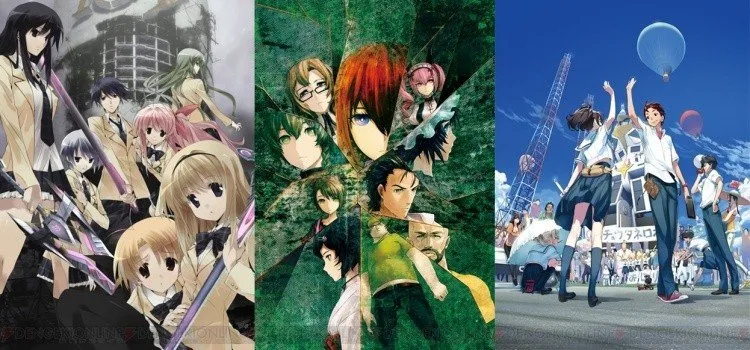
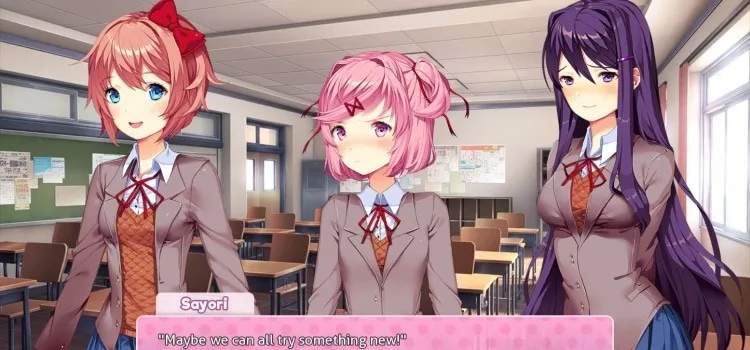 In many stories, readers or viewers sit with a pile of "what ifs." In a visual novel, those forks are real. With a few options, you can define the fate of a story and of several characters. All of those choices have consequences, good or bad: they can improve or wreck a relationship with a character, help or hinder a case, open a route or lock it.
Not every title works that way. A kinetic novel — the label Key used for Planetarian — has no branches at all. You read one story, one ending. Higurashi When They Cry is another famous linear case. The format is not "you always choose." It is that a decision can matter, or that the writer can take that power away on purpose.
When there are branches, you usually start on a common route, then lock onto a character route. Hidden flags, affection points, and a late decision can all decide which ending you see. If you want a different ending, you replay, face those consequences again, and learn where you went wrong. Visual novels wander from everyday life into the supernatural, yet they get closer to a life lesson than most media: a line you picked in chapter two can come back as a confession, a fight, or a bad end hours later.
In many stories, readers or viewers sit with a pile of "what ifs." In a visual novel, those forks are real. With a few options, you can define the fate of a story and of several characters. All of those choices have consequences, good or bad: they can improve or wreck a relationship with a character, help or hinder a case, open a route or lock it.
Not every title works that way. A kinetic novel — the label Key used for Planetarian — has no branches at all. You read one story, one ending. Higurashi When They Cry is another famous linear case. The format is not "you always choose." It is that a decision can matter, or that the writer can take that power away on purpose.
When there are branches, you usually start on a common route, then lock onto a character route. Hidden flags, affection points, and a late decision can all decide which ending you see. If you want a different ending, you replay, face those consequences again, and learn where you went wrong. Visual novels wander from everyday life into the supernatural, yet they get closer to a life lesson than most media: a line you picked in chapter two can come back as a confession, a fight, or a bad end hours later.
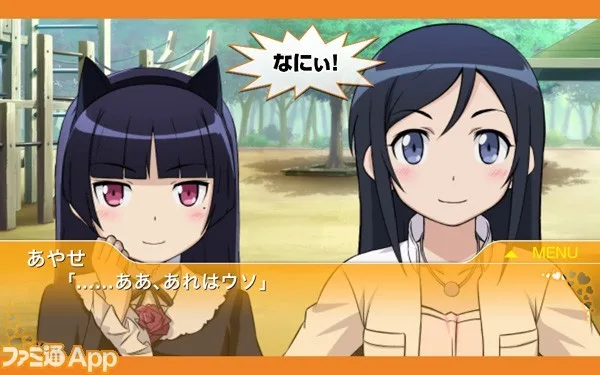 You also run into tragic family stories, past loves, traumas that need to be overcome, childhood friends. Those details make them feel human: their fears, likes, way of speaking. That is why it is easy to identify with one of them, and even easier to get involved in their stories.
Because they are mostly text and choices, visual novels have to captivate with characters and story — and the good ones do that very well.
You also run into tragic family stories, past loves, traumas that need to be overcome, childhood friends. Those details make them feel human: their fears, likes, way of speaking. That is why it is easy to identify with one of them, and even easier to get involved in their stories.
Because they are mostly text and choices, visual novels have to captivate with characters and story — and the good ones do that very well.
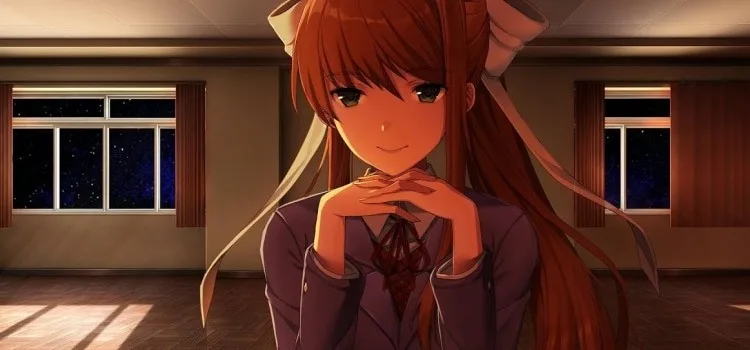 Japanese fans even named the tear-jerker strain: nakige (泣きゲー), the "crying game." Key titles such as Kanon, Air, and Clannad made a formula famous — a comedic first half, a warmer middle, a sudden loss, then (usually) an emotional reunion. The point is not shock for its own sake. It is to make you care enough that a bad end actually hurts.
The thrill of building a theory and finding out if it was right, the sting of a wrong choice, the relief of a good ending: those are the feelings people remember after the credits.
Japanese fans even named the tear-jerker strain: nakige (泣きゲー), the "crying game." Key titles such as Kanon, Air, and Clannad made a formula famous — a comedic first half, a warmer middle, a sudden loss, then (usually) an emotional reunion. The point is not shock for its own sake. It is to make you care enough that a bad end actually hurts.
The thrill of building a theory and finding out if it was right, the sting of a wrong choice, the relief of a good ending: those are the feelings people remember after the credits.

Community
Comments
0 comments
There are no published comments in this language yet.
Send comment