
Citizens of 74 countries and regions can visit Japan without a visa, most of them for stays of up to 90 days. Travelers from the United States, the United Kingdom, Canada and Australia are part of that group. Those who do need a visa can apply online if they live in one of the 20 eligible countries and regions: the JAPAN eVISA system opened in 2023 and was expanded most recently on May 15, 2026.
The eVISA is issued through a portal run by Japan's Ministry of Foreign Affairs. It covers one type of visa: a single-entry short-term stay of up to 90 days for tourism. Applicants must hold an ordinary passport, and entry is limited to arrivals by air or by scheduled passenger ferry from Busan or Shanghai. Visas for business, study, family visits or longer stays still require an application at a Japanese embassy or consulate.
Contents 3
Who can apply for the JAPAN eVISA
Eligibility depends on nationality and place of residence, and the application route differs between two groups. Travelers living in Australia, Brazil, Cambodia, Canada, Saudi Arabia, South Africa, Taiwan, the United Kingdom or the United States apply directly on the JAPAN eVISA website, unless they are already covered by a short-term visa exemption.
The second group applies through accredited agencies. Chinese nationals living in China apply through travel agencies accredited by the Japanese embassy, while Filipino and Vietnamese nationals can apply as part of a packaged tour organized by designated agencies. Residents of Hong Kong, India, Indonesia, Macau, Mongolia, South Korea, Singapore and the United Arab Emirates also apply through agencies when a visa is required.
Some applicants receive shorter stays: visas issued to travelers from China run for 15 or 30 days, and those issued to Vietnamese and Filipino applicants run for 15 days. The Japan eVISA page of the Ministry of Foreign Affairs lists every eligible country and region and points applicants to the Japanese embassy or consulate responsible for their place of residence. Travelers who are unsure whether they need a visa at all can review the Japan tourist visa and visa-free entry rules before starting an application.
How the online application works
Applicants create an account on the JAPAN eVISA website, fill in personal details, travel plans and an address in Japan, and upload the documents required for their nationality and place of residence. An application can be submitted up to three months before departure. Incomplete applications can be canceled without processing, so it pays to check the document list for the place of residence before submitting.
The Ministry of Foreign Affairs normally needs five working days to examine a complete application. The wait can stretch past a month when the case requires an interview, document checks or extra information, and there is no expedited service. When the visa is ready for issuance, the applicant receives an email and pays the fee online with a credit card in their own name.
Since July 1, 2026, a single-entry visa costs about 15,000 yen, compared with roughly 3,000 yen before the change. Some nationalities pay less or nothing under reciprocal fee arrangements, so applicants should confirm the amount with the embassy or consulate that handles their case.
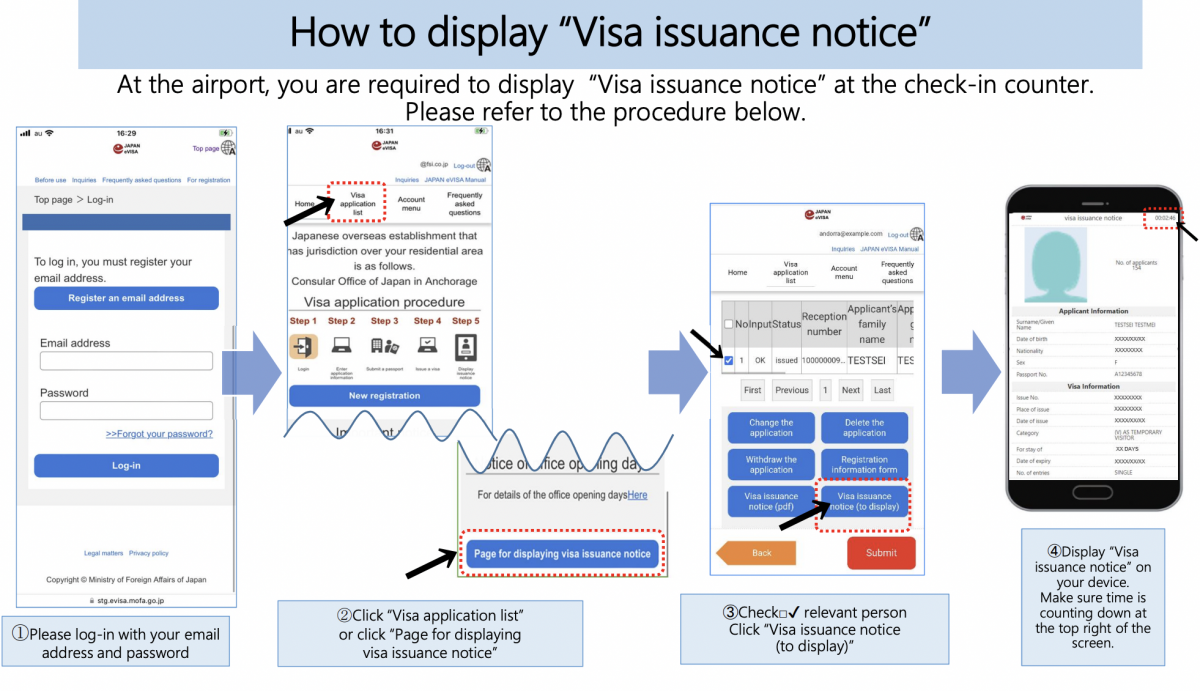
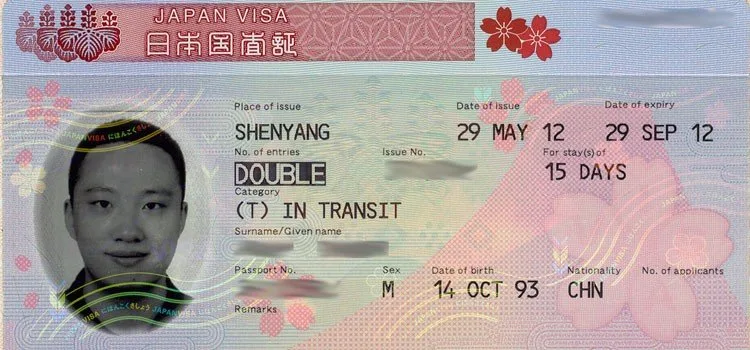
The visa is stored electronically. It is not sent as a printable document or attached to the passport. At the airport, travelers log in to the portal at check-in and display the "Visa issuance notice" on a smartphone or tablet connected to the internet. PDF files, screenshots and printed copies are not accepted. Travelers must enter Japan within three months of issuance, and the visa cannot be extended.
More visitors, spread beyond the big cities
Japan received 31.9 million foreign visitors in 2019 and a record 42.68 million in 2025, according to the Japan National Tourism Organization. In the first eight months of 2026, arrivals reached 27.63 million, 2.7 percent below the same period a year earlier, after a sharp drop in visitors from China.
The tourism plan approved by the cabinet on March 27, 2026 keeps two targets for 2030: 60 million visitors and 15 trillion yen in spending. It adds new goals for repeat visitors and overnight stays in the regions, along with measures to prevent overtourism in the most crowded districts.
Applications are accepted only through the official JAPAN eVISA portal of the Ministry of Foreign Affairs. The Japanese government warns about fraudulent websites that imitate the portal, so check the address before entering personal or payment data. Arrival and customs information can be prepared in advance through Visit Japan Web, the government's online entry form.



Community
Comments
0 comments
There are no published comments in this language yet.
Send comment