Blog

  • What is the meaning of Bankai and Shikai in Bleach?

    What is the meaning of Bankai and Shikai in Bleach?

    “Shikai” and “Bankai” are terms that originated in the anime and manga series “Bleach”. They refer to techniques used in battles that excite all fans, becoming words of great prominence, but what is the real meaning of Bankai and Shikai?

    In this article, you will understand once and for all how the abilities of the swords in Bleach work, what is necessary to reach this level, and mainly the meaning of the word and etymology in the Japanese language.

    What is Bankai in Bleach?

    In Bleach, Bankai is an advanced sword technique that allows characters to unleash the full power of their Zanpakuto (sword) to achieve exceptional abilities and powers.

    To achieve the Bankai form, a Shinigami must be able to materialize and subjugate the spirit of their Zanpakutō. This usually takes 10 years or more to be accomplished.

    Bankai is generally five to ten times stronger than the Shikai form of the Zanpakutō. Those who achieve Bankai play notable roles in the history of the Soul Society, but there are also disadvantages.

    If a Bankai is broken, it usually cannot be restored, and the disappearance of the Bankai without the user’s permission can indicate the user’s imminent death if not addressed immediately. Additionally, the form and strength of the Bankai depend on how much the Zanpakutō recognizes the user.

    The Meaning of Bankai in the Japanese Language

    In Japanese, the word “Bankai” is written as “卍解”. The first part “卍” is a symbol that can be read as “manji” in Japanese, and it is a Buddhist symbol that represents harmony, peace, and life.

    The second part “解” is read as “kai” and means “release” or “unlocking”. Together, the two parts form the word “Bankai”, which refers to the advanced sword technique in the anime and manga series “Bleach”.

    “Bankai” can be translated from Japanese as “final release” or “total liberation”. It is a technique that can only be performed by those who are capable of completely mastering their Zanpakuto and unlocking its true potential. It is considered the most advanced ability that a Shinigami can have in Bleach.

    The ideogram [解] also conveys the idea of solution, explanation, interpretation, answer to the problem, thus showing Bankai as a strike capable of overcoming any barrier.

    We recommend reading: Differences between the Buddhist Swastika and Nazi Swastika

    Does Bankai Exist in the Japanese Language?

    Obviously, the word Bankai from Bleach does not exist natively in the Japanese language, being created to address real meanings, and also referring to other words that share the same pronunciation.

    In the Japanese dictionary, we have the bankai [挽回] which means something like restoration and recovery. There may be other derived words or words with similar meanings.

    What is the Meaning of Shikai in Bleach?

    Shikai [始解] is the first stage of release of the Zanpakutou, the sacred sword of the shinigamis. When a shinigami reaches Shikai, they can unleash the special ability of their Zanpakutou.

    The Shinigami must be able to communicate and harmonize effectively with their Zanpakutō, which requires the ability to speak with the spirit within their world. Gaining access to Shikai and unleashing it for the first time is known as Manifestation (顕現, Kengen).

    Achieving Shikai is a sign of control over a Zanpakutō, and it is a requirement for advancement within the ranks of Shinigamis, as most seated officers are capable of Shikai.

    The word 始解 (shikai) in Japanese is composed of two kanji: 始 (shi) which means “beginning” or “start” and 解 (kai) which means “release” or “unlocking”. Thus, the word 始解 can be literally translated as “initial release” or “initial unlocking”.

    Bleach? – Information – New Season – Media

    The Meaning of the Manji in Bankai

    Although Hitler was inspired by the Buddhist swastika and created an inverted version, this original symbol does not present anything malicious but has deep connections with Buddhism, Hindu traditions, and the Indian subcontinent dating back over 500 B.C.

    The Manji [卍] present in the word Bankai brings a much greater depth than the literal meaning of “total release”. The four arms of the “manji 卍” represent the four directions, comets, and constellations, thus representing the totality of heaven and earth.

    In other words, the manji represents the universe as a whole and not just the universe as a whole in a spiritual sense, but as a whole from a spiritual perspective as well.

    Furthermore, the manji also represents the auspicious footprints of Buddha, serves as a meditation aid, and a way to “follow the footsteps of Buddha” on the path to enlightenment. It can also represent 10,000.

    We can say that Bankai means much more than a special attack, but presents the essence of the character itself, their relationship with the universe, and what they truly are.

    The characters who master “bankai” have a deep understanding of who they really are, reaching a form of enlightenment, the very names of the “bankai” reflect the “manji” symbol.

    For example, Ichigo uses “Tensa Zangetsu”, which translates as “Heavenly Moon Cutter”, in reference to the Buddhist symbolism of the moon. Due to the deep meaning of the “manji”, there is no proper translation for the term “bankai”.

    We recommend reading: Manji – The Swastika in Anime, Manga, and Japanese Culture

  • How to find out the names of animes, doramas, and series?

    How to find out the names of animes, doramas, and series?

    Want to discover the name of an anime, dorama, or series but don’t know how? Do you only have an image? Do you only remember a few things about the work? In this article, we will share tips on how you can find out, including our tool that discovers it for you using Artificial Intelligence. 

    There are various different techniques to find out the name of an anime, whether by image, music, character names, character traits, release year, etc. Although the focus is on animes, you can use the strategies in this article with series, doramas, mangas, games, and others.

    Discovering the name of the anime by an image

    Usually, you look to find out the name of a certain anime when you come across an interesting image on social media, but no one mentions the name. There are several ways to find out the name of an anime from images.

    If you use the Google Chrome browser, just right-click and choose the option Search Image on Google. By doing this, you will come across several sites citing the source of that image.

    Just select the images of the animes by browsing through Google Images until you see some reference or name of the anime present on the pages with the image or even in the image description on Google.

    How to discover the name of animes, doramas, and series?

    If you use another browser, you can search on Google for Reverse Image Search as these sites perform the same function as the Chrome browser. Perhaps the other browser also offers an extension for this.

    If you use Telegram, you can send the image to some of the bots below that perform the same function:

    • @WhatAnimeBot – Allows you to find the anime and episode from an image;
    • @YaMelodyBot – Discover song names;
    • @reversesearchbot – Performs a reverse image search;

    Discovering the name of the anime with Akinator

    Another way to discover the name of an anime, series, or movie, or even the name of a character is by using Akinator. If you vaguely remember the character, just answer the questions and arrive at an answer.

    Akinator is a website where a genius asks questions based on variables to guess the character you are thinking of. Usually, it displays the name of the character along with the name of the anime.

    It may not mention the name of the anime. In those cases, just search for the character’s name on Google. It can also end up being wrong sometimes if it is a very unknown character.

    How to discover the name of animes, doramas, and series?

    Discovering the name with little information

    If you want to remember the name of the anime with little information, it may be necessary to do a long search on informative sites like animelist, wikipedia, and other databases.

    I remember that I used to listen to a song in my childhood called Hey Ya! Unfortunately, this song got lost and I had no idea what it was called at 16 years old, but I really wanted to know.

    Unfortunately, I couldn’t find the name of the song by the lyrics because I wrote the chorus and the phrases I remembered from the song incorrectly. I only knew that this song was the theme of an annual Nickelodeon event.

    I searched year by year on the Wikipedia pages of the Kids’ Choice Awards event until I found the name of the song Hey Ya! – Outkast. It was a great satisfaction to find the name of this song.

    How to discover the name of animes, doramas, and series?

    If you know the year the anime was released, you can search on myanimelist. If you remember the studio that the anime was aired on, you can look for it on the studio’s Wikipedia page or search by genre.

    Any information you have can be relevant to finding the name of the anime, series, or dorama. Both have a page on the internet with information that you can filter and find using Google.

    I have already found the names of animes by writing some characteristics in English on Google. Maybe this can help you! The information available in English is much greater than the information in Portuguese.

    Ask for help in an online community

    Today it is easy to remember the name of an anime, series, or dorama. If none of the previous alternatives helped you remember the name of the work, just ask for help online through groups on social networks and online forums.

    I noticed that many people turn to Yahoo Answers, others search on Facebook or YouTube channels. No matter the case, never give up on finding the work you are looking for but can’t remember.

    I hope the tips in this article are enough to help you remember and discover the name of an anime or series that you have forgotten. You can use the tips in this article for anything.

    If you liked the article, just share it and leave your comments. Do you remember any other tips to help remember? We hope to hear them in the comments…

  • Akiya Bank: Revitalizing the empty houses of Japan

    Akiya Bank: Revitalizing the empty houses of Japan

    Japan faces a persistent problem of abandoned houses known as “akiya.” These empty residences represent a challenge for the country, both from an economic and social perspective. Fortunately, an innovative solution called Akiya Bank has emerged as a way to tackle this housing crisis and revitalize local communities.

    Discover how the Akiya Bank is solving the housing crisis in Japan and revitalizing abandoned houses.

    We recommend reading: Houses in Japan – What are they like? Rent or Buy?

    What is the Akiya Bank?

    The Akiya Bank is a pioneering project aimed at connecting owners of empty houses with people interested in acquiring a new home. Launched in 2008 by the Akiya Recovery Agency, the virtual bank allows people to search for and find abandoned houses in different regions of Japan.

    This online platform, also available as an app, features an extensive list of vacant houses, including details about location, size, price, and conditions of the property.

    The goal of the Akiya Bank is to encourage the purchase and use of these neglected houses, thus avoiding waste of resources and revitalizing declining communities.

    Houses in Japan – What are they like? Rent or Buy?

    How does the Akiya Bank work?

    The Akiya Bank acts as a bridge between the owners of empty houses and potential buyers or tenants. The platform allows owners to advertise their properties for free, while interested parties can search, filter, and find options according to their preferences.

    Once a buyer finds a house of interest, the Akiya Bank assists in the purchasing process by providing information about necessary documents, financing, and legal support.

    Additionally, the platform also offers support in the renovation and remodeling of acquired houses, connecting buyers with construction companies and architects.

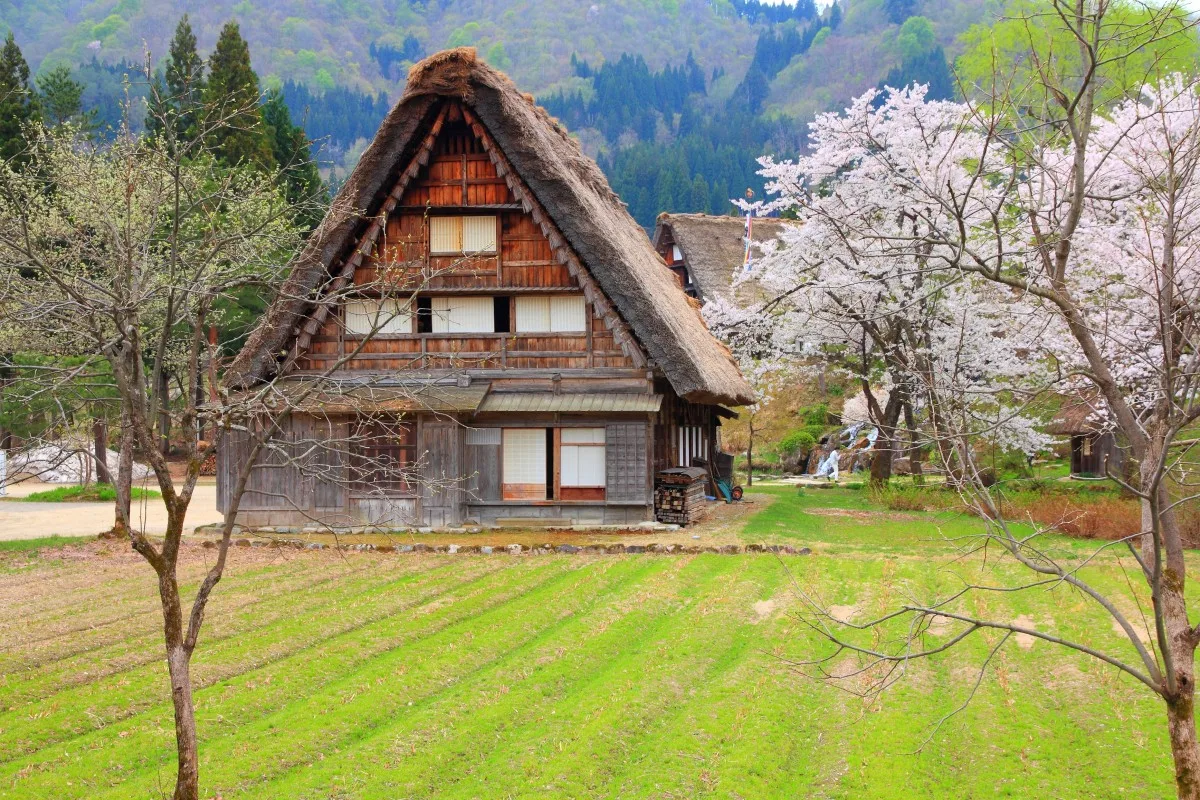
    Traditional wooden Japanese house by plowed terraced rice fields. High quality photo

    Benefits of the Akiya Bank

    The Akiya Bank brings a series of benefits for both the owners of empty houses and potential buyers:

    Reduction of waste

    The project combats resource waste by reusing abandoned houses instead of building new structures. This contributes to sustainability and avoids environmental degradation.

    Stimulus to the local economy

    The revitalization of empty houses generates a positive impact on the local economy. Renovations and occupancy of these properties create jobs for builders, architects, real estate agents, and other professionals related to the sector.

    Solution to the housing crisis

    The Akiya Bank helps to solve the housing crisis by providing affordable housing options for people looking for a new home. This is especially beneficial for young couples, people seeking a second residence, or foreigners wishing to settle in Japan.

    Preservation of local culture and identity

    By rehabilitating abandoned houses, the Akiya Bank contributes to the preservation of local culture and identity. Many of these houses have significant historical and architectural value, representing a piece of the history of the communities in which they are located. By revitalizing them, these unique characteristics are preserved, enriching the cultural heritage of the region.

    Improvement of quality of life

    The occupancy of empty houses through the Akiya Bank improves the quality of life for people and communities. By bringing new residents to declining areas, it is possible to reactivate local services, such as shops, restaurants, and schools, which had been affected by the lack of residents. Additionally, the presence of residents contributes to the safety and vitality of the areas, creating a sense of belonging and community.

    Incentive to tourism

    Many abandoned houses are located in picturesque and tourist regions of Japan. When revitalized, these houses can become tourist attractions, attracting visitors interested in experiencing local culture. This boosts tourism in these areas, generating additional revenue for local residents and businesses.

    Abandoned public bath house, Kanazawa, Ishikawa, Japan.

    Subsidies from the Akiya Bank

    Certain municipalities in Japan have implemented subsidies to encourage participation in the Akiya Bank and facilitate the revitalization of empty houses. These subsidies are offered as an additional incentive to attract buyers and help address the housing crisis. Here are some examples of subsidies that may be available:

    1. Financial subsidies: Some municipalities provide direct financial subsidies to support the purchase or renovation of houses through the Akiya Bank. These subsidies can help reduce initial costs, such as down payments or mortgages, making acquisition more accessible for buyers.
    2. Tax exemptions: Some municipalities offer tax exemptions for owners of empty houses who make them available through the Akiya Bank. These exemptions may include reductions or exemptions from property taxes, real estate transfer taxes, or income taxes.
    3. Support for renovations: To encourage the revitalization of empty houses, municipalities may provide subsidies to help with renovation and remodeling costs. This may include financial assistance for structural repairs, energy efficiency improvements, installation of safety or accessibility features.
    4. Technical assistance: In addition to financial subsidies, some municipalities offer technical assistance for owners who wish to renovate their empty houses. This may include consulting from architects, engineers, or construction specialists to assist in project design and ensure compliance with local regulations.
    5. Entrepreneurship support programs: Some municipalities offer entrepreneurship support programs for buyers who wish to open a business in a revitalized house. This may include assistance in obtaining business licenses, support in developing business plans, and guidance for accessing financing.
    What is in a traditional Japanese house?
    What is in a traditional Japanese house?

    How to Join the Akiya Bank?

    To join the Akiya Bank and start exploring the available options for empty houses, follow the steps below:

    1. Access the Akiya Bank website: Visit the official Akiya Bank website, which is an online platform dedicated to connecting owners of empty houses with interested buyers. Make sure to access the reliable and official site for up-to-date and accurate information.
    2. Search for available houses: On the Akiya Bank website, browse the list of available empty houses. You can use search filters, such as location, size, and price, to refine the results and find options that meet your preferences and needs.
    3. Analyze the details of the houses: Upon finding a house of interest, analyze the provided details, such as property description, photos, conditions, and other relevant information. Make sure to understand all important information before proceeding.
    4. Contact the owner: If you find a house that interests you, contact the owner or the agent responsible for the listing. Generally, the Akiya Bank website provides contact information to facilitate communication.
    5. Negotiate and finalize the purchase or rental: After contacting the owner, you can start negotiations to acquire the empty house. Discuss the terms, conditions, and price with the owner or real estate agent. If you reach an agreement, follow the provided guidelines to finalize the purchase or rental of the property.

    It is important to highlight that the exact process of joining the Akiya Bank may vary depending on the circumstances and the region where the empty house is located. Additionally, it is advisable to seek the support of a real estate specialist or lawyer to assist you in negotiations and legal matters involved in acquiring the property.

    Be sure to also follow local laws and regulations, including those related to real estate transactions, taxes, and necessary licenses. These measures will help ensure that your experience joining the Akiya Bank is safe, transparent, and successful.

    Japan village

    Challenges and Future Perspectives
    Although the Akiya Bank has brought significant benefits to addressing the housing crisis and revitalizing rural areas in Japan, there are still challenges to be faced. Some owners may have difficulty selling their houses due to structural issues, remote locations, or lack of resources for renovations. Additionally, the demand for empty houses may vary from region to region, requiring a balance between supply and demand.

    However, the success of the Akiya Bank has inspired other similar initiatives around the world, seeking creative solutions to the housing crisis and the waste of abandoned properties. The exchange of knowledge and experiences among these projects can open new opportunities and improve existing practices.

    In summary, the Akiya Bank plays a vital role in revitalizing abandoned houses in Japan, addressing the housing crisis and bringing economic, social, and cultural benefits to local communities. By connecting owners and interested buyers, this platform is transforming the urban and rural landscape of the country, ensuring a sustainable future for empty houses and the people who inhabit them.
  • Kasaya and Kesa – Robes of Buddhist Monks

    Kasaya and Kesa – Robes of Buddhist Monks

    The Kasaya or Kesa is a ceremonial garment worn by Buddhist monks as a symbol of renunciation of worldly pleasures and as a constant reminder of their commitment to monastic life.

    The word Kasaya comes from the Sanskrit “Kashaya,” which means “color” or “dye.” The original color of the garment was brown, but nowadays it can be found in various colors, such as yellow, orange, and red.

    We also recommend reading:

    Origin of Kasaya and Kesa

    The origin of the Kasaya dates back to the time of Buddha Gautama, when his disciples wore old rags to cover themselves. However, as the number of followers increased, a more organized method of dressing the monks became necessary.

    It was then that the Buddha established the Kasaya as the standard garment for monks, which should be made from discarded fabric and sewn by themselves.

    The origin of the Kesa garment dates back to the early days of Buddhism, when itinerant monks wore clothes collected from dumps and crematoriums. These clothes were sewn together to form a single garment, which was worn as a symbol of their commitment to monastic life.

    Over time, this practice of using recycled clothing evolved into the making of ceremonial garments specifically for Buddhist monks and nuns. It is believed that the Buddha himself instructed his disciples to wear simple clothes made from discarded fabrics as a way to practice modesty and renunciation.

    The current form of the Japanese Kesa can be traced back to the Tang China (618-907 AD), where the garment was known as “kasaya.” Japanese monks studying in China during this time brought the tradition of the Kasaya to Japan, where it evolved into the Kesa that is used today.

    Senior couple lifestyle moments in a traditional japanese house

    Kesa – Japanese Version of Kasaya

    The Kasaya is a sacred garment worn by Buddhist monks, not only in Japan but throughout the Buddhist world. In the Japanese language, the Kasaya is called “kesa” (袈裟).

    The meaning of “kesa” in Japan is the same as in other Buddhist traditions, that is, it is a symbol of renunciation of worldly pleasures and commitment to monastic life. Additionally, the “kesa” is also seen as a symbol of respect and reverence for the teachings of the Buddha.

    In Japan, monks wear the “kesa” on all ceremonial and ritual occasions, such as ordination ceremonies, meditation, and teachings. The color of the “kesa” may vary among different temples and Buddhist schools, but it is generally red or brown.

    In Japanese tradition, the making of the “kesa” is an important practice, and many monks learn to sew and make their own “kesa.” The process of making it is considered a meditative practice, which helps develop patience, concentration, and manual skill.

    Meaning of Kasaya and Kesa

    The Kasaya is an important symbol for Buddhist monks, as it represents their renunciation of worldly pleasures and commitment to monastic life.

    By wearing it, monks remind themselves and others that they have abandoned secular life and are in search of spiritual enlightenment. The color of the Kasaya also has symbolic meaning, with different colors representing different stages of spiritual development.

    In Japanese Kesa, the first character, “ke” (袈), can be translated as “coat” or “mantle,” while the second character, “sa” (裟), means “tunic” or “long garment.”

    Buddha monk practice meditation in forest

    The process of making the Kasaya

    The making of the Kesa is a meditative and ritualistic practice in itself, where the monk follows a sequence of precise and ceremonial steps while sewing the strips of fabric together. This practice is seen as a way to develop concentration, patience, and manual skill, as well as an expression of respect for the Buddha and the teachings of the Dharma.

    The Kasaya is made from discarded fabric and sewn by the monks themselves. The fabric is washed and cut into strips, which are then sewn together to form the garment. The Kasaya is a simple piece of clothing, without many adornments or details, reflecting the simplicity and humility that are core values in monastic life.

    Wearing the Kesa is a practice that reminds them of the importance of following the spiritual path and remaining committed to their monastic vows.

    How to wear the Kasaya

    The Kasaya is worn by Buddhist monks on all ceremonial and ritual occasions, such as ordination ceremonies, meditation, and teachings.

    It is worn as an outer garment, covering the entire body, except for the head and hands. Monks typically carry the Kasaya folded over their right arm or shoulder, using it as a constant reminder of their monastic vows.

  • Yama (山) – Different ways to say Mountain in Japanese

    Yama (山) – Different ways to say Mountain in Japanese

    Have you ever wondered how to say mountain in Japanese? The ideogram for mountain 「山」is seen by beginners of the Japanese language, but do you know the different ways to refer to mountains besides Yama?

    Mountains are an important part of Japanese geography and culture, with nearly 80% of the country being mountainous terrain. The ideogram “yama” (山) is pictographic and literally represents a mountain.

    The mountain is an important symbol in Japanese culture and is often seen as a sacred place where gods and spirits are revered. Even city names in Japan are named with the ideogram for mountain.
    We recommend reading:

    The Ideogram of Mountain Yama (山)

    The ideogram “yama” (山) is one of the oldest and most important ideograms in Japanese culture, and it is often used to represent mountains in the Japanese language.

    The ideogram “yama” is composed of two elements: the radical “san” (三), which means “three,” and the radical “hen” (艮), which represents the idea of “stop” or “containment.” These elements together form the meaning of the mountain, which is seen as a solid, immobile, and majestic object.

    In addition to mountains, the ideogram “yama” is used in other Japanese words related to elevations, such as “nagayama” (長山), which means “long mountain,” and “fuyuyama” (冬山), which means “winter mountain.”

    It is also used in common expressions, such as “yamazumi” (山積み), which means “piled up like a mountain,” or “yamahako” (山穂), which refers to rice spikes that resemble mountain peaks.

    The ideogram “yama” is also an integral part of Japanese culture, being seen in various contexts, such as in art, literature, and religion. The image of the mountain is often associated with the idea of overcoming challenges, due to its grandeur and the challenges it represents for those who climb it.

    As such, the image of the mountain is often used in Japanese expressions, such as “yamaaruki” (山歩き), which means “mountain walking,” or “yamabiko” (山彦), which refers to the echo that occurs in mountainous regions.

    The famous Japanese Alps – Hisa, Kiso, and Akaishi

    Different Ways to Say Mountain in Japanese

    There are several ways to refer to hills and mountains in Japanese. Here are some of the main ones:

    1. 山 (yama) – this is the most common way to refer to a mountain in Japanese. It is used to describe any type of mountain, from small hills to large peaks.
    2. 岳 (dake) – this word is generally used to refer to tall and majestic mountains. It is often added to the end of a mountain’s name to indicate that it is an important or challenging mountain. For example, Mount Fuji in Japanese is called Fuji-san or Fujisan, while Mount Everest would be called Erebazu-dake.
    3. 峰 (mine) – this word is used to refer to the peak or top of a mountain. It is often added to the end of a mountain’s name to describe the top or peak of the mountain. For example, the peak of Mount Fuji is called Fuji-no-mine.
    4. 坂 (saka) – this word is used to refer to a slope or hillside of a mountain. It is often added to the end of a mountain’s name to describe the incline of the mountain. For example, Mount Hiei in Japanese is called Hieizan, and the northern slope of the mountain is called Hiei-no-saka.
    5. 隆起 (ryūki) – this word is used to refer to mountains that formed due to geological activity, such as volcanoes and mountains created by earthquakes.

    In general, Japanese culture highly values mountains and nature in general. Mountains are considered sacred places, where many temples and shrines have been built, and many people practice mountaineering and hiking to appreciate the natural beauty of these regions.

    Mount Fuji as viewed from rural town in Japan

    Mountains Called “San”

    Have you ever wondered why some mountains in Japan are called “San”? The suffix “San” is often added to the end of the mountain’s name as a way to express respect and reverence.

    In addition to the famous name Fuji-san, there are many other mountains that end up gaining this reading in the ideogram of Yama (山). See below:

    • 筑波山 (Tsukubasan) – a mountain in Ibaraki Prefecture.
    • 白山 (Hakusan) – a mountain in Ishikawa Prefecture.
    • 羊蹄山 (Yōteizan) – a mountain in Hokkaido Prefecture.
    • 伊豆山 (Izusan) – a mountain in Shizuoka Prefecture.

    Although there is no direct connection, the suffix “San” used after the names exemplifies the meaning well. It is as if we were saying “Mrs. Mountain.” The goal is the same, to show respect!

  • Soul of Yokai: Otome Game – A dive into the supernatural world of romance

    Soul of Yokai: Otome Game – A dive into the supernatural world of romance

    In recent years, otome games have gained popularity among fans of mobile games and visual novels. These games offer a unique experience, where players can enjoy romantic plots and interact with captivating characters. Among the many titles in the genre, “Soul of Yokai: Otome Game” stands out, a game that combines romance, adventure, and supernatural elements to create an engaging experience.

    Developed by the fictional game company “Moonlit Entertainment,” “Soul of Yokai: Otome Game” transports players to a world where humans and yokai (supernatural spirits from Japanese folklore) coexist. In the game, players take on the role of a young protagonist who, upon moving to a new city, discovers her unique power to see and communicate with yokai.

    We also recommend reading:

    Story and Features of Soul of Yokai

    The story unfolds through a series of encounters with intriguing and mysterious characters. Each character belongs to a different yokai clan, such as the charming kitsunes, the seductive succubi, or the melancholic water spirits. As the protagonist gets closer to them, opportunities arise to build romantic relationships and uncover the deep secrets of each character.

    One of the main features of “Soul of Yokai: Otome Game” is its choice system. Players are constantly faced with decisions that affect the plot and determine the development of romantic relationships. Each choice has consequences, and different routes and endings are available, depending on the options made. This variety increases the replayability of the game, encouraging players to explore various possibilities and discover all the secrets it holds.

    In addition to the engaging narrative, the game also features stunning visuals. The character illustrations are beautiful and detailed, and the animations bring key moments of the story to life. The immersive soundtrack adds an extra layer of immersion, helping to create the right atmosphere for each scene.

    “Soul of Yokai: Otome Game” also stands out for its careful approach to Japanese culture and folklore. Players have the opportunity to learn more about the different yokai clans, as well as their unique characteristics and stories. The game is a charming blend of fictional romance and authentic elements of Japanese culture, creating an educational and fun experience at the same time.

    In terms of gameplay, “Soul of Yokai: Otome Game” is accessible and easy to understand, even for players new to the otome genre. The intuitive interface and simple mechanics allow players to quickly immerse themselves in the story and interactions with the characters.

    Characters of Soul of Yokai: Otome Game

    Now let’s take a look at some of the characters that players can encounter in “Soul of Yokai: Otome Game.” Each of them has a unique personality, an intriguing past, and a romantic story that unfolds throughout the game. Interacting with these characters allows players to dive into their lives, uncover their secrets, and build meaningful relationships along the romantic journey.

    Hayato

    Hayato is a complex character who carries a duality between his heritage as half Oni and half human. This internal conflict results in an ambiguous view of the world of Yokai and humans. This perspective often leads him to act harshly or rudely as he grapples with his own feelings and insecurities regarding the protagonist.

    His ambition is to prove his strength and make significant changes in the world of Yokai, aspiring to become the next ruler of the Yokai World. However, he understands that he cannot achieve this goal without a queen by his side, a partner who shares his vision and is willing to face challenges alongside him.

    This quest for power and transformation makes Hayato a character with an interesting personal journey full of growth. By getting involved with him, the protagonist is faced with a challenge, both in terms of her own acceptance and in supporting Hayato in his quest for the throne of the Yokai World.

    The relationship with Hayato in “Soul of Yokai: Otome Game” promises to be intense and full of ups and downs, as both confront their own inner demons. The player must be prepared to face the challenges and ask themselves if they are willing to embark on this journey alongside Hayato, taking on a crucial role as his queen and partner.

    Yukio

    Yukio is known as one of the most handsome men in the world of Yokai and is widely popular among women. However, he does not seem to take these relationships seriously, due to his difficulties in understanding the true meaning of love. He is charming and seductive, but his interactions with women often seem superficial.

    In terms of personality, Yukio is calm and kind. He has a natural charm and is very popular among the women in the village. However, he begins to question his own actions when he realizes that he is deceiving and hurting women. This experience leads him to become more self-aware and promises to change his behavior, showing his innocence and willingness to learn and grow.

    As for his appearance, Yukio has light blue eyes, white hair, and pale skin. His outfit resembles a white and gray kimono, with well-crafted details. When in human form, he wears a black dress shirt with a tie and a white suit with detailed collars. He can be seen holding a cane in human form, which adds a distinctive touch to his appearance.

    The story of Yukio and his journey to understand true love, while seeking to reconnect with the protagonist, certainly promises exciting and captivating moments in the game “Soul of Yokai: Otome Game.”

    Karasu

    Karasu is a character who has gone through trauma due to the horrible crimes committed by his older brother, Sakuya. These traumatic experiences have made him cold, distant, and fearful. He carries the emotional weight of this dark past and finds himself conflicted about his feelings for the protagonist.

    Previously friendly with humans, Karasu faces an internal battle, struggling to decide whether he should distance himself from the protagonist to protect her or risk his own life to be by her side. He is torn between the fear of becoming emotionally involved again and the possibility of finding happiness and overcoming his traumas through the relationship with the protagonist.

    In terms of personality, Karasu initially presents an empty, sad, and distant appearance. However, as the story progresses and the relationship with the protagonist develops, he reveals a loving and understanding heart. Karasu’s transformation allows players to witness his evolution as he opens up emotionally and begins to trust the protagonist.

    As for his appearance, Karasu has red eyes, black hair, and pale skin. A striking feature is the large black wing on his back. He wears a sleeveless kimono with floral details, complemented by a gray coat and a necklace with pom-poms. His pose demonstrates a confident and determined stance, with one hand relaxed and the other on his waist.

  • All Anime Characters in Free Fire

    All Anime Characters in Free Fire

    Skins, clothes, outfits, these are the terms used to refer to the appearances of characters in Free Fire. Some of these items allow you to have the appearance of anime characters. In this article, we will see all the anime characters available in Free Fire.

    We also recommend reading:

    One Punch Man

    In 2021, a collaboration between One Punch Man and Free Fire took place. During the event, several skins inspired by the characters from the anime were released, including the protagonist Saitama himself.

    The One Punch Man skins in Free Fire include:

    • Skin “Saitama” (available only for training mode): The skin depicts the main character of the anime, Saitama, with his iconic yellow superhero suit and red cape. This skin was made available for free during the event.
    • Skin “Genos”: This skin depicts Saitama’s support robot character, Genos. The skin is available for purchase for 499 diamonds.
    • Skin “Speed-o’-Sound Sonic”: This skin depicts the villain Speed-o’-Sound Sonic, with his black and silver outfit. The skin is available for purchase for 399 diamonds.
    • Skin “Mumen Rider”: This skin depicts the cyclist hero Mumen Rider, with his blue outfit and helmet. The skin is available for purchase for 399 diamonds.

    In addition to the skins, the event also brought a new game mode called “Training Hero,” which allowed players to fight against the One Punch Man boss, Boros, and receive exclusive rewards, including the aforementioned Saitama skin.

    Attack on Titan

    Recently, in an epic collaboration between Free Fire and Attack on Titan, Free Fire players had the opportunity to experience various skins and items from Attack on Titan.

    During the event, several character skins, titans, and items inspired by the anime were released. Players were able to dress up as Eren, Mikasa, and other iconic characters, and use their favorite weapons from the anime to fight against other players.

    The collaboration between Free Fire and Attack on Titan was a great success among fans of both titles, and many hope that this is just the first of many future collaborations.

    Demon Slayer

    Garena has also collaborated with the popular anime Demon Slayer, bringing new skins to the game inspired by the hugely successful series with beautiful animation.

    The new packages called “Angry Hunter” and “Angry Huntress” feature exclusive skins of characters from the Demon Slayer series based on the Flame Hashira.

    Unofficial Anime Skins

    Unofficial anime skins are created by fans using image editing programs and are usually shared in online communities so that other players can download and use them in the game. However, using these unofficial skins may be considered a violation of the game’s terms of service, and players who use them risk being banned.

    Custom skins for Free Fire are generally created by modifying the textures of the game’s 3D models. This is done using image editing programs that allow players to edit the textures of existing skins or create new textures from scratch.

    To apply a custom skin in Free Fire, the player needs to replace the original texture of the skin with their own custom texture. This can be done using a file extraction program, such as APK Editor Pro, which allows players to unpack the game’s files and edit the textures of the skins.

    It is also worth noting that modified skins do not appear to other players, only to you who are playing, so it is kind of useless.

    There are many skins from various animes like One Piece and Naruto. But officially, so far, we have not had collaborations with these popular animes.

    Original Free Fire Characters Based on Animes

    The characters below are not from any specific anime, but are based on Japanese animations; they are original characters with characteristics or stories related to Japan.

    Moco – Prodigy Hacker

    Moco is a playable character in Free Fire, she is known as the game’s “prodigy hacker.” Her special ability is called “Hawk Eye” and allows her to mark enemies hit by her bullets for a short period of time, which can help her team track and eliminate opponents more easily.

    From her colorful and styled hair to her clothes and accessories, Moco has a look that definitely seems to have been inspired by anime aesthetics.

  • Cup Noodles and Instant Noodles – Is It Bad? Origin and Curiosities

    Cup Noodles and Instant Noodles – Is It Bad? Origin and Curiosities

    Does Miojo or Cup Noodles make you gain weight? Is it bad for you? Does it cause cancer? Is Cup Noodles healthy or full of calories? In this article, we will talk a little about this traditional Japanese instant noodle, some curiosities, and its dangers.

    Cup noodles and instant noodles are one of Japan’s greatest inventions that has spread all over the world. In Japan, there are thousands of different flavors, and they are much more filled compared to those sold in Brazil.

    It is consumed by a large part of the Japanese population due to its low price and short preparation time. It is mainly consumed by busy people or Neets.

    Some people mistakenly think that instant ramen is healthy just because it is made in Japan and is full of vegetables. Like most industrialized products, Cup noodles and Japanese instant noodles also have their dangers.

    History of Cup Noodles and Instant Noodles

    Instant noodles were invented in 1958 by Momofuku Ando (1910–2007), a Taiwanese-Japanese businessman and founder of Nissin. Ando developed some pre-cooked and dehydrated noodles with chicken flavors.

    On September 18, 1970, Ando opened a subsidiary company to sell his instant noodles in the United States, as people in that country were not accustomed to the traditional packaging of this food.

    Ando created a large reusable polystyrene cup that only needed hot water and waiting. The acceptance of the product led Ando to create a subsidiary company called Cup Noodles to sell instant noodles abroad.

    cup noodles

    Dangers of Cup Noodles

    Why are Cup Noodles dangerous? All due to their manufacturing process. The goal of factories is to create a dried noodle that lasts a long time and cooks in a few minutes.

    To meet these requirements, it is fried in oil, and its dehydrated soup contains much more fat and sodium, as well as monosodium glutamate (MSG) and various other preservatives and chemical components.

    The real danger lies in the high sodium content, containing more than 1060mg and 13g of fat. A Cup Noodle has about 380 calories, with 126 being just fat and the rest white flour. The seasoning and soup of the instant noodles are the main culprits.

    I think everyone should know the danger of sodium, which causes pressure problems and ulcers. The Monosodium Glutamate used to mask and enhance the flavor of the ingredients can cause headaches, nausea, and burning sensations in some people.

    After 20 years, this can even help develop cancer. We don’t even need to talk about the fat. In other words, eating Cup Noodles once in a while won’t kill you, only if you eat excessively. Who will keep eating non-stop for 20 years?

    You don’t need to be afraid of eating a Cup Noodles, it’s probably much healthier than eating a hamburger or a pizza every week, as many have been doing today. The dangers of instant ramen are the same as any medication in its package insert.

    The danger of eating instant ramen and cup noodles

    Alternatives to Cup Noodles

    Just as we can’t stop drinking soda, eating snacks, or meat, CUP Noodles don’t need to be 100% avoided; just have balance. Among all the Cup Noodles, one of the healthiest is the chicken with vegetables, which has only 290 calories.

    You can also resort to other types of instant noodles without seasoning and ingredients. You can season and fill it naturally with products you buy. You can buy, for example, a miso or soy sauce to season it.

    Also, look for instant products that take longer to prepare; the longer they take, the healthier they should be. Also, buy other pastas that are not fried in oil.

    If you live in Japan, it is much better to go to an original ramen, soba, or udon restaurant instead of eating instant and industrialized products.

    The danger of eating instant ramen and cup noodles

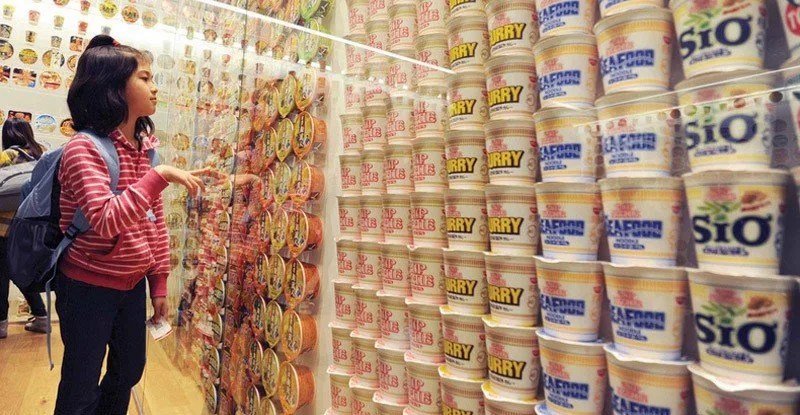
    The Cup Noodles Museum

    Of course, we won’t only talk about bad things here; everything nowadays is harmful, and there’s no problem eating once in a while. If you’re visiting Japan in Tokyo, we recommend going to the neighboring city of Yokohama to visit the Cup Noodles Museum.

    The Cup Noodles Museum is located in Yokohama at Minato Mirai and is quite popular among children and families. The museum tells the entire history of Nissin and its creations. Momofuku Ando, the founder of Nissin, drastically changed the Japanese diet.

    Instant noodles are now a worldwide sensation. It was considered the most important Japanese invention of the 20th century. The museum showcases all inventions from 1958 to today.

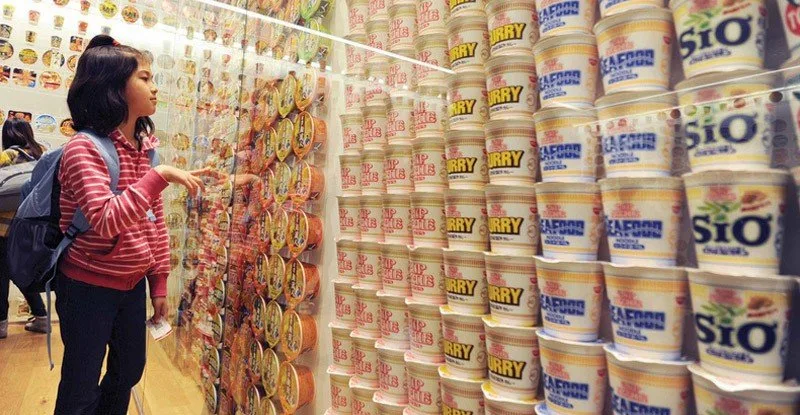
    Cup Noodles and Miojo - Is It Bad? Origin and Curiosities

    Create Your Own Noodles

    The museum allows visitors to create their own cup of noodles, choosing the seasoning, ingredients, etc. Imagine how wonderful it must be to invent your own flavor and fill it with ingredients! The best part is that you make it to take home; you don’t have to consume it on the spot. The video below shows a great adventure in the museum:

    The entrance fee is 500 yen for adults, and children do not pay; you can use the ticket for re-entry throughout the day. To create your own Cup Noodles, you pay 300 yen. The museum also has a restaurant on the upper floor where you can taste different noodles from various countries.

    Differences Between Ramen and Miojo

    Miojo is an industrial instant noodle that promises to bring the flavor of ramen to your home. Despite attempts, Miojo will never come close to an artisanal and original ramen.

    The ramen takes hours and hours to prepare, while Miojo is made in just 5 minutes. Just the sauce of a ramen can take up to 20 hours to be ready. Not even Cup Noodles comes close to a ramen.

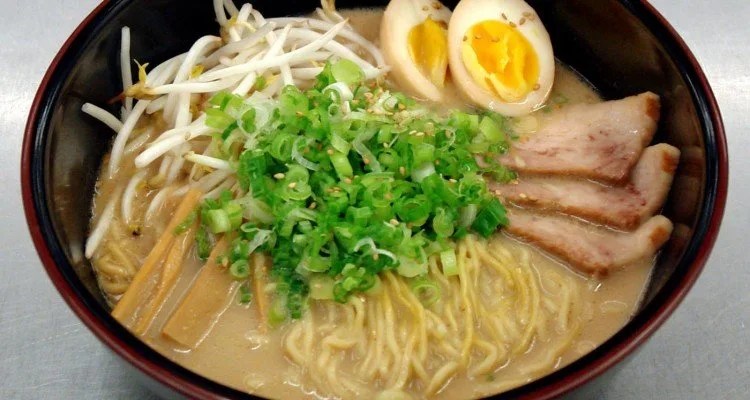
    Ramen - Curiosities and Recipe

    The ramen has a completely different texture, aroma, and flavor, a completely unique sauce, and not that seasoning packet that comes with instant noodles. It takes a lot to make a ramen.

    If you want to make a natural ramen, we recommend checking out the course Lamen Gourmet by clicking here. This course teaches step by step how to create the perfect ramen. You will learn more than 5 types of ramen.

    Types of Korean Ramen

    Do you know about Cup Noodles or Korean ramens? They are far superior to the national ones with a unique flavor and great cost/benefit. This type of noodle is very easy to prepare and delicious.

    The national ramens do not have the same texture and flavor as Korean Ramens, which is why Korean Ramens are becoming increasingly popular in Brazil.

    The most famous Korean brand in the world is Nong Shim, which has very spicy ramens that are quite popular, such as: Shin Ramyun, Shin Cup, Kimchi Ramyun, Yuguejang, and others. Some ramens from the Paldo brand have a special packaging that allows you to prepare your ramen in minutes in your microwave.

    Korean Ramens and Promotion at Konbini Store

    One of the most well-known is Shin Ramyeon, where the word shin means spicy, but it is not as spicy as it seems. Other spicy flavors include jin ramen, Paldo Rabokki, Nongshim Jinjja Jinjja… Other interesting flavors are jalapeno with chicken.

    Apart from the super spicy ones, there are non-spicy flavors, such as Oolongmen with chicken, beef, and seafood flavors. Another popular flavor is Chajanmen, which is not spicy and is made with black beans and has a sweeter taste; it is very popular in South Korea.

    In addition, there are traditional cup-shaped ramens, very practical for preparation, as you already have the correct container to prepare your ramen; chicken and shrimp ramens are great options with almost no spice. Other interesting and popular flavors include udon, neoguri, cham pong, shrimp, and others. There are even vegetarian options.

    Korean Ramens and Promotion at Konbini Store

    Flavors of Cup Noodles in Japan

    To conclude the article, we will leave a complete list of Cup Noodles flavors below:

    • Pumpkin
    • Shrimp oil
    • China Furong crab
    • Beef stew;
    • Chili with Tomato
    • Chowder
    • Chicken barbecue
    • Spicy pork ribs
    • Grilled ribs in black soy sauce;
    • Brazilian Cup Noodle (in celebration of the cup, seafood flavor)
    • China Cup Noodle (oyster flavor with soy sauce)
    • Miso Cup Noodle
    • Italian Cup Noodle
    • Cup Noodle X (secret flavor)
    • Italian Curry
    • Ebichiri (a shrimp sauce);
    • Bolognese style
    • Singapore laksa style (coconut milk + soup);
    • Spicy curry chicken
    • Soft creamy chicken
    • Seafood
    • Hayashi
    • Hot Chili Pepper
    • Rice noodles;
    • Shellfish
    • Mie goreng (Indonesian dish)
    • Soy sauce
    • Japanese cod roe;
    • Red chili pepper
    • Italian Pizza
    • Roast pork and soy sauce
    • Cheese with garlic
    • Risotto
    • Chizukare flavor (Cheese with Curry)
    • Curry flavor;
    • Hong Kong flavor;
    • Brazilian chicken flavor
    • Ratatouille flavor
    • Salt flavor (various types)
    • Vegetable flavor
    • Wasabi and Mayonnaise flavor;
    • Yakisoba flavor
    • Shark fin soup;
    • Turtle soup
    • Tofu
    • Tomato somen
    • Tonkatsu
    • Tonkotsu
    • Bacon with soy sauce
    • Vongole (shellfish)
    • Yum Goong
  • Marimo: The charming moss ball

    Marimo: The charming moss ball

    Marimo are a type of algae that has won the hearts of many people around the world. These mosses are lovely and charming, and they can bring a magical and relaxing atmosphere to any environment. In this article, we will explore the history behind Marimo, its benefits, how to care for them, and how to decorate your home with these adorable mosses.

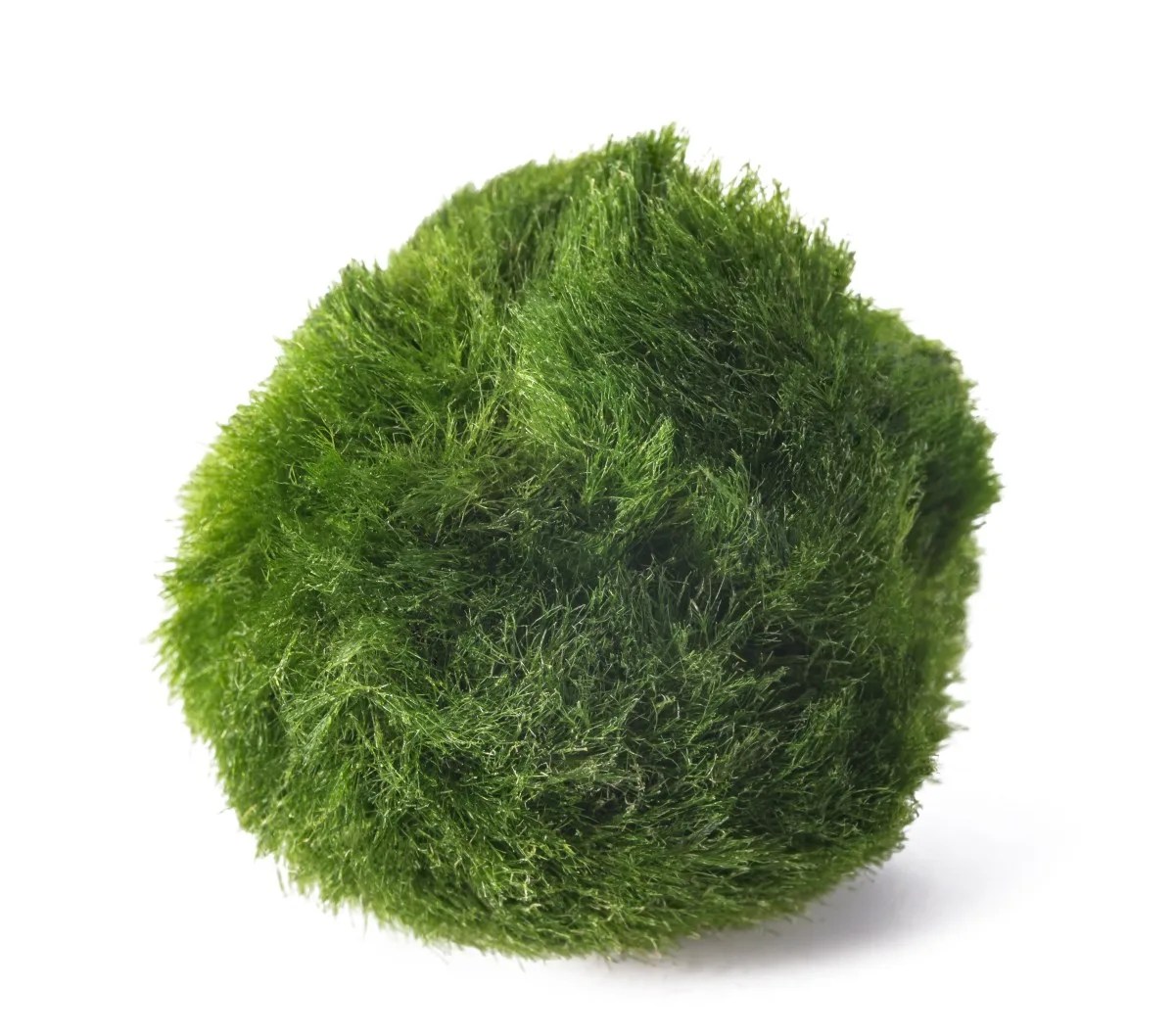
    Marimo, also known as “moss ball” or “algae ball,” is a rare and unique form of algae that grows naturally in certain regions of the world. Its history dates back centuries and is associated with legends and cultural traditions.

    Marimo – Moss Ball

    Marimos are primarily found in freshwater lakes in specific regions, such as Lake Akan in Japan, Lake Myvatn in Iceland, and some lakes in Scotland and Estonia. These areas have ideal conditions for Marimo growth, with cold, clear waters and gentle movement.

    In Japanese culture, Marimos are considered symbols of luck and prosperity. They have been protected as natural treasures in Japan since 1920 and are objects of veneration and care. According to legend, Marimos are gifts of love given by the gods to passionate couples. They are also associated with longevity and harmony.

    Marimos grow slowly, forming soft, spherical green balls that can reach various sizes, from a few centimeters to several centimeters in diameter. They are composed of algae filaments that come together to form a compact and dense mass.

    Due to their unique appearance and engaging history, Marimos have become popular as aquarium plants and decorations. They require minimal care, being able to live for long periods in suitable aquatic environments.

    Moss ball isolated on white background

    The benefits of having a Marimo at home

    Having a Marimo at home can bring many benefits to your life. These mosses help regulate water quality by absorbing pollutants and producing oxygen.

    Additionally, they are great for reducing stress and anxiety, and they bring a sense of tranquility and inner peace. And of course, we cannot forget the beauty they bring to any environment.

    How to care for your Marimo: useful and simple tips

    Caring for a Marimo is a simple and fun task. These mosses like fresh, clean water and need to be changed every two weeks.

    They also need a source of indirect light, such as natural light from a window, and can be kept in an aquarium or a glass jar. Over time, Marimos can grow and multiply, bringing even more joy to your home.

    Decorate your home with the cutest Marimos in the world

    Marimos are a great option for decorating your home in a creative and natural way. They can be placed in aquariums, glass jars, or even in handmade terrariums.

    Additionally, there are many accessories and decorations you can use to make your Marimos even cuter, such as tiny hats, bows, and even glasses.

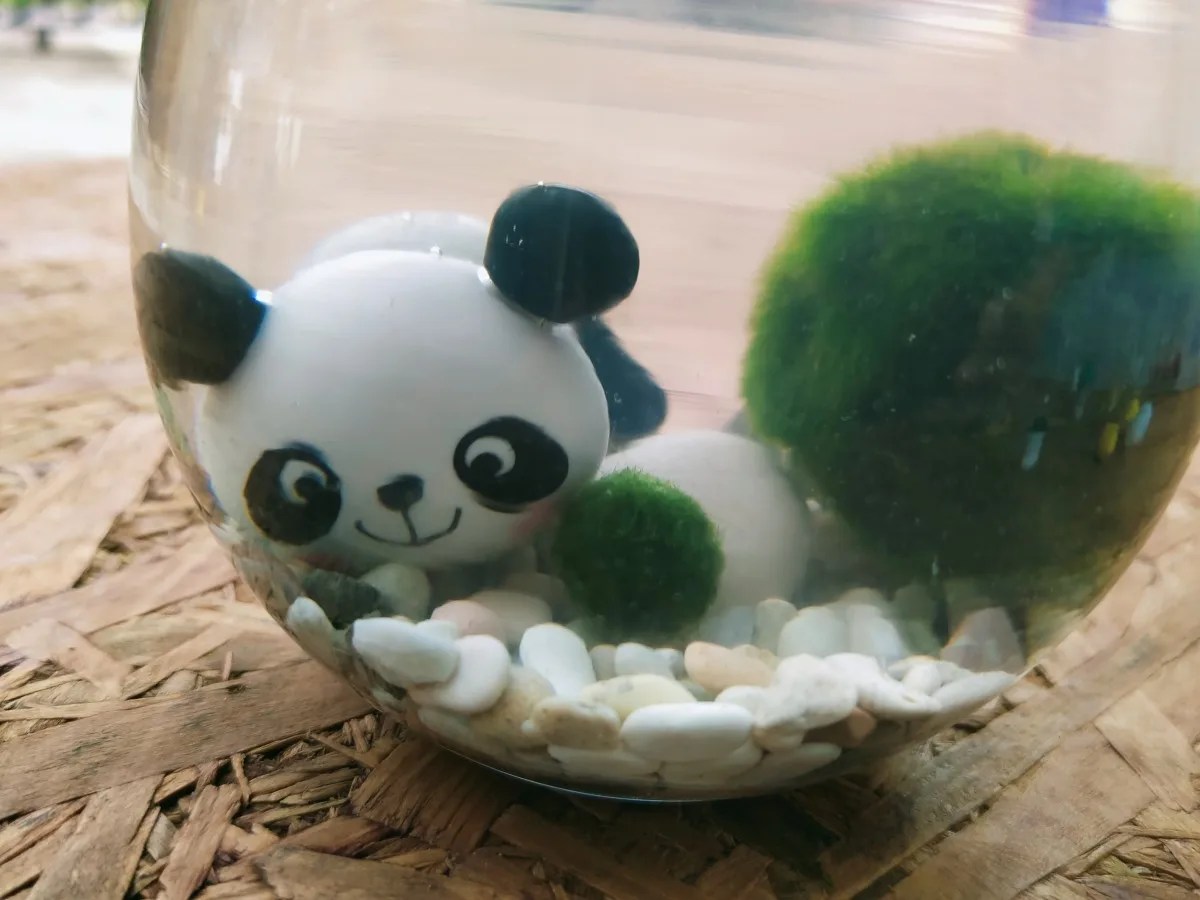
    Marimo in a glass cup filled with natural stones and a cute miniature panda.

    Where to buy Marimo?

    You can buy Marimo at various online stores specializing in plants and aquariums, as well as in some physical stores that sell aquatic plants. Here are some options where you can find Marimo for purchase:

    1. Aquarium and fish stores: Check if there are any aquarium and fish stores in your area. Often, these stores sell Marimo, as they are popular in aquariums.
    2. Gardening and plant stores: Some gardening and plant stores may have a section dedicated to aquatic plants and aquariums. Check if they have Marimo available.
    3. Online sales websites: There are several online stores that sell Marimo, such as Amazon, eBay, Etsy, and other specialized plant and aquarium stores. Just search for the term “Marimo” on the sites to find purchase options.
    Cladophora plant balls in aquarium

    Get a Marimo for your home

    If you are looking for a creative and fun way to bring more nature into your home, adopting a Marimo is the perfect choice. These mosses are adorable, easy to care for, and bring a sense of peace and tranquility to any environment. So, don’t waste time and adopt your own Marimo today!

    Marimos are a treasure of nature that everyone should have at home. They are charming and lovely creatures that bring joy and peace to our daily lives.

    We hope this article has inspired you to adopt a Marimo and enjoy its magical and relaxing company. Take good care of them, and they will take care of you in return!

  • Akatsuki – All Members History and Powers

    Akatsuki – All Members History and Powers

    The Akatsuki is a criminal organization from the Naruto universe that played a significant role in the plot of the manga and anime, gaining prominence as one of the most dangerous and feared organizations in the ninja world. In this article, we will explore each member of the Akatsuki, their history, and their unique powers.

    We also recommend reading:

    All Members of the Akatsuki

    Pain (Nagato Uzumaki)

    Pain, whose real name is Nagato Uzumaki, is one of the most iconic members of the Akatsuki. He possesses the power of the Rinnegan, a supreme dōjutsu that grants him incredible abilities, such as control over the six Paths of Pain. Each path represents a specific ability, such as the capacity to absorb chakra, control gravity, manipulate souls, and even perform the resurrection of the dead.

    Itachi Uchiha

    Itachi Uchiha, initially presented as an antagonist, revealed himself to be a double agent of the Akatsuki. He possessed the Sharingan, a dōjutsu characteristic of the Uchiha clan, which granted him abilities such as predicting movements, reading minds, and the capacity to cast powerful genjutsus. Itachi also mastered the Mangekyou Sharingan, which gave him access to even more powerful techniques, such as Amaterasu and Tsukuyomi.

    Kisame Hoshigaki

    Kisame Hoshigaki, known as the “Monster of the Mist,” was an extremely powerful shinobi and partner of Itachi Uchiha. He was recognized for his unique physical appearance, resembling a shark. Kisame possessed a vast amount of chakra and was skilled in using water-based ninjutsus, such as the famous technique “Flying Shark.” Additionally, he carried the Samehada, a living sword that absorbed chakra.

    Sasori

    Sasori, also known as “Sasori of the Red Sand,” was a master of puppetry. He transformed his own body into a puppet, eliminating any trace of his original humanity. Sasori controlled puppets with deadly and poisoned abilities, and he possessed in-depth knowledge of poison manipulation. He also had the power to convert humans into living puppets.

    Deidara

    Deidara was an explosive artist and an expert in explosives. He possessed the Kekkei Genkai called “Explosion,” which allowed him to create and manipulate explosive clay. Deidara sculpted his creations in the form of animals and other figures, activating them with a seal and detonating them at will. He also had the ability to fly using explosive clay wings.

    Kakuzu

    Kakuzu was a greedy and immortal ninja, due to his regeneration ability. He could extend his life by stealing the hearts of other ninjas, using them as a source of vital energy. Each heart he acquired granted him different elemental abilities, allowing him to manipulate techniques such as fire, wind, earth, and lightning. Additionally, Kakuzu had tentacles that could extend and act as powerful weapons.

    Hidan

    Hidan was an extremely peculiar member of the Akatsuki, known for his religious beliefs and unique fighting style. He was a practitioner of the Jashin cult, which involved human sacrifice rituals. Hidan possessed the ability of immortality, thanks to a ritual in which he would harm himself and drink the blood of his opponents. Additionally, he wielded a scythe as his main weapon and could link his life to that of his opponent through a ritual, allowing him to inflict damage to himself and reflect it onto his opponent.

    Orochimaru

    Although Orochimaru is not an official member of the Akatsuki, he played a significant role in the formation and influence of the organization. Orochimaru was a former member of the Hidden Leaf Village and a renowned traitorous ninja. He sought immortality and had an obsession with obtaining new bodies to prolong his life. Orochimaru was a master of forbidden jutsus and genetic experiments, granting him the ability to use snakes in his techniques and manipulate his own body in terrifying ways.

    Zetsu

    Zetsu is a singular being composed of two individuals, one white and one black, who share a single body. He acts as a spy and informant for the Akatsuki, providing crucial information about the activities of other ninjas. Additionally, Zetsu has the ability to merge with the vegetation around him, becoming practically invisible. He also possesses the capability to split his body into clones and absorb the chakra of his enemies.

    Tobi (Obito Uchiha)

    Initially presented as a low-ranking member, Tobi later reveals himself to be Obito Uchiha, one of the key protagonists of the story. He becomes the leader of the Akatsuki after Pain’s death. Obito possessed the Sharingan and later the Mangekyou Sharingan, allowing him to use space-time techniques, such as the “Teleportation Technique” and the “Kamui Dimension.” Additionally, he controlled the “Tailed Beast” known as the Ten-Tails.

    Konan

    Konan was the only female member of the Akatsuki and was a loyal companion of Nagato. She possessed the ability to manipulate explosive papers, transforming them into deadly weapons. Konan was also known for her skill in creating numerous explosive traps using papers. She demonstrated great ingenuity and strategy in her battles.

    History of the Akatsuki

    The history of the Akatsuki is filled with complex events and twists. From its formation to the final developments, the trajectory of the Akatsuki is marked by betrayals, ambition, and conflicts with other key characters in the Naruto series. Below, we will go through the main moments in the history of the Akatsuki:

    Origins and Foundation:

    The Akatsuki was originally founded by Yahiko, Nagato (known as Pain), and Konan. They were born in the Hidden Rain Village, which was amidst a devastating war. Determined to create a peaceful world, the three friends formed the Akatsuki as an organization that would work towards this goal.

    Under the influence of Jiraiya, the legendary Sannin, the Akatsuki began to adopt a peaceful and altruistic approach, helping those in need. However, the death of Yahiko under mysterious circumstances and the influence of Obito Uchiha (acting under the name Tobi) ultimately corrupted the Akatsuki’s initial goals.

    Nagato’s Leadership

    After Yahiko’s death, Nagato took command of the Akatsuki and became known as Pain. He believed he could bring peace through absolute control, using force to suppress any form of resistance. Under Pain’s leadership, the Akatsuki transformed into a feared and powerful criminal organization.

    The Bijus’ Objective

    The main ambition of the Akatsuki was the capture of the Bijus, powerful creatures with a vast amount of chakra. The Akatsuki’s plan was to extract the chakra from the Bijus to create weapons of mass destruction and thus establish their dominance over the shinobi world.

    Cosplayer as characters Akatsuki from Naruto in Japan Festa in Bangkok 2013.

    Conflicts with the Shinobis of the Hidden Villages

    The Akatsuki’s quest for the Bijus led to confrontations with the shinobis of the Hidden Villages. They engaged in battles with ninjas from various villages, including Naruto Uzumaki and his allies. These confrontations revealed the true strength and powers of the Akatsuki members, putting them in direct opposition to the protagonists of the story.

    Revelations about Obito Uchiha

    Throughout the story, it is revealed that Tobi, initially a lower-ranking member of the Akatsuki, was actually Obito Uchiha, a former companion of Kakashi Hatake. The revelation of his motivations and his role in manipulating the events of the Akatsuki completely changes the dynamics of the story.

    The Great Ninja War

    The Akatsuki played a significant role in the Great Ninja War, a global conflict that involved several shinobi villages. During the war, the Akatsuki showcased its power by controlling the Ten-Tails, a fearsome beast and the most powerful being in the Naruto universe.

    Redemption and Conclusion

    After intense confrontations, the true nature of Nagato is revealed by Naruto, the protagonist of the series. Influenced by Naruto 

    and his words about the importance of love and understanding, Nagato begins to question his actions and the distorted vision of peace he sought to achieve. Before dying, Nagato uses his powers to revive all the people he killed in the Hidden Leaf Village as an act of redemption.

    After Nagato’s death, the leadership of the Akatsuki is taken over by Obito Uchiha. However, Obito begins to question his own goals and motivations as revelations about his personal history come to light. Eventually, he regrets his actions and sacrifices himself to help Naruto and his allies defeat Kaguya Ōtsutsuki, a powerful entity that threatened the existence of the shinobi world.

    After Obito’s fall, the Akatsuki begins to gradually dismantle. Some members leave the organization, while others are killed in confrontations with the heroes of the story. However, it is important to mention that even after the official dissolution of the Akatsuki, some of its members continue to play important and complex roles in the Naruto story, including Sasuke Uchiha and Itachi Uchiha.

  • Is Abortion Legal in Japan? Curiosities and Facts

    Is Abortion Legal in Japan? Curiosities and Facts

    Many people question whether abortion in Japan is allowed or legalized. In this article, we will understand in what situations it is permitted to perform a voluntary interruption of pregnancy in Japan, along with numerous curiosities.

    Abortion (中絶 – Chūzetsu) in Japan has been legalized since 1948. Fortunately, Japan has a relatively low rate of unwanted pregnancies. It is not common to have religious or moral discussions around the legalization of abortion; the only concern of the government is that it helps to reduce the Japanese birth rate, which is a major problem.

    Japan only allows abortion with the mother’s consent and if it is for a valid reason. Anyone who tries to perform the procedure without the mother’s consent or uses clandestine and unauthorized methods can be punished and imprisoned.

    The History of Abortion in Japan

    Japan has a long history regarding abortion; it was prohibited for a long time from 1842 to 1923. After that year, doctors were allowed to perform abortions in emergency cases where the mother’s life was at risk. After World War II, Japan faced food shortages and ended up legalizing it.

    Currently, abortion is widely accepted by more than 70% of the population in Japan; this does not mean that they agree with abortion, but rather that they have no issues with the law that allows abortion and believe it is a family’s choice to decide such an act.

    Another significant factor is that the Japanese do not have the habit of interfering in the lives and decisions of others; they consider it disrespectful and impolite to go against someone else’s opinion.

    It is worth remembering that the practice of abortion is something that has been happening for many centuries all over the world. In the past, absurd methods were used, such as kicking the mother’s belly, exposing the pregnant woman to intense cold, and others.

    There were several bizarre cases of abortion and baby murders that led the government to decide on the legalization of abortion; one of them was a midwife who ended up killing hundreds of newborn babies, with the false argument of being concerned about the families’ ability to raise the babies.

    Curiosities about Abortion in Japan

    Abortion without reason is not allowed in Japan!

    Another thing that many end up confusing is that Japan does not allow abortion for any reason. It is available only for women in limited circumstances, with compromised health or economic difficulties.

    However, licensed doctors who supervise and perform abortions end up ignoring these rules. Thus, any woman can use a simple pretext to abort without having problems with the law.

    According to Japanese law, you can have an abortion if:

    • The pregnancy was a result of rape;
    • You do not have the financial means to support the child;
    • It may compromise the mother’s health;
    • It may harm the mother’s mental or psychological health;
    • You do not have the mental capacity to care for a child;
    Curiosities about Abortion in Japan

    Data on abortion in Japan

    The numbers show that doctors and families are not honest about the problems in performing the procedure. About 250,000 abortions occur in Japan each year; it is impossible that this number is from mothers with problems.

    It is believed that for every 1,000 pregnant women in Japan, 40 have abortions. It is worth remembering that the numbers are never exact, as doctors end up concealing these numbers to avoid paying taxes or to abort without a valid reason.

    Japan has the lowest teenage pregnancy rate in the world. Only 4 out of every 1,000 pregnancies are from girls under 19 years old. Of the abortions that occur in Japan, only 8% belong to young women under 20 years old. One of the factors that lead teenagers to have abortions is the discrimination against young pregnant women.

    Curiosities about Abortion in Japan

    Curiosities about abortion

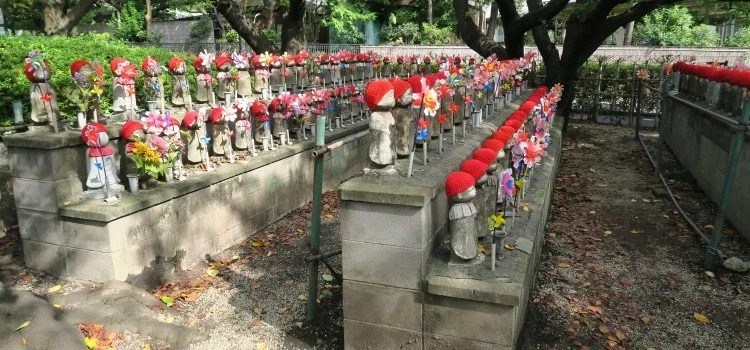
    You have probably heard about Kokeshi, which are wooden dolls quite popular as decorations and souvenirs. These dolls were originally used by families who had experienced an abortion (natural or induced). They were placed in the house to represent the unborn child and thus try to make amends for the harm done.

    In Japan, there are also many temples dedicated to “mizuko,” which means “water children,” but one of the explanations for the etymological origin of this word is that using other kanji while maintaining the same reading, this word can mean “unseen children” (because they did not come to birth).

    Many women who have had abortions go to these temples to pray for the souls of the aborted children, as a way to ask for forgiveness and repair the mistake. When I was traveling in Japan, I found this at the temple near Tokyo Tower.

    Curiosities about Abortion in Japan

    My conclusion on the subject

    I was quite relieved to know that under the law, abortion without any reason is prohibited; it is a pity that this rule is not fully enforced, and many abortions are committed for trivial reasons.

    The truth is that abortion in Japan is a very delicate subject, and unfortunately, I did not have time to address even half of the topic. Although Japan allows abortion, it is curious to mention that even in countries where abortion is prohibited, it happens in huge clandestine numbers.

  • Pregnancy in Japan – Tips and curiosities

    Pregnancy in Japan – Tips and curiosities

    In this article, we will see some tips, experiences, and curiosities related to pregnancy in Japan. Japan faces a major birthrate problem, and pregnancy is one of the solutions to end this issue, so the government has undertaken various projects to encourage pregnancy in Japan. Unfortunately, Japan allows abortion in some cases, which ends up hindering the country’s birthrate.

    Japan has a traditional and rigid culture; being a single mother or having children before marriage is often considered disgraceful. Various factors lead mothers not to want to have children. One of the main reasons is employment; about 60% of women who end up having children stop working. Another serious problem is that 1 in 5 pregnant women end up facing discrimination within companies. Some even hide their pregnancy for fear of losing their position. Others end up exposing themselves to risks at work.

    pregnancy in Japan

    Duties of women during pregnancy

    Women in Japan need to undergo certain procedures to have a good pregnancy and receive support from the government. The first step is to have health insurance, which is somewhat mandatory for everyone living in Japan. Being regular and paying taxes correctly will also influence the numerous benefits that the government offers.

    The first step upon discovering with a pregnancy test (妊娠検査薬 – Ninshin kensa-yaku) is to schedule a medical examination and request the nishin todoke, which serves as proof of pregnancy. With this proof, you must go to your city hall or public health center to continue the process.

    It doesn’t matter if you are a foreigner; in some cities in Japan, you receive all assistance in your own language. Women can take time off work with medical guidance or prenatal exams. The pregnant woman can request 6 weeks of maternity leave before the birth and 8 weeks after the baby is born.

    This right does not apply to all workers; you should check for more local details beforehand. The employer is not obligated to pay remuneration during maternity leave, but those who have shakai hoken receive assistance from the government.

    The local government may offer two free exams during pregnancy; however, childbirth and other exams are not covered by health insurance. However, if the pregnant woman is registered with shakai hoken or kokumin hoken, after paying for childbirth and having the baby, she can receive government assistance of 350,000 yen, which can exceed 500,000. If the woman cannot afford to pay for childbirth, there is a maternity assistance system (nyuuin josan seido).

    pregnancy in Japan

    Assistance and incentives for pregnancy in Japan

    Despite the problems, Japanese women wish to have a child, even those living in the corporate world. The government does its part with a series of incentives before, during, and after pregnancy.

    During the initial pregnancy process, the woman will receive various materials to help her during the gestation period. Some books, notebooks, diaries, and even a keychain (mataniti maaku) that serves to indicate that the person is pregnant and thus receive priority in transportation and other places. Free lectures are held that teach all the details of pregnancy and baby care.

    Japan is very concerned about pregnancy; consultations are held every 2 weeks in the first and third trimesters. There are more than 15, and most include ultrasounds.

    Upon having the first child, a nurse may visit the parents to provide guidance. Until the first 13 months of the baby, parents are entitled to 3 free consultations. Don’t forget to follow all the procedures recommended during pregnancy to not miss any benefits.

    pregnancy in Japan

    Curiosities about pregnancy in Japan

    Not all hospitals in Japan offer epidural pain relief for childbirth. Some believe that the pain during childbirth will facilitate the bond between mother and child.

    Japanese doctors encourage women to eat fruits, vegetables, and milk as their vitamins instead of suggesting pharmacy supplements. Although doctors may suggest taking folic acid or other vitamins in the first trimester of pregnancy.

    In other countries, pregnant women are advised not to eat any raw food such as sushi or drink tea. However, doctors in Japan allow women to eat this; in fact, some consider it part of good prenatal nutrition.

    We recommend reading: Can pregnant women eat sushi? What are the risks? Which to choose?

    Only mothers and their babies are allowed to stay in the hospital before and after childbirth. Partners and relatives can only visit during visiting hours.

    There are many other details about pregnancy in Japan that should be researched carefully. I hope you enjoyed this article; if you remember something interesting that was not mentioned in the article, please leave your comments below.

  • Futon – Do the Japanese sleep on the floor?

    Futon – Do the Japanese sleep on the floor?

    Japan likes simple things, and one of those things is sleeping on the floor on a cozy futon. These are rollable mattresses made to be placed on tatami-type floors. In this article, we will see the benefits of sleeping on a Japanese mattress.

    Is it uncomfortable? Why not a bed? That is the question many ask when they see Japanese people sleeping on a mat on the floor. We will also see why the Japanese prefer the futon to a traditional bed.

    What is a futon?

    The futon [布団] is thin, about only 5 cm high, and contains cotton, wool, or synthetic material inside. Sets are sold in Japan that include the mattress (shikibuton), comforter (kakebuton), and pillow (makura). These pillows are filled with adzuki beans, buckwheat, or plastic pieces.

    The futon is a type of padding or blanket flexible enough to be folded and stored during the day and used at night, aiming to save space. It consists of a shikibuton (bottom) and a kakebuton (thick padding).

    Futon - Do Japanese sleep on the floor?

    It can be a big cultural shock to Westerners; they are quite thin and even harder than a mattress, but this is seen as a benefit. Locals will tell you that a soft bed makes your body go limp. They are designed to be good for the body and mind. You won’t catch a Japanese monk sleeping on a soft bed.

    You can find these Japanese mats in ryokan inns, minshuku, and some hostels. The experience of most foreign travelers who enjoyed the futon reported an excellent night’s sleep.

    Origin of futons

    The origin of the futon is uncertain, as people have been sleeping on straw mats since the 13th century. Nobles of the time slept on tatami, but none of them were as comfortable as they are today. Most did not use blankets, slept naked, and covered themselves with their clothes.

    Futon - Do Japanese sleep on the floor?

    Bedding appeared in the 17th century, filled with cotton and wool. Basically, it was these bedding items that gave rise to the futon. In the 18th century, futons were still expensive due to the price of cotton. Some cost as much as 1,200,000 yen.

    Futon [布団] can be literally translated as a group [団] of cloths [布]. The futon set comprises all the pieces of the bed, not just the mattress or its blanket. Futon can also be the name of that round pillow used for zen meditation.

    One of the oldest and most popular companies that manufactures futons is called Nishikawa and has been around for over 440 years.

    How to use a futon?

    The futon should be exposed to the sun to prevent it from becoming like stale bread. Therefore, it is common to find buildings full of stretched futons.

    Futon - Do Japanese sleep on the floor?

    Many people often beat the futon with a special bamboo stick called futon tataki to shake out the dust. When wet, the Japanese use the futonkansōki (dryer), which forces warm air into the mattress.

    Futons should be folded and stored in the morning. This prevents it from molding and also frees up space for use during the day. If you are in a ryokan, you don’t need to worry about someone folding it for you. Some guests tend to fold it out of habit.

    If you are a guest in someone’s home, it is considered good manners to fold your own futon in the morning. Japanese homes have special closets to store these mattresses. However, as a guest, it is better to fold it and leave it in a corner of the room out of the way.

    Futon - Do Japanese sleep on the floor?

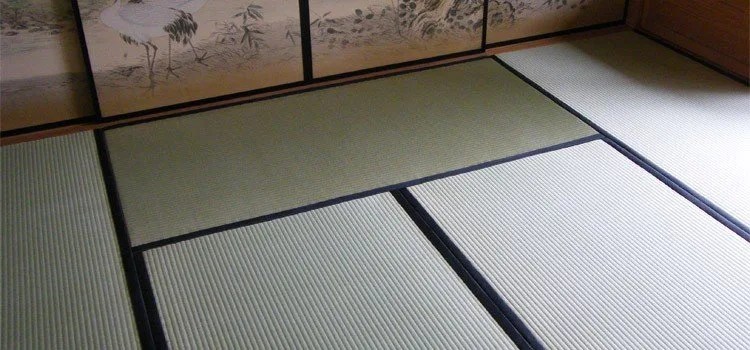
    The futon was made to be used on Tatami, a type of special flooring made of rice straw. If the room is without tatami, it is common to find a Western bed.

    The benefits of sleeping on a futon

    One of the main benefits of using a futon is its portability, which saves a huge amount of space. You can simply roll up the entire mattress and have a huge free space in your room.

    Futons are also usually cheaper than Western beds; it is a pity that in Brazil it is the opposite, and a futon can cost much more than a bed. We are talking about real futons and not the mats we find in Brazil.

    tatami

    In addition to saving space and money, using a futon is much more hygienic than a Western bed. It is easier to clean, carry, move, and use. There are quality futons that are much more comfortable than a Western bed.

    The Japanese also often simply join tatami from single beds to form a giant comfortable bed that can be larger than a King bed. Nights can be warmer when using a tatami.

    The futon also helps with your health; it forces people to sleep in a correct position, helps with spinal correction, joints, head, back, and shoulders. It can help reduce your pain and stress.

    And you? What is your experience? Do you want to try it? I personally find it quite comfortable.

    Where to buy a futon?

    Unfortunately, futons in the West are confused with simple cushions, or sometimes are a bit different from those in Japan. The best option is to import these Japanese mats from some website.

    To buy a futon, you can consider the following options:

    1. Specialized furniture stores: Check furniture stores that offer a variety of bed and mattress options, including futons. Some stores may have a specific section for Japanese furniture or traditional futons.
    2. Home goods stores: Large home goods stores, such as IKEA, may have futons available in their mattress or bedroom furniture section.
    3. Online shopping: There are various online stores that sell futons, offering a wide variety of styles and sizes. Some examples of online stores include Amazon, Wayfair, Walmart, and Overstock.
    4. Specialized Japanese product stores: If you are looking for a traditional Japanese futon, it may be interesting to look for stores specializing in Japanese products or Oriental furniture stores.
  • Children’s Books in Japanese – Download

    Children’s Books in Japanese – Download

    Are you learning Japanese and looking for easy and simple books to read? Learn by reading children’s books [子供の本] or picture books, and also learn about Japanese culture and stories.

    I am leaving for you 11 small children’s books in hiragana, so you can read and learn. I will also leave a video explaining about learning Japanese with children’s books, as well as a suggestion for buying books in Japanese.

    Also read:
    Romance animes with children + 12-sai chicchana mune no tokimeki
    Children go to and from school alone in Japan! Why?

    Where to buy Children’s Books in Japanese?

    If you want to buy physical children’s books in Japanese, you have several options. Here are some suggestions for those living inside or outside Japan:

    Japanese Festivals – In some cities, especially those with significant Japanese communities, cultural fairs or themed festivals may occur where you can find children’s books in Japanese for sale. These events are great opportunities to explore Japanese culture and find suitable books for children.

    Amazon and Rakuten Websites

    When we think of books, the great Amazon comes to mind. Unfortunately, most of the time you cannot buy children’s books in Japanese because they are out of stock, but you can constantly check to see if the product has a digital version through Kindle Unlimited.

    We suggest that you also do a deep search on your country’s Amazon using the keywords Japanese Edition or 子供の本, in order to find the products and books you are looking for, in the Japanese language.

    In addition to Amazon, we have Rakuten Books, a Japanese online store that has a section dedicated to children’s books in Japanese. You can find a variety of popular titles.

    Specialized Japanese Bookstores

    Kinokuniya: Kinokuniya is a Japanese bookstore chain with branches in several countries. They have a section dedicated to books in Japanese, including children’s books. Check if there is a branch near you.

    Maruzen: Maruzen is another Japanese bookstore chain that offers a variety of books in Japanese, including children’s books. They also have an online store where you can shop.

    In Japan, just find any bookstore, but if you want to save money, we recommend those that sell used products like Bookoff.

    11 children’s books in hiragana for download

    Children’s books are called kodomo no hon [子供の本] and are published by ohanashi shirīsu[おはなしシリース!]. The books are:

    • 01.Issunboushi
    • 02.Urashimatarou
    • 03.OmusubiKororin
    • 04.Kaguyahime
    • 05.Kasazizou
    • 06.SarukaniGassen
    • 07.ShitarakiriSuzume
    • 08.TsurunoOngaeshi
    • 09.NezuminoYomeiri
    • 10.HansakaJiisan
    • 11.Momotaro

    You can download these 11 books at the link below, in a compressed file of 7.8mb

    CLICK HERE TO DOWNLOAD

    I hope you liked it, we do not support any kind of piracy, but unfortunately it becomes impossible to get these books here in Brazil, mainly because they are not sold.

    Can you learn Japanese with children’s books?

    See in the video below if it is effective to learn Japanese with children’s books:

  • The best-selling Japanese perfumes in the world

    The best-selling Japanese perfumes in the world


    Of all the scents and for all tastes, there are always those perfumes that catch attention wherever the person goes, in addition to the unforgettable scents that everyone knows. However, one thing is certain: there are always preferred perfumes that become the best-selling in the world. With fragrances that have a lot of history and come from various parts of the world, some imported brands stand out in this field. But one in particular stands out: Japanese perfumery.

    To understand the success of Japanese perfumery, which often influences perfumes worldwide, it is necessary to comprehend its origins. Japan is one of the largest powers in the global cosmetics market, and of course, perfumes are included as well. Japanese perfumes present their own technology, with some very specific characteristics. Generally, they are fragrances that carry a certain subtlety, with a high fixation power. Among the most common aromas are the scent of incense, flowers, and more citrusy olfactory notes.

    Among these olfactory notes, some are quite specific. One example is perfumes that carry Sakura, the famous cherry blossom of the country. Another distinctive note is green tea, which brings with it a sweeter and more herbaceous scent. As mentioned earlier, Japanese incense also plays a significant role. Incense notes are generally used to give a sense of depth to the perfume.

    Among the best-selling perfumes in Japan, several brands stand out. In fact, many have taken the global stage and become true brands, with a high volume of sales worldwide. Among these, one of the most famous is Kenzo, created by Kenzo Takada, one of the most influential perfumers in the world. In fact, one of the most famous perfumes in the world belongs to this brand, namely “Flower By Kenzo.” Other perfumes may also enter this list, such as Comme des Garçons, Issey Miyake, among others.

    The influence of Japan in perfumery is so strong and stands out so much that brands from other countries, including Western countries, have begun to draw inspiration from typical notes of the country. One of the great examples is the famous Bleu de Chanel, from the French brand of the same name. Check out the list of the best-selling Japanese perfumes!

    Flower By Kenzo

    One of the most famous women’s perfumes in the world, Flower By Kenzo is one of the great successes of the Japanese brand. As a characteristic of the country’s perfumery, it brings in its essence a floral aroma, as the name itself suggests. What stands out the most is that it was created based on the poppy, a flower that has no scent. The perfume was launched in 2000 and is well-remembered due to its iconic packaging, which features a red flower on its top. The success was so great that the Japanese brand launched a series of variations, all carrying the same floral essence.

    Shiseido Zen

    Shiseido Zen was also launched in Japan in the 2000s and became a worldwide sales success. What stands out the most is the inspiration of the perfume in Eastern philosophy. It combines floral, woody notes, and also hints of bergamot. The fragrance was inspired primarily by “zen Buddhism,” in order to bring a sense of calm and serenity, which made it so famous in the country.

    Issey Miyake L´Eau d´Issey

    Issey Miyake is one of the most famous perfume brands in Japan. This specific perfume has become one of the “favorites” of contemporary perfumery worldwide. Much of this is because the olfactory notes are based on specific notes from the country, such as lotus flower, melon, and lily. It is a sweet and sophisticated perfume that can be worn by both men and women.

    Comme des Garçons Play

    Comme des Garçons Play is one of the best-selling releases from the Japanese brand Comme des Garçons. One of the characteristics that most attracts the attention of fans of oriental perfumery is the design of the packaging, remembered by the famous heart drawing, which became a worldwide success. This line features various fragrance variations, being bolder than those mentioned earlier. Most bring more citrus and spicy notes. From the same brand, another line captivated many sales, namely “Incense,” which makes a direct allusion to oriental incense as its main reference.

    Hanae Mori Butterfly

    Hanae Mori Butterfly was created by the renowned Japanese designer Hanae Mori. Popular since 1996, it gained strong fame in Japan and around the world for bringing femininity as its main characteristic. It is a soft fragrance, harmonized with sweet notes.

    The influence of Japanese perfumery on the rest of the world

    The influence of Japanese perfumery on the rest of the world is evident. As mentioned earlier, due to Japan being a global reference in the cosmetics field, several extremely famous brands have drawn inspiration from characteristics of the country’s perfumery. One of the biggest examples is the Bleu de Chanel.

    Without a doubt, Chanel emerges as one of the most famous brands when it comes to the best-selling perfumes in the world. Bleu de Chanel is one of the most famous men’s perfumes in the world. The striking aroma is one of its main characteristics, being one of the key names of the French brand.

    It was launched in 2010 and to this day is one of the best-selling men’s perfumes on the market. Treated as a woody fragrance with citrus touches, it does not hide the presence of oriental notes in its aroma – very noticeable, for example, in the incense notes found in its composition – typical of Japan.

    But Chanel was not the only Western brand to draw inspiration from the sales successes of Japan. Another very popular perfume in the market that brings something similar is Guerlain L’Instant, from Guerlain, also French. This specific perfume has as its main reference the Japanese tea ceremony, with strong tea notes in its composition.

    It is a fact: Japanese perfumery is undoubtedly one of the most influential in this scenario worldwide. This is due to the quality and attention to detail, in addition to the typical elements of Japan and the wisdom in harmonizing aromas. Even if it often presents a more traditional root, innovation is always noticeable, whether in Flower By Kenzo or Bleu de Chanel.

  • TCG! The Best Card Game Animes

    TCG! The Best Card Game Animes

    Since their creation, collectible card games (TCGs) have enchanted millions of players around the world. With their complex strategies, exciting battles, and amazing cards, TCGs provide a unique experience. And when these games are adapted to the world of anime, the magic happens. In this article, we will explore some of the best card game animes ever produced, which have won the hearts of fans and elevated the genre to a new level.

    Yu-Gi-Oh!

    “Yu-Gi-Oh!” is one of the most popular and influential card game animes of all time. Based on the manga by Kazuki Takahashi, the series features Yugi Muto, a young skilled at the game “Duel Monsters.” With a plot full of intense duels, exciting twists, and charismatic characters, “Yu-Gi-Oh!” managed to capture the imagination of an entire generation.

    Moreover, the anime had a significant impact on the real world, with the creation of the TCG “Yu-Gi-Oh!” which became a global phenomenon. Every child has played or collected cards from this great game. What is the strongest card in Yu-Gi-Oh! that you have?

    Cardfight!! Vanguard

    “Cardfight!! Vanguard” is a series that presents the world of TCGs from a new and exciting perspective. The story revolves around Aichi Sendou, a shy student who becomes a master of the game “Cardfight!! Vanguard.”

    With a mix of fantasy and action elements, the anime captivates viewers by following Aichi’s evolution as a player and his journey to become the national champion.

    The combination of charismatic characters, captivating strategies, and epic battles makes “Cardfight!! Vanguard” a must-watch for card game fans.

    Selector Infected WIXOSS

    This series features a card game called WIXOSS, where players compete to achieve their deepest desires. However, they soon discover that the game has dark consequences.

    With a mysterious atmosphere and exciting twists, “Selector Infected WIXOSS” combines elements of psychological drama with TCG strategies.

    Yu-Gi-Oh! GX

    GX” is a direct sequel to the original “Yu-Gi-Oh!” anime, but with a new protagonist, Jaden Yuki. The series takes place at Duel Academy, an institution that trains young talents in the game “Duel Monsters.”

    With a lighter approach and a diverse cast of characters, “Yu-Gi-Oh! GX” maintains the spirit of its predecessor while adding unique elements to the narrative. The exciting duels and surprising twists make this series an excellent choice for card game fans.

    Future Card Buddyfight

    In “Future Card Buddyfight,” the protagonist Gao Mikado discovers a new TCG called “Buddyfight.” Throughout the series, he embarks on a journey to become the Buddyfight King, facing exciting challenges and making lasting friendships along the way.

    The anime combines elements of fantasy and action with a touch of comedy, resulting in a joyful and exciting experience for viewers. With an emphasis on friendship and overcoming obstacles, “Future Card Buddyfight” has won many fans around the world.

    Hearthstone: Heroes of Warcraft

    Although not technically an anime, “Hearthstone: Heroes of Warcraft” deserves an honorable mention on this list. Developed by Blizzard Entertainment, the digital TCG has gained a loyal fanbase and received an animated series that perfectly captured the essence of the game.

    With iconic characters and impressive animations, “Hearthstone: Heroes of Warcraft” brings a new dimension to the card game genre, proving that fun and strategy can be found beyond physical cards.

    Conclusion

    Card game animes offer a unique opportunity to experience exciting battles and complex strategies through screens. From classics like “Yu-Gi-Oh!” to more recent productions, these series have been a source of entertainment and inspiration for TCG players around the world.

    If you are a fan of card games, be sure to check out these animes and embark on these epic journeys. Who knows, maybe you will feel inspired to improve your own skills in card games and embark on your own adventure as a true TCG master. Prepare your decks, choose your strategy, and dive into this fantastic universe where cards turn into power. The fun is just beginning!

  • Hunter x Hunter Vocabulary in Japanese

    Hunter x Hunter Vocabulary in Japanese

    Have you watched or read Hunter x Hunter? Both the anime and the manga are very popular in Brazil and Japan. In this article, we will learn several Japanese words related to the anime/manga by Yoshihiro Togashi. Get ready to greatly expand your vocabulary!

    My top 10 favorite animes – Best animes of all time

    About Hunter x Hunter in Japanese

    1 is a manga that has two animated versions (1999 and 2011) and currently has 36 volumes (almost 400 chapters). The series tells the adventures of Gon Freecss, a boy who lives on Whale Island and intends to become a hunter to find his father. The manga began in 1998, written and illustrated by the famous and brilliant mangaka Yoshihiro Togashi 冨樫義博 (とがしよしひろ), also known for his long hiatuses (pauses in the publication of chapters).

    Hunter x Hunter, in Japanese, is written ハンターハンター (Hantaa Hantaa). We have that ハンター (hantaa) is the Japanese pronunciation for the English word “Hunter,” which is commonly translated as “Caçador.” In free translation, Hunter x Hunter can be translated as Hunter x Hunter, although the Brazilian versions of the anime and manga have kept the original title “Hunter x Hunter.”

    In this anime, there are many specific terms, such as 念 (ねん) – Nen, which has different translations: “sensation,” “idea,” “thought,” “desire,” “attention,” and “care.” In the plot, Nen refers to the energy or “aura” of the hunter world, equivalent to Ki from Dragon Ball or Cosmos from Saint Seiya (although Nen is much more complex than both).

    Hunter x Hunter Vocabulary in Japanese

    Read below some words from the universe of Hunter x Hunter:

    • ハンター Hantaa – Hunter.
    • 念 (ねん) Nen – It is the aura of the Hunter x Hunter world. It can be translated as “sensation,” “idea,” “thought,” “desire,” “attention,” and “care.”
    • 念能力 (ねんのうりょく) Nen Nouryoku – Nen Power, Nen Ability, Nen Skill.
    • 系統 (けいとう) Keitou – System (generally refers to the entire Nen system, with its branches and types). When expressed with other kanji, it can be abbreviated to 系 (けい, kei).
    • 四大行 (よんだいこう) Yondaikou – The 4 Great Actions (literal translation). In the Hunter x Hunter universe, this word refers to the four great Nen techniques (Ten 纏, Zetsu 絶, Ren 錬, and Hatsu 発).
    • 纏、点 (てん) Ten – This kanji is the same as the verb 纏める (まとめる, matomeru), which carries the ideas of “gathering,” “collecting,” “finalizing,” or “joining.” The kanji for point – 点 (てん, ten) is also used.
    • 絶、舌 (ぜつ) Zetsu – Means “cut” or “suppression.” It is the ability to cut off the flow of aura and thus conceal one’s presence in combat.
    • 錬、練 (れん) Ren – Means “refine,” “enhance,” or “polish.” It is when the Nen boils. With the kanji 練, it emphasizes the idea of “practice” (putting Nen skills into practice).
    • 発 (はつ) Hatsu – Means, among other things, “to emit” (to release Nen with a blow or ability).
    • 陰 (いん) In – Means “shadow,” “hiding place,” “concealment,” or something similar. It is the technique of hiding the aura of a certain part of the body.
    • 円 (えん) En – Means “circle.” It is the act of expanding the aura in a certain territory.
    • 凝 (ぎょう) Gyou – Means “coagulation,” “freezing,” or “concentration.” It is the Nen technique of storing all the aura in a single point of the body (usually in the eyes).
    • 強化 (きょうか) Kyouka – Reinforcement, Intensification (one of the 6 types of Nen).
    • 放出 (ほうしゅつ) Houshutsu – Emission (one of the 6 types of Nen).
    • 変化 (へんか) Henka – Transformation (one of the 6 types of Nen).
    • 操作 (そうさ) Sousa – Manipulation (one of the 6 types of Nen).
    • 具現化 (ぐげんか) Gugenka – Materialization (one of the 6 types of Nen).
    • 特質 (とくしつ) Tokushitsu – Specialization, Special Nen Type (one of the 6 types of Nen).
    • ゾルディック家編 Zorudikkuka Hen – Zoldyck Saga.
    • 天空闘技場編 (てんくうとうぎじょうへん) Tenkuu Tougijou Hen – Celestial Tower Saga (Sky Arena).
    • フロアマスター Furoa Masutaa – Floor Masters.
    • ヨークシン編 Yookushin Hen – York Shin Saga. New York Saga. “Shin” is probably composed of the Kanji 新 which means “new.”
    • 流星街 (りゅうせいがい) Ryuuseigai – Meteor City.
    • グリードアイランド編 Guriido Airando Hen – Greed Island Saga.
    • キメラ蟻 (キメラアント) Kimera Anto – Chimera Ants.
    • ハンター試験 (はんたーしけん) Hantaa Shiken – Hunter Exam.
    • 試練 (しれん) Shiren – Test, Exam, Trial, Challenge.
    • 試験 (しけん) Shiken – Exam, Test.
    • 受験生 (じゅけんせい) Jukensei – Exam Participant.
    • 受験者 (じゅけんしゃ) Jukensha – Examiner.
    • ルーキー Ruukii – Rookie.
    • プロハンター Puro Hantaa – Professional Hunter.
    • 賞金首ハンター (ブラックリストハンター) Burakku Risuto Hantaa – Bounty Hunter. Mercenary Hunter.
    • 賞金首 (しょうきんくび) Shoukinkubi – Wanted Person, Person with a bounty on their head.
    • 一ツ星 (シングルハンター) Shinguru Hantaa – 1 Star Hunter.
    • 二ツ星 (ダブルハンター) Daburu Hantaa – 2 Star Hunter.
    • 三ツ星(トリプルハンター) Toripuru Hantaa – 3 Star Hunter.
    • ハンター資格 (はんたーしかく) Hantaa Shikaku – Requirements to become a Hunter, Hunter Qualifications.
    • オーラ Oora – Aura.
    • 暗黒大陸 (あんこくたいりく) Ankoku Tairiku – Dark Continent.
    • 会長選挙・アルカ編 (かいちょうせんきょ、あるかへん) Kaichou Senkyo, Aruka Hen – Hunter Association President Election Saga, Alluka Saga.
    • 十二支ん (じゅうにしん) Juunishin – Zodiacs, The 12 of the Zodiac. Originally the correct term would be 十二支 (じゅうにし) Juunishi, but the author added an extra letter at the end of the word, the ん (n).
    • 念獣 (ねんじゅう) Nenjuu – Nen Beast.
    • 魔獣 (まじゅう) Majuu – Magical Creature(s).
    • 釣竿 (つりざお) Tsurizao – Fishing Rod.
    • ハンターライセンス Hantaa Raisensu – Hunter License.
    • ハンター協会 (はんたーきょうかい) Hantaa Kyoukai – Hunter Association.
    • くじら島 (くじらとう) Kujira Tou – Whale Island.
    • 珍獣 (ちんじゅう) Chinjuu – Rare Animals, Rare Creatures.
    • 怪獣 (かいじゅう) Kaijuu – Monsters, Creatures, Beings.
    • 幻獣 (げんじゅう) Genjuu – Mythical Animals, Uncataloged Animals.
    • 財宝 (ざいほう) Zaihou – Treasures.
    • 秘宝 (ひほう) Hihou – Hidden Treasures, Hidden Riches.
    • 魔境 (まきょう) Makyou – Sinister Places, Monster-Infested Places.
    • 秘境 (ひきょう) Hikyou – Unexplored Territories, Hidden Places.
    • 未知 (みち) Michi – The Unknown, The Unexplored.
    • 既知 (きち) Kichi – The Already Known, The Already Explored.
    • 血は争えない (ちはあらそえない) Chi Wa Arasoenai – “Like father, like son,” “You can’t fight blood,” “Blood is not discussed.”
    • 死体ごっこ (したいごっこ) Shitai Gokko – To pretend to be dead.
    • 縄張り (ナワバリ) Nawabari – Territory (of an animal).
    • 小熊、子熊 (こぐま) Koguma – Bear Cub.
    • キツネグマ Kitsune Guma – Fox Bear.
    • ゴン – Gon.
    • レオリオ – Leorio.
    • クラピカ – Kurapika.
    • キルア Kirua – Killua.
    • ヒソカ – Hisoka.
    • バンジーガム Banjii Gamu – Bungee Gum (Hisoka’s Nen ability). Elastic Gum.
    • 幻影旅団 (げんえいりょだん) Gen’ei Ryodan – Phantom Troupe.
    • 競売 (きょうばい) Kyoubai – Auction.
    • オークション Ookushon – Auction.
    • クルタ族 (くるたぞく) Kuruta Zoku – Kuruta Clan.
    • 王位継承 (おういけいしょう) Oui Keishou – Succession (to the throne).
    • カキン帝国 (かきんていこく) Kakin Teikoku – Kakin Empire.
    • 5大厄災 (ごだいやくさい) Godai Yakusai – The 5 Great Calamities.

    If you want to practice Japanese with Hunter x Hunter, you can read some pages of the manga for free on the “ebook Japan” website, clicking here!

    This article is being constantly updated.

  • The 10 Best Characters in Genshin Impact

    The 10 Best Characters in Genshin Impact

    Genshin Impact is a very popular game, and players have had plenty of time to get to know the many Waifu characters in the game. Although each one has their favorites, there are some characters that stand out above the rest. Here are the best characters in Genshin Impact, based on their overall utility, strength, and popularity within the Genshin Impact universe.

    Ayaka

    We start with the splendid character Kamisato Ayaka. The character plays an important role within the Kamisato clan, which is a very noble clan in Inazuma serving the Shogunate and led by Ayaka’s older brother, Ayato Kamisato.

    Ayaka is a young woman of stunning appearance, carrying noble titles; her prominence was such that she received the title of Shirasagi Himegimi, thus being considered a model of example and perfection in Inazuma.

    Ayaka carries a gentle demeanor at certain moments, a pleasant personality, and courtesy. She is a kind-hearted young woman who gives due attention to her people.

    Hu Tao

    eccentric and full of pranks and mischief, Hu Tao is a talented character, skilled in creating poems. She holds the position of director at the Wansheng Funeral Home. Even though she is so eccentric and lively, she takes her duties very seriously.

    Hu Tao is energetic, cheerful, and even when talking about dark topics like death, which is the scope of her work, she shows tranquility and enthusiasm, treating taboo subjects with great lightness.

    Her pranks and jokes have generated some trust among certain characters, but even in light of her personality, she remains professional in her role as director.

    Kokomi

    Sangonomiya Kokomi is a young Priestess living on Watatsumi Island, having descent from the Sangonomiya Clan, taking on an important role in most matters that arise on the Island.

    For her people, she is hope. She alone carries on her shoulders the responsibility of maintaining the hope and happiness that her people aspire to.

    A calm and peaceful young woman, she shows great humility and kindness towards her people, always aiming for the pacifism of her lands.

    Raiden

    Shogun Raiden is the formation of beings in one body, of Ei and Shogun. Created to act in the command of Inazuma.

    She is a very rational young woman, always analyzing scenarios to avoid taking unnecessary risks, with great loyalty to those she trusts, a reliable and stable girl, having a very strong sense of duty and morality.

    A character very focused and dedicated to achieving her goals, always respecting laws and rules.

    A character highly acclaimed by fans, even being the favorite character of some celebrities.

    Xiangling

    Known for being a chef at the Wanmim restaurant, which she runs with her father Mao, inspired by her father in cooking, Xiangling Mao is a skilled cook who performs very well in creating unique and exotic dishes.

    A young woman who does not live restricted by traditions, always yearning for freedom in her dish creations. She constantly seeks new ingredients and possibilities, strongly highlighting her passion for cooking.

    Carrying an energetic and lively personality, the young woman can be described as enthusiastic. Being very friendly and nice, she gets along well with everyone around her.

    Diona

    Diona, daughter of the hunter Draff, is a bartender attendant at Cat’s Tail, having a repulsion for alcohol and its derivatives. However, she takes her job very seriously and executes it with the utmost caution, being a very dedicated person, thinking a lot about her customers and quality.

    Being a very shy and reserved young woman, with traits of introversion, she does not open up much and is a bit hesitant when meeting someone. Carrying traits of kindness and politeness in her treatment of those around her, having a sense of protection and care for those around her,

    She possesses several maternal traits, acting as a protective figure for those around her, deeply caring for her friends. This makes her seen as someone trustworthy and supportive.

    Qiqi

    Qiqi is a playable character in Genshin Impact. She is a four-star sword user specializing in poison damage. Qiqi’s kit is designed around her poison damage, with her abilities and constellation focused.

    Qiqi is a kind and caring girl, always looking after her friends. She is also quite stubborn, often going against orders if she believes it is the right thing to do.

    Amber

    Amber is one of the most popular characters in the game, and for good reason. She is an archer with a unique playstyle that allows her to deal massive damage from a distance. She is also one of the few characters who can reliably deal with the many flying enemies in the game.

    Barbara

    Barbara is another extremely popular character, and for good reasons. She is a support character who can heal her allies and boost their stats. She is also one of the few characters who can remove status effects from her allies.

    Noelle

    Noelle is another character that is often overlooked, but she is actually one of the strongest characters in the game. She is a melee character with a unique playstyle that allows her to deal massive damage up close. She is also one of the few characters who can boost her allies’ stats.

    Sucrose

    Sucrose is another character that is often overlooked, but she is actually one of the strongest characters in the game. She is a support character who can heal her allies and boost their stats. She is also one of the few characters who can remove status effects from her allies.

  • Zelda Vocabulary in Japanese

    Zelda Vocabulary in Japanese

    Playing the Zelda games in Japanese? In this article, we will share a list of words related to the games of the franchise, including the new BOTW and TOTK for you to expand your vocabulary and not get lost in the game. 

    About Zelda in Japanese

    “The Legend of Zelda” is a famous video game franchise created by Shigeru Miyamoto and Takashi Tezuka and developed by Nintendo. The first game in the series was released in 1986, and since then, it has become one of the most iconic and beloved titles in video game history.

    In Japanese, “The Legend of Zelda” is translated as “ゼルダの伝説” (Zeruda no Densetsu). The word “ゼルダ” (Zeruda) refers to the main character of the series, Princess Zelda, while “伝説” (Densetsu) means “legend.” Together, these words represent the essence of the series, which revolves around the legendary adventures experienced by the protagonist, Link, in his quest to rescue Princess Zelda and defeat the villain Ganon.

    In each game of the “The Legend of Zelda” series, players are transported to the vast fantasy world known as Hyrule (ハイラル – Hairaru). In this world, they take on the role of Link (リンク – Rinku), the hero destined to face great challenges and protect Hyrule from the dangers that threaten it. The player explores dungeons, solves puzzles, defeats enemies, and gathers powerful items to progress in the story.

    One of the main features of the franchise is the presence of the Triforce (トライフォース – Toraifōsu), a sacred symbol that represents divine power. The Triforce is composed of three parts: the Triforce of Power, the Triforce of Wisdom, and the Triforce of Courage. These elements play a fundamental role in the narrative of the games, with Link seeking to gather the complete Triforce to achieve his goals.

    Zelda em Japonês - Breath of the Wild

    Vocabulary from Zelda Breath of the Wild and Tears of the Kingdom

    See below some Japanese words present in both games of the franchise: 

    1. ゼルダの伝説 (Zeruda no Densetsu) – The Legend of Zelda
    2. ブレス オブ ザ ワイルド (Buresu obu za Wairudo) – Breath of the Wild
    3. ハイラル (Hairaru) – Hyrule
    4. トライフォース (Toraifōsu) – Triforce
    5. ガノンドロフ (Ganondorofu) – Ganondorf
    6. プリンセス ゼルダ (Purinsesu Zeruda) – Princess Zelda
    7. リンク (Rinku) – Link
    8. シーカーストーン (Shīkāsutōn) – Sheikah Slate
    9. シーカーセンサー (Shīkāsensā) – Sheikah Sensor
    10. ハイラル王国 (Hairaru ōkoku) – Kingdom of Hyrule
    11. シーカータワー (Shīkātawā) – Sheikah Tower
    12. カカリコ村 (Kakariko Mura) – Kakariko Village
    13. ゼルダの像 (Zeruda no zō) – Statue of Zelda
    14. シーカーラボ (Shīkā Rabo) – Sheikah Lab
    15. カカリコ村長 (Kakariko Mura-chō) – Mayor of Kakariko Village
    16. ハイリアの盾 (Hairia no tate) – Hylian Shield
    17. マスターソード (Masutā Sōdo) – Master Sword
    18. ハイリア剣士 (Hairia kenshi) – Hylian Knight
    19. シーカーストーンの力 (Shīkāsutōn no chikara) – Power of the Sheikah Slate
    20. ハートのかけら (Hāto no kakera) – Heart Container
    21. クオリティ ショップ (Kuoriti Shoppu) – Quality Shop
    22. アーマーショップ (Āmā Shoppu) – Armor Shop
    23. ポーション (Pōshon) – Potion
    24. 料理 (Ryōri) – Culinary
    25. クック (Kukku) – Cook
    26. ダンジョン (Danjon) – Dungeon
    27. ボス (Bosu) – Boss
    28. ミニゲーム (Minigēmu) – Minigame
    29. パラグライダー (Paraguraidā) – Paraglider
    30. シーカークラフト (Shīkākurafuto) – Sheikah Slate Craft
    31. バトル (Batoru) – Battle
    32. クライム (Kuraimu) – Climbing
    33. ライド (Raido) – Mount
    34. ヒネリ (Hineri) – Trick
    35. シークロック (Shīku Rokku) – Sheikah Tower Clock
    36. ガーディアン (Gādian) – Guardian
    37. モンスター (Monsutā) – Monster
    38. ルーイン (Rūin) – Ruins
    39. シーカーダンジョン (Shīkā Danjon) – Sheikah Dungeon
    40. クエスト (Kuesuto) – Quest
    41. 祠 (Hokora) – Shrine
    42. 神殿 (Shinden) – Temple

    Japanese Names of Zelda Characters

    Below is the Japanese name of the characters from “Zelda Breath of the Wild” or “Zelda Tears of the Kingdom” and some other games from the franchise.

    1. 神獣 (Shinjū) – Divine Beast
    2. ガノン (Ganon) – Ganon
    3. インパ (Inpa) – Impa
    4. メファ (Mefa) – Mipha
    5. レイボス (Reibosu) – Revali
    6. ウリッシ (Urisshi) – Urbosa
    7. ダルケル (Darukeru) – Daruk
    8. シダックス (Shidakksu) – Sidon
    9. ピア (Pia) – Paya
    10. カネ (Kane) – Kass
    11. シーク (Shīku) – Sheik
    12. ベッドル (Beddoru) – Beedle
    13. テラー (Terā) – Tarry Town
    14. パイ (Pai) – Pie
    15. ポロ (Poro) – Bolson
    16. ハトノ (Hatono) – Hateno
    17. カーコ (Kāko) – Koko
    18. タリー (Tarī) – Talon

    Japanese Vocabulary of The Legend of Zelda

    Now let’s look at more words related to the games of the franchise: 

    1. オカリナの時間 (Okarina no Jikan) – Ocarina of Time
    2. トワイライトプリンセス (Towairaito Purinsesu) – Twilight Princess
    3. 神々のトライフォース (Kamigami no Toraifōsu) – A Link to the Past
    4. 神々のトライフォース2 (Kamigami no Toraifōsu Tsū) – A Link Between Worlds
    5. マスターコンパス (Masutā Konpasu) – Master Compass
    6. フックショット (Fukku Shotto) – Hookshot
    7. ブーメラン (Būmeran) – Boomerang
    8. ガストの剣 (Gasuto no Ken) – Gust Bellows
    9. スピリッツトラック (Supirittsu Torakku) – Spirit Tracks
    10. フォーゴトンロープ (Fōgoton Rōpu) – Forgotten Rope
    11. ダンジョンマップ (Danjon Mappu) – Dungeon Map
    12. バトルアリーナ (Batoru Arīna) – Battle Arena
    13. ソウルメダル (Sōru Medaru) – Soul Medal
    14. カカリコ村の井戸 (Kakariko Mura no Ido) – Kakariko Village Well
    15. 魔法の隠れ家 (Mahō no Kakurega) – Magic Hideout
    16. 神秘の森 (Shinpi no Mori) – Mystical Forest
    17. ハイラル城 (Hairaru Jō) – Hyrule Castle
    18. デクの樹 (Deku no Ki) – Deku Tree
    19. ゼルダの守り手 (Zeruda no Mamorite) – Guardian of Zelda
    20. グレートフェアリー (Gurēto Fearī) – Great Fairy
  • Meanings and Vocabulary of Dragon Ball in Japanese

    Meanings and Vocabulary of Dragon Ball in Japanese

    Dragon Ball is one of the most successful anime and manga of all time. Now and then we come across terms that make some interesting references. In this article, we will make a list of Dragon Ball terms and their meanings, from name meanings, techniques, and locations.

    Let’s start with the name of the anime “Dragon Ball,” a reference to the dragon balls that are collected by the characters in the series. The dragon balls grant a wish when gathered and summoned by a user capable of reading them.

    Also read: Phrases in Japanese from Dragon Ball Z

    Dragon Ball in Japanese

    The meaning of Son Goku

    “Son Goku” is the name of the main character in Dragon Ball. The name is written in Japanese as “孫悟空,” which can be divided into three parts:

    • “孫” (son) means “grandson” in Japanese.
    • “悟” (go) means “enlightened” or “understanding” in Japanese.
    • “空” (kuu) means “sky” in Japanese.

    Together, these parts form the name “Son Goku,” which can be translated as “Enlightened Grandson of the Sky.” Often his name is translated as Monkey King.

    The name “Son Goku” is a reference to the character Sun Wukong from the Chinese legend “Journey to the West.” Sun Wukong is a monkey who acquires magical abilities being chosen as a protector by the monk Xuanzang. He is known for his strength, agility, and ability to transform into other forms.

    Dragon Ball Vocabulary in Japanese

    Series and Titles

    • ドラゴンボール (Doragon Booru) – Dragon Balls, Dragon Ball.
    • ドラゴンボールゼット (Doragon Booru Zetto) – Dragon Ball Z.
    • ドラゴンボール超 (Doragon Booru Suupaa) – Dragon Ball Super. The kanji 超 is also read as ちょう (chou) and means “super.”
    • ドラゴンボール改 (Doragon Booru Kai) – Dragon Ball Kai. 改 (かい, kai) means “revision.”
    • ドラゴンボールジーティー (Doragon Booru Jii Tii) – Dragon Ball GT.

    Characters and Creators

    • 鳥山明 (Toriyama Akira) – Akira Toriyama (creator of Dragon Ball).
    • 影山ヒロノブ (Kageyama Hironobu) – Hironobu Kageyama (singer of the anime openings).

    Terms Related to Tournaments

    • 武道会 (Budoukai) – Martial Arts Meeting, Martial Arts Tournament, Fighting Tournament. “Budou” 武道 means “martial arts.”
    • 天下一 (Tenkaichi) – The Best in the World, The Best in the Universe.
    • 天下一武道会 (Tenkaichi Budoukai) – Martial Arts Tournament to decide the best fighter in the world.

    Dragons and Balls

    • 神龍、シェンロン (Shenron) – Shenlong.
    • ドラゴンレーダー (Doragon Reedaa) – Dragon Radar.

    Energy and Powers

    • 気 (Ki) – Spiritual Energy, Mind, Spirit, Energy.
    • 戦闘力 (Sentouryoku) – Fighting Power.
    • 生き返る (Ikikaeru) – Revive, Come Back to Life.
    • 不老不死 (Furou Fushi) – Immortality, Ability to Never Age or Die.

    Main Characters

    • 孫悟空 (Son Gokuu) – Son Goku.
    • 孫悟飯 (Son Gohan) – Son Gohan. “Gohan” written ご飯 or 御飯 means “rice” (cooked) and “meal.”
    • 孫悟天 (Son Goten) – Son Goten.
    • 孫悟空少年編 (Son Gokuu Shounen Hen) – Saga of Young Goku.
    • ベジータ (Bejiita) – Vegeta. A pun with the word ベジタブル which means “vegetable.”
    • クリリン (Kuririn) – Kuririn. A pun with the word クリ (kuri) which means “chestnut” and リン (rin) which may come from Shaolin Kung Fu.

    Objects and Artifacts

    • 亀 (Kame) – Turtle.
    • 亀仙人 (Kame Sennin) – Master Kame. Literally “Turtle Hermit.”
    • スカウター (Sukautaa) – Scouter.
    • 仙豆 (Senzu) – Hermit Beans.
    • ゼットソード (Zetto Soodo) – Z Sword, Zetto Sword.
    • カプセルコーポレーション (Kapuseru Kooporeeshon) – Capsule Corporation.

    Combat Techniques

    • かめはめ波 (Kamehameha) – Kamehameha. “Ha” 波 means “wave.”
    • ギャリック砲 (Gyarikkuhou) – Galick Ho. Name of Vegeta’s main technique. It is a pun with the word “garlic” which means “garlic.” 砲 (hou) means “cannon” or “weapon.”
    • 気円斬 (Kienzan) – Technique used by Kuririn. It means something like “ki circle decapitator.”
    • 魔閃光 (Masenkou) – Evil Light Flash.
    • 気功砲 (Kikouhou) – Name of Tenshinhan’s most powerful attack.

    Races and Clans

    • フリーザー族 (Furiizaa Zoku) – Freeza Clan.
    • ナメック星人 (Namekuseijin) – People of Planet Namekusei.
    • ツフル人 (Tsufurujin) – Tsufurujin. Extinct race from the Dragon Ball Z universe.

    Transformations and Fusions

    • 合体 (Gattai) – Fusion, Union, Combination.
    • ポタラの合体 (Potara no Gattai) – Potara Fusion.
    • ポタラ (Potara) – Name of the earrings used by the Kaioshins.
    • フュージョン (Fyuujon) – Fusion.
    • 超サイヤ人 (Suupaa Saiyajin) – Super Saiyan.
    • 超サイヤ人ゴッド (Suupaa Saiyajin Goddo) – Super Saiyan God.

    Energy and Powers

    • 元気玉 (Genkidama) – Spirit Bomb.
    • 界王 (Kaiou) – King of Worlds.
    • 界王拳 (Kaiouken) – King of Worlds Fist.
    • 界王神 (Kaioshin) – God King of Worlds.
    • 老界王神 (Rou Kaioshin) – Old Kaioshin.
    • 神様 (Kami-Sama) – God.
    • 破壊神 (Hakaishin) – God of Destruction.
    • 全王様 (Zen’ou Sama) – King of All (Zeno).

    Race Transformations

    • 大猿 (Oozaru) – Great Ape.

    Armies and Forces

    • レッドリボン軍 (Reddo Ribon Gun) – Red Ribbon Army.
    • ギニュー特戦隊 (Ginyuu Tokusentai) – Ginyu Force.

    Planets and Places

    • 惑星 (Wakusei) – Planet.
    • 天国 (Tengoku) – Heaven.
    • 地獄 (Jigoku) – Hell.
    • 蛇の道 (Hebi no Michi) – Serpent Road.
    • あの世 (Anoyo) – The Other World.
    • 閻魔大王 (Enma Daiou) – Great King Enma.
    • ナメック星人 (Namekuseijin) – People of Planet Namekusei.

    Androids and Creations

    • 人造人間 (Jinzou Ningen) – Android.

    Races and Demons

    • 魔人 (Majin) – Devil, Evil Spirit.
    • ピッコロ (Pikkoro) – Piccolo.
    • 大魔王 (Daimaou) – Daimao. Great Demon King.
    • 鬼 (Oni) – Oni, Demon, Monster (a specific type of entity from Japanese culture).
    • 猫魔人 (Neko Majin) – Cat Demon. It is a race of super powerful felines from the Dragon Ball universe.

    Clans and Characters

    • フリーザー (Furiizaa) – Freeza.
    • セル (Seru) – Cell.
    • 魔人ブウ (Majin Buu) – Majin Boo.

    Other Terms

    • 吸収する (Kyuushuu Suru) – Absorb.
    • おっ魂消る (Ottamageru) – Be Very Surprised.
    • 栽培マン (Saibaiman) – “Cultivation Men.”
    • 瞬間移動 (Shunkan Idou) – Teleport.
    • テレポート (Terepooto) – Teleport.
    • 尻尾 (Shippo) – Tail.
    • いなかもん (Inakamon) – Country Bumpkin.
    • 田舎者 (Inakamono) – Country Bumpkin.
    • 宇宙 (Uchuu) – Universe.
    • 惹かれる (Hikareru) – Be Attracted to, Be Enchanted by.
    • 屁の河童 (He no Kappa) – Easy Peasy.
    • 無敵 (Muteki) – Invincible.
    • 修行 (Shugyou) – Training.
    • 武術 (Bujutsu) – Martial Arts.
    • 筋斗雲 (Kintoun) – Kintoun (name of Goku’s flying cloud).
    • ハロー (Haroo) – Halo. Circle that appears above the heads of dead characters in the series.
  • Types of products from 6 animes found on AliExpress

    Types of products from 6 animes found on AliExpress

    It is no surprise that animes, which are Japanese animated series, have gained popularity worldwide over the past few decades. And with this growing popularity, a wide variety of anime-related products have also been produced to meet the demand of fans: action figures, games, themed clothing, cosplay, collectible cards, etc.

    And AliExpress is undoubtedly one of the platforms where you can find various anime products, especially collectible figures of characters, which can vary in size and detail.

    Many products on AliExpress are sold at lower prices compared to other online retail platforms, partly due to the direct manufacturer-to-consumer business model.

    KIMETSU NO YAIBA (DEMON SLAYER)

    If you are a fan of Demon Slayer and want to acquire some anime products, you can find various types of items on AliExpress: action figures of the most varied characters, funko pops, keychains, cosplay pieces, clothing, and much more.

    Demon Slayer tells the story of Tanjiro, a young boy who becomes a demon hunter in order to save innocent people and find a cure for his sister Nezuko, who has been turned into a demon.

    BOKU NO HERO ACADEMIA (MY HERO ACADEMIA)

    My Hero Academia, which tells the story of Izuku Midoriya, a boy who wants to become a hero even without any superpowers, also has a wide variety of items on AliExpress.

    On the Chinese e-commerce platform, you can find statues, plush toys, clothing, cosplay pieces (clothes, wigs, accessories, etc.), phone cases for all types of mobile phones, frames, and much more.

    ONE PUNCH MAN

    One Punch Man, the anime of the most famous bald character in anime, Saitama, also has various products on AliExpress.

    On the e-commerce platform, you can find collectibles of Saitama, Genos, Fubuki, Tatsumaki, King, and other characters from the One Punch Man series.

    You can also find hoodies, t-shirts, keychains, phone cases, and various other types of items.

    NARUTO

    From Naruto, one of the most popular animes in history, you can find kits with collectible cards, accessories of the most varied characters, clothing, Funko Pops, bracelets, pendants, mugs, action figures of various types and qualities, and many other types of items.

    There are also several articles from the anime Boruto, which is the direct continuation of Naruto Shippuden.

    ONE PIECE

    One Piece, the most famous work today when it comes to animes and mangas, narrates the adventures of Luffy and his allies.

    Due to its popularity, there is an endless variety of One Piece products on AliExpress: action figures, frames, casual clothing for men and women, clothing aimed at those who do cosplay, cards, keychains, etc.

    DRAGON BALL

    AliExpress also sells various items from the Dragon Ball franchise, one of the most famous in history.

    You can find a wide variety of products featuring Goku, Vegeta, Bulma, Gohan, Piccolo, Freeza, and other iconic characters from the work created by Akira Toriyama.

    Among the diversity of products, you will find action figures, collectible cards, funko pops, keychains, clothing, etc.

    ABOUT ALIEXPRESS

    AliExpress is an e-commerce platform founded in 2010 and based in China, operated by Alibaba Group.

    It is one of the largest marketplaces in the world and offers a wide variety of products, from electronics, clothing, accessories, to home items and much more.

    The site is known for connecting Chinese and international sellers to buyers around the world.

    As with any e-commerce platform, it is essential for buyers to conduct research, read reviews, and understand the return policy before making a purchase on AliExpress. [trp_language language=”pt_BR”] And even after doing all this, if there are still any doubts, the recommendation is to access one of the customer service channels that the platform provides by clicking here.[/trp_language] 

    To search on AliExpress, follow the steps below:

    Access the official AliExpress website (www.aliexpress.com) in your browser;

    On the homepage, you will see a search bar at the top of the page. This is where you can enter search terms to find the products you want;

    Type keywords related to the product you are looking for in the search bar. For example, if you are looking for a “Funko Pop” of Boku No Hero, you can type “funko pop boku no hero”;

    As you type, AliExpress will provide suggestions for keywords that may be relevant to your search. This can help you refine the search and find more accurate results;

    Press “Enter” or click the magnifying glass icon next to the search bar to start the search;

    The search results will be displayed on a new page, showing a variety of products that match your search. You can use the filters on the left side of the page to further refine the results by price, brand, ratings, among other criteria;

    When you find a product that interests you, click on the image or title to get more details about the item, including photos, description, price, reviews from other buyers, and shipping information;

    If you are satisfied with the product and want to buy it, add it to your cart and follow the instructions to complete the payment.

    Remember to check the seller’s reputation, product reviews, and return policies before making a purchase on AliExpress to ensure a safe and satisfactory shopping experience.

  • Tabemono no Sanpuru: Food Samples in Japan

    Tabemono no Sanpuru: Food Samples in Japan

    In Japan, it is common to find restaurant displays showcasing dishes that look like they just came out of the kitchen. But, upon closer inspection, you discover that they are food replicas, known as Tabemono no Sanpuru (食べ物のサンプル). These samples, created with an impressive level of detail, are made to imitate real dishes, serving as a combination of art, marketing, and functionality.

    With historical origins and technological evolution, food replicas play fundamental roles not only in restaurants but also in other sectors. Let’s explore more about how they emerged, how they are made, and what they are used for.

    The History of Food Samples in Japan

    Food replicas have their roots in the late 19th century. At that time, many Japanese restaurants began adopting practices of displaying dishes to attract customers. However, using real food as samples presented significant challenges, such as waste due to heat, humidity, and even attacks from insects and animals.

    It was in the 1920s that the first replicas began to be made from painted wax. Although effective, these versions were still not ideal, as they melted at high temperatures. The real revolution came with the use of vinyl plastics in the mid-20th century, bringing durability and a realism never before achieved.

    Today, Japan leads the world in the production of these replicas, with specialized companies investing in technology and manual techniques to create unique pieces.

    Food samples in Japan - Fake Food

    How Food Replicas Are Made

    The process of creating food replicas is meticulous and artisanal. Each item is produced individually, involving steps that combine creativity and technical precision. Here is an overview of the process:

    1. Molding: The first step is to create a mold using real food. For a sandwich, for example, each ingredient – bread, lettuce, tomato – is molded separately.
    2. Painting and Detailing: After the mold, the pieces are hand-painted to achieve the perfect color and texture. Details such as the shine of a sauce or the crispy texture of a chicken skin receive special attention.
    3. Assembly: Just like assembling the real dish, the parts are joined together to form the final item. At this stage, the artist ensures that everything looks natural and appetizing.

    Beyond the technical process, there is a commitment to perfection: each replica must be as attractive as the real dish.

    sushi

    Uses and Applications of Replicas

    Restaurant Marketing

    The most well-known use of replicas is as a marketing tool in restaurants. In displays or next to the menu, they help customers visualize the offered dishes, especially for tourists who may not understand the Japanese language. The realistic appearance conveys quality and reliability, directly influencing the customer’s choice.

    Education and Research

    These samples are also used in educational contexts, such as nutrition and health classes. With them, it is possible to demonstrate ideal portions or teach about the ingredients of certain dishes.

    Props for Entertainment

    Movies, series, commercials, and theater productions often use these replicas to avoid using real food during filming. Thus, scenes involving food can be filmed repeatedly without waste.

    Toys and Decoration

    In addition to displays, miniatures of these replicas are turned into keychains, refrigerator magnets, and even collectible items. These small objects are popular among tourists and enthusiasts of Japanese culture.

    The Art Behind the Replicas

    Creating a perfect replica requires skill comparable to preparing the real dish. The artists responsible are trained to reproduce every detail with precision, from the translucence of a watermelon slice to the shine of sushi rice. This dedication has transformed food replicas into a form of art, with exhibitions and competitions that celebrate the creativity and innovation of this practice.

    Renowned companies like Iwasaki Be-I and Ganso Shokuhin Sample-ya are pioneers in this sector, offering thousands of options that meet the demands of different audiences and markets.

    sandwich

    Curiosities About Food Replicas in Japan

    • High Cost: A custom replica can cost as much as the real dish or even more, due to the detailed work involved.
    • Export: Other countries, especially those with large Japanese communities, have also adopted the practice of replicas for restaurants.
    • Museums: There are museums in Japan dedicated exclusively to the history and technique of creating replicas, such as the Ganso Sample Museum in Tokyo.

    Conclusion

    Food samples in Japan are more than commercial tools; they are a combination of art, functionality, and cultural tradition. The next time you pass by a Japanese restaurant display and are enchanted by the dishes, remember: behind that perfect appearance lies artisanal work that demonstrates the Japanese commitment to quality and detail.

    Whether as art, marketing, or entertainment, food replicas continue to delight people around the world, proving that even plastic can whet our appetite.

  • What does Tamaranai [たまらない] mean in Japanese?

    What does Tamaranai [たまらない] mean in Japanese?

    In Japanese, the word tamaranai (たまらない) is one of those versatile expressions, full of nuance, that can cause a huge confusion if you try to translate it literally. Literally, it comes from the verb tamaru (たまる), which means “to accumulate” or “to endure.” The “-nai” at the end is a negation, that is: cannot endure, cannot stand. But the real magic lies in the context.

    Yes, depending on the situation, tamaranai can express unbearable pain… or a pleasure so intense that you can hardly hold back a smile.

    When “tamaranai” means something very good

    In many cases, tamaranai is used to express emotions so strong that they overflow. And this can be totally positive. You know that ice cream on a scorching summer day that makes you close your eyes and let out a “wow, how delicious”? That’s the vibe.

    このチーズケーキ、うますぎてたまらない!
    Kono chīzukēki, umasugite tamaranai!

    “This cheesecake is so good, I can’t take it!”

    Here, “I can’t take it” is in the sense of it’s irresistible. It can express ideas like “it’s too good,” “it’s out of this world,” “it’s killing me how good it is.”

    When “tamaranai” indicates suffering or discomfort

    Not everything is rosy. When the tone changes, tamaranai can carry an emotional weight, a physical or mental pain that the person cannot bear. It’s the kind of word that appears in scenes of heartbreak, dramatic movies, or when the new shoes really hurt.

    頭が痛くてたまらない。
    Atama ga itakute tamaranai.

    “My head hurts too much, I can’t take it.”

    Do you notice how the tone changes completely? It all depends on the adjective or verb that comes before tamaranai.

    How to use it correctly?

    Tamaranai is a very informal word. Do not use it with bosses, in serious meetings, or in formal contexts. There, it would be more appropriate to seek more neutral forms like 我慢できない (gaman dekinai, “I cannot endure”) or とても~です (totemo… desu, “very…”)

    It’s a strong expression that carries emotional intensity, whether positive or negative. You will find tamaranai in songs, anime, Japanese dramas, soap operas, and even commercials. Especially when the goal is to move the audience’s emotions.

  • 6 things you need to do on your next trip

    6 things you need to do on your next trip

    Preparing for your next trip? Whether it’s to an exotic destination, a vibrant city, or a tranquil retreat, there are always new adventures waiting for you. Below, we highlight six must-do things you need to include in your next trip.

    From exploring stunning natural wonders and immersing yourself in local culture to savoring authentic cuisine and embarking on thrilling activities, this list is the ultimate guide to creating unforgettable memories. 

    Don’t waste time, get ready to embark on this journey and make the most of every moment. 

    Why it’s important to make a good travel itinerary

    Creating a good travel itinerary is essential to make the most of your experience and ensure that you don’t miss anything important. Here are some reasons why it’s important to invest time and effort in crafting a well-planned itinerary:

    1. Time optimization — with a well-structured itinerary, you can organize your time by prioritizing the attractions and activities that are most important to you. This prevents wasting precious time and allows you to make the most of each day;
    1. Financial planning — an itinerary helps estimate expenses and plan the budget accordingly. By having a clear view of transportation, accommodation, food, and activity costs, you can avoid unpleasant surprises and have greater financial control;
    1. Discovery of hidden attractions — researching and creating an itinerary allows you to discover attractions and lesser-known places, off the traditional tourist path. This provides a more authentic and enriching experience, allowing you to explore destinations in a unique way and uncover hidden gems.
    1. Flexibility and adaptation — while an itinerary is important, it’s also essential to leave room for flexibility. Having an initial plan helps provide a foundation, but allowing yourself to adjust the itinerary as needed enables you to handle unforeseen events, changes in weather, or simply go with the flow and seize unexpected opportunities.

    It provides a more relaxed experience, ensuring that you make the most of every moment, discover new places, and create unforgettable memories.

    Asian (Japanese) woman engaged in night work such as cabaret club

    6 Things to do on your next trip

    On your next trip, be sure to include the following activities we’ve prepared for you in your itinerary!

    1. Explore the local culture — immerse yourself in the culture of the destination by visiting traditional markets, watching local music and dance performances, and trying typical cuisine. Getting to know the local culture is an enriching way to understand the essence of the place you are exploring;
    1. Discover natural wonders — explore the natural beauty of the region, whether by admiring a stunning waterfall, hiking through a lush forest, or enjoying a breathtaking sunset on a paradise beach. Connecting with nature is refreshing and provides memorable experiences;
    1. Visit monuments — check out the most famous landmarks of the destination, such as historical monuments, religious temples, or impressive architectural structures. These iconic landmarks often tell the story and represent the identity of the place you are visiting. In this activity, you can rely on the trustworthiness and provenance of recommended sites for purchasing tickets like Hellotickets.
    2. Interact with locals — have conversations with local residents, ask questions, listen to their stories, and discover their recommendations. These genuine interactions can provide valuable insights into the culture and lifestyle of the area, as well as create meaningful connections during your trip;
    1. Try exciting adventures — step out of your comfort zone and try thrilling activities, such as hiking in the mountains, engaging in water sports, paragliding, or participating in a diving expedition. These adventures offer a dose of adrenaline and make everything even more exciting;
    1. Take time to relax — while it’s exciting to explore the destination to the fullest, it’s also important to set aside moments for relaxation. Enjoy a day at a spa, take a leisurely stroll through a park, or simply sit in a local café to soak in the atmosphere and people-watch. Take the time to rejuvenate and absorb the energy of the place;

    Remember that the main goal of a trip is to create unforgettable memories and enjoy every moment. With these six activities in mind, you’ll be ready to experience a truly enriching and transformative journey.

    Did you already know any of these suggestions? Don’t forget to share this article if it was helpful to you!