
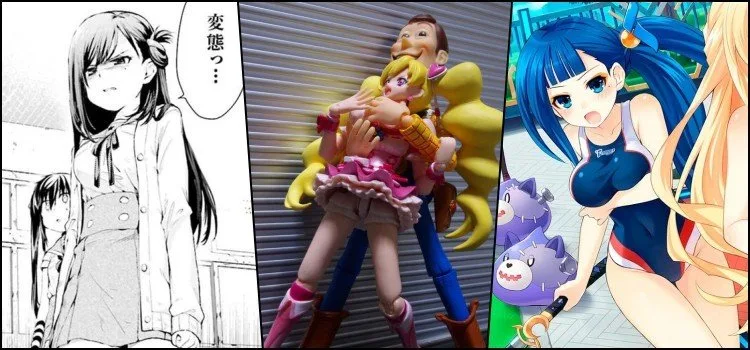
If you enjoy anime, you already treat ecchi as a genre label. But is that its real meaning? The word does not sit in the same place in the West and in Japan.
The heavier surprise is hentai. In English it names drawn porn. In Japanese it is a person, an attitude, sometimes even a scientific metamorphosis. The shelf labels fans use online were built after the words left the country.
Contents 9
Ecchi and Hentai in the West
In the West, the word ecchi is used to refer to any anime, manga, or Japanese work that has sensual scenes such as a character's panties showing or breasts bouncing or even appearing. These are titles that make use of fanservice to attract a young audience, and unfortunately most anime have at least a bit of this fanservice.
The word hentai refers to any type of pornography in drawing. Ecchi is one level before hentai: suggestive, perverted things, while hentai involves explicit sex. The controversy is that these two words swap weight with each other in Japan.
The meaning of Ecchi and Hentai in Japan
While ecchi in the West refers to light things and hentai refers to heavy things, in Japan calling someone hentai means that this person is a strange pervert. Using the word ecchi points to sex or erotic things. The two words really swap meanings with each other — until you listen a little longer.
If a young woman calls a young man ecchi, it can sound like flirting. Calling him hentai sounds more like condemnation. Japan does not keep a clean softcore-versus-hardcore pair the way English fandom does. The letter H is just a softer way of talking around the same family of words.
The word ecchi in Japanese is the pronunciation of the English letter H, written エッチ. It is not a coincidence that H is the initial of hentai. Do you remember B Gata H Kei, where the H is the joke in the title, or Hentai Ōji to Warawanai Neko — a show that is not porn even with 変態 sitting in the name?
The word ecchi is not used only for sexual relations but also for indecent and sensual things. Pay close attention when watching anime and notice the use of the word hentai to call boys perverts, or the word H (エッチ) to talk about indecent things.
In Japan, it makes no sense to use the word hentai to refer to pornography in drawing. Using the word ecchi in Japan to refer to anime with a bit of sensuality can also be a mistake. It is much more common and normal to call a friend hentai (perverted) than to go around saying the word ecchi in public.
The Hentai (変態) is not even a heavy word in every context. This word is also used with the meaning of transformation and metamorphosis. If you search for hentai in roman letters, you will come across heavy scenes, but if you write 変態 in Japanese letters, you will see a bunch of images of crazy people with panties on their heads.
The word hentai is literally composed of the ideograms strange (変) and attitude, condition, figure, appearance (態). Personally, I cannot understand why this Japanese word gained such a heavy meaning here in the West.
| In the West | In Japan | |
|---|---|---|
| ecchi / エッチ | Softcore genre: panty shots, bouncing chests, no explicit sex | Naughty; to have sex (ecchi suru / Hする); the letter H |
| hentai / 変態 | Drawn pornography as a genre name | A pervert; an abnormal attitude; also metamorphosis in science |
Alternatives to the words ecchi and hentai in Japan
Ecchi does not literally mean sex, but rather something "indecent." When you use the expression Ecchi Shiyou (エッチしよう), you are inviting someone to do indecent things, that is, sex. In Japanese there are many non-literal or idiomatic words. The Japanese do not like to express themselves directly with one blunt word.
The true word that literally means sex is sekkusu (セックス). There are other words to refer to a person's sex, such as sei (性), seibetsu (性別), and the word seiteki (性的) which, besides gender, is used with other words to refer to something sexual, such as sexual harassment or sexual arousal.
Since hentai means perverted, how do I talk about pornographic drawings in Japan? To talk about pornography in Japan, we use the expression ero (エロ) from erotic. Although there is the expression porn (ポルノ), it is more common to see the use of the word H (ecchi) or ero (エロ). Shops and publishers also say 18-kin (18禁) or seijin-muke (成人向け) when they mean "for adults."
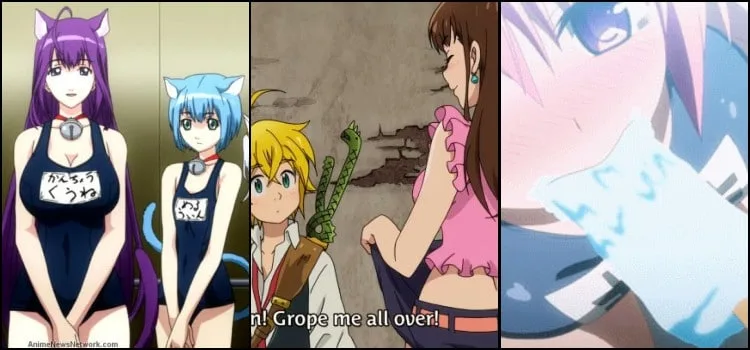
If you want to refer to erotic Japanese animations, we can use the expression eroanime (エロアニメ); if it is manga we can say eromanga (エロ漫画); and for erotic games it is usually said as the abbreviation of erogemu, eroge (エロゲ). Regarding videos, besides the word erobideo (エロビデオ), we can use H bideo (Hビデオ).
Those labels sit closer to how Japan actually files the material. They also explain why a search for 変態 does not behave like a search for "hentai" on an English site. If you want the cultural side of adult Japan, there is already a longer walk through why adult content is censored, the odd public campaigns around groping and "free oppai", and why some stories treat incest as if it were casual.
Types of Ecchi
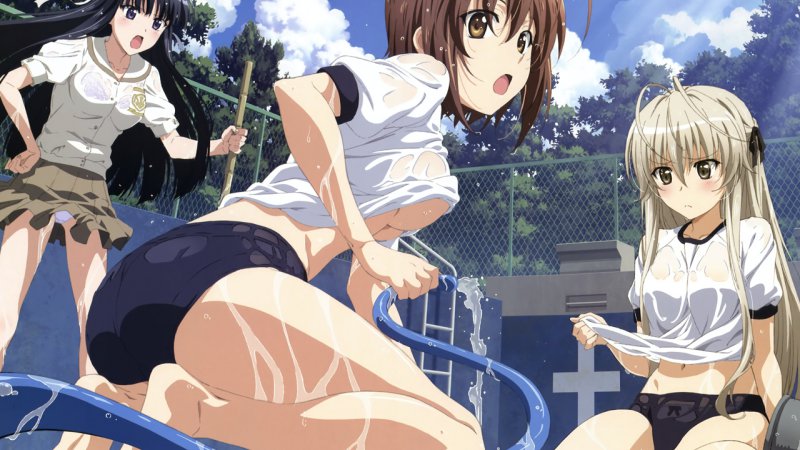
In traditional ecchi, we have constant shots of panties, bouncing breasts, and questionable camera angles. These titles are usually sexualized and designed to excite, playing with perverted themes and focusing heavily on the female body.
Nosebleeds, suspicious hand positions, faces planted on breasts, expressive and exaggerated body parts, and other gags characterize this lane. It is comedy first, even when the camera is not innocent.
The ecchi anime can still be categorized as regular anime, such as shounen, shoujo, and seinen. Some people identify them by their origin: some are based on eroge, while others come from adult manga.
Borderline H — on the edge
These titles include frequent explicit sexual content, predominantly aimed at a male audience in seinen, yuri, or bara work. Sex is used as a plot device and is the main focus in many of them.
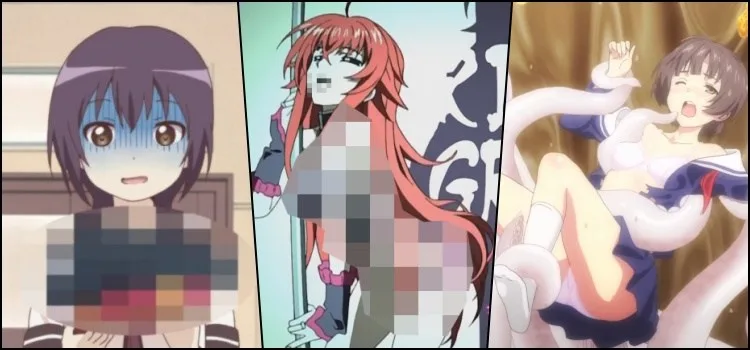
Like hentai, borderline H anime shows prolonged sexual acts; however, it censors the genitals and other elements with white outlines, mosaics, or opacity. Generally the scenes try to avoid positions that expose too much.
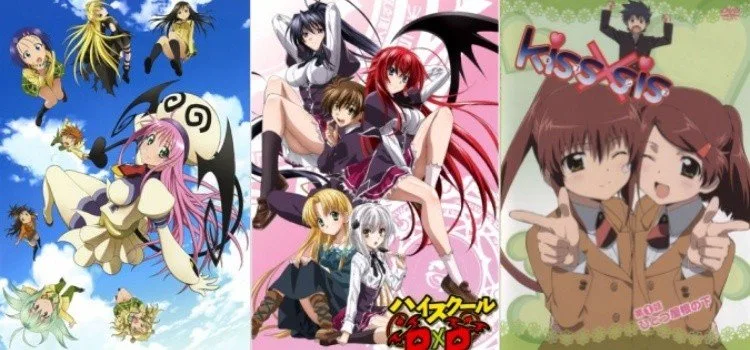
Some names that sit on that edge are Aki Sora, Futari Ecchi, Interspecies Reviewers, Kiss x Sis, Shinmai Maou no Testament, Seikon no Qwaser, Nozoki Ana, and Queen's Blade.
Smut — ecchi for women
Smut anime are typically written by women, for women, in lanes such as shoujo, josei, and yaoi. There is a strong focus on seduction, characters being swept away, and other build-ups to sex that make the temperature rise.
They often, but not always, include explicit sexual content. Since 2017 a lot of them have arrived as those short anime that look like hentai and show up every season: Papa Datte, Shitai, XL Joushi, 25-sai no Joshikousei, Amai Choubatsu, Skirt no Naka wa Kedamono Deshita.
Shounen-ai, Shoujo-ai, Yuri, and Yaoi
This is the homosexuality lane. These titles may or may not fall into hentai or ecchi; many mix the labels, which makes a clean identification hard. Better to read the longer pieces on yuri anime and yaoi anime.
Types of Hentai
Besides yuri and yaoi, there are many lanes inside explicit work, and nobody can list them all. A few terms that keep coming back:
Bakunyū [爆乳] — pornographic media focused on women with very large breasts. The word can be read literally as "exploding breasts."
Futanari [ふたなり] — characters drawn with both phallic genitals and, often, a vulva or vagina.
Incest [近親相姦] — sexual activity with legal relatives.
NTR or Netorare [寝取られ] — stories about betrayal and infidelity, usually from the side of the person who is "taken."
Omorashi [お漏らし] — a form of urolagnia.
Tentacles [触手責め] — creatures with tentacles, sometimes monsters, in sexual scenes. The image is older than modern anime; Hokusai's The Dream of the Fisherman's Wife is the print people keep pointing at.
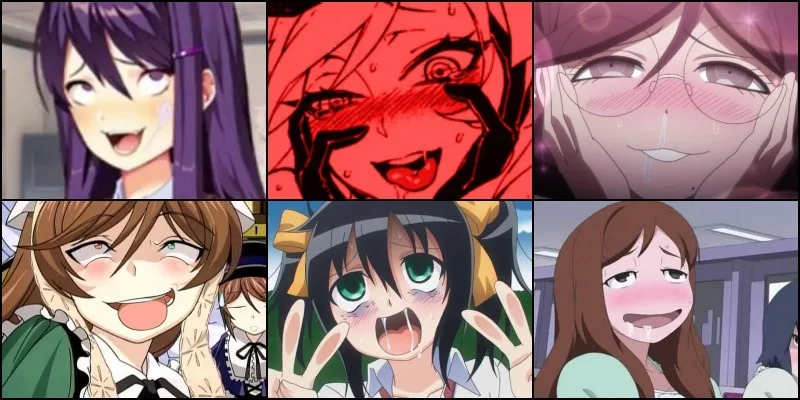
If the faces in those scenes look broken on purpose, that is another vocabulary item: ahegao. For a wider adult map of Japan, there is the adult culture guide.
If you came here looking for a list
A dump of two hundred titles does not explain the words. If you want recommendations in the softcore lane, use the list of ecchi anime. Historical names that English fandom later filed under hentai include Cream Lemon, Urotsukidōji, La Blue Girl, and Bible Black — they are examples of how the Western label stuck, not a ranking and not a catalog.
There is still time to step away from this junk and save your mind, if that is the mood you are in.
I hope this cleared the real meaning of hentai and ecchi in Japanese. If it helped, share it with a friend and leave a comment.



Community
Comments
0 comments
There are no published comments in this language yet.
Send comment