
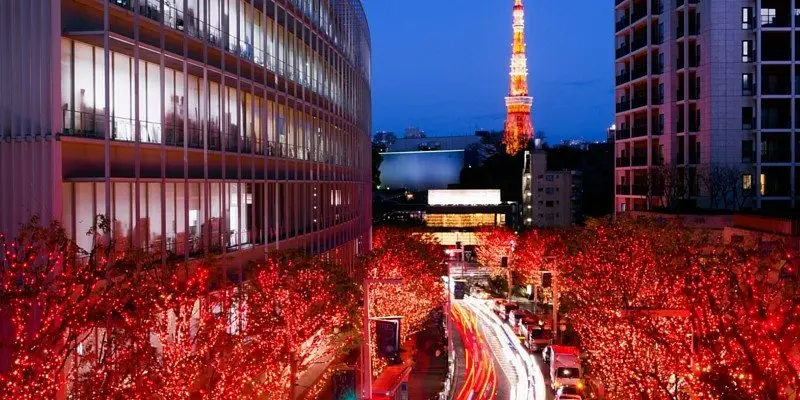
Yes, people do celebrate Christmas in Japan, but not in the same way you might expect in the United States or Europe. December 25 is usually a normal working day, and the holiday is treated much more as a seasonal event built around lights, food, shopping, and atmosphere than as a religious family celebration.
If you want the short version, here it is: Christmas in Japan usually means winter illuminations, a special dinner on Christmas Eve, strawberry shortcake, and some form of chicken on the table. For many couples, December 24 feels closer to a date night than to a family reunion.
That is why Christmas in Japan can feel familiar and unusual at the same time. The decorations look global, the music is recognizably Christmas, but the rhythm of the celebration is distinctly local.
Contents 8
Is Christmas a holiday in Japan?
No. Christmas is not a national holiday in Japan, so schools, offices, and trains usually run as normal on December 25. That alone changes the tone of the season. Instead of gathering around a long family lunch, many people fit Christmas into the middle of an ordinary workweek.
Most Japanese people do not celebrate Christmas as a religious festival. In practice, the modern version is secular and commercial, with a strong focus on decoration, limited seasonal foods, gift shopping, and memorable nights out.
How do Japanese people usually spend Christmas?
There is no single rule, but a few patterns appear again and again. Couples often book a dinner, exchange gifts, and go out to see winter illuminations. Friends may gather for a casual party at home, in a restaurant, or in a karaoke room. Families with children often keep things simple with cake, presents, and a festive dinner.
The biggest contrast with many Western countries is that Christmas Eve tends to carry more emotional weight than Christmas Day. The evening of December 24 is when restaurants fill up, city centers feel most festive, and romantic expectations are highest.
If that sounds familiar, it is because the social role of Christmas Eve overlaps a little with the kind of couple-centered mood you also see around Valentine's Day in Japan. The feeling is not identical, but the emphasis on dates, gifts, and atmosphere is real.
What do people eat for Christmas in Japan?
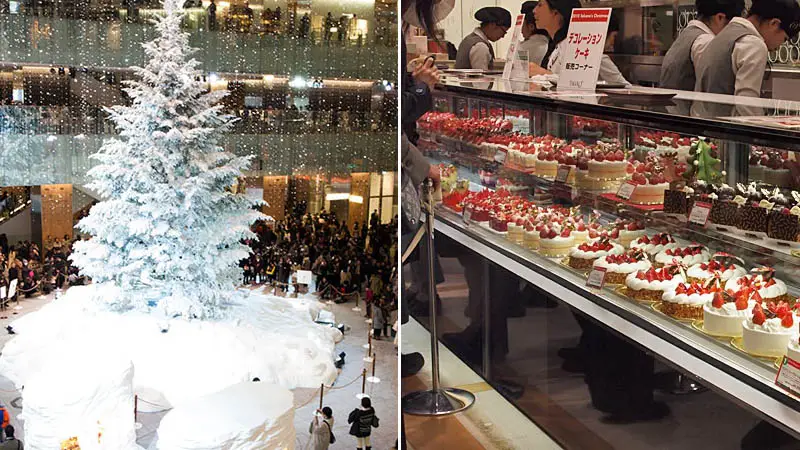
The two foods most often associated with Christmas in Japan are fried chicken and Christmas cake. The chicken is the part that surprises most foreign visitors, especially because KFC became the most visible symbol of that habit. Not every household orders from KFC, but the chain helped turn chicken into a standard Christmas option, and its official Christmas reservations still return every season.
The cake is usually not a dense fruitcake or a heavy dessert. In Japan, the classic Christmas cake is a light sponge cake topped with whipped cream and strawberries. It looks simple, but it fits the season perfectly: festive, photogenic, and easy to share after dinner. If you want the dessert tradition in more detail, this guide to Japanese Christmas cake explains why it became such a familiar part of the holiday.
Some people also build a home dinner around roast chicken, convenience-store party food, pizza, or salads. In other words, Christmas dinner in Japan is less about one sacred menu and more about picking food that feels festive and easy to enjoy together.
Why is KFC so tied to Christmas in Japan?
The short answer is smart marketing that arrived at the right cultural moment. A Christmas chicken meal was easy to understand, easy to share, and much more practical than trying to reproduce a Western roast turkey dinner in homes that did not have that tradition.
Over time, what began as a campaign became a habit people recognized instantly. Today, many customers reserve ahead of time, and the official seasonal menu still treats Christmas as one of the biggest moments of the year. Even if you never order from KFC yourself, the association is strong enough that it remains one of the first things people mention when talking about Christmas in Japan.
If you want to make a homemade version of that crispy holiday comfort food instead of ordering out, this article on karaage and Japanese-style fried chicken is a useful place to start.
Christmas in Japan versus New Year in Japan
One of the easiest ways to understand Christmas in Japan is to compare it with New Year. Christmas is bright, social, and often romantic. New Year is the deeper family holiday, tied to visits, rituals, and a more traditional sense of the season.
| Christmas in Japan | New Year in Japan |
|---|---|
| Usually secular and atmosphere-driven | Much more traditional and family-centered |
| Big focus on Christmas Eve | Big focus on the turn of the year and first days of January |
| Lights, dates, cake, gifts, chicken | Shrine visits, special food, greetings, family gatherings |
| December 25 is usually a normal workday | Many businesses close around the New Year period |
That difference also helps explain gift culture. Christmas gifts do exist, but Japan already has its own year-end gift traditions, and many people separate those customs in practice. Seasonal presents can overlap with the broader habit of giving, much like the etiquette behind omiyage and thoughtful gifting in Japan, but Christmas itself is not the country's main family exchange moment.
Winter illuminations are a huge part of the experience
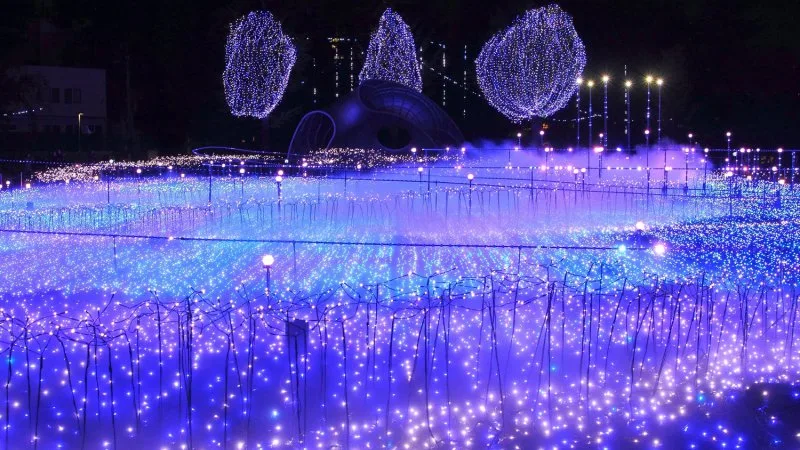
If there is one thing that gives Christmas in Japan its strongest identity, it is the illumination culture. Major cities start lighting up well before December 24, and some displays continue into January or February. People do not only go out for the holiday meal. They also go out to walk, take photos, and enjoy the atmosphere.
Tokyo is especially known for this, with districts such as Roppongi and Marunouchi drawing crowds for elegant street displays. Other cities have their own winter highlights, and schedules change every year, so it is always worth checking the latest official event pages before you travel.
How did Christmas become so popular in Japan?
Christmas first entered Japan centuries ago with Christian missionaries, but that does not explain the modern version most people recognize today. The popular urban Christmas seen now grew much later through department-store decorations, imported holiday imagery, cake culture, media, and retail campaigns.
That gradual shift matters. It means Japan did not copy one foreign model and freeze it in place. Instead, it absorbed selected parts of Christmas and reshaped them around dating culture, shopping streets, seasonal sweets, and highly visual winter events.
The result is not a lesser version of Christmas. It is simply a different one, built around mood rather than ritual.
So what is Christmas in Japan really like?
It is best understood as a winter celebration of atmosphere. People dress up, buy gifts, share cake, reserve chicken, and head out into decorated city streets. For couples, Christmas Eve can feel special. For travelers, the illuminations are often the highlight. For families with children, the season is still playful and festive, just without the same structure seen in countries where Christmas is primarily religious or home-centered.
So yes, Japanese people celebrate Christmas. They simply celebrate it in a way that makes sense inside modern Japanese life: bright, practical, seasonal, and very good at turning an ordinary December night into something memorable.


Community
Comments
0 comments
There are no published comments in this language yet.
Send comment