
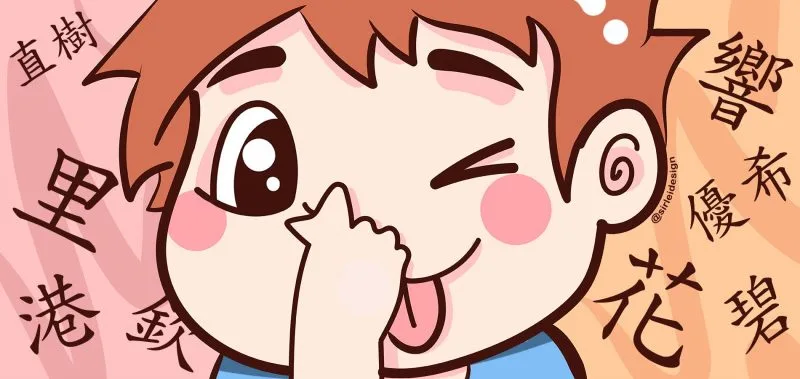
Looking for Japanese female names with meanings and the kanji behind them? The sound is only half the name. Write Sakura as 桜 and you get cherry blossom; swap the characters and the same reading can tilt toward a completely different wish.
The glosses below are a first cut, not a finished dictionary entry. Look the ideogram up in depth, or change the characters used to write the name, and it can pick up another meaning entirely. For how that actually works, see how to discover the meaning of Japanese names and how to write a name in kanji. Use Ctrl + F if you already have a reading in mind — this is a working list, not a census.
Contents 10
How to discover the meaning of a Japanese female name
A Japanese given name is not a fixed English-style label. Parents pick characters first, then a reading, and the same sound can be registered with several legal writings. That is why two girls named Yuna may not share a single kanji, and why a name generator that ignores the characters is only guessing.
If you want the bigger picture — family name first, given name second, and how a child is named in practice — the companion piece is how Japanese names are chosen. The lists on this page stay on girls’ given names and the characters most often shown with them.
Japanese female names by period or era
What sounds “typically Japanese” to a foreign ear is often just a vintage. Names ending in -ko (子, “child”) filled classrooms for decades and then almost vanished from the top of new-baby lists. The eras below are a map of taste, not a rule for what you are allowed to like.
Taishō [1912–1926] — Chiyo and Fumiko were among the names you heard most for girls.
Shōwa [1926–1989] — Kazuko and Sachiko sat near the top for a long stretch. Around 1958, Kumiko, Yumiko, and Keiko were easy to find on class rolls. By the mid-1960s, Mayumi, Naomi, and Akemi were in heavy rotation. In the 1980s, many baby girls were named Ai (愛), “love.”
Heisei [1989–2019] — Early on you heard Narumi, Noriko, and Saki. Through the 2000s, Sakura, Haruna, and Yuzuki kept turning up.
Reiwa [2019– ] — The old -ko wave is gone from the head of the list. For girls born in 2025, a nationwide insurer survey of newborns put writings such as 翠 (Sui / Midori), 陽葵 (Himari), 紬 (Tsumugi), 茉白 (Mashiro), and 凛 (Rin) near the top. 愛 (ai, “love”) still shows up inside a huge number of combinations even when it is not the whole name.
Japanese female names inspired by nature
Let’s start the list with names built from flowers, weather, and other pieces of the landscape. Nature is still the easiest place Japanese parents go when they want a name that looks like a picture.
Japanese female names with flower meanings
These are some of the flower names people actually use, with one common writing each:
- Sakura (桜): cherry blossom, the short, loud spring that Japan treats as a reminder that beauty does not stay.
- Hana (花): flower. Short, old, and still easy to wear.
- Kiku (菊): chrysanthemum, the imperial flower, tied to longevity and rank.
- Rika (莉花): jasmine plus flower. Other writings exist; this one leans floral on purpose.
- Ayame (菖蒲): iris. In Japan the plant also shows up in Boys’ Day displays, so the name carries a tougher edge than “pretty flower” suggests.
- Sumire (菫): violet, small and close to the ground.
- Momo (桃): peach. The tree, the fruit, and the blossom all sit in the same character.
- Yuri (百合): lily, often read as purity. It is also a word used for girls’ love stories, so check the room before you pick it for a character.
- Kaede (楓): maple. Not a flower, but the red autumn leaf does the same seasonal work as sakura in reverse.
- Ran (蘭): orchid.
Japanese female names of natural elements
Moon, rain, insects, and sky. A few of these are everyday names; a few are almost only seen in fiction, and that difference matters if you want something a real child in Japan might carry.
- Sora (空): sky. Used for girls and boys.
- Hotaru (蛍): firefly.
- Mizuki (水樹): tree by the water. Other common writings use 瑞 and 月 instead.
- Tsuki (月): moon. More often a piece inside a longer name (Yuzuki, Mizuki) than a standalone legal name.
- Kasumi (霞): mist or haze.
- Niji (虹): rainbow. Uncommon as a registered given name, easy to understand.
- Yukina (雪奈): snow plus a phonetic 奈. Other writings swap in 華 or 菜.
- Suzume (雀): sparrow.
- Hoshi (星): star. Again, more often an element than the whole name.
- Amaya (雨夜): rainy night. The writing is readable Japanese, but the name itself is far more common in Western baby-name lists than on Japanese birth records.
- Inazuma (稲妻): lightning. Treat this as vocabulary or a character name, not a typical girl’s given name.
- Arashi (嵐): storm. Same warning: vivid word, rare legal name for a girl.
Popular Japanese female names
Popular in two different senses. The first group is what English-speaking readers already meet in anime, games, and classrooms. The second is what Japanese parents were actually registering in 2025. They overlap less than people expect.
- Yui (結衣): to tie or bind, plus garment. A very common modern girl’s name.
- Emi (恵美): blessing plus beauty. Another frequent writing is 絵美, “picture” plus beauty.
- Akari (明里): bright plus village. Other parents write 朱莉 or 灯.
- Haruka (遥): distant, far-off. Spring only enters if you switch to 春.
- Kaori (香織): fragrance plus weave.
- Aoi (葵): hollyhock. Also written 蒼 or 碧 when the family wants “blue-green” instead of the plant.
- Hinata (日向): a sunny place. Used for girls and boys.
- Rin (凛): dignified, cold-clear. One of the single-kanji names that still ranks high for new babies.
- Ayumi (歩美): walk plus beauty, or just 歩, “to walk.”
- Kanon (花音): flower plus sound.
- Mao (真央): true plus center.
- Nanami (七海): seven seas. Nana alone is usually 奈々 or 菜々, not 七海.
- Rio (莉緒): jasmine plus cord or beginning. Also used for boys with other kanji.
- Yuna (優奈): gentle plus a phonetic 奈. A 2025 favorite writing is 結菜, “to bind” plus greens — same sound, different wish.
- Momoka (桃花): peach blossom.
- Mei (芽衣): sprout plus garment. That is the ordinary girl’s name. 冥 (“dark, underworld”) is a different character and not how families usually register Mei.
- Rina (莉奈): jasmine plus phonetic 奈. 奈 is not “apple tree”; that confusion comes from mixing it with 梨 (nashi, pear).
Writings that sat near the top for girls born in 2025, according to that same insurer survey:
- Sui / Midori (翠): kingfisher, jade green.
- Himari (陽葵): sun plus hollyhock. People also hear Hinata in the same characters.
- Tsumugi (紬): pongee silk, a handwoven cloth that looks plain until you live with it.
- Mashiro (茉白): jasmine plus white.
- Hina (陽菜): sun plus greens.
- Koharu (心陽): heart plus sun, in the 2025 ranking. The older writing 小春 means “little spring,” a warm spell in early winter.
- Iroha (彩葉): color plus leaf.
- Uta (詩): poem.
- Kotoha (琴葉): koto (the harp) plus leaf.
Quiet, night, and camellia names
Some lists sell these as “dark Japanese girl names.” Most of them are not sinister in Japanese. They are quiet, seasonal, or just old. If you want names that really lean into night, death imagery, or villain energy, that is a different page: dark Japanese names and how they are actually used.
- Shizuka (静): quiet, still. A classic, not a curse.
- Tomoko (朋子): friend plus child, or “companion child.” The “hidden wisdom” reading is a stretch.
- Reika (麗華): lovely plus flower. Beauty, not danger.
- Kurumi (胡桃): walnut. In Japan it is a warm, slightly retro girl’s name, not a ticket to the underworld.
- Yoru (夜): night. As a standalone given name it is unusual; it lives more comfortably in fiction.
- Tsubaki (椿): camellia. A winter flower. In some older flower language the red camellia can mark a noble death, which is why writers reach for it — but plenty of women are just named Tsubaki.
- Ayako (綾子): twill or patterned silk plus child. A Shōwa-era staple.
- Misaki (岬): cape, headland. Isolation is a poet’s extra, not the dictionary.
Less common Japanese female names
Rare is a moving target. Himiko is history. Koharu, depending on the writing, is now ordinary again. The names below are either old-fashioned, regionally thin, or famous for one person.
- Himiko (卑弥呼): the shaman queen recorded in Chinese chronicles. Almost nobody puts this on a birth certificate today; it is a historical name, wrapped in argument about who she was.
- Umeko (梅子): plum plus child. The plum blossoms while it is still cold.
- Chinatsu (千夏): a thousand summers.
- Noa (乃愛): of / belonging to, plus love. Short, modern, and easy to pronounce outside Japan.
- Saya (紗綾): gauze silk plus twill.
- Izumi (泉): spring, fountain. Used for girls and boys.
- Hikaru (光): light. Unisex, and not rare.
Japanese female names of virtues and feelings
This is the older layer of the list: love, blessing, obedience, a long life. Many of these are -ko names. They sound like someone’s mother or grandmother in Tokyo now, which is exactly why some parents are picking them again on purpose.
- Ai (愛): love.
- Aika (愛佳): love plus excellent / beautiful.
- Aiko (愛子): child of love.
- Aimi (愛美): love plus beauty.
- Akemi (明美): bright beauty.
- Aki (秋): autumn. Also written 明, “bright.”
- Akiko (秋子): autumn child, or bright child if the first character is 明.
- Asami (麻美): hemp / flax plus beauty — not “morning.” Morning would be 朝.
- Chie (智恵): wisdom.
- Chieko (智恵子): wise child.
- Etsuko (悦子): joyful child.
- Hiroko (裕子): abundant child.
- Hiromi (裕美): abundant beauty.
- Hisako (久子): long-lived child.
- Jun (順): obedient, in good order. Junko (順子) is the -ko form.
- Kei (恵): blessing. Keiko (恵子) is the familiar longer form.
- Kō (幸): happiness. The same character is also read Sachi.
- Kyō (杏): apricot.
- Kyoko (恭子): respectful child. 恭 is reverence, not “city” (that would be 京).
- Madoka (円): circle, completeness.
- Manami (愛美): often the same characters as Aimi, read differently; other families write 真奈美.
- Masako (雅子): elegant child. The empress’s name made this one hard to ignore.
- Masami (雅美): elegant beauty.
- Masayo (益世): to benefit the world.
- Megumi (恵): blessing. Same character as Kei, different reading.
- Akira (明): bright, clear. More famous on men, still used for women.
- Atsuko (篤子): sincere, devoted child — not “child + type.”
- Chikako (千香子): a thousand fragrances plus child.
- Harumi (春美): spring plus beauty.
- Hideko (秀子): excellent child.
- Nobuko (信子): faithful child.
- Sachiko (幸子): happy child.
- Shigeko (成子): to become / accomplish plus child. “Luxuriant” would need 茂 or 繁.
- Sumiko (澄子): clear, limpid child.
- Yasuko (康子): peaceful / healthy child.
- Yoshie (佳江): excellent plus inlet / bay.
- Kimi (君): originally “you” or a noble address; in names it is usually a piece, not the whole thing.
Arts and aesthetics
- Kotone (琴音): sound of the koto.
- Mai (舞): dance.
- Maiko (舞子): dance plus child. Also the word for an apprentice geisha in Kyoto, which is a different use of the same sounds.
- Shiori (詩織): poem plus weave. Another common writing, 栞, means bookmark.
If you are naming a boy, a pet, or something that should work on either side, keep going through the male name list, the unisex names, kawaii names, names for cats and other pets, and the surnames with origins. The kanji warning stays the same on every one of those pages: do not tattoo a reading you have not checked against the characters.


Community
Comments
0 comments
There are no published comments in this language yet.
Send comment