
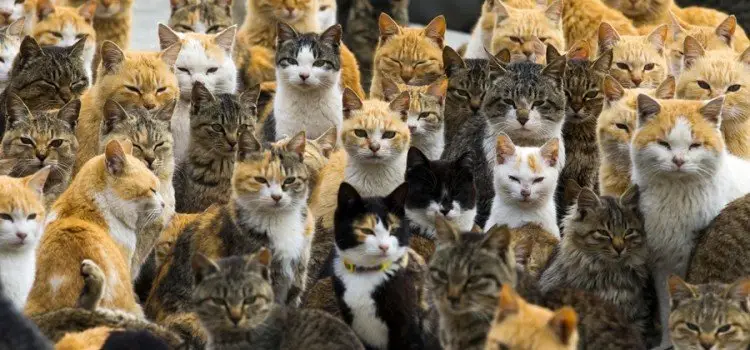
Japan's cat islands are small communities where free-roaming cats have become part of the landscape. The best-known examples are Tashirojima in Miyagi and Aoshima in Ehime, but they are not theme parks or open-air cat cafés. They are lived-in islands with limited services, local routines, and animal-care rules that visitors need to respect.
You may see these places called neko no shima (猫の島) or nekojima (猫島), expressions that mean “cat island.” The label is informal rather than a fixed checklist. It is more useful to choose an island by location, access, and the kind of visit you can make responsibly than to chase a number on a list.
Also read: Neko – Cats in Japan
Contents 6
Why do some Japanese islands have so many cats?
The story changes from island to island, so there is no single explanation for every place called a cat island. Two recurring threads are practical work and a shrinking human population. Cats were valued where they could keep rodents away from fishing supplies, food stores, or silkworm cocoons. When work and population changed, some cat colonies remained highly visible.
That history matters because it keeps the subject grounded. A cat island is not a spectacle created for visitors. The animals and the people who care for them share a real place, often with few shops, few transport options, and little room for careless tourism.
Tashirojima: Miyagi's famous Cat Island
Tashirojima (田代島) lies off Ishinomaki in Miyagi Prefecture. It is one of the most recognizable cat islands in Japan, with two small settlements, coastal walks, and a ferry connection from Ishinomaki. The Japan National Tourism Organization notes that cats historically protected the island's silkworm cocoons from rats; fishermen also cared for the semi-wild cats and gave them fish scraps.
Cats are often easiest to spot around Nitoda, the southern village and one of the ferry stops. Beyond the cats, Tashirojima rewards a slower visit: sea views, paths between the settlements, and the quiet rhythm of a small island. Do not plan around an old timetable. Check the ferry operator's current departure and return times before leaving Ishinomaki, especially if you are visiting for a day.
The island's Cat Shrine, or Neko-jinja (猫神社), is another reason Tashirojima has such a strong identity. Local tradition links the shrine to a cat killed by a falling rock, and the islanders' long-standing belief that cats bring good fortune. Tashirojima also has Manga Island, an area with cat-shaped accommodation and manga-inspired architecture; overnight stays should be arranged in advance.
Aoshima: a quiet island in Ehime
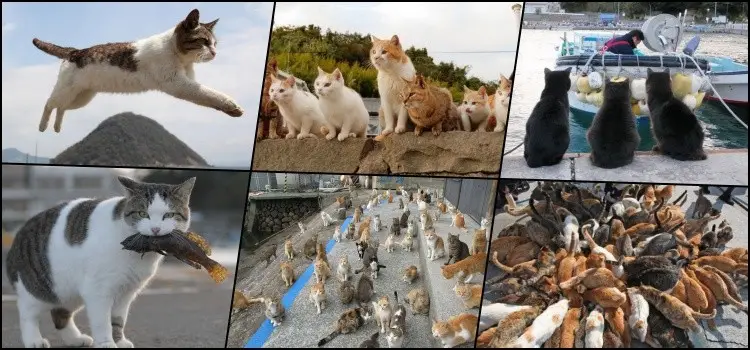
Aoshima (青島), in Ehime Prefecture, is another celebrated neko no shima. Its cats were introduced when the island's fishing community needed help controlling mice. As fishing declined and the number of residents fell, the cats remained. That history explains both the island's appeal and its limits.
Aoshima is not built around tourism. Arrive self-sufficient, take all rubbish back with you, stay clear of private property, and do not expect the island to provide a service designed for day-trippers. The Setouchi Official Travel Guide warns that facilities are extremely limited, so confirm current local guidance before you travel.
Feeding is not a default visitor activity. Follow signs and local instructions. Where feeding is permitted, it may be limited to a designated area and to small portions of proper cat food. Chasing, picking up, or surrounding cats for photographs makes the visit worse for the animals and for the people who live nearby.
Other islands often associated with cats
Japan has other islands with visible cat communities, particularly around the Seto Inland Sea. Manabeshima in Okayama, Sanagishima and Ogijima in Kagawa, Iwaishima in Yamaguchi, and Muzukijima in Ehime are frequently mentioned alongside Aoshima. Conditions vary widely, so a name on a travel list is not enough reason to board a ferry.
Enoshima, near Tokyo, is different again. It is a busy and accessible sightseeing destination rather than a remote cat-island experience, but it is a good choice for readers who want coastal scenery and occasional cats without the logistics of an isolated community. Learn more about Enoshima Island and its love locks.
How to visit Japan's cat islands respectfully
- Confirm transport on the day: small-island ferries can change with weather, maintenance, or local needs.
- Pack food, water, and a bag for rubbish: do not assume there will be shops, bins, or public facilities.
- Keep distance: let cats choose whether to approach. A calm photo is better than a forced interaction.
- Follow feeding rules: use only approved places and food when local guidance allows it.
- Respect residents: keep noise low, avoid private property, and remember that a ferry route may serve the community first.
Are Japan's cat islands worth visiting?
They can be memorable for travelers who enjoy quiet coastal places and understand the responsibility that comes with visiting them. Tashirojima suits people looking for a fuller island walk from Ishinomaki, while Aoshima calls for more careful preparation and a lighter footprint. In both places, the point is not to collect cat photos. It is to see how local history, fishing life, and animal care shaped an island community.
If you prefer an animal destination with a different focus, Okunoshima, Japan's Rabbit Island offers another well-known island visit. Whichever destination you choose, check current local guidance before you go.



Community
Comments
0 comments
There are no published comments in this language yet.
Send comment