
Have you ever dreamed of seeing Mount Fuji with your own eyes? The image of the snow-covered volcano, reflected in a calm lake or emerging behind a floating torii gate, is one of the most iconic in Japan — and one of the hardest to capture. Not for lack of places, but because Fuji-san, as it is affectionately called, is known for its shifting visibility. It appears and disappears in the blink of an eye, and knowing where (and when) to look for it can completely change your experience.
In this guide, I have gathered the best spots to see and photograph Mount Fuji — based on real experiences and tips that you won't find in tourist brochures. From hidden viewpoints to unexpected beaches, passing by the most famous lakes in the region, here is everything you need to know to have that magical moment with Japan's sacred mountain.
Contents 17
The best viewpoints of Mount Fuji
Below are the places that offer the most rewarding views of Fuji-san — from classic photo spots to a few quieter corners.
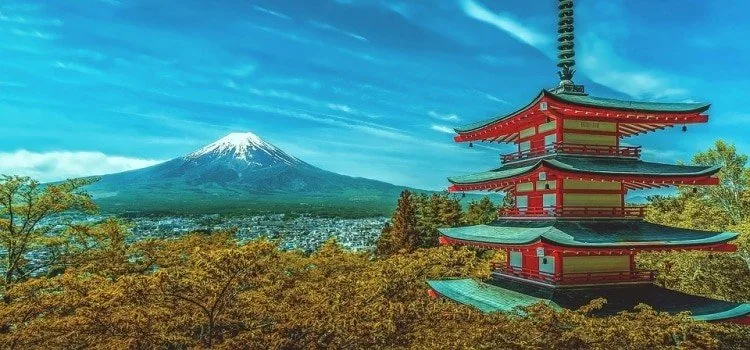
Chureito Pagoda
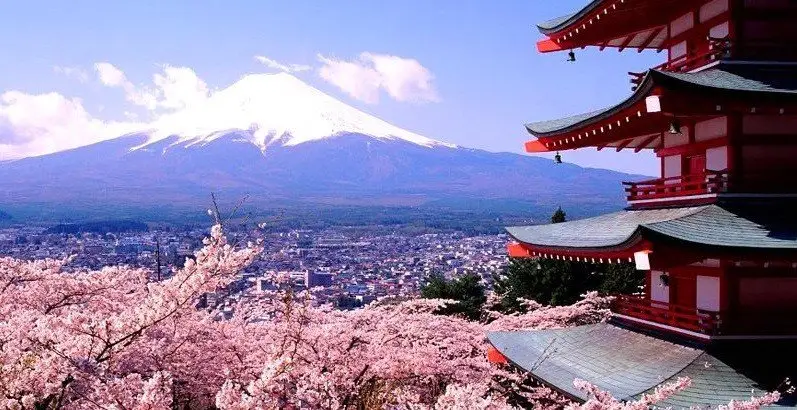
Have you seen the photo of the red pagoda with Mount Fuji in the background, surrounded by cherry blossoms? Well, this is the place. The Chureito Pagoda is part of the Arakura Sengen Shrine in Fujiyoshida and stands at the top of a hill — over 400 steps of climbing, but every step is worth it.
When is the best time to visit? During the sakura season (April) or in autumn (late October to November), when the landscape turns into a painting. It is one of the most photogenic places in Japan and, refreshingly, not as crowded as you might expect — especially if you arrive early in the morning.
Fuji Shibazakura Festival
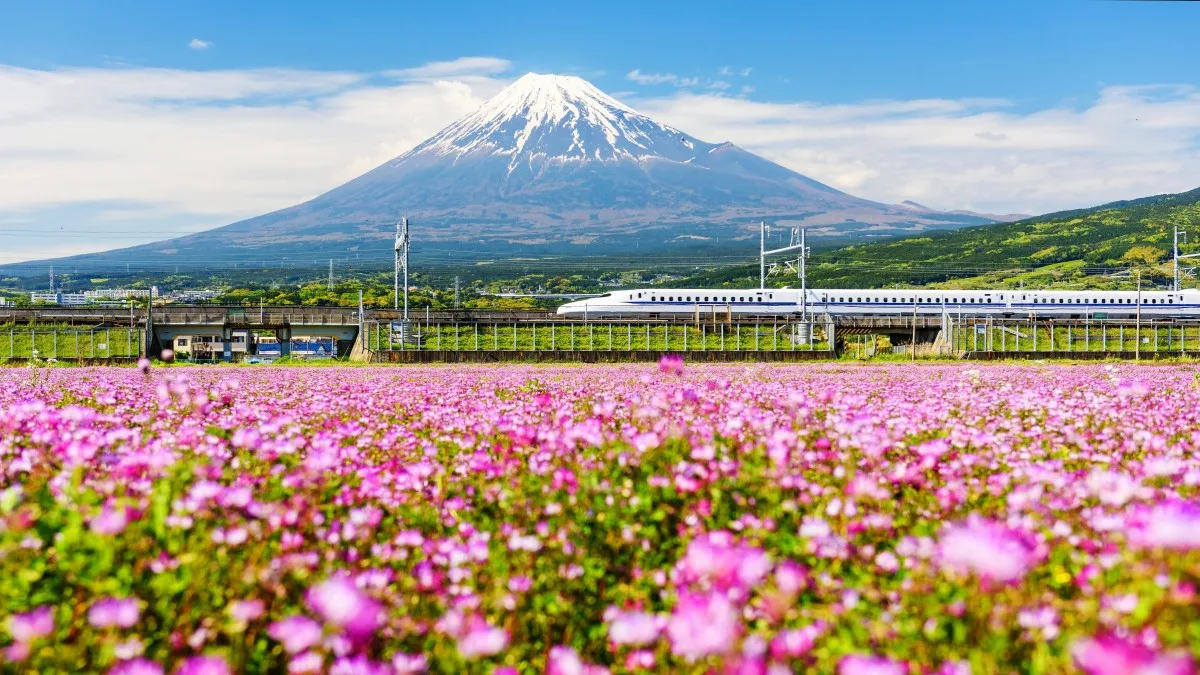
If you are in Japan between late April and May, don't miss the Fuji Shibazakura Festival. It takes place near Lake Motosuko, and what makes it special is the striking visual contrast: over 80,000 pink, red, and white shibazakura (moss phlox) flowers covering the hills, with Fuji rising in the background.
It almost looks as if Mount Fuji is floating above a sea of petals. The festival also features food stalls, local products, sakura-themed desserts, and even foot baths with a view of the mountain. It easily counts as one of the most evocative events of the Japanese spring.
Iyashi no Sato
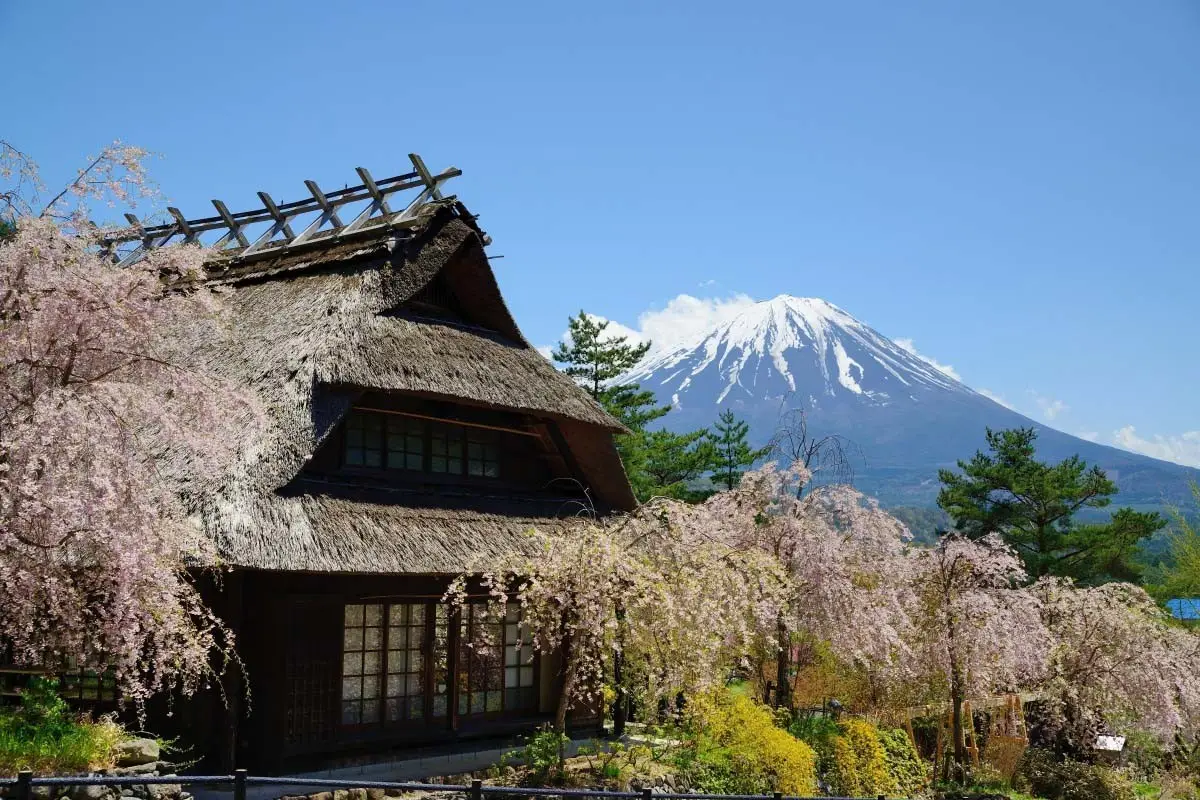
The Iyashi no Sato Nenba is an open-air museum that recreates a typical rural village from the Edo period, on the shore of Lake Saiko. Each restored house hosts exhibitions, craft workshops, traditional clothing rentals, and small shops with regional products.
The most interesting thing here is the contrast between Fuji in the background and traditional Japanese architecture in the foreground. It is a rare opportunity to see Mount Fuji much as it was seen centuries ago — without modern buildings, poles, or signage getting in the way.
The Five Lakes — Fujigoko
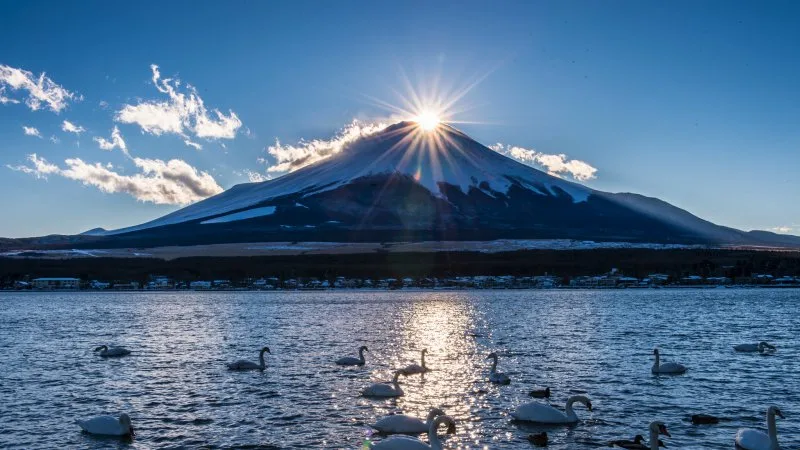
The main lakes for seeing Mount Fuji are the Fujigoko ("Five Lakes of Fuji"), located in Yamanashi: Kawaguchiko, Yamanakako, Motosuko, Saiko, and Shojiko. Each offers its own angle on the volcano. Lake Kawaguchiko is the easiest to reach and the best known, ideal for capturing the rare Diamond Fuji phenomenon, when the sun sets exactly behind the summit. Yamanakako, the largest of the five, is great for outdoor activities such as fishing and hot spring baths with a view of the mountain.
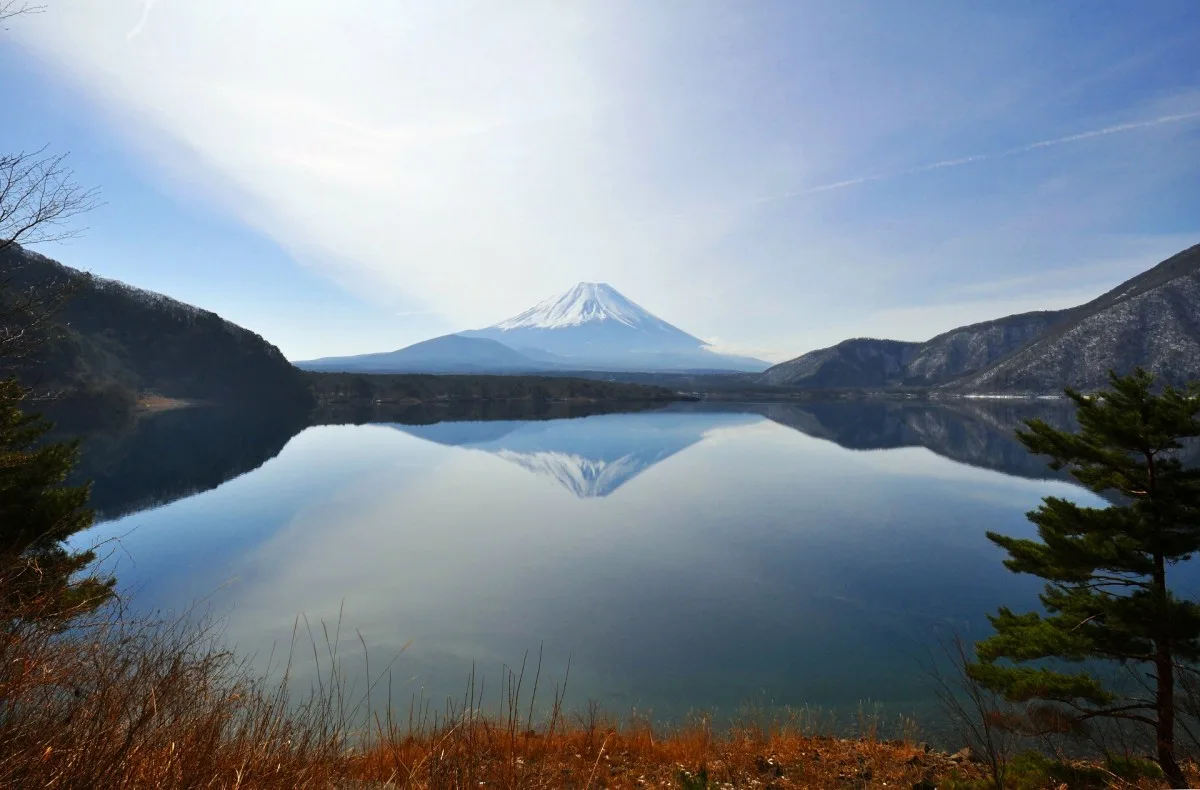
Lake Motosuko is famous for being the lake pictured on the 1,000 yen note, offering one of the most symmetrical views of Fuji. If you prefer quiet, Lake Saiko is surrounded by the Aokigahara forest, and Shojiko is the smallest and least crowded of the group. Outside this cluster, Lake Tanuki in Fujinomiya is also impressive — especially at dawn, when Fuji's reflection in the calm water creates a near-perfect image.
Fuji-Q Highland
This tip is for the brave: Fuji-Q Highland, in Fujiyoshida, is an amusement park with several extreme roller coasters — and yes, with a direct view of Fuji.
You see Mount Fuji while plunging at over 170 km/h. An experience you won't easily forget — and an unusual way to register Fuji in your memory. The park also has an Evangelion-themed area, attractions for children, and a hot spring called "Fujiyama Onsen" right next door, with thermal waters and a relaxed view of the volcano.
Which cities offer the best views of Mount Fuji?
Beyond the towns around the Five Lakes, there are several other cities nearby where you can get a good look at Fuji. Below are the most popular ones.
Gotemba: shopping with a view of Fuji
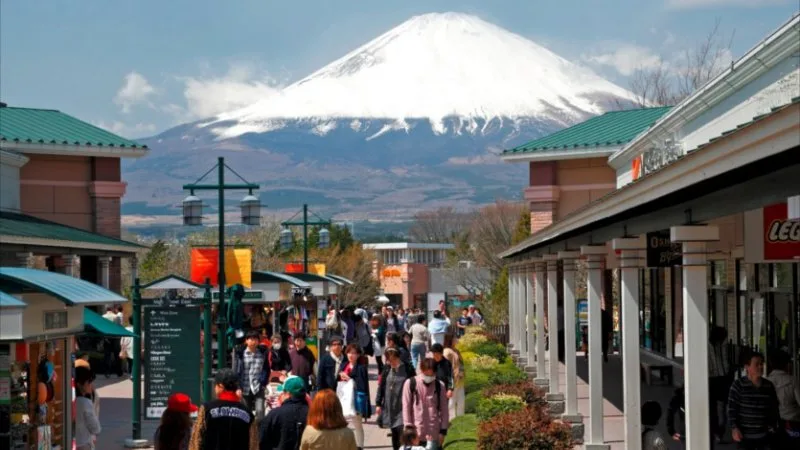
Gotemba is one of the closest cities to the base of Mount Fuji, and perhaps one of the most practical places to spot it. In addition to its proximity, it is home to the Gotemba Premium Outlets, a shopping centre with over 200 stores and an open area that, on clear days, offers a spectacular view of Fuji — with an unforgettable sunset between shopping bags and coffee.
Gotemba is also an excellent starting point for visiting nearby regions such as Hakone — one of the most traditional onsen (hot spring) destinations in Japan.
Hakone: nature, hot springs, and a view of Fuji
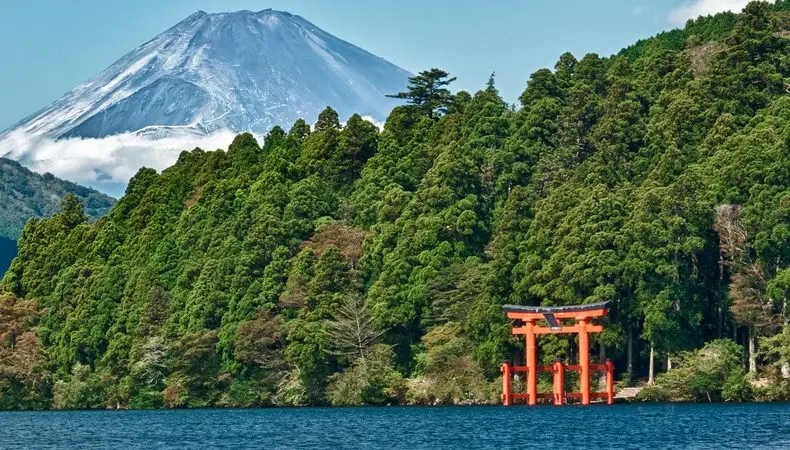
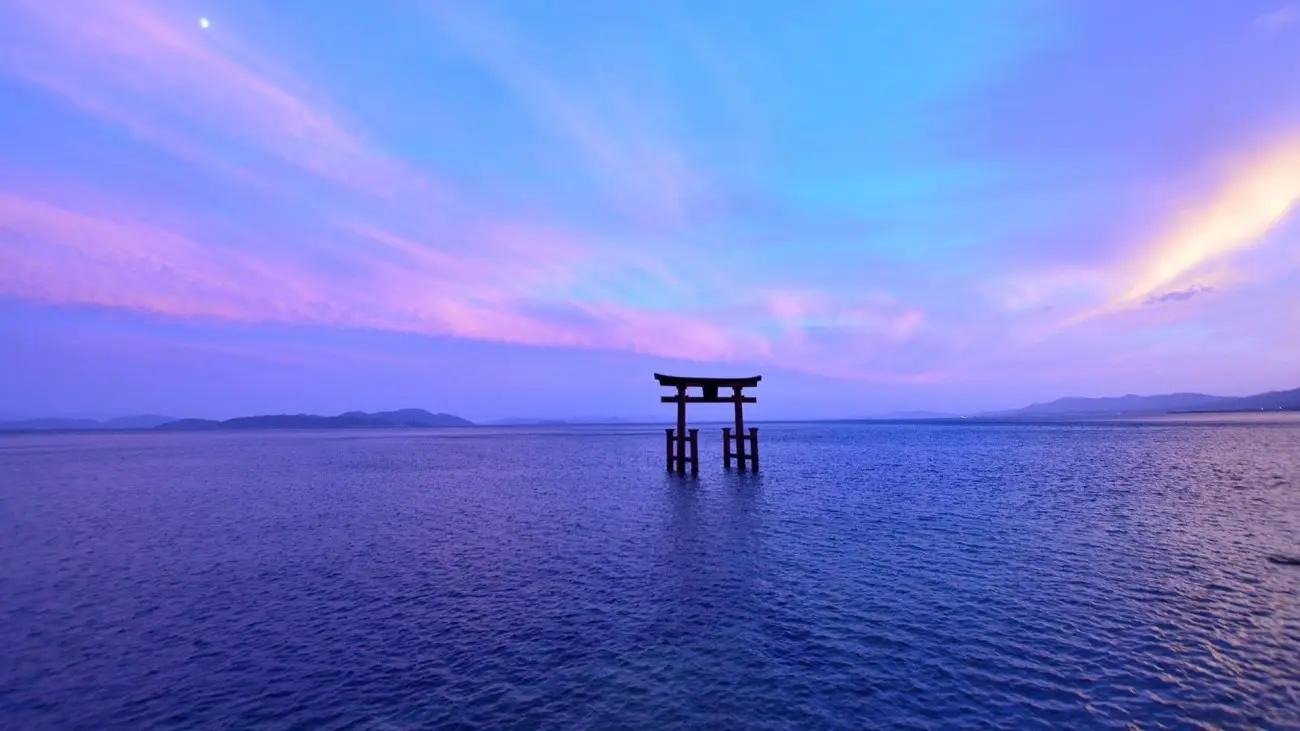
Hakone combines culture, relaxation, and nature. One of its highlights is Lake Ashi, where you can take a boat ride with Mount Fuji in the background — especially charming if you choose the pirate-ship-style boat. The town also has one of the most photogenic torii gates in Japan, partially submerged in the lake, with Fuji peeking through on clear days.
Beyond that, Hakone offers a cable car, gondola, hiking trails, and a wide selection of ryokan with onsen overlooking the mountain.
Can you see Mount Fuji from Tokyo?
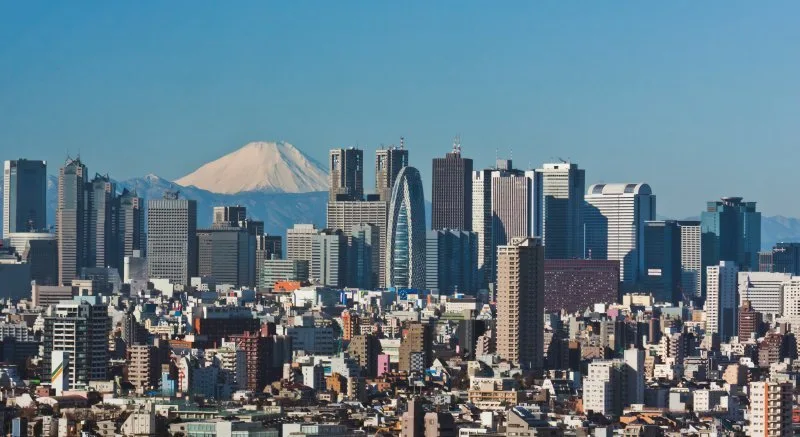
Yes — and it's easier than it sounds, as long as the weather cooperates. Tokyo is about 100 km from Mount Fuji, and there are several strategic spots to catch a view:
- Tokyo Skytree: one of the tallest towers in Japan. On clear days, you can see Fuji from the 450 m observation deck. Tip: plan your visit between October and March, when clear skies and a snow-covered summit are most likely.
- Bunkyo Civic Center: a public building with free access to the observation floor on the 25th level. It offers a classic view of Fuji framed by the skyscrapers of Shinjuku.
- Tokyo Metropolitan Government Building: another free observatory in Shinjuku. A long-time favourite for Fuji hunters on blue-sky days.
Izunokuni Panorama Park
It is not close to Mount Fuji itself, but it is a great destination to enjoy a wide-open view of Fuji-san and ride one of Japan's longest cable cars. The mountain is so large that on clear days you can also see the Japanese Alps in the distance.
Izunokuni, as the name suggests, sits on the Izu Peninsula, on the far side of the mountains, near Mishima in Shizuoka Prefecture. At the top of Mount Katsuragi, you get a sweeping view of the region, along with walking trails and a small zoo.
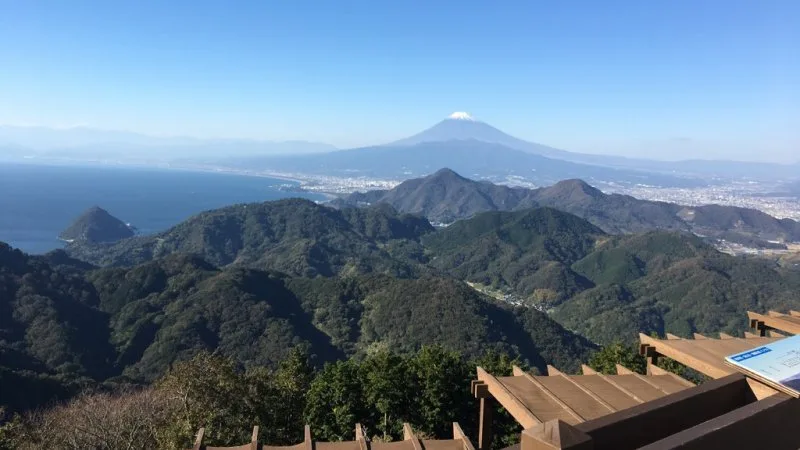
I had the chance to visit Panorama Park myself and really enjoyed the experience. The cable car is impressively long and high, and surprisingly fast — it covers 1.8 kilometres and climbs 411 metres in about 5 minutes.
At the top of Mount Katsuragi, you will also find a small foot onsen and a place to rest while taking in the view. The peak sits at 452 metres above sea level.
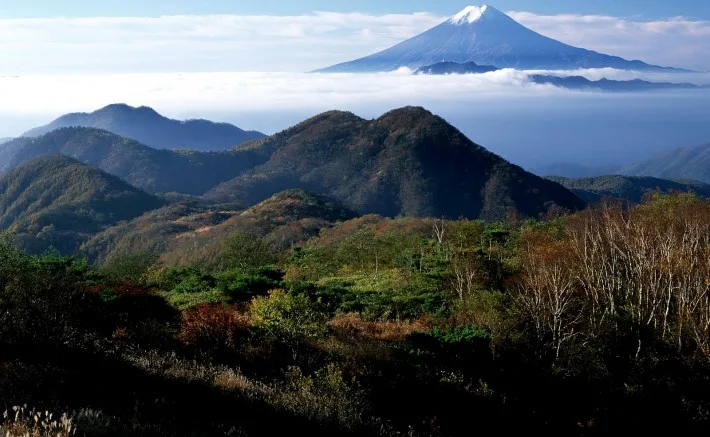
Beyond Mount Katsuragi, the region offers several other peaks with great views of Fuji-san, including Mount Tenjo and the Kachi Kachi Cable Car, Shakushiyama, the mountains around Hakone, Kenashi, and a few lesser-known viewpoints.
If you are interested in the views from the beaches around Kamakura and Enoshima, you will find more tips in the dedicated section below.
Can you see Mount Fuji from the beach?
Few people realise it, but Mount Fuji also appears on the horizon of several beaches south of Tokyo. Two destinations stand out.
Kamakura
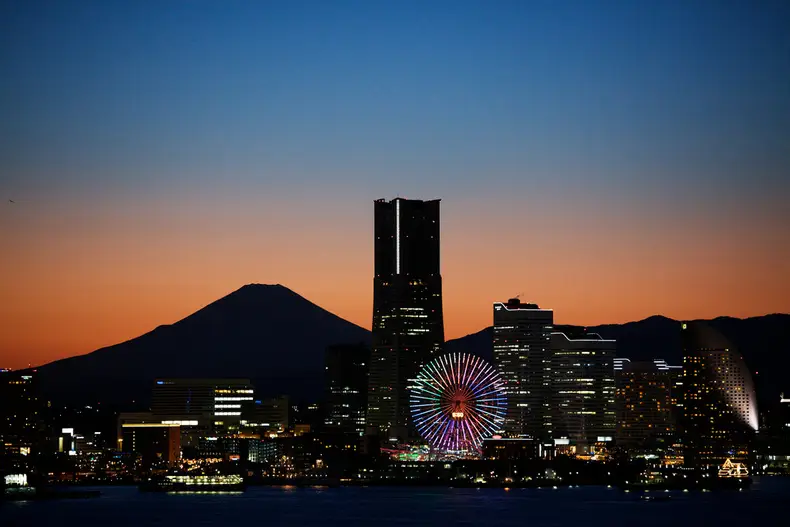
The coastal city of Kamakura is about an hour from Tokyo. Known for its Great Buddha and ancient temples, its beaches also surprise visitors with a beautiful view of Mount Fuji — especially in the late afternoon.
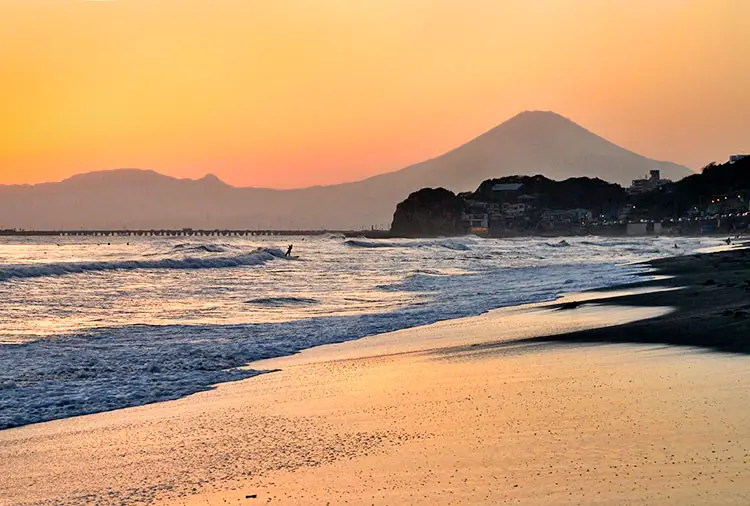
Enoshima
A small island connected to the mainland by a bridge. Enoshima is famous for its summer beaches and the dramatic sunset with Fuji in the background. It is a favourite view of both amateur and professional photographers.
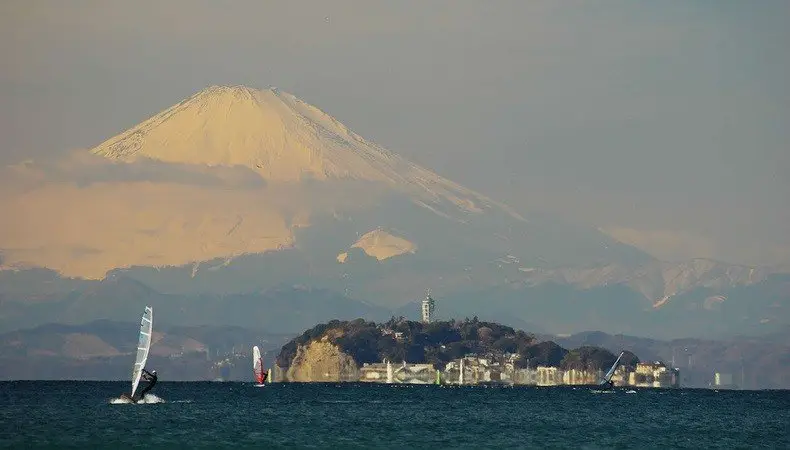
Can you see Mount Fuji by train?
Even if you are not heading to a specific viewpoint, you can still see Mount Fuji during the train journey between Tokyo and Osaka, whether by Shinkansen or a local train. The best stretch runs between Shin-Yokohama and Shizuoka stations, especially around Shin-Fuji Station.
Sit on the right-hand side if you are travelling from Tokyo toward Kyoto/Osaka, and on the left-hand side in the opposite direction. The windows are large, and with a bit of luck, you will see Fuji "parading" alongside you for several minutes.
It is exactly the kind of small tip that makes all the difference — and that few travellers pay attention to when planning a trip.
Lakes and reflections: getting Fuji mirrored on the water
For many visitors, the dream image of Fuji is the one doubled in still water. The best chances come from the lakes that face the mountain directly and are sheltered from strong wind: Lake Kawaguchiko, Lake Yamanakako, Lake Tanuki in Fujinomiya, and Lake Ashi in Hakone (where the torii in the water is the main subject, with Fuji as a backdrop).
A few practical rules of thumb: aim for early morning, when air is cooler and crowds thinner; check the weather the night before — a clear, calm morning follows a still, cool evening; and bring a polarising filter if you have one, to cut glare on the water and make the reflection sharper.
Practical tips for getting there
A few quick pointers before you go. Fuji is most often visible in the early morning, shortly after sunrise, and again in the late afternoon — the air is more stable and crowds are thinner. Winter and the shoulder seasons (spring and autumn) tend to offer the clearest skies; in summer the mountain hides behind haze and cumulus clouds more often than not. At the lakes, look for windless days — that is when the famous mirror reflection actually happens.
From Tokyo, most of the spots in this guide can be reached as a day trip: the Five Lakes area is around 2 to 2.5 hours by express bus or a mix of train and local bus; Hakone is about 1.5 hours by Odakyu Romance Car; Gotemba is around 1.5 hours by JR bus or shinkansen plus a local transfer. For viewpoints inside Tokyo itself, simply plan a clear-sky morning between October and March.
And one last question: which Mount Fuji viewpoint has surprised you the most — or which one would you like to visit next?

Community
Comments
0 comments
There are no published comments in this language yet.
Send comment