Blog

  • From Sushi to Slots: A Journey Through Japanese-Inspired Gaming

    From Sushi to Slots: A Journey Through Japanese-Inspired Gaming

    [trp_language language=en_US]

    In the dynamic world of gaming, inspiration knows no boundaries. Japanese culture, with its captivating blend of tradition and innovation, has found a remarkable place in the gaming realm. Koi Princess, a slot game by NetEnt, seamlessly combines traditional Japanese elements with the thrill of slots. Players now have the power to experience the best online slots games from the comfort of their own space, anytime, and anywhere.

    Let’s embark on a virtual journey through this enticing world, exploring how Japan’s culture has shaped some of the most engaging games and slots.

    Japanese-themed gaming is experiencing a surge in popularity, captivating players worldwide. Japan’s culture, with its unique mix of ancient traditions and modern innovation, offers an unparalleled source of inspiration for game developers. These games artfully blend tradition with innovation, drawing players into a visually stunning and culturally rich world.

    The Cultural Riches of Japan

    Japan’s culture is a treasure trove of diversity, encompassing exquisite cuisine, centuries-old traditions, and a rich history. Its universal appeal is rooted in the ability to blend tradition with modernity.

    The Rise of Japanese-Inspired Gaming

    Recent years have witnessed an upswing in games and slots inspired by Japan. These titles draw on Japan’s aesthetics, traditions, and mythology, offering players a captivating cultural experience.

    From Sushi to Samurai

    Gaming embraces iconic Japanese symbols, including sushi, cherry blossoms, and samurai. These symbols evoke the essence of Japan and its unique charm, creating a world rich in tradition and innovation.

    Art and Aesthetics

    Japanese-inspired games are renowned for their meticulous attention to detail and visual aesthetics. These games transport players to a world rich in tradition and innovation.

    The Fusion of Tradition and Innovation

    The unique appeal of Japanese-inspired gaming lies in its fusion of tradition and innovation. While respecting age-old customs and symbols, these games incorporate cutting-edge technology and design, offering players a modern gaming experience while honouring their cultural roots.

    Culinary Adventures and Slot Spins

    Japanese cuisine often makes its way into Japanese-themed games, creating an enticing blend of food and gaming. Whether it’s the delectable imagery of sushi or the aroma of ramen, these games immerse players in a world where culinary delights and gaming excitement go hand in hand.

    Immersive Storytelling and Japanese Folklore

    Japanese culture’s rich folklore and legends play a significant role in immersive storytelling in gaming. Games frequently feature yokai, spirits, and mythical creatures, adding depth and intrigue to the player’s experience.

    The Appeal to a Global Audience

    The appeal of Japanese-inspired gaming extends beyond Japanophiles. These games have garnered a universal fanbase, attracting players from diverse backgrounds who appreciate the aesthetic, cultural richness, and storytelling Japan brings to the gaming world.

    The Future of Japanese-Inspired Gaming

    The future of Japanese-inspired gaming looks promising, with more innovative titles on the horizon. Players can expect fresh interpretations of Japanese culture, further pushing the boundaries of gaming and storytelling. The genre is likely to continue captivating gamers and retaining its status as a dynamic and influential part of the gaming industry.

    As we conclude our journey through the world of Japanese-inspired gaming, it’s clear that Japan’s culture has left an indelible mark on the gaming landscape. The seamless blend of tradition and innovation, captivating visuals, and rich storytelling have created a genre that continues to captivate players from all corners of the world. Whether you’re a seasoned gamer or new to the world of Japanese-inspired games, there’s no better time to explore these captivating virtual worlds where tradition and innovation unite, and the allure of Japan is just a spin away.

    Artigo disponível apenas em inglês.

  • Discover the Zen of Winning: The Best Japanese-Inspired Slots

    Discover the Zen of Winning: The Best Japanese-Inspired Slots

    Japanese culture has been captivating people beyond the Japanese border for years. From anime enthusiasts to history and fashion buffs, Japan has tons of fans. This country’s influence is not only seen in cartoons, movies, and fashion – we can also see it in online casinos. From the tranquil beauty of cherry blossoms to the martial artistry of samurais, Japanese-inspired slots offer a unique blend of entertainment and aesthetics.

    Leading casino sites will always try their best to cater to the widest audience, and so an ever-increasing number of games from all genres and themes ensures the best possible results. In this article, we’ll take you on a journey through the top Japanese-themed slot games that transport players to the Land of the Rising Sun. 

    1. Sakura Fortune

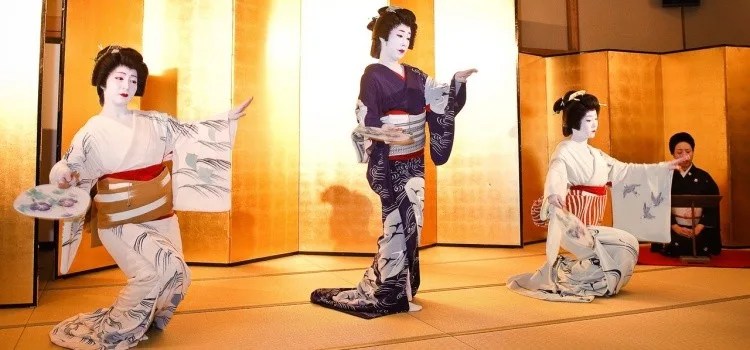
    Let’s begin our quest with “Sakura Fortune,” a slot game by Quickspin that beautifully captures the essence of Japanese tradition. Set against a backdrop of cherry blossoms in full bloom, this slot features a fearless heroine on a quest to defeat evil emperors and claim her fortune. The game boasts stunning visuals and a captivating soundtrack that immerses players in the world of samurais and geishas. 

    2. Shogun of Time

    Next up, we have “Shogun of Time” by Just For The Win, a slot game that brilliantly blends Japanese history with futuristic elements. This game transports players to an alternate reality where samurais have mastered time travel. With its cyberpunk-meets-samurai aesthetic, “Shogun of Time” offers a truly unique gaming experience. The game features a respin feature that adds an extra reel, boosting your chances of landing a winning combination. 

    3. Koi Princess

    For those who prefer a more whimsical take on Japanese culture, “Koi Princess” by NetEnt is a delightful choice. This is one of the best online slot games, it is a colourful and vibrant homage to all things kawaii, featuring adorable characters, lucky cats, and, of course, koi fish. The game is loaded with bonus features, including a Bonus Wheel that can lead to exciting rewards like free spins and coin wins. 

    4. Geisha’s Fan

    If you’re enchanted by the mystique of geishas and the elegance of traditional Japanese art, “Geisha’s Fan” by Tom Horn Gaming will captivate your senses. This slot game transports players to a traditional Japanese teahouse, where geishas await with exciting bonuses. The game features wild symbols, free spins, and a bonus game that lets you pick fans to reveal hidden treasures.

    5. Ninja Fruits

    For those who seek the thrill of martial arts and ninja stealth, “Ninja Fruits” by Play’n GO is a top choice. This slot game combines the excitement of fruit machines with the art of the ninja, creating a fast-paced and entertaining experience. Watch as fruits are sliced by throwing stars and uncover your fortune in this action-packed slot. 

    Conclusion

    Japanese-inspired slots offer a captivating blend of culture, tradition, and excitement that can transport players to a world of beauty, history, and adventure. Whether you’re drawn to the serene beauty of cherry blossoms or the martial prowess of samurais and ninjas, there’s a Japanese-themed slot game waiting for you. So, why not embrace the Zen of winning and embark on a journey to the Land of the Rising Sun from the comfort of your own home? 

    Artigo disponível apenas no Idioma Inglês! 

  • Shiritori: The Enchanting Japanese Word Game

    Shiritori: The Enchanting Japanese Word Game

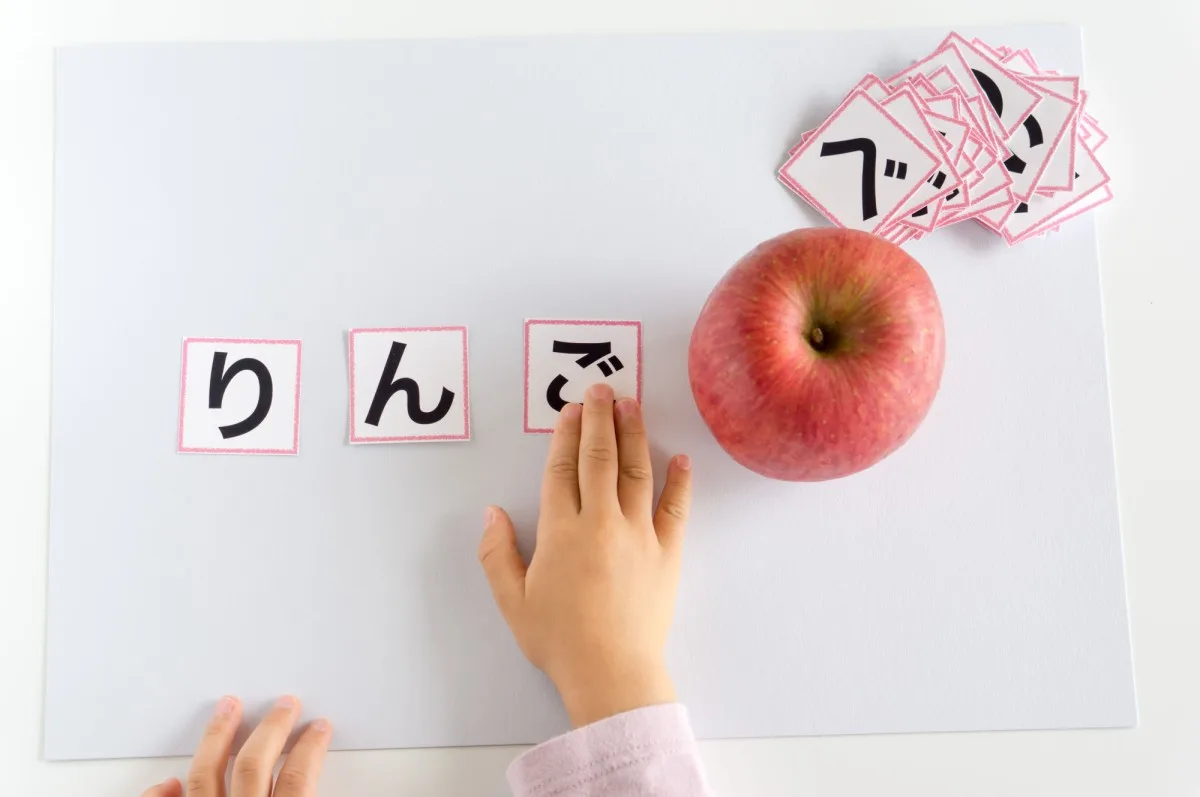
    Shiritori is a popular Japanese word game well-known for its simplicity and charm. The game stimulates creativity, mental agility, and memory, and is also an excellent tool for learning and practicing Japanese vocabulary. In this article, we will explore the rules, variations, and strategies of this intriguing word game.

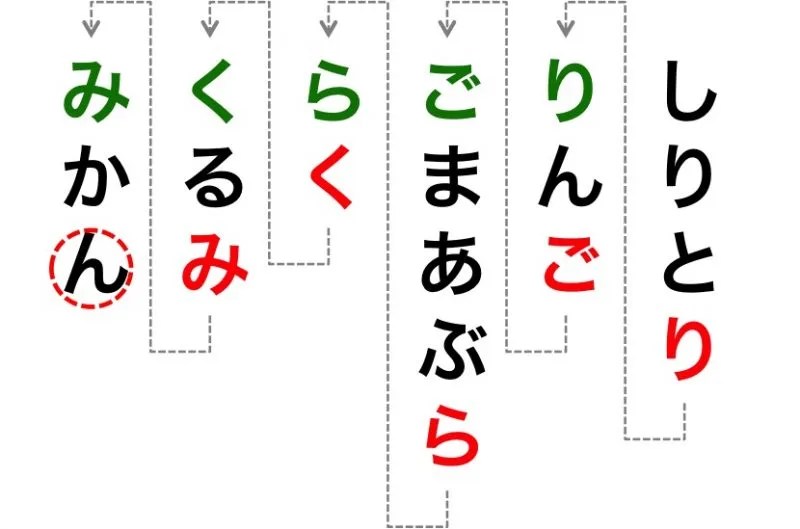
    The game is simple: One player starts with a word, and each player must continue with another word that begins with the last letter (syllable) of the previous word. Words cannot be repeated, and the player who says a word that ends with n (ん) also loses the game.

    We also recommend reading:

    How to play Shiritori

    Shiritori consists of players taking turns to say words that start with the last syllable of the previous word. The game is usually played by two or more people and can be played in both Japanese and other languages.

    However, when playing in Japanese, there are some additional or optional rules to follow:

    • Only nouns count. Common pronouns and place names may be allowed;
    • A long vowel can either be ignored or considered as a vowel;
    • Dakuten and handakuten can be ignored or added as a rule;
    • The length of a word must be three or more syllables.

    The game has several other rules that can be included to make it easier or harder. It is a very simple and interesting game to play, and it can be adapted and played in any language.

    Strategies to Win Shiritori

    Although Shiritori is a casual game, there are some strategies that can be employed to increase the chances of winning:

    1. Learn and memorize rare words: Having a vast vocabulary and knowledge of less common words can be useful, especially when the game becomes more challenging.
    2. Try to predict your opponent’s responses: By anticipating the words your opponent might use, you can plan ahead and think of several possible responses.
    3. Use words with less common syllables: Choosing words that end with less common syllables can make it harder for your opponent to respond and increase your chances of winning.

    See also: Super Dictionary of Yojijukugo – List of words with 4 kanjis

    Shiritori – Word game

    History and Meaning of Shiritori

    The word “Shiritori” (しりとり) is a combination of two Japanese terms: “shiri” (尻), which means “tail,” “buttocks,” or “end,” and “tori” (取り), which means “to take” or “to grab.”

    Together, they form “shiritori” (尻取り), which can be translated as “taking the tail” or “taking the end.” The etymology of the word reflects the basic mechanics of the game, where players must create a new word using the last syllable or “tail” of the previous word.

    The exact origin of Shiritori is difficult to determine, as there are no historical records specifically documenting its emergence. However, it is widely accepted that the game has its roots in Japanese culture and tradition, possibly dating back to the Heian period (794-1185) or the Edo period (1603-1868).

    During these periods, word games and poetry were very popular among the nobility and the warrior class, as well as among the general population. The most famous of these is “uta-awase,” a poetry contest in which participants competed to create the best poem following specific rules and themes. “Renga,” a style of collaborative poetry in which poets created alternating verses to compose a long poem, was also common.

    It is believed that Shiritori may have originated as a simplified form of such word games, aimed at providing entertainment and fun for people of all ages and social classes. Over the years, the game has gained popularity and evolved, becoming a common pastime and a useful tool for learning and practicing Japanese vocabulary.

    We recommend reading: Heian Period – The period of peace in Japan

    See below a song about Shiritori:

    Variations of the Shiritori Game

    There are several variations of Shiritori that can be played to make the game more challenging or suitable for different age groups and skill levels:

    1. Thematic: Players must choose words related to a specific theme, such as animals, foods, or places.
    2. Limited time: Players have a set time to think of a word, making the game more exciting and challenging.
    3. Words from specific grammatical categories: Instead of using only nouns, players can choose words from other grammatical categories, such as verbs or adjectives.

    In addition to the mentioned variations, the game can appear in different forms for children or in books and apps. It is possible to create different puzzles and intelligence tests using the basis of the game.

    The image below shows a map with determined words, where the goal is to find words that start with the last syllable and end with the first syllable of the word that follows the path:

    Let’s Play Shiritori?

    Now that you have learned how to play Shiritori, why not invite your friends and take the test? If you are still lost, see an example of a game below:

    Example of a game

    • Player 1: sakura (さくら)
    • Player 2: rajio (ラジオ)
    • Player 3: onigiri (おにぎり)
    • Player 1: risu (りす)
    • Player 2: sumou (すもう)
    • Player 3: udon (うど) – Lost!

    You can also easily download a game or app on your phone, just search for “Shiritori” in the app store.

    To conclude, we can summarize that Shiritori is a simple and engaging Japanese word game that can be enjoyed by people of all ages and language skills.

    In addition to being a great way to learn and practice Japanese vocabulary, the game can also be played in other languages and with different variations and rules.

    Through the use of strategies and vocabulary knowledge, players can challenge each other and improve their language skills while having fun.

  • Spy x Family family rocking in Cosplay of Yor Forger, Anya, and Loid

    Spy x Family family rocking in Cosplay of Yor Forger, Anya, and Loid

    In this article, we will present amazing photos of cosplays of Yor Forger, Anya, and Loid that showcase the talent and dedication of the Spy x Family fan community.

    Spy x Family is a successful manga series written and illustrated by Tatsuya Endo, which has won fans around the world with its engaging plot and charismatic characters.

    The story follows Loid Forger (Twilight), a spy, Yor Forger, an assassin, and their adopted daughter, Anya, who together form a “fake” family with the goal of completing a secret mission. With memorable character designs and unique personalities, it’s no surprise that cosplayers are recreating and celebrating these characters through their works.

    We also recommend reading:

    Anya Forger: Adorable and Telepathic

    Anya, the adopted daughter of Loid and Yor, is a sweet and mischievous girl with telepathic abilities. Her characteristic look includes short blonde hair, comfortable clothes, and a frequently curious and funny facial expression. Here are some of the most charming interpretations of Anya Forger in cosplay:

    Sometimes fans go beyond the limit and sensualize Anya with cosplay. If you were looking for an Adult version of Anya Forger, the images will now show how she would look:

    Yor Forger: The Elegant Assassin

    Yor Forger has won the hearts of fans with her elegant appearance and her ability to balance her double life as a deadly assassin and a loving wife.

    Cosplayers have captured the essence of Yor through detailed costumes and expressive poses, showcasing her fearless side and fighting skills, as well as her gentle and caring nature.

    Cosplay of the United Forger Family

    In addition to individual cosplays, many cosplayers choose to represent the Forger family as a group, capturing the unique dynamic and unconditional love that exists between these characters. Here are some impressive photos of cosplayers portraying the Forger family together:

  • Characters come to life with Doki Doki Literature Club Cosplay

    Characters come to life with Doki Doki Literature Club Cosplay

    The fame of the game Doki Doki Literature Club inspired a new wave of bold and eye-catching cosplay, today we will see the characters of this game full of twists coming to life and creating trends.

    Doki Doki Literature Club (DDLC) is a visual novel game released in 2017, which quickly gained popularity due to its unique narrative and unexpected twists. Despite its deceptively cute and colorful appearance, the game addresses dark and complex themes, creating an unforgettable gaming experience.

    As a result, a vibrant fan community has emerged, with many of them embracing the art of cosplay to honor their favorite DDLC characters.

    We also recommend reading:

    Cute Doki Doki Cosplay

    One of the main factors behind the popularity of DDLC cosplay is the wealth of captivating characters and intriguing designs found in the game. Each character has a distinct personality and a unique visual style that cosplayers can use to create impressive and memorable costumes.

    For example, Monika, the charismatic president of the literature club, is often portrayed in bold and provocative cosplays, highlighting her dominant role in the game. On the other hand, Sayori, the protagonist’s childhood friend, is often represented in more innocent and cheerful outfits, reflecting her kind and optimistic personality.

    This diversity of characters and visual styles offers cosplayers a wide variety of options, allowing them to explore different aspects of their creativity and artistic skills.

    Dark and Intense Cosplay

    Many DDLC cosplayers choose to create darker and more intense versions of their favorite characters, incorporating visual elements that reflect the most impactful and disturbing moments of the game. This can include elaborate makeup, special effects, and props that bring to life the darker aspects of the game.

    By exploring these dark themes through cosplay, DDLC fans have the opportunity to express their appreciation for the game in a deeper and more personal way, while challenging the boundaries of what is considered appropriate or conventional in the world of cosplay.

  • Japanese habits and customs

    Japanese habits and customs

    The Japanese have an extensive collection of interesting habits and customs to learn. In this article, we will look at some of these customs. We will mention customs, manners, rules, and random habits. Unfortunately, it is not possible to categorize them in this article; we will only mention the most common ones and important facts you should know.

    We also recommend reading:

    It can be rude to pour your own drink

    Instead of you pouring your drink or someone pouring drinks for everyone, eventually someone will notice and fill your glass. Just remember it is a bit rude to fill your own drink;

    When drinking with friends, wait for the Kanpai

    Drinking before they say Kanpai, a type of toast among friends, is considered rude and undisciplined. This usually happens when drinking Sake and Beer at a gathering, celebration with friends or colleagues;

    How to drink like a Samurai

    Shaking hands when doing business

    It may be common to shake hands when closing deals, there is no need to bow if you have shaken hands with someone;

    Yukata

    This garment, besides being popular at summer festivals, is often used as pajamas, especially in hotels and onsens. In some cases, you can have breakfast wearing the yukata. Furthermore, the women’s Yukata should be well secured, in case you are not wearing anything underneath and it opens..;

    Differences between Japanese and Western thinking

    Slippers

    Some bathrooms or other places provide slippers to access certain areas, just remember not to take them out of the place;

    Generally, slippers should not be used on tatami floors. In ryokans, slippers are often only used in the hallways;

    Also read: Zori – Havaianas or Japanese Sandals?

    Trash and Recycling

    There are many rules about how to package trash and the collection for recycling that varies according to the municipality. So you must pay close attention to the details to avoid doing it wrong;

    Trash

    Playing with Chopsticks

    Use chopsticks only for eating, that’s how the Japanese do it; besides involving hygiene, chopsticks represent many traditions and cultures, playing with them can be disrespectful;

    Also read: Chopsticks – Tips and Rules on how to use and hold chopsticks

    Chopsticks – Tips and Rules – How to use and hold chopsticks

    Pointing with your finger

    It is considered threatening in Japan; instead of pointing with fingers, the Japanese usually point in a direction with an open hand. Verbal instructions without gestures are also very common;

    part 3

    Taking a Dirty Bath

    In public baths, hotels, and homes, you will encounter a bathtub. In Japan, bathing is seen as a relaxing leisure activity rather than a body cleaning act. The Japanese usually wash themselves in the shower before entering the bathtub, and avoid any soap residue in the bathtub. (Or Ofuro).

    Towels in Hot Springs

    People bring small towels with them to bathing areas. These are used to lightly clean the body before entering the bath. They are also a tool for modesty to cover small parts of your body when standing. The towels cannot get wet. So they are often used on the head;

    We recommend reading: Onsen – Natural Hot Springs of Japan

    Onsen – Natural Hot Springs of Japan
    Onsen – Natural Hot Springs of Japan

    Oshibori

    Many restaurants offer a damp towel called Oshibori, which is used to lightly clean the hands before meals, so you should avoid using it on your face or as a napkin; it is considered rude;

    Shoe Manners

    Blowing your nose

    Blowing your nose in public is considered rude. People usually go to the bathroom to blow their nose. Sniffling is generally normal;

    Touching and Hugging

    We know that hugs and back pats are not common among the Japanese. Even lovers tend to avoid physical intimacy in public places. Therefore, avoid hugging or holding the hands of strangers, unless they are holding a sign that says Free Hugs;

    Free Hugs

    Walking while smoking

    Walking and smoking is seen as dangerous and reckless for a variety of reasons, the biggest being the idea that you could accidentally burn someone on a crowded street.

    Itadakimasu and Gochisosama deshita

    Before every meal, you should say Itadakimasu before eating and Gochisosama after finishing the meal; these are important customs that involve various things and meanings.

    Both words have several translations such as thank you for the food, I humbly accept the food, I thank God for the food, it was a good meal.

    This custom, although it has a bit of spirituality involved, is a cultural practice performed by everyone regardless of belief.

    Also read: Itadakimasu and Gochisousama – What is the true meaning?

    Names

    You should address a person by their last name and use the most common respectful suffix “-san”. Except if you are quite close friends with someone, you may call them by their first name;

    We recommend reading: List of Japanese Last Names 200+ Origin and Meanings

    Soups

    Soups are eaten with a spoon, of course. But there is no problem in picking up a bowl of soup to drink directly from it. This is quite common;

    In Japan it's Ok to Slurp

    Well, these are just some of the customs and habits related to Japan; in fact, there are thousands of rules and customs related to each item mentioned in this article, such as eating with chopsticks or in the bathroom. This is just another explanatory article because there are thousands of cultural differences and customs that can be found in various articles on this site.

  • Kaomoji | Emoji – 600 Japanese Emoticons in Text

    Kaomoji | Emoji – 600 Japanese Emoticons in Text

    Kaomoji [顔文字] are text-based face emojis, a style of Japanese emoticons composed of Japanese characters and punctuation marks. They are used to express emotion in text messages and internet communication on messengers like WhatsApp, Telegram, or social media platforms such as Facebook and Instagram.

    The word Kaomoji is a combination of Kao [顔], which means face, and Moji [文字], which means character and writing. Since it is of Japanese origin, it is common to find these writings on social media platforms in Japan, such as Line.

    We also recommend reading:

    Japanese people believe that the eyes are the mirror of the human soul. Therefore, unlike Western emoticons, where the focus is on the mouth, in Japanese emoticons the most important part is the eyes. Additionally, Kaomoji are so popular because you don’t have to read them sideways like Western emoticons.

    The Japanese are great at drawing and art, and they can convey a wide range of emotions using just a character’s face; we can see this clearly in anime and manga.

    Actually, there are thousands of Japanese emoticons, some more extravagant than others; some even fill up 100 lines of a page. In this article, we will provide a list of small Kaomoji separated into categories.

    At the end of our huge list of text emoticons, we will also share some apps where you can find even more kaomoji.

    We also recommend reading: The True Meaning of Japanese Emoticons and Emojis

    kaomoji,emoji - Kaomoji | Emoji – 600 Emoticons Japoneses em Texto

    Kaomoji of Joy and Happiness

    Below we will share a list of text emoticons for you to share with your friends on social media, Telegram, WhatsApp, Instagram, or Twitter.

    (* ^ ω ^)(‘∀ `*)(-‿‿-)☆ *:… o (≧ ▽ ≦) o…: * ☆
    (o ^ ▽ ^ o)(⌒ ▽ ⌒) ☆<())>..: ☆ *: · ‘(* ⌒-⌒ *)))
    ヽ (· ∀ ·) ノ(‘. • ω •.`)(W)`;: ゛;`; · (゜ ε ゜)
    (o · ω · o)(@ ^ – ^)ヽ (* · ω ·) ノ(o_ _) ノ 彡 ☆
    (^ 人 ^)(o’▽ `o)(* ‘▽ `*). ゚ (゚ ∀ ^ ^ ゚) ゚.
    (‘ω `)(((o (* ゚ ▽ ゚ *) o)))(≧ ◡ ≦)(o’∀`o)
    (‘• • co `)(^ ▽ ^)(⌒ω⌒)Σd (゚ ∀ ゚ d)
    ╰ (▔∀▔) ╯(─‿‿─)(* ^ ^ * ‿)ヽ (o ^ – ^ o) ノ
    (✯◡✯)(◕‿◕)(* ≧ ≦ co *)(☆ ▽ ☆)
    (⌒‿⌒) (≧ ▽ ≦) /⌒ (o ^ ▽ ^ o) ノ☆ ~ (‘▽ ^ 人)
    (* ゚ ▽ ゚ *)(✧∀✧)(✧ω✧)ヽ (* ⌒ ▽ ⌒ *) ノ
    (‘. • ᵕ •.`)(‘▽ `)(¯ ▽ ¯)╰ (*’)` *) ╯
    ヽ (> ∀ <☆) ノo (≧ ▽ ≦) o(☆ ω ☆)(っ ˘ω˘ς)
    (¯ ▽ ¯) /(*) *) (^ ▽ ^) /9 (◕‿◕) 6
    (o˘◡˘o) (★ ω ★) / (^ ^ ヮ) /(〃 ^ ▽ ^ 〃)
    (╯✧ ▽ ✧) ╯o o (> ω <)o (❛ᴗ❛) o Emoji

    Love and Passion Emoji

    Want to express your love to that special someone through a message? Instead of using traditional emoji emoticons, how about sharing your affections using text?

    (ノ’з `) ノ(♡ μ_μ)(* ^^ *) ♡☆ ⌒ ヽ (* ‘, ^ *) chu
    (♡ ♡ -_-)(£ @)ヽ (♡ ‿ ♡) ノ(‘∀ `) ノ ~ ♡
    (─‿‿─) ♡(‘. • ᵕ •.`) ♡(* ♡ ∀ ♡)(. · · // // Ε).
    (‘ω `♡)(◡‿◡ ♡)(◕‿◕) ♡(/▽*).o○♡
    (ღ˘⌣˘ღ)(♡ ゚ ▽ ゚ ♡)♡ (.- ω-)♡ ~ (‘▽ ^ 人)
    (‘• ω • `) ♡(‘ε `) ♡(‘. • ω •.`) ♡(‘▽ `).. o ♡
    ╰ (*’)` *) ╯ ♡(* ˘)˘ *)…: * ♡(♡ ˙)˙ ♡)♡ (¯ ▽ ¯) / ♡
    (≧ ◡ ≦) ♡(⌒ ▽ ⌒) ♡(* ¯ ³ *) ♡(っ ˘з (˘⌣˘) ♡
    ♡ (˘ ▽ ˘> ԅ (˘⌣˘)(˘⌣˘) ♡ (˘⌣˘)(/ ^ – ^ (^ ^ *) / ♡9 (♡ ε ♡) 6
    σ (≧ ε ≦ σ) ♡ emoji

    Embarrassment and Awkwardness Emoji

    To show embarrassment, you can use characters (something like a sweat drop), or characters to blush (*, o). Additionally, you can try making your emoticons cover their face with their hands in embarrassment.

    Read more: Why don’t Japanese women remove their pubic hair?

    (⌒_⌒;)(o ^ ^ o)(* / ω)(* /. )
    (* / _ )(* ノ ω ノ)(O -_- o)(* μ_μ)
    (◡‿◡ *)(ᵔ.ᵔ)(* ノ ∀` *)(// ▽ //)
    (ω // //)(ノ * ゚ ▽ ゚ *)(* ^. ^ *)(* ノ ▽ ノ)
    (¯ ▽ ¯ *) ゞ(/ / • /ω/ • / /)(* / ▽ *) Emoji

    Sympathy Kaomoji

    Show your elegance on Twitter using the Japanese text emoticons below:

    (ノ _ <.) ヾ (‘▽ `). · · ゚ (ノ Д`) ヽ (co)ρ (-ω-,) ヾ (Q;)
    ヽ (Q (..) ゝ(* ‘Eu `) ノ ゚ (ノ Д` ゚) ゚.ヽ (~ _ ~ (· _ ·) ゝ
    (ノ _;) ヾ (‘∀ `)(; Ω;) ヾ (‘∀ `*)(* ‘ー) ノ (ノ д`)
    (“-Ω-` (_)(っ’ω `) ノ (╥ω╥)(o · _ ·) ノ “(ノ _ <,)

    Kaomoji of Discontent

    Are you disappointed with someone? The emojis below can help express that feeling when posting on social media like TikTok and Instagram.

    (#> <)(; ⌣_⌣)☆ o (> <;) ○(¯ ¯ |||)
    (; Ä)(¯ □ ¯ 」)(# 0)(# W)
    (¬_¬;)(> M <)(」゜ ロ ゜)」(〃> _ <; 〃)
    (^^ #)()︹︺)(¯ ヘ ¯)<(¯ ﹌ ¯)>
    (︿)(> ﹏ <)(–_–)凸 (¯ ヘ ¯)
    ヾ (O) ツ(⇀‸↼ “)o o (> <)(」> <)」

    Angry Emoticons

    Are you angry at someone? Express it using the text emoticons below:

    (# `Д’)(皿 `’#)(`Ω’)ヽ (`д’*) ノ
    (· · `Ω’)(`Trem ‘)ヽ (`⌒’メ) ノ凸 (`△ ‘#)
    (`Ε’)ψ (`∇’) ψヾ (`ヘ ‘) ノ ゙ヽ (`﹏ ‘) ノ
    (メ ロ `’)(╬ 益 `’)┌∩┐ (◣_◢) ┌∩┐凸 (`ロ ‘) 凸
    Σ (▼ □ ▼ メ)(° ㅂ ° ╬)ψ (▼ へ ▼ メ) ~ →(ノ ° 益 °) ノ
    (҂ `з’)(‡ ▼ 益 ▼)(҂ ロ `’) 凸((╬◣﹏◢))
    9 (╬ʘ 益 ʘ╬) 6(╬ Ò﹏Ó)\9 (1` ^ ‘1) // 6(凸 ಠ 益 ಠ) 凸
    ↑ _ (ΦwΦ) Ψ← ~ (Ψ ▼ ー ▼) ∈୧ ((# Φ 益 Φ #)) ୨9 (ఠ 益 ఠ) 6

    Japanese Sadness Emoticons

    Feeling sad? Share your feelings on social media and messaging apps using the Kaomoji below:

    (ノ _ <).(* -_-)(‘Ω–`). · ゚ ゚ · (/ ω) · ゚ ゚ ·.
    (μ_μ)(ノ Д`)(-ω-,). ゜ ゜ (‘O `) ° ゜.
    o (T ヘ To)(; Ω;)(.╯3╰).. · ゚ ゚ * (> д <) * ゚ ゚ ·.
    (゚, _ `ゝ)(个 _ 个)(╯(╰,). · ゚ (゚> <゚) ゚ ·.
    (╥ω╥)(╯_╰)(╥_╥).. · ゚ ゚ · (> _ <) · ゚ ゚ ·..
    (/ ·,)(ノ _ <,)(╥﹏╥). ゚ (. ノ ω ヽ.) ゚.
    (つ ω` *)(.T Ω T.)(ノ ω ·,)· · ゚ (.> Ω <.) · · ゚
    (T_T)(> _ <)(T ▽ T). ゚ · (> ﹏ <) · ゚.
    o (〒﹏〒) o emoji

    Japanese Emoticons of Fear

    The Japanese emojis in the text below express the fear of the Japanese people. These are the characters they use in their messaging apps like Line.

    (ノ ω ヽ)(/.)(ノ _ ヽ).. · ヾ (>. <) シ
    (“ロ ゛)(;;; * _ *)(· · 人) (〇_o) /
    (/ ω)(/ _)~ (> <) ~Σ (° △ ° |||) ︴
    (((> <))){{(> _ <)}} (º □ º l | l) /〣 (ºΔº) 〣

    Indifference Emojis

    Not caring about anything? Don’t care about what others think? The Kaomoji below express indifference, perfect for sharing in online game and MMORPG chats.

    ヽ (ー ー _) ノヽ (‘ー `) ┌┐ (‘~ `) ┌ヽ (Ä) ​​ノ
    ┐ (¯ ヘ ¯) ┌ヽ (¯ ~ ¯) ノ╮ (_) ╭ヽ (ヘ) ノ
    ┐ (¯ ~ ¯) ┌┐ () ▽)) ┌╮ (¯ ~ ¯) ╭¯ _ (ツ) _ / ¯
    ┐ (‘д `) ┌╮ ()︿)) ╭┐ (∀) ┌┐ (˘, ˘) ┌

    Confused Kaomoji

    Are you confused by the comments made on Twitter? How about replying with a little confused face?

    (Q;)σ (¯, 〃)(¯ ~ ¯;)(-_-;) · · ·
    ┐ (‘~ `;) ┌(· _ · ヾ(〃¯ω¯〃 ゞ┐ (¯ ヘ ¯;) ┌
    (_ · ·;)(_) · · ·╮ (Q;) ╭(.;)
    (@ _ @)(· ·;) ゞΣ (ノ.)(· ·)?
    (• ิ _ • ิ)?(◎ ◎) ゞ(ー ー;)ლ (ಠ_ಠ ლ)

    Kaomoji of Doubt and Uncertainty

    Doubt about someone’s answer? Reply using the text emojis below:

    (¬_¬)(→ _ →)(¬¬)(¬‿¬)
    (¬_¬)(← ← _)(¬¬)(¬‿¬)
    (↼_↼)(⇀_⇀) emoji

    Surprise Emojis

    When you’re surprised by a message or post from a friend on Instagram, how about responding with these surprised little faces below?

    w (゚ o ゚) wヽ (゚ 〇 ゚) ノΣ (O_O)Σ (゚ ロ ゚)
    (⊙_⊙)(o_O)(O_O;)(OO)
    (゚ ロ ゚)!(o_O)!(_ □ □)Σ (□ □ _)
    Σ (O_O;) emoji

    Greeting Kaomoji

    (* · Ω ·) ノ(¯ ▽ ¯) ノ(゚ ▽ ゚) /(*’∀ `) ノ
    (^ – ^ *) /(@ ‘ー `) ノ ゙(‘• ω • `) ノ(゚ ∀ ゚) ノ ゙
    ヾ (* ‘▽’ *) (⌒ ▽ ⌒)ヾ (☆ ▽ ☆)(‘▽ `) ノ
    (^ 0 ^) ノ~ ヾ (· ω ·)(· ∀ ·) ノヾ (^ ω ^ *)
    (* ゚ ー ゚) ノ(· _ ·) ノ(o’ω`o) ノヾ (☆ ‘∀’ ☆)
    (W) /(‘ω `) ノ ゙(⌒ω⌒) ノ(o ^ ^ o) /
    (≧ ▽ ≦) /(✧∀✧) /(o’▽ `o) ノ(¯ ▽ ¯) /

    Winking Emojis

    (^ _ ~)(゚ o⌒)(^ _-) ≡ ☆(^ ~ ω)
    (> ^ ω)(~ 人 ^)(^ _-)(-_ ·)
    (^ _ <) ~ ☆(^ 人 <) ~ ☆☆ ⌒ (≧ ▽ °)☆ ⌒ (ゝ.∂)
    (^ _ <)(^ _-) ☆(· Ω <) ☆ emoji

    Japanese Apology Emoticons

    m (_ _) m(シ _ _) シm m (.).<(_)>
    人 (_ _ *)(* _ _) 人m (_ _; m)(M; _ _) m
    (シ..) シ

    Japanese Emoticons Hiding

    | · Ω ·)ヘ (· _ || ω ·) ノヾ (· |
    | д ·)| _))| ▽ //)┬┴┬┴┤ (· _├┬┴┬┴
    ┬┴┬┴┤ · ω ·) ノ| · Д ·) ノ

    Kaomoji Writing

    __φ (..)(¯ ー ¯) φ____φ (..)__φ (..;)
    ヾ (`ー ‘) シ φ____〆 (¯ ー ¯)…. φ (· ∀ · *)___ 〆 (· ∀ ·)
    (^ ▽ ^) ψ__…. φ () ▽)) φ….(..) Φ____φ (◎◎ ヘ)

    Kaomoji Running

    Looking for emoticons to express your runs in Stumble Guys? The Kaomoji below can help you:

    Read more: 15 Ways to Earn Free Gems in Stumble Guys

    ☆ ミ (o * · ω ·) ノC = C = C = C = C = ┌ (; · · ω) ┘─ = ≡Σ (((つ> <) つ
    ε = ε = ε = ε = ┌ (; ¯ ▽ ¯) ┘ε = ε = ┌ (> _ <) ┘C = C = C = C = ┌ (`ー ‘) ┘
    ε === (っ ≧ ω ≦) っヽ (Ä;) ノ = 3 = 3 = 3… ミ ヽ (>. <) ノ

    Japanese Sleeping Emoticons

    [(-)].. ZZZ(-_-) Zzz(∪.∪) Zzz…(-ω-) Zzz
    (O) zzzzzzzz((_ _)).. Zzzzz(P).. zzZZ(-.-)… Zzz
    (_ _ *) Z zz(x. x) ~~ ZZZ emoji

    Japanese Animal Emoticons

    Now let’s move on to the kaomoji that make animal faces. The Japanese are really clever.

    We also recommend reading: Names of Animals in Japanese – Doubutsu

    Cat Emojis

    Cat in Japanese is Neko. One of my favorite animals, in fact I named my cat Neko.

    (^ = · · Ω ^ =)(^ = · · ェ ^ =)(= ①ω① =)(= Ω =).. nyaa
    (=; ェ; =)(= `Ω’=)(= ^ ^ = ‥)(= ノ ω ヽ =)
    (= ⌒‿‿⌒ =)(= ^ ^ = ◡)(= ^ – ω – ^ =)ヾ (= `= ω’) ノ”
    (^ Co • • ^)(/ = Ω =) /ฅ (• ㅅ • ❀) ฅฅ (• ɪ •) ฅ
    ଲ (ⓛ ω ⓛ) ଲ

    Bear Emojis

    (‘(エ) `)(* ¯ (エ) ¯ *)ヽ (¯ (エ) ¯) ノ(/ ¯ (エ ¯)) /
    (¯ (エ) ¯)ヽ (`(エ) ‘) ノ⊂ (¯ (エ) ¯) ⊃(/ (エ) )
    ⊂ (‘(ェ)’) ⊃(/ – (エ) -)(/ ° (エ) °) /ʕ ᵔᴥᵔ ʔ
    ʕ • ᴥ • ʔʕ • ω • ʔʕ • • ʔ o emoji

    Dog Emojis

    Below we have some Japanese dog Kaomoji:

    Read also: Meet 11 Japanese Dog Breeds

    ∪ ^ ^ ェ ∪∪ ω · · ∪∪ ∪-∪ · ェ · ∪
    U ^ ^ U 皿UT ェ TUU ^ ^ U ェV ● ᴥ ● V

    Rabbit Emojis

    Rabbit in Japanese is called Usagi, and there is even an island full of rabbits in Japan. Shall we take a look at some more Kaomoji below?

    Also read: Okunoshima – The Famous Rabbit Island

    / (≧ ≦ x) / (· · ×) / (=’x` =) / (^ X ^)
    / (X = · · =) / (^ ^ ×) / (> × <) emoji

    Pig Emojis

    (‘(00) `)(¯ (ω ¯))ヽ (`(00) ‘) ノ(‘(Oo) `)
    (¯ (oo) ¯) /. ゚ (゚ ‘(00) `゚) ゚.(¯ (00 ¯)) emoji

    Bird Emojis

    Bird in Japanese is called tori. How about sharing bird kaomoji on social media?

    (Q)(`· · Θ ‘)(`Θ’)(◉Θ◉)
    (`Θ’) /(· · Θ)(· · Θ)ヾ (¯ ◇ ¯) ノ 〃

    Japanese Fish Emoticons

    Fish in Japanese is called Sakana. How about sharing a fish with the text emoticons below?

    (°) #)) <<<·)))> <<° ζ))) 彡> °)))) 彡
    (°)) <<> ^))) <~~≧ (゚ ゚) ≦ emoji
    O verdadeiro significado dos Emoticons e Emojis Japoneses

    Japanese Emoticons of Friends

    The faces below are not individual but represent the bond of friendship, perfect for sharing in a Facebook or Instagram post.

    ヾ (· ω ·) メ (· ω ·) ノヽ (∀ ゜) 人 (゜ ∀) ノヽ (⌒o⌒) 人 (⌒ ⌒-) ノ
    (* ^ ω ^) 八 (⌒ ▽ ⌒) 八 (-‿‿-) ヽ (^ ^ ∀) メ (^ ^ ∀) ノヾ (¯ ー ¯ (≧ ω ≦ *) ゝ
    ヽ (⌒ω⌒) 人 (= ^ ^ = ‥) ノヽ (≧ ◡ ≦) 八 (o ^ ^ o) ノ(* · ∀ ·) 爻 (· ∀ · *)
    . *: ☆ (· ω · 人 · ω ·).: ゜ ☆.o (^^ o) (o ^^ o) (o ^^ o) (o ^^) o(((¯ (¯ (¯ ▽ ¯) ¯) ¯)))
    (゚ (゚ ω (゚ ω ゚ (☆ ω ☆) ゚ ω ゚) ω ゚) ゚)ヾ (· ω · `) ノ ヾ (‘· ω ·) ノ ゛Ψ (∀ `) (∀’) Ψ
    (っ ˘ ▽ ˘) (˘ ▽ ˘) ˘ ▽ ˘ς)(((* ° * ° ▽) 八 (* ° * ° ▽)))☆ ヾ (* ‘· ∀ ·) ノ ヾ (· ∀ · `*) ノ ☆
    (* ^ Ω ^) 人 (^ ω ^ *)9 (1 · ิ ᴗ · ิ) 69 (· ิ ᴗ · ิ 1) 6(☞ ゚ ヮ ゚) ☞ ☜ (゚ ヮ ゚ ☜)

    Enemy Emojis

    Tired of haters on social media? How about expressing the idea of enemies using the Kaomoji below?

    ヽ (· ∀ ·) ノ _θ 彡 ☆ Σ (ノ `Д’) ノ(*’∇ `) ┌θ ☆ (ノ> _ <) ノ(Q) ノ ゙ ⌒ ☆ ミ (o _ _) o
    (* `0′) θ ☆ (メ ゜ 皿 ゜) ノ(o¬‿¬o)… ☆ ミ (* x_x)(╬ 皿 ¯) = ○ # (¯ #) 3)
    (; -_-) —— C <-_-)<(︿) (θ(θ( ☆ (> 口 <-)(£ (# ¯) ☆ ╰╮o (¯ ▽ ¯ ///)
    ヽ (> _ <ヽ) -⊂ | = 0 ヘ (^ ^ ‿)ヘ (> _ <ヘ) ¬o (‿ メ),, (((¯ □) _ / _ (○ ¯))),,
    (҂ `ロ ‘) ︻ デ ═ 一 (º □ º l | l) /(╯ ° Д °) ╯( /(.□. )(¬_¬ ”) ԅ (¯ε¯ԅ)
    / (. □.) (╰ (° 益 °) ╯( /(.□. /)(ノ -.-) ノ…. ((((((((((((● ~ * (> _ <)!! (メ ¯ ¯) _θ ☆ ゚ ゚ 0) /
    (`⌒ *) O – (` ⌒’Q)(((ง ‘ω’) و 三 ง ‘ω’) ڡ≡ ☆ ⌒ ミ ((x_x)(ง ಠ_ಠ) ง σ (• ω • σ)

    Weapon Emojis

    It’s time to start shooting using the Kaomoji below. Perfect for those who want to chat about Battle Royale games like Fortnite and Free Fire.

    Read more: 15 ways to get Free Fire Diamonds for free

    (· ∀ ·) · · · ——– ☆(/ -_ ·) / D · · · · · —— →(^ ω ^) ノ ゙ (((((((((● ~ *
    (-ω -) / 占 ~~~~~(/ · ·) ノ ((く ((へ-⊂ | = 0 ヘ (^^)
    ○ ∞∞∞∞ ヽ (^ ー ^)(; _ · ·) —- C(· _ ·) ノ ζ ||| ζ
    (* ^^) / ~~~~~~~~~~ ◎¬o (¯ ¯-メ)– (T_T) →
    (((¯ □) _ /(メ ロ `’) ︻ デ ═ 一(“-Ω ·) ︻┻┳══━ 一
    (メ ¯ ▽ ¯) ︻┳═ 一Q (`⌒’Q)(ಠ o ಠ) ¤ = []:::::>

    Health Emojis

    Have you ever wondered what Health is like in Japan? The Kaomoji below perfectly express the Japanese idea of health. Personally, I couldn’t quite understand it very well.

    Read more: Healthcare System and Hospitals in Japan

    (* ‘ー’) 旦 旦 (Q *)(*’з `) 口 ゚. ゚ 口 (· ∀ ·)(O ^ ^ o) 且 且 (‘ω `*)
    (¯ ▽ ¯) [] [] (≧ ▽ ≦)(* ^^) O∀ ∀o * (* ^^)(^^) _ 旦 ~~ ~~ U _ (^^)
    (* ¯ ▽ ¯) 旦 且 (‘∀ `*)(‘Ω’) 旦 ~~ ┏━┓ emoji

    Music Emojis

    Like Japanese music? Below we recommend a list of music kaomoji:

    Also read: My Playlist of Japanese Songs + Animes

    ヾ (‘〇 `) ノ ♪♪♪ヘ (co ヘ)(~ ▽ ¯) ~~ (¯ ▽ ~)
    ヽ (o’∀`) ノ ♪ ♬(ノ ≧ ∀ ≦) ノ♪ ヽ (^^ ヽ) ♪♪ (/ _ _) / ♪
    ♪ ♬ ((d⌒ω⌒b)) ♬ ♪└ (¯-└))((┘¯ω¯) ┘√ (¯ ‥ √)
    └ (^^) ┐┌ (^^) ┘ (¯ ▽ ¯) / (¯ ▽ ¯) /
    (¯ ▽ ¯) /♫•*¨*•.¸¸♪(^ _ ^ ♪)(~ ˘ ▽ ˘) ~~ (˘ ▽ ˘ ~)
    ヾ (⌐ ■ _ ■) ノ ♪(~ △ ¯) ~(~ ~ ▽ ~) ~~ (˘ ▽ ˘) ~
    乁 (• ω • 乁)(「• ω •)「⁽⁽◝ (• ω •) ◜⁾⁾✺◟ (• ω •) ◞✺

    Kaomoji for Games

    Below we have a list of gaming Kaomoji, perfect for posting in the global chat of online games:

    (^^) P _____ | _o ____ q (^^)(/ O ^) / ° ⊥ (^ o)! (; ゚ o ゚) o / ¯¯¯¯¯¯¯ ~> ゚)))) 彡
    ヽ (^ o ^) ρ┳┻┳ ° σ (^ o ^) ノ(/ _ ^) / ● (^ _ )“((≡ | ≡)) _ / _ ((≡ | ≡))”
    (ノ -_-) ノ ゙ _ □ □ VS _ ヾ (^ – ^ ヽ)ヽ (; ^ ^) ノ ゙……___ 〇(= O * _ *) = OQ (* _ * Q)
    Ю ○ 三 (¯ ^ ) emoji

    Special Kaomoji

    More special Japanese emoticons in text for you to use on messaging apps and social networks:

    9 (‘〇’ *) وacordando
    (¯ ^ ¯) ゞsaudação militar
    (-‸ლ)facepalm
    (╯ ° 益 °) ╯ 彡 ┻━┻jogando mesa com raiva
    (╮ ° – °) ╮┳━━┳ (╯ ° □ °) ╯ ┻━━┻pegando a mesa e ficando louco
    ┬─┬ ノ (º _ º ノ)colocando mesa de volta
    (OT-T) 尸rendição
    (͡ ° ͜ʖ ͡ °)Aquela carinha…
    (ಠ_ಠ)olhar de desaprovação
    ◯ 0o. (ー. ー) y ~~fumar
    (¯﹃¯)faminto
    (˘ ▽ ˘) っ ♨comendo
    (っ ˘ڡ˘ ς)gostoso
    (x (x_ (x_x (O_o) x_x) _x) x)viva entre zombies
    (· Ω ·) ☞indicação
    (⌐ ■ _ ■)de oculos
    (¯.) O- 【】 TVassistindo TV
    `,` ヽ ヽ `, ヽ (ノ> <) ノ`, `ヽ ☂ ヽ`, ヽcaptura guarda-chuva na chuva
    (II *)sangramento do nariz
    (¯ ¯ ハ *)sangramento do nariz (alternativa)
    (•) (•) ԅ (~⌣~ԅ)emm… tentar descobrir o que está fazendo

    Download a Kaomoji App

    We know that it’s not always easy to just copy and paste emojis. With that in mind, in addition to our huge list of Japanese kaomoji sorted by category, we’re also going to share a list of Android and iOS apps that you can look for in your app store to install and copy even more emojis.

    Kaomoji – Japanese Emoticons is the most popular app of all, but it’s a generic name, so you will probably find several apps with similar titles, all functional.

    After all, it’s not that important—it’s just an app that shows a list of special characters that form pictures. If you don’t want to fill up your smartphone’s memory, we recommend saving this article to your favorites so you don’t have to install anything.

    The advantage of the app is that it has more than 10,000 Japanese text emoticons. Our list is small, with about 600. For this reason, you can download the recommended app or any other by searching with the keywords:

    • Kaomoji
    • Japanese Emoticons
    • Emoji Text
    • 顔文字

    Another app I’d like to recommend is Emoticon Dictionary, which is a text emoticon dictionary where people can share those gigantic emoji that can even take up entire sheets of paper. This app has no limits!

    You can also install the Kaomoji Keyboard, which adds an option of hundreds of text emojis to your keyboard, just like the traditional emoticon menu we have on our phones.

    Other apps are:

    • Smiley&Emoticons5000 [iOS]
    • Girl’s Kaomoji Jiten 5000
    • Cute Emoticon

    Do we use Kanji and Ideograms in Kaomoji?

    Yes, it is possible to find ideograms in Japanese emoticons, often just for visual effect, but they can also carry meaning. If you don’t know how to write such an ideogram in Japanese, or don’t understand its meaning, we recommend watching the video below:

    I hope you enjoyed the article. Don’t forget to share it and leave your comments.

  • Japan: here are the travel ideas to be enjoyed

    Japan: here are the travel ideas to be enjoyed

    Ivory beaches bathed by a placid turquoise ocean only tinged with blue, a gigantic metropolis of skyscrapers with mirrored facades animated by commercials and instant news 24 hours a day, and again, rural villages among ancient forests, spas, castles, and Shinto and ancient Buddhist temples where the smell of wood intensifies with the smoke of burning incense.

    Nestled between unimaginable folklore and modernity, Japan often seems to be a risky destination for the average tourist. Whether due to the cost of travel, the language, or the sometimes embarrassing eccentricity of the Japanese, the Land of the Rising Sun remains a corner of the planet very little explored by Italian travelers. However, nowhere else will you find a punctual public transportation system that can break the second and is always within a short distance as in Japan, so much so that even the smallest urban centers are served by at least one train station. So, if you already have half a mind to go to Japanese lands, know that you will not find the slightest difficulty in getting around, whether to visit the gigantic capital or a typical village in the south of the country.

    Discovering Japanese Spirituality

    Wherever you go in Japan, you will certainly not fail to notice the vibrant spirituality of the natives. Although the topic of religion is, in fact, a kind of taboo (when questioned about the subject, the average Japanese becomes embarrassed or, to avoid interrupting the conversation, evades and shifts to a “lighter” topic), the Japanese maintain a strong connection with Shinto tradition and often willingly join it with Buddhism, alternating between the two through various phases or situations in life.

    A wonderful example of this very normal Japanese eccentricity in terms of spirituality is represented by the Zeniarai Benzaiten temple. You won’t believe it, but at this Shinto temple, the Japanese go every time they want to submit their money to the purification rite. First of all, it must be emphasized that money is considered a malicious object in itself, therefore, the purification rite helps to ward off any kind of misfortune related to the use of money. You can find the Zeniarai Benzaiten temple in Kamakura (Kanagawa Prefecture), a true valley of Japanese temples, where you can wash your money in the sacred water spring: the Buddhist deity Benten (and here Buddhism and Shinto intersect in a unique tradition), goddess of water, music, and well-being, will protect all your future purchases or investments. Just think that Benten’s fame is such that many Japanese go to purify coins to buy lottery tickets. Don’t forget: the “washed” money in the temple spring must be spent to produce its good fruits!

    Buddhism in Japan - Japanese Religions
    Buddha Monument

    Tokyo, the giant of megacities

    A single day in Tokyo will never be enough to see all the wonders of this city, which knows how to be futuristic beyond imagination and traditional in the most disarming way possible. Before entering the alleys of this immense maze of streets and lanes, grab a map to consult step by step (practically, almost all shops have at least one) or download an internet app that allows you to understand with extreme precision where you are and where to go. If you are not afraid of mazes, Tokyo is all yours! In this giant among the most limitless megacities, you will be literally captured by the gravitational attraction of the flow of people moving almost synchronized in unison; it is impossible not to be caught by the human circuit of Tokyo!

    Even the seemingly most remote alleys are, in fact, well-lit and populated with typical shops or restaurants displaying images of their main dishes on monitors shown in the window. In the Ginza district, the most elegant and refined meander of the capital, you will find the most exclusive shops in the entire country: the one that sells the best types of paper in the world, including paper made in Italy, used for wrapping objects, but also for making colorful greeting cards or very refined business cards.

    Japan Wireless brings you portable Wi-Fi in Japan
    View of Tokyo from Above

    The rural villages not to miss

    Besides surprising with its ultramodern jewels, the Land of the Rising Sun remains above all a country of ancient traditions and rural villages, lost at the foot of some mountains and populated by wooden houses and peasants who still wear kimonos (which city Japanese only wear for special occasions, such as ceremonies or national holidays).

    Tsumago Juku is one of the villages found on the now-famous Magome-Tsumago route. It was born as a cluster of houses around the post office, where travelers used to sleep and change horses. If you want to go back a few centuries, Tsumago is the number one destination to include in your trip to Japan. If you wish, you can also stay overnight in one of the many inns and savor the typical flavors of the place.

    Magome - The Samurai Village
    Magome Route

    Another village that definitely deserves a stop is Takayama, famous for its sake distilleries and for that sweet and intense aroma that blends with the smell of the old wood of its houses. To not miss anything, Funaya (also known as Ine no Funaya) is a village that will impress you with the unique characteristic of its houses: all have space to accommodate a boat. Funaya is, in fact, the Japanese Venice, where people travel by boat and the houses seem to emerge directly from the water.

    Still regarding the issue of water, the village of Oshino Hakkai was born in eight lakes that receive water from the melting snow on Mount Fuji. As the mountain acts as a natural filter with its layers of lava, the water that flows downstream is clear and pure. You can drink directly from the spring, which the locals consider a sacred source.

  • The 5 best free Android games of 2022

    The 5 best free Android games of 2022

    There is a wide variety of games available in online stores for smartphones, and games in general have flourished recently and diversified, resulting in high demand. Adults and children play for many reasons, whether to obtain some fun, excitement, and comfort away from the pressures and problems of modern life.

    In this article, we will list the best games from the Google Play Store and Apple Store so that players can choose a new game based on a brief description. The focus of this article is on Android apps, but you will find many of the games also on iOS.

    List of the best free games for Android in 2022

    We present in the following list a group of the best, most important, and most popular games that can be played online or downloaded for free on Android systems from Google Play:

    FIFA 2022 Mobile

    FIFA 2022 is one of the most recent and popular releases from EA SPORTS, one of the most important video game companies in the world. FIFA 2022 is the most famous game in the field of football, as it offers the best international, local, and European tournaments for fans of these tournaments. The game includes many tips and gameplay strategies so that players can create their own strategy, choose favorite teams, and control their strategies and gameplay skills. The game puts players in the role of coaches, managers, planners, and implementers of games as well. The game also allows players to switch gameplay, swap players, and play against other teams controlled by other players or controlled by the game itself. The company released the latest version of the game, which relies on updating gameplay techniques and tactics, enhancing defensive capabilities and shooting ability, and making audio and visual efficiency at its highest levels to give the feeling of real matches.

    SLOTS

    The Internet is famous for various casino sites that offer players the chance to win many prizes, bonuses, and money as well. Online slots are called slots, which consist of spinning the arm and waiting for the symbols or numbers where the player bet from the beginning to appear. Also available in these games is the casino’s free spins bonus that allows players to win without depositing money. These games also offer a wide range of other features, such as educational and training courses and free accounts, which will increase the chances of winning and enhance the excitement of thrill and fun.

    - Best Casino Apps for Mobile

    PUBG Mobile

    The PUBG game has spread since 2017 and has been highly admired by all age groups of video game lovers. This game has provoked wide controversy because it is the only game in terms of the number of players participating in a round. Each round of the game includes about 100 players from all nationalities. These players are spread across a certain geographical area and use the resources available in that area and try to survive until all players die and only one player or group remains, then the rest is considered the winner of the round. The PUBG game falls under fighting games, but differs in many factors, the most important of which is that there is no chance of return if the player is killed in the round and that it can also be played in different styles, as shown below:

    • Simple Game: This is when one person plays against 99 other players.
    • Playing in Pairs: when one player joins another player and fights against the remaining 98 players.
    • Team Play: When one player joins three other players and fights against other teams.
    • You can also
    • Playing from the Player’s Perspective: The player opts to have the camera as if it were in their eyes and sees everything as if they were in the game.
    • Playing from a Third-Person Perspective: The player opts to have the camera behind the player as if someone were filming the entire event.

    Regardless of which mode the player chooses, the main objective of the game must be verified to survive until the end, one must be careful, follow all instructions, pick up all weapons, and constantly look at the map for players around.

    - 15 ways to earn balance in PUBG Battlegrounds for free
    15 ways to earn balance in PUBG Battlegrounds for free

    Asphalt 9 Game

    Asphalt is one of the most popular car racing games for mobile phones. The game offers more than 70 different racing tracks, each with its own challenges, attributes, and appearances, so each of them also has special skills that must be present in the car or in the player themselves. Normally the race consists of eight players, but with the new updates of the game, it has become possible to increase the number of players according to the difficulty of the race itself. Asphalt races are similar to traditional driving in some ways, such as basic driving concepts, but differ in the focus on racing skills and controlling the car through the options at the top of the screen.

    Call of Duty: Mobile

    Call Of Duty: Mobile is one of the most popular free games offered on smartphones at the moment. This game has reached a competitive level with the famous PUBG game due to the great capabilities of this game and a fan base growing every day. The game involves an attempt to obtain all resources, weapons, and enough food that provides the player with chances to survive from the enemies surrounding them in the game, therefore it is considered one of the action and fighting games. When downloading the game, players must follow the instructions, adjust the types of weapons, and start playing with focus.

    We recommend reading: 15 ways to earn CPs in Call of Duty Mobile for free

    - 15 ways to earn balance in Call of Duty Mobile for free

    The positive effects of games on intellectual performance

    Video games have a very large impact on overall culture and on individuals in particular. Recent studies indicated that people who play video games have significantly higher levels of intellectual and analytical performance compared to people who do not play video games.

    Video games affect a person’s ability to analyze and think quickly in a perceptible and logical manner. Therefore, the brain is very trained in the ability to analyze and think quickly. On the other hand, studies indicated that hand-eye coordination improves at an unprecedented level due to video games. Where video games require quick action at hand as soon as you watch the action in the game and this skill is a skill that must be enhanced with practice, and this practice is done through video games.

    On a psychological level, video games help introverted people or those who lack the skill to make friends to try to push them into a privileged society and gain diverse friendships. There is no room for discussion that the increased demand for video games would cause certain problems, but the advantages of video games are distinct and numerous if adopted at their natural pace and without affecting other aspects of life.

  • The good relationship of the Japanese with their pets

    The good relationship of the Japanese with their pets

    Traditionally known for its love and respect for animals, Japan also has laws and care that protect pets.

    The good relationship with pets goes far beyond what we know in the West. Having a pet in Eastern countries, such as Japan, is more than just giving affection and love to the little creature; the country is also known for having animals as cultural and religious symbols.

    Dogs of the Shiba Inu breed, for example, are popular in Japan as a symbol of good luck for their owners and local residents. The breed, also known as the “little fox of Japan,” is one of the oldest and most popular in the East. Studies show primitive drawings dating back to 300 B.C. already featuring these animals. Considered a national treasure of Japan, Shiba Inu dogs are appreciated for their courage, gentleness, boldness, and kindness.

    The cat’s main symbol is the popular Maneki Neko (also known as the Lucky Cat), a culturally famous cat in Japan for its seated appearance, always with one paw raised. It is considered an amulet to attract good luck, protection, happiness, prosperity, and health.

    The love for animals is so great that, in Yamaguchi Prefecture, there is the Cat Temple (Unrinji). The temple arose from a local legend that tells the story of a cat that stayed at its owner’s grave after their death. The belief also states that the sad meow of the animal was only heard to stop after a monk built the sanctuary in its honor. The site displays over 700 sculptures of felines and is frequently visited by those who believe in the loyalty of cats.

    - Automatic draft

    Laws Value Pets in Japan

    In a more practical way, the country values animals in all aspects, and to have a pet in Japan, one must respect and fulfill local obligations. In order to reduce animal abandonment, the Japanese parliament implemented laws that require dog and cat traders to microchip the animals. The microchip, which is about 2 millimeters, contains information such as the seller’s name, names, address and contact of the owners, breed of the animal, name of the animal, color, gender, among other information directly sent to a database of the Japanese government. The country, which rescues about 72,000 abandoned or lost dogs and cats each year, implemented this measure so that animal guardians can be identified in case of abandonment or if the animal is found after going missing.

    The law also protects puppies when they are sold. Dogs and cats must be at least 56 days old before being separated from their mother. This decision was made after experts concluded that animals taken away too early from their mother tend to be more violent and aggressive throughout their lives.

    The appreciation and respect for the life of animals in Japan is a serious matter; laws against animal cruelty have harsh and severe penalties when violated, which can reach up to five years of imprisonment and fines of up to ¥5 million (about 195 thousand reais).

    In addition to legal measures to value the lives of animals, protectors from institutions specialized in animal rights advocate that new guardians take a consciousness test before adopting or buying a pet. It is advocated that a complete evaluation of the place be made, and observations such as permission to have animals on the premises and living conditions are taken seriously. It is also analyzed whether the owners have sufficient time to fulfill obligations such as veterinary visits and frequent walks. Another important factor is the economic condition of the new owners; if the animal causes any material damage, it is necessary to know if the guardians have the means to cover the costs of compensation.

    Nekojima - Discover 20 Cat Islands in Japan

    There Are More Pets Than Children in Japan

    It is estimated that today pets have already outnumbered children in Japan, making them a fundamental part of many Japanese households. Animals began to gain importance in Japanese families in the 60s and 70s, a period known as Mai Hoomu (from English My Home), where the desire for houses and a lifestyle similar to that of Americans became popular. The increase in households with animals led to the creation of various services and items exclusively for pets. According to a 2020 survey conducted by the pet insurance company Anicom Insurance, it is estimated that spending on dogs in Japan increased annually by 13%, while spending on cats increased by 3.9%. Among the main costs are food, hygiene, and veterinary care such as consultations and treatments.

    Among the services offered for Japanese pets are restaurants specifically for animals. These establishments offer specialized and exclusive food for pets, special menus on holidays, and even birthday cakes. There are also services such as bathing and relaxation in hot springs, luxury resorts exclusive for animals, professionals responsible for taking care of pets while their owners are busy, dog taxis, among others.

    Other services not so common in Brazil are also offered in the country. Buddhist rituals for pets are performed after the animal’s death. Prayers and ceremonial rites are conducted so that the animals can make the transition according to belief. There are also families that visit temples on the 49th day after the animal’s death, a day that, according to Buddhist beliefs, is the day when prayers for the reincarnation of the deceased are made.

    The Japanese are also great advocates of pet products. It is common to walk the streets of Tokyo and see animals in strollers or wearing designer clothes. Products such as dog beds, cat scratchers, and toys are also popular in the country.

    According to research conducted by the Tokyo University of Agriculture and Technology and the Japan Small Animal Veterinary Association, good treatment of pets has yielded results. The average lifespan of dogs has reached a record of 13.2 years, and 11.9 years for cats. The good care mentioned above and regular visits to the veterinarian are responsible for the high longevity of pets in the eastern country.

  • Exploring Higher Education in Korea: Opportunities and Challenges

    Exploring Higher Education in Korea: Opportunities and Challenges

    The obvious difference in mindset, culture, and society between Western and Eastern countries has not prevented thousands of students from seeking higher education in the Land of the Morning Calm. According to researchers from the write my research paper service, the rapidly growing economy and the South Korean government’s favorable attitude towards internationalization make the country an attractive destination for educational tourism. High-speed internet, the prevalence of English, and a supportive startup system attract students from all over the world to South Korea.

    Higher Education System

    Higher education is popular in South Korea. About 70% of high school graduates enroll in higher education institutions, which include not only classical universities, colleges, and open universities (which organize academic courses via the Internet).

    The university education process is divided into three stages: Bachelor’s, Master’s, and Doctorate. It takes four years to obtain a bachelor’s degree, and two years for a master’s. Doctoral students work on research for no more than four years.

    The academic year in South Korea is divided into two semesters. One starts in March and the other in September. After each semester, vacations are announced: summer, from mid-July to August; winter, from late December to February.

    It is important to note that you must pay for all types of education in Korea (including even preschool education). Higher education costs from $1,500 to $8,000 per year. Master’s programs cost about a quarter of that.

    The extensive infrastructure of universities is also funded to some extent by students, who pay each semester for student support services, accommodation, and meals in dormitories, as well as health insurance.

    The Content Side of Study

    The period in which a student can obtain a bachelor’s, master’s, or doctoral degree in South Korea is almost identical to that of Europe. However, the content of the Korean educational process differs markedly from that of Europe.

    Most Korean universities adhere to liberal educational standards. There are no strict curricula here. Students are free to choose the subjects they are interested in, including general sciences and specialized subjects. Such a format, combined with the cost of education, motivates students to choose the subjects they study responsibly. It is the prioritization of the student that determines how useful and productive their years at university will be. Thus, the perceived freedom imposes significant responsibilities and obligations on students.

    When evaluating a student’s academic performance, South Korean educators are not concerned with the amount of information learned, grades, or even attendance. The most important thing a student must do to obtain a good grade is to prove that they can apply the information they learned in practice. Students prepare real projects and solve cases, demonstrating their ability to use theory in a variety of situations.

    There are no seminars in South Korean universities, only lectures in the curriculum. There are various formats for class lessons. In the first, the instructor assigns each student to prepare a presentation that addresses certain aspects of the topic being studied. During the class, students present their information from which the overall picture emerges. This format teaches students effective public speaking, concise presentation, and quick assimilation of information.

    Another way in which the teacher plays the role of moderator is through lively discussion among students. He or she asks important questions, identifies topics for discussion, gives examples, and invites comments. The result of scientific discussions is a solid understanding of the material. It is known that strong emotions evoke long-term memorization. Students who emotionally prove their viewpoint on the subject being studied memorize the course of their thoughts and arguments, as well as the logic of their opponents.

    Universities in South Korea

    Today, in South Korea, there are about 400 higher education institutions. Among them, there are private and state universities. The three most prestigious universities are designated by the abbreviation SKY and include:

    • Seoul National University
    • Korea Advanced Institute of Science and Technology
    • Yonsei University

    Seoul National University is the largest university in Korea, founded in 1946 after the merger of 10 educational institutions of various specializations. Seoul National University is the alma mater of tens of thousands of undergraduate and graduate students. They study social sciences, natural and technical sciences, ecology, engineering programs, veterinary sciences, and music. The university’s faculty has a liberal outlook, giving students as much freedom as possible throughout the educational process. Another important activity of this university is its student exchange programs, which are designed for both long-term studies and short-term internships.

    - Higher Education in South Korea

    KAIST (Korea Advanced Institute of Science and Technology) is the leading university in South Korea and, in less than 50 years of operation, has managed to become one of the top ten universities in Asia and one of the top 100 universities in the world. KAIST is located in Daejeon, a mountainous city about 140 kilometers from Seoul. Most of the university’s educational programs are dedicated to mathematics, engineering, chemistry, physics, electrical engineering, as well as biotechnology and IT. However, KAIST also has a liberal arts department that educates future journalists, political scientists, and intellectual property managers. Students are housed in 22 dormitories on the university’s extensive campus. Festivals and concerts are also an essential part of KAIST’s cultural life.

    Yonsei University is an elite research center and private property and one of the top three universities in South Korea. Yonsei University hosts many English-language educational courses, including the MBA business program. The summer school for international students offers a variety of hundreds of courses ranging from arts and culture to social and technical sciences. Filled with clouds of greenery, Yonsei University’s campus is considered one of the most picturesque campuses in the world.

    Ewha Woman’s University is a non-governmental women’s university in the heart of Seoul, founded in the late 19th century. Today, Ewha Woman’s University is the largest women’s university in the world. Ewha’s mission is to help women become leaders in their professional environment. The university has a special attitude towards tradition because it was founded based on a women’s missionary school. It offers courses in humanities, social and natural sciences, engineering, music, pedagogy, law, and design.

    Pohang University of Science and Technology (POSTECH) is a world-renowned private university located in the city of Pohang. Research and scholarship in technology and technical disciplines are a priority for POSTECH. The university is famous for its specialists in mathematics, chemistry, and physics. The faculties of industrial engineering, electronics, and computer technology also attract students from all over the world to POSTECH.

    Admission

    The peculiarities of admission to South Korean universities depend on the principles of a particular institution. Sometimes they differ, but there are still some common characteristics.

    March is the official start of the academic year in South Korea. However, many universities accept new students twice a year. For those wishing to apply during the “yellow fog” period (in March, South Korea is briefly covered by clouds of sandy dust from the Gobi Desert), the application and admission testing period runs from September to November. Those planning to study starting in September should submit their information in May or June.

    Most universities in South Korea accept candidates’ portfolios by email or through a special application form on the school’s website.

    Korean is an advantage and not a requirement for international students. A large proportion of educational programs require instruction in English. Thus, the candidate will need a certificate confirming their level of proficiency in the language: TOEFL or IELTS – in English, TOPIK – in Korean.

    The test is the main way to select worthy candidates. In South Korea, essays and written recommendations are viewed with suspicion. They are considered difficult to evaluate objectively. That is why reviews of the writing service reddit are mainly from students in the US and Europe.

    So, if you decide to study in South Korea now, you know the main details of education there. We wish you good luck!

  • 8 Books to learn more about Japanese culture

    8 Books to learn more about Japanese culture

    Reading is an act capable of changing lives. It is also the driving force behind a country’s good education. The books, when read, are stored in the minds of those who read them, so that the reader’s personality changes as the reading deepens more and more. Books are also the tool to better understand the nuances of certain cultures. Japanese culture can be better understood through good texts and, above all, good books.

    In this article, I will recommend some. For those who do not like to read, I recommend that you try to start creating this habit, considering that knowledge transforms us into better people. To those who already enjoy reading, I hope you enjoy the suggestions I will comment on next. In Brazil, unfortunately, a solid reading habit has not yet been established. But who knows, one day it might happen?

    Study Guide to Learn Japanese

    Read our article with the best books to learn the Japanese language by clicking here!

    If you have any book suggestions and it happens not to appear on this list, feel free to let us know in the comments. Every suggestion will be welcome.

    That said, let’s go to the list!

    1. The Japanese – Célia Sakurai

    One of the best books to learn about Japanese culture. This is how I define The Japanese, by Célia Sakurai; a compendium that brings together the most diverse aspects of Japan – Mythology, Agriculture, Economy, Society, Family, History, Politics, and Pop Culture are some of the topics covered. Easy to understand, the chapters summarize with quality and vigor each of the main elements related to the Land of the Rising Sun.

    For those who want a general overview of what makes Japan, Japan, through an easy and fun read (filled with photos, graphs, and illustrations), The Japanese (2007), published by Contexto, is undoubtedly the best choice.

    Below are excerpts from the author’s interview on Jô’s program:

    The Japanese – Célia Sakurai on Jô’s Program 1/2 – YouTube

    The Japanese – Célia Sakurai on Jô’s Program 2/2 – YouTube

    2. Concise History of Japan – Brett L. Walker

    The history of Japan is full of wars, disputes between clans, feudal lords, samurais, ninjas, emperors, shoguns, and economic transformations. To encompass such a rich and ancient history, a specific book is needed for this.

    Concise History of Japan, by American Brett L. Walker, is precisely what we are looking for. Covering from Japanese prehistory, when the country was still treated by the Chinese and Koreans as the Kingdom of Wa (translated as “dwarf kingdom”), to contemporary times, the book emphasizes the importance of learning about natural disasters and the environmental consequences of the globalized capitalist world, in which Japan and other world powers are inserted.

    Great for history lovers in general!

    3. Time and Space in Japanese Culture – Shuichi Kato

    A philosophical book that discusses the issue of time (and space) in Japanese culture. Characterized as a “culture of the present,” that is, focused on the moment when things are experienced, Japanese society carries with it a constant fear of the future, justified by the uncertainties of nature (tsunamis, earthquakes, volcanic eruptions, typhoons, and future nuclear disasters) territorial.

    Even in language, we see a constant tendency to express the present, considering the grammatical form ます (masu) that compels an action both in the present and in the future. The future in the Japanese language is quite obscure and often neglected. We have a grammatical structure for the completed past and for the present/future. In this sense, it is valid to question why this is the case.

    On the back cover of the book, we have the following quote, which summarizes well what this theme is about:

    “At all levels of Japanese society, there is a strong tendency
    to live in the present, letting the past be carried away by the waters and
    trusting the future to the direction of the wind. The meaning of present events defines itself, regardless of the relationship between past history and future purpose.”

    4. Introduction to Japanese Culture: Essay on Reciprocal Anthropology – Hisayasu Nakagawa

    Short, with about 128 pages, developed from a set of essays/collections, published in Brazil by the Martin Fontes publishing house, Introduction to Japanese Culture: Essay on Reciprocal Anthropology is an anthropological book that addresses Japanese culture from a Western point of view, more specifically French, through a fluid writing that greatly contributes to increasing knowledge about the country and its culture.

    The book can be purchased on Amazon and other online stores. In physical stores, it is difficult to find, especially in regions farther from the country (outside the Rio-São Paulo axis).

    5. The Book of Tea – Kakuzo Okakura

    Contrary to what the title says, “The Book of Tea,” written by Okakura Kakuzō, is not a book about teas, but rather an essay that tries to relate aspects of Japanese culture with the tradition of the tea ceremony, working on the issue of antagonism between antiquity and modernity, an aspect so present in contemporary Japan.

    Other subjects are addressed, such as the influence of Zen Buddhism, Taoism, and architecture in Japanese culture and the experience of the tea ceremony.

    A rich book, well worth it!

    6. The Analects – Confucius

    Confucius, an important Chinese thinker, influenced numerous aspects of social life in the East. From ideals of loyalty, wisdom, obedience, and authority to family, governmental, and psychological issues, Confucius is one of the fathers of the Eastern world, giving name to what is called “Confucianism”, the political, philosophical, religious, and social doctrine that dominated China for centuries and still holds power when it comes to Japanese culture and its determining influences.

    The Analects is the most famous and important book of Confucianism. For those who wish to read it, know that not everything applies to modern Japan, but many of the verses constituted teachings that have passed through several generations.

    7. Psychology and Eastern Religion – Carl G. Jung

    For psychology lovers, we also have an excellent option for those who want to better understand Japanese culture and Eastern mentality.

    Psychology and Eastern Religion, by the renowned Swiss psychiatrist and physician Carl Jung (creator of Analytical Psychology or Archetypal Psychology), is a dense, complex book rich in information and philosophical reflections.

    Here, Jung addresses the difference between Western thought and Eastern thought, bringing to light themes such as Buddhism, Hinduism, Chinese Culture, Tao Te Ching, and History to trace the issue of Eastern monism that contrasts with Western dualist thought (rationalism).

    8. Pre-industrial Japanese Culture: Socioeconomic Aspects – Nobue Myazaki

    It addresses the coexistence between two fundamental aspects of Japanese culture: high technology and pre-industrial traditions. A society that blends the old and the new, the modern and the ancient, urban technology and rural nature. The book is divided into parts that address Anthropology, Economy, and Technology, totaling just over 144 pages.

    Tsundoku – The art of buying books and not reading

    So? Did you like the tips? Then comment, like, and share on social media!

  • Ambiguity in Language Learning

    Ambiguity in Language Learning

    In this article, we will explain what ambiguity is and ways to combat it on your own. But what is ambiguity? Ambiguity is that negative feeling of not being able to understand what you read, what you hear, or what you watch in the language you are studying; it usually arises in beginner students.

    It is when you are reading something in the language and feel restless because you do not understand almost anything. But how are you going to overcome ambiguity?

    I won’t tell you to go and study more to overcome it; many students study like crazy and still feel this way; they do not feel comfortable reading or listening to something in the language without any script, that is, (text) that translates what they are saying in the language.

    THE FIRST STEP TO OVERCOME IT

    To overcome ambiguity, you must face it like any feeling of fear; what prevents you from doing something is the negative feeling you had when trying to do it before, and to overcome ambiguity, you have to fight against it. What are your weapons?

    Obviously, it is expected that you are already studying. You need to have preparatory weapons to be able to defeat it. Ambiguity is overcome with practice, the right mindset, and study. With these combined elements, you will certainly be able to easily step out of your comfort zone and put immersion in the language into practice.

    You need to understand that fluency in the language comes mostly from what you consume in that language; the brain was born to learn languages. In Europe, for example, you can encounter many people fluent in various languages.

    ADULTHOOD vs CHILDHOOD IN LANGUAGE LEARNING

    But of course, learning a language in adulthood is more difficult in some aspects, and ambiguity is one of them; a child does not care if they understand everything; if it is fun for them, they will watch or get used to consuming it.

    And even their ears are more attuned to perceive certain sounds of the language, as the brain is trying to become an EXPERT in the sounds of the language; it is a survival mechanism, so it tries to be the best it can be in what is around it during its youth. For this, it will perform its role at maximum potential.

    But have you completely lost those LEARNING benefits that a child’s brain has? No! The point is how you do it, how you approach it, since when adults try to mechanize language learning, we try to focus our energy entirely on theories, linguistic rules, and isolated concepts.
    A language requires a different mental capacity than the practices exercised when we study math, biology, chemistry; a language does not depend on the RATIONAL; it is a set dependent on a skill. In other words, it is something that your brain gets used to and does without necessarily reasoning to use it.

    The order is not: I will use the noun, then I will put a connector and finish the sentence with the verb. It happens NATURALLY and automatically; you think, your brain gathers previously seen patterns of what you want to express, and then you automatically express it in words. Also, a language is INDISCREETLY UNPREDICTABLE.

    WHAT IS THE LOGIC OF A LANGUAGE?

    There is no determining logic; many things will not make sense and will go against grammar rules; sometimes はい will mean no, and sometimes いいえ will mean yes, whether due to context, situation, or CULTURAL FACTOR; a language lives in constant change and breaks various patterns that in theory should be respected to obey a grammar formulated by grammar books.

    One observation: this “Unpredictability” arises among natives; among foreigners, it would be erroneous, since new linguistic styles and dialects arise from people who are already fluent and native to the region, and then others start to repeat.

    Are the Japanese polite or fake?

    AND GRAMMAR?

    Grammar does not define what is right; it copies WHAT HAS ALREADY BEEN used before and says if it is in the context THAT IT KNOWS, but sometimes the language will break the grammar; sometimes the Japanese will break particles, abbreviate where in theory they should not, and why? Because yes! That is how languages work; we seek to facilitate communication, creating expressions, jargon, and dialects.

    In other words, if in 100 years the Japanese start speaking differently, the current grammar books would be thrown in the trash, and a new linguistic agreement would be used, so those who depended on grammar would be in trouble, and those who depended on: listening to patterns COMING FROM THE NATIVES would be at ease.

    One observation: we do not recommend IGNORING grammar; it is important to have an IDEA of what is generally used to form the structures of a language, but note, use it as a way to have an idea and not as a DEPENDENCY. Your dependency should be on listening to and reading from the natives themselves.

    Grammar will only give you an idea if the environment is formal or informal, and this can also be acquired naturally; if you listen to Japanese journalists, you will gradually notice what differs between what they say and what a character from shounen anime says; languages are occasions; learn to expose yourself to occasions to naturally express what the occasion demands.

    THEORY VS PRACTICE

    With this knowledge, you realize that it makes more sense to dedicate yourself to simply = understanding. (Without questioning everything about the structure of the language).

    And to understand, you use: previously learned vocabulary, the situation being applied, etc.

    For example, if I see a Japanese person in front of the sea and he says: Umi dazo.

    I can infer that umi may mean sea; that is how the brain TRULY ACQUIRES languages, through comprehensible messages where there is a new element. Your brain gathers these pieces and puts them together in a puzzle.

    When you understand, for example, about 50% of what you see, the chance of this phenomenon happening is very high; there is much to discover SIMPLY by watching something.

    What you already know and that new information come together, and you acquire the language.

    CONCLUSION

    But where does this fit into ambiguity?

    One way to overcome it is to realize that no one is born understanding 100%; this person understood 30% and gradually increased this number precisely by consuming.

    But consume what? You should create a balance between what is understandable for you and what is Fun.

    Maybe you don’t want to watch Peppa Pig or Dora the Explorer to get good at Japanese or the language you are learning, even if you understand the dialogues, because it does not stimulate you. So you should continue studying and looking for something that is between = the understandable and that is also fun, that catches your attention.

    If you enjoyed this article, share and comment; let us know your opinion on this subject and your experience with it. Until next time!

  • The 5 nationalities that Japanese men married the most

    The 5 nationalities that Japanese men married the most

    Japan is a country with unique customs and a millennia-old culture that has endured for many years, but with globalization, the influence of the West and other Eastern countries on Japanese society has become increasingly common. As a result, many Japanese have started to relate to people from various other nations. These are those who are residents of Japan.

    According to data from the Japanese government, this number is higher among Japanese men than Japanese women, that is, Japanese men are relating even more with foreign women.

    In this article, we will look at some data from 2021 from the Japanese government and discover which nations these are and understand a bit of the influenci e that these countries have on present-day Japan. In an order from the smallest to the largest in numbers of couples who got married.

    About 9,000 Japanese men married foreign women in 2021. Estimates suggest about 40 couples per day. An impressive number.

    5 – Brazil

    About 240 couples got married last year, that is, Japanese men and Brazilian women.

    First, it is worth remembering that Japan and Brazil have a historical connection. In the mid-
    20th century, around 1900, the ship Kasato-Maru docked in São Paulo, this process brought about 200,000 Japanese to Brazil.

    Throughout periods of history, Japanese and Brazilians mixed, forming the so-called descendants. And how did this influence Japan? During part of history, a good portion of Japanese with their descendant children returned to Japan.
    These descendants began to cultivate the Japanese language, culture, and language, and this process has repeated itself up to the present day.

    This has led to a significant population of descendants in Japan. Currently, about 130,000 Brazilians live in Japan, making them one of the main nationality groups living in the country. With this number and the historical relationship between the countries, it is not surprising that a high number of Japanese are marrying Brazilian women or descendants.

    4 – Thailand

    About 620 Japanese men married Thai women in 2021. The average distance between Japan and Thailand is about 4,310 km (or 2,330 nautical miles). Much closer than Brazil.

    - The 5 nationalities that Japanese men married the most
    A graphic representation of the distance between the countries!

    What is the historical relationship between Japan and Thailand? Historically, there has always been a trade relationship between these two countries.

    Going back more than 600 years to the 14th century when there was trade between Siam and Ryukyu Kingdom (Okinawa). While there was exponential growth, there was a decline in trade between these countries over the centuries. But in 2019, at the beginning of the Reiwa era, both countries celebrated the strong union between the royal families, which should last for many years.

    This strong historical correlation and the distance influence the growth in the number of Thai residents in Japan and consequently couples.

    Another detail is that Japanese men actually have a certain popularity among Thai women, as Thai women tend to like hardworking men, and most Japanese are like that.

    3 – Korea

    About 1,270 Japanese men married Korean women last year.

    In addition to the aesthetic influence of Korean women, who are very beautiful, there is a large
    population of Koreans in Japan. Something that facilitates contact between the peoples is a similar culture and habits.

    Japan and Korea are countries with very strong historical correlations, both good and bad.
    These countries are neighbors and both are the largest allies of the United States in East Asia.

    A curiosity is that the Korean and Japanese languages have great similarities in their structures and part of their origins. Both countries have invaded each other, and there has been enmity between them throughout history.

    We can see that both countries are like very close brothers in many aspects and with correlations from good to bad, they have always had economic correlations as well, even if at mandatory moments, in this there is a large Korean population in Japan and consequently
    couples have formed.

    - How do Koreans find their perfect match? Relationships in Korea

    2 – Philippines

    About 1,900 Japanese men married Filipino women in 2021. It is common to see some couples around Japan. And there are some famous Filipinos in Japan. Some of these celebrities are:

    • Alan Shirahama (former member of the group EXILE, generation);
    • Chieco Kawabe (Singer, model, and actress);
    • Maharu Yoshimura (Professional table tennis player);

    In this, it is noted that Filipinos can have some cultural influence in Japan. Being an Asian country, the proximity is greater, both countries also have historical correlations dating back many centuries.

    1 – China

    About 2,330 Japanese men married Chinese women last year.

    China, the most populous Asian country. It is worth remembering that China has a population of about 1.387 billion people. Therefore, it would not be surprising if a certain portion of this population were in Japan.

    But beyond this factor, China and Japan have very strong historical connections. To the point that part
    of the use of writing in the Japanese language has its origins in Chinese, that is, kanji. In addition to cultural, religious, philosophical, and even legal factors used in the past.

    In the past, Japan was very attached to China, as if the Chinese state’s influence affected various factors from economic to social, but after the mid-1949, Japan began to adopt more individualism in its positions, as they perceived a certain lag in certain positions of China. Thus seeking to modernize more and more.

    Today, their correlations are more peaceful, not 100% peaceful, but there is a balance.
    And in this, there are many Chinese who move to Japan for various reasons. According to a 2020 survey, around 770,000 Chinese live in Japan.

    So, did you enjoy these curiosities? Then like, comment, and share!

  • Drive My Car: meet the Japanese film that won the Oscar for Best International Feature Film

    Drive My Car: meet the Japanese film that won the Oscar for Best International Feature Film

    The Oscar is recognized as the main award in cinema, annually rewarding the achievements that occur within the film industry, creating great expectations each year about which film will take home the highest award in cinema.

    This award for many years was focused solely on Hollywood cinema, the main hub for American film production, but the truth is that the artistic audiovisual market is much larger than that, becoming increasingly recognized.

    The first step of the Academy of Motion Picture Arts and Sciences in this regard was the creation of the Best Foreign Language Film award, a category that has been renamed as International Film, recognizing the value of cinema made outside the USA.

    Not as something exotic and distinct, but rather as productions to be viewed with importance, recognizing the different cultural trends present in various countries, just as a moving company can handle different markets.

    But beyond the international film category, it is also possible to see greater recognition of these globally oriented productions, with them increasingly being nominated for other categories within the largest film award.

    Brazil itself has managed to have some productions recognized, such as Fernanda Montenegro being nominated for Best Actress for Central Station (2019), and City of God (2001) being nominated for four golden statuettes.

    What happened only occasionally, with a rather fragmented history, like a delivery company dealing with partial loads, has now seen a change regarding the recognition of international cinema.

    These productions have also begun to occupy other important categories in the awards. And in the 2022 edition, the great recognition was the Japanese Drive My Car, marking another significant victory for Asian cinema.

    The impact of this victory for Japanese cinema

    One of the purposes regarding the international film award is to shine a spotlight especially on productions made by different countries, which would hardly receive the same type of recognition if they were restricted to acknowledgment in their respective countries.

    The globalization of the market as a whole has also been helping international cinema gain greater reception, as access to such productions becomes increasingly practical with the help of streaming services.

    The same type of commercial opening can allow an agency focused on environmental consulting to expand its operating territory, using tools that enable such a business to extend into different markets.

    In the case of the film awards, there is another factor related to a greater number of recognitions of foreign productions, which is the increased representation among voters, with professionals from various countries.

    Specifically, in the 2022 edition, it was possible to find films from different markets being recognized in various categories, such as a production from Denmark nominated for Best Animation and Documentary, and one from Norway for Best Original Screenplay.

    But none received the same recognition as the Japanese Drive My Car, which ended up being nominated for four awards, namely Best International Film, Best Director, and Best Adapted Screenplay, but the biggest highlight was the nomination for the top award of the night.

    The Asian production was among the ten main films competing for the Best Picture award, which ultimately went to CODA, the American version of a French production, in a way also recognizing the strength of international cinema.

    But it is not as if this loss allowed only one conception, like a reflection on a smooth surface, since the mere presence of Drive My Car already marked a significant event for Japanese cinema, but it also won the international award.

    A recognition guaranteed over other great productions, which are:

    • The Hand of God (Italy);
    • The Worst Person in the World (Norway);
    • The Happiness of Small Things (Bhutan);
    • Flee: No Place to Call Home (Denmark).

    And the victory of Drive My Car becomes even more impactful as it continues the process of recognizing Asian cinema as a whole, which has been on the rise after the main award victory in 2020 by the South Korean Parasite.

    But just as it is necessary to conduct a soil sample for quality analysis of a terrain, it is also important to understand carefully what the film is about, in order to grasp the reasons why it was recognized.

    What is the synopsis of Drive My Car?

    The film follows the actor and theater director Yusuke Kafuku, played by the Japanese Hidetoshi Nishijima. He tries to direct a play while dealing with grief after the death of his wife, even though they had a troubled relationship in life.

    The method chosen by the director to remember his lines is to listen to his text while driving; however, a rule established by his new theater group requires the presence of a professional driver, with a young woman having to take the keys to his car.

    The plot was nominated for the adapted screenplay category as it is an adaptation of a short story by the Japanese author Haruki Murakami in a work that deals with the weight of how to cope with the loss of a loved one, especially if there are unfinished matters.

    A touching and reflective film about life, bringing a unique perspective on human relationships. The work features screenplay and direction by Ryusuke Hamaguchi, a Japanese director who has been recognized by world cinema for other works.

    Being an interesting name to follow in his filmography, even though it is necessary to have a stainless steel filter and a nearby bathroom, as he also stands out for his high-duration productions, deviating in some works from the standard average of two hours.

    The history of director Ryusuke Hamaguchi

    In the same year that Drive My Car was released in theaters, in 2021, another production by the director also hit the screens, the drama Wheel of Fortune, which follows the lives of three women and how their relationships end up intertwining in some way.

    This film was recognized by Berlinale (Berlin International Film Festival), receiving the Silver Bear from the jury, the festival’s top prize, while Drive My Car was awarded at the Cannes Film Festival in the Best Screenplay category.

    But the director’s first work to receive some global recognition was Happy Hour: Happy Hour, from 2015, particularly noted for its extensive five-hour runtime, functioning almost like a miniseries, but in a continuous manner.

    Returning to the awards for Drive My Car, in addition to the Oscar and recognition at Cannes, the film also received the foreign film award at celebrations such as the Golden Globe and the Critics’ Choice Awards.

    And as positive as the recognition may be, it does not seem to have happened during the Oscar celebration night.

    The controversy surrounding the victory of Drive My Car

    The Oscar night, which took place this year on March 27, was marked by controversial situations, with a physical impasse involving actors Chris Rock and Will Smith, but the award ceremony was also criticized for how it treated its artists.

    When an event focused on environmental issues is held, it is expected that there will be interest and respect from the audience regarding the specialist in environmental consulting invited to speak at this space.

    The same attention that is expected when you receive such an important award as the Oscar, but that was not what the Japanese Ryusuke Hamaguchi received. After receiving the statuette for the international film category, the director was practically ignored.

    His speech was quickly interrupted, with the production raising the background sound while he was still thanking mainly the film’s distributors, who allowed such a story to reach the entire world.

    He even tried to continue speaking, but was interrupted again while thanking the actors of the production, having to leave the stage. A negative event that ended up being overshadowed by other controversies that occurred on the biggest night of cinema.

    But for those who truly intend to recognize Hamaguchi’s work, know that Drive My Car is already available on the streaming platform for art films MUBI, where it is also possible to find Asako I & II (2018), another work by the director.

    Some screenings of Drive My Car can be found in theaters, after its recognition as an international film; you just need to get used to the metal lining present in your cinema, as the production has a runtime of three hours.

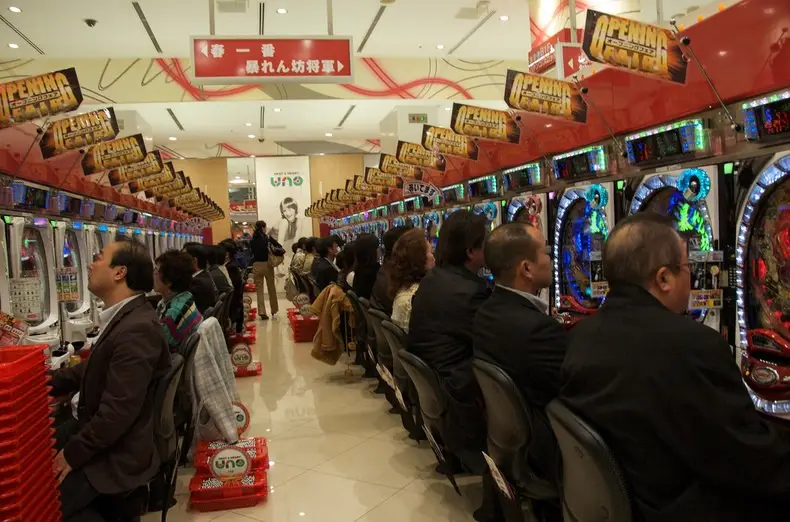
  • Yamete kudasai, Yamero, Dame e Yada – Meaning

    Yamete kudasai, Yamero, Dame e Yada – Meaning

    Have you ever been curious about what “yamete kudasai” really means or laughed at the “yamero” meme? If you follow anime or Japanese culture, you’ve probably come across these words — and you’re not alone: every month, tens of thousands of people search for this!

    In this article, we will try to understand the literal and popular meanings of the terms yamete kudasai, yamero, dame, and yada. Ready to dive into popular terms in embarrassing situations?

    The meaning of Yamete and Yamero

    The word yamete [止めて] literally means stop  and can convey the sense of:  stop it; please stop; I can’t take it anymore; it hurts. Both yamete and yamero are forms of the verb yameru [止める] which means to stop, cease, discontinue, finish, leave, cancel, abandon, give up, abolish, and refrain.

    The word yamete is a bit more feminine and is used in extreme cases, such as when a woman is about to be attacked. On the other hand, yamero is usually used by men in moments of action, fighting, and frustration, when trying to prevent something from happening.

    Both derive from the kanji [止] (to stop), but don’t confuse them: Japanese has several verbs for “to stop,” like tomeru (止める) which is used when you stop a car, for example. Meanwhile, yameru is more related to stopping an action, abandoning, or giving up on something.

    The expression yamete kudasai [止めてください] is generally seen in adult anime in spicy scenes, as if the girl is begging to stop, asking please, but in some cases, she wants it to continue.

    Yamete kudasai, Yamero, Dame – Meanings and synonyms in Japanese

    What does Dame mean?

    The word dame [駄目] is often written in katakana [ダメ] and means that something is not good, should not be done, cannot, must not, or is not allowed. This word can be used in various tones to reject an offer, to scold children, and also in more extreme cases like yamete kudasai in adult animations.

    Women often use dame [ダメ] during sexual relations, as if they are asking to stop. In this case, they are trying to say something like: I’m too innocent to accept this kind of embarrassing situation; you’re turning me into a naughty girl; we shouldn’t do this, but it’s amazing.

    Yamete kudasai, Yamero, Dame - Meanings and synonyms in Japanese

    What does Yada mean?

    The word yada [やだ] literally means “no way, unlikely, failure, and weak point.” This expression conveys denial, rejection, or simply “no way!”. Sometimes it can be used lightly when the person is about to give in.

    Some people use this word when something goes wrong or to reject an offer or someone trying to do something like grab or kiss you.

    Yamete kudasai, Yamero, Dame - Meanings and synonyms in Japanese

    The yamero meme

    At the end of 2016, a comic started circulating of someone splashing water on a dog until it gets annoyed, its eyes shine, and the caption says yamero! Soon after, thousands of images of animals, characters, and other things with this caption went viral on the internet.

    As we can see in the image below, apparently someone took an illustration from WikiHow, made the montage, and posted it on Tumblr. Over time, various similar montages appeared and exceeded 100,000 counts just on Tumblr.

    Yamete kudasai, Yamero, Dame - Meanings and synonyms in Japanese

    Phrases related to yameru and dame

    Now that you know the verbs yameru [やめる] and the words dame and yada. Let’s conclude this article with some example sentences and related words for you to understand more about the topic. If you liked the article, don’t forget to share. Any questions or suggestions, just leave them in the comments.

    PortugueseJapaneseRomaji
    Cannotダメですdamedesu
    Completely useless駄目駄目damedame
    Stop it. He is our friend.やめろよ。あいつは俺たちの友達だろ。yamero yo. Aitsu wa oretachi no tomodachidaro.
    Stop procrastinating and get a job仕事探しを先延ばしにするのはやめなさい。shigotosagashi o saki nobashi ni suru no wa yame nasai.
    I gave up on following trends.流行に付いて行くことはやめた。ryūkō ni tsuite iku koto wa yameta.
    He said the trip is canceled旅行はやめにすると言った。ryokō wa yame ni suru to itta.
    You should definitely invite him out.彼を誘わなくちゃだめよkare o sasowanakucha dame yo
    It’s all over!もうだめだ。mou dameda
    I didn’t like the atmosphere.雰囲気がいやだった。fun’iki ga iyadatta.
    I don’t want to be alone一人はいやだ。hitori wa iyada

    Variations of Yamete

    There are other variations of the Japanese word. Below we will study some of them:

    What does Yamete Kure mean?

    Adding “kure” to the end of “yamete” does not change the meaning, but it changes the tone of what is being said. Using “yamete” conveys a tone of reprimand, as this is generally how parents tell their children to stop whatever it is they shouldn’t be doing.

    Using “yamete kure” emits a tone of an order because it adds more feelings to the statement. As if being angry about something, upset, or giving some reprimand.

    What does Yamete yo mean?

    Unlike kure, “yamete yo” conveys a tone with less emotion, a friendlier tone that does not convey anger or reprimand. It is common to hear women using this tone.

  • Curiosities and possible continuation of Alice in Borderland

    Curiosities and possible continuation of Alice in Borderland

    Alice in Borderland (今際の国のアリス) is among the most watched series on Netflix, with a 95% approval rating. The series is based on a 2014 Japanese suspense manga, which was officially completed in 2016. The manga has 18 tankōbon volumes and 87 chapters, illustrated by Haro Aso. At the end of 2020, the series directed by Shinsuke Satō premiered on Netflix.

    The series currently has 1 season with 8 episodes. The main cast includes: Kento Yamazaki, Tao Tsuchiya, and Nijiro Murakami. Alice in Borderland tells the story of a group of friends living in a parallel reality where they are forced to participate in various games; those who lose the game lose their lives.

    Original trailer for Alice in Borderland on Netflix

    Plot

    A gamer and two friends are transported to a parallel version of Tokyo, where they must participate in various deadly games if they want to survive. The gamer is Arisu, who is considered a failure and a bum by his parents. He spends most of his time playing either on the video game console or on his phone. Arisu has two friends who are not very different from him. While being chased by the police, they run to hide in a bathroom, but when they come out, they realize that everything has disappeared. Only they remain.

    The trio is transported to a parallel world, where they and their friends receive a mission to complete. Unfortunately, he ends up losing one of his friends in the first game. The games are based on logical reasoning. They receive the mission and the time they have to execute it on their phones; a person dies if they lose the game or fail to finish on time; giving up is not an option. No information is given on how the game should proceed, so it is more about deduction.

    Alice in Borderland - Alice in Borderland

    As Arisu is quite accustomed to the gaming world, he manages to solve most of the puzzles. In each phase of the game, new players appear, some with more experience than others, and sometimes they participate to help in some way with the execution. As they progress through the phases, the games become increasingly difficult and the deaths more painful, with the number of players also increasing and dying simultaneously.

    More survivors are found in a place called “Beach,” where there is a society of other players, and they wear beach attire all the time. But the fight for survival takes precedence, and at a certain point, they start killing each other. At no point in the series is a justification provided for the existence of the game.

    Not much is known about the backstory of each character in Alice in Borderland, but as the story develops, some moments from their past appear. Each game takes place in a different setting, allowing them to feel immersed in the game itself. The players also have a style of clothing and hair that is quite similar to when we choose avatars in games.

    Alice in Borderland - Alice in Borderland

    5 Curiosities about Alice in Borderland

    1 – The reference of Alice in Borderland is to Alice in Wonderland. During the games, it is common to use cards to determine the difficulty level of the game;

    2 – The term “border” in Borderland, which means frontier in English, refers to the games taking place, apparently, only in Tokyo, and their goal is to get out of there;

    3 – Before becoming a series, Alice in Borderland became an anime;

    4 – Three OVAs (Original Video Animation) were produced that present the story and characters;

    5 – The protagonist’s name is Ryouhei Arisu, and the surname is a translation for Alice;

    Alice in Borderland - Alice in Borderland
    Anime Alice in Borderland

    Can we expect a 2nd season?

    Alice in Borderland premiered on Netflix at the end of 2020, and since then, nothing has been mentioned about a continuation. However, an update for the 2nd season was released during the Netflix Festival Japan 2021.

    A preview was shown with an interview with the protagonists about what to expect from the series in 2022, still without a release date. Actors Kento Yamazaki and Tao Tsuchiya, who play Arisu and Usagi, respectively, spoke about their characters and the long-awaited escape. They claim to be working hard to maintain the standard of the series. The video showcases all the releases of Japanese series on Netflix. Alice in Borderland starts at the 8 minute 15 second mark. Watch:

    Protagonists

    Kento Yamazaki

    He is a Japanese actor and model, 27 years old, originally from Itabashi in Tokyo. His career began in 2010. He has participated in 13 dramas, including Death Note, and 17 films. Kento is represented by Stardust Promotion.

    Tao Tsuchiya

    She is an actress and model, 26 years old, originally from Tokyo. Her career began when she was cast in the lead role of the asadora Mare, aired by NHK, on March 30, 2015, after an audition with over 2,020 women. She has already accumulated 16 film appearances and 17 on television. Tao has two awards, both for the newcomer of the year category, from the Japan Academy Prize and Elan d’or Awards. The actress has also appeared in the music video for singer Sia, Alive (2016).

    Alice in Borderland - Alice in Borderland

    What did you think of the series? Have you managed to deduce the reason for the existence of the game?

  • Everything about the Japanese Maple: one of the most beautiful plants that exist

    Everything about the Japanese Maple: one of the most beautiful plants that exist

    When thinking of a Japanese tree, the first that usually comes to mind is the famous cherry blossom, but this is not the only plant that draws attention for its beauty. The Japanese Maple is a plant that is also among the most exuberant.

    Japan is very rich in plant diversity and even has exotic plants. The Japanese Maple, also known as Acer Palmatum (its scientific name), besides being beautiful and easy to find in Japan, can also be used to make bonsai.

    This is possible due to the impressive adaptability of its foliage. Do you also enjoy different plants?

    I bet you must have seen this tree passing by in some anime at a glance, as the Maple is one of the most popular trees in Japan. Come get to know the Japanese Maple better.

    Everything about the Japanese Maple: one of the most beautiful plants that exist

    Characteristics of the Japanese Maple

    The Japanese Maple also has other popular names such as Acer, Japanese Acer, Palmate Acer, and Red Japanese Maple. It belongs to the family of Sapindaceae (flowering plants).

    This type of plant, besides being a common tree, can also be a Bonsai. Generally, the Japanese Maple thrives in environments with continental, Mediterranean, subtropical, and temperate climates.

    Besides Japan, the tree is commonly found in Asia (where it originated), China, and South Korea. The foliage of the Japanese Maple changes color with the seasons. It can reach up to ten meters in height. In rare cases, it can reach sixteen meters.

    Everything about the Japanese Maple: one of the most beautiful plants that exist

    The leaves are large and shiny, ranging from reddish to more golden tones. The leaves can measure on average from five to twelve centimeters. Besides red, they can also be green or purple.

    Its fruits develop in pairs resembling samaras. The fruits are produced in April and May. The Japanese Maple is an ideal tree for urban environments.

    It is also highly sought after for bonsais due to its delicacy. The plant is even resistant to wind and the intense midday heat. The Maple can have several intertwined trunks.

    Everything about the Japanese Maple: one of the most beautiful plants that exist

    Acer Palmatum is divided into three subspecies:

    • Acer palmatum subsp. Matsumure: large leaves up to 12 centimeters wide.
    • Acer palmatum subsp. Palmatum: smaller leaves with 7 centimeters in width.
    • Acer palmatum subsp. Amoenum: its leaves are 7 to 12 centimeters wide.

    What care should be taken with the Japanese Maple?

    The seeds of the Japanese Maple can be easily found in nurseries. The most cultivated species is the one with red foliage. I even took a look to see if it can be bought online, and it can! The average price is around R$150.

    So if you live in Brazil, it is possible to have a Japanese Maple, preferably if you live in the southern and southeastern regions, as these places will allow the tree to adapt better since they are closer to the climate it needs to grow healthily.

    It is important to be careful with excessive heat because it will lose its leaves prematurely and may die.

    The Japanese Maple should be watered every day, but gradually, keeping an eye on it so that it does not become too dry or waterlogged.

    Everything about the Japanese Maple: one of the most beautiful plants that exist

    Recommendations for the Maple

    Although it is a good tree for adaptation, the Japanese Maple should be located in a bright area, but not in direct sunlight.

    The soil should be well-drained, deep, and have a pH between four and six. And always pay attention to watering.

    The fertilizer should be applied in spring and summer. But to know the correct type of fertilizer for the Maple, consult a professional, as using the wrong fertilizer may hinder its proper development and may even lead to its death.

    And last but not least: pruning. Especially if your Japanese Maple is in the form of a bonsai. Regular pruning can be done at any time of the year as needed, and formation pruning is best done in autumn.

    Diseases and pests in the Japanese Maple

    No plant is completely free of pests, and the Japanese Maple is no different. In this case, the most affecting pests are mealybugs and aphids.

    • Mealybug: It is an insect that sucks the sap, causing malformations in the leaves and stem. Additionally, they excrete excess sap on the surface of the leaves, leading to the appearance of the so-called rust fungus.
    • Aphid: Insects that attack the crops, causing loss of vigor, reducing growth, and decreasing flowering. Aphids feed on sap and also consume the leaves.

    To prevent these pests, the planting area of the tree should be kept slightly moist. Prevention can also be done with eco-friendly insecticides, but consult a specialist on which ones are best for your type of Maple.

    Everything about the Japanese Maple: one of the most beautiful plants that exist

    The Japanese Maple in tattoos

    Despite the taboo, some Japanese people tend to tattoo leaves of trees from Japan because they are quite delicate, and the Japanese Maple is among them.

    Many artists create designs based on these leaves for the creation of new tattoo models. To choose the best tattoo that pleases the person, besides the leaf model, they can choose a number of leaves that may indicate luck for them.

    Some meanings attributed to tattoos resembling those of the Maple are self-control, memories, balance, among others.

    So, do you feel like cultivating a Japanese Maple? Do you have a favorite Japanese plant?

  • The birth of Manga and its worldwide conquest

    The birth of Manga and its worldwide conquest

    Manga (漫画) basically means comic book. These stories have won over not only the Japanese but fans all over the world.

    The good otaku surely has their favorite manga and always keeps an eye out for when the anime inspired by that manga will be released! There is no age or gender for this passion.

    And there is manga for all kinds of tastes such as action, adventure, business and commerce, comedy, detective, drama, horror, mystery, romance, fantasy, sexuality, suspense, and many others.

    But have you ever wondered how it all started and why it caught the attention of people from other countries? Discover all of this now!

    The birth of Manga and its worldwide conquest

    How did manga originate?

    It is believed that the first evidence of manga with the characteristics we know today was through the Oricom Shohatsu (Theater of Shadows).

    These theaters were known for telling legends with puppets during the feudal period. Over time, these legends began to be written on rolls of paper and contained illustrations.

    The term Manga emerged in the nineteenth century in the year 1814, but it was not yet like our modern manga. The author to use this term was Katsushika Hokusai, but until then this type of artistic expression was known as ukiyo-e.

    The term manga was used when Hokusai created his collection of humorous stories on various subjects and named it Hokusai Manga, which lasted until 1878.

    After his death around 1850, mangas began to gain popularity among Europeans.

    This happened because after the end of the Shogunate, Japan found itself in need of forming alliances to boost the economy and then partnered with the United States.

    Then after that, the artist and cartoonist Charles Wirgman had a strong influence when he created the Japan Punch in 1862. This magazine spoke in satirical ways about Japanese conflicts.

    But investing in mangas was not a simple task; no one would even imagine it would be a success worldwide. But the first to invest and believe in mangas was Rakuten Kitagawa, who created comic stories.

    Rakuten Kitagawa’s manga was published in 1902 and told the story of two peasants who had to deal with life in the big city. This story marked the beginning of modern manga.

    Kitagawa also founded a school specialized in mangas, where many cartoonists and animators graduated.

    Darling in the FranXX – New Season, Finale, Curiosities

    Curiosities about mangas

    • Mangas make up at least 40% of everything printed in Japan.
    • In 2006 alone, mangas generated over 4 billion dollars, becoming one of the largest markets in the world with 750 million copies sold.
    • The largest consumers of mangas are: USA (over 200 million dollars in sales), France, and Germany.
    • The ten countries where mangas are most popular are: 10. Spain, 9. Japan, 8. Mexico, 7. Philippines, 6. United States, 5. Russia, 4. Brazil, 3. Indonesia, 2. India, 1. China.
    • The plot is published chapter by chapter in almanacs of up to five hundred pages.
    • Most almanacs are made of recyclable paper.
    • Writers write an average of twenty pages per week and have the help of a team for illustration.
    • In Japan, mangas are advertised with the stories most famous at the moment on billboards, train stations, and even inside train cars.
    • In Japan, mangas are displayed more in stands than newspapers considered of large circulation.
    • A manga does not always generate an anime; the opposite can happen, as in the case of Gundam, the most famous giant robot in Japan.
    • The most visited place by manga fans is in the Akihabara district.
    • Japanese citizens usually spend an average of 117 reais on mangas annually (it is cheaper there).
    • One of the most popular is One Piece, which has sold over 480 million copies worldwide since 1997.
    • 60% of manga fans are women.
    • The genre that attracts the most attention is science fiction;
    100 Swear Words and Insults in Japanese

    What differentiates mangas from common comic books?

    The characteristics of mangas are so strong that it doesn’t take much effort to identify them compared to other stories.

    This happens because generally the characters have striking features such as big eyes, exaggerated expressions like rosy cheeks, little drops of blood from the nose, among numerous others.

    All of this likely happens because before the term itself, caricatures were made, and one characteristic of them is the striking expressions.

    The protagonist usually has an “innocent soul.” They have purity and naivety, but at the same time, they are warriors for battling in life. You can see this with Naruto and Goku.

    It always reinforces the bonds of friendship while also having confrontations with memorable rivals.

    Tips to become a mangaka – Practice or Gift? Editors and Inspiration

    The manga industry today

    Incredibly, even with this process of globalization where people have everything at their fingertips, many still prefer the physical version of mangas.

    But for those who follow this modernity, it is also possible to access these mangas online.

    The anime industry has risen by 15% recently, mainly due to the pandemic caused by COVID-19. Consequently, mangas also saw an increase in demand.

    This was a way many found for entertainment since most had to stay home in quarantine.

    As mangas generate successful animes, their popularity continues to grow. To give you an idea, a half-hour episode costs, on average, 100 thousand dollars.

    But as you can see, there are always anime releases, as they manage to recover and surpass the investment value.

    Tell me which mangas you like the most! Do you prefer the electronic version or the good old printed version?

  • Japanese hair hydration

    Japanese hair hydration

    On the internet, we come across new hydration techniques daily, using a variety of ingredients. However, one recipe that has been making waves lately is the homemade Japanese hair hydration, which uses very simple products that can easily be found at home. And let’s be honest, when it comes to hydration, Japanese women know their stuff, as they have the smoothest and shiniest hair in the world. Want to know how to make this recipe? Then come with us!

    Japanese hair hydration:

    This little recipe not only keeps the hair super hydrated but also produces an impeccable straightening effect. And the best part is that we will use super simple ingredients, which if you don’t have at home, you will definitely find at any market. So check out the ingredients:

    • 1 tablespoon of sugar;
    • 2 tablespoons of sago;
    • 1 tablespoon of hydration mask;
    • 1 tablespoon of vegetable oil (avocado, rosehip, castor, or another).

    All you need to do is put half a glass of water in a saucepan, add the sugar and sago, stirring over low heat until the mixture boils. Then, you will strain the entire mixture and throw away the sago balls, as we only need the gel it releases when boiled.

    Next, all you need to do is add the hydration cream to this mixture, stirring well until everything is homogeneous. After washing your hair and removing excess moisture, you will separate your hair into sections and apply our hydration mixture to each one of them.

    To improve the results, you will put a cap on your head and wait about 15 to 20 minutes before removing the mixture from your hair. To finish, apply a good conditioner and rinse again with water.

    The sago in this recipe is capable of deeply hydrating the hair, and combined with sugar, the hydration cream, and vegetable oil, it can keep the ghosts of frizz and dryness far away.

    Is there prejudice against hair types and colors in Japan?

    Another Japanese hydration:

    To add to this list, we brought you another homemade Japanese hair hydration recipe, so you can include it in your hair care routine. So pay attention to the list of ingredients:

    • 1 capful of glycerin;
    • 2 tablespoons of cornstarch;
    • 1 tablespoon of honey;
    • 2 tablespoons of hydration mask;

    First, you will wash your hair with shampoo, and after removing excess moisture, mix all the ingredients well and apply them to the strands, section by section, until nothing is left. Then, just put a cap on your hair and wait about 30 minutes.

    After the time is up, you will rinse your hair only with water, apply a conditioner, and rinse again after about 3 minutes. And voilà, your hair is hydrated and smooth, just like the Japanese.

    In addition to care like hydration, proper washing of the strands, and nutrition are essential steps for those who want long, smooth, and healthy hair! See you later!

  • Funimation x Crunchyroll: Which one to subscribe to?

    Funimation x Crunchyroll: Which one to subscribe to?

    Which anime-focused streaming platform is better to subscribe to? Funimation vs. Crunchyroll, see the positive and negative points of each.

    Not long ago, literally the only effective way to consume anime here in Brazil was through piracy. But over time, this has changed, with more investment in open TV. In 2012, Crunchyroll arrived in Brazil, the only good option for those who wanted to watch anime officially.

    Over the years, this has improved, especially with the arrival of new streaming services in the country that also include anime in their catalog. However, this is not the focus of these platforms, but now we have the option to choose between 2 different streamings, 100% focused on anime.

    Funimation vs. Crunchyroll

    This article aims to highlight the differences, and thus, the negative and positive points about Funimation and Crunchyroll, to help choose which one to subscribe to.

    Catalog

    There are several factors that make someone choose one streaming service over another, and without a doubt, the main one is related to the catalog. Crunchyroll has been in Brazil for much longer, since 2012, and has over 1,000 anime in its catalog. On the other hand, Funimation has around 700, which is a good number considering it arrived in the country in 2020.

    Both have anime of all genres and eras, meaning both new and classic anime. But the big advantage goes to Crunchyroll for containing a good portion of the “essential” anime, which are those anime that everyone has heard of at some point in their life, or that when asking for a recommendation, without a doubt, one of them will be referenced. The giant shounen, Naruto, One Piece, Dragon Ball, etc. But this is not exclusive to them; Funimation is also investing and has 2 big hits of the moment, Kimetsu no Yaiba and Shingeki no Kyoujin.

    Regarding the Catalog, both are somewhat equal, with rare exceptions of some exclusive anime to one platform or another… So, it really depends on individual preferences.

    • Learn how to watch TV on your mobile.
    Funimation vs. Crunchyroll: Which to subscribe?

    Simulcast

    Both are receiving anime all the time, with a good portion being seasonal anime, the so-called Simulcast. And this is exactly a good factor for those in a hurry to choose between Funimation vs. Crunchyroll. After an anime is released in Japan, it arrives on Crunchyroll in just 1 hour! While on Funimation, this time is much longer, but it still comes out on the same day.

    In other words, for those who are in a hurry to watch, or depend on watching first (content creators), the sooner they can watch, the better for production. The time difference in Simulcast is crucial.

    Image Quality

    Both have anime with the best available quality, with most in 1080p (fullHD). However, only Funimation provides the maximum quality for all users, including non-subscribers. Crunchyroll offers its anime at a maximum of 720p for those using the free version of the service.

    Availability on Different Platforms

    Since Crunchyroll has been around longer, it is literally available on all platforms you can imagine. It is available for consoles (Xbox 360, One, Series S and X, Playstation 3, 4 and 5, PS Vita, and Wii U), has mobile versions for Android and iOS, in addition to apps for Smart TVs (Fire TV, Roku, and Apple TV).

    Funimation, which has just arrived, is still gaining its mobile versions, for TV and consoles. So far, Funimation is available for Android, Consoles (Nintendo Switch, Xbox One, Series S and X, Playstation 4 and 5), TV (Android TV, Roku, Fire TV, and Chromecast).

    Since both are available to watch in the Browser, it is up to the user to choose according to the platforms they like to use to watch their anime.

    Subscription Price

    Finally, one of the main factors influencing the decision on which streaming service to subscribe to is the price, which will dictate the cost-benefit. Both are different, which helps to choose based on the price. While Funimation has only one subscription model (at least for now), on the other hand, Crunchyroll has 2 different subscription plans.

    Funimation Subscription Plan

    Called Premium Plus, Funimation’s subscription plan allows users to watch all anime in the catalog without ads and without restrictions. In addition, it allows up to 5 simultaneous screens, in case you have many platforms at home or wish to share the cost with someone.

    Price: R$ 24.99 / month, R$ 249 / year.
    Trial period (new users): 14 days.

    Funimation vs. Crunchyroll: Which to subscribe?

    Crunchyroll Subscription Plans

    As mentioned, Crunchyroll has 2 different subscription plans, actually 3, but one of them is just a one-year version of another plan. Check below what the plans are:

    Fan: The most basic plan of the platform. Allows users to watch all the anime on the platform, without any ads, but can only be used on 1 simultaneous screen. Price: R$ 25.00/month.

    Mega Fan: Includes all the benefits of the Fan subscription plan, but with an additional allowance of up to 4 screens and the possibility to download for offline viewing. Price: R$ 32.00/month. This is the only plan with the option to contract for 12 months, which comes with a 16% discount, totaling R$ 315.00/year.

    List of Crunchyroll anime + DUBBED

    Funimation vs. Crunchyroll: Which to subscribe? Conclusion

    In short, all the major points regarding each of the biggest streaming services focused on anime have been raised, their prices, catalogs, etc. But then, which one to subscribe to? The answer is… It depends!

    What you are looking to watch, both platforms have different catalogs, but at the moment Crunchyroll has a larger collection, after all, it has been in the market much longer than Funimation here in Brazil.

    If you are looking for a lower-cost option, the answer is Funimation! For those who will watch anime casually and do not want to pay much to consume little, Funimation is a good choice, especially because of its anime and exclusive dubs. The price is the same as Crunchyroll (basic plan), but allows 5 screens, making it possible to share the cost with someone.

    Cost vs. Benefit: the winner of the cost vs. benefit is Crunchyroll, for having a much larger collection, and the basic plan of the platform being close to the price of Funimation. Although it only has one screen in the basic plan, it has more available anime that arrive earlier on the platform, just 1 hour after the release in Japan.

    There is also the option to use the Kotas site to save on your subscriptions, learn more here.

    The answer to the question of which to choose is to choose the one that best meets your current needs. Both are growing, and the anime market is gaining space in Brazil.

  • 5 movies that portray Japanese culture

    5 movies that portray Japanese culture

    Cinema is one of the best ways to get to know a country’s culture. It portrays history, habits, traditions, music, cuisine, clothing, and much more.

    Japanese cinematography is extremely rich and has won all the major awards in the seventh art. There are four Oscars for Best Foreign Film and four Palme d’Ors at the Cannes Film Festival, in addition to several other prestigious accolades. Moreover, stories about Japanese culture have been told in various productions from other countries, especially the United States.

    Want to learn more about Japanese culture through cinema? Then stay tuned for our recommendations!

    5 films that portray Japanese culture

    Ugetsu (1953)

    We start with a film that depicts ancient tales from Japanese folklore. “Ugetsu”, an extremely poetic work by the great director Kenji Mizoguchi, is based on a series of famous stories from the medieval era.

    This is an ideal work for those who wish to know a different Japan with its legends and ghostly stories. Beautiful, it is considered one of the best films of all time.

    After the Storm (2016)

    Director Hirokazu Kore-eda won the most recent Japanese Palme d’Or with “Shoplifters” in 2018. His previous film, “After the Storm”, is perfect for those who want to learn more about family relationships in Japan.

    “After the Storm” is a film that shows how affection and respect function in relationships between relatives in Japan. Hirokazu Kore-eda always has a very sensitive approach and is capable of bringing out the best in family narratives.

    Geisha - Who are they really? History and Curiosities

    Memoirs of a Geisha (2005)

    “Memoirs of a Geisha” is one of the many American films that portray Japanese culture. Although the story is altered to generate more interest from the American audience, there are valuable characteristics in aspects such as settings and costumes.

    According to the platform Late Night Streaming, “Memoirs of a Geisha” is available for rent on Google Play and Claro Vídeos.

    Tampopo (1985)

    Cuisine is one of the most valued aspects of Japanese culture. How about watching a film entirely dedicated to it that teaches you how to prepare the perfect ramen?

    “Tampopo”, directed by Juzo Itami, is a hilarious comedy that showcases various traditions of Japanese cuisine. In addition to its value for those who enjoy a good ramen, it guarantees many laughs.

    Seppuku and Harakiri - Unknown Facts
    Seppuku and Harakiri – Unknown Facts

    Harakiri (1962)

    The concept of honor in Japanese culture is different from what we know here. “Harakiri – The Death of a Samurai”, directed by Masaki Kobayashi and winner of the Jury Prize at the Cannes Film Festival, portrays exactly this issue.

    In addition to helping us better understand how the Japanese deal with certain factors, “Harakiri” is essential for those who want to learn more details about the era of the samurai and its decline.

    With a filmography as rich as the Japanese one, you will always have several options for films, series, and anime to watch. If you wish to delve even deeper into the cinema of the land of the rising sun, getting to know directors like Mizoguchi, Kobayashi, Kore-eda, Akira Kurosawa, and Yasujiro Ozu is ideal.

  • A study of the influence of anime on the perception of the world

    A study of the influence of anime on the perception of the world

    The secret of the popularity of anime lies largely in the strong emotions displayed on screen. And they often seem exaggerated, which attracts teenagers, as at ages 12-17 the intensity and clarity of feelings is the main factor that determines the level of interest in a particular work. Watching anime can be a normal hobby: some enjoy dramas, some comedies or horror films, and some enjoy anime. It’s just a matter of taste and, as you know, all markers are different. The question of how anime affects the psyche of teenagers does not have a definitive answer: Japanese animation has both positive and negative sides, and the extent of its impact on immature consciousness largely depends on many related factors.

    If we talk about the positive points, we can note the most obvious one, which is the development of imagination in children. By seeing pictures with different stories and characters, getting familiar with their characters, children develop a creative personality. With the help of anime, they become increasingly interested in music, drawing, and other creative activities, that is, anime helps to find, and later possibly even develop talents. Each main character of the cartoon has their own beliefs and morals, so by watching anime, one can learn and develop many useful moral qualities: achieving goals, caring for others, taking care of relatives, setting the right priorities, etc.

    Assessing the impact of anime on the psyche of teenagers, it is worth noting that by persistently introducing certain images into their consciousness, anyone unconsciously contributes to their realization in reality. Fixation on negative characters can inhibit normal communication in real life. A well-known research paper assistant conducted research and found answers to the most popular responses.

    Why are teenagers attracted to the anime genre?

    Anime attracts teenagers due to its strangeness, unconventionality. It is known that during adolescence, a child tries to solve several opposing tasks at the same time: on one hand, they are trying to become an individual, understand how much they differ from others, and on the other, they are trying to find their place in the world, to find their group of people who think like them. Anime allows teenagers to address the issue related to their sense of individuality and peculiarity while simultaneously solving the second problem – finding friends with similar interests. Furthermore, although most anime is aimed at adults, the main character there is a teenager with their problems and first disappointments. As a rule, they are different from their peers, they are rebels and fighters for justice, whose response to youthful maximalism resonates with these characters.

    Can this type of animation affect the psyche of teenagers?

    Anime, like any other form of art, can influence the inner world and psyche of all people, not just teenagers. Just like movies, cartoons, books, anime evokes emotions, makes you empathize, finds a response in the viewer. Moreover, Japan is a country of restraint and self-control, so anime characters, as in a world opposite to reality, are often created as impulsive and sensitive. This type of psychotype resonates with viewers, especially teenagers. But if a person is mentally healthy, not depressed, has developed critical thinking, no matter how much they sympathize with the characters, they will be able to separate reality from fantasy.

    However, it is important to observe the age limit when watching anime. Because although the main character is a teenager, most anime series are aimed at people over 20 years old. There may be scenes of aggression, brutality, violence, sexual relations – for children and teenagers, watching these scenes can be traumatic because they have not yet developed sufficient critical thinking. And mental trauma can later manifest in symptoms such as irritability, aggression, or depression.

    Is there a link between interest in anime and suicidal behavior?

    If the child is mentally healthy, not in a depressive episode, their behavior does not exhibit suicidal tendencies (self-aggressive behavior, propensity for self-harm, passion for dangerous sports), they have confidence in relating to family and feel secure, then watching, for example, anime with negative themes, the child will simply feel uncomfortable or sad. But it cannot provoke suicidal thoughts in them. Watching can only affect if the child was already in a difficult psychological state and the video they saw was the last straw for them.

    What other children’s entertainment content (cartoons, movies) can harm a teenager’s psyche?

    Traumatization occurs when something happens in a person’s life and the psyche cannot assimilate it. For example, if a child sees some strange or scary content and cannot understand or explain it to themselves, that is when traumatization occurs. A negative impact on the psyche can be produced by any content that is not age-appropriate, which is a fun form that advocates harmful habits, justifies cruelty and violence.

    How can we regulate children’s consumption of entertainment content?

    There should be, first of all, age restrictions that will be respected both offline and online. At the same time, parents need to remember that the method of prohibition will have no effect. Teenage maximalism will turn the situation around: if you prohibit a teenager, they will do it out of spite. The child’s parents are guides to the adult world. They teach them how to deal with negative emotions, how to solve problems. They help a child become an independent person. And if he or she encounters something unknown or incomprehensible on the way to adulthood, it is the parents who should be the first to explain it.

    If the mother or father notices that the teenager is addicted to ambiguous content, in this case, a good tactic is to try to watch that movie or series together and discuss it after watching. You can ask the child which character they like the most and why, how they understand the plot, why the character behaves this way or that way. The parent should try to understand the child’s interests and comprehend them. Perhaps they are not so dangerous. If doubts still confirm and the watched content depresses the teenager, bothers them, in this case, one should contact a medical professional or try to engage the child in something of their interest, for which they can change, spend more time with them, and organize more joint leisure activities.

  • The Best Classic Animes on Netflix

    The Best Classic Animes on Netflix

    Are you a big anime fan looking for exciting series? We have compiled a selection of the best anime series on Netflix that will enchant the world.

    The Best Classic Anime on Netflix

    Today, anime is a source of inspiration for many writers, designers, musicians, architects, and directors. In its homeland, Japan, anime has become popular due to its availability. Animators can easily showcase spectacular events through this art form. However, anime is an infinitely complex art form: even at first glance, poorly created projects with minimal contribution to animation are filled with creative ideas, artistic techniques, and traditions belonging to Japan.
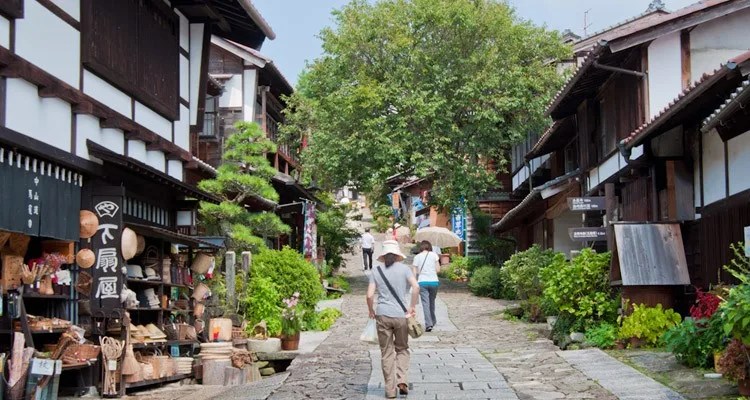
    Perhaps you are wondering if you should start watching anime? Many of you are probably familiar with this art form through Pokémon, Dragon Ball Z, or Sailor Moon. They are brilliant shows, but they are only equivalent to the blockbusters or cartoons shown when children after school. Therefore, we decided to help you a little and suggest series to start your hobby for this art form.

    Many classic animes are still not available for free viewing on the Internet. But Netflix has managed to gather the best projects from its collection. However, you may face a block because Netflix is not available for everyone. Therefore, you might have a question about how to unblock Netflix? Use – VeePN. The service has over 2,500 servers in 50 countries around the world. The company provides a trial version. During the free period, you can evaluate the VPN provider. Using a VPN is simple: sign up, download, and connect to one of the servers. Now you can watch any show that is prohibited in your country!

    Many classic animes are still not available for free viewing on the Internet. But Netflix has managed to gather the best projects from its collection. However, you may face a block because Netflix is not available for everyone. Therefore, you might have a question about how to unblock Netflix? Use – VeePN. The service has over 2,500 servers in 50 countries around the world. The company provides a trial version. During the free period, you can evaluate the VPN provider. Using a VPN is simple: sign up, download, and connect to one of the servers. Now you can watch any show that is prohibited in your country!

    The Best Classic Animes on Netflix

    Tokyo Ghoul

    What is the best anime series on Netflix? Anime lovers are called Tokyo Ghoul. Many anime directors create demons or strange, supernatural, and unique creatures. In this case, the name indicates a ghoul: a type of vampire that differs from a person not only by its long fangs. In the first episode, the main character, Ken Kaneki, is taken to the hospital, where the organs of this creature are transplanted into him. Now he is a half-ghoul trying to become one for both people and ghouls. It seems very simple, but that is before you watch and realize how carefully the show interprets this idea.

    Japan Sinks: 2020

    What is the top 10 of the best anime? Our selection includes Japan Sinks. It was originally released in 1973 and is considered an important cultural artifact. The anime has been adapted several times, but the latest version on Netflix, created by the same animator who gave us The Devil Man, brings the story back to our days. A tragic earthquake occurs here after the end of the Tokyo Olympics. This series is filled with unique emotions, where people try to be positive even though death follows them. This anime is great for hardcore drama fans like The Walking Dead.

    Sword Art Online

    MMORPG game fans are surprised by the fact that there are few anime series based on these games in anime culture. The issue is that no other filmmaker can surpass Sword Art Online. According to the plot of the series, two users of the game of the same name are trapped in it by a sinister developer and are forced to fight their way through the dungeon to escape. Those who die in the game also die in real life. The developers created Sword Art Online nine years ago, and it is worth watching this series because it incorporates good classic animation.

    Shigatsu Wa Kimi no Uso

    According to audience reception, Your Lie In April is a good anime to watch on Netflix. Kousei Arima is an incredibly smart guy who cannot accept his mother’s death. He fears he will never love music again, but he finds inspiration after meeting the violinist Kaori. And then we see a romantic story where art is seen from a beautiful and melancholic side.

    The 64 Most Beautiful Animes of All Time

    Food Wars

    Food Wars is another good anime on Netflix, as thousands of anime fans have chosen it. Food Wars fully demonstrates to the viewer what anime is often ridiculed for: the constant desire of authors to undress and objectify all their characters. If you are an anime fan, then you understand that this stereotype is true and often annoying. However, shows that are built around this idea are usually excellent. In classic anime, some tournaments or talent contests are often featured. Food Wars belongs to this subgenre and showcases the confrontation in international cuisine. This is a great modern version of a classic anime, and even if only for that reason, the show is worth watching. This anime is not available in many countries, so a VPN will be helpful here to unlock the Netflix region.

    Carole & Tuesday

    Shinichiro Watanabe creates a unique, exciting, and perfectly thought-out musical show. Carole & Tuesday is an extraordinary project by Watanabe that stands out for its content. In this series, the action unfolds around the adventures of the daughter of local Donald Trump and a refugee orphan from Earth. The two characters meet by chance and want to form a musical duo. Their goal is to perform on the popular Martian talent show. It is a warm anime with a charming soundtrack featuring Thundercat, Denzel Curry, and many other artists.

    One Punch Man

    It is no wonder that anime is considered a special type of art because many directors are trying to incorporate bold ideas through the prism of careful attention. Perhaps it is because there are many ideas in anime. One-Punch Man is a fantasy with the theme: “What if there was a superhero who could kill any creature with one punch?” Then they approach this idea from different sides and squeeze out all its essence. As a result, we have a very funny superhero comedy about an omnipotent man.

    List of the Best Animes on Netflix

    Howl’s Moving Castle

    Howl’s Moving Castle is based on the eponymous novel by Diana Wynne Jones, and the main idea of the anime is the moving castle owned by Howl. This anime strays far from the book, but Hayao Miyazaki’s journey with the audience feels so magical that the writer has nothing to complain about. As in many other studio projects, it is about a girl. Sophie is under the influence of magic, which transforms her into an older woman. She finds herself under the protection of an unknown wizard, Hall. Hole appoints Sophie as the guardian of the castle, and this adventure becomes the center of her life when she meets fantastic creatures. Note that there is no emotional tension in this anime, but the animation is incredible, so you should pay attention to this series.

    Akira Fudo is a shy student and has a childhood friend Ryo Asuka. But one day, the girl encounters a secret race of evil demons in her world disguised as people. Already at the demon party, Akira transforms into one of these creatures – a hybrid of two essences that makes the hero much more confident and attractive. And then we watch a nihilistic study on whether demons are more violent than humans. This is a bloody show where there is room for tragedies, genocides, and even hell invasions.

    Little Witch Academia

    We are not fans of stories about children sent to a magic academy to learn magic. But there is something insanely adorable about the series about Akko Kagari – a girl who, without magical abilities, attends the local variation of Hogwarts and gains strength. People in this anime consider magic outdated and tasteless, but Akko is trying to prove that art is beautiful and thriving. This is a touching and charming show that is perfect if you want to watch something relaxing.

    Princess Mononoke

    If you are not yet familiar with Studio Ghibli, we recommend you start watching Princess Mononoke. The anime takes place during the Muromachi period, one of the medieval stages of Japanese history between the 14th and 16th centuries. Prince Ashitaka, under the influence of an ancient demon. He finds himself at the center of the debate between the spirits of the forest and the people. This anime works the way any good epic should work.