
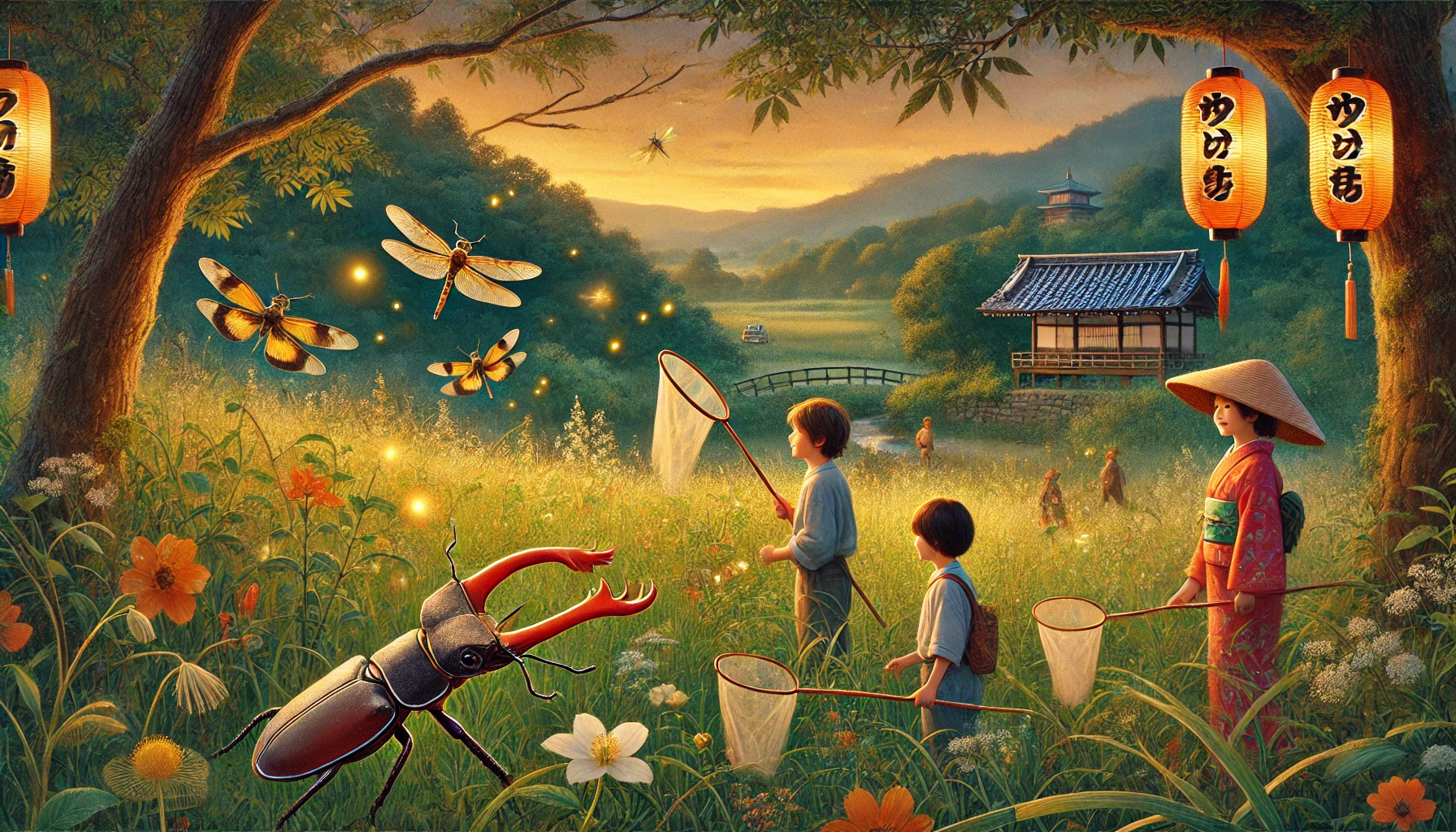
In Japan, the fascination with insects is woven into daily life in a way that often surprises first-time visitors. From small children to retirees, many Japanese treat these tiny creatures with a fondness that can feel almost sentimental to outsiders — though anyone who grew up in Tokyo in July will probably recognize it immediately. The deafening chorus of cicadas outside the family apartment, the first clumsy attempt to catch a beetle with a handmade net, the quiet thrill of a firefly blinking by the river: these are not niche memories, they are part of a shared national soundtrack. Boys especially fall hard for the strength, stubbornness, and strangeness of insects, and insect hunting remains one of the favorite summer rituals of Japanese schoolchildren. With a small kit — net, bait box, maybe a cheap magnifier — the chase becomes a miniature adventure. It is exactly this hobby that supposedly inspired Satoshi Tajiri to turn his own childhood bug-collecting into the idea for Pokémon.
In this article, I'd like to walk you through some of the most beloved insects in Japan, listen in on their calls, and try to explain why they mean so much more here than just "creatures that happen to live in the garden."
Contents 8
Cicadas — Semi
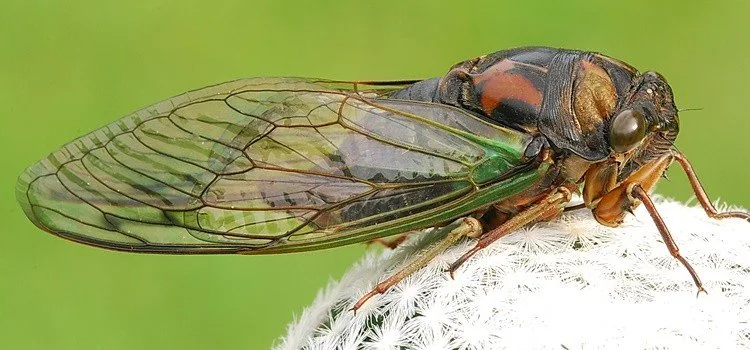
Is there any sound that defines the Japanese summer quite like the relentless chirring of cicadas? In Japanese they are called semi (蝉), and they are the unofficial emblem of the hot months. The monotone, almost overwhelming hum is not considered a nuisance here — it is heard as a melodic reminder of the heat, the muggy evenings, and the fleeting nature of the season. Think of it as the acoustic wallpaper of every natsuyasumi, the long Japanese summer break.
Japan is home to more than 350 species of cicadas, and you can hear them from rural mountain villages all the way into the busiest streets of central Tokyo. Two of the most recognizable are the Abura-Zemi (アブラゼミ), with its deep, oily call, and the Min-Min-Zemi (ミンミンゼミ), whose high, almost metallic cry cuts through the August air. Adult cicadas only live a few weeks above ground, and that short lifespan mirrors a theme the Japanese have been turning into art for centuries: mono no aware, the gentle awareness of how beautifully brief everything is.
Beetles — Kabuto-mushi and Kuwagata
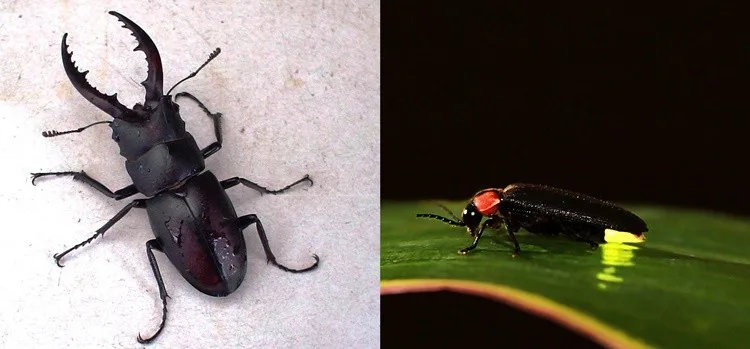
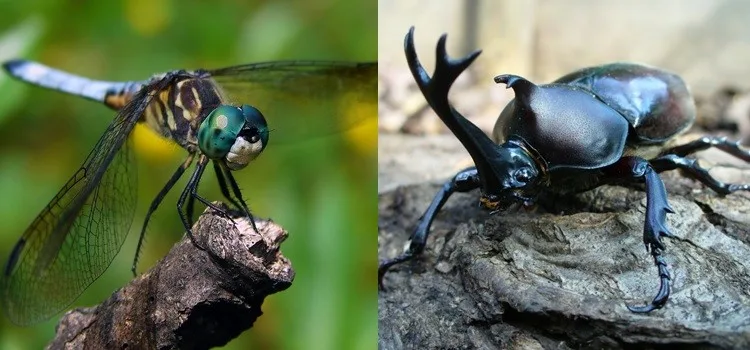
If you grew up in Japan, you probably remember the ritual: a flashlight, an empty plastic box, and a slow walk around the local park after dusk, scanning the trunks of cedar and oak trees for that tell-tale glint of chitin. Kabuto-mushi (カブトムシ, the rhinoceros beetle) and Kuwagata (クワガタ, the stag beetle) are the absolute stars of these evening expeditions. Kids compare the size of their mandibles, the strength with which they pull at your fingers, the heft of them sitting in the palm of your hand — all attributes that, in a child's imagination, feel almost superhuman.
In summer you can find small plastic containers of live beetles in nearly every supermarket, home center, and even the occasional gas station, often sold in pairs. If you do not have a garden, you keep them for a few weeks in a plastic case layered with soil and bark, feed them sugared water or ripe fruit, and watch them wrestle. It is not just play — many adult Japanese still remember "their" first kabuto, and unusual color variants or rare species can fetch serious money at specialist flea markets like the antique markets held around Tokyo's larger temples.
Mushi in everyday life — more than just species
The word mushi (虫) is surprisingly wide in everyday Japanese. It does not strictly mean "beetle" — it is the casual umbrella term for insects in general, and in some contexts even stretches to small spiders and other arthropods. A child who spots something small and crawly will exclaim mushi ga i-ru ("there's a bug!"), whether the culprit is a cicada, a ladybug, or a tiny spider in the bathroom sink.
This generous vocabulary shows up in classical art too. In Noh theater there is the figure Tsuchigumo (土蜘蛛), a kind of earth-bound giant spider, and during the Edo period a whole genre of illustrated books — mushi-kyō — paired delicate insect drawings with short poems. If you are interested in the long human relationship with insects in Japan, those old woodblock prints are a surprisingly philosophical place to start.
Fireflies — Hotaru
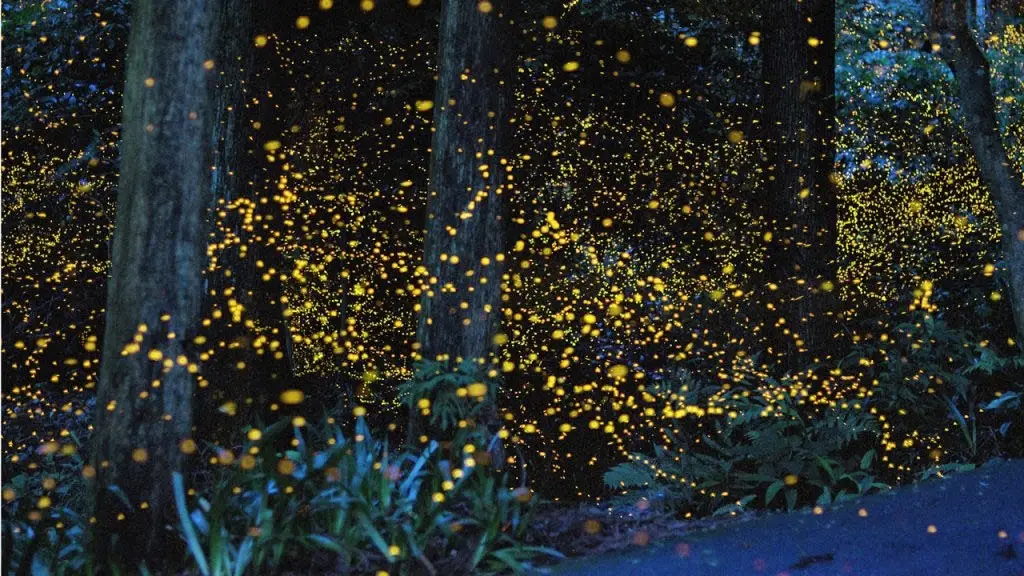
The poetic counterpoint to the loud cicadas is the hotaru (蛍), the Japanese firefly. Where semi shout, hotaru whisper. On warm June nights they appear in drifts over rice paddies, riverbanks, and park ponds, and their synchronized flashing — especially in the larger Genji-hotaru species — feels almost like a slow natural light show.
All over Japan you will find traditional hotaru-matsuri, firefly festivals, where people gather to watch the insects in their natural habitat. Two well-known examples are the festival along the Shōnai River in Fukuoka Prefecture and the evening walks around Nijo Pond in Hamamatsu. These events are also a nice tip for travelers who want to step off the usual tourist trail: most are free, and all you really need is a small flashlight covered with red cellophane (or a handkerchief) so you do not disturb the display.
If you want to see them, plan a trip between late May and early July, head somewhere rural, and pick a warm, humid evening just after light rain. You will not find them in central Tokyo, but even in the suburbs there are small protected pockets where a few minutes of patient watching can turn into a quietly unforgettable night.
Dragonflies — Tombo
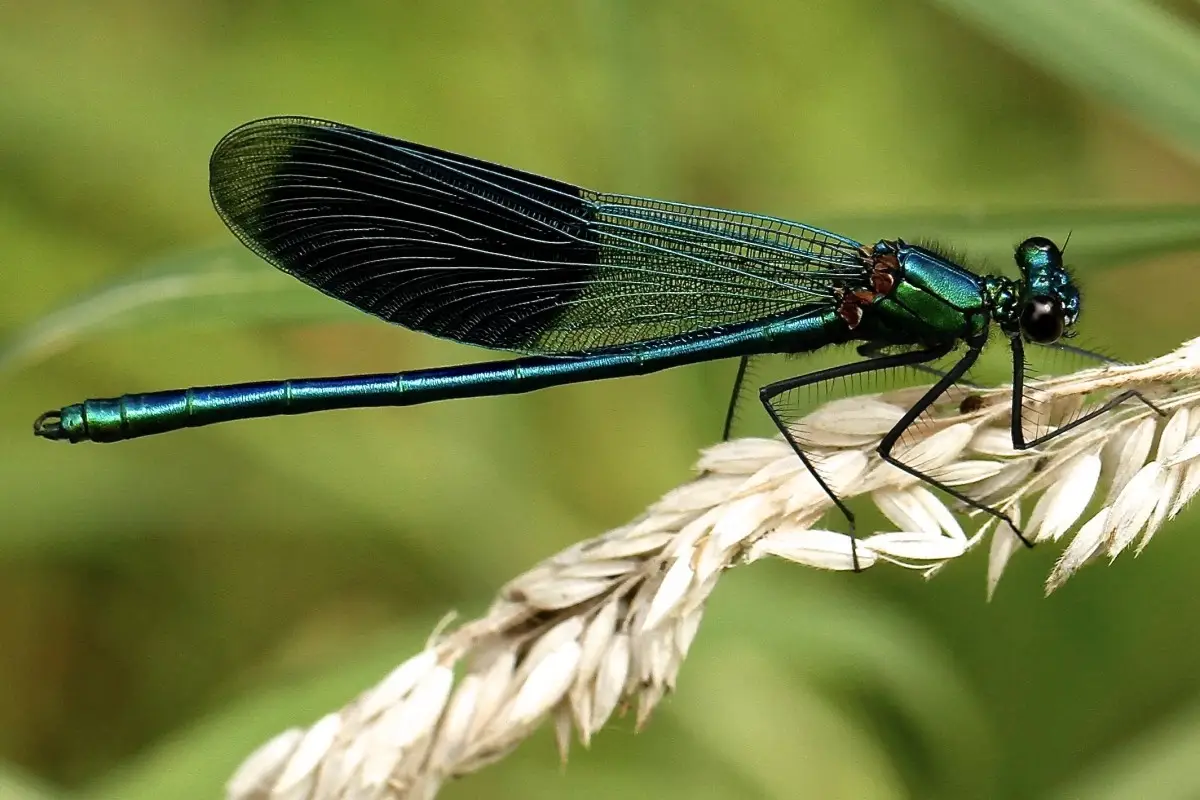
High summer also brings the tombo (トンボ), Japanese dragonflies, darting in quick, even backward loops over ponds and rice fields. To most Japanese they belong to the season as firmly as the cicadas, only quieter and more elegant. The common red species akane-tonbo (Sympetrum frequens) shows up in huge numbers and is treated almost as a calendar marker — even though you first spot it in August, its presence already hints at the end of the hottest weeks.
The cultural layer is interesting too. An older reading of "dragonfly" in Japanese is katsumushi (勝虫, "victory insect"), because a dragonfly in flight is almost impossible for predators to catch. Samurai adopted the symbol on helmet ornaments and sword fittings, and the dragonfly motif still shows up on family crests (kamon) today. So if you are walking through a Japanese garden, touring a castle, or wandering an old samurai district like Kanazawa and you spot a dragonfly carved into a gate or embroidered on a curtain, it is almost certainly there on purpose.
Butterflies — Chō
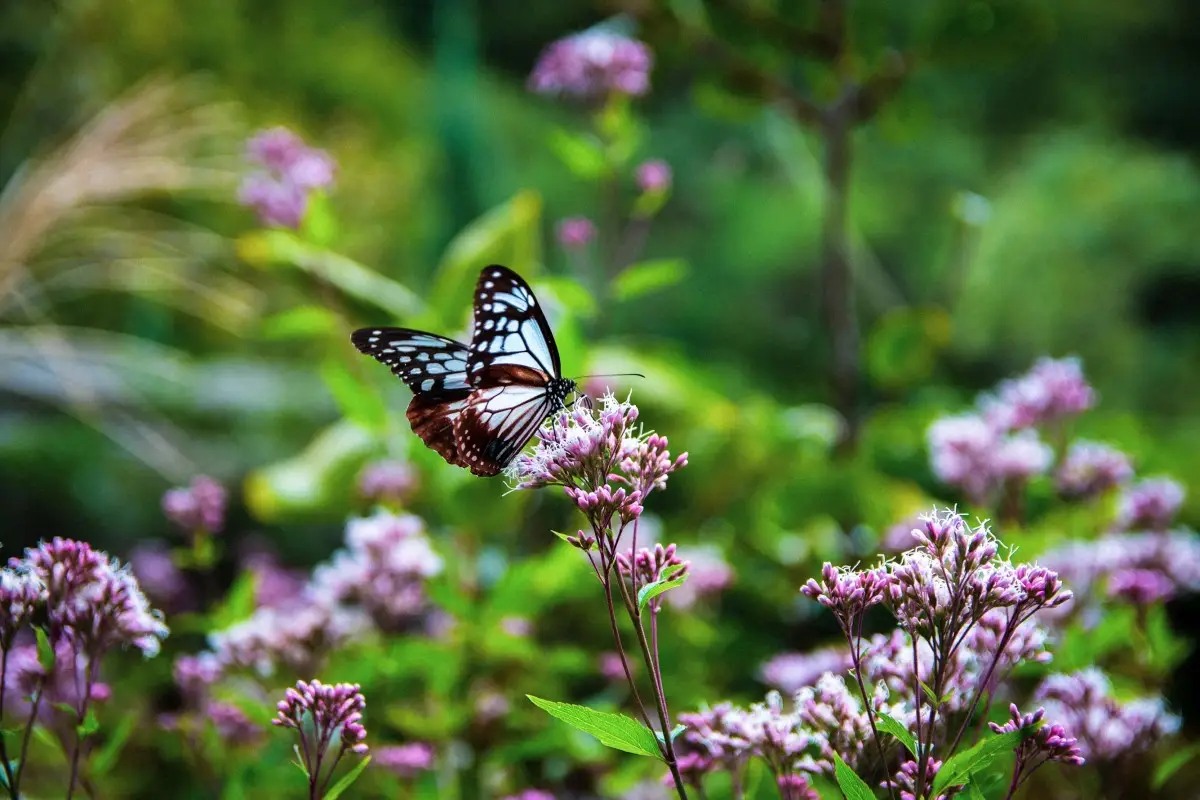
Less in the spotlight but deeply embedded in the culture are chō (蝶), Japanese butterflies. The ō-monshiro (the large white, Pieris brassicae) and the kōhō (the eastern pale clouded yellow, Colias erate) are among the species you will see most often in gardens and meadows. In art the butterfly has stood for the soul and for transformation for centuries — in Noh theater, for example, the famous scene of Komachi features the Kochō costume covered in hundreds of prepared butterfly wings.
If you are visiting Japan in spring, it is worth setting aside half a day for a butterfly garden. Chōfu-Kōen near Tokyo and the butterfly greenhouse on Awajishima are both excellent in April and May, when native and tropical species are active. Keep in mind that many of these places close or scale back in winter, so aim for the warmer months if you can.
Insects and Pokémon — the jump into pop culture
It is no accident that a long list of well-known Pokémon are basically stylized insects. Scyther echoes the praying-mantis-like kamasu-mushi, Pinsir borrows from kabuto-mushi, Butterfree from the large white butterfly, and the cicada-inspired line Kakuna, Ninjask, and Illumise all trace back to semi species. Creator Satoshi Tajiri has said this himself in interviews: his own childhood in suburban Aichi Prefecture, catching and cataloguing bugs in small boxes with neighborhood friends, was the direct seed for the idea of turning that passion into a "collect and trade" game.
In that sense the Pokémon franchise is more than a global toy line — it is the pop-culture continuation of a centuries-old Japanese relationship with mushi. Walk into any Japanese toy store today and the rows of plastic beetles, glow-in-the-dark fireflies, and beetle-wrestling kits are unmistakably the direct descendants of kabuto-mushi and kuwagata, just a little more colorful and a lot easier to carry home.
Why this fascination is worth taking seriously
The Japanese enthusiasm for insects is not a quirky footnote — it is one expression of a culture that pays close attention to small, short-lived things. Watching a cicada for ten minutes, sitting quietly by a riverbank waiting for the first firefly, cupping a beetle gently in your hand: all of that has had a real place here for a long time, well before the words "mindfulness" or "slow life" started showing up in Western lifestyle magazines.
That, I think, is also why the topic is genuinely interesting for travelers. If you come to Japan in summer you can experience this human-insect relationship firsthand — at a hotaru-matsuri in Fukuoka, on an evening walk through a Kanazawa park, or in one of the small regional museums that focus on local mushi fauna. You do not need much: a little curiosity, a warm night, and a few minutes of actually paying attention.
Did you catch insects as a kid, or does the idea of keeping a beetle as a pet still feel a bit alien to you? I would love to hear how the Japanese mushi culture lines up with your own childhood — drop us a note and tell us what you think.



Community
Comments
0 comments
There are no published comments in this language yet.
Send comment