
Visual novels have been popular in Japan for decades and are reaching more players in the West. Most of them ask you to win a character's heart through dialogue and choices. Doki Doki Literature Club! by Team Salvato takes that form and turns it around: it starts like a cute dating simulator and becomes a metafictional psychological horror story that plays with the player's expectations.
This article explains what the game is, why it breaks clichés, which characters appear and who should play it. Plot details are deliberately left out.
Contents 8
What Doki Doki Literature Club is
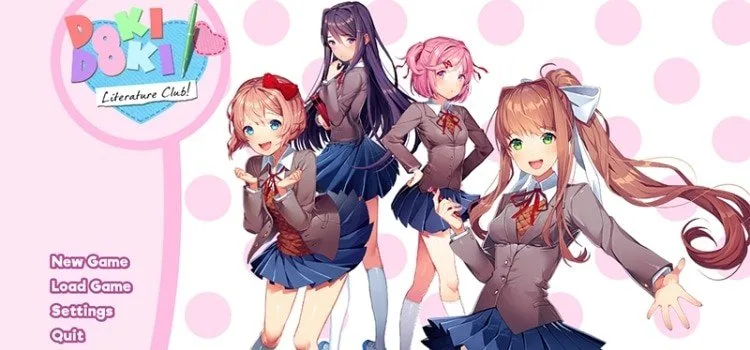
Doki Doki Literature Club! is a visual novel released worldwide on 22 September 2017 for Windows, macOS and Linux. It was developed by Team Salvato, an American independent studio led by Dan Salvato, who handled design, programming, writing and music. The art was made by Satchely and VelinquenT, and the game runs on the Ren'Py engine.
The game is free to play. It was first distributed through itch.io and later became available on Steam. Official iOS and Android versions arrived in December 2025.
How it breaks clichés
The first impression is a classic school club: a shy protagonist, four girls, poems and friendly conversations. The game uses that surface to break the rules of the genre. It acknowledges the player as a player, works with save files and the game folder, and changes scenes that seemed normal on a first run.
That layer is not a gimmick. The metafictional element is the core of the story and the reason many players think differently about the characters and the genre afterwards. Anyone expecting a simple romance will be surprised, and anyone who knows dating simulators will notice how deliberately the game quotes and undermines their patterns.
The four characters
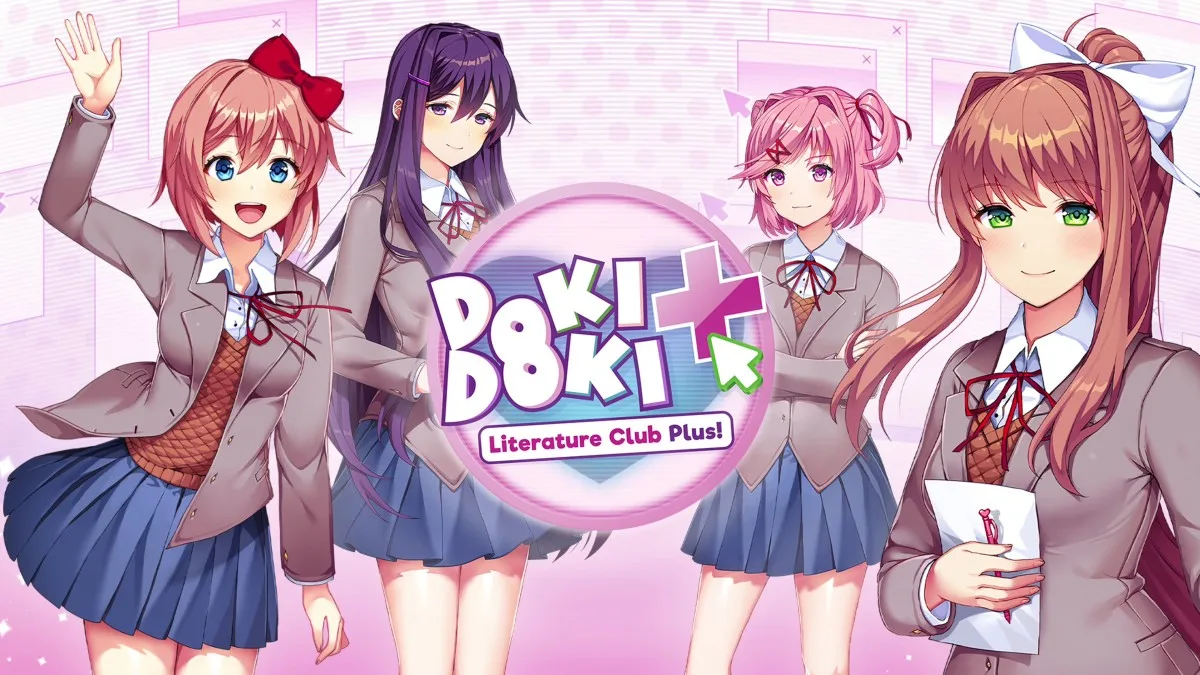
The literature club has four members who start as familiar types. Monika is the calm, organised club president. Sayori is the protagonist's cheerful, clumsy childhood friend. Natsuki is small, direct and fond of manga. Yuri is shy, well read and fascinated by dark stories.
As the story moves on, those roles stop fitting. Each character has her own worries and contradictions, and the game treats mental health more seriously than the cute opening suggests.
The gameplay, without spoilers
The gameplay is deliberately simple. The player reads dialogue, makes occasional choices and writes a poem every day. To do so, you pick word groups that appeal to specific characters and get different reactions. That small mechanic is enough to steer relationships without turning the game into a complex simulation.
The real work is done by atmosphere and tone. The music, the calm images and the seemingly harmless conversations become uncomfortable step by step, without relying on loud jump scares.
The warning and sensitive subjects
The game carries a clear warning on its official site and in the opening sequence. It deals with depression, anxiety, self-harm and suicide. People who have a difficult relationship with those subjects should not play it alone or without preparation.
The warning is not a marketing trick. The story uses those themes as part of its effect rather than as decoration. If you are unsure, read a spoiler-free summary first or play with someone who knows the game.
Doki Doki Literature Club Plus!
On 30 June 2021 the expanded version Doki Doki Literature Club Plus! arrived from Serenity Forge for Nintendo Switch, PlayStation 4, PlayStation 5, Windows, Xbox One and Xbox Series X/S. Along with the main story it adds six side stories, a virtual desktop, 100 unlockable images and a music player. The music there was made by Dan Salvato, Nikki Kaelar, Jason Hayes and Azuria Sky.
Reception and impact
The game spread in 2017 mainly through Let's Plays. It was downloaded more than one million times in its first three months and passed two million about a month later. Large YouTubers such as PewDiePie and Markiplier played it, and the character Monika became an internet motif.
The game also started a debate about age ratings and how games handle mental illness, especially after a death in the United Kingdom in 2018. That discussion is part of the title's history and worth keeping in mind when recommending it.
Who should play it
Anyone who enjoys metafiction, visual novels and unusual storytelling will find one of the genre's most influential titles. Anyone looking for a light romance will be disappointed. Anyone who avoids sensitive themes should stay away.
Doki Doki Literature Club! remains an example of how a small free game with a clear idea can have more impact than some large productions. It shows that a genre is not defined by its rules but by the way those rules are used.
Read more: what is a visual novel?, why play visual novels, video games in Japan, the most bizarre games created in Japan and Junji Ito and Japanese horror.



Community
Comments
0 comments
There are no published comments in this language yet.
Send comment