
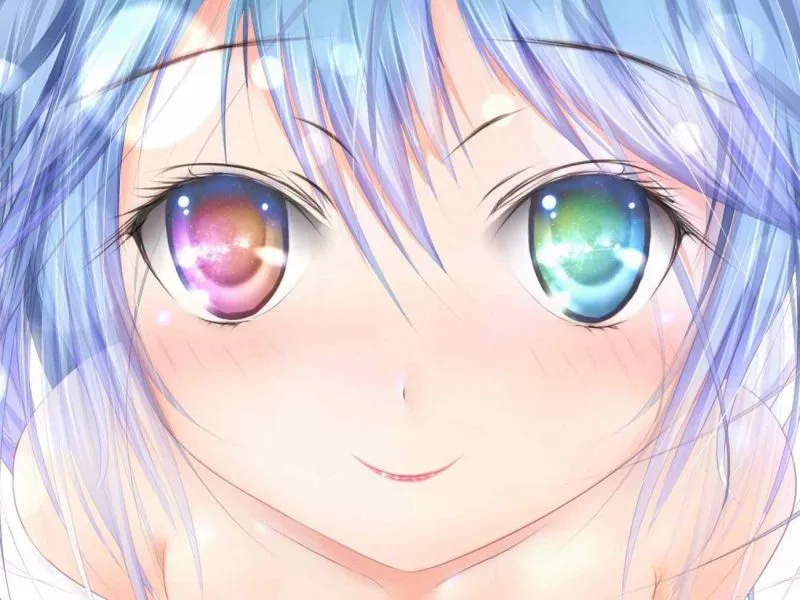
Ask why manga and anime characters have such large eyes and you will get a different answer from every artist, fan and parent. Some parents have looked at the big eyes and wondered whether they hide a message. The history behind the look reaches back further than the rumor suggests.
Several explanations overlap, and most of them contain part of the answer. I personally believe that fashion explains a lot. Someone drew a striking pair of eyes, readers responded, and other artists copied what worked. The rest of the story involves American cartoons, Japanese stage theater and the way comics and animation are made.
The more childish the style, the bigger the eyes tend to be. Comedy anime and chibi characters are the clearest examples.
Contents 5
Where did the big-eyed look come from?
Long before manga and anime reached readers around the world, American animation was already drawing characters with oversized eyes. Mickey Mouse and Betty Boop are the best-known examples. Betty Boop, who first appeared in 1930, combined a large, round baby face with the persona of a Jazz Age flapper. That mix of childish and adult features became part of her appeal.
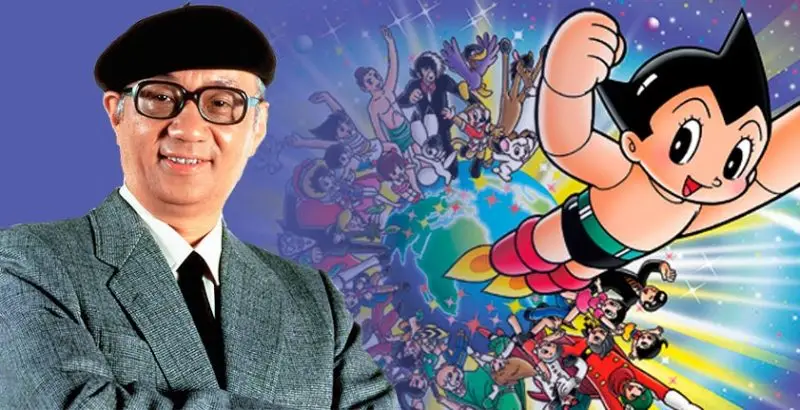
Osamu Tezuka, the artist known as the god of manga, grew up with those films. He was a Disney fan and is often said to have watched Bambi more than 80 times. Betty Boop, Mickey Mouse and Bambi are among the Western characters cited as influences on his art.
Manga had a long history before Tezuka, and Japanese comics already used large eyes in the early 20th century. What Tezuka changed was the scale and ambition of the stories. His 1952 manga Astro Boy became a huge success, and the 1963 television series was Japan's first animated TV series. The look spread along with the show.
A less obvious influence came from the stage. Tezuka's mother took him to the Takarazuka Revue, an all-female musical troupe whose performers wore heavy makeup and had large, sparkling eyes. Tezuka later said the theater left him with a strong sense of nostalgia. Those eyes became part of his visual vocabulary, alongside the American cartoons.
Earlier Japanese illustrators had already pushed in a similar direction. Yumeji Takehisa drew women with large, expressive eyes in the 1910s and 1920s, and his work influenced later shōjo manga. In the 1930s, Katsuji Matsumoto brought round-eyed, childlike faces into comics for girls. His series Kurukuru Kurumi-chan, published from 1938 to 1940, was one of the best-known girls' comics of the era.
How the modern manga face took shape
What readers now recognize as the typical manga face emerged from the work of several artists. According to comics historian Eike Exner, the modern pattern of large eyes, a small pointed nose and a pointed chin took shape in the work of Macoto Takahashi and Tetsuya Chiba.
Takahashi worked as an illustrator before moving into comics. He drew fashionable girls for magazines and kept the eyes large while giving them a more refined look. His style became popular in girls' magazines in the late 1950s. Tetsuya Chiba, who began his career in the same magazine market, adopted the pointed nose and large eyes and carried them into boys' magazines in the early 1960s. From there, the design became a standard for mainstream manga.
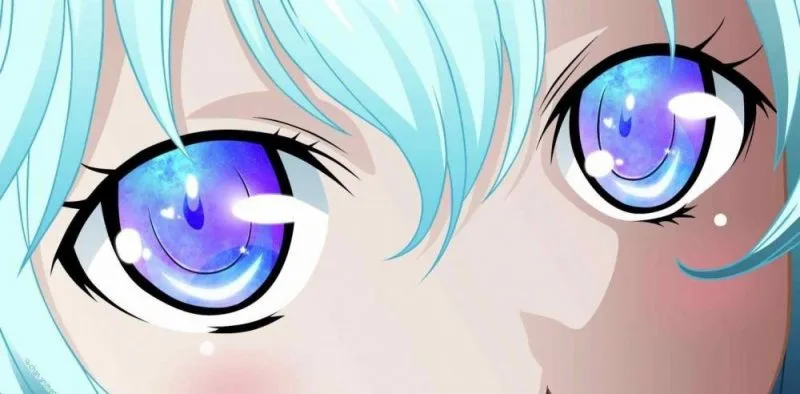
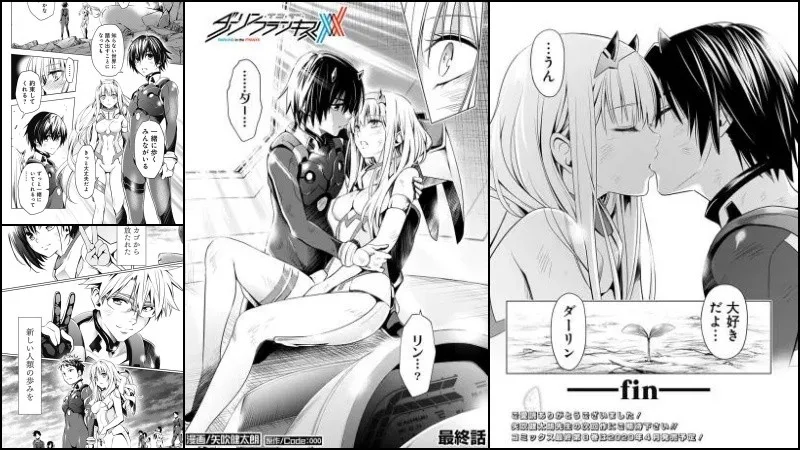
Shōjo manga gave the style its most elaborate version. Artists added highlights, star-shaped reflections and detailed irises. The Japanese term dekame (デカ目), literally "huge eyes," is sometimes used for this look. The eyes became a way to show emotion and beauty at the same time.
Do all anime and manga characters have big eyes?
No. The impression that every character has the same face comes from the most visible examples. Gundam, the films of Studio Ghibli and many series from Shueisha's Jump magazines use different eyes and facial shapes. Some characters have small eyes and large noses. Others have almost no nose at all.
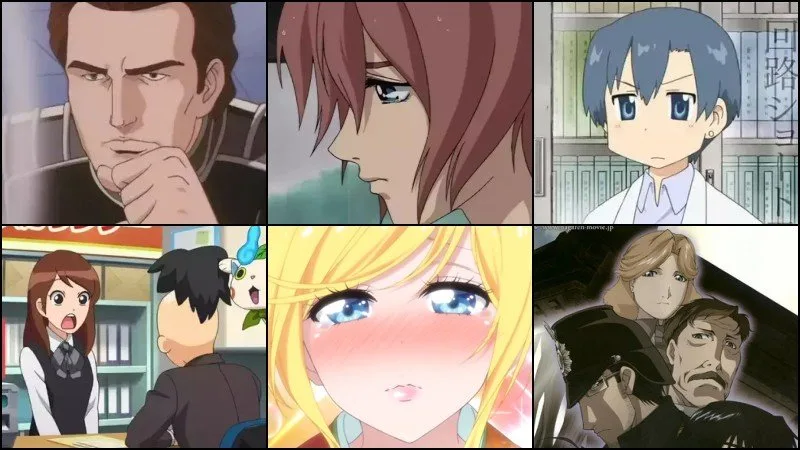
A single series can change proportions from one character to another. In Hunter x Hunter, Gon and Killua have round, open eyes, while Hisoka has a narrower face and smaller eyes. The design follows the character and the scene rather than one fixed rule.

In the 1990s, some productions moved toward more realistic faces with smaller eyes and larger noses. Films such as Ghost in the Shell (1995) and Perfect Blue (1997) showed that realistic proportions could work in animation. The big-eyed style remained, and both approaches continued because they serve different stories.
Why the size of the eyes matters in animation
Size is only part of the story. What matters most is that the eyes stand out, because they are the windows to the soul. A wide eye, a narrowed lid or a bright reflection can show surprise, anger or sadness before the mouth moves. Bigger eyes make emotions easier to represent, and that makes the characters easier to relate to.
Animation makes this even more important. Japanese TV animation often uses limited animation: drawings are reused, frames are held longer, and characters move their mouths while blinking only occasionally. In that system, a detailed eye can carry an emotional beat without redrawing the whole body. The audience looks at the face, and the face is built around the eyes.

That focus on the eyes also helps hide uneven production. A manga page can have a carefully drawn face and a background that is little more than a sketch. Animation has similar shortcuts. When the eyes hold the viewer's attention, the rest of the frame can be simpler.
Big eyes help viewers read a character's emotional reaction without a line of dialogue.
Cuteness, beauty and the inner child
Large eyes also fit a beauty ideal. In Japan, makeup, false lashes and eyeliner are often used to make the eyes look bigger, and the expressive gaze is a familiar motif in pop culture. The kawaii culture of cuteness, which gained force in the 1970s, reinforced that preference.
There is a biological reason too. Humans respond to baby-like features, and babies have large eyes and round faces. The Austrian ethologist Konrad Lorenz described a set of infant features that tend to trigger caregiving. Researchers call this the baby schema. Artists use it deliberately: a character with those proportions looks younger, more vulnerable and easier to like.
That effect works on adults as well. A big-eyed character can appeal to the viewer's inner child, even in a story with mature themes. In seinen manga, a category aimed at adult men, stylized eyes can make violent or sexual scenes feel less literal. That distance from realism gives artists room to handle serious material.
The old rumors about hidden demonic messages have more to do with anxiety than with the drawings. The big eyes are a visual language assembled from American cartoons, Takarazuka makeup, girls' magazines and the economics of animation. Once you know that history, a familiar face becomes easier to read.
Which series do you think makes small eyes work just as well?




Community
Comments
0 comments
There are no published comments in this language yet.
Send comment