
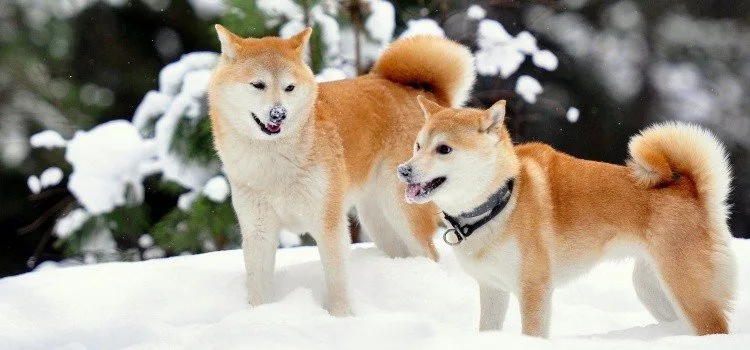
The Akita Inu and the Shiba Inu are the two best-known Japanese dog breeds, and the quickest way to tell them apart is size. Both belong to the Nihonken [日本犬], the group of six native Japanese breeds that also includes the Hokkaido, Kai, Kishu and Shikoku, and both are designated Natural Monuments of Japan: the Akita since 1931 and the Shiba since 1936.
The numbers are easy to remember. A male Akita Inu stands around 67 cm at the shoulder and a female around 61 cm, while a male Shiba reaches about 39.5 cm and a female 36.5 cm, according to the FCI standards. The Akita is a heavy, bear-headed dog built for the snow of northern Japan; the Shiba is a small, fox-like hunter that fits easily into an apartment.
They also share a temperament that surprises new owners: quiet indoors, clean and dignified, deeply attached to their family but reserved with strangers and often indifferent to other dogs. The Shiba adds a stubborn, independent streak, while the Akita brings strength and a strong territorial instinct.
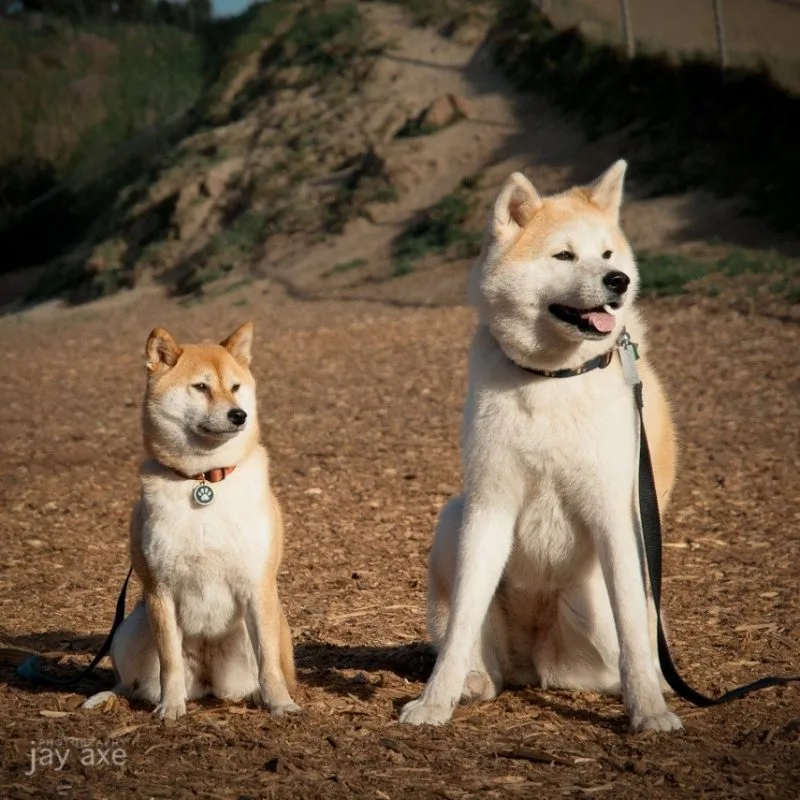
That combination explains why the Shiba is the most popular companion dog in Japan, while the Akita remains a working breed at heart. Size, color and temperament separate them clearly, and the split between Japanese and American lines adds another layer.
Contents 3
Differences between Akita Inu and Shiba Inu
Color is where the American Akita enters the story. Japanese Akitas are limited to red fawn, sesame, brindle and white, all with urajiro, the pale markings on the muzzle, cheeks, chest and belly. The American Akita, developed in the United States after the Second World War, accepts any color, including the black mask and pinto patterns that would disqualify a Japanese Akita.
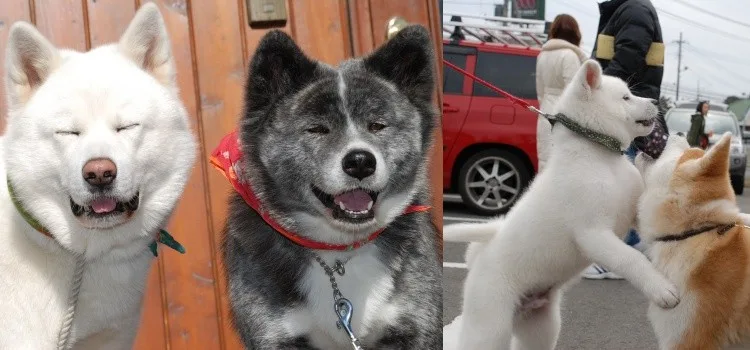
That split has a longer history. Akitas were crossed with Tosa fighting dogs and mastiffs in the late 19th century, and German Shepherds were added during the Second World War, when Japanese breeders tried to save the breed from a government order to cull non-military dogs. The heavier Dewa line, with its black mask and pinto markings, appealed to American servicemen, who took dogs of that type home after the war. Breeders there developed a larger, bear-headed dog, and the FCI recognized the American Akita as a separate breed in June 1999, first as the "Great Japanese Dog" and, since January 2006, as the American Akita.
In temperament, the Akita is the calmer and more imposing of the two, while the Shiba is more alert and independent. The Akita is a demanding companion, and owners who want a small, cute and gentle dog are usually happier with a Shiba.
Origin of the Akita Inu and the Shiba Inu
The Akita's recorded history begins in the mountains of northern Japan. Its ancestors were the Matagi Inu, medium-sized hunting dogs used by the Matagi to track and hold bears, wild boar and Japanese serow in deep snow. In the Ōdate region they were also kept as guard dogs and fighting dogs, and the breed was known as the Ōdate dog until 1931, when it received the name Akita Inu and became the first of the native breeds to be declared a Natural Monument.
War nearly erased that history. Many Akitas were killed or lost to food shortages, and the surviving dogs had been crossed with German Shepherds and mastiffs. The breed was rebuilt from the Dewa and Ichinoseki lines, with Matagi stock added later, and the official standard drawn up in 1934 guided the work.
The Shiba is even older. Dogū figurines from the Jōmon period show small dogs with pointed ears and curled tails that resemble the breed, and the Shiba is considered the oldest of the six Nihonken. Hunters in the mountains of central Japan used it to flush birds and small game, and its name, usually translated as "brushwood dog", refers to the bushland where it worked.
The breed almost disappeared twice. Crossings with imported dogs had eroded the pure Shiba by the early 20th century, and the Second World War, followed by outbreaks of distemper, left so few animals that every modern Shiba descends from three regional bloodlines: Shinshu, Mino and San'in. The Nippo standard was published in 1934, and the Shiba was declared a Natural Monument in December 1936.
Curiosities about Shiba Inu and Akita Inu
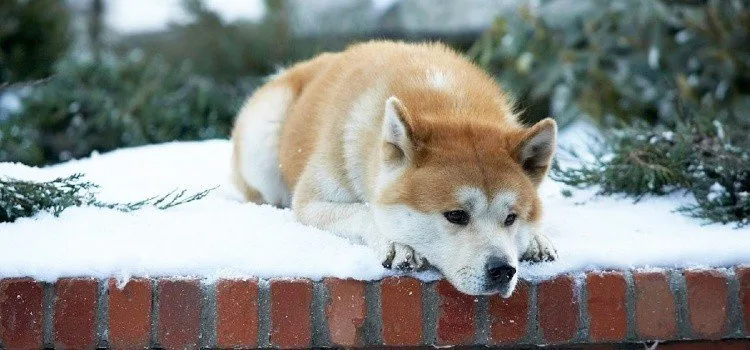
- The most famous Akita is Hachikō, who waited for his deceased owner at Shibuya Station for nine years, from 1925 until his death in 1935; a bronze statue was erected in his honor in 1934 and still stands at the station;
- A Shiba Inu puppy from a breeder typically costs between US$1,000 and US$3,000, depending on pedigree, breeder and country;
- Cold mountain winters shaped both breeds; the Akita in particular enjoys snow and tolerates freezing weather far better than summer heat;
- They need daily exercise and mental stimulation: space to run, long walks and something to do. A garden alone is not enough;
- Training takes patience. Intelligence and independence come together in a dog that does not obey for the sake of obeying, so early socialization and consistent rules matter more than repetition;
- Akitas and Shibas normally have smaller red blood cells than other dogs, a harmless trait called microcytosis that can make anemia harder to read on a blood test. Onions and garlic damage red blood cells in any dog, so they have no place in these breeds' diet;
- Shibas are prone to skin allergies such as atopic dermatitis, so persistent scratching is a reason to see a vet early;
- These dogs guard their space and take time to accept strangers, so supervision around visitors and other pets is part of living with them;
- In Tokyo, a Shiba named Shiba-san became a local celebrity by appearing at the window of the Suzuki tobacco shop in Musashi-Koganei, a routine that lasted until 2015.
Both breeds reward the same kind of owner: someone who values a thinking dog over an obedient one. The Akita offers that experience on a large scale, with the presence of a guardian and the needs of a working breed; the Shiba offers it in a compact, cat-like package that fits city life, as long as the owner is ready to negotiate as much as to train. Neither is a beginner's lapdog, and both repay patience with the kind of loyalty that made Hachikō famous.




Community
Comments
0 comments
There are no published comments in this language yet.
Send comment