
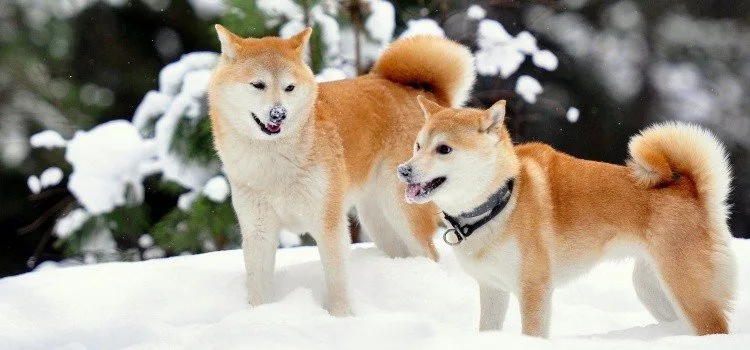
Japan gets called a cat country so often that the dogs look like a footnote. Then you meet a Shikoku from the mountains of Kochi, or a Hokkaido that was once asked to hold a brown bear, and the picture flips. The posters belong to Shiba Inu and Akita. The quieter ones still carry the names of the places that raised them.
Six of those dogs are Nihon Ken — native Japanese breeds later protected as natural monuments. Inu and ken both mean dog; the rest of the name is usually the region. Other Japanese dogs were shaped in different ways: a court companion, a white city fluff, a fighting mastiff, a sled dog that almost disappeared. The walk below starts in Kochi, not in the meme.
The six Nihon Ken are Shiba Inu, Akita Inu, Kai Ken, Kishu Ken, Shikoku Ken and Hokkaido. Pricked ears, curled tail, double coat — and a hunting job before they became family dogs.
Contents 13
1 - Shikoku Inu — the dog from Kochi
The Shikoku Inu is a dog from the Kochi region, on the island of Shikoku. The mountains there are remote, which is why this breed is often called one of the purer native lines: crossing with outside dogs was simply harder.
It is one of the six Nihon Ken. Dogs of this breed tend to be gentle and loving with their owners. They also tend to get along well with children when they grow up around them; otherwise they can show a sharper, more reserved side.
The Shikoku Inu is a medium-sized dog, with males measuring between 49 and 55 centimeters and weighing between 16 and 25 kilograms. Life expectancy is usually between 10 and 12 years. The coat comes in red sesame, black sesame and sesame. The personality that keeps coming back in descriptions is intelligent, cautious, energetic, agile and courageous — a boar hunter that still wants a real job.
2 - Hokkaido Inu — the northern dog
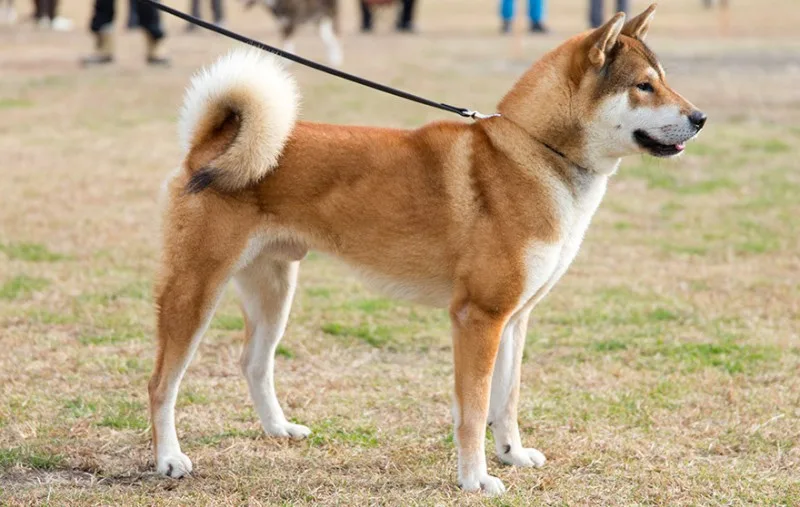
The Hokkaido, also called Ainu-ken, comes from medium-sized dogs that went with people from Honshu to Hokkaido during the Kamakura period, around the 1140s — not the 17th century, as some older notes mix up. In the cold north they worked with the Ainu as hunting partners, including against brown bear.
Being strong and cold-resistant, Hokkaidos adapt well to mountains. Dogs of this breed have a gentle, courageous, alert and loyal personality. An interesting trait that owners still repeat: a sharp sense of direction, enough to find their way back if they lose the person they follow.
It is also a medium-sized Nihon Ken, around 48 centimeters at the shoulder and 20 to 30 kilograms. Coats appear in black, white, black and tan, sesame or red. Japan designated the breed a natural monument in 1937, and the official name became Hokkaido-Inu.
3 - Tosa Inu — the fighting mastiff
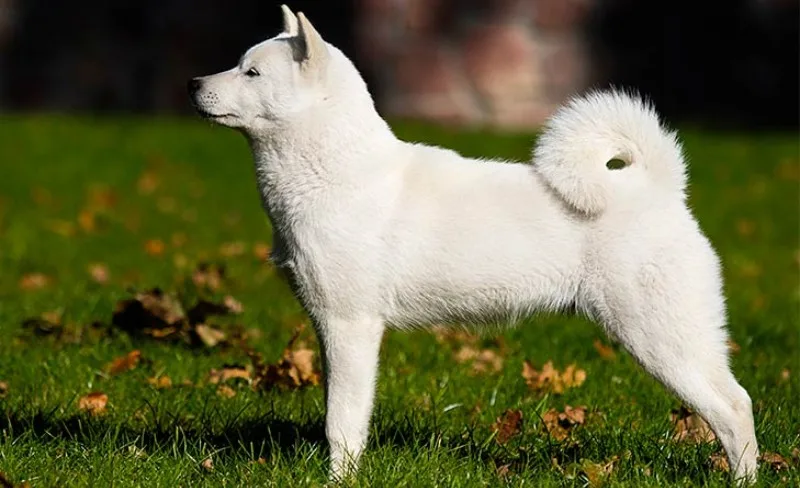
The Tosa Inu is not one of the six Nihon Ken. It was built in Tosa, today's Kochi, in the late 19th century, by crossing local Japanese dogs — often described as Shikoku-type — with Western breeds such as the Mastiff, Great Dane, Bulldog and St. Bernard. The aim was a large dog for ritualized fighting, sometimes called dog sumo: power, and as little noise as possible.
This is the largest Japanese-origin breed in the list, commonly 45 to 90 kilograms and around 60 centimeters at the shoulder. These dogs generally do not warm to strangers quickly, but they attach hard to the household, which is why people still keep them as guardians.
The usual picture is suspicious, intelligent, sensitive, potentially aggressive and courageous. The coat is short, in black, fawn, brindle or red. Because of that history and size, some countries restrict or ban the Tosa; anyone looking at the breed has to check local law first, not a blog list.
4 - Kishu Inu — the silent hunter of Kishu
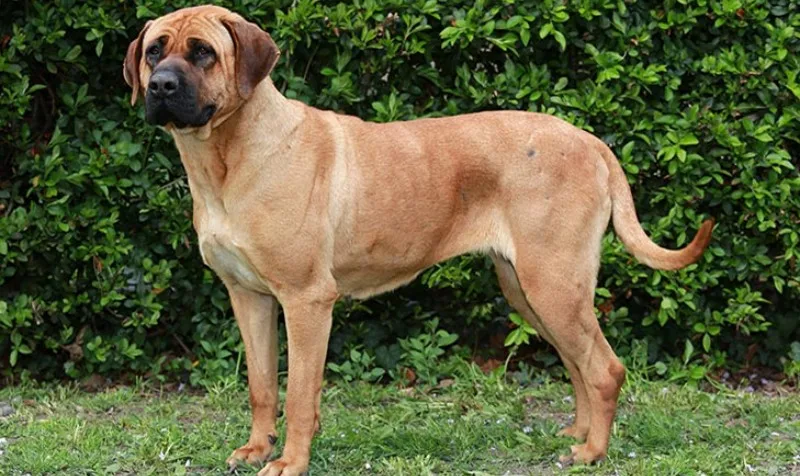
Kishu takes its name from the old Kishu region, now Wakayama and Mie. It is an old hunting line, used on boar and deer much larger than itself, not a museum piece with a round “3,000 years” date attached. Japan designated the Kishu a natural monument in 1934. Hunters later favored the white coat because it showed up in the forest.
The Kishu is a medium-sized Nihon Ken, measuring between 49 and 55 centimeters and weighing between 19 and 27 kilograms. The coat can be white, brindle, sesame or red — though white is the face most people now expect. Dogs of this breed tend to be loving, active, playful, gentle, patient and protective, which is why they often do well with children when they are raised with them.
On the hunt they are quieter than the bark-first dogs. They stalk, then hold. That patience is the part that does not show up in a cute photo.
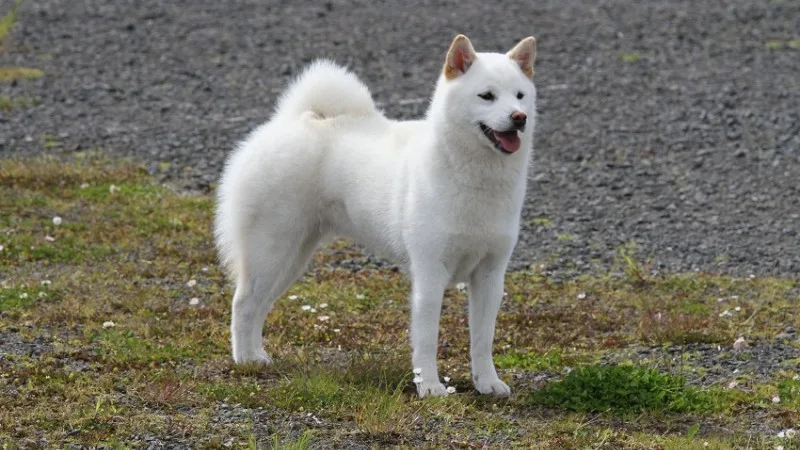
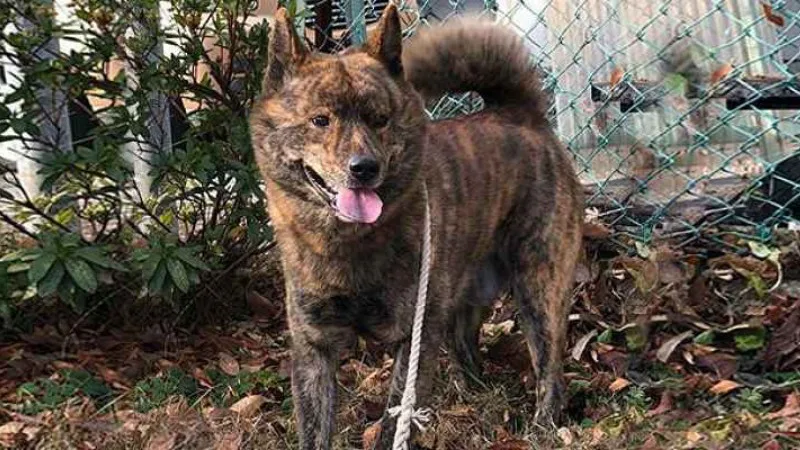
5 - Kai Inu — the pack dog of Yamanashi
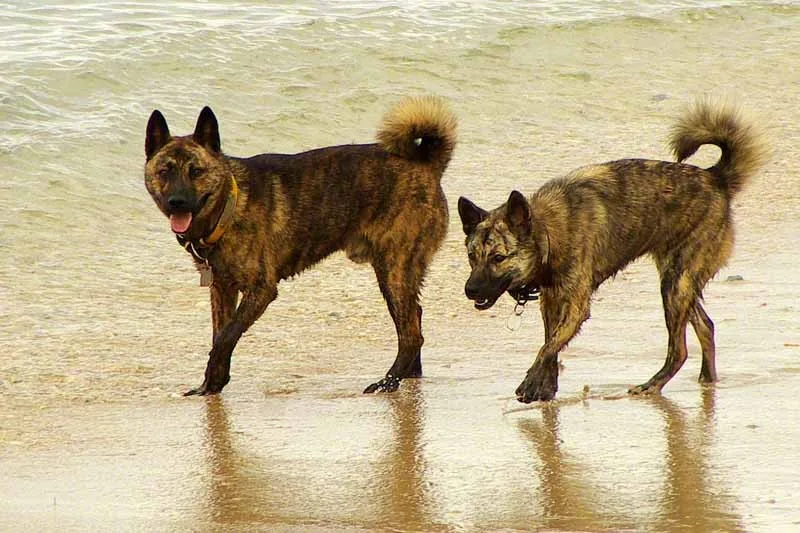
Also called Kai Tora-ken, the tiger dog, this medium-sized Nihon Ken was established in the Kai district of Yamanashi. The brindle coat — black, gray or red — is the whole point of the nickname. Puppies can look almost solid at first; the stripes often fill in with age.
These dogs have a strong tendency to form packs, which helped keep the population and the look of the breed together in isolated mountains. Originally they hunted boar and deer. Because they adapt well, they also work as companions and guardians. They are even talked about as climbers, willing to go up rock and, in some reports, trees after quarry.
Size sits between 45 and 56 centimeters, weight between 14 and 18 kilograms. Life expectancy is often given as 14 to 16 years. The coat stays in those dark, gray or red brindle ranges.
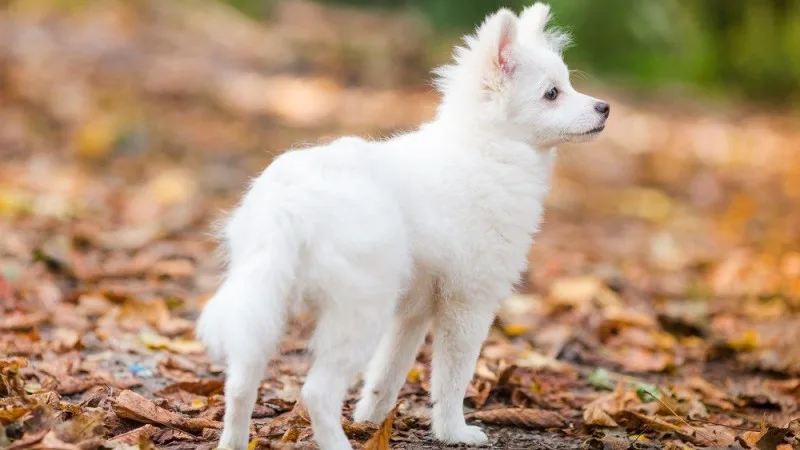
6 - Japanese Spitz
The origin of the Japanese Spitz is not a single clean story. A common account is that Japan shaped it in the early 20th century from white spitz dogs — German Spitz is usually in the mix; American Eskimo appears in some versions — and the Japan Kennel Club recognized the breed in 1948. It is not a Nihon Ken. These are small companion dogs, bred for the house, not the mountain.
They are cheerful, energetic and playful, with a life span often given between 10 and 16 years. Males measure about 30 to 38 centimeters; females, about 25 to 35 centimeters. The personality that owners want is intelligent, affectionate, obedient and companionable — a white plume of a tail and a face that looks permanently ready to go out.
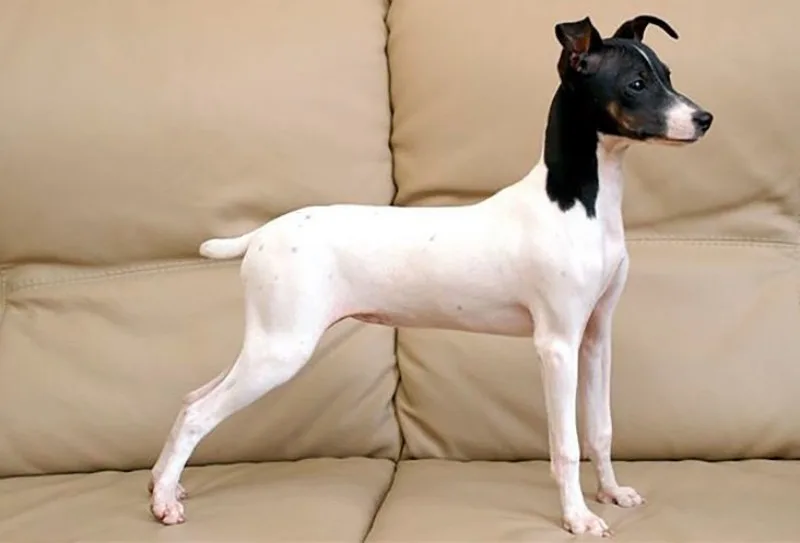
7 - Japanese Terrier
The Japanese Terrier, also known as Nihon Teria or Nippon Terrier — not “Nihan” — comes from short-haired terriers brought to Nagasaki by Dutch traders, later crossed with local dogs. It is one of the few Japanese breeds that does not wear the classic spitz silhouette.
This is a small companion, good for play, and it generally gets along well with children. Height sits between 20 and 33 centimeters, weight between 2.3 and 4.1 kilograms. The coat is short, black and white or tricolor, often a dark head on a white body. The usual temperament: affectionate, cheerful, alert, lively and active. Even inside Japan it remains uncommon.
8 - Japanese Chin
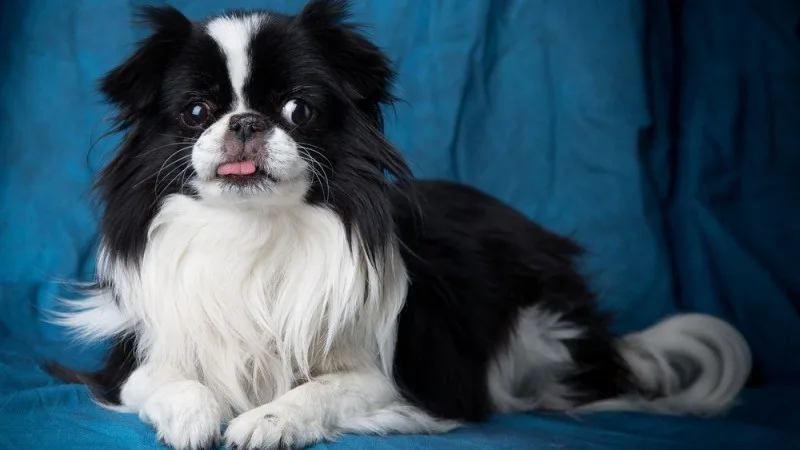
The Japanese Chin, also called Chin, is the quiet option for a city apartment. The face looks like a small spaniel; the job was never hunting. Court households kept it as a companion. The type has roots on the continent and was refined in Japan into the dog people now mean by Chin.
This is a small breed with a long coat, usually black and white or red and white, and a tail heavy with fur. They are intelligent, alert, loyal and loving. Life expectancy is often 12 to 16 years, weight between 1.4 and 6.8 kilograms. The flat face means heat and hard exercise are not a game — a Chin is a lap and a cushion, not a mountain partner.
9 - Sakhalin Husky
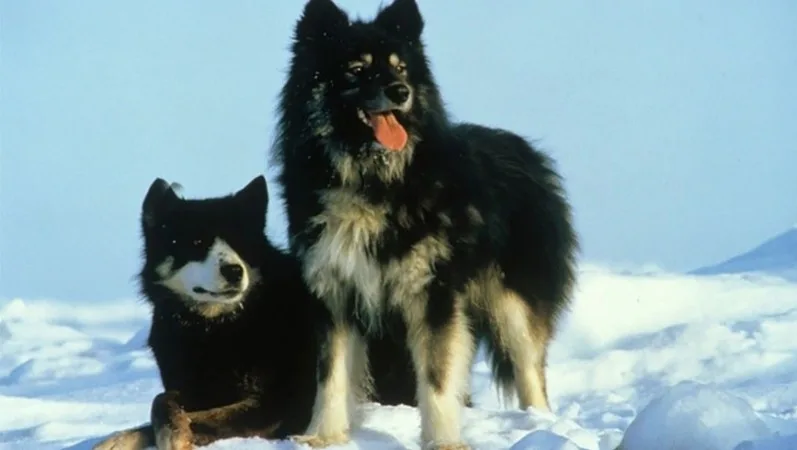
The Sakhalin Husky, or Karafuto Ken, was a sled and hunting dog from Sakhalin, the island Japan called Karafuto. The name most people outside Japan know comes from the 1958 Japanese Antarctic expedition: the team left the dogs behind in a failed relief plan, and two of them, Taro and Jiro, were found alive much later. That story stuck. The breed did not.
As of 2011, the last two known Sakhalin Huskies in Japan were still alive; the landrace was already treated as nearly gone. Height is given between 56 and 66 centimeters, weight between 30 and 40 kilograms. Coats appear in black, cream, russet and biscuit. It is not a Nihon Ken, and it should not be sold as a common pet with a waiting list.
10 - Akita Inu
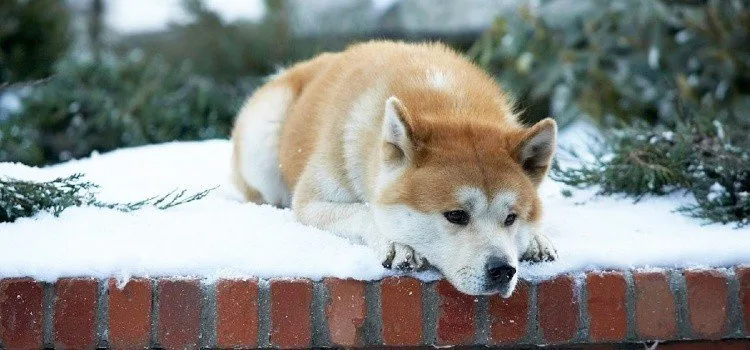
The Akita Inu is the large Nihon Ken, the dog behind Hachiko, who waited at Shibuya, and later the film Hachi: A Dog's Tale. It is loyal, gentle, calm, courageous, watchful and companionable with its own people. Because it is territorial, an Akita often does not share space easily with other dogs.
Males of the Japanese type typically stand between 64 and 70 centimeters and weigh between 34 and 54 kilograms. The coat can be white, sesame or brindle-red, with the pale urajiro shading on cheeks and chest that the Japanese standard wants. Life expectancy is often 10 to 12 years. The American Akita is a heavier, more bear-like cousin; if the face in the photo has a black mask, you are probably not looking at the Japanese show dog.
11 - Shiba Inu
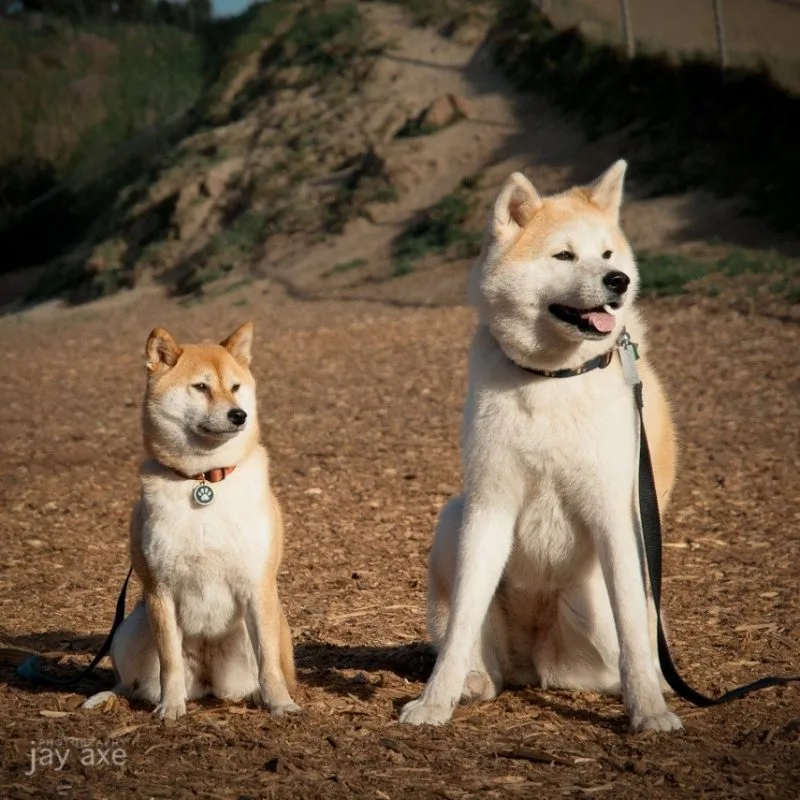
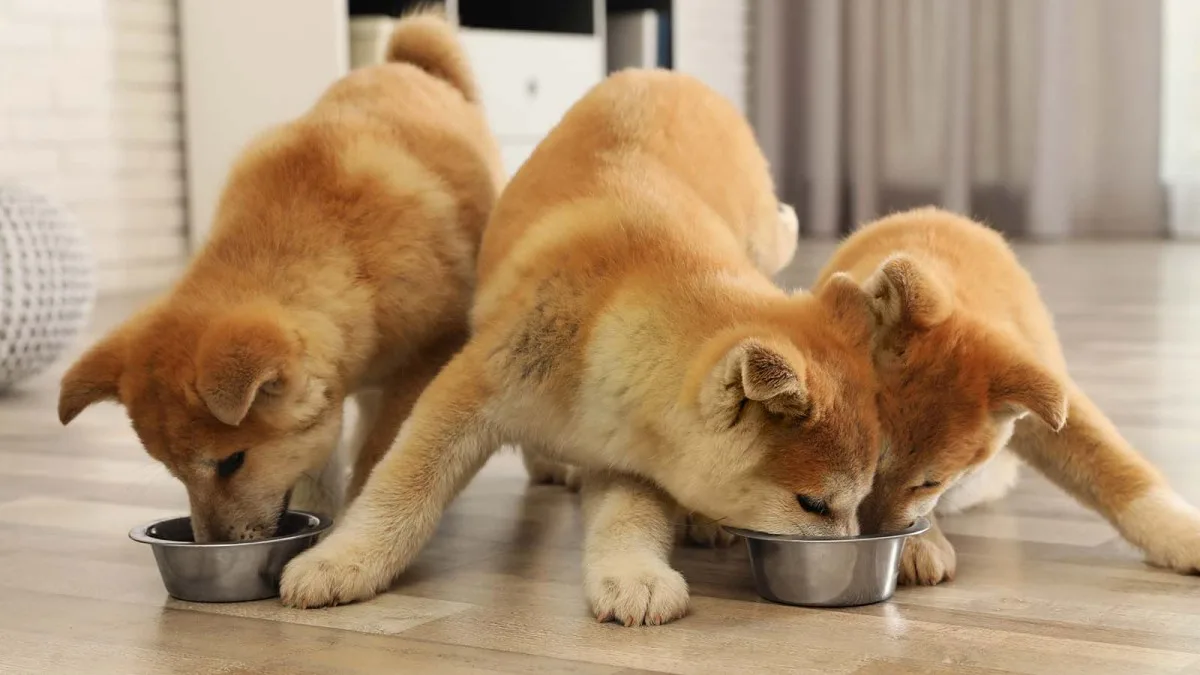
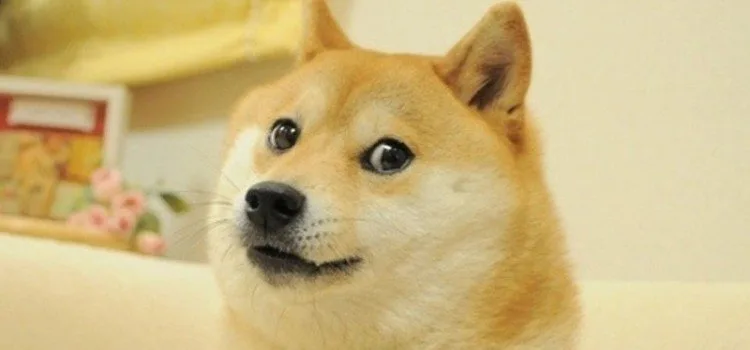
The Shiba Inu is the small Nihon Ken, and the one the internet already knows. It shares the pricked ears, curled tail and double coat with the Akita, then shrinks the whole design and adds a cat-like stubbornness. Shiba is Japan's most common native dog; Akita is the famous large one. Size and temperament are the real split, not a costume change.
A Shiba is compact, clean, bold and independent. It was used on small game in the underbrush, not on bear. The “Shiba scream” is not folklore invented for clicks: plenty of owners have heard it over a nail trim. For a closer comparison of the two household stars, there is a separate piece on Shiba Inu and Akita Inu.
12 - Ryukyu Inu
The Ryukyu Inu is a rare hunting dog from the southern islands, mainly Okinawa. It is not one of the six Nihon Ken. In 2015, estimates put the population around 400, which is why people on the islands still treat the remaining dogs as something close to a local treasure. They hunted boar in subtropical forest, not snow.
The outline can recall a Kai Ken — lean, alert, often brindle — but the lineage and the climate are different. They are described as brave, intelligent and alert, and affectionate with their own people. Outside Okinawa they are still hard to see, which is the whole conservation problem in one sentence.
13 - Sanshu Inu
The Sanshu Inu is a newer Japanese type, put together around 1912 from Chow Chow, the old Aichi dog and other Japanese Inu lines. It is not a Nihon Ken and it is not a reconstruction of a Jomon hunter. What people wanted was a medium companion with a gentler household temperament than the mountain six.
That mix produced a dense-coated dog, loyal and sweet with family, a little reserved with strangers. It remains uncommon outside Japan. If a listing calls every fluffy Asian mix a Sanshu, treat the name as marketing until the pedigree says otherwise.
Thirteen dogs, and only six of them are the official Nihon Ken. If the face that stopped you was a Shiba on a phone screen, the rest of the map is still out there — some in the mountains, some in a court painting, and one almost only in old expedition photos.

Community
Comments
0 comments
There are no published comments in this language yet.
Send comment