
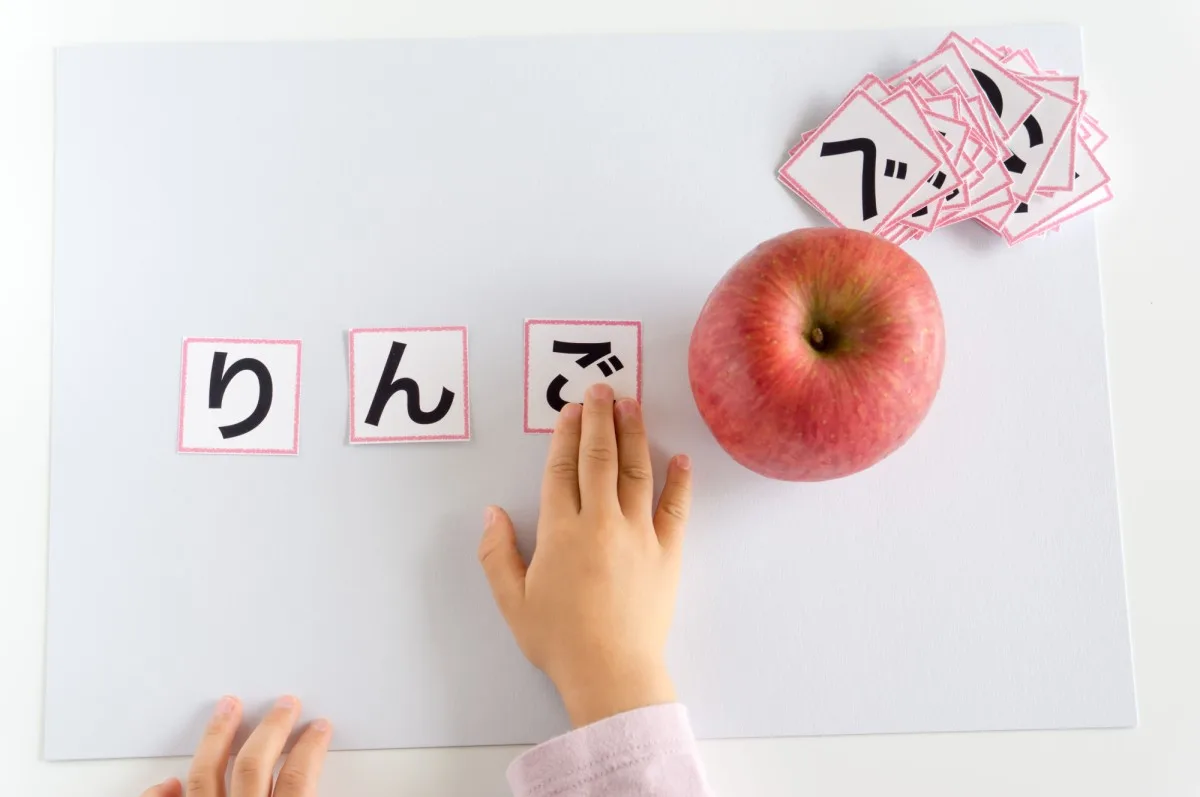
Shiritori is a popular Japanese word game well-known for its simplicity and charm. The game stimulates creativity, mental agility, and memory, and is also an excellent tool for learning and practicing Japanese vocabulary. In this article, we will explore the rules, variations, and strategies of this intriguing word game.
The game is simple: One player starts with a word, and each player must continue with another word that begins with the last letter (syllable) of the previous word. Words cannot be repeated, and the player who says a word that ends with n (ん) also loses the game.
We also recommend reading:
- How to use Discord to learn Japanese?
- Sugoroku – Board games with dice
- How to learn Japanese with manga and anime?
Contents 6
How to play Shiritori
Shiritori consists of players taking turns to say words that start with the last syllable of the previous word. The game is usually played by two or more people and can be played in both Japanese and other languages.
However, when playing in Japanese, there are some additional or optional rules to follow:
- Only nouns count. Common pronouns and place names may be allowed;
- A long vowel can either be ignored or considered as a vowel;
- Dakuten and handakuten can be ignored or added as a rule;
- The length of a word must be three or more syllables.
The game has several other rules that can be included to make it easier or harder. It is a very simple and interesting game to play, and it can be adapted and played in any language.
Strategies to Win Shiritori
Although Shiritori is a casual game, there are some strategies that can be employed to increase the chances of winning:
- Learn and memorize rare words: Having a vast vocabulary and knowledge of less common words can be useful, especially when the game becomes more challenging.
- Try to predict your opponent's responses: By anticipating the words your opponent might use, you can plan ahead and think of several possible responses.
- Use words with less common syllables: Choosing words that end with less common syllables can make it harder for your opponent to respond and increase your chances of winning.
See also: Super Dictionary of Yojijukugo – List of words with 4 kanjis
History and Meaning of Shiritori
The word "Shiritori" (しりとり) is a combination of two Japanese terms: "shiri" (尻), which means "tail," "buttocks," or "end," and "tori" (取り), which means "to take" or "to grab."
Together, they form "shiritori" (尻取り), which can be translated as "taking the tail" or "taking the end." The etymology of the word reflects the basic mechanics of the game, where players must create a new word using the last syllable or "tail" of the previous word.
The exact origin of Shiritori is difficult to determine, as there are no historical records specifically documenting its emergence. However, it is widely accepted that the game has its roots in Japanese culture and tradition, possibly dating back to the Heian period (794-1185) or the Edo period (1603-1868).
During these periods, word games and poetry were very popular among the nobility and the warrior class, as well as among the general population. The most famous of these is "uta-awase," a poetry contest in which participants competed to create the best poem following specific rules and themes. "Renga," a style of collaborative poetry in which poets created alternating verses to compose a long poem, was also common.
It is believed that Shiritori may have originated as a simplified form of such word games, aimed at providing entertainment and fun for people of all ages and social classes. Over the years, the game has gained popularity and evolved, becoming a common pastime and a useful tool for learning and practicing Japanese vocabulary.
We recommend reading: Heian Period – The period of peace in Japan
See below a song about Shiritori:
Variations of the Shiritori Game
There are several variations of Shiritori that can be played to make the game more challenging or suitable for different age groups and skill levels:
- Thematic: Players must choose words related to a specific theme, such as animals, foods, or places.
- Limited time: Players have a set time to think of a word, making the game more exciting and challenging.
- Words from specific grammatical categories: Instead of using only nouns, players can choose words from other grammatical categories, such as verbs or adjectives.
In addition to the mentioned variations, the game can appear in different forms for children or in books and apps. It is possible to create different puzzles and intelligence tests using the basis of the game.
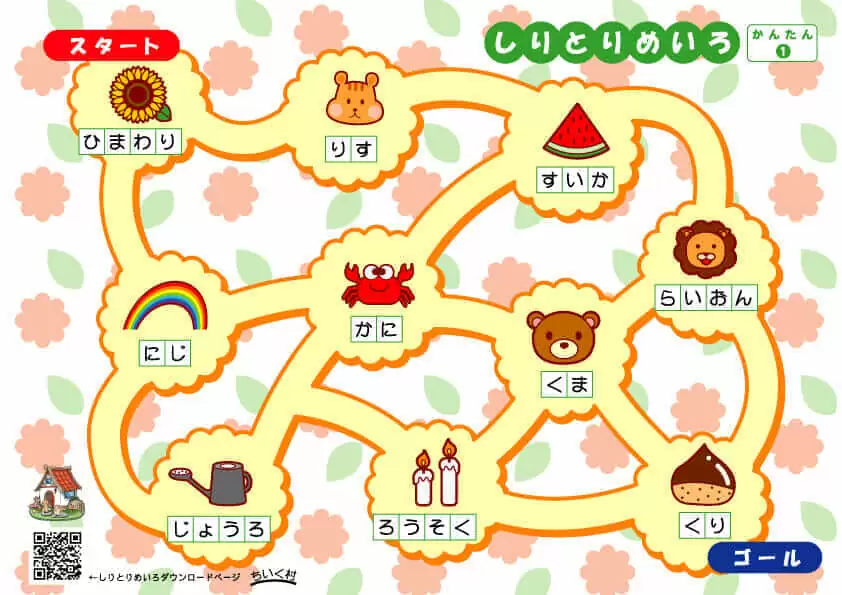
The image below shows a map with determined words, where the goal is to find words that start with the last syllable and end with the first syllable of the word that follows the path:
Let's Play Shiritori?
Now that you have learned how to play Shiritori, why not invite your friends and take the test? If you are still lost, see an example of a game below:
Example of a game
- Player 1: sakura (さくら)
- Player 2: rajio (ラジオ)
- Player 3: onigiri (おにぎり)
- Player 1: risu (りす)
- Player 2: sumou (すもう)
- Player 3: udon (うどん) – Lost!
You can also easily download a game or app on your phone, just search for "Shiritori" in the app store.
To conclude, we can summarize that Shiritori is a simple and engaging Japanese word game that can be enjoyed by people of all ages and language skills.
In addition to being a great way to learn and practice Japanese vocabulary, the game can also be played in other languages and with different variations and rules.
Through the use of strategies and vocabulary knowledge, players can challenge each other and improve their language skills while having fun.





Community
Comments
0 comments
There are no published comments in this language yet.
Send comment