

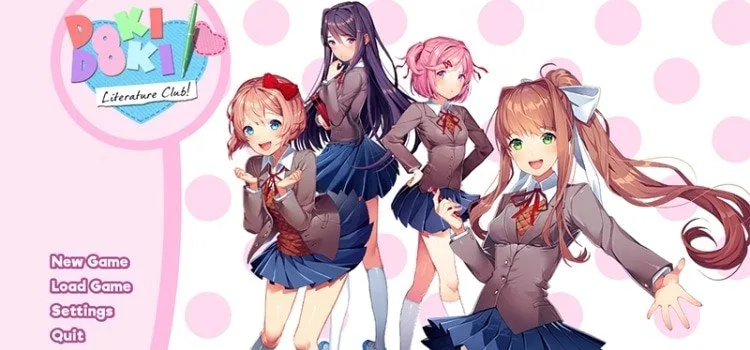
"Doki doki" is a Japanese expression or onomatopoeia that means "heartbeat" or "excited." It can be used to describe a feeling of excitement or nervousness.
In Japanese pop culture, "doki doki" is widely used in anime, manga, and games, usually to describe a character's emotion in a tense or exciting situation.
Someone might say that a game is "doki doki" if it is very fun or exciting to play. A character might say "doki doki" while in a romantic situation or while facing a challenge or danger.
On the internet, "doki doki" is a term commonly used in fandoms and online memes. It is often associated with anime or manga characters that are particularly cute and adorable.
It is also common to see images or videos showing a character's heartbeat, usually accompanied by the expression "doki doki."
We also recommend reading:
Contents 3
How to translate Doki Doki?
Although many see Doki Doki as a simple onomatopoeia, the word can be an adverb or verb. Its use is quite frequent and different from the onomatopoeias used in the West.
The word Doki Doki can be translated as:
- Thump-thump;
- bang-bang;
- pit-a-pat;
- pitapat;
- pitter-patter;
- Beat fast;;
- pulse;
- beat;
- throb
Doki Doki, despite being an onomatopoeia, can be used as a verb - suru「する」to say that a person became excited or thrilled, or with a racing heart.
Despite being a frequent and commonly used word, it is classified in JLPT N2. There is also a synonym for this onomatopoeia which is 「どきんどきん」Dokin Dokin.
When can someone say Doki Doki?
Asuna is a strong and determined character, but she can also be very emotional. She might say "doki doki" while facing danger or when she is in love with her partner Kirito.
Chika from Kaguya Sama is a very cute and adorable character, and it is common for her to get excited in fun moments. She might say "doki doki" while feeling happy or nervous.
Nagato Yuki is a very serious and reserved character, but she can also say "doki doki" while facing a challenge or when she is feeling nervous or anxious.
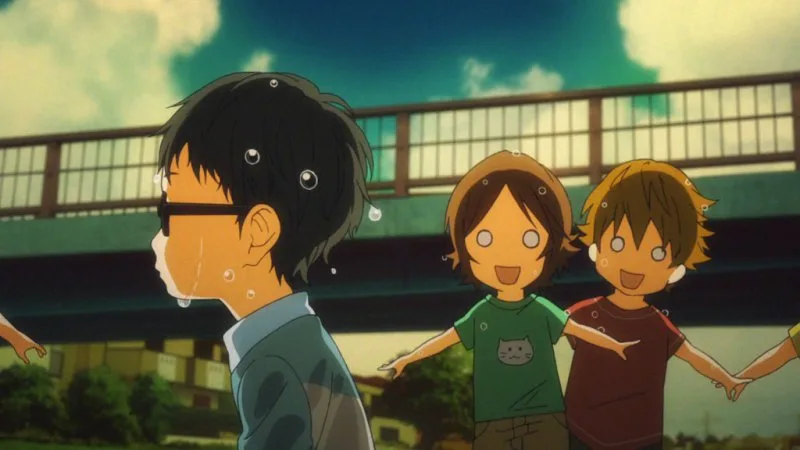
Arima Kousei is a talented young pianist, but he is also very emotional. He might say "doki doki" while feeling nervous before a concert or when he is feeling excited about someone special.
Sentences in Japanese with the word 「ドキドキ」
See below some example sentences that use the Japanese expression doki doki:
This game is very exciting, isn't it?
「このゲーム、ドキドキするよね。」
Kono geemu, doki doki suru yo ne.
When he confessed to me, I was very excited.
「彼が私を告白したとき、私はドキドキしました。」
 Kare ga watashi o kokuhaku shita toki, watashi wa doki doki shimashita
This movie is really exciting
「この映画、本当にドキドキするよ。」
Kono eiga, hontou ni doki doki suru yo.
I always get excited when I go out with her.
「彼女とデートするのは、いつもドキドキするよ。」
Kanojo to deeto suru no wa, itsumo doki doki suru yo.
This park is always full of people, so I get very excited.
「このパーク、いつも人がいっぱいで、ドキドキするよ。」
Kono paaku, itsumo hito ga ippai de, doki doki suru yo.
I always get excited when I think about her
「彼女のことを考えると、いつもドキドキするんだ。」
Kanojo no koto o kangaeru to, itsumo doki doki suru n da.
This restaurant serves really wonderful food, so I always get excited.
「このレストラン、本当に素晴らしい料理を出すから、いつもドキドキするよ。」
Kono resutoran, hontou ni subarashii ryouri o dasu kara, itsumo doki doki suru yo.
When he proposed to me, I was really excited
「彼が私にプロポーズしたとき、私は本当にドキドキしました。」
Kare ga watashi ni puropoozu shita toki, watashi wa hontou ni doki doki shimashita.


Community
Comments
0 comments
There are no published comments in this language yet.
Send comment