

Do you know the book Minna no Nihongo? The title, みんなの日本語, means Japanese for everyone. When I went looking for a copy, I had to sort out which volume, which edition, and which extra book is supposed to sit next to the main text.
Contents 6
What is the Minna no Nihongo book?
3A Corporation publishes the series. In Japanese the company is スリーエーネットワーク. The first elementary books came out in 1998. Elementary I of the second edition followed in 2012, and Elementary II in 2013. A third edition of the elementary series began in the autumn of 2025, and the second edition is still sold beside it.
The main text is written in Japanese. The companion volume, Translation and Grammar Notes (翻訳・文法解説), gives the vocabulary, the sentence patterns, the conversations and the grammar in another language, together with short notes about life in Japan. On the second edition those notes come in 15 languages, English among them. Minna is the ordinary word for everyone, and the lessons are aimed at general adult learners, in a class or on your own, once those notes are there to lean on.
You need the basics of hiragana and katakana before the usual copy pays off. The main text and the translation notes do not teach hiragana, katakana or kanji. Elementary I of the second edition also has a roman-letter version for readers who cannot handle Japanese script yet. The standard copy is the kanji-and-kana book.

Minna no Nihongo Shokyu
Shokyu (初級) is the elementary level, in two volumes. Elementary I covers lessons 1 to 25. Elementary II covers lessons 26 to 50. For the second edition, 3A lists about 1,000 words and 80 sentence patterns in the first volume, and about 1,000 words and 71 sentence patterns in the second. The third edition of Elementary I is also listed at 1,000 words. 3A offers this as a level guide: around JLPT N5 after Elementary I, and around N4 after Elementary II.
Each lesson has the same pieces: sentence patterns, short example sentences, a conversation, exercises A, B and C, then practice questions. Exercise A shows the form. Exercise B asks you to change and join the patterns. Exercise C is the freer conversation, often from a picture, where you put in your own words. A second-edition lesson runs about eight pages. There is also a basic workbook, the Hyojun Mondaishu (標準問題集), if you want more drills. The two books you actually need are the main text and the translation notes.
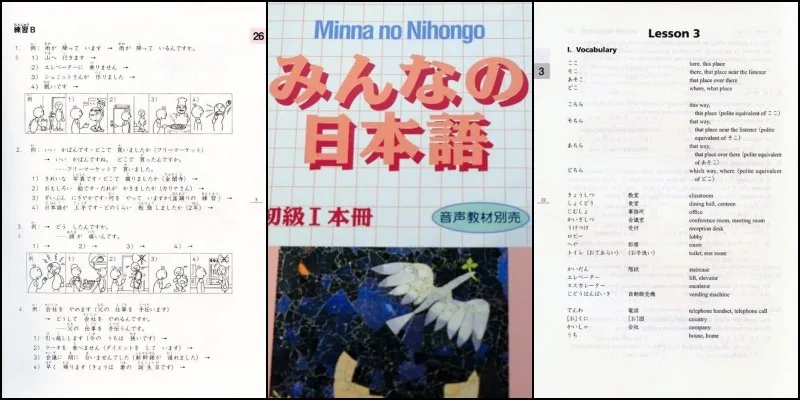
The cover in that photo says 音声教材別売, which means the audio is sold separately. That is the older arrangement. A second-edition main text includes one CD with the conversations and the listening questions. For that edition, a five-CD set with the words, sentence patterns, example sentences and exercises A, B and C is sold on its own. The third edition dropped the disc. Conversations and practice questions are free on the 3A website and in the audio app, and so is the introduction to Elementary I: pronunciation, classroom language, greetings and numbers. Sentence patterns, example sentences and exercises A, B and C are paid streams in the same app.
The third-edition main text of Elementary I has been on sale since the autumn of 2025. The first printing is dated 23 October 2025, and 3A posted a short list of corrections for that printing. The grammar syllabus and the shape of each lesson stay close to the second edition. Scenes, some vocabulary and a few expressions were updated. English Translation and Grammar Notes for the third edition of Elementary I have been on sale since November 2025, and the English notes for Elementary II are available too. Several other languages are already out for Elementary I, and the rest are still being issued. Match the notes to the main text. Second-edition notes do not follow a third-edition book.
Minna no Nihongo Chukyu
Chukyu (中級) is the intermediate series, published as its own books. Intermediate I came out in 2008: 12 lessons, about 1,000 words, 100 sentence patterns, and one CD in the main text. Intermediate II came out in 2012: lessons 13 to 24, about 2,500 words, 118 sentence patterns, and two CDs. English translation notes exist for both. They assume the 50 elementary lessons are already behind you.
How a Minna no Nihongo lesson is meant to go
The method is short sentences. You learn the new words by placing them in the sentence patterns, then you say those patterns out loud. The conversations are situations a newcomer in Japan actually meets: introductions, shopping, asking until what time a place is open, taking a train, accepting or turning down an invitation, visiting someone, asking about daily life, talking about work and hobbies, and saying what you want.
The chart below is the practical flow of one lesson. The labels on the image are in Portuguese. In English they read: learn the words, then for each learning point go through practice A, B and C, use the dialogue, and finish with the exercises that check listening, grammar and reading.
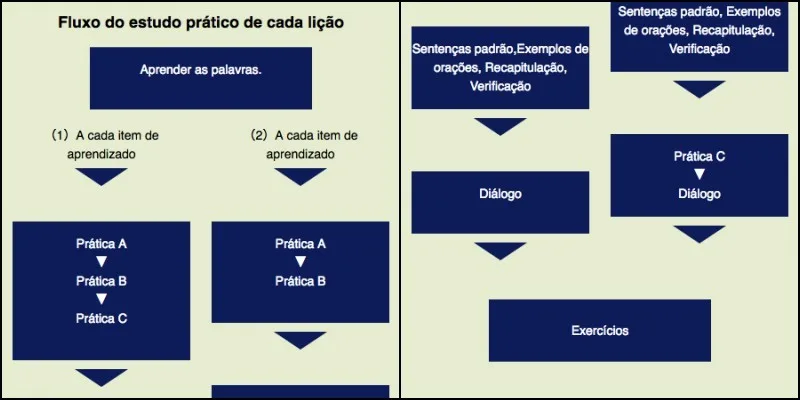
At the end of the lesson the book recommends training the same patterns with another person, or with someone who already speaks Japanese.
Downloading the Minna no Nihongo book
I believe that most people are looking for a free download of the Minna no Nihongo book. Suki Desu does not support piracy and strongly recommends a physical copy, for a better experience learning Japanese. Especially if you are a procrastinator like me, who downloads things and never even opens them.
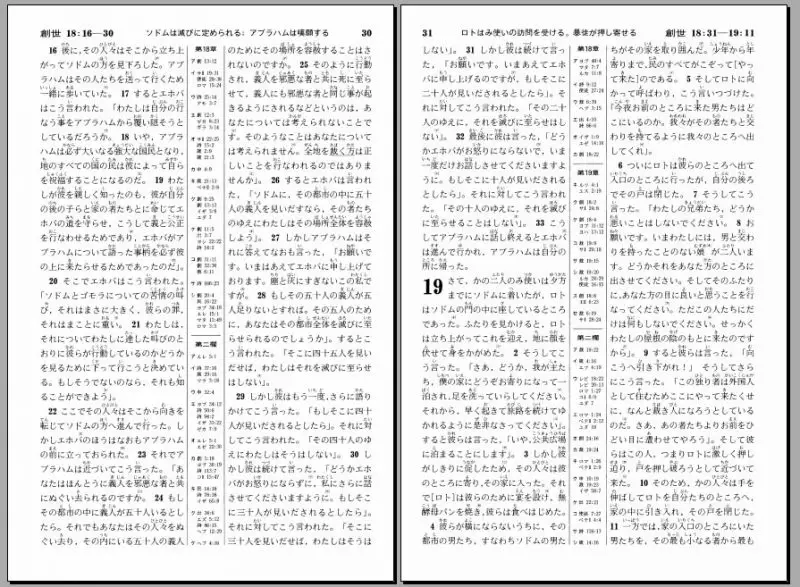
With the book on your desk or bedside table, it will be easier to open and study, and to draft notes and write the exercises. The right-hand page in the photo above is the English vocabulary list for Lesson 3, with ここ, そこ and あそこ. You use that page while the main text is still hard to read.
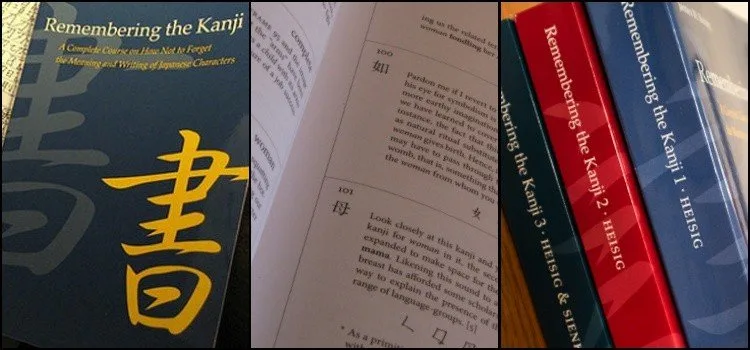
Kanji are a separate job, so we also recommend using the book with a spaced repetition program and with the RTK method. The important thing is not to get stuck with just one book. Look for different study methods, and if you want to use the internet and the computer, you might try Jisho and Anki.

Where to buy Minna no Nihongo
3A sells the books on its own site, and the same editions turn up at ordinary online bookstores, Amazon included. Order the main text and the Translation and Grammar Notes together, and check that both name the same edition. For textbooks outside this series, we also keep a list of other books for learning Japanese.
If you are starting, get Elementary I and the English notes of that same edition, with hiragana and katakana already usable. Elementary II comes after that volume. Leave Chukyu until you can say the elementary patterns out loud.



Community
Comments
0 comments
There are no published comments in this language yet.
Send comment