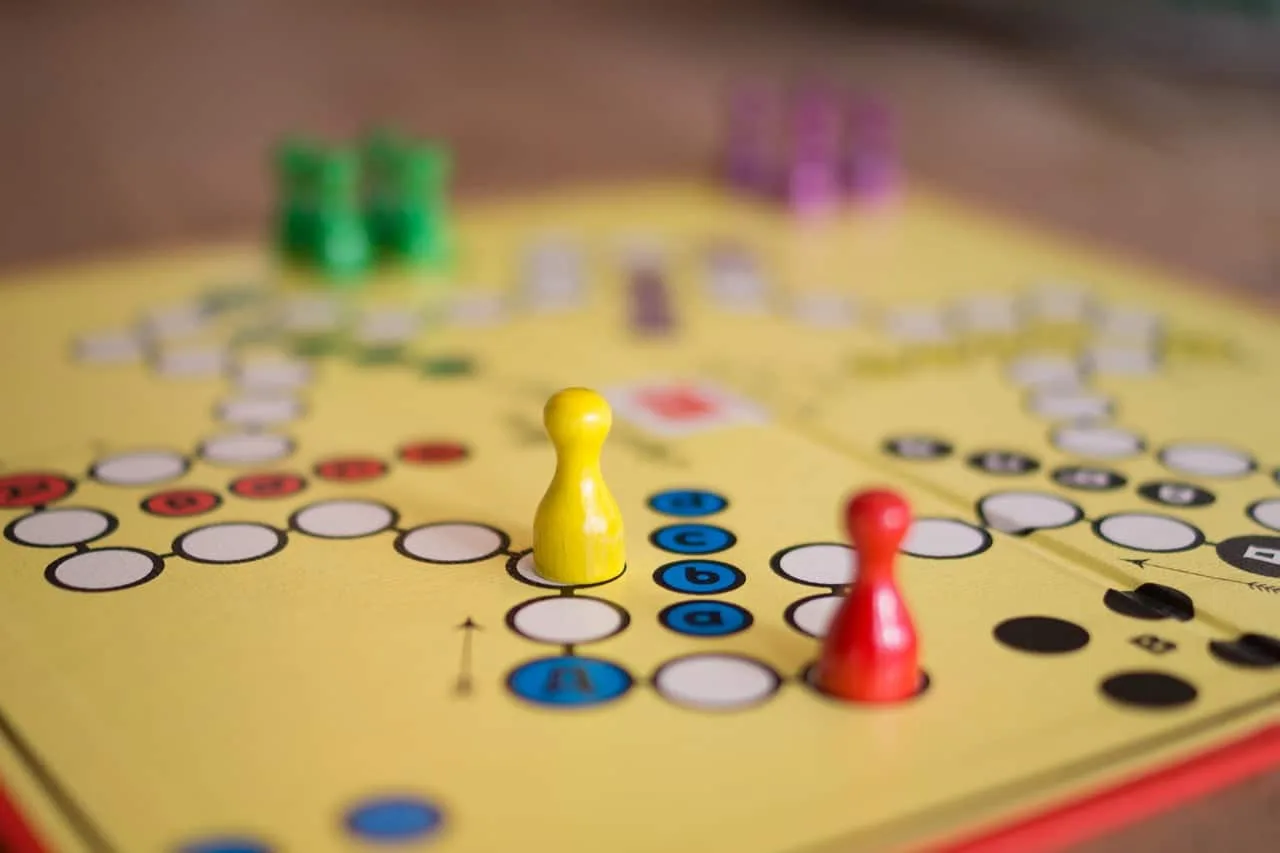
Do you know what sugoroku is? It is the Japanese name for the kind of board game where players roll a die, move their piece forward, and follow the instruction written on the space they land on. English usually calls the format roll-and-move, and the closest familiar example is Snakes and Ladders.
In Japanese, the game is written 双六 and read sugoroku. The characters combine 双, "double" or "pair", with 六, "six", usually understood as a reference to the two dice used in play. The older spelling 雙六 also appears in historical texts.
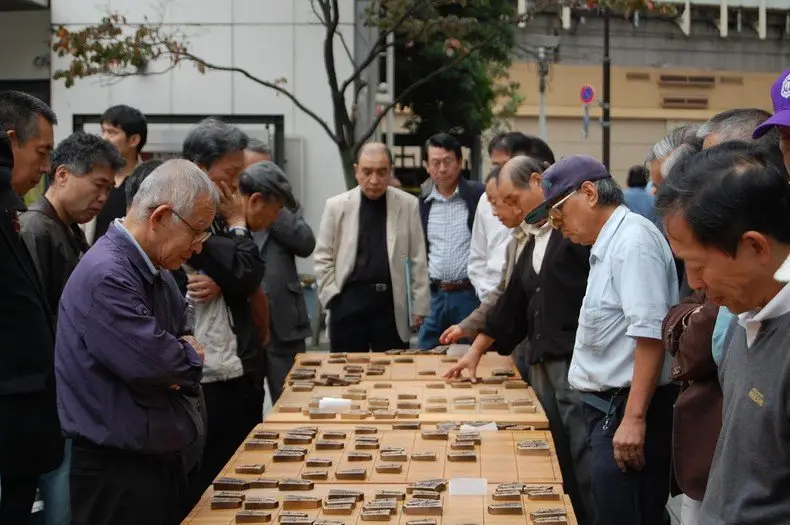
The word can describe any game in which players roll dice, move around a board, and perform the task written on each space. In its oldest sense, it refers to ban-sugoroku [盤双六], a Japanese board game played in the manner of backgammon. Sugoroku belongs to the same family of traditional games as shogi and Go, although those two reward strategy rather than luck.
The history of Sugoroku
Ban-sugoroku is the older form. It plays like backgammon with a few changes to the rules, and it probably reached Japan from China in the sixth century. It became a popular gambling game, and the court banned it more than once, including in 689 and 754. Ban-sugoroku remained an aristocratic pastime for centuries, even after those prohibitions.
In the early Edo period, a faster betting game called chōhan [丁半] took over the tables, and ban-sugoroku gradually left everyday play. Picture sugoroku, or e-sugoroku [絵双六], followed another path. The illustrated version was already known in the Muromachi period, and it became a popular pastime in the Edo period, when woodblock printing allowed colorful boards to be produced in large numbers. Thousands of designs circulated, with themes that ranged from famous places and kabuki actors to politics, religion, and adult subjects.
The picture version held on after the Meiji Restoration. Children's magazines included sugoroku boards as supplements, and the game became part of New Year celebrations. It declined after World War II as other forms of play took over. With ban-sugoroku long out of fashion, the word sugoroku now means the picture version almost everywhere.
Different boards in sugoroku
E-sugoroku comes in two common formats. In mawari-sugoroku, players travel once around the board. In tobi-sugoroku, the spaces tell players to jump ahead, go back, or lose a turn. You can play with one die, draw a board that never ends, or fill each square with a task of your own. The freedom is the point: the rules are simple, and players invent the rest as they go.
Japanese children often make their own sugoroku boards, filling each square with a dare or a small punishment for whoever lands there. The gag turns up in episode 8 of Asobi Asobase, where Hanako and Kasumi use a penalty-filled board to test Olivia's luck.
Modern board games use a similar rhythm. Monopoly and The Game of Life belong to a separate Western tradition, yet both send players around a track and ask them to respond to the space they land on. In Japan, the influence is more direct: Mario Party is built around dice rolls and board spaces, and the Momotarō Dentetsu series draws even more openly from sugoroku.
Video games have returned to the format many times. Kiteretsu Daihyakka: Chōjikū Sugoroku turned the format into a 1995 video game, and other Japanese franchises have used sugoroku boards as spin-offs or minigames.
The word sugoroku covers two games. Ban-sugoroku was a game of strategy and chance for the court, and it disappeared when the gambling moved elsewhere. E-sugoroku turned the board into a picture of its time, which is why the name survives today in printed boards and children's games.
Kevin Henrique has written about the Japanese language, culture, anime, games, and travel since founding Suki Desu in 2014. He first visited Japan in 2016.
Community
Comments
0 comments
There are no published comments in this language yet.





Community
Comments
0 comments
There are no published comments in this language yet.
Send comment