Preparing for your next trip? Whether it’s to an exotic destination, a vibrant city, or a tranquil retreat, there are always new adventures waiting for you. Below, we highlight six must-do things you need to include in your next trip.
From exploring stunning natural wonders and immersing yourself in local culture to savoring authentic cuisine and embarking on thrilling activities, this list is the ultimate guide to creating unforgettable memories.
Don’t waste time, get ready to embark on this journey and make the most of every moment.
Why it’s important to make a good travel itinerary
Creating a good travel itinerary is essential to make the most of your experience and ensure that you don’t miss anything important. Here are some reasons why it’s important to invest time and effort in crafting a well-planned itinerary:
Time optimization — with a well-structured itinerary, you can organize your time by prioritizing the attractions and activities that are most important to you. This prevents wasting precious time and allows you to make the most of each day;
Financial planning — an itinerary helps estimate expenses and plan the budget accordingly. By having a clear view of transportation, accommodation, food, and activity costs, you can avoid unpleasant surprises and have greater financial control;
Discovery of hidden attractions — researching and creating an itinerary allows you to discover attractions and lesser-known places, off the traditional tourist path. This provides a more authentic and enriching experience, allowing you to explore destinations in a unique way and uncover hidden gems.
Flexibility and adaptation — while an itinerary is important, it’s also essential to leave room for flexibility. Having an initial plan helps provide a foundation, but allowing yourself to adjust the itinerary as needed enables you to handle unforeseen events, changes in weather, or simply go with the flow and seize unexpected opportunities.
It provides a more relaxed experience, ensuring that you make the most of every moment, discover new places, and create unforgettable memories.
6 Things to do on your next trip
On your next trip, be sure to include the following activities we’ve prepared for you in your itinerary!
Explore the local culture — immerse yourself in the culture of the destination by visiting traditional markets, watching local music and dance performances, and trying typical cuisine. Getting to know the local culture is an enriching way to understand the essence of the place you are exploring;
Discover natural wonders — explore the natural beauty of the region, whether by admiring a stunning waterfall, hiking through a lush forest, or enjoying a breathtaking sunset on a paradise beach. Connecting with nature is refreshing and provides memorable experiences;
Visit monuments — check out the most famous landmarks of the destination, such as historical monuments, religious temples, or impressive architectural structures. These iconic landmarks often tell the story and represent the identity of the place you are visiting. In this activity, you can rely on the trustworthiness and provenance of recommended sites for purchasing tickets like Hellotickets.
Interact with locals — have conversations with local residents, ask questions, listen to their stories, and discover their recommendations. These genuine interactions can provide valuable insights into the culture and lifestyle of the area, as well as create meaningful connections during your trip;
Try exciting adventures — step out of your comfort zone and try thrilling activities, such as hiking in the mountains, engaging in water sports, paragliding, or participating in a diving expedition. These adventures offer a dose of adrenaline and make everything even more exciting;
Take time to relax — while it’s exciting to explore the destination to the fullest, it’s also important to set aside moments for relaxation. Enjoy a day at a spa, take a leisurely stroll through a park, or simply sit in a local café to soak in the atmosphere and people-watch. Take the time to rejuvenate and absorb the energy of the place;
Remember that the main goal of a trip is to create unforgettable memories and enjoy every moment. With these six activities in mind, you’ll be ready to experience a truly enriching and transformative journey.
Did you already know any of these suggestions? Don’t forget to share this article if it was helpful to you!
Most countries do not need a visa to enter Japan, and recently in 2023 Brazil is one of the new countries to join this list. This does not mean that you will enter freely without questions; it may be that the immigration and passport control officer wants to ask questions.
With that in mind, we created this article with some phrases of questions and answers that may be asked by the immigration officer, or answered by you who are about to enter the country.
What is the purpose of your trip?
The officer may ask: What is the purpose of your trip?
なにをするために来ましたか?
Nani o suru tame ni kimashita ka?
You can respond:
観光目的です。” (Kankou mokuteki desu.) – It is a trip for tourism.
“ビジネスで来ました。” (Bijinesu de kimashita.) – I am here for business.
“留学生として来ました。” (Ryuugakusei toshite kimashita.) – I came as an international student.
“友達や家族を訪ねに来ました。” (Tomodachi ya kazoku o tazune ni kimashita.) – I am visiting friends or family.
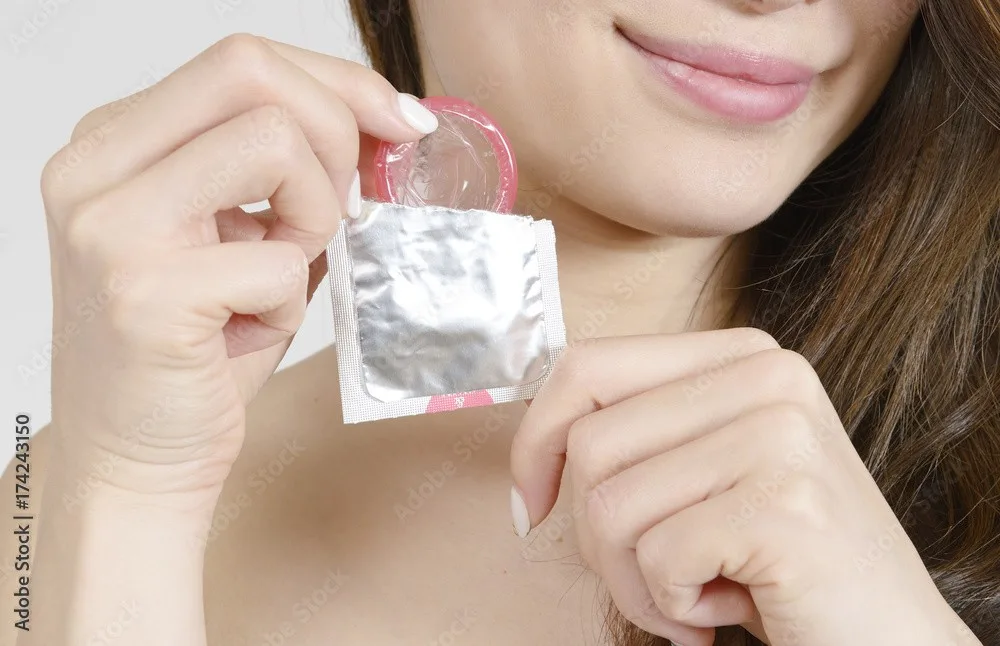
Buying condoms in Japan may seem like a challenging task for foreigners, especially due to cultural differences and language barriers. However, it is essential to be well-prepared and informed about the subject, as sexual health is a priority anywhere in the world.
In this article, we will explore how to buy condoms in Japan, including the main brands available and how to find condoms with delay effects and other features and flavors.
In Japan, when discussing contraceptive methods, it is common to use the word “コンドーム” (kondōmu) to refer to condoms in a more formal way. However, in informal conversations, people often use the slang “ゴム” (gomu), which literally means “rubber,” to refer to condoms.
In Japan, there are several condom brands available, each with unique characteristics. Here are some of the main brands:
Okamoto (オカモト)
Okamoto is one of the most renowned condom brands in Japan, widely recognized for its quality and innovation. Its condoms are notably ultra-thin, providing a closer experience to direct contact, increasing sensitivity during sexual intercourse.
Additionally, Okamoto offers a variety of options, from ultra-thin condoms to those with special textures, such as dotted and ribbed models, aimed at intensifying pleasure. Many Okamoto products also include special lubrication to enhance comfort.
003 Platinum: This is one of the most well-known models from Okamoto, famous for its extreme thinness, providing a sensation close to direct contact.
Crown: Another popular model from Okamoto, known for its smooth texture and comfort.
Sagami
Sagami is another Japanese condom brand that has gained prominence for producing ultra-thin and durable condoms. These condoms are designed to offer strength while providing sensitivity and comfort during sexual intercourse.
Sagami is also known for its innovation in materials and technology, making it a popular choice among those seeking high-quality condoms.
Sagami Original 001: This is one of the thinnest and most durable condoms from Sagami, providing sensitivity and durability.
Sagami Xtreme Super Thin: As the name suggests, it is an ultra-thin condom from Sagami, known for its premium quality.
Kimono
Kimono condoms are made with premium latex and are recognized for their smooth texture and natural feel. They are designed to be thin and strong, providing a realistic experience during sex.
The emphasis of Kimono is on feel and comfort, making it an attractive option for those who want a condom that feels as close as possible to the natural experience.
MicroThin: This model from Kimono is a thin and strong condom, designed to provide a realistic sensation.
Textured: Kimono Textured condoms have a smooth texture for additional stimulation during sexual intercourse.
Jex
The Jex brand offers a variety of condoms with different textures and features. They produce condoms that can range from ultra-thin to those with special designs, such as ribbed or dotted, to provide a differentiated experience. The Jex brand is known for its reliability and quality.
Jex Ultra Thin: As the name suggests, it is an ultra-thin condom from Jex, designed for greater sensitivity.
Jex Fresh Mint: This model has a mint touch in the lubricant, providing a refreshing sensation.
Glyde
Glyde is an imported brand but widely available in Japan. It is known for its vegan and eco-friendly condoms, ideal for people with latex allergies or environmental concerns.
Glyde condoms are made with high-quality materials and are available in various options to meet different preferences.
Ultra: Glyde Ultra condoms are known for being ultra-thin and provide a sensation close to the skin.
Maxi: This model is slightly wider than the standard and is ideal for those who need a larger size.
Caution Wear
Caution Wear is a brand that provides high-quality condoms with a focus on offering effective protection. Their condoms come in various options, including those with features such as textures and extra lubrication.
Classic: Reliable condoms from Caution Wear, designed to provide effective protection.
Wild Rose: This model has a unique floral texture for extra stimulation.
Other Japanese Brands
Condom Vocabulary in Japan
The words below may help you when buying condoms in Japan:
性的な (seiteki na) – Sexual
コンドーム (kondōmu) – Condom
早漏 (hayadzume) – Premature ejaculation
防止 (bōshi) – Prevention
健康 (kenkō) – Health
快楽 (kairaku) – Pleasure
セックス (sekkusu) – Sex
インティマシー (intimashī) – Intimacy
刺激 (shigeki) – Stimulation
感度 (kando) – Sensitivity
コンビニエンスストア (konbiniensu sutoa) – Convenience store
薬局 (yakkyoku) – Pharmacy
プロダクト (purodakuto) – Product
ブランド (burando) – Brand
ジェル (jeru) – Gel
サポート (sapōto) – Support
使用方法 (shiyō hōhō) – Instructions for use
注意事項 (chūi jikō) – Precautions
包装 (hōsō) – Packaging
エクサイティング (ekusaitingu) – Exciting
快適 (kaiteki) – Comfortable
トラブル (toraburu) – Problem
満足 (manzoku) – Satisfaction
セクシュアルヘルス (sekushuaru herusu) – Sexual health
パートナー (pātonā) – Partner
自慰 (ji’i) – Masturbation
セクシャルエデュケーション (sekusharu edyukēshon) – Sex education
勃起不全 (bokki funen) – Erectile dysfunction
安全 (anzen) – Safe
Where to find condoms in Japan?
In Japan, condoms are primarily sold in locations related to pharmaceutical products, such as pharmacies and drugstores (excluding pharmacies specialized in medications).
They can also be found in vending machines in front of stores, in convenience stores, supermarkets, 100 yen shops, as well as in stores that sell adult products. Additionally, in Tokyo, in the neighborhoods of Shibuya and Harajuku, there are even specialty stores for condoms.
Previously, condoms were also sold in vending machines in urban areas, but there has been opposition since the early stages of installing these machines. Some negative opinions claimed that this could negatively affect the education and healthy development of youth and that the machines could harm the aesthetics of the city.
How much does a condom cost in Japan?
The price and availability of condoms in Japan can vary depending on several factors, including the brand, the place of purchase, and the type of condom. Overall, condoms in Japan are affordable and widely available in pharmacies, supermarkets, convenience stores, and even vending machines in urban areas.
The price of a pack of condoms in Japan can range from 300 to 800 yen, depending on the brand and the quantity included in the package. More well-known and reliable brands, such as Okamoto and Sagami, tend to be a bit more expensive, but many people prefer to pay a little more for quality and safety.
Regarding sizes, most condoms in Japan are designed to accommodate a variety of sizes. However, some brands offer size options to meet different consumer needs. This can include thinner condoms for greater sensitivity, larger condoms for more comfort, or smaller condoms for those who need a tighter fit. Brands usually indicate the size on the packaging, so consumers can choose what best fits their preferences and needs.
Additionally, Japan is known for its emphasis on innovation in health products, including condoms. This has led to the development of ultra-thin and technologically advanced condoms, which are popular among consumers seeking a more natural and comfortable experience.
Condoms with Delay in Japan
Condoms with delay are designed to prolong sexual intercourse by delaying ejaculation. If you are interested in finding delay condoms in Japan, you can look for brands that offer this option, such as Okamoto.
Often, these condoms contain a special type of lubricant that helps reduce sensitivity, allowing sexual intercourse to last longer.
Finding these condoms can be a bit more complicated, as the terms related to delay and delayed ejaculation are quite ambiguous. We suggest the following terms below:
One of the great difficulties in learning Japanese is the kanji. They are very important in the language and have their positive points, but learning them can be a great challenge. How do Japanese students learn this in school?
Many end up being intimidated by such ideograms, which are practically the opposite of the Portuguese language. Understand that they are not entirely necessary; Japanese children do not learn everything in one year like the Roman alphabet (romaji).
The Japanese see kanji as something simple and normal; from childhood, they do not perceive any of this as a difficulty. Therefore, you should not view kanji as something impossible!
To make good use of this list, we recommend having a workbook that teaches kanji, a dictionary, or an online site like Jisho, so you can copy the kanji you want to learn from the list below and start examining them one by one.
We are leaving a small list with all the kanji in the order of learning.
What is the Process of Learning Kanji in Japanese Schools?
The learning of Kanji, Chinese characters used in Japanese writing, in Japanese schools is a gradual and systematic process that extends over several years of education. Here is a general description of the process of learning Kanji in Japanese schools, grade by grade:
Preschool (optional):
Normally, Japanese children do not learn Kanji in preschool.
At this stage, the focus is on basic language skills, such as speaking and simple Japanese vocabulary.
First Grade (Shogakko 1-nensei):
In the first year, children begin to be introduced to Kanji.
The focus is on the simplest and most common characters.
Generally, children learn about 80 to 100 Kanji during the first year.
Second Grade (Shogakko 2-nensei):
The number of Kanji taught gradually increases.
Children review and expand their knowledge of the Kanji learned in the first year.
They may learn an additional 160 to 200 Kanji during the second year.
Third Grade (Shogakko 3-nensei):
The number of Kanji that children learn increases even more.
They continue to review the Kanji learned in previous years.
They may learn about 200 to 250 Kanji during the third year.
Fourth Grade (Shogakko 4-nensei) and Fifth Grade (Shogakko 5-nensei):
The teaching of Kanji continues to be progressive, with the introduction of more complex Kanji.
Students also begin to learn Kanji with multiple readings (pronunciations).
The number of Kanji taught in each grade may vary, but it is generally around 200 to 300 Kanji per year.
Sixth Grade (Shogakko 6-nensei):
In the last year of elementary school, students continue to expand their knowledge of Kanji.
They also learn more advanced Kanji, which can be found in more complex texts.
The number of Kanji taught may vary, but it is generally around 350 to 400 Kanji.
After elementary school, Japanese students continue to learn Kanji in high school and then in university if they wish. The total number of Kanji that an average Japanese person can read and write may vary, but it is generally around 2,000 to 3,000 Kanji.
It is important to note that the teaching of Kanji may vary from school to school and according to the curriculum. Additionally, many Japanese people also study Kanji on their own to expand their knowledge beyond what is taught in schools.
First Year School Ideograms – 80 kanji
The list below shows all 80 kanji that students learn in the first year of school:
一 九 七 二 人
入 八 力 十 下
三 千 上 口 土
夕 大 女 子 小
山 川 五 天 中
六 円 手 文 日
月 木 水 火 犬
王 正 出 本 右
四 左 玉 生 田
白 目 石 立 百
年 休 先 名 字
早 気 竹 糸 耳
虫 村 男 町 花
見 貝 赤 足 車
学 林 空 金 雨
青 草 音 校 森
Second Year School Ideograms – 160 kanji
The list below shows all 160 kanji that students learn in the second year of school:
刀 万 丸 才 工 弓 内 午 少 元
今 公 分 切 友 太 引 心 戸 方
止 毛 父 牛 半 市 北 古 台 兄
冬 外 広 母 用 矢 交 会 合 同
回 寺 地 多 光 当 毎 池 米 羽
考 肉 自 色 行 西 来 何 作 体
弟 図 声 売 形 汽 社 角 言 谷
走 近 里 麦 画 東 京 夜 直 国
姉 妹 岩 店 明 歩 知 長 門 昼
前 南 点 室 後 春 星 海 活 思
科 秋 茶 計 風 食 首 夏 弱 原
家 帰 時 紙 書 記 通 馬 高 強
教 理 細 組 船 週 野 雪 魚 鳥
黄 黒 場 晴 答 絵 買 朝 道 番
間 雲 園 数 新 楽 話 遠 電 鳴
歌 算 語 読 聞 線 親 頭 曜 顔
Third Year School Ideograms – 200 kanji
The list below shows all 200 kanji that students learn in the third year of school:
丁 予 化 区 反 央 平 申 世 由
氷 主 仕 他 代 写 号 去 打 皮
皿 礼 両 曲 向 州 全 次 安 守
式 死 列 羊 有 血 住 助 医 君
坂 局 役 投 対 決 究 豆 身 返
表 事 育 使 命 味 幸 始 実 定
岸 所 放 昔 板 泳 注 波 油 受
物 具 委 和 者 取 服 苦 重 乗
係 品 客 県 屋 炭 度 待 急 指
持 拾 昭 相 柱 洋 畑 界 発 研
神 秒 級 美 負 送 追 面 島 勉
倍 真 員 宮 庫 庭 旅 根 酒 消
流 病 息 荷 起 速 配 院 悪 商
動 宿 帳 族 深 球 祭 第 笛 終
習 転 進 都 部 問 章 寒 暑 植
温 湖 港 湯 登 短 童 等 筆 着
期 勝 葉 落 軽 運 遊 開 階 陽
集 悲 飲 歯 業 感 想 暗 漢 福
詩 路 農 鉄 意 様 緑 練 銀 駅
鼻 横 箱 談 調 橋 整 薬 館 題
Fourth Year School Ideograms – 200 kanji
The list below shows all 200 kanji that students learn in the fourth year of school:
士 不 夫 欠 氏 民 史 必 失 包
末 未 以 付 令 加 司 功 札 辺
印 争 仲 伝 共 兆 各 好 成 灯
老 衣 求 束 兵 位 低 児 冷 別
努 労 告 囲 完 改 希 折 材 利
臣 良 芸 初 果 刷 卒 念 例 典
周 協 参 固 官 底 府 径 松 毒
泣 治 法 牧 的 季 英 芽 単 省
変 信 便 軍 勇 型 建 昨 栄 浅
胃 祝 紀 約 要 飛 候 借 倉 孫
案 害 帯 席 徒 挙 梅 残 殺 浴
特 笑 粉 料 差 脈 航 訓 連 郡
巣 健 側 停 副 唱 堂 康 得 救
械 清 望 産 菜 票 貨 敗 陸 博
喜 順 街 散 景 最 量 満 焼 然
無 給 結 覚 象 貯 費 達 隊 飯
働 塩 戦 極 照 愛 節 続 置 腸
辞 試 歴 察 旗 漁 種 管 説 関
静 億 器 賞 標 熱 養 課 輪 選
機 積 録 観 類 験 願 鏡 競 議
Fifth Year School Ideograms – 185 kanji
The list below shows all 185 kanji that students learn in the fifth year of school:
久 仏 支 比 可 旧 永 句 圧 弁
布 刊 犯 示 再 仮 件 任 因 団
在 舌 似 余 判 均 志 条 災 応
序 快 技 状 防 武 承 価 舎 券
制 効 妻 居 往 性 招 易 枝 河
版 肥 述 非 保 厚 故 政 査 独
祖 則 逆 退 迷 限 師 個 修 俵
益 能 容 恩 格 桜 留 破 素 耕
財 造 率 貧 基 婦 寄 常 張 術
情 採 授 接 断 液 混 現 略 眼
務 移 経 規 許 設 責 険 備 営
報 富 属 復 提 検 減 測 税 程
絶 統 証 評 賀 貸 貿 過 勢 幹
準 損 禁 罪 義 群 墓 夢 解 豊
資 鉱 預 飼 像 境 増 徳 慣 態
構 演 精 総 綿 製 複 適 酸 銭
銅 際 雑 領 導 敵 暴 潔 確 編
賛 質 興 衛 燃 築 輸 績 講 謝
織 職 額 識 護
Sixth Year School Ideograms – 181 kanji
The list below shows all 181 kanji that students learn in the sixth year of school:
亡 寸 己 干 仁 尺 片 冊 収 処
幼 庁 穴 危 后 灰 吸 存 宇 宅
机 至 否 我 系 卵 忘 孝 困 批
私 乱 垂 乳 供 並 刻 呼 宗 宙
宝 届 延 忠 拡 担 拝 枚 沿 若
看 城 奏 姿 宣 専 巻 律 映 染
段 洗 派 皇 泉 砂 紅 背 肺 革
蚕 値 俳 党 展 座 従 株 将 班
秘 純 納 胸 朗 討 射 針 降 除
陛 骨 域 密 捨 推 探 済 異 盛
視 窓 翌 脳 著 訪 訳 欲 郷 郵
閉 頂 就 善 尊 割 創 勤 裁 揮
敬 晩 棒 痛 筋 策 衆 装 補 詞
貴 裏 傷 暖 源 聖 盟 絹 署 腹
蒸 幕 誠 賃 疑 層 模 穀 磁 暮
誤 誌 認 閣 障 劇 権 潮 熟 蔵
諸 誕 論 遺 奮 憲 操 樹 激 糖
縦 鋼 厳 優 縮 覧 簡 臨 難 臓 警
High School Ideograms – 320 / 320 / 299 kanji
The list below shows all the kanji that students learn in the 3 years of high school:
乙 了 又 与 及 丈 刃 凡 勺 互 弔 井 升 丹 乏 匁 屯 介 冗 凶
刈 匹 厄 双 孔 幻 斗 斤 且 丙 甲 凸 丘 斥 仙 凹 召 巨 占 囚
奴 尼 巧 払 汁 玄 甘 矛 込 弐 朱 吏 劣 充 妄 企 仰 伐 伏 刑
旬 旨 匠 叫 吐 吉 如 妃 尽 帆 忙 扱 朽 朴 汚 汗 江 壮 缶 肌
舟 芋 芝 巡 迅 亜 更 寿 励 含 佐 伺 伸 但 伯 伴 呉 克 却 吟
吹 呈 壱 坑 坊 妊 妨 妙 肖 尿 尾 岐 攻 忌 床 廷 忍 戒 戻 抗
抄 択 把 抜 扶 抑 杉 沖 沢 沈 没 妥 狂 秀 肝 即 芳 辛 迎 邦
岳 奉 享 盲 依 佳 侍 侮 併 免 刺 劾 卓 叔 坪 奇 奔 姓 宜 尚
屈 岬 弦 征 彼 怪 怖 肩 房 押 拐 拒 拠 拘 拙 拓 抽 抵 拍 披
抱 抹 昆 昇 枢 析 杯 枠 欧 肯 殴 況 沼 泥 泊 泌 沸 泡 炎 炊
炉 邪 祈 祉 突 肢 肪 到 茎 苗 茂 迭 迫 邸 阻 附 斉 甚 帥 衷
幽 為 盾 卑 哀 亭 帝 侯 俊 侵 促 俗 盆 冠 削 勅 貞 卸 厘 怠
叙 咲 垣 契 姻 孤 封 峡 峠 弧 悔 恒 恨 怒 威 括 挟 拷 挑 施
是 冒 架 枯 柄 柳 皆 洪 浄 津 洞 牲 狭 狩 珍 某 疫 柔 砕 窃
糾 耐 胎 胆 胞 臭 荒 荘 虐 訂 赴 軌 逃 郊 郎 香 剛 衰 畝 恋
倹 倒 倣 俸 倫 翁 兼 准 凍 剣 剖 脅 匿 栽 索 桑 唆 哲 埋 娯
娠 姫 娘 宴 宰 宵 峰 貢 唐 徐 悦 恐 恭 恵 悟 悩 扇 振 捜 挿
捕 敏 核 桟 栓 桃 殊 殉 浦 浸 泰 浜 浮 涙 浪 烈 畜 珠 畔 疾
症 疲 眠 砲 祥 称 租 秩 粋 紛 紡 紋 耗 恥 脂 朕 胴 致 般 既
華 蚊 被 託 軒 辱 唇 逝 逐 逓 途 透 酌 陥 陣 隻 飢 鬼 剤 竜
粛 尉 彫 偽 偶 偵 偏 剰 勘 乾 喝 啓 唯 執 培 堀 婚 婆 寂 崎
崇 崩 庶 庸 彩 患 惨 惜 悼 悠 掛 掘 掲 控 据 措 掃 排 描 斜
旋 曹 殻 貫 涯 渇 渓 渋 淑 渉 淡 添 涼 猫 猛 猟 瓶 累 盗 眺
窒 符 粗 粘 粒 紺 紹 紳 脚 脱 豚 舶 菓 菊 菌 虚 蛍 蛇 袋 訟
販 赦 軟 逸 逮 郭 酔 釈 釣 陰 陳 陶 陪 隆 陵 麻 斎 喪 奥 蛮
偉 傘 傍 普 喚 喫 圏 堪 堅 堕 塚 堤 塔 塀 媒 婿 掌 項 幅 帽
幾 廃 廊 弾 尋 御 循 慌 惰 愉 惑 雇 扉 握 援 換 搭 揚 揺 敢
暁 晶 替 棺 棋 棚 棠 款 欺 殖 渦 滋 湿 渡 湾 煮 猶 琴 畳 塁
痘 痢 硬 硝 硫 筒 粧 絞 紫 絡 脹 腕 葬 募 裕 裂 詠 詐 詔 診
訴 越 超 距 軸 遇 遂 遅 遍 酢 鈍 閑 隅 随 焦 雄 雰 殿 棄 傾
傑 債 催 僧 慈 勧 載 嗣 嘆 塊 塗 奨 嫁 嫌 寛 寝 廉 微 慨
愚 愁 慎 携 搾 摂 搬 暇 楼 歳 滑 溝 滞 滝 漠 滅 溶 煙 煩 雅
献 痴 睡 督 碁 禍 禅 稚 継 腰 艇 蓄 虞 虜 褐 裸 触 該 詰 誇
詳 誉 賊 賄 跡 践 跳 較 違 遣 酬 酪 鉛 鉢 鈴 隔 雷 零 靴 頑
頒 飾 飽 鼓 豪 僕 僚 暦 塾 奪 嫡 寡 寧 腐 彰 徴 憎 慢 摘 概
雌 漆 漸 漬 滴 漂 漫 漏 獄 碑 稲 端 箇 維 綱 緒 網 罰 膜 慕
誓 誘 踊 遮 遭 酵 酷 銃 銑 銘 閥 隠 需 駆 駄 髪 魂 錬 緯 韻
影 鋭 謁 閲 縁 憶 穏 稼 餓 壊 懐 嚇 獲 穫 潟 轄 憾 歓 環 監
緩 艦 還 鑑 輝 騎 儀 戯 擬 犠 窮 矯 響 驚 凝 緊 襟 謹 繰 勲
薫 慶 憩 鶏 鯨 撃 懸 謙 賢 顕 顧 稿 衡 購 墾 懇 鎖 錯 撮 擦
暫 諮 賜 璽 爵 趣 儒 襲 醜 獣 瞬 潤 遵 償 礁 衝 鐘 壌 嬢 譲
醸 錠 嘱 審 薪 震 錘 髄 澄 瀬 請 籍 潜 繊 薦 遷 鮮 繕 礎 槽
燥 藻 霜 騒 贈 濯 濁 諾 鍛 壇 鋳 駐 懲 聴 鎮 墜 締 徹 撤 謄
踏 騰 闘 篤 曇 縄 濃 覇 輩 賠 薄 爆 縛 繁 藩 範 盤 罷 避 賓
頻 敷 膚 譜 賦 舞 覆 噴 墳 憤 幣 弊 壁 癖 舗 穂 簿 縫 褒 膨
謀 墨 撲 翻 摩 磨 魔 繭 魅 霧 黙 躍 癒 諭 憂 融 慰 窯 謡 翼
羅 頼 欄 濫 履 離 慮 寮 療 糧 隣 隷 霊 麗 齢 擁 露
Other Frequent Kanji – 303 kanji
Ideograms that university students and learners likely study after high school:
挨 垢 憧 宛 或 椅 伊 炒 嘘 嬉
噂 餌 於 岡 俺 嘩 鍵 崖 賭 籠
霞 嘗 鞄 釜 噛 瓦 稀 稽 蹴 喧
梢 忽 此 頃 沙 匙 拶 爽 叱 腫
繍 醤 尻 芯 腎 隙 凄 裾 咳 咀
蘇 袖 其 剃 揃 汰 叩 只 溜 誰
旦 蛋 馳 蝶 呟 壷 爪 吊 頓 丼
那 奈 謎 撫 鍋 匂 賑 睨 濡 覗
喉 呪 狙 這 箸 筈 貼 髭 膝 肘
瞳 紐 藤 蓋 吠 頬 殆 惚 蒔 撒
枕 股 眉 勿 尤 貰 闇 茹 嵐 呂
脇 湧 僅 碗 阿 葵 茜 旭 梓 虻
粟 庵 鞍 杏 磯 鰯 允 蔭 烏 迂
鵜 窺 丑 臼 唄 姥 瓜 閏 云 堰
怨 燕 艶 苑 荻 伽 苛 俄 牙 柿
笠 恰 葛 叶 樺 兜 鎌 鴨 茅 粥
姦 竿 韓 玩 癌 雁 毅 畿 亀 祇
橘 僑 匡 卿 桐 錦 倶 狗 駒 寓
串 櫛 窪 熊 隈 栗 桂 詣 拳 捲
姑 狐 虎 跨 鯉 杭 紘 腔 壕 濠
麹 痕 些 叉 塞 采 砦 冴 榊 笹
纂 讃 斬 獅 鹿 悉 柴 錫 惹 讐
竣 曙 渚 哨 娼 昌 杖 埴 拭 須
瑞 雛 雀 摺 棲 醒 戚 羨 腺 閃
膳 惣 掻 槍 綜 舵 楕 堆 戴 黛
鯛 鷹 凧 辰 巽 鱈 樽 綻 酎 猪
喋 暢 諜 銚 掴 佃 辻 蔦 綴 椿
潰 鶴 挺 轍 纏 澱 兎 堵 妬 寅
酉 沌 灘 捺 楠 虹 葱 撚 巴 罵
牌 萩 柏 曝 鳩 隼 斑 汎 庇 斐 媛 淵 僻
To know the meaning of these ideograms, we recommend using the dictionary jisho.org;
Netorare, also known as NTR, is a subgenre of anime, manga, and other media that focuses on the theme of betrayal in romantic relationships. This genre explores infidelity among couples, whether they are dating, married, or any type of bond that involves a minimum of commitment and loyalty.
These stories are usually presented from the perspective of the betrayed person, who in most cases is portrayed as a man. In this article, we will delve deeper into this subgenre, analyzing how it reflects aspects of Japanese reality and the way betrayal is approached in different cultural contexts.
The meaning of the word Netorare
Netorare [寝取られ] literally means to betray a loved one with another, or “to put horns,” as it is popularly said. The term comes from the verb netore [寝取れ], which, in its passive form, means “to have the spouse or lover stolen.” The verb netoru directly refers to the act of stealing someone’s partner.
The word netorare is composed of the kanjis [寝], which means “to sleep” or “to go to bed,” and [取], which means “to take,” “to grab,” “to steal,” among others. Interestingly, Google often struggles to translate this word, precisely because Japanese ideograms have a wide range of meanings and synonyms.
Furthermore, netorare can be written using only one of the ideograms or even without them, but the meaning remains the same. However, Google frequently generates peculiar and incorrect translations, such as “to have sex in sleep,” “to be naughty,” or “to take a delight,” which makes no sense. Therefore, it is always useful to refer to reliable dictionaries like jisho.org.
Sometimes, netorare is abbreviated to NTR. The main objective of this genre is to evoke jealousy in the audience by presenting stories in which the protagonist loses their beloved, who is seduced by another person. Variations of the verb netoru, such as netori, netorimasu and netorimashita, also refer to the act of stealing someone else’s spouse.
Animes and Mangas about Netorare
When people search for netorare, they are looking for related Japanese works. Whether anime or manga, people apparently enjoy seeing the suffering of others; this mix of feelings of love and hate tends to be very exciting.
If you don’t already know, most anime in the netorare category are hentais, but there are some Ecchi or innocent shoujo stories that address the theme, such as White Album, which is a music and drama anime.
To understand the true “soul” of the Netorare genre, it is essential to understand the meaning of loyalty. After all, for betrayal to occur, there must be some degree of loyalty, even if it is unilateral. If you are not yet familiar with the concept of loyalty, here is a summary:
Loyalty is the practice of being faithful, demonstrating care and respect for someone or something. It involves consistency in the commitments made to other people.
With these terms clarified, we can deepen our explanation of Netorare. To begin with, betrayal is something common in many types of anime, manga, and other genres. If this seems confusing, think of that cliché where the villain eventually changes sides and joins the hero.
This type of betrayal can also be found in various stories, but what makes Netorare unique is that in this subgenre, betrayal occurs in a romantic and intimate context, usually involving the loss of a partner to another person. While in the example of the villain, betrayal is aimed at power or friendship alliances, in Netorare, the betrayed person is emotionally closer, making the impact much more personal.
And to make the idea even more impactful, in some cases, the level of intimacy in a Netorare can be equivalent to or even greater than the relationship between villain and hero in terms of emotional betrayal. The factor that differentiates Netorare is that it explores this betrayal intensely, seeking to evoke jealousy and even despair in the viewer through the loss of the loved one to another.
Why is romantic betrayal so shocking?
Have you ever heard the phrase “nothing lasts forever”? It applies to everything, and this is no exception; even the universe will not last forever; sooner or later, it will disappear at the same speed it appeared.
But even though we know this, people insist on continuing to believe that love is eternal. And this thought is so ingrained in society that for people, love is a sacred thing.
This love mentioned does not have a specific type; it is vague. This is because there are various forms of love, and that is why this paragraph above was left so vague. However, we can sift through these types and leave only one: the love between couples.
As this is so often cited in books and movies where one does everything for the other. But there are details they do not mention. For example, over time, this love diminishes, or even in moments when love ends.
I believe that because of this thought and the lack of dissemination of others, we are so shocked by romantic betrayals. I am, of course, generalizing this statement because I know very well that although these things affect most people, they are not universal.
Development of Netorare
In this type of Japanese genre, it is usually the woman who betrays the man with another man, but other types can also happen, such as betraying with another woman, or even homosexual relationships between men. In short, the possibilities are many, but it does not change the fact that someone will betray their partner.
As it is more common for women to be the betrayers, we will treat the examples within this type. Let’s take the cliché example: the woman betrays her partner with another. As in most cases, we will observe the situation from the perspective of the protagonist, who is the one who was “replaced.” In his view, they had the perfect screen. He talked to her normally, went out with her, had fun together, had some spicy moments, etc.
It really seems that the woman is wrong in this case, but before throwing stones at her, let’s ask what led her to do this. We will then see from her point of view how the screen between them was, after explaining some reasons that lead women to swap their partners (attention, for men who identify with the theme, I advise you to pay close attention).
Reasons for Betrayal
Distance: Whether physical or emotional, the lack of closeness between the couple inevitably causes wear and tear on the relationship, which often culminates in betrayal. When there is a disconnection, over time, the relationship tends to weaken.
Neediness: If one party does not receive the affection or attention they desire from their partner, there is a good chance they will seek it in another person. The lack of affection in the relationship paves the way for betrayal to become an alternative.
Betrayal: It may seem paradoxical, but just as kindness begets kindness, betrayal also begets betrayal. A mistake can easily trigger a spiral of distrust and infidelity.
Time: As already mentioned, nothing lasts forever. When love comes to an end, what remains are two people who share an empty relationship. When both have difficulty accepting this, they seek to satisfy their emotions elsewhere, even if they do not admit it.
Having feelings for another person: Although less common, it also occurs. The person remains in a current relationship only as an attempt to forget another for whom they still have feelings. However, this is only a temporary solution, and if the loved one gives any sign of reciprocity, betrayal is almost inevitable.
Lack of sex in the relationship: In my opinion, women value sex as much as men do, although they often hesitate to admit it due to cultural pressures. The lack of sex can reflect the absence of care, affection, and pleasure in the relationship, which can eventually lead to the loss of fidelity.
Jealousy: Excessive jealousy is fatal for any relationship. As they say, “whoever seeks, finds,” or “a lie repeated a thousand times becomes the truth.” Constant distrust corrodes the relationship, opening doors to infidelity.
Lack of innovation: Monotony, like jealousy, is a great enemy of relationships. When life as a couple becomes predictable and boring, irritation and emotional weariness take over, making the relationship unbearable. The ending, in these cases, is almost always the same.
These are some of the reasons why many men in Japanese society end up allowing betrayal to infiltrate their relationships.
Points of View in Netorare
As promised, we will now present the girl’s point of view regarding the relationship. The fact is that the protagonist was not interesting to her. In her view, they had a routine that was good at first, but over time it became predictable and dull.
She knew what would happen today, tomorrow, the day after tomorrow, and the day after the day after tomorrow. In short, it became monotonous and boring, and she didn’t want that anymore.
Why didn’t she say this? Well, there may be cases where this can happen, but in this case, they suffered from another problem that is also on the list above: distance.
The fact of being in a relationship does not mean being intimate with the other person. It can take time to happen, months or years to get close enough, years or decades to almost fully understand the partner.
From his point of view, the relationship was perfect, but they were not close enough for him to know what she was thinking, and she was not secure enough to say she wanted new things. Given the points of view, whether to throw stones or not is up to each one.
Netorare – Post-Swap
There are cases where the couple separates, in others the couples stay together, but without one knowing about the other’s betrayal, and in other cases, the partner knows about the betrayal but does not want to separate.
In the first example, fidelity is broken by both, in the second case fidelity is not broken, and in the third case fidelity may or may not be broken.
In short, these three cases can fit into this Japanese genre, but the common one is the third, with fidelity being broken by one of the parties. That is, in the example, the woman betrays her partner and then they separate.
After the relationship ends, we will see all the lamentations and regrets that the protagonist has. If it were to define it in one word, that word would be lamentation.
And these lamentations are the basis of the psychological drama of the entire main plot and even some additional ones that may occur.
Basically, after being betrayed, the protagonist begins to feel sad, lonely, and other adjectives of the genre. With this lamentation, he may or may not try to move on and whether or not he will overcome this fact.
Conclusion of the Article
We have reached the end of this article. Personally, I rarely consume this type of Japanese genre, perhaps because it is not so common. After all, we are used to the cliché of the protagonist who rejects girls, while they, in turn, do not think of anyone else. This is such a deep-rooted pattern that few dare to break it.
I confess that I appreciate when there is a break from this cliché. It may sound a bit sadistic, but I enjoy seeing protagonists who, by being passive or apathetic, end up suffering the consequences. This gives me a sense of realism. It’s not that I root for the misfortune of others, but rather for the honesty of the narrative. Sometimes, it’s good to see that not everything ends in the idealized way and that, just like in real life, actions (or the lack thereof) bring consequences.
Feng Shui increasingly awakens curiosity among those who wish to transform their homes into more balanced and welcoming environments. But do you really know how to apply this ancient Chinese philosophy in your daily life? In this article, we will explore not only the concept but, mainly, how you can practically harmonize the spaces where you live. Get ready to see your home in a completely new way.
From positioning furniture to choosing the right colors, Feng Shui offers guidelines that transcend the aesthetic, seeking to favor the circulation of energy — the famous “Chi.” After all, who wouldn’t want to live in an environment that enhances well-being, prosperity, and tranquility? So, continue with me in this reading, because by the end you will be able to apply the basics of Feng Shui in your home without mystery.
What is Feng Shui and how does it work?
Feng Shui, whose literal translation is “wind and water,” originated in China over 3,000 years ago and is deeply connected to the idea that energy (Chi) circulates through environments, directly affecting the people who live in them. This ancient system of environmental harmonization combines principles of Taoist philosophy with knowledge of astronomy, geography, and architecture.
The essence of Feng Shui lies in the search for balance between the forces of Yin (more passive energy) and Yang (active energy). When there is disharmony, energetic blockages arise that can negatively interfere with the health, relationships, and even finances of the residents.
One of the main tools used is the Baguá, an octagonal map that indicates areas of life such as health, love, work, and prosperity. By applying the Baguá over the house plan, you discover which rooms influence each aspect of your life. Does it seem complex? In practice, it is more intuitive than you might imagine.
How to start applying Feng Shui in your home
Before you start moving all the furniture, stop and observe: how is the circulation in your home? Feng Shui suggests that energy should flow freely, without obstacles. Cluttered hallways or blocked doors can create points of energetic stagnation. Your first step should be to eliminate excess.
Another essential measure is to ensure that the front door is clean, well-lit, and inviting. After all, it is considered the “mouth of Chi,” the point through which energy enters the home. A beautiful rug, healthy plants, and good lighting can transform this area simply and effectively.
The positioning of furniture is also crucial. In the living room, for example, the sofa should be positioned so that those sitting can see the door, creating an unconscious sense of safety and control. Similarly, the bed should never be aligned directly with the bedroom door, as this represents vulnerability.
Colors and natural elements in Feng Shui
The choice of colors plays a strategic role in harmonizing environments. Each color is associated with a natural element and a specific energy. For example:
Red: associated with the Fire element, promotes passion, energy, and dynamism.
Green: linked to Wood, favors growth, health, and renewal.
Blue: represents Water, stimulating tranquility and introspection.
Before painting a wall or changing curtains, think: what energy do you want to stimulate in this room? In the bedroom, soft colors like pastel tones help with relaxation. In the office, vibrant tones can bring more focus and productivity.
In addition to colors, incorporating natural elements is essential. Plants, water features, stones, and woods not only decorate but also strengthen the presence of the five elements (Wood, Fire, Earth, Metal, and Water) essential for energetic balance. And if you are thinking that you need to transform your home into a botanical garden, calm down! Just small, well-thought-out touches are enough.
Common mistakes when applying Feng Shui and how to avoid them
It is very easy to fall into the trap of wanting to “do Feng Shui” just by moving objects around, but this practice goes far beyond that. One of the most common mistakes is applying isolated techniques without considering the whole. Feng Shui is systemic, meaning each adjustment impacts the overall home.
Another frequent slip is ignoring the maintenance of objects and furniture. What’s the point of placing a plant if it is wilted? Or a cracked mirror? In Feng Shui, everything communicates and influences the energy of the environment.
Avoid excessive decorative items as well. Visually cluttered environments hinder the free circulation of Chi. Think about functionality and harmony. A “too full” home can be just as oppressive as an empty one.
Finally, do not make the mistake of following rigid formulas. Feng Shui is adaptation. Observe the space, understand your routine and needs. Don’t be afraid to test and feel the effects of the changes.
Practical tips to transform your home with Feng Shui
Now that you know the theory, how about getting your hands dirty? Here are some practical suggestions to start immediately:
At the entrance: always keep it clean and organized, use a plant to attract good energies.
In the living room: avoid having sofas and armchairs facing away from the door, promote a welcoming arrangement.
In the bedroom: position the bed in a place that allows you to see the door without being directly aligned with it.
In the kitchen: keep the stove clean and in good condition, as it symbolizes prosperity.
In the bathroom: keep the toilet lid closed to prevent energy from “escaping.”
If you want to go further, study the application of the Baguá and explore the areas that need more attention in your life. Small adjustments can lead to significant transformations.
And now, answer honestly: is your home reflecting who you want to be? If the answer is no, you already know where to start.
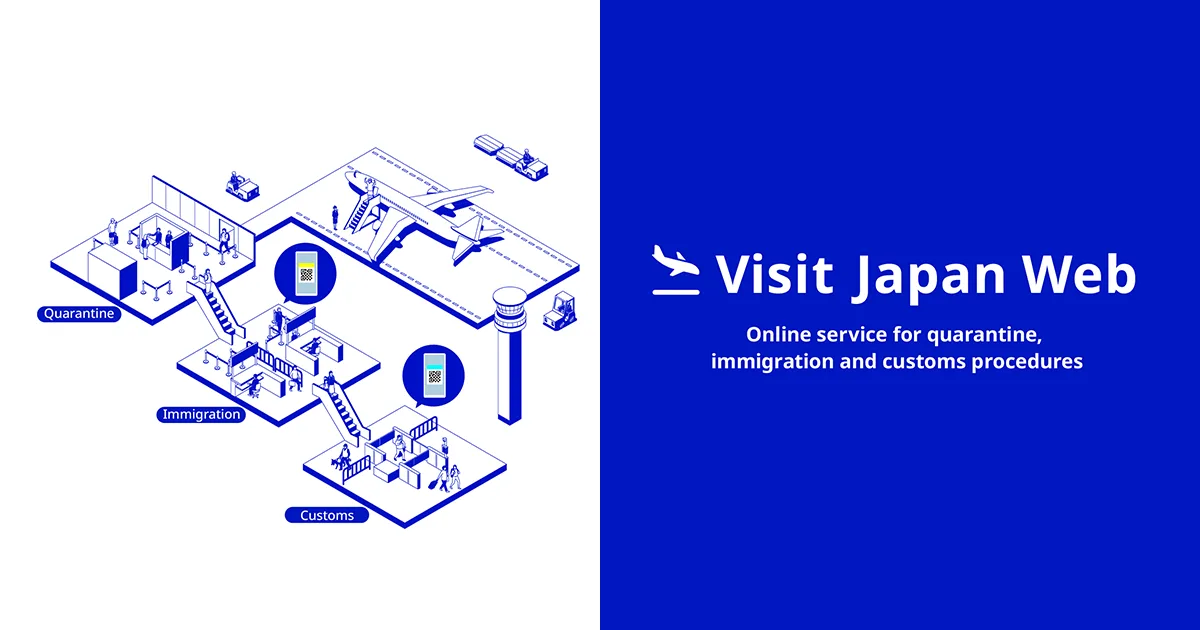
The Visit Japan Web is an initiative by the Japanese government aimed at making the entry process into the country more efficient, safe, and convenient for foreign visitors. It replaces the previously required paper forms with an online platform that allows travelers to fill out all the required information before arriving in Japan.
This system was implemented as part of Japan’s efforts to promote tourism and simplify entry procedures. It is designed to make the entry experience into Japan smoother while allowing authorities to better track visitors and maintain the country’s security.
What is the Visit Japan Web?
The Visit Japan Web is Japan’s online service for immigration procedures and customs declarations, launched in November 2022. While Japan was still dealing with the pandemic, the Visit Japan Web also served as a way to verify COVID-19 vaccinations.
The Visit Japan Web – Japan Entry Form offers several advantages for both travelers and the Japanese government:
Convenience: Eliminates the need to fill out paper forms upon arrival in Japan, saving time and effort.
Efficiency: Streamlines the entry process, reducing queues and improving the traveler experience.
Security: Allows immigration authorities to quickly access visitor information, contributing to the country’s security.
Health Tracking: The health questions section helps identify travelers who may pose public health risks.
Tourism Promotion: Simplifies entry into Japan, encouraging more tourists to visit the country and support the tourism industry.
Is the Visit Japan Web Mandatory to Enter Japan?
To be clear, the Visit Japan Web is NOT a requirement to enter Japan. You can simply arrive in Japan without filling out the Visit Japan Web.
However, you will have to do the same things you would do on the Visit Japan Web when disembarking at the airport in Japan, so it’s better to prepare it before you arrive. It’s free and quick!
How to Fill Out the Visit Japan Web
Filling out the Visit Japan Web is a relatively simple process. Before your trip, you can access the official website dedicated to this service. There, you will find several electronic forms that need to be filled out.
Suki Desu created a video about the Form, teaching step by step how to fill out all the steps and also answer the questions. Watch the video below and enjoy subscribing to the channel.
Step 1: Register on the Visit Japan Web
If you do not have an account on the Visit Japan Web yet, you can register here.
Account registration is free and very simple. Just create an account with your email address and a password. You will need to verify your email, but this is easy to do – they will send a 6-digit code via SMS (text message) to your phone, which you will need to enter on the Visit Japan Web before proceeding to step 2.
Step 2: Register Traveler Details
After setting up your account, log in with the password you set in Step 1. Then, provide your details by clicking the button that says “Your details” and start filling out the form.
The only thing I would say is to ensure that your passport number is correct and matches the passport you will use to enter Japan!
You will be asked for a photo of your passport; this process can be tedious and time-consuming, as it often results in many errors, even with a high-end smartphone camera.
Step 3: Register Your Trip
Next, you will need to register your trip to Japan by clicking on “+ New registration”.
You can do this for each trip you will make to Japan if you are planning to go more than once. Be sure to give a unique name to each trip so you can manage multiple plans if necessary.
Step 4: Immigration Clearance
If you are a resident of Japan, you do not need to complete this step.
But, as a visitor, the next thing you can do is complete your immigration clearance by filling out the disembarkation card. This is the same procedure for entering Japan as it has always been, even before COVID, except that now it is not done by manually writing your information on paper.
Step 5: Customs Declaration
Similar to the disembarkation card, you can also make your customs declaration online to pass quickly when you arrive. Again, this is the same procedure that has always been for entering Japan, just digitized now.
Using the QR Code
The use of the QR code generated by the Visit Japan Web is an important part of the entry process for travelers who use it to facilitate their arrival in Japan. This QR code contains essential information about the traveler and their trip, being used to expedite immigration and customs procedures at the Japanese airport.
Here’s how the Visit Japan Web QR code is used:
Immigration Registration: After your arrival in Japan and entering the immigration area at the airport, you will present your passport and the QR code to the immigration officer.
Data Verification: The immigration officer will use the QR code to verify the information provided on the Visit Japan Web, including your personal details, your intended stay in Japan, and other relevant data. This is done electronically and helps speed up the process.
Entry Stamp: After successful verification, you will receive the entry stamp in your passport, which officially confirms your entry into Japan. Remember that the immigration procedures are the same, just more efficient with the use of the QR code.
Customs Declaration: In addition to immigration, the Visit Japan Web QR code can also be used at customs. After picking up your luggage, you will find machines where you can scan the QR code and declare the items you are bringing into Japan. This makes the customs process faster and simpler.
You can also generate a QR code to make purchases with Tax Free.
Remember that it is essential to keep your QR code safe throughout your stay in Japan, as you will need it on various occasions. It is a good practice to take a photo of the QR code or keep it in an easily accessible place on your mobile device to ensure that you can present it when needed.
The Hakone Open-Air Museum is an artistic treasure located in the lush hills of Hakone, Japan. This unique place combines the natural beauty of the landscape with an impressive collection of sculptures and contemporary art installations.
In this article, we will explore what makes this museum so special, from its main sculptures to practical information for planning your visit.
Before you start reading, we recommend watching our video about the Museum below, and also subscribing to our channel:
My Experience at the Museum
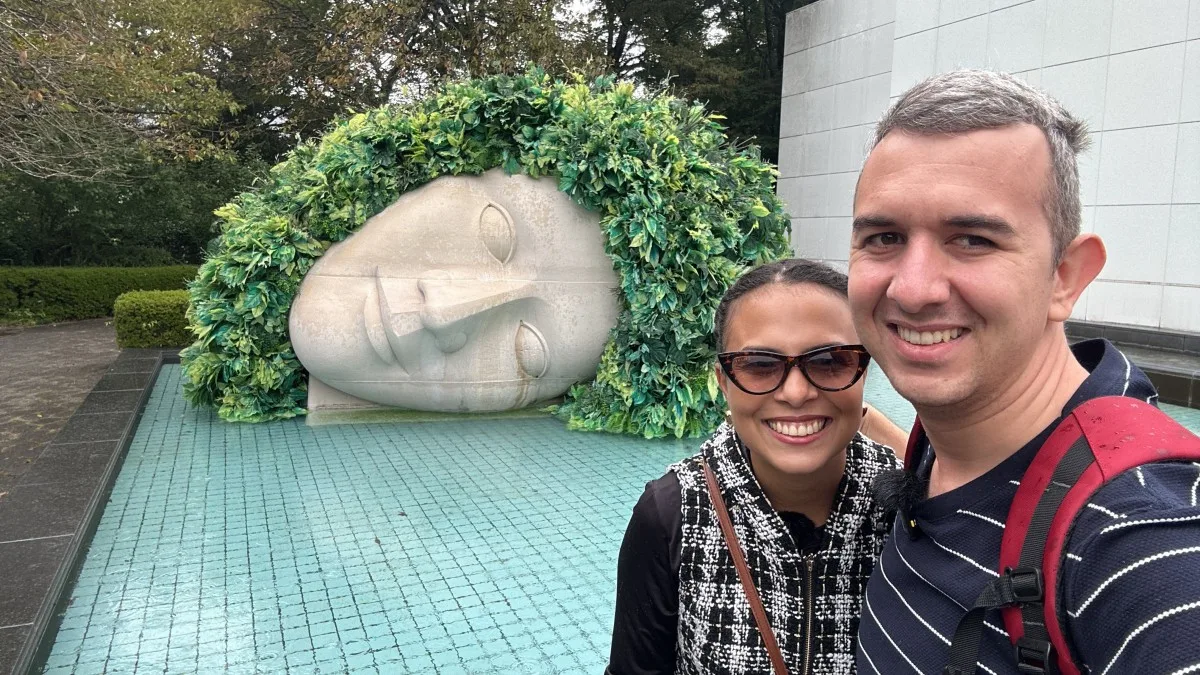
I am not an art enthusiast, so I didn’t understand the purpose of most sculptures, but the place itself is very beautiful, especially the outdoor works and the Picasso exhibition.
The highlight is definitely the tower filled with glass panes and a circular staircase to the top, offering a complete view of the park. There is also a great attraction for children and a maze.
One of my criticisms is the price of the cafeteria inside the venue, which is not one of the cheapest. Fortunately, there seems to be a buffet restaurant at the exit that allows you to eat as much as you want for just ¥2000.
Symphonic Sculpture – Glass Tower
The “Symphonic Sculpture” by Gabriel Loire is one of the most popular and iconic artworks at the Hakone Open-Air Museum. This sculpture is one of the main attractions of the museum and is admired for both its beauty and impressive size.
Artist: Gabriel Loire, a renowned French artist specializing in glass art.
Description: The “Symphonic Sculpture” is a magnificent sculpture made of colored glass that rises in the center of the museum. It combines the beauty of blown and colored glass with a structure resembling a tower or giant stalactite. The sculpture is illuminated in a way that creates a sense of enchantment and immersion.
Meaning: Gabriel Loire created this sculpture with the intention of capturing the beauty and harmony of music in visual form. The symbiosis of colors and the transparency of the glass create a sense of visualized music, a true symphony in glass.
Popularity: The “Symphonic Sculpture” is one of the most popular works in the museum and is frequently featured in photos and souvenirs from visitors. Its majestic presence on site makes it an unmistakable focal point.
Picasso Exhibition
The collection of Pablo Picasso’s works at the Hakone Open-Air Museum seems truly remarkable. With over 300 creations by Picasso, spanning various media such as oil paintings, prints, sculptures, ceramics, and gold objects, it offers visitors a comprehensive view of the life and art of this iconic artist.
The thematic organization of the exhibition, exploring aspects such as childhood, sexuality, life, death, and Picasso’s passion for bullfighting, provides a deeper understanding of the artist’s varied interests and influences. It is unfortunate that photography and drawing are not allowed inside the building, but its vivid description offers a glimpse of the experience and the lasting impression these works leave on visitors.
Exploring such an extensive collection of Picasso’s works is undoubtedly a unique and memorable experience for art enthusiasts visiting the Hakone Open-Air Museum. This is a testament to the museum’s commitment to providing a rich and diverse cultural experience.
Sculptures and Exhibitions
The museum is known for housing a variety of impressive sculptures by renowned artists from around the world. Some of the highlights include:
1. The Guardian of the Entrance
As soon as you arrive at the museum, you will be greeted by the majestic sculpture “Guardian of the Entrance.” This imposing work is a striking introduction to the artistic experience you are about to encounter.
2. Sculptures by Henry Moore
The Hakone Open-Air Museum houses several works by the famous British sculptor Henry Moore. His abstract sculptures in stone and bronze are an undeniable attraction, standing out among the lush hills.
3. Rotating Exhibitions
The museum also features temporary exhibitions that change throughout the year, providing visitors with the opportunity to appreciate a variety of styles and contemporary artistic approaches.
Location
The museum is strategically located on a wooded hillside, offering spectacular views of the mountains and Lake Ashi. The historic 18th-century residence that houses part of the art collection adds a touch of history to the experience. The serene atmosphere and the combination of nature and art make this place a unique destination.
Address: Hakone Open-Air Museum 85 Sengokuhara, Hakone, Ashigarashimo District, Kanagawa 250-0631, Japan
Prices and Hours
Admission prices at the Hakone Open-Air Museum vary according to age and ticket type. The approximate prices are as follows (values in Japanese yen):
Adults: 1,600 JPY
Students (high school and college): 1,200 JPY
Children (up to elementary school): 800 JPY
Hours of Operation: The museum generally opens from 9:30 AM to 5:00 PM. It is recommended to check the museum’s official website or contact the location to confirm current hours, as they may vary seasonally.
Tips for the Visit
Comfortable Footwear: Be prepared to walk on varied terrain, including natural trails. Wear comfortable shoes.
Extra Time: Allow enough time to explore all the sculptures and installations. The surrounding nature is equally charming.
Weather: Consider the weather conditions when planning your visit. The museum is spectacular in all seasons, but each offers a unique experience.
Camera: Don’t forget your camera or smartphone. The landscapes and sculptures provide great photo opportunities.
The Hakone Open-Air Museum is a truly special place that combines the appreciation of art with the natural beauty of Japan. If you are in the Hakone area, this is a must-see attraction that offers a unique immersive experience in contemporary art in a picturesque setting. Plan your visit and enjoy the fusion of culture and nature that this museum provides.
Remember to check the latest information on prices, hours of operation, and exhibitions on the museum’s official website before planning your visit.
Hakone Free Pass
The Hakone Free Pass is a convenient ticket for visitors who wish to explore the Hakone area, including the Hakone Open-Air Museum. Here are the main details:
Coverage: The Hakone Free Pass generally covers unlimited transportation in various forms, such as local trains, trams, buses, and even the Hakone Sightseeing Cruise pirate ship on Lake Ashi. Discount at the Hakone Open-Air Museum: The Hakone Free Pass usually offers a discount on admission to the Hakone Open-Air Museum, allowing visitors to save on their visit. • Benefits: In addition to the museum discount, the pass also provides access to other popular attractions in Hakone, such as the onsen hot springs, Lake Ashi, and the famous Mount Fuji on clear days.
When it comes to traveling to Osaka, one of the most vibrant and exciting cities in Japan, it’s important to find ways to make the most of your experience without emptying your wallet. One of the most valuable tools for visitors is the Osaka Amazing Pass, a tourist pass that offers significant savings and access to various attractions and transportation in the city.
In this article, we will explore how the Osaka Amazing Pass works, what it offers, and how you can make the most of it to spend less and explore more.
What is the Osaka Amazing Pass?
The Osaka Amazing Pass is a special tourist pass designed to make your stay in Osaka more economical and convenient. It offers a unique combination of benefits that include unlimited access to public transportation and discounts at various attractions in the city.
With this pass, visitors have the flexibility to choose between two validity options: one day or two consecutive days. This means you can tailor the pass to your itinerary and explore Osaka according to your preferences.
1. Unlimited Transportation: One of the most advantageous features of the pass is the unlimited access to the Osaka subway and city buses during the validity period. This means you can easily get around the city without worrying about additional transportation costs.
2. Free or Discounted Access to Attractions: The Osaka Amazing Pass offers free or discounted entry to over 40 popular attractions in Osaka. This includes the renowned Osaka Kaiyukan Aquarium, Osaka Castle, Osaka Science Museum, and much more. You can save a considerable amount by visiting these attractions with the pass.
3. Discounts at Shops and Restaurants: In addition to attractions, the pass also offers discounts at selected shops and restaurants throughout the city. This means you can enjoy delicious meals and shop at discounted prices while exploring Osaka.
4. Boat Tours: The Osaka Amazing Pass includes the opportunity to take boat tours along the city’s rivers, such as the Okawa Canal cruise and the Tombori River cruise. These tours offer unique panoramic views of Osaka.
How to Make the Most of the Osaka Amazing Pass
To make the most of your Osaka Amazing Pass, follow these tips:
1. Plan Your Itinerary: Before using the pass, plan your itinerary and choose the attractions you want to visit. Be sure to check the opening hours of the attractions and the travel time between them.
2. Use Public Transportation: Make extensive use of the Osaka subway and city buses to get around. This will save you time and money on transportation.
3. Enjoy Free Attractions: Prioritize attractions that offer free entry with the pass. This will maximize your value.
4. Try Local Cuisine: Use discounts at restaurants to savor Osaka’s delicious cuisine without spending too much.
5. Take Boat Tours: Don’t miss the opportunity to take the boat tours included in the pass to enjoy the unique views of the city.
The Osaka Amazing Pass is a fantastic way to explore Osaka on a budget. It offers convenience, savings, and access to some of the best attractions in the city. When planning your trip to Osaka, consider purchasing this pass to make the most of your stay in the “Kitchen of Japan.” With the Osaka Amazing Pass, you can spend less and explore more, creating unforgettable memories in one of the most exciting cities in Japan.
Free Entries with the Osaka Amazing Pass
There are over 40 free attractions in addition to the discounts that the Osaka Amazing Pass provides for a low cost. It’s definitely worth it, see some of the attractions below:
Osaka Kaiyukan Aquarium: One of the largest public aquariums in the world, housing an incredible variety of marine species.
Osaka Castle: One of the most iconic historical buildings in Osaka, offering panoramic views of the city.
Osaka Science Museum: An educational and interactive venue that captivates visitors of all ages.
Tombori River Cruise: A relaxing ride along the Dotonbori River, offering unique views of the buildings and nightlife of Osaka.
Osaka Museum of History: A museum that explores the rich history and culture of Osaka.
Umeda Sky Building Observatory: A skyscraper with a spectacular observation deck.
Abeno Harukas Art Museum: An institution dedicated to contemporary art.
Okawa Canal Cruise: A relaxing boat ride along the Okawa Canal, especially beautiful at night.
Shitenno-ji Temple: One of the oldest Buddhist temples in Japan.
Tennoji Zoo: A zoo that houses a variety of animals from around the world.
Osaka Natural History Museum: An educational place to learn about the region’s flora and fauna.
Floating Garden Observatory Kuchu Teien: A suspended garden atop the Umeda Sky Building.
For those who are passionate about doramas, they surely enjoy tips on where to watch new releases and revisit their favorites. I brought you 5 options of websites to stay updated on your favorite dorama without paying anything extra for it – besides, of course, the internet and electricity.
Unfortunately, many fansubs had to cease their activities in 2021, mostly because they could not cover the expenses since they were sites that did not receive financial help from third parties.
However, despite several account deactivations, there are still good options for fans of doramas to have fun. So, let’s go.
The dorama, also called K-drama or South Korean soap opera, refers to television dramas from North Korea. Just as there are various categories of films, there are also styles of doramas for all tastes, such as comedies, dramas, romances, thrillers, and many other genres.
Those who are dorama fans are certainly always updated with new releases, and there are people who want to dive into this type of entertainment. With that in mind, I will talk about the 5 most popular sites to watch doramas, both paid and free platforms.
1 – Netflix
Netflix is by far one of the most well-known platforms worldwide for watching everything from animations to series from various countries. Founded in 1997 in the United States, the company started as a DVD rental service by mail. Today, it is a streaming platform with over 220 million subscriptions, not counting non-subscribers who gain access by sharing an account with someone else.
And on the platform, there are even various types of doramas, many of which are among the most popular. It is impossible to know exactly how many doramas are available on the streaming service, but the certainty is that there are countless. Every month new content arrives, and the audience has shown increasing interest in South Korean culture.
To access Netflix, it is necessary to pay a monthly fee, but most people can watch for free with accounts from friends, relatives, shared accounts, and other means. It is important to mention Netflix, as it is responsible for spreading Korean doramas in the West.
Many people choose to split the cost since it is possible to have up to 4 screen divisions. And others are simply “parasites” (a common term on the internet to refer to someone who does not pay but enjoys the platform). This is a good option for those who like a more complete version.
2 – Telegram
Telegram is a social network for chatting and groups. One of the main features of this tool is cloud storage. If you join a group, you can access messages prior to your entry into the group.
The social network has over half a billion active users, according to last year’s surveys, and allows for video calls, sending messages, sharing photos, videos, and files. And you can watch your favorite series. But how?
After installing the app on your phone, go to the magnifying glass (top right corner) and search for: streaming now, click on the option, then you will enter a kind of group, but with electronic messages with the options you can choose.
Another way to watch doramas is to join specific groups that you can find on various Instagram profiles. Usually, the bio will already have the link to access the group and watch your dorama. There are groups for specific K-dramas and others with various options to watch. The app is free and available for Android and iOS.
3 – Rakuten Viki
Founded in 2007, Rakuten Viki is a streaming platform that allows user interaction for content creation. For example, users are allowed to subtitle series, movies, among others. The name Viki is the union of VIDEO with WIKI (like Wikipedia), as it uses volunteers to manage content.
Because of its collaborators, the network contains more than 200 languages, 50 of which are endangered languages, making it a differentiator compared to others that usually have the most popular dialects. Rakuten Viki has original productions such as: Dramaworld, Where Your Eyes Stay, and Light in Me.
Viki has both a free and a paid version. Even in the free option, there are doramas available, even on the app. The subscription service is called Viki Pass and has exclusive content, no ads, and HD options. The cost is US$ 0.99 per month or US$ 9.99 per year.
4 – Drama Fansubs
Drama Fansubs is a site that allows dorama fans to translate and subtitle. The site has an immense amount of doramas. The video quality is in HD, with no need for registration, and there is also the option to download.
You can find doramas in alphabetical order and keep an eye on those that release episodes weekly, which are always updated on the site, and have access to Korean dramas from 2010 to the present.
5 – Kingdom Fansubs
Kingdom Fansubs is very similar to Drama Fansubs, but the user needs to register, which is free. To watch the dorama, you must follow these steps: Enter the site; Go to ‘Register’; Accept the terms of use; Enter your details and email; in the email you will receive a password for access.
6 – Line TV
Line TV is a free streaming service, but as you watch, some ads will appear. The platform originated in Thailand, expanded throughout the Asian continent, and is now easily accessible in various countries around the world. Its headquarters is located in Japan.
The platform allows users to exchange experiences, watch shows, 24-hour television, and their favorite doramas. Line TV can be downloaded on any device.
7 – Crunchyroll
Crunchyroll serves both to watch anime and dorama. However, this platform is not 100% free. It offers content at no cost, but if you want more variety, you need to subscribe monthly. When the platform launched in 2006, the site mainly had content from East Asia.
More than 100 million users access the platform worldwide – it is not allowed in all countries. Crunchyroll has over 1000 anime series, more than 200 doramas from East Asia, and about 80 manga titles. The streaming service had over a million paid subscribers in 2017. In 2021, there were over 5 million.
8 – Movie Asian Fansub
Movie Asian Funsub has doramas and movies from South Korea, Japan, China, Taiwan, India, and the Philippines. Created in August 2017, the site does not have much engagement on social media, but the platform is well visited. It is quite simple to navigate, and upon entering the site, options are given for which nationality the user wants to watch programming.
Then, just go to the desired option and browse the catalog of doramas of various styles. However, it is necessary to create an account to gain access.
9 – We TV
We TV is geared towards Android and you need to download the “We TV – Dramas and shows!” app. The app is simple to use and is categorized, making it easier to find the dorama you want. The app is quite complete and allows configurations according to each user’s needs.
The app has a feature similar to Instagram, where short and fun videos appear on the screen in a vertical format. Your Instagram profile is quite engaging and brings many snippets of doramas, which makes it easier to know what will be next on the list.
10 – Dorama Sites
The online dorama sites, in addition to streaming doramas, also have anime. There is no need to download an app or register, the videos are watched online. The platform is simple; right at the beginning of the site, the dorama options are organized in alphabetical order.
When you click on the desired dorama, the technical details and the list of seasons with episodes appear. When you click to play the video, another tab will open, and then the user must click on the ad to gain access.
Yes, the downside of free options is the numerous ads we have to watch, but they help the people involved to have resources to keep them running.
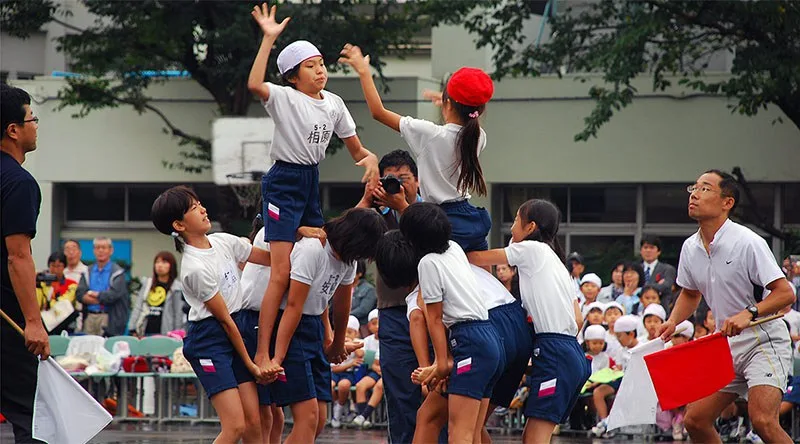
Do you know about the Japanese school sports festivals called Undokai? This sports gathering consists of a huge amount of sports, games, and other activities involving students from the entire school.
The Undokai is an informal event that takes place on a weekend where parents and children gather at the school. During this event, children and young people interact in competitive activities for fun.
From elementary school to university, students and their families come together to participate in this unique sports event, with unique and fun games.
The competition is usually held outdoors and is an opportunity for students to show their sportsmanship and competitiveness, as well as to celebrate unity and cooperation among teams.
The History of Undokai
Undokai [運動会] originated in Japan around 1880 when it was declared in the constitution that families should gather at schools annually for fellowship.
Undokai is a compound word: “undō” means sport and movement, and “kai” is gathering in Japanese. However, the best translation for Undokai is family sports festival.
Usually, Undokais are held in the fall during the months of September, October, or November. The Undokai emerged as a way to celebrate the arrival of autumn and the good harvest.
In some schools, the Undokai is held in May, taking advantage of the start of classes in April for greater integration of students and teachers.
The most interesting thing is that the calendars are very well organized, so parents can participate in all Undokais, regardless of the grade their children are in.
Over the years, the Undokai has evolved to include a wide range of games and sports activities, including relay races, team games, physical skill tests, water games, and much more.
The Undokai lasts an entire day, colorful flags are stretched across the field, and various competitions happen simultaneously.
Each family brings their snack, and some schools usually have a place for a nice picnic. Parents often prepare their obento, onigiri, some snacks, and various other treats.
What Does Undokai Mean?
We know that the meaning of Undokai is sports festival. But have you ever stopped to think about the etymology of the word and the ideograms?
Let me explain the ideograms that make up the word “Undokai”:
運 (Un): This ideogram means “luck” or “destiny.” It is used to represent the idea of “movement” or “activity” in the context of Undokai.
動 (Do): This ideogram means “to move” or “to act.” It indicates action or movement, which is the central part of “Undokai.”
会 (Kai): This ideogram is used to represent a “gathering” or “assembly.” In the context of “Undokai,” it implies a gathering of people to participate in sports activities.
Therefore, when combined, the ideograms “運動会” (Undokai) represent the gathering or event where people come together to participate in sports activities and promote movement and action, often in a spirit of camaraderie and healthy competition.
Games of the Undokai Event
There are countless games and activities, all diversified. No football, volleyball, baseball, or usual sports. Some schools tend to have another date to hold competitions and championships with sports and school clubs. In the Undokai, we have very different sports and some simple ones to interact with the whole family.
Races – The most traditional are the races, where the distance varies according to the age of the students. Generally between 50 and 200 meters.
Acrobatics– The school classes usually perform an acrobatic presentation. They often make a human pyramid.
Oodama (Big Ball) – In this particular game, children play in 2 ways, trying to pass the giant ball over the students. Others tend to push the giant ball around like crazy…
Samurai Fight – A game where 3 students serve as a horse (support) and the student who stands on top of the 3 students has to take the hat or bandana from the opponent.
Bands – A group of students forms their band and marches around the event playing their traditional instruments.
Dances – There are also dance performances and other cultural activities for the entertainment of the crowd. One of them is the famous radio taiso, which is a standardized exercise program.
Ball in the Basket – There are 2 ways to play this game. One way is that there is a huge basket, and the students must try to fill their basket using small puffs. The other is that the teacher has the basket on their back, and the students have to run after them to fill the basket.
Bo-taoshi – This is a Japanese flag-pulling game where two teams of about 150 people each compete to see who can protect their flag or knock down the enemy flag that is on a pole.
It is worth remembering that there is no age limit for these events. Even the adult community can organize similar events for the entire community regardless of whether they are studying or not.
Other Sports of the Undokai
See below some more sports available in some Undokai with their names in Japanese.
Sakasa Juku: (逆さ塾) – Inverted relay race: In this race, participants run backward, passing the baton to the next runner in an inverted manner.
Tokkuri Yubi: (徳利指) – Obstacle race: A race with obstacles, such as low fences, tires, and holes in the path that competitors must overcome.
Shotto Pūto: (ショットプート) – Shot put: Similar to “shot put” in Western sports, participants throw a heavy ball as far as possible.
Nawatobi: (縄跳び) – Jump rope: Teams compete in synchronized jump rope, often with specific rhythms.
Kyūdō: (弓道) – Archery: An archery competition where participants try to hit targets with arrows.
Tsuna Hiki: (綱引き) – Tug of war: Two teams compete by pulling a rope from opposite sides, trying to drag the opposing team to their side.
Sack Race: (麻袋競争 – Ami-bukuro kyōsō) – Sack race: Participants hop inside potato sacks or burlap sacks, jumping to the finish line.
Sanbon Shōbu: (三本勝負) – Miniature sumo fights: Miniature sumo competitions where participants try to push their opponent out of the circle.
Shinnyo-en Odori: (真如苑踊り) – Dances and performances: Presentations of traditional dances or creative choreographies.
Sunīku Tugowā: (スニーク・ツゴワー) – Three-legged race: A race where participants have their legs tied together at one leg and must run together.
Javurin Tōssu: (ジャヴリン投げ) – Javelin throw: A javelin throwing competition where participants try to throw javelins as far as possible.
Ekiden: (駅伝) – Endurance race: A long-distance relay race, often held as a team marathon.
Yōga to Yawarakasa: (ヨーガと柔らかさ) – Yoga and stretching: Activities that emphasize flexibility and balance, such as yoga poses and stretches.
It is important to remember that the variety of activities may vary from school to school and from company to company that holds these sports events.
My Experience at an Undokai
During my trip in 2023 to Japan, I had the chance to attend the Undokai of a friend’s grandchildren, which took place around the third week of October.
At this elementary school Undokai, I expected to see those different sports originating from Japan, but unfortunately, there were only races.
My friend said that due to COVID, the Undokai had their time reduced, so we only had common sports.
Fortunately, we had several music and dance performances. It was very nice to see all the interaction and the family ready to watch.
Below, I leave the video of my visit to the Undokai:
Videos of the Undokai
There is nothing better than ending our article with great videos for you to get to know the Undokai. Below we have the video from Velberan:
Undokai held among adult students. My ordinary day channel (JNDCD):
Have you ever imagined visiting the Hell Lakes, bathing in traditional hot springs, and even participating in an African Safari in Japan? Today we will talk about the famous city of Beppu and its 7 Jigoku Meguri.
Beppu (別府市) is a city located in Oita Prefecture, with the largest number of hot springs in Japan. The city was built from scratch, aiming to attract tourists, and was one of the most sought-after destinations in the 19th century.
The city has 126,000 inhabitants, with an area of 125 km², and is known for its large number of onsens, providing various medicinal baths and unusual tours.
My experience in Beppu
Beppu is one of the most famous cities in the Kyushu region, I personally had the chance to visit it for 2 days and I can say it is a must-visit destination for anyone going to the Kyushu region.
I stayed for 2 days, one day was enough to visit the African Safari and see all 7 jigoku that we will mention throughout this article. I stayed at a very good hostel called Beppu Hostel U & T which offers private rooms with bathrooms, as well as free drinks and bicycles.
I had the chance to visit the oldest onsen in the city and see how the local people are more communicative. I also bought a shirt that says “every day is hell” [毎日が地獄です] for only 1900 yen.
I suggest getting the bus pass at Beppu station. I ended up delaying and couldn’t get it in time before the Safari, I had to pay more using the IC Card.
Steam in the City of Beppu
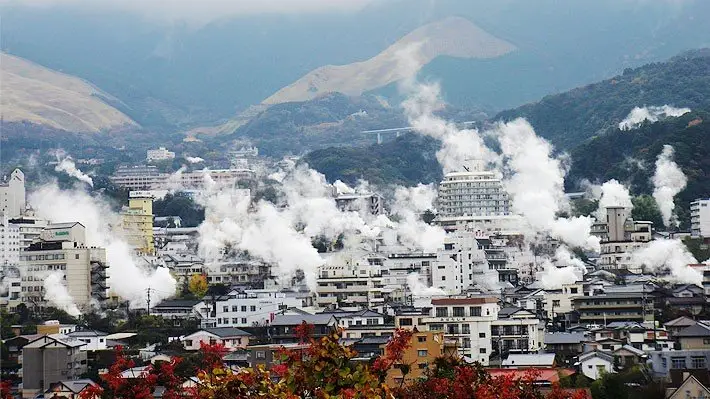
Beppu is a place full of steam. The main reason for the city’s fame is that it has the largest volume of hot springs in the world, resulting in a lot of steam. Beppu has 2,909 hot spring openings within the city limits.
This is about 10% of all hot spring openings in Japan. If you look at the city from the outside on a cool day, you will see steam coming out of half of the buildings in the city.
Even the street manholes emit smoke, and you can smell the strong odor of sulfur in the city, which, if you are unfamiliar, smells like fart.
The city also has a university known as Asia Pacific University. A very rare school, with almost half of the students being foreign.
Unlike most cities in Japan, which are full of elderly people, Beppu has a youthful and touristy environment full of shopping malls and attractions.
Sand Baths
Beppu has so much hot water that it literally bubbles black sand on the city’s beaches. Several onsens in the city offer a service that will dress you in a Yukata and bury you in the hot sands of Beppu beach.
Some baths offer extremely wet and hot sand, while others offer dry sand like the Hyotan Onsen.
Several restaurants and attractions in Beppu use hot spring water to cook a variety of foods. The locals consider it healthy because the food absorbs the rich minerals from the hot springs.
The onsen water itself is also used as an ingredient in a wide variety of snacks and desserts sold in local gift shops.
Some onsens offer the option for you to cook your own eggs and other foods in the hot spring water. It can also be found outside the bathhouses.
African Safari and Monkeys
In Beppu, you can take an African Safari on a kind of bus where you can feed lions, elephants, bears, and various other animals.
At the Kyushu Natural Animal Park African Safari, you can also find hyenas, tigers, leopards, giraffes, zebras, rhinoceroses, and various deer-like animals.
In the park, you will also find a place where you can play with kangaroos and feed them, as well as other animals like ponies, cats, and dogs.
Another popular place in Beppu is the Takasakiyama monkey park, which incredibly has 10% of all the snow monkeys in Japan. You will encounter over 1500 monkeys.
Beppu is also surrounded by mountain trails. The best ones lead to deep hot springs in the forest. They are naturally a konyoku. (natural hot spring, without gender division.)
Takegawara Onsen
Opened in 1879, Takegawara Onsen is not only the oldest but also one of the most famous onsens in Beppu. This onsen is known for its historical architecture, which reflects traditional Japanese style and creates an atmosphere of tranquility and nostalgia.
The building of Takegawara Onsen is an attraction in itself, with its Meiji-style roof and elegant facade. The traditional bath has followed the same traditional molds since its opening, there are no showers, only a pool with extremely hot water that exceeds 45 degrees.
Takegawara also offers a sand bath for around 1500 yen with Yukata. The sand is moist and quite hot, usually the sand bath gets crowded and it is necessary to make a reservation.
The 7 Hells of Beppu – Jigoku Meguri
Beppu is particularly famous for the hot springs known as “Jigoku Meguri” or “Hells of Beppu”. These are seven natural hot springs, each with distinct and fascinating characteristics.
For visitors, there is the option to buy a combined ticket that allows access to all seven Jigoku for 2,100 yen for adults. Alternatively, one can visit each Jigoku individually, with an entrance fee of 450 yen per location.
5 of these springs are located close to each other and are accessible by walking. The other two are located 2 kilometers away and require a 20-minute bus ride.
Umi Jigoku (Sea Hell)
“Umi Jigoku”, or “Sea Hell”, is famous for its turquoise blue water that resembles a tropical ocean. This Jigoku has a temperature of about 98°C and was formed over 1,200 years ago due to a volcanic eruption.
Oniishibozu Jigoku
Oniishibozu Jigoku gets its name from the resemblance of the bubbles emerging from the gray water to the shaved heads of Buddhist monks. This location offers a unique view of nature in action, with its bubbling waters.
Kamado Jigoku (Cauldron Hell)
Kamado Jigoku, or “Cauldron Hell”, is characterized by several pools of different colors and temperatures. The area also features a statue of a demon, symbolizing the kitchen of hell.
Oniyama Jigoku (Demon Mountain Hell)
Oniyama Jigoku is famous for its powerful water flow, which is so strong that it can drag large stones. This Jigoku is also known for creating a habitat for a large number of crocodiles.
Shiraike Jigoku (White Pond Hell)
Shiraike Jigoku is known for its milky and tranquil water. The water temperature is a bit lower compared to other Jigoku, but its serene appearance and the surrounding vegetation offer a picturesque setting. Here you will also find an aquarium with various types of fish.
Chinoike Jigoku (Blood Pond Hell)
Chinoike Jigoku, known as “Blood Pond Hell”, is one of the most photogenic, with its red water due to the presence of iron oxides. This Jigoku, with its unique color and rich history, is one of the oldest in the area.
Tatsumaki Jigoku (Geyser Hell)
Tatsumaki Jigoku stands out for its geyser, which erupts regularly every 30-40 minutes. This natural hot spring is a spectacular demonstration of geothermal activity in the area.
Yama Jigoku (Mountain Hell) – Extra
It is not part of the 7 Jigoku but is very close to Umi Jigoku!
Yama Jigoku is unique due to the variety of small animals, such as monkeys and hippos, that live on the premises. The area is more than just a hot spring, offering a zoo experience amidst hot vapors.
In this article from studying songs we will break down the song from the movie Kimi no na Wa – Sparkle. It was difficult to find a video that does not infringe copyright on YouTube, so I will leave a guitar version that I found with a voice closer to the original.
Below I will leave an incomplete official version:
Mada kono sekai wa boku o kainarashitetai mitai da nozomi doori ii darou utsukushiku mogaku yo
tagai no suna-dokei nagame nagara kisu o shiyou yo 「sayonara」 kara ichiban tooi basho de machi-awaseyou
jisho ni aru kotoba de deki-agatta sekai o nikunda mangekyou no naka de hachi-gatsu no aru asa
kimi wa boku no mae de hanikande wa sumashite miseta kono sekai no kyoukasho no you na egao de
tsui ni toki wa kita kinou made wa joshou no joshou de tobashi-yomi de ii kara koko kara ga boku da yo
keiken to chishiki to kabi no hae-kakatta yuuki o motte ima da katsutenai supiido de kimi no moto e daibu o
madoromi no naka de nama-nurui koora ni koko de nai dokoka o yumemita yo kyoushitsu no mado no soto ni densha ni yurare hakobareru asa ni
aishi-kata sae mo kimi no nioi ga shita aruki-kata sae mo sono warai-goe ga shita
itsuka kiete nakunaru kimi no subete o kono me ni yakitsukete oku koto wa mou kenri nanka ja nai gimu da to omou nda
unmei da toka mirai toka tte kotoba ga dore dake te o nobasou to todokanai basho de bokura koi o suru
tokei no hari mo futari o yokome ni mi nagara susumu sonna sekai o futari de isshou iya, nan-shou demo
ikinuite ikou
Translation of the Song
Click here to expand the text
It seems that this world still wants to keep me tied to you. But that is just what I desire – I strive beautifully. Staring at our hourglasses, let’s share a kiss. Let’s set a meeting at the farthest place from our eventual goodbye.
I grew up hating this world made of words found in a dictionary. On an August morning, trapped inside this kaleidoscope. Whenever we were face to face, you always gave a shy smile before playing modestly.
Your smile was like a description from a textbook of this world.
The time has finally come – Yesterday seemed nothing more than a prologue to a prologue. You can skim through if you wish, from here on is my story: Wielding experience, wisdom, and a slightly molded courage, At an unprecedented speed until now, I dove to where you were.
During the nap, I dreamed that I saw a different place from here. Inside my lukewarm cola… Outside the classroom windows… In mornings swaying back and forth on the train…
Just as I felt the smell… Just as I carried the sound of your laughter… Facing the fact that you will eventually disappear, I have no choice but to burn your existence into my memory with these two eyes; I no longer perceive it right… I feel it is my duty! We love each other no matter the place, no matter how far we are. Words like destiny and future are completely within our reach. We proceed like the hands of a clock that glance at us; Making our way through this kind of world, we will spend our whole life but not as many chapters. Let’s live more and more, together!
Breaking Down the Song
This article is part of a project for VIP members of the Suki Desu website that will air in March. To access the sentences of this song, the meaning of words and phrases, you must be a VIP member! If not, you will only have access to 3 sentences below:
まだこの世界は 僕を飼いならしてたいみたいだ
Mada kono sekai wa boku o kainarashitetai mitai da
It seems that this world still wants to keep me tied to you.
まだ – still
この – this
世界 – world
僕 – I
飼いならして – tame, domesticate zz
たい – wants
みたいだ – seems
望み通りいいだろう 美しくもがくよ
nozomi doori ii darou utsukushiku mogaku yo
But that is just what I desire – I strive beautifully.
望み通り – as I wish
望み – wish / 通り – street, according
いい – good
だろう – seems, I think, I wonder
美し – beautifully
もがくよ – struggle, strive
互いの砂時計 眺めながらキスをしようよ
tagai no suna-dokei nagame nagara kisu o shiyou yo
Staring at our hourglasses, let’s share a kiss.
互い – mutual, reciprocal
砂時計 – hourglass
眺め – scene, view, perspective
ながら – time, then, although, despite
キス – kiss
しようよ – let’s try
「さよなら」から一番 遠い 場所で待ち合わせよう
「sayonara」 kara ichiban tooi basho de machi-awaseyou
Let’s set a meeting at the farthest place from our eventual goodbye.
さよなら – goodbye
から – from, one
一番 – first, number one, most, best
遠い – far, distant
場所 – place
待ち – wait
合わせよう – unite, match, combine, meet
辞書にある言葉で 出来上がった世界を憎んだ
jisho ni aru kotoba de deki-agatta sekai o nikunda
I grew up hating this world made of words that is found in a dictionary.
辞書 – dictionary
ある – to have, to locate
言葉 – word
出来上がった – finished, completed, ready
世界 – world
憎んだ – hated, detested
万華鏡の中で 八月のある朝
mangekyou no naka de hachi-gatsu no aru asa
On an August morning, trapped inside this kaleidoscope.
万華鏡 – kaleidoscope
万 – ten thousand, myriad, all, various, many
華 – splendor, flower, petal, shine
鏡 – mirror
中 – inside
八月 – August, month 8
八 – eight
月 – moon
朝 – morning
ある – to exist, to have, to be
君は僕の前で ハニかんでは澄ましてみせた
kimi wa boku no mae de hanikande wa sumashite miseta
Whenever we were face to face, you always gave a shy smile before playing modestly.
君は僕の前で – you are in front of me
君 – you / 僕 – I / 前 – front
ハニかんで – to be shy, shyly
澄まし – clarified, cleared, meticulously, modestly
みせた – showed, shown (見せた)
この世界の教科書のような笑顔で
kono sekai no kyoukasho no you na egao de
Your smile was like a description from a textbook of this world.
この世界 – this world
教科書 – textbook, instruction manual
のような – like a, like a
笑顔 – smile
ついに時はきた 昨日までは序章の序章で
tsui ni toki wa kita kinou made wa joshou no joshou de
The time has finally come – Yesterday seemed nothing more than a prologue to a prologue.
ついに – finally, at last
時 – time, moment
きた – came
昨日 – yesterday
まで – until, to, only, more than
序章 – prologue, preface
飛ばし読みでいいから ここからが僕だよ
tobashi-yomi de ii kara koko kara ga boku da yo
You can skim through if you wish, from here on is my story:
飛ばし – skip, jump (pages), dispersion, hide
読み – read
いいから – it doesn’t matter, don’t worry about it, listen, emphasis command
ここ – here / ここから – from here
僕だよ – my, mine, I
経験と知識と カビの生えかかった勇気を持って
keiken to chishiki to kabi no hae-kakatta yuuki o motte
Wielding experience, wisdom, and a slightly molded courage,
経験 – experience
知識 – knowledge, learning, wisdom
カビ – mold
生えかかった – grown, born, sprouted
勇気 – courage, bravery, valor
持って – carry, bring, hold, transport
いまだかつてないスピードで 君のもとへダイブを
ima da katsutenai supiido de kimi no moto e daibu o
At an unprecedented speed until now, I dove to where you were.
いま – now (今)
かつてない – unprecedented, never seen before, unknown
スピード – speed
もと – origin, source, cause, reason
ダイブ – dive
まどろみの中で 生温いコーラに ここでないどこかを 夢見たよ
madoromi no naka de nama-nurui koora ni koko de nai dokoka o yumemita yo
During the nap, I dreamed that I saw a different place from here, inside my lukewarm cola…
まどろみ – nap, sleep
まどろみの中 – during the nap, in the middle of sleep
生温い – lukewarm, cowardly, tepid
コーラ – cola
どこか – somewhere, anywhere
ここでない – different from here, not here
夢見 – dreaming, to dream
教室の窓の外に
kyoushitsu no mado no soto ni
Outside the classroom windows…
教室 – classroom, department
窓 – window
外 – outside, outdoors, another place
電車に揺られ 運ばれる朝に
densha ni yurare hakobareru asa ni
In mornings swaying back and forth on the train…
電車 – train
揺られ – swaying, shaking
運ばれる – moving, carrying, transporting
朝 – morning
愛し方さえも 君の匂いがした
aishi-kata sae mo kimi no nioi ga shita
Just as I felt the smell…
愛し – beloved, adorable
方さえも – just as
匂い – odor, aroma, smell
匂いがした – smelled
歩き方さえも その笑い声がした
aruki-kata sae mo sono warai-goe ga shita
Just as I carried the sound of your laughter…
歩き方 – way of walking
笑い – laughter / 声 – voice
いつか消えてなくなる 君のすべてを
itsuka kiete nakunaru kimi no subete o
Facing the fact that you will eventually disappear,
いつか – someday, eventually
消えて – disappear
なくなる – lose, run out, disappear
君 – you
すべて – all, everything
この眼に焼き付けておくことは
kono me ni yakitsukete oku koto wa
I have no choice but to burn your existence into my memory with these two eyes;
この – this
眼 – eye
焼き付けて – burning
おく – place, establish, leave
もう権利なんかじゃない 義務だと思うんだ
mou kenri nanka ja nai gimu da to omou nda
I no longer perceive it right… I feel it is my duty!
もう – now, already
権利 – right, privilege
なんかじゃない – not perceive
なんか – softening
義務 – duty, obligation
思う – think, feel, consider
運命だとか未来とかって 言葉がどれだけ手を
unmei da toka mirai toka tte kotoba ga dore dake te o
Words like destiny and future are completely within our reach.
運命 – destiny
だと – like, if it is the case
未来 – future
言葉 – words
どれだけ手 – in hand, within reach
どれだけ – how much, the measure
手 – hands
伸ばそうと届かない 場所で僕ら恋をする
nobasou to todokanai basho de bokura koi o suru
We love each other no matter the place, no matter how far we are.
伸ばそう – how far, to stretch
届かない – unreachable
場所 – place
僕ら – we
恋をする – love
時計の針も二人を 横目に見ながら進む
tokei no hari mo futari o yokome ni mi nagara susumu
We proceed like the hands of a clock that glance at us;
A company from Japan had the idea of selling whale meat in vending machines in the city of Tokyo. The initiative divided opinions among the Japanese, who held protests in some parts of the country. In 1986, the International Whaling Commission banned commercial whaling after the extinction of some species. However, whaling continued in Japan for research purposes. Commercial whaling resumed in 2019 in the Asian country. The company selling whale meat in machines aims to increase the number to 100 locations in the next five years in Japan.
The firm focused on the whaling industry Kyodo Senpaku was responsible for making the self-service terminals, known in the country as hanbaikis. The Whale Stores offer canned, frozen, and sashimi-style whale meat. Prices range from 1,000 to 3,000 yen, which would be an average of R$40 to R$120 in reais.
Before the machines were implemented, a test was conducted at the end of last year. Kyodo Senpaku’s spokesperson, Konomu Kubo, stated in an interview with the British newspaper The Guardian that sales exceeded expectations. “Sales surpassed our expectations, even though the products are not exactly cheap.” Additionally, according to Kyodo Senpaku, many curious individuals and elderly people wanting to reminisce about their childhood buy this type of meat.
Regarding the criticisms the company has been receiving since the installation of the whale meat machines, the spokesperson claims it does not reflect the opinion of the majority. “We are aware of the criticisms, but they are a minority. What is important to us is how popular the machines have proven to be so far.” As one of the market leaders, Kyodo Senpaku annually supplies an average of 100 tons of whale meat to be offered to children in school lunches.
The tradition of whale meat is not new
The consumption of whale meat intensified after World War II: in the early 1960s. During this period, about 233,000 tons were consumed in a year in Japan. In Japan, whale meat is called kujira. At that time, it was common for the meat to be served in school lunches. With awareness campaigns, whaling industries reduced the amount consumed. In 2021, for example, 1 ton of meat was consumed over a year in the Asian country. However, the presence and modernization of machines by the industry contributed to the popularization of this food.
People who are against the consumption of whale meat protest for it to be banned. In a statement, the Whale and Dolphin Conservation expressed: “Only a small, yet influential, group of politicians and industry shareholders drive whaling interests in the country,” the organization stated in a note. The industry has the support of conservative politicians, who accuse opposition groups to whale consumption of killing a tradition in the name of what they call “culinary imperialism.”
The importance of whales for the environment
According to the The United Nations Environment Programme (UNEP), whales are the most intelligent creatures in the ocean, as well as being the largest. They are responsible for accumulating a large amount of carbon in their bodies. This allows them to store billions of tons of carbon dioxide each year. According to a study by the International Monetary Fund, protecting whales has a monetary incentive, as these animals are an important nature-based solution for capturing carbon from human emissions, which influences the reduction of global warming.
With an average lifespan of 200 years, when whales die, they sink to the ocean floor and take the carbon with them. According to the study, each whale captures at least 33 tons of carbon dioxide.
The answer is yes! But keep reading, because in this article we will explain the reason.
Some people claim that it is not possible to learn Japanese through anime, but this is untrue. Of course, if you only stick to anime, you won’t reach fluency. However, anime has the ability to get you accustomed to the language enough for you to migrate to other types of content and continue understanding.
One of the first goals when we start learning a second language is to understand, right? And that’s where it is! Anime, or more specifically, entertainment content in Japanese will guarantee you this at a much faster pace than other types of materials for one simple reason.
Engagement. Yes! Engagement is one of the greatest weapons for learning a second language, after all, you will spend hours and hours of your day entertained watching or reading something made by natives for natives.
The truth is that to learn a second language, you do not need to have any special gift; it is the sum of two things: a good method and the time spent with the language you are learning.
Below we have a video where we discuss the topic of this article, take a look:
Learning and Acquiring
But let’s separate two things here: Learning and Acquisition. These are easily confused terms, after all, they seem to be the same thing, but let’s define the meaning of each. Learning is the act of mastering, consciously learning something.
For example, you are in driving school and start learning which pedals to press to execute a command in the vehicle, what the gearbox is, etc. This is learning; you rationalize the movement, the actions, the commands; you need to analyze and think about each movement before doing it.
Acquisition is when you start learning to do without realizing it; you go through the conscious learning phase and move to the unconscious learning phase; you continue learning, but you no longer notice it, after all, you have already automated the actions.
The same happens with learning a second language. The phase of learning vocabulary, phrases, grammar, and the phase of acquiring that information through content made by natives for natives. In other words, watching or reading without needing to stop to research or look for meaning. That is acquisition.
And how does anime fit into this discussion? Anime can be used in both ways; you can very well research the meaning of words and terms or watch just trying to understand what is being said using only what you already know of the language.
Japanese Subtitles
Subtitles can help you if done the right way and hinder you if done the wrong way. What is the right way? Ideally, the subtitles should be in the language you are learning and not in the language you already know. In other words, if you watched something in Japanese, put the subtitles in Japanese.
No Japanese subtitles? If not, challenge yourself, watch without them! Surely there will be some series that you will enjoy and discover that there are no subtitles for it, but after watching more than 30 anime with Japanese subtitles, you will have the ability to do this.
And that is where you will actually develop the ability to understand without subtitles.
Anime, just like in reality, use the same structures; remember this word. That is, the phrases used in anime, for example, slice-of-life (which is a genre of everyday anime) tend to appear in reality as well. In the video above, we have examples of this.
But what changes? Anime tends to use extremely informal language, jargon, slang, some very specific vocabulary, talk about ultra-niche subjects, and so on in some contexts. The more fantastical, the more this will weigh.
If I only learn through anime, will I speak in a very childish or unrealistic way? It depends. Do you only have anime as a source of immersion? Do you only learn from fantastical works? If these are the cases, then yes, there is a chance. But don’t worry, even if this happens to you, the antidote is simple. Start watching other styles of content. Japanese YouTube, Japanese newspapers, radio, etc.
The fact is that when you truly understand the language, you change what you watch to adjust to your level and easily identify where it sounds natural or not. And why not start right away with the Japanese newspaper?
The reason is simple. You need to choose something that keeps you entertained and is at your level. Sometimes the newspaper uses slightly advanced language. Another important observation you should make is that if you stick to one thing forever, you will not have the opportunity to evolve; that is, regardless of whether it is anime, newspapers, or anything else, challenge yourself, try to step out of your comfort zone as you progress.
Journey of Those Who Start with Anime
Just like me and many others who started with anime, after a few months or at most 1 or 2 years, they were already dealing with more diverse content like Japanese YouTube, Japanese television, radio, etc., and since they were already accustomed to the language, it is not so difficult to get used to these other formats.
As mentioned before, anime is just the fuel for you to later migrate to other subjects.
Fun in Learning
It may not be a surprise to you, but the most powerful weapon during learning is “fun.” When you do not feel stimulated by the activity you are doing in the language you are learning, you end up procrastinating or not doing it at all.
What is the most powerful combination for beginners?
Those who are starting need to become literate; it is the first step. You need to know the basics of the language: Hiragana, Katakana, particles, some Kanjis, the most common structures and grammatical points. However, this literacy is not the most difficult point; you can master it in a few months with effort.
I still don’t understand watching with Japanese subtitles
There are 2 possible reasons for this. First, you really do not know vocabulary, structures, grammatical points, and the basics to understand. And if that is the case, keep studying, learning in your course, and learn phrases; with at least 3,000 phrases, you will be able to handle an episode of anime without pain.
Second, you know enough, have mastered several grammatical points, know a lot of vocabulary, but when you start watching, you understand almost nothing. In this case, you are suffering from something known out there as “ambiguity.”
How does it affect us? Ambiguity occurs when we have a feeling of repulsion, disgust, sadness, or anger for not understanding something spoken in a second language.
How to overcome it? The first thing is your mindset; you need to keep in mind that it is normal not to understand and that eventually, if you keep studying and watching, you will understand at some point. The second are the attitudes you should take while watching something; the first of them is: focus on understanding the context of the story, what it is about, what the subject is; you do not need to understand everything, but rather what they are talking about. At first, your deduction and intuition will be weak due to the lack of habit of understanding things, but over time you will start to understand what they are talking about.
The third attitude is not to get upset about how much you do not know or did not understand; celebrate understanding a part and eagerly await the next. Little by little, you will develop the ability to understand more and more.
Another powerful attitude is to watch something you have seen before in Portuguese; you will already know the story, the context, and the subject, focusing only on connecting that with what they are saying.
Beyond Anime
You can apply all of this to other things you use for learning Japanese, such as: Doramas, manga, Japanese YouTube, and others.
The greater your resistance to ambiguity, the more you will advance, because you will try to study through things that challenge you. Renowned linguist Stephen Krashen states that to acquire a second language, you need to be in contact with what has a step up of new information for you; this implies that if at some point anime or any other type of content you are using to learn becomes too easy, seek new challenges.
The more you challenge yourself, the more you advance, but always with caution not to fall into perfectionism, which is something that does not exist.
We have another article discussing the subject; if you want even more information on the topic, visit:
One of the biggest challenges for those starting to learn Japanese is developing the reading habit. Many beginners get stuck because they don’t know where to start, fall into boring textbooks, and quickly become discouraged.
If you’ve tried reading textbooks in Japanese and found everything artificial, full of dialogues that no one uses in real life, don’t worry: the problem is not with you, but with the method.
The question “What to read in Japanese?” is very common among students. And the answer is simple: read about topics that interest you. This is what will really accelerate your learning and keep you motivated.
Developing the Habit
Traditional textbooks, made only for tests like the JLPT, usually use a language that doesn’t appear in everyday life. Therefore, when you try to read a real website or book in Japanese, you get that feeling of “I don’t understand anything.” It’s normal.
How to choose what to read in Japanese
Think about your hobbies and interests: do you like anime, manga, cooking, traveling? Look for texts and websites about these topics.
Start with simple materials: children’s manga, blogs, texts with audio, or easy news websites.
Use recommended reading lists: in this article, we have separated several options for websites and books in Japanese for beginners.
Tips for developing the reading habit in Japanese
Vary the types of material: try blogs, comics, easy books, websites about your hobbies.
Read a little every day, even if it’s just 5 minutes.
Don’t worry about understanding everything; the important thing is to create frequent contact.
Mark new words and phrases, but without overwhelming yourself.
Below we have a video that will help you delve deeper into this topic:
Learn by reading Manga
One of the most popular reading formats among those who end up developing an affection for Japanese culture and language. Manga are Japanese comic stories, and as expected, they are a very accessible resource for those who want to start reading in Japanese.
In addition to their ease of reading, as they have an image, scene, drawn for each action and dialogue of the characters, greatly facilitating the interpretation of the narrative. Consequently, improving your Japanese.
Reading in Japanese with Light Novels
Another reading format for those who are fond of fiction, romance, and adventure. Novels are books that tell the narrative of a character without the use of images, unlike manga. The advantage of starting to read novels is that you train a fairly advanced text interpretation skill in Japanese.
Novels narrate actions, movements, ideas, thoughts, in other words, they develop an exceptional capacity for interpretation and knowledge of vocabulary and structures.
It may seem obvious, but there are fantastic books that are only available in Japanese, books for example on personal development written by Japanese authors that do not have translations in other languages.
In this context, we know that books in general deal with various issues, technology, health, finance, etc. And if you are someone who loves to acquire knowledge through books, reading in Japanese is hitting a rabbit with one blow. After all, in addition to absorbing knowledge, you will improve your Japanese.
Visual Novels
Visual novels are narrative games with an image that represents the scene and text below. They are games that usually tell romance narratives, with alternative endings that vary according to your dialogue choices.
It is a great reading resource, as visual novels usually do not have Furigana (the reading in Kana of the text), which trains your ability to read Japanese kanji.
Blogs and news sites usually cover various social and everyday topics. This makes them an excellent way to improve your reading in the language, being practically the gateway for many to start reading Japanese due to their ease of access and the content available within a blog.
There is even a Japanese news site created specifically for beginners of the Japanese language, News Web Easy Japan; this site even includes readings in Furigana for the kanji, serving as a gateway for those who are starting to learn Japanese.
Conclusion
In summary, starting to read Japanese is not as difficult as it seems; initially, you will struggle to interpret some texts, however, as you start to read and learn words and structures from these easier texts, they will become easier.
One suggestion is also to read in Japanese what you have already read in Portuguese, as you will already know what the story is about and how it unfolds, focusing only on connecting the meaning of those texts with what you already know.
The habit of smoking is harmful to health, but despite this, more than 8 million smokers die each year due to smoking. Of these, 7 million are direct smokers and 1.3 million are passive smokers. The data is from July 2023 published by the World Health Organization (WHO). According to the WHO, smoking is responsible for the leading causes of death, disease, and poverty around the globe. There are 1.3 billion smokers in the world. In Japan, on average, 20% of the population are smokers.
The use of cigarettes can also interfere with employment. Many companies prefer not to hire smokers due to the number of times they are absent from work to smoke. But a Japanese company did something different: it offered six extra vacation days to non-smoking employees to compensate for the break given to smokers. The initiative aims to combat smoking.
Photo: Creative Commons
Initiative for Non-Smokers
A Japanese advertising agency, when launching the initiative in 2018, had 30 smokers in the company. Some would go out about seven to ten times during working hours to smoke. To make the decision to benefit non-smokers, the Human Resources Department noticed that each smoker takes an average of 15 minutes to smoke each cigarette.
With this, the company concluded that absences throughout the workday represent less productivity, so they decided to reward those who spend more time working by giving six extra vacation days compared to smokers.
In some streets in Tokyo, smoking is prohibited, but it is allowed inside many bars and restaurants. With the initiative at the company, four employees quickly became ex-smokers.
4 Facts About Smokers in Japan
1 – Men smoke more than women
The average of Japanese men who smoke is 30%, while that of women is 10%.
2 – Age to Smoke
In Japan, the minimum age to smoke is 20 years, just like for the consumption of alcoholic beverages. But despite this, the number of young smokers is lower than that of the elderly.
3 – Places for Smokers
It is prohibited to smoke on the streets of Japan, but this does not lead to the imprisonment of anyone. However, there are specific areas for smoking, especially in busier places like train stations. In restaurants, it is common to smoke where alcoholic beverages are served, such as bars or small restaurants called izakaya. In some cafes, there are specific areas inside for smokers. But in regular restaurants, it is not always easy to find these areas.
4 – Price of Cigarettes
Cigarettes in Japan cost an average of 460 yen. They are usually sold in convenience stores. It is also possible to buy them from vending machines that are common in Tokyo. For this, it is necessary to present a “residence card.”
In the heart of Japan, a land known for its rich culture and advanced technology, fans of “Naruto” find a magical refuge where the line between reality and anime fades. The theme parks dedicated to the universe of “Naruto” and “Boruto” offer visitors the chance to explore the Hidden Leaf Village, test their ninja skills, and dive deep into the work that has captivated millions around the world.
This article invites you to embark on a detailed adventure through the “Naruto” theme parks in Japan, discovering the main attractions, immersive experiences, and unforgettable souvenirs that only the land of the rising sun can provide.
Naruto & Boruto Shinobi-zato
The Shinobi-zato, located on Awajishima Island, is known for being the largest Naruto theme park in the world. The island offers an escape from daily routine and transforms fiction into reality with its exhibits and interactive activities that pay homage to the Naruto universe.
This park invites visitors to become ninjas for a day, with activities ranging from throwing shurikens to participating in reconnaissance missions. The interactive attractions are accompanied by cutting-edge technology, creating an immersive experience that is both educational and fun.
We had the chance to visit this park in person and will document our adventure below:
Location and Environment
Located in the heart of Nijigen no Mori, the Naruto & Boruto Shinobi-zato is a unique experience that spans 8,000 square meters. The setting faithfully recreates memorable places from the series, such as the mountain with the carved faces of the first five Hokage and the gates of the Hidden Leaf Village.
Main Attractions
The attractions here are designed to provide visitors with a deep dive into ninja culture. There is a variety of activities, from ninja skill tests to interactive game areas. The reproductions of ninja training areas allow fans to test their skills in physical and mental challenges, reflecting the training of the characters in the series.
The two main attractions of the “Naruto & Boruto Shinobi-zato” park on Awaji Island are:
Ten no Maki (The Scroll of Heaven) – The 3D Maze
This attraction begins with the entrance through the gates of the Hidden Leaf Village, followed by a meeting with the Hokage Rock monument, which displays the Hokage leaders up to the fifth, Tsunade. The three-story 3D maze behind the Hokage Rock offers two paths: the Uzumaki, which tests physical strength with steep inclines and stairs to climb, and the Uchiha, which challenges knowledge with tricks and puzzle doors.
Chi no Maki (The Scroll of Earth)
In this attraction, visitors receive a scroll with 7 missions to interact with members of the Akatsuki and pass the Senjutsu training tests. Additionally, there are points for fun photos with life-size statues of the characters and an augmented reality game for smartphones.
These experiences are designed to immerse visitors in the world of “Naruto” and “Boruto,” offering a mix of physical and mental challenges, as well as interactivity with famous elements from the series.
NARUTO FUJI Hidden Leaf Village
The Fuji-Q Highland features the NARUTO×BORUTO FUJI Hidden Leaf Village, a themed experience located at the base of Mount Fuji. This attraction offers visitors the chance to explore an authentic recreation of the Hidden Leaf Village, complete with games and exhibits inspired by the series.
Fans can enjoy games that test their accuracy and knowledge of the Naruto world, as well as exhibits that detail the story and characters of the series. The souvenir shops offer a variety of exclusive merchandise, allowing visitors to take home a memento of their ninja adventure.
Ninja Way Museum
This museum is a must-visit for fans, offering rare sketches from the original manga and a mini-theater with a special anime film. A room recreates the “Hokage Room” and the “throne” of the Uchiha hideout, where visitors can take commemorative photos dressed in an Akatsuki cloak.
Game Arcade Ninjutsu Carnival
This interactive attraction allows visitors to summon a frog from Mount Myōboku and throw it towards Gamakichi or Gamatatsu, practice throwing shurikens with Akatsuki members, or roll a ball to knock down Orochimaru. Winners receive a special plush toy, with details like Sasuke’s hidden Rinnegan appearing when lifting the plush’s hair.
Additionally, the park offers a variety of attractions and themed restaurants, such as Ramen Ichiraku, arcade games, 3D shooting rides, souvenir shops, and much more.
Have you heard of the Korean expression “oppa”? In this article, we will deeply understand the real meaning of this word popularized thanks to Korean Doramas and K-Pop.
Many people have some doubts about what the word “oppa” means, its value, and its use in Korean life, but don’t worry, today we will explain not only its meaning but also its origin, evolution, variation, and alternatives.
오빠 – What does Oppa mean?
The word “oppa” means “older brother” and is usually used by women to refer to their older brothers. It’s like a Korean honorific title.
Just like in the Japanese language we have oniichan and oneechan. In the Korean language, we have Oppa (오빠) and Hyung (형) to be used with “older brothers,” and Noona (누나) and Unnie (언니) for “older sisters.”
Although the word is originally used for older brothers, some girls tend to use it to refer to their boyfriend or crush, as long as they are a bit older than they are.
Oppa is used by women, but if a man wants to refer to his older brother, he can use Hyung. All these terms mentioned here can also be used with friends.
Other meanings of Oppa
Oppa is a super versatile and useful word, used as frequently as a pronoun like you. This is because the word you in Korean is reserved and used only among close friends due to the Korean hierarchy.
The expression also conveys an idea of flirting, resulting in meanings like crush, darling, and dear. It doesn’t just mean older brother, but rather a term of endearment or nickname.
Korean girlfriends and wives can say “oppa” a lot with different intonations. Korean men can distinguish the tones and can tell if she is happy, annoyed, upset, or wants something.
Who can I call Oppa?
We have seen in this article that girls can call their older brothers oppa, as well as boyfriends and even close friends, but you can use this word with other people.
Your older male relatives and cousins can be called “oppa.” In fact, an older male cousin in Korean is “sa-chon oppa“.
As mentioned, you can use “oppa” with friends or acquaintances, but you need to be careful as this can be interpreted as flirting. Whether or not it is flirting will depend on your tone.
Just like in Japanese we have the term senpai to refer to a senior, in the Korean language we use sunbae, but some may prefer to be called “oppa,” even asking to use this term.
The most popular form of the expression oppa in the West is used to refer to celebrities. It is generally used with young K-POP singers or actors from Korean Doramas.
Other Korean women are clever and use this term to gain benefits in bars, restaurants, clubs, and other places, whether for visitors or for the employees of the place.
Rules for using Oppa
Before using this word, make sure of the following:
You must be female; otherwise, there are only 3 exceptions. You are a man joking or telling a woman to call you “oppa,” or you are singing Gangnam Style.
You must say this to a man.
The man must be at least one year older but not more than 10 years older. If he is 10 years older than you, you should use the terms samchon or ajeossi.
You must have a familial and friendly relationship with him.
You can use “oppa” regardless of the person’s age, but if the man is over 30, other more popular terms are “ajeossi, samchon, and sajangnim.”
“Oppa” can be used both as an honorific suffix and as a pronoun. That is, you can use it after the person’s name or without their name.
The term “oppa” (오빠) has its roots in the ancient Korean language, emerging in the context of a society deeply rooted in hierarchical structures and familial respect. Originally, “oppa” was used strictly in a family context, referring to an older brother by a younger sister. This practice reflects the Confucian emphasis on order and respect within the family, a fundamental pillar of traditional Korean society.
As Korea went through various dynasties and social changes, the term “oppa” began to evolve. During the Goryeo and Joseon periods, the use of “oppa” still predominantly remained within family boundaries. However, with the gradual modernization and Western influence in the 20th century, especially after the Korean War, Korean society began to experience significant changes in its structure and language use.
In the 1960s and 70s, amid rapid economic and social development, the term “oppa” began to be used outside the strict family context. It became a term of endearment for a younger woman to address an older man with whom she had a friendly or affectionate relationship. This marked a significant shift, signaling a Korean society that was becoming more open and less rigid in terms of social interactions.
The boom of Korean pop culture in the 1990s and 2000s, especially with the rise of K-Pop and Korean dramas, led to a globalization of the term “oppa.” K-pop idols and actors were often referred to as “oppa” by fans, not only in Korea but around the world. This phenomenon reflected not only the growing cultural influence of Korea but also a change in the perception of the term – from a familial designation to a term of affection, admiration, and fondness.
Today, “oppa” is a multifaceted term in Korean culture, used in both familial and social contexts. It symbolizes the ongoing evolution of the Korean language and culture, adapting to the changes of the times while maintaining its historical roots.
Different ways to say Oppa
Depending on the tone, the meaning of the expression can change completely. Here are some ways to say oppa below:
Oppa – The standard way to call a blood relative like an older brother or male cousin. If there is no zhuzh in the word, they are probably talking about family. The flat and emotionless tone is a dead offer.
Oppaaaah – This is a whiny way to get what you want. One of the most powerful aegyo techniques. It can be used with friends, boyfriends, or even strangers when there is interest.
Opa – A fun way to tease or show annoyance.
Oppah – A general way to greet and show that you are happy to see someone.
OPPPA! – The high-pitched and abrupt tone shows that the girl is upset. Try some treat like dessert or dinner.
Saying oppa with a eerily calm tone, usually followed by “we need to talk,” prepares you for things to get ugly.
Alternative expressions to Oppa
Besides “oppa,” the Korean language has several other expressions that are used to refer to people in a respectful or affectionate manner, depending on the context and the relationship between the speakers. Here are some alternative expressions, along with their contexts and meanings:
Hyung (형): Used by men to refer to an older brother or an older male friend. Reflects respect and camaraderie.
Noona (누나): Used by men to refer to an older sister or an older female friend. Demonstrates respect and affection in an informal context.
Unnie (언니): Used by women to refer to an older sister or an older female friend. It is an expression of affection and respect among women.
Dongsaeng (동생): Refers to a younger brother or sister, regardless of the speaker’s gender. It is used to express a fraternal or friendly relationship.
Seonsaengnim (선생님): A formal term used for teachers, instructors, or anyone in a teaching or authoritative position. Indicates great respect.
Sunbae (선배): Used to refer to someone more experienced or older in a school or professional context. Shows respect for experience or higher position.
Hubae (후배): The opposite of “sunbae,” used to refer to someone younger or less experienced in a school or professional context.
Sajangnim (사장님): Used to refer to the president or CEO of a company. It is a respectful form of address for business leaders.
Ajeossi (아저씨) / Ajumma (아줌마): “Ajeossi” is used for middle-aged men, while “ajumma” is for middle-aged women. These are colloquial terms used for people who are not known to the speaker.
Chingu (친구): Means “friend” and is used informally, usually among people of the same age.
Example Sentences using Oppa
See below sentences in Korean using the term oppa in different contexts.
Family Context:
In Korean: “오빠, 저녁 뭐 먹고 싶어요?” (Oppa, jeonyeok mwo meokgo sipeoyo?)
Translation: “Oppa, what do you want to eat for dinner?”
Explanation: A younger sister asks her older brother about his dinner preferences, demonstrating the traditional and familial use of “oppa.”
Romantic Context:
In Korean: “오빠, 내일 같이 영화 볼래요?” (Oppa, naeil gati yeonghwa bollaeyo?)
Translation: “Oppa, do you want to watch a movie with me tomorrow?”
Explanation: A young woman invites her older boyfriend or romantic partner for a date, using “oppa” affectionately.
Friendship Context:
In Korean: “오빠, 이거 좀 도와줄래?” (Oppa, igeo jom dowajullae?)
Translation: “Oppa, can you help me with this?”
Explanation: A friend asks an older friend for help, using “oppa” to indicate respect and closeness.
Fan to Idol Context:
In Korean:“오빠, 사인해 주세요!” (Oppa, sainhae juseyo!)
Translation: “Oppa, please autograph for me!”
Explanation: A fan asks her K-Pop idol for an autograph, referring to him as “oppa” in a gesture of admiration and affection.
General Social Context:
In Korean:“오빠, 그 카페에 가 본 적 있어요?” (Oppa, geu cafe-e ga bon jeok isseoyo?)
Translation: “Oppa, have you been to that café?”
Explanation: A younger woman asks an older acquaintance or colleague if he knows a specific café, using “oppa” to establish a casual and respectful conversation.
The Korean Manhwa market, that is, Korean comics, has been becoming increasingly popular among fans of manga and comic books.
Being a relatively new market compared to the Japanese one. However, it has been accumulating many fans who seek something new, escaping a bit from the famous clichés or fanservices that are often found in Japanese works.
One observation is that Manhwa was already popular in the mid-1950s, but it suffered a decline in the 1960s due to censorship laws in South Korea. However, it regained its popularity when South Korea launched its websites that published Manhwa as Webtoons, such as Daum Webtoon and Naver Webtoon, in 2003 and 2004 respectively.
In today’s content, we will be presenting some animes that also sometimes have adaptations of Manhwas. Works that have stood out among the general pop culture audience.
However, before that, let’s understand some differences between Korean Manhwas and the famous Japanese Mangas.
Traits and Reading
Japanese Manga often features characters with large eyes, detailed facial expressions, and a focus on smoother lines.
While Korean Manhwa tends to present a variety of styles, but often focuses on a more realistic line compared to mangas.
Mangas: Are read from right to left, which can be a bit different for those used to Western comics.
Manhwas: Are read from left to right, more similar to Western comics.
Culture and Themes
Korean culture differs in various elements; although the countries are close in some cultural aspects, in others they are completely different. This means that you will find themes being addressed within Manhwas that you would never find in a manga, perhaps because it is a taboo for the Japanese and vice versa.
Mangas: Reflect Japanese culture and often address specific themes related to Japanese society and life.
Manhwas: Reflect South Korean culture and can address specific themes of Korean society and life.
Manhua: An additional curiosity is that Manhua are the version of comic stories from China.
If you want to understand more deeply, read our other article on the subject.
Next, we will see some works that have become animes, adapted by Japanese studios.
Noblesse
The narrative begins by telling the life of “Rai,” a Noblesse who is a noble and powerful figure. With his servant Frankenstein who enrolls him in a school so that he can stay hidden from an organization that seeks Rai’s blood.
Rai then tries to familiarize himself with the school environment, his new classmates, and the daily activities of a student. However, this beginning turns out to be anything but peaceful, as he needs to save one of his new friends from the hands of a Union that ends up kidnapping him.
During his stay, new problems arise; while all these events occur, Rai must be cautious and keep his identity a secret while trying to protect what is important to him.
Studio: Production I.G
Episodes: 13
Release date: 2020
Available on: Crunchyroll
The God Of HighSchool
A tournament called “God of High School” is initiated to find the best fighter among Korean high school students. The tournament allows the use of all martial arts styles, weapons, and methods to achieve victory, and the prize is the granting of a wish to the winner.
Jin Mo-Ri, a Taekwondo expert, is invited to participate in the tournament. During the tournament, he befriends Han Dae-Wi, a karate expert, and Yu Mi-Ra, a swordswoman, both participating for personal reasons.
Mo-Ri is aware that each opponent will be unique, and the fights will be the most relentless he has ever faced.
However, no matter how challenging it seems, Mo-Ri is excited about the prospect. As the tournament progresses, the participants discover that there is a secret behind the seemingly transparent facade of the combat skill test. Additionally, there is a Korean politician named Park Mu-Jin watching each fight with hungry, attentive eyes. Mo-Ri, Dae-Wi, and Mi-Ra are about to discover the true meaning of becoming the God of High School.
Studio: Mappa
Episodes: 13
Release date: 2020
Available on: Crunchyroll
Tower Of God
In this world, there is a tower that decides and summons chosen people, these called “regulars,” are invited with the promise of being able to fulfill their greatest desires. Be it wealth, fame, authority, or whatever it may be.
The twenty-fifth Bam was a boy who had nothing but dirty clothes and lived in a cave, with so little knowledge, guided by an unreachable light. When then, in the past, a girl known as Rachel came to him through this light and then the world that Bam knew changed.
He became a close friend of Rachel and with her discovered and learned a lot about the outside world. However, when Rachel shows interest in climbing the Tower, Bam sees his world fall apart. He promises that he would follow her to the ends, no matter the cost.
Bam fixes his gaze towards the tower and a miracle happens. And thus begins the journey of Bam, a young boy who was not chosen by the Tower but opened its gates by himself. They call his kind “Irregulars” – beings who shook the very foundations of the Tower every time they set foot there.
Semi Wa Magic Club
This narrative tells the tale of Semi, a brilliant and intelligent young woman who embarks on a magical time travel journey with the genius professor Wai. In order to prevent the evil X from using his malevolent powers from the magic cube,
During the journey, Semi and her friends from the math school encounter math and history problems that they need to solve using logic and intelligence.
The work has 2 seasons.
Honorable Mentions
Below we have another list of Korean anime works that are worth your attention:
Element Hunters
The Haunted House
Ghost Messenger
Hammerboy
Seoul Station
The True story of Mr.sorry
Pucca
News for 2024 – Solo Leveling
In 2024, the anime version of the acclaimed Manhwa work Solo Leveling will be released, which already has 4 trailers and a premiere date.
Acclaimed Manhwas
If you are curious about acclaimed Manhwa works, below we leave an article where we present a list of successful Manhwas.
The Japanese people are known for their kindness and politeness. An education that is admired by many. They are organized and often do not express what they think to others to avoid any type of conflict.
The service could not be different. Japan is a country where if the train is delayed, a formal apology is made; if the quality of service is not exemplary, they apologize and bring something better again. Everything is thought out to have the least amount of problems or difficulties for those around them.
A sense of social care and justice is something extremely strong among the Japanese. However, in this article, we will comment on a somewhat peculiar restaurant, a restaurant that leaves the so-called Japanese etiquette a bit aside and delivers a unique treatment.
The Lazy House, also known as The Bake House, is a Japanese restaurant located in the Nagoya region in Aichi Prefecture, in Nakagawaku Yoshimoto cho.
This restaurant has been a craze among the Japanese, curious about the treatment. Is it worth visiting this restaurant? Read the article to the end and find out.
Rude treatment?!
Some refer to the Lazy House as 態度悪い Taido Warui, which means: terrible treatment or bad behavior. Upon entering the restaurant, many are greeted with “Hurry up,” “pick up the pace,” “sit there!” The famous Irashaimase, welcome in Japanese, will not be the first thing you hear when you arrive at this restaurant.
When you arrive at your table, the first thing you will notice is the delay in receiving your order, and as soon as you question it, you will hear, “Do you know how to follow the order of arrival or not, dude?” making you feel like an idiot for asking.
On the menu, you will find the names of the orders written in a not-so-conventional way, things like: “for you who have no friends – Mango Caprese and prosciutto (2 servings/serves two).”
Even after placing your order, it does not mean you will receive it right away. And when you do receive it, it does not mean you will get your spoon right away; sometimes you will have to go get it. Did you order in a low voice? Speak louder. Did you speak too loudly? Lower your voice, that’s what you will hear sometimes.
It may seem rude, but this treatment, especially for those going in a group of friends, is extremely funny. Sometimes you will find employees on their phones as if they don’t care, and sometimes some will go out to smoke.
At times, some employees keep asking what time you are leaving.
Food
Something that everyone reports about the Lazy House is that everything is extremely well made and tasty. Those who go notice that there is extreme care in the preparation of everything. Showing the great concern they have for those who visit the place, highlighting that all the treatment is just to relax with those who go to the place.
The menu is extremely varied, having not only many tasty foods but also special drinks.
The truth about the place
When you go to pay and leave, you realize that it was all just a joke. Everyone treats you with great kindness, affection, and smiles. Asking if you feel good, if everything is okay, and hoping you come back, in addition to thanking you for your presence at the place.
Ironically, as if they were different people.
As mentioned earlier, the purpose of the place is just to relax and bring a unique experience to the customer; the intention is not to make the person feel 100% bad, but rather to experience what they are not used to and with that, have some laughs among friends while tasting the delicious delicacies that the place offers.
Who is the founder
竹原大樹 Taiki Takahara is the founder; you can find his profile on Instagram @taiki_takehara and Twitter @tktktkni.
In an interview with the newspaper Terebi News One, he states the following phrases: “Although the theme of the restaurant The Lazy House is ‘terrible treatment,’ in the end, our goal is to make people laugh. As a consequence of this objective, we ended up creating something viral on the internet.”
One Piece is an extremely popular anime and manga series that tells the story of the young pirate Monkey D. Luffy. One of the most interesting things in the One Piece universe is the Akuma no mi, or “devil fruits”.
These fruits grant incredible powers to those who eat them, but they are also highly coveted and contested by the characters in the story. In this section, you will find information about all the Akuma no mi present in One Piece.
What are the “Akuma no mi”?
The Akuma no mi are devil fruits that grant superhuman abilities to those who consume them. They are one of the most emblematic elements of the One Piece series and are responsible for many twists in the plot.
There are three categories of Akuma no mi: Paramecia, Zoan, and Logia. Paramecia-type fruits allow the user to develop special abilities, such as stretching or compressing their body, creating objects from their body, or manipulating specific elements.
Zoan-type fruits enable the user to acquire transformation abilities, taking on partial or complete animal forms. Meanwhile, Logia-type Akuma no mi allow the user to manipulate natural elements and become the element itself.
“The Akuma no mi are a fundamental element of One Piece, becoming the target of many battles and conflicts in the series.”
Throughout the series, several characters possess one or more Akuma no mi, each with unique abilities. Some of these fruits are rare and highly coveted, while others have less impressive effects.
Despite being valued for their abilities, the Akuma no mi have some disadvantages, such as leaving the user vulnerable to attacks from enemies who know their weaknesses. And not all fruits are equally powerful.
In summary, the Akuma no mi are one of the most intriguing and mysterious elements of One Piece, and they significantly contribute to the fantasy and complexity of the series’ fictional universe.
“Akuma no Mi” of the Paramecia type
The Akuma no mi of the Paramecia type grant incredible abilities to their users. These fruits stand out from the other categories by allowing characters to develop amazing powers without the need to transform or manipulate natural elements. Instead, their abilities are focused on physical changes to their body or to objects and animals around them.
An example of a character with a Paramecia-type Akuma no mi is Luffy, the protagonist of One Piece. His fruit, Gum-Gum no Mi, made him capable of stretching his entire body like rubber and performing various aerial attacks.
Another character with a Paramecia-type Akuma no mi is Nico Robin, who ate the Hana-Hana no Mi. This fruit allowed Nico to create copies of parts of her body and stick them anywhere, giving her the ability to fly and control enemies.
Other characters who possess Paramecia-type Akuma no mi and are important in the One Piece story include Hancock Boa, Donquixote Doflamingo, and Katakuri Charlotte. Each of them has exceptional abilities that have made them a fundamental part of the plot.
With so many options for different abilities, there is certainly a Paramecia Akuma no mi that will catch your attention. It is amazing to think about the variety of powers that these fruits can grant a character, and how this helps make One Piece a true masterpiece.
See below a List of “Akuma no Mi” of the Paramecia type:
Gomu Gomu no Mi: Used by Monkey D. Luffy, gives the ability to stretch like rubber.
Bara Bara no Mi: Used by Buggy, allows separating and controlling body parts.
Sube Sube no Mi: Used by Alvida, makes the skin slippery.
Kilo Kilo no Mi: Used by Miss Valentine, allows altering body weight.
Bomu Bomu no Mi: Used by Mr. 5, allows creating explosions.
Hana Hana no Mi: Used by Nico Robin, allows sprouting extra limbs from the body.
Doru Doru no Mi: Used by Mr. 3, allows creating and manipulating wax.
Baku Baku no Mi: Used by Wapol, allows eating anything and merging it with the body.
Mane Mane no Mi: Used by Mr. 2 Bon Kurei, allows copying appearances.
Supa Supa no Mi: Used by Mr. 1, allows transforming body parts into steel blades.
Toge Toge no Mi: Used by Miss Doublefinger, allows creating spikes on the body.
Ori Ori no Mi: Used by Hina, allows creating iron handcuffs and nets.
Bane Bane no Mi: Used by Bellamy, allows transforming legs into springs.
Noro Noro no Mi: Used by Foxy, emits rays that slow down movements.
Doa Doa no Mi: Used by Blueno, creates doors in solid surfaces.
Awa Awa no Mi: Used by Kalifa, allows creating and controlling soap bubbles.
Beri Beri no Mi: Used by Very Good, divides the body into spheres.
Sabi Sabi no Mi: Used by Shu, rusts metals.
Yomi Yomi no Mi: Used by Brook, allows reviving after death.
Kage Kage no Mi: Used by Gecko Moria, allows manipulating shadows.
Horo Horo no Mi: Used by Perona, creates ghosts.
Suke Suke no Mi: Used by Absalom, makes invisible.
Nikyu Nikyu no Mi: Used by Bartholomew Kuma, emits paws that repel everything.
Gura Gura no Mi: Used by Whitebeard and later by Blackbeard, creates earthquakes.
Mero Mero no Mi: Used by Boa Hancock, petrifies whoever she wishes.
Doku Doku no Mi: Used by Magellan, produces deadly poisons.
Horo Horo no Mi: Used by Perona, allows creating and controlling ghosts.
Choki Choki no Mi: Used by Inazuma, transforms hands into scissors.
Gomu Gomu no Mi: Used by Luffy, gives the ability to stretch like rubber.
Woshu Woshu no Mi: Used by Tsuru, washes and hangs criminals like clothes.
Fuku Fuku no Mi: Used by Kin’emon, creates clothes from stones.
Mato Mato no Mi: Used by Vander Decken IX, marks targets for long-distance attacks.
Buki Buki no Mi: Used by Baby 5, transforms body parts into weapons.
Guru Guru no Mi: Used by Buffalo, allows spinning body parts rapidly.
Beta Beta no Mi: Used by Trebol, produces and controls a sticky substance.
Ito Ito no Mi: Used by Donquixote Doflamingo, creates and controls strings.
Atsu Atsu no Mi: Used by Don Accino, produces and controls intense heat.
ku Kuku no Mi: Used by Streusen, transforms objects into food.
Juku Juku no Mi: Used by Shinobu, ripens or rots objects.
Ope Ope no Mi: Used by Trafalgar Law, creates an “operating room”.
Bari Bari no Mi: Used by Bartolomeo, creates indestructible barriers.
Shiro Shiro no Mi: Used by Capone Bege, transforms the body into a fortress.
Nagi Nagi no Mi: Used by Donquixote Rosinante, creates a field of silence.
Akuma no Mi of the Zoan type
The Akuma no mi of the Zoan type are fruits that grant transformation abilities to their users. By eating a Zoan Akuma no mi, the user’s body can transform into animals or hybrids between humans and animals. This transformation ability can be used both in combat skills and in other activities.
An example of a user of a Zoan Akuma no mi is Tony Tony Chopper, one of the most beloved characters in One Piece. Chopper is originally a reindeer, but after eating the Akuma no mi Hito Hito no Mi, he transforms into various hybrid forms with unique abilities, such as the One Horn form where he becomes a giant reindeer with a powerful horn.
Another character with a Zoan Akuma no mi is X Drake, who ate the Akuma no mi Ryu Ryu no Mi, model Allosaurus. With it, he can assume the complete form of an Allosaurus, as well as hybrid and humanoid forms with parts of a dinosaur.
The power of Zoan transformations
The Zoan transformations can give immense power to their users. In addition to granting strength, speed, and physical abilities of animals, the unique abilities of each transformation can be combined with personal combat techniques, allowing the user to create powerful and unexpected tactics.
An example is the battle of Lucci against Luffy at Enies Lobby. Lucci is a user of the Zoan Akuma no mi model Leopard, and his abilities combined with his sadistic and brilliant personality made him one of the most beloved and iconic villains in One Piece.
In One Piece, the Zoan transformations are always surprising and unique, making each user special and captivating. Be sure to follow the adventures of the characters with these incredible Akuma no mi!
See below a List of “Akuma no Mi” of the Zoan type:
The Akuma no Mi of the Zoan type in “One Piece” are primarily categorized based on the type of animal into which the user can transform. Here are the main categories and some examples of models within each category:
Mammal Zoan
Ushi Ushi no Mi: Models Bison (Dalton), Giraffe (Kaku), and Minotaur (Minotaurus).
Inu Inu no Mi: Models Jackal (Chaka), Wolf (Jabra), Dachshund (Lassoo), and Death Adder (Onigumo).
Neko Neko no Mi: Model Leopard (Rob Lucci) and Tiger (unnamed, Beast Pirates).
Hito Hito no Mi: Normal Model (Tony Tony Chopper) and Daibutsu (Sengoku).
Tori Tori no Mi: Models Falcon (Pell) and Phoenix (Marco).
Uma Uma no Mi: Used by Pierre, transforms into horse or pegasus.
Reptile Zoan
Hebi Hebi no Mi: Models Anaconda (Boa Sandersonia), King Cobra (Boa Marigold), and Yamata no Orochi (Orochi).
Ryu Ryu no Mi: Models Allosaurus (X Drake), Spinosaurus (Page One), Brachiosaurus (Queen), Pteranodon (King), and Triceratops (Sasaki).
Bird Zoan
Tori Tori no Mi: Models Falcon (Pell) and Phoenix (Marco).
Mushi Mushi no Mi: Models Wasp (Bian) and Rhinoceros Beetle (Kabu).
Mystical Zoan
Hito Hito no Mi, Model: Daibutsu: Used by Sengoku.
Tori Tori no Mi, Model: Phoenix: Used by Marco.
Inu Inu no Mi, Model: Okuchi no Makami: Used by Yamato.
Uo Uo no Mi, Model: Seiryu: Used by Kaido.
Fish Zoan
Uo Uo no Mi, Model: Seiryu: Used by Kaido.
Insect Zoan
Mushi Mushi no Mi: Models Wasp (Bian) and Rhinoceros Beetle (Kabu).
Amphibian Zoan
Sara Sara no Mi, Model: Axolotl: Used by Smiley.
Dinosaur Zoan (Subcategory of Reptiles)
Ryu Ryu no Mi: Models Allosaurus (X Drake), Spinosaurus (Page One), Brachiosaurus (Queen), Pteranodon (King), Triceratops (Sasaki), and Ankylosaurus (Ulti).
Akuma no mi of the Logia type
The Akuma no mi of the Logia type are very powerful devil fruits that, when consumed by a user, allow them to manipulate natural elements. These elements can include fire, smoke, ice, sand, light, and even electricity. A user with a Logia-type Akuma no mi can transform into the element they are associated with, becoming immune to physical attacks and able to attack their opponents with the ability of the element they control.
An example of a character with a Logia-type Akuma no mi is Enel, the thunder god and villain of Skypiea. He is capable of manipulating electricity and transforming into electricity as well. Another example is Crocodile, one of the main antagonists of the Alabasta arc, capable of manipulating sand and transforming into sand as well. Both are extremely powerful characters with unique and impressive abilities.
Moku Moku no Mi: Used by Smoker, allows creating, controlling, and transforming into smoke.
Mera Mera no Mi: Originally used by Portgas D. Ace, later by Sabo; allows creating, controlling, and transforming into fire.
Suna Suna no Mi: Used by Crocodile; allows creating, controlling, and transforming into sand.
Goro Goro no Mi: Used by Enel; allows creating, controlling, and transforming into electricity.
Hie Hie no Mi: Used by Kuzan (Aokiji); allows creating, controlling, and transforming into ice.
Yami Yami no Mi: Used by Marshall D. Teach (Blackbeard); allows manipulating darkness and gravity.
Pika Pika no Mi: Used by Borsalino (Kizaru); allows creating, controlling, and transforming into light.
Magu Magu no Mi: Used by Sakazuki (Akainu); allows creating, controlling, and transforming into magma.
Numa Numa no Mi: Used by Caribou; allows creating, controlling, and transforming into mud.
Gasu Gasu no Mi: Used by Caesar Clown; allows creating, controlling, and transforming into gas.
Yuki Yuki no Mi: Originally used by Monet; allows creating, controlling, and transforming into snow.
Netsu Netsu no Mi: Used by Charlotte Oven; allows superheating and radiating extreme heat.
Mochi Mochi no Mi: Used by Charlotte Katakuri; allows creating, controlling, and transforming into mochi. Although technically a Paramecia, this fruit has characteristics of a Logia.
Rare and Legendary Akuma no mi
Did you know that there are some Akuma no mi that are considered rare and legendary in One Piece? These fruits possess incredible powers and often play an important role in the plot. Some characters even go as far as to kill for a chance to obtain them.
One of the legendary Akuma no mi is the Mera Mera no mi, which grants the user the ability to control and transform into fire. This fruit was previously possessed by Luffy’s older brother, Portgas D. Ace, and was the target of many conflicts surrounding it during the Dressrosa saga.
Another legendary Akuma no mi is the Gura Gura no mi, also known as the Fruit of Earthquakes. With powers capable of shaking the entire world, it was possessed by the famous Whitebeard Pirate, considered one of the most powerful in history.
In addition to these legendary fruits, there are also some rare ones that deserve highlighting, such as the Ope Ope no mi, from the character Trafalgar D. Water Law. It allows the user to create an operating room, giving them absolute power over everything inside it.
Conclusion
We conclude this article by recalling the various Akuma no mi present in One Piece and their importance to the story. We hope you enjoyed this exploration of the universe of devil fruits and had as much fun writing it as we did.
Always remember that the Akuma no mi are one of the most fascinating elements of the One Piece universe, and that their unique characteristics and abilities play a fundamental role in the plot and character development.
Now that you know more about the Akuma no mi, how about exploring even more this exciting universe of pirates and adventures? Keep following the stories of Luffy and his friends in the One Piece manga and anime, and discover all the twists and surprises that are yet to come.
Always remember: the journey is more important than the destination. Enjoy every moment of your adventure in the world of One Piece, and make it an unforgettable experience.
One of the easiest ways to learn Japanese and get a visa to live in Japan is through school exchanges, like the popular 6-month Japanese course with a student visa that costs at least 5000 dollars or 800,000 yen.
For this process, several companies offer assistance, usually of quality and with full support, but despite this, some partner schools have done horrible things to students.
Of course, many schools are good, but others are bad. Some during the 6 months teach nothing beyond Hiragana and Katakana, leaving the student completely aside and treating them like trash.
Brazilian Victims in Japan
In one reported case, several Brazilians arrived in Japan to study at a school that had gone bankrupt during the pandemic.
They were lost at the airport, but luckily another school had bought the bankrupt school and received all the money invested by the students, who were able to continue studying.
The big problem is that later the school wanted to charge the students again 25,000 BLR, which they had already paid to the old school. Many students had to return to Brazil with their heads down, losing all their investment.
Other students did extra work, paid the amount again, and many went to court suing the school, which in front of the judge said it would give the money to Brazilian slums. (As if).
Ukrainian Refugees
A Japanese language school offered hundreds of Ukrainian refugees free classes with a student visa, making them sign a contract.
After 6 months, the school started charging these refugees, forcing them to work, even after promising free schooling. Several students had to return to their country.
The problem wasn’t even that; if it had been stated in the contract, there would have been no issues. The worst part was the school president calling the Ukrainian students luxury refugees. This case resonated and made it to Japanese television.
Other School Reports
Some language schools want to prevent you from getting a driver’s license, as they are somewhat responsible for your guardianship in the country. Fortunately, it’s worth clarifying that you can indeed obtain a license easily, regardless of the student visa.
Some exchanges promise quality apartments and accommodations with beautiful photos, but in the end, they deliver a precarious place with a smelly and dirty kitchen. Of course, in this case, you can request new accommodation if you don’t like it, or do like a friend and rent your own apartment. So think carefully before arranging accommodation through the exchange process.
How to Choose a Quality School?
Unfortunately, we cannot recommend schools or say which ones are bad, as some have links to the Yakuza and this could put my life at risk.
You can try researching the name of the school in question to see if you find related scandals, but usually, these schools hide well and manage to cover up the cases.
Another thing you can do is read comments and reviews on Google Maps, which are usually honest. It’s very likely that if someone has something negative against the company, they will post it there.
If you expect to learn Japanese by going to Japan, studying 4 hours a day, choose a good school, one that will really fit you in the correct level, and that truly teaches new things every day.
Be careful with your choices, there are many good schools, but also many bad schools!
As is known, the Japanese have a huge difficulty in relating to each other, especially when it comes to dating. Therefore, here are some long-distance dating apps that have greatly benefited the Japanese in this regard. So let’s go to the top!!
1 – OMIAI
This relationship app is the most accessed and known by the Japanese. To obtain and use OMIAI, one must have a Facebook account.
In its description, it is stated as an app for relationships/marriage, meaning that for those who have not yet found their partner, they can meet more people and potentially have a serious relationship through it.
To find a match, this app contains 24 filters available for the user to make selections. Thus, it is possible for the user to select by nationality, even by income!
Therefore, those who have skills in Japanese, are in the country, and are looking for a serious relationship, this app can be an option.
2 – TAPLLE
Taplle is a dating app that is very well used by the Japanese. In it, users must fill out what they are looking for, that is, what qualifications they expect in the person they are interested in dating.
This app, although very used in Japan, has its largest audience in the age range of 20 years. Perfect for those looking to date a Japanese girl.
In this app, as in others, there are people who only want a casual relationship, thus having many reports that at the moment of going to in-person meetings they end up not going.
3 – TINDER
This app is very famous worldwide, used in various countries for those seeking a relationship, and just like in other countries, it is also very well known in Japan.
And in addition to this app allowing you to meet people from your country, the user with its paid version allows them to meet someone even if they are on the other side of the planet. Therefore, if you are looking for a long-distance romance or have any plans to go to Japan soon, Tinder can be of help.
4 – ZEXY KOIMUSUBI
Just like the app OMIAI, to access and use ZEXY KOIMUSUBI as desired, it is necessary to have a FACEBOOK account to find that ideal partner close to you.
One of its main and very interesting characteristics is that this app was created by a wedding company. However, the app does not aim to make people get married, but rather to allow them to get to know each other.
Interestingly, although ZEXY KOIMUSUBI is not focused on marriage, it is a very well-known app for its success in dating and subsequent marriages.
5 – MATCHALARM
This app is not here for its success, but rather for its functionality. Over time, this app unfortunately ended up being discontinued. However, what draws the most attention is its operation.
This app was available only in Japanese. At a specific time every day at 8 AM, it would send a message (alarm) to the user notifying them about someone it recommended.
Also, as was done in other apps, MATCHALARM also collected its information from the Facebook app to try to find people closer to you and your preferences regarding women and men.
And after the alarm went off, it was necessary to respond to the alert within 16 hours. If that person did not respond, they disregarded who recommended them.
popular dating apps in japan
6 – PAIRS
PAIRS is known for being a very secure app, it also uses Facebook as a source to set up the user’s profile. The app has become a popular choice among those looking for long-term commitments. And for the majority of people on this app, they seem real and sincere, showing they are looking for serious relationships and love.
The design and aesthetics of the app particularly appeal to women who want to date “online”, something that is not so common among Japanese apps.
As is done in Tapple, its service is completely free for female members. Male members can create their profile for free, but they must pay a monthly fee to send messages to the girls they are interested in. This app is entirely officialized in the Japanese language.
7 – BUMBLE
Also a dating app like the other previously mentioned apps. However, this app has its differentiator, it has three options such as wanting only a relationship, just friendship for those who like to meet new people, and the option to choose both modes.
Also in this app, you can contact different people around the world, thus translating what the person says on the other side.
8 – CROSSME
This app is quite different from the others, as with CROSSME you can find people using the same app near you, when you cross paths with someone who has the app, it will notify you that you encountered or passed near a user or that person you or they are interested in. Showing their profile and their distance in meters from them to you.
This app is also highly recommended for those looking to arrange a relationship with a Japanese person.
And at this point? If you enjoyed learning about these interesting apps for dating Japanese people, keep visiting our site to learn more about this fascinating country.
9 – Dine
Dine is a dating app that focuses on opportunities for new social and culinary experiences, rather than love at first sight. This app introduces high-quality matches every day.
Users simply invite others to eat, and if they accept, they can skip trivial conversations and go straight to the date at a chosen restaurant.
Dine has fewer users than Tinder and Tapple, but offers a unique concept, making it easy to choose the restaurant for the date.
10 – OkCupid Japan
OkCupid is often referred to as “the best dating site in the world.” The Japanese version of OkCupid is much more detailed than other apps like Bumble or Tinder, requiring an average of about 45 minutes to fill out a profile.
Although you can leave most of your profile blank, more complete profiles tend to receive more attention. OkCupid is known for attracting a significant number of users interested in casual dating, but it is also used for more serious relationships.
11 – YYC
YYC is the largest dating service in Japan, active for 20 years. Upon signing up, users automatically receive 300 points that they can use to meet and match with others based on search parameters. Most users of this service are young professionals.
YYC combines the blog section of LiveJournal with the influencer lifestyle of Instagram. It is a site more suitable for those interested in casual dating and has a 24-hour security monitoring system.
12 – JapanCupid
JapanCupid is an online dating site that is part of the Cupid Media Group. This service has a strong presence in Japan and is ideal for both locals and foreigners.
The site and app have sections dedicated to both Western and Japanese singles, making it a great option for those looking for an international date. JapanCupid offers the choice between thousands of local Japanese and Western singles and is available in both Japanese and English.
This bilingual aspect facilitates communication between users from different backgrounds, increasing its popularity among a diverse user base.
13 – Happy Mail
Happy Mail started in 2001 and, thanks to consistent efforts over the years, has become one of the most used dating/matching apps in Japan.
With over 25 million users, Happy Mail caters to a wide range of needs, from people looking for pen pals to partners for serious relationships.
This app is comparable to Pairs in terms of features but differs in the immediacy of matches, something similar to Tinder. It is predominantly in Japanese, and registration is free for women, while men use a points system or pay per use.
14 – Hatch
Hatch is a dating app that resembles Bumble in its approach, as only women have the right to initiate conversations in heterosexual matches. In same-sex matches, both parties can send the first message.
Matches also expire in 24 hours. Hatch is available only as an iOS app and is location-based, making it ideal for meeting people in your city. This app is female-friendly and offers a “highlight colors” system that can match people with similar interests.
Hatch also allows filtering potential matches based on language, making it accessible and functional for a diverse user base, including English and Japanese speakers.