

Learning Japanese takes time and patience. Some people use helpers like watching anime and dramas or reading manga to get more exposure to the language. We have already covered those topics on the site, and you can read them as a complement to this article. In today's article, we'll look at another way to study Japanese: with a light novel.
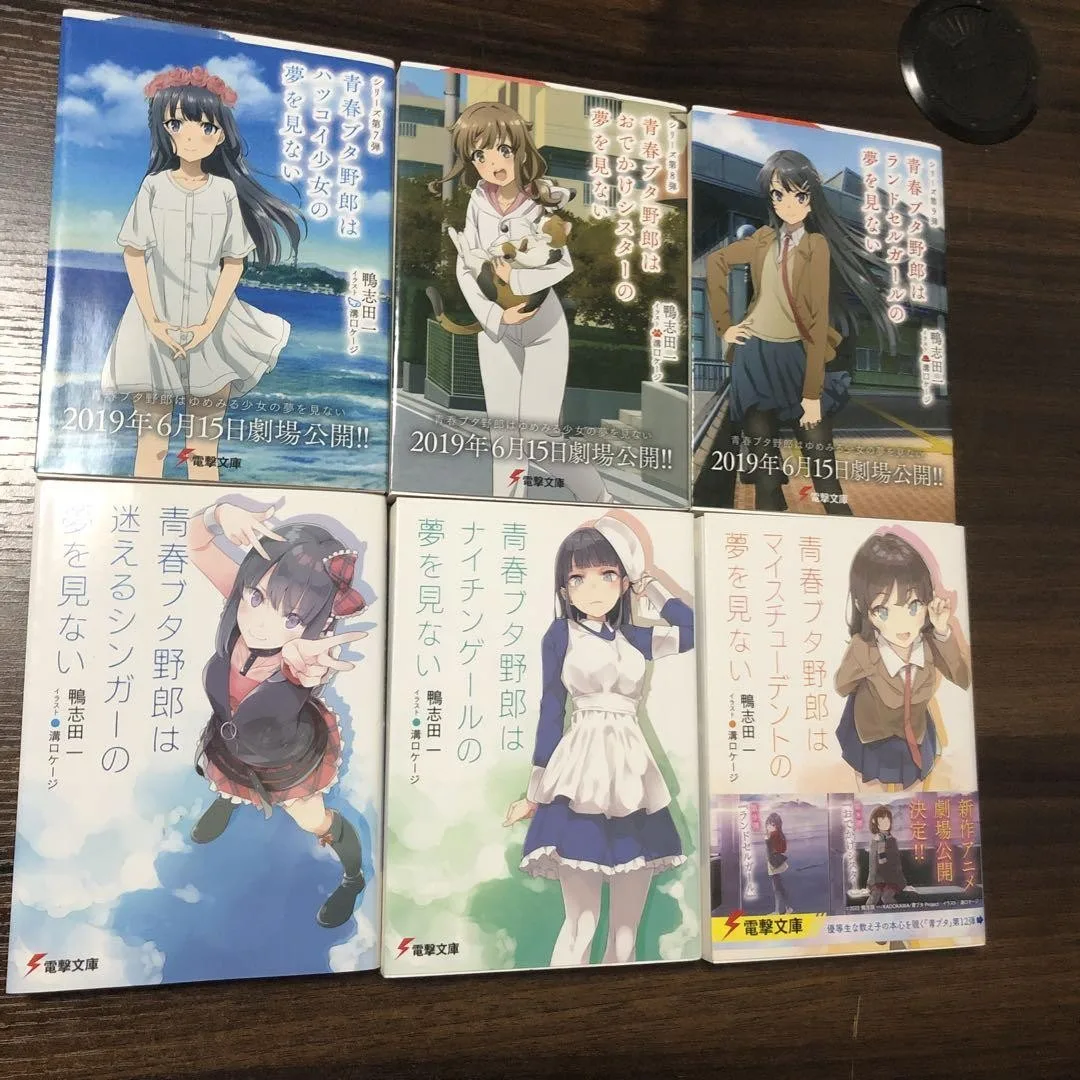
A light novel is a Japanese book with light, fast-moving stories, often in the style of manga and usually with romance or a very engaging plot. Many light novels later become anime, which naturally attracts more attention to them.
Contents 5
How do you get a light novel?
One of the biggest difficulties in using a light novel for study is simply getting one. If you do not live in Japan, you will usually need to order through certain websites. Even at anime events in Brazil, it is not easy to find light novels in Japanese.

Another option is to read free web novels online, which some authors make available. That said, this also comes with limitations. Light novels are written for young adults, so many of them have little furigana and are packed with kanji. That is why we make it clear that learning with light novels requires at least a basic command of the language and a lot of patience.
Choosing and getting familiar with the light novel
A lot of light novels tell stories full of fantasy, magic, or very complex themes. But the best titles for Japanese study are usually the ones that show everyday situations. So it is better to choose works that reflect the daily life of certain characters.
Do not start with titles like Monogatari Series, Durarara, or Sword Art Online. Their themes are far from everyday life, and they also tend to use more complex language.
We also recommend choosing shorter light novels or ones that are already complete. You will spend a long time reading and studying them, and waiting six months for a new volume can be frustrating. You may also rush through the story just to finish it, which hurts your study results.
There are countless light novels to choose from, so try to pick something that suits you. Choosing a work whose anime you have already watched may also make it easier to understand the story and the dialogue in the book.
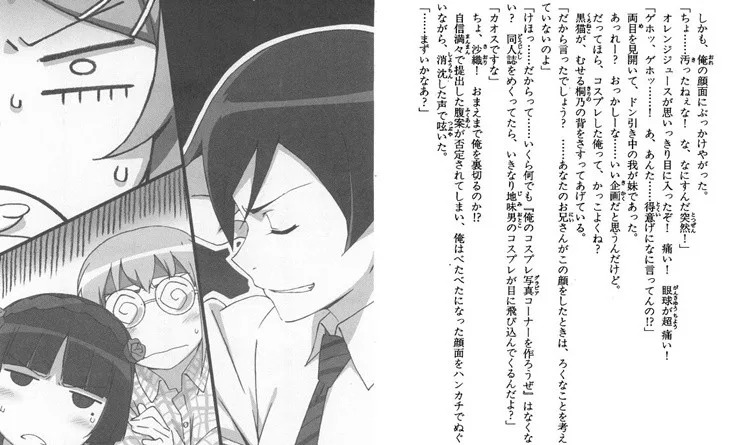
Studying with a light novel
A chapter of a light novel usually has around 5,000 to 7,000 words. A complete volume usually has about 40,000 words and is generally divided into five chapters of roughly 200 pages.
Light novels usually have short, simple dialogue. Very long or highly complex passages are the exception rather than the rule.
Most light novels use more hiragana and katakana. Kanji make up about 30% of a light novel, and about 5% of those kanji have furigana. Light novels are not like manga, where the shonen genre often comes with a lot of furigana. Even so, the reading is still fairly manageable.
When you read a light novel, the goal should be to have fun and learn naturally at the same time. Reading light novels can help you do exactly that.
Here are a few tips for studying in the right way:
Do not read what you do not know. - If you start a light novel and spend all your time chasing meanings in the dictionary, it may be better to choose another book at your level. Otherwise you only slow down your learning and end up remembering very little.
Read again. - If you come across a word or sentence you understand, read it again. Repetition makes it harder to forget and helps your reading flow more quickly.
Keep it short and enjoyable. - You only really benefit from reading if you enjoy it. If reading feels tiring or discouraging, it is better to read a little at a time so you do not burn out.
Copy useful phrases. - If you use Anki or another memorization tool, copy interesting phrases and their meanings into the app. A notebook also helps if you want to practice writing.

Problems when studying with light novels
You can use light novels to improve your Japanese, but we do not recommend them as your main study tool. Here is why learning with light novels can be difficult if you approach them the wrong way:
- Light novels are often full of slang and abbreviations. Authors also write very freely, use kanji in unusual places, or leave out particles altogether. Some even ignore Japanese grammar almost completely, so be careful when you use them as a study source;
- A Japanese learner should focus on dialogue, listening, and simple phrases. Reading books can become a very slow and tiring process. If your goal is to become fluent quickly, a light novel is not always the best choice;
- As mentioned above, a light novel contains many new and unfamiliar kanji. It is often recommended that you have at least an N4 level to understand about 40% of the book. Some learners spend about half a year understanding just one volume of a light novel;
How I study with light novels
Even with those difficulties, do not get discouraged. I did not find it especially hard to study with a light novel. I have already done that here on the site using a passage from the web novel version of Re:Zero.
I copied the passage I wanted to study, separated the sentences, and left a large space between them. In that space, I wrote the reading in romaji or hiragana.
I then checked each word in the sentence and looked up its meaning in online dictionaries like Jisho and Google. I also searched the word on Google Images to understand it better. After that, I wrote down all the meanings and tried to understand the sentence as a whole.
I hope these tips help you with Japanese.




Community
Comments
0 comments
There are no published comments in this language yet.
Send comment