
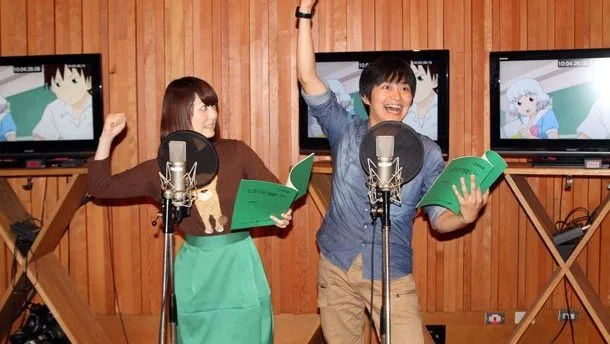
Listening to music while you study, walking while you talk, cooking while you check the news — everyday life is full of two things running in parallel. Japanese packs that idea into a compact structure: ながら (nagara).
Once you notice it, it shows up everywhere: conversations, anime lines, textbooks. Here you will learn how to form it, which action carries the focus, and several examples with translation and vocabulary.
Contents 6
What ながら expresses
With ながら / 乍ら (nagara) you connect two actions by the same person that happen at the same time or in the same phase. The usual English sense is “while” — doing one thing while you do another.
Important: the action before ながら is the accompanying action. The real focus sits on the verb at the end of the sentence. If you say you are “doing homework while listening to the radio,” you are mainly talking about homework — the radio is running “in the background.”
There are also fixed phrases where ながら leans toward “although” (for example 残念ながら, “unfortunately”). This article stays on parallel action — the use you need first in daily speech and on the JLPT path.
Formation: masu stem + ながら
The form is simple: take the verb’s ます form, drop ます, and add ながら. What you get is the verb stem (the 2nd connecting form) plus ながら.
- 聞きます → 聞き → 聞きながら (listen / hear)
- 食べます → 食べ → 食べながら (eat)
- 歩きます → 歩き → 歩きながら (walk)
- 寝ます → 寝 → 寝ながら (sleep / lie down)
- 走ります → 走り → 走りながら (run)
Tense lives on the second verb (present, past, polite style). Before ながら you keep the stem — you do not put a past form like た there. If you already know the dictionary form and masu form of Japanese verbs, this step clicks quickly.
Which action is in the foreground?
Word order is not random. The ながら action supplies the background; the action at the end is the main point.
音楽を聞きながら勉強します。
Ongaku o kikinagara benkyō shimasu.
“I study while listening to music.” — Study is the focus; music rides along.
勉強しながら音楽を聞きます。
Benkyō shinagara ongaku o kikimasu.
“I listen to music while studying.” — Now listening is front and center. Both sentences are grammatical; they simply tell different stories about what matters more.
Also: both actions belong to the same subject. Two different people doing things in parallel (“I watch TV while my sister cooks”) need other patterns — not ながら between two different actors.
Example sentences
These sentences show ながら in everyday situations. Read Japanese and romaji first, then the English meaning and the vocabulary.
ブドウを食べながら午後を過ごしました。
Budō o tabenagara gogo o sugoshimashita.
Spending the afternoon while eating grapes.
- ブドウ – grape
- 食べながら – while eating
- 午後 – afternoon
- 過ごしました – spent
彼らは歌を歌いながら、道を歩いた。
Karera wa uta o utainagara, michi o aruita.
They walked down the street singing a song.
- 彼ら – they
- 歌 – song
- 歌いながら – while singing
- 道 – road / street
- 歩いた – walked
ついに彼らは用心しながら秒読みを開始した。
Tsuini karera wa yōjin shinagara byōyomi o kaishi shita.
Finally, they began the countdown cautiously.
- ついに – finally
- 用心 – caution / to be careful
- 秒読み – countdown
- 開始した – started / began
彼は走りながら助けを呼んでいた。
Kare wa hashirinagara tasuke o yonde ita.
He was running and calling for help.
- 走りながら – while running
- 助け – help
- 呼んでいた – was calling
彼はいつだって歌いながらシャワーを浴びる。
Kare wa itsu datte utainagara shawā o abiru.
He always sings in the shower.
- いつだって – always
- シャワー – shower
- 浴びる – bathe / shower
彼女は微笑みながら言いました。
Kanojo wa hohoeminagara iimashita.
She said with a smile.
- 彼女 – she
- 微笑みながら – while smiling / smiling
- 言いました – said
彼女が歩きながら話した。
Kanojo ga arukinagara hanashita.
While walking, she spoke.
- 歩く(あるく) – walk
- 話す(はなす) – speak
昨日テレビを見ながらご飯を食べていました。
Kinō terebi o minagara gohan o tabete imashita.
Yesterday, while watching television, I was eating a meal.
- 昨日(きのう) – yesterday
- テレビ – television
- 見る(みる) – watch / see
- ご飯(ごはん) – meal / rice
- 食べる(たべる) – eat
お父さんは微笑みながら言いました。
Otōsan wa hohoeminagara iimashita.
Dad said while smiling.
- お父さん(おとうさん) – father
- 微笑む(ほほえむ) – smile
- 言う(いう) – say
孫は涙を流しながら答えました。
Mago wa namida o nagashinagara kotaemashita.
My grandson answered while crying.
- 孫(まご) – grandson
- 涙(なみだ) – tear
- 流す(ながす) – let flow
- 答える(こたえる) – answer
起きながら見た夢
Okinagara mita yume
The dream I had while waking up — here you can feel how ながら can also ride in a short noun phrase.
- 起きる(おきる) – wake up / get up
- 夢(ゆめ) – dream
What to watch for
Three points keep you out of the usual traps:
- Same actor: ながら joins actions of one person, not “me + someone else” in parallel.
- Stem, not past: Before ながら comes the masu stem. Tense is marked on the verb at the end.
- Focus at the end: What you are “really” doing comes after ながら. Swap the verbs and the nuance changes.
Sometimes ながら also covers longer parallel phases — for example studying and a part-time job over weeks. Then the sentence does not always mean “in the same second,” but “side by side in life.” The everyday tone stays the same.
When you later practice listing actions (“sometimes this, sometimes that”), the たり form is worth a look. And for vocabulary drills, a compact N5 verb list helps the stem for ながら settle faster.
Quick practice
Pick a verb you use often — 見る, 聞く, 歩く, 食べる — and build the stem plus ながら. Then add a clear main action: study, work, speak, answer. Say the sentence out loud and notice which verb at the end carries the focus.
Once that clicks, you will start hearing ながら everywhere: in anime dialogue, in song lyrics, and in simple everyday talk. Two actions, one structure — and you know who is “along for the ride” and what really stands in the foreground.



Community
Comments
0 comments
There are no published comments in this language yet.
Send comment