
The answer is yes! But keep reading, because in this article we will explain the reason.
Some people claim that it is not possible to learn Japanese through anime, but this is untrue. Of course, if you only stick to anime, you won't reach fluency. However, anime has the ability to get you accustomed to the language enough for you to migrate to other types of content and continue understanding.
One of the first goals when we start learning a second language is to understand, right? And that's where it is! Anime, or more specifically, entertainment content in Japanese will guarantee you this at a much faster pace than other types of materials for one simple reason.
Engagement. Yes! Engagement is one of the greatest weapons for learning a second language, after all, you will spend hours and hours of your day entertained watching or reading something made by natives for natives.
The truth is that to learn a second language, you do not need to have any special gift; it is the sum of two things: a good method and the time spent with the language you are learning.
Below we have a video where we discuss the topic of this article, take a look:
Contents 8
Learning and Acquiring

But let's separate two things here: Learning and Acquisition. These are easily confused terms, after all, they seem to be the same thing, but let's define the meaning of each. Learning is the act of mastering, consciously learning something.
For example, you are in driving school and start learning which pedals to press to execute a command in the vehicle, what the gearbox is, etc. This is learning; you rationalize the movement, the actions, the commands; you need to analyze and think about each movement before doing it.
Acquisition is when you start learning to do without realizing it; you go through the conscious learning phase and move to the unconscious learning phase; you continue learning, but you no longer notice it, after all, you have already automated the actions.
The same happens with learning a second language. The phase of learning vocabulary, phrases, grammar, and the phase of acquiring that information through content made by natives for natives. In other words, watching or reading without needing to stop to research or look for meaning. That is acquisition.
And how does anime fit into this discussion? Anime can be used in both ways; you can very well research the meaning of words and terms or watch just trying to understand what is being said using only what you already know of the language.
Japanese Subtitles

Subtitles can help you if done the right way and hinder you if done the wrong way. What is the right way? Ideally, the subtitles should be in the language you are learning and not in the language you already know. In other words, if you watched something in Japanese, put the subtitles in Japanese.
No Japanese subtitles? If not, challenge yourself, watch without them! Surely there will be some series that you will enjoy and discover that there are no subtitles for it, but after watching more than 30 anime with Japanese subtitles, you will have the ability to do this.
And that is where you will actually develop the ability to understand without subtitles.
Animelon - Learn Japanese with Anime
What Changes from Anime to Reality
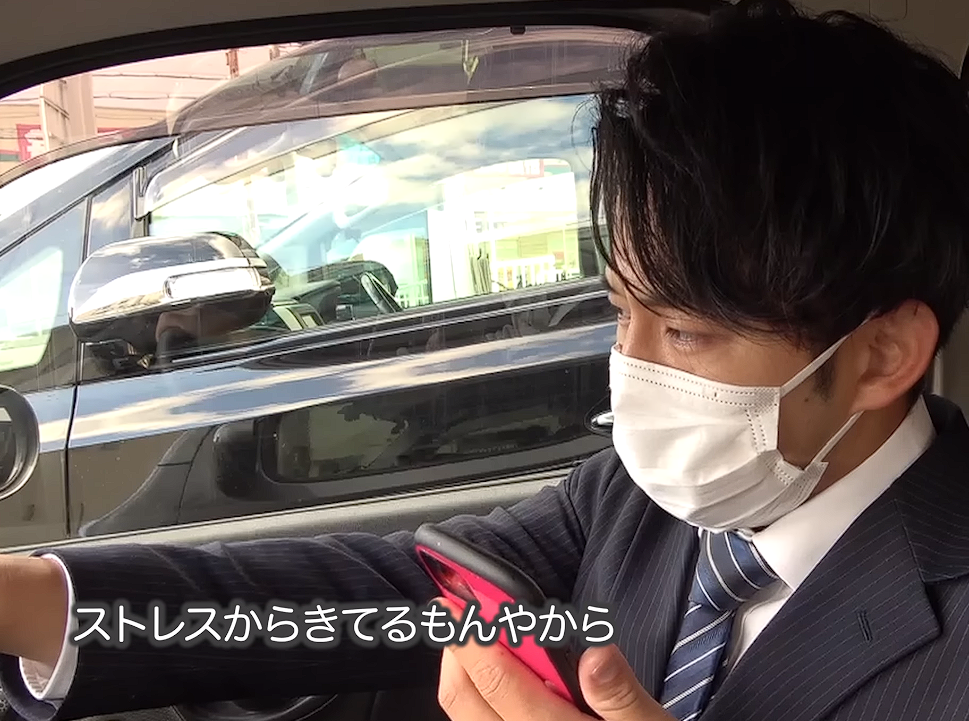
Anime, just like in reality, use the same structures; remember this word. That is, the phrases used in anime, for example, slice-of-life (which is a genre of everyday anime) tend to appear in reality as well. In the video above, we have examples of this.
But what changes? Anime tends to use extremely informal language, jargon, slang, some very specific vocabulary, talk about ultra-niche subjects, and so on in some contexts. The more fantastical, the more this will weigh.
If I only learn through anime, will I speak in a very childish or unrealistic way? It depends. Do you only have anime as a source of immersion? Do you only learn from fantastical works? If these are the cases, then yes, there is a chance. But don't worry, even if this happens to you, the antidote is simple. Start watching other styles of content. Japanese YouTube, Japanese newspapers, radio, etc.
The fact is that when you truly understand the language, you change what you watch to adjust to your level and easily identify where it sounds natural or not. And why not start right away with the Japanese newspaper?
The reason is simple. You need to choose something that keeps you entertained and is at your level. Sometimes the newspaper uses slightly advanced language. Another important observation you should make is that if you stick to one thing forever, you will not have the opportunity to evolve; that is, regardless of whether it is anime, newspapers, or anything else, challenge yourself, try to step out of your comfort zone as you progress.
Journey of Those Who Start with Anime
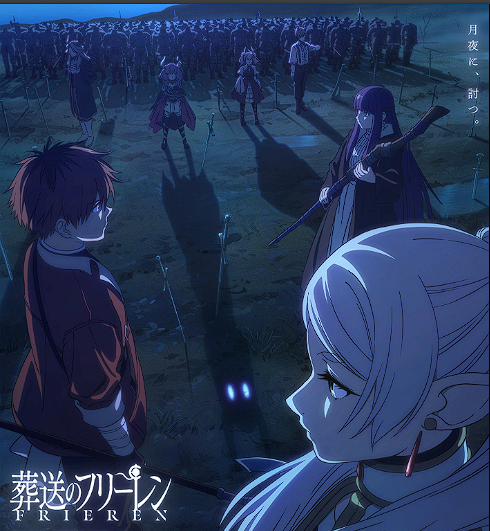
Just like me and many others who started with anime, after a few months or at most 1 or 2 years, they were already dealing with more diverse content like Japanese YouTube, Japanese television, radio, etc., and since they were already accustomed to the language, it is not so difficult to get used to these other formats.
As mentioned before, anime is just the fuel for you to later migrate to other subjects.
Fun in Learning
It may not be a surprise to you, but the most powerful weapon during learning is "fun." When you do not feel stimulated by the activity you are doing in the language you are learning, you end up procrastinating or not doing it at all.
How to learn Japanese with manga and anime?
What is the most powerful combination for beginners?
Those who are starting need to become literate; it is the first step. You need to know the basics of the language: Hiragana, Katakana, particles, some Kanjis, the most common structures and grammatical points. However, this literacy is not the most difficult point; you can master it in a few months with effort.
Japanese Club - The Best Online Japanese Course
I still don't understand watching with Japanese subtitles

There are 2 possible reasons for this. First, you really do not know vocabulary, structures, grammatical points, and the basics to understand. And if that is the case, keep studying, learning in your course, and learn phrases; with at least 3,000 phrases, you will be able to handle an episode of anime without pain.
Second, you know enough, have mastered several grammatical points, know a lot of vocabulary, but when you start watching, you understand almost nothing. In this case, you are suffering from something known out there as "ambiguity."
How does it affect us? Ambiguity occurs when we have a feeling of repulsion, disgust, sadness, or anger for not understanding something spoken in a second language.
How to overcome it? The first thing is your mindset; you need to keep in mind that it is normal not to understand and that eventually, if you keep studying and watching, you will understand at some point. The second are the attitudes you should take while watching something; the first of them is: focus on understanding the context of the story, what it is about, what the subject is; you do not need to understand everything, but rather what they are talking about. At first, your deduction and intuition will be weak due to the lack of habit of understanding things, but over time you will start to understand what they are talking about.
The third attitude is not to get upset about how much you do not know or did not understand; celebrate understanding a part and eagerly await the next. Little by little, you will develop the ability to understand more and more.
Another powerful attitude is to watch something you have seen before in Portuguese; you will already know the story, the context, and the subject, focusing only on connecting that with what they are saying.
Beyond Anime

You can apply all of this to other things you use for learning Japanese, such as: Doramas, manga, Japanese YouTube, and others.
The greater your resistance to ambiguity, the more you will advance, because you will try to study through things that challenge you. Renowned linguist Stephen Krashen states that to acquire a second language, you need to be in contact with what has a step up of new information for you; this implies that if at some point anime or any other type of content you are using to learn becomes too easy, seek new challenges.
The more you challenge yourself, the more you advance, but always with caution not to fall into perfectionism, which is something that does not exist.
We have another article discussing the subject; if you want even more information on the topic, visit:
Is it possible to learn Japanese by watching anime and doramas?






Community
Comments
0 comments
There are no published comments in this language yet.
Send comment