
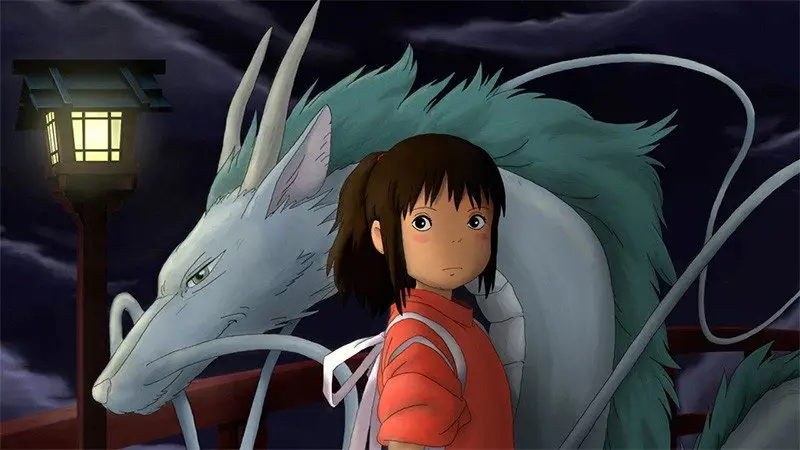
A bathhouse full of spirits, a flying castle and a cat-shaped bus all come from a studio that rarely uses fantasy as an escape from real life. Studio Ghibli (スタジオジブリ, Sutajio Jiburi) brings wonder to stories about war, grief, work, childhood and the environment. That contrast helps explain why its films reward a return long after a first viewing.
Its best-known worlds are unmistakably Japanese, yet they do not depend on a single formula. A quiet train ride, an abandoned town or a forest path can carry as much weight as a chase scene. The films often draw on Japanese landscapes, folklore and daily life while leaving room for ambiguity rather than handing every character a simple lesson.
Contents 4
How Studio Ghibli began
The roots of Studio Ghibli reach back to Hayao Miyazaki and Isao Takahata's earlier work. In 1974, Takahata directed Heidi, Girl of the Alps (アルプスの少女ハイジ), while Miyazaki worked on the series' scene design. Years of television work made the limits of short production schedules clear to both filmmakers: the kind of detailed animation they wanted demanded more time.
Nausicaä of the Valley of the Wind, released in 1984, was not made by Studio Ghibli, but its success became the immediate foundation for the new studio. Tokuma Shoten established Studio Ghibli in 1985 to make animated features centered on Miyazaki and Takahata's work. The name “Ghibli” refers to a hot wind of the Sahara; Miyazaki chose it with the hope that the studio would stir up Japanese animation.
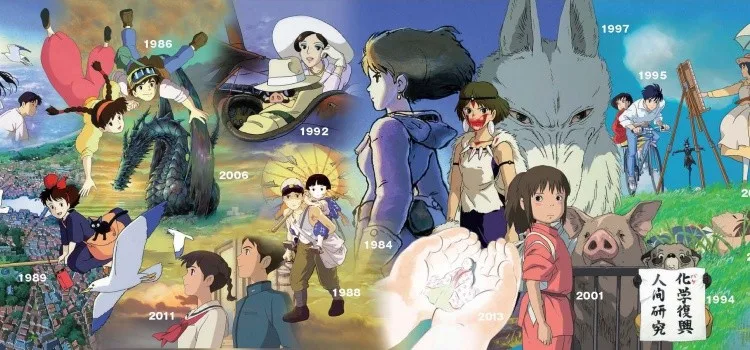
The first feature made under the new studio was Castle in the Sky (1986). In 1988, Ghibli released Grave of the Fireflies and My Neighbor Totoro as a double bill. Making two very different feature films at once was an enormous undertaking, but the pairing revealed an important part of Ghibli's range: Takahata's devastating wartime drama beside Miyazaki's gentle, strange view of childhood. Totoro later became the studio's emblem.
What makes Ghibli films distinct?
Studio Ghibli is often associated with hand-drawn animation, but the lasting appeal is less about a technique than about attention. Its protagonists are allowed to hesitate, make mistakes and notice small things. Adults can be foolish or frightening, yet they are rarely reduced to villains. Even when a story turns toward conflict, the films tend to ask what people, places and creatures may lose when someone insists on an easy answer.
This is why the studio's filmography moves comfortably between very different moods. Princess Mononoke faces violence and environmental conflict; Kiki's Delivery Service turns creative exhaustion into a coming-of-age problem; Only Yesterday follows memory and adult uncertainty without needing a fantasy setting. The shared thread is not a genre, but the care given to a character's inner life and to the places around them.
Many Ghibli releases also became major cultural reference points in Japan. Several sit among the country's highest-grossing Japanese films, but popularity alone does not explain their endurance. Their images are easy to recognize; their questions are harder to outgrow.
Studio Ghibli films by release year
The list below focuses on the feature and television releases in Studio Ghibli's catalogue. It does not attempt to include every short film, music video or commercial project.
- 1986 — Castle in the Sky
- 1988 — Grave of the Fireflies; My Neighbor Totoro
- 1989 — Kiki's Delivery Service
- 1991 — Only Yesterday
- 1992 — Porco Rosso
- 1993 — Ocean Waves
- 1994 — Pom Poko
- 1995 — Whisper of the Heart
- 1997 — Princess Mononoke
- 1999 — My Neighbors the Yamadas
- 2001 — Spirited Away
- 2002 — The Cat Returns
- 2004 — Howl's Moving Castle
- 2006 — Tales from Earthsea
- 2008 — Ponyo
- 2010 — The Secret World of Arrietty
- 2011 — From Up on Poppy Hill
- 2013 — The Wind Rises; The Tale of the Princess Kaguya
- 2014 — When Marnie Was There
- 2016 — The Red Turtle
- 2020 — Earwig and the Witch
- 2023 — The Boy and the Heron
A catalogue that keeps changing
The catalogue does not belong to a single director or a single mood. Miyazaki, Takahata, Yoshifumi Kondō, Hiromasa Yonebayashi, Gorō Miyazaki and other collaborators each brought different concerns to the studio. The Red Turtle, for example, was an international co-production, while Earwig and the Witch explored computer-generated animation. These departures do not erase the older Ghibli identity; they show that the studio's history has never been as fixed as its most familiar characters suggest.
For a first visit, the best starting point depends on what you want from a film. My Neighbor Totoro offers quiet childhood wonder, Spirited Away builds a rich fantasy world, Princess Mononoke is more intense and morally tangled, and Only Yesterday stays close to adult memory. The common pleasure is discovering how much feeling Ghibli can fit into a gesture, a room or a stretch of sky.


Community
Comments
0 comments
There are no published comments in this language yet.
Send comment