
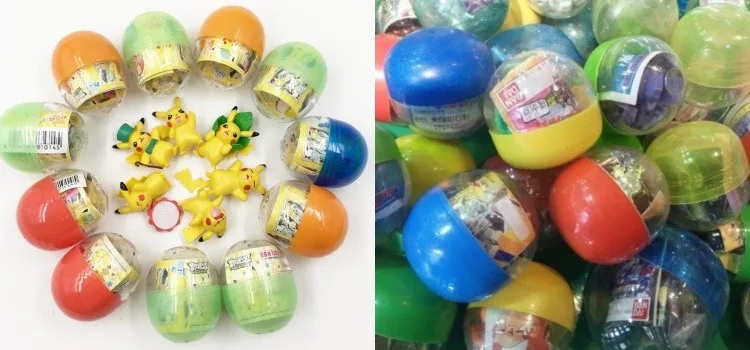
The capsule machines are a familiar sight in Japan and have spread around the world through a simple game: insert a coin, turn the crank, and receive a surprise toy. The combination of expectation and luck explains why gashapon are loved by children and adults, especially collectors.
In Japan the selection changes constantly: Bandai alone brings more than 120 new capsule products to market every month, and the catalog goes far beyond anime characters. Animals, miniature furniture, fake food and tiny reproductions of everyday objects all end up inside the capsules.
Contents 8
What are Gashapon?
The gashapon (ガシャポン), also called gachapon (ガチャポン), are capsule vending machines that reached Japan from the United States in the 1960s. The name is onomatopoeic: gasha imitates the sound of the crank turning, and pon imitates the capsule landing in the collection tray. Gashapon is Bandai's registered trademark, while Tomy uses the shorter gacha for its own machines, which is why both names appear on store signs.
Japanese capsule toys are known for the quality of their contents. Figures made by companies such as Bandai, Tomy and Kaiyodo are small but precisely molded and painted, and many are licensed from anime, manga and video games, which is why adults collect them alongside children.
Three elements keep the format attractive: quality, surprise and limited editions. The capsules contain small, highly detailed figures, and a series can vanish from the machines when its production run ends.
History of Gashapon
Capsule vending machines were used in the United States for decades before they arrived in Japan in 1965. Bandai entered the market twelve years later, in 1977, with a 100-yen machine, and the business grew slowly until the first boom in the 1980s.
That boom began in 1983 with Kinkeshi, the rubber figures based on the manga Kinnikuman. Bandai produced more than 400 models and sold around 180 million of them, turning capsule toys into a regular part of Japanese childhood. A second wave arrived in 1995, when the Gashapon HG series released full-color Ultraman figures that won over adult collectors.
Since then the market has expanded to collectors of every age. In August 2025 Guinness World Records certified Gashapon as the largest capsule toy brand in the world.
Where to Find Gashapon in Japan
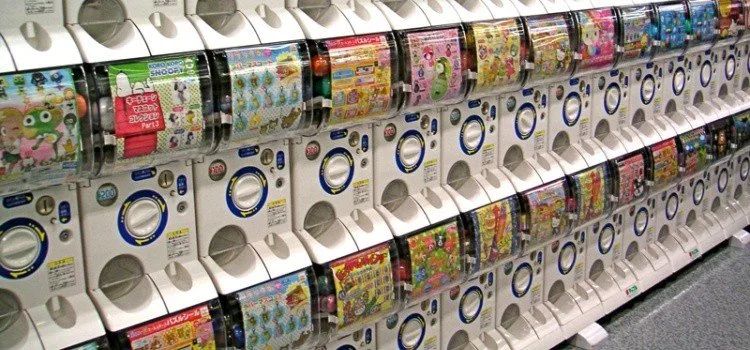
Today the machines appear in shopping malls, train stations, game centers and tourist spots, and the largest cities have whole shops built around them. In Tokyo, the streets around Akihabara, Shinjuku and Shibuya hold the densest clusters, with electronics shops and arcades reserving entire floors for capsule toys.
The largest single location is the Gashapon Department Store in Ikebukuro's Sunshine City, which keeps more than 4,000 machines in one space. Specialty shops of this kind appeared in the 2000s and are now common in Tokyo, Osaka and other large cities.
Types of Gashapon
Capsule toys now come in several formats, from machine capsules to sealed boxes, and the packaging changes the way the surprise works.
Blind Boxes
Blind boxes work like gashapon without the machine: the figure comes in sealed packaging, so the buyer still cannot see the contents before opening it. The format spread through designer toys, with companies such as Pop Mart and Dreams Inc. building entire collections around it, and many capsule series are repackaged as blind boxes for shops outside Japan.
Bottle Cap Figures
Bottle cap figures are a variation in which the figure is mounted on a plastic bottle cap. The cap works as a base rather than a bottle closure, and the figures are sold both in machine capsules and in blind boxes.
Character Series
Most machines sell character series licensed from anime, manga and games, from long-running properties such as Gundam and Pokémon to characters from American films and series. Some lines grow beyond the machines: Cup no Fuchiko, a figure of a woman posed on the rim of a cup released by Kitan Club in 2012, shipped 100,000 units in its first week and passed three million sales within a year.
Prices, Duplicates and the Collector Market
The figures are usually made of PVC, and the intricate detail of the painting and molding makes some pieces valuable, especially when they come from limited or rare editions. Prices depend on the machine and the size of the capsule: most charge between ¥100 and ¥500, while Bandai's premium machines, introduced in 2021, accept 500-yen coins and can reach ¥2,500 for larger figures.
Although duplicates are a normal part of the experience, many fans still enjoy turning the crank and trusting in luck. Because the capsule is sealed, a collector who wants one specific figure may end up with several copies of another, and trading with other fans became a routine part of the hobby. Shops that sell manga and anime goods often stock complete sets for buyers who prefer to skip the randomness and buy the full lineup at once.
The appeal survives because the format is easy to repeat. The machines stand in places people pass every day, a capsule costs little, and the result is decided in seconds. Each turn ends with a real object in the hand, even when it is a duplicate, and every collector knows the next machine may hold the figure still missing from the set.


Community
Comments
0 comments
There are no published comments in this language yet.
Send comment