
For fourteen restless years, Japan wore the name of a man the public barely saw. Emperor Taishō — born Yoshihito (嘉仁) — reigned from 1912 to 1926 while party cabinets, cafés, and factory floors pulled the country in new directions. The irony is almost unfair: the era that carries his posthumous name is remembered less for palace spectacle than for the brief democratic weather historians later called Taishō Democracy.
That gap between throne and street is the key to reading him. After the long modernization drive of the Edo-to-Meiji transition, Yoshihito inherited a constitutional monarchy already in motion — and a body that rarely let him keep pace with it. What follows is his life, how Japanese emperors receive their names after death, and why such a short reign still matters in the timeline of modern Japan.
Contents 9
Posthumous name and era name in Japan
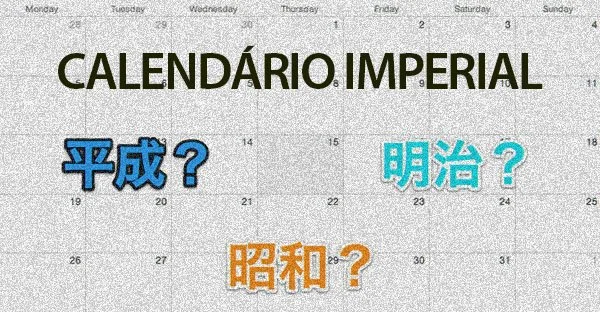
In Japanese custom, a living emperor is simply “the Emperor.” After death, he receives an honorific posthumous name (tsuigo). Since the practice standardized in 1912, that name has matched the era name (nengō) used for the years of his reign. Yoshihito’s era was Taishō (大正, often rendered “great righteousness”); after his death he is known as Emperor Taishō (大正天皇), not by the personal name Yoshihito in ordinary historical speech.
That is why English readers meet “Emperor Taishō” the same way they meet “Emperor Meiji” or “Emperor Shōwa”: the era label and the posthumous imperial title travel together. It is easy to confuse the calendar name with a personal nickname; the cleaner distinction is that the era marks time while the emperor is alive, and the same characters become the name under which history remembers him once the reign ends.
How it differs from a kaimyō
Buddhist death names (kaimyō) serve a related idea of renaming after death, but they belong to religious practice for individuals and families. The imperial posthumous title is a public, institutional name tied to the era system that still frames Japanese calendars, documents, and school history books.
Emperor Taishō: life and family
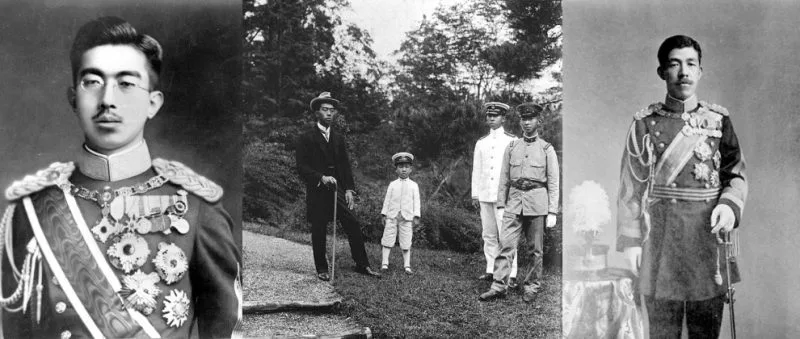
Yoshihito was born on 31 August 1879 in Tokyo, son of Emperor Meiji and Yanagiwara Naruko, a lady-in-waiting. Empress Shōken was regarded as his official mother under court custom of the time. Elder brothers had died in infancy; Yoshihito survived, yet childhood meningitis and lifelong health limits shaped almost every public decision around him.
Childhood, education, and health
He was raised partly away from the main palace, with tutors and a slower curriculum because fever and frailty interrupted ordinary schooling. He showed aptitude for languages and for riding, and he could charm foreign guests when protocol demanded it — yet court observers often judged him less sure-footed in dense political briefings than his father. Those limits were not a private footnote; they later became a structural fact of the reign.
Marriage and children
In 1900 he married Kujō Sadako, later Empress Teimei, chosen in part for poise and intelligence that could balance his weaker points in public life. The couple had four sons: Hirohito (the future Emperor Shōwa), Yasuhito (Prince Chichibu), Nobuhito (Prince Takamatsu), and Takahito (Prince Mikasa). Their line connects Taishō’s household to the later imperial family that English readers usually know through Hirohito and Akihito.
Reign: 1912–1926
Emperor Meiji died on 30 July 1912; Yoshihito’s accession opened the Taishō era the same day in the official calendar. From early on he appeared less often than the Meiji image of an active modern monarch. A famous Diet episode — rolling a speech into a tube and peering through it — fueled gossip about his condition; people who knew him also noted physical awkwardness that made public ritual difficult. After about 1919 he withdrew from many ceremonial duties, and on 25 November 1921 Crown Prince Hirohito was appointed regent (sesshō).
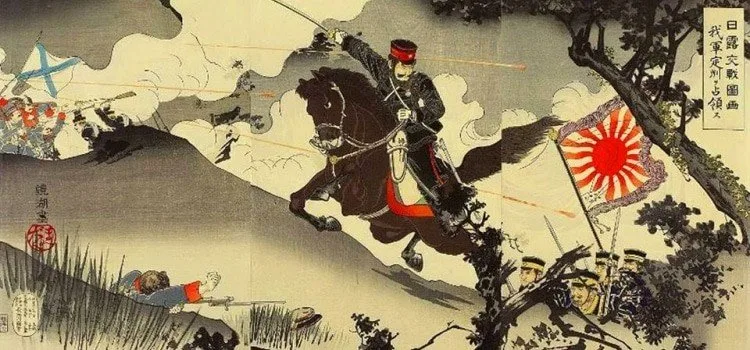
Abroad, Japan entered World War I on the Allied side, seized former German holdings in China and the Pacific, and sat among the victors at Versailles. At home the war years brought industrial expansion — chemicals, textiles, shipping — while Europe was distracted. The boom did not last: postwar contraction, the Rice Riots of 1918, and the catastrophic Great Kantō Earthquake of 1923 battered cities and confidence. Yoshihito himself spent the quake period away from Tokyo; the capital’s recovery became a national trauma that outlived the emperor.
He died on 25 December 1926 at Hayama Imperial Villa in Kanagawa, aged 47. Contemporary reports spoke of pneumonia; accounts of the final hours also describe heart failure. Hirohito succeeded him and the era name changed to Shōwa. Historians sometimes call Taishō the first “Tokyo emperor” because he lived his whole life in or near the capital, unlike Meiji, who was born and raised in Kyoto.
Taishō Democracy and everyday modern Japan
The phrase Taishō Democracy (大正デモクラシー) is a later historical label for a longer stretch of political opening that peaked during and around the Taishō years. Power shifted, unevenly, from aging Meiji oligarchs (genrō) toward party cabinets and a louder Diet. In 1925 universal male suffrage for men over twenty-five expanded the electorate even as the Peace Preservation Law tightened controls on radical politics — a double edge that already hinted at later repression.
Outside the chamber, the period is remembered for magazines, department stores, jazz cafés, cinema, labor activism, and the figure of the moga (“modern girl”) in big-city streets. Liberal air was real enough to matter, and limited enough to disappoint. The emperor’s frailty did not “cause” democracy, but a less commanding throne made room for party politicians, newspapers, and social movements to fill public space — for a while.
By the late 1920s and early 1930s that weather soured. Assassinations, military assertiveness on the continent, and economic crisis pulled Japan toward the darker early Shōwa path. Looking back at Taishō is partly looking at a hinge: industrial Japan had already left the feudal order of the shogunate behind under Meiji; what remained unsettled was who would speak for the nation — parties, generals, or the myth of an all-directing emperor.
The Taishō years: boom, shock, and aftershocks
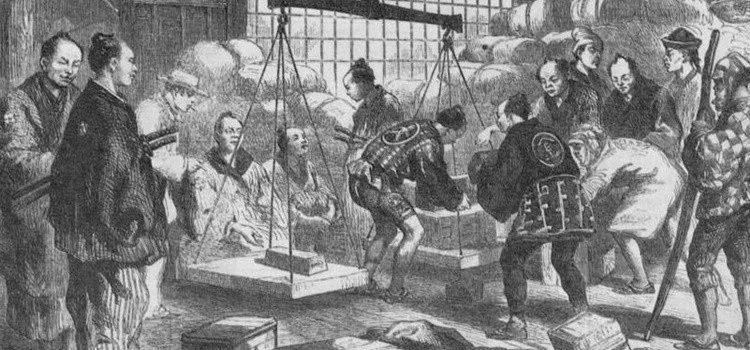
Economically, the wartime surge and the 1923 disaster bookend the era for many textbooks. Banks and heavy industry grew; so did urban poverty and rural pressure — the same tensions that exploded in the Rice Revolt of 1918. Culturally, Western fashions mixed with older hierarchies rather than replacing them cleanly. Politically, the Hara cabinet (1918) and later party governments made “normal” constitutional politics look possible until violence and emergency law rewrote the script.
For readers tracing the full line of rulers, Taishō sits between Meiji’s modern founding myth and Shōwa’s wartime and postwar extremes on any solid list of Japanese emperors. Fourteen years is short on the imperial clock; the density of change inside them is not.
Quick facts and lasting questions
- Personal name: Yoshihito (嘉仁); childhood title often linked to Prince Haru.
- Reign / era: Taishō, roughly 30 July 1912 – 25 December 1926.
- Empress: Teimei (Sadako); four sons, eldest Hirohito as regent from 1921.
- Public role: limited by health; political energy of the age ran through parties, media, and social movements more than through his person.
- Legacy angle: not a warrior-emperor legend, but a hinge name for Japan’s short liberal experiment and the industrial society that fed both café culture and later militarism.
Emperor Taishō does not dominate popular memory the way Meiji or wartime Shōwa do — and that quiet is part of the story. The years stamped with his name asked whether a modern empire could widen participation without losing control. Japan answered that question more than once after 1926; the Taishō page is where the question first felt urgent in a thoroughly modern key.

Community
Comments
0 comments
There are no published comments in this language yet.
Send comment