
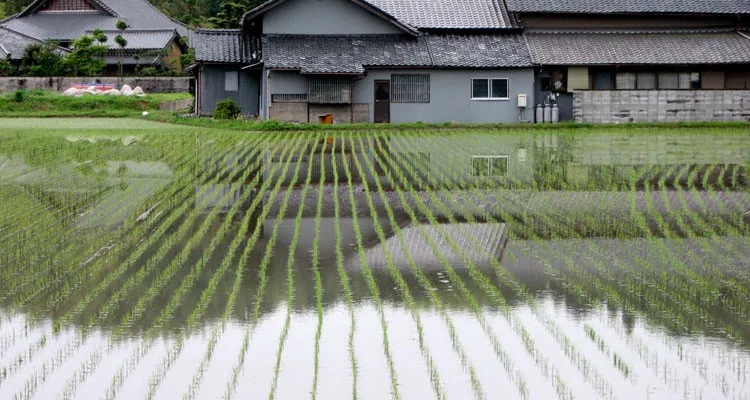
In Japan, rice is more than a side dish: it shows up at breakfast as naturally as in sushi, onigiri, or mochi. Travel anywhere beyond the city core and the landscape itself tells the story — mirror-flat paddies in the plains, and stair-step terraces clinging to mountain slopes.
Cultivated area has been shrinking, and many farm households are aging. Even so, rice growing remains one of the defining threads of Japanese agriculture, and the fields are still workplace, cultural landscape, and national symbol at once.
Contents 9
The history of rice cultivation in Japan
Wet-rice farming has shaped Japan since the Yayoi period — roughly two thousand years of flooded fields, villages, and ritual. Before that long shift, life leaned more on hunting, gathering, and dry crops; irrigated paddies helped lock in settled communities and the social order that grew around them.
In the Edo period (1603–1868), rice was not only food but a measure of wealth: harvests and rice-based taxes marked the status of many feudal domains. Today, regions such as Hokkaido stand out for large volumes of table rice, while other prefectures — Niigata among them — are known for particular varieties and quality. The grain’s spiritual and cultural weight never quite left, even as machines and markets remade daily farm work.
How is rice cultivated in Japan?
The classic path runs through flooded fields (often called tanbo / 田んぼ or suiden / 水田). Water helps suppress weeds, protects young seedlings, and keeps soil temperatures more stable — as long as irrigation and drainage work together.
Flat fields and tanada
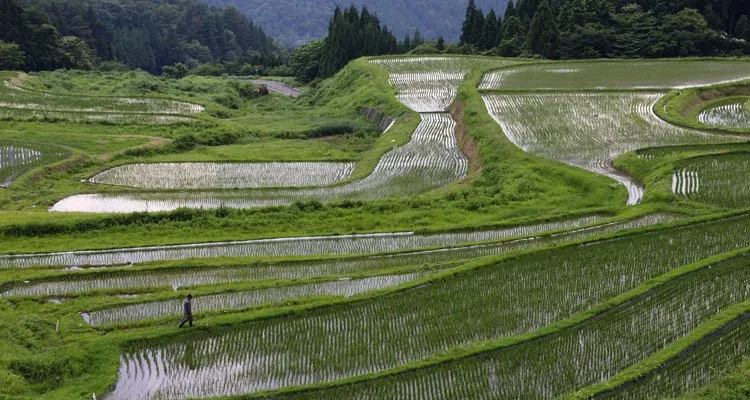
On plains and valley floors you see the neat rectangles from the train window. On slopes and in narrow valleys, farmers built tanada (棚田): terraced paddies, often edged with stone or packed earth. They stretch limited flat land and became a signature look of rural Japan.
Irrigation and care
Without water, wet rice fails. Historic channels and modern systems keep the flow, while fertilizing, weeding, and pest control — today often with machinery — aim to protect the crop. Many regions mix traditional handwork with tractors, transplanting machines, and combine harvesters.
Harvest and drying
When the heads turn golden, fields are drained so harvest is easier and drier. Then come drying, threshing, and further processing — until the grain leaves the farm as polished table rice, sticky rice for sweets, or raw material for drinks.
Tanada and the landscapes people visit
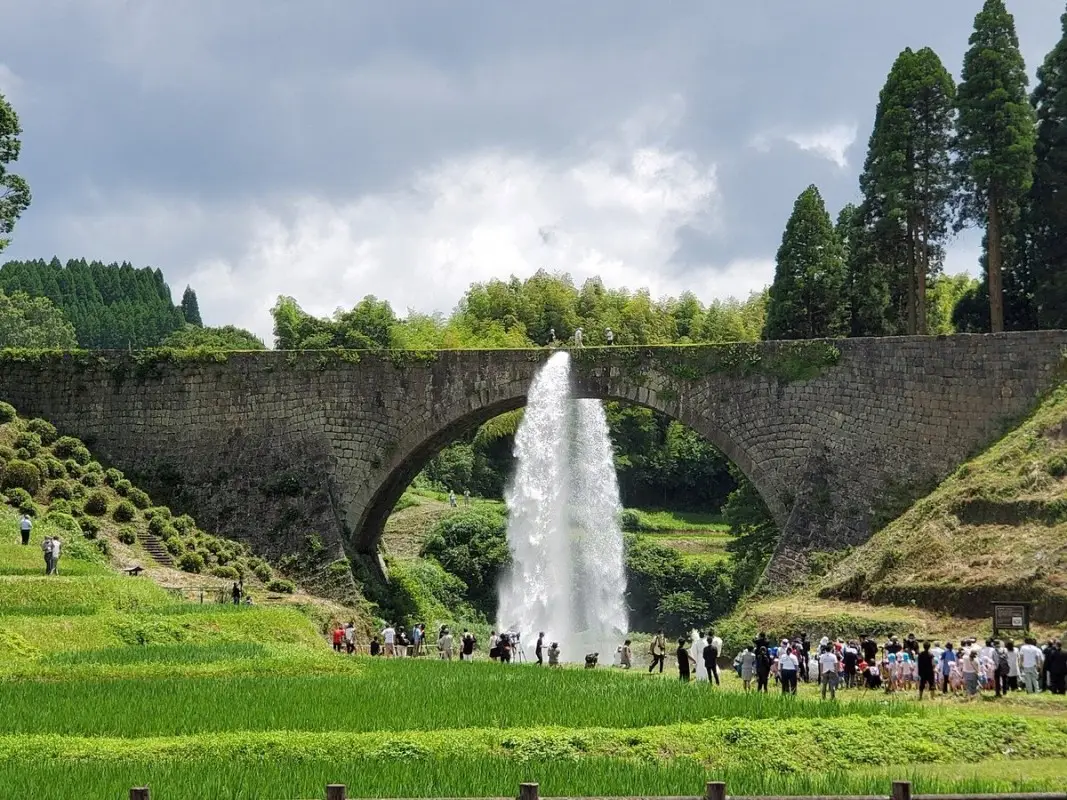
Tanada are not “just pretty photos.” They are working plots on hard ground: narrow, steep, often small. In 1999 Japan’s Ministry of Agriculture, Forestry and Fisheries launched the “100 Terraced Rice Fields of Japan” (Nihon no tanada hyakusen) initiative to support care and public interest in these cultural landscapes — more than a hundred communities had terraces selected under that program.
Familiar images come from places such as Shiroyone Senmaida in Wajima (Ishikawa), stepping down toward the sea, and from terraces in Niigata, Gifu, and elsewhere. Season changes the view: spring water and new seedlings, a deep-green sea in summer, harvest gold in autumn. Visitors should treat private land and active farming with respect — the backdrop is also someone’s workplace.
Cultural meaning of the rice fields
Rice fields are workplaces and carriers of ritual and story. In some regions, local beliefs link paddies and fertility; loud noise or careless intrusion can feel like more than bad manners toward farmers — it can feel like disturbing a fragile balance. Those traditions vary sharply by place; a blanket claim about “the south” is too neat.
Rice follows festivals and life events: as offering, as shared food, as a symbol of abundance. The Western habit of throwing rice at weddings has its own roots; it is not a simple export “from Japan.” What remains is the idea of fertility and good fortune — and, in Japan itself, more often respect for the grain on the plate than the act of throwing it.
Visually, the straight lines and water reflections draw residents and travelers, especially around planting and harvest. That beauty depends on care: abandoned terraces grow over, and with them a piece of the classic Japanese countryside disappears.
Rice in Japanese daily life
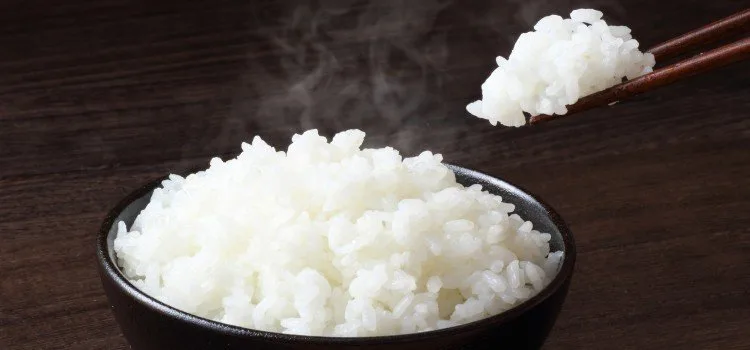
In everyday speech, cooked rice is often gohan (ご飯) — and the same word can mean “a meal.” The cuisine builds whole menus around this grain:
- Dishes: onigiri, sushi, donburi, and plain white rice with fish and vegetables.
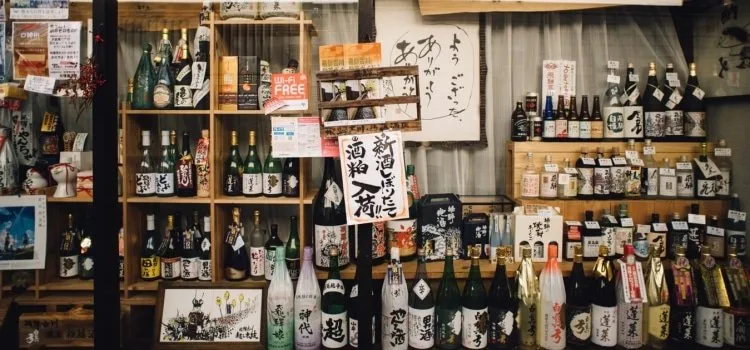
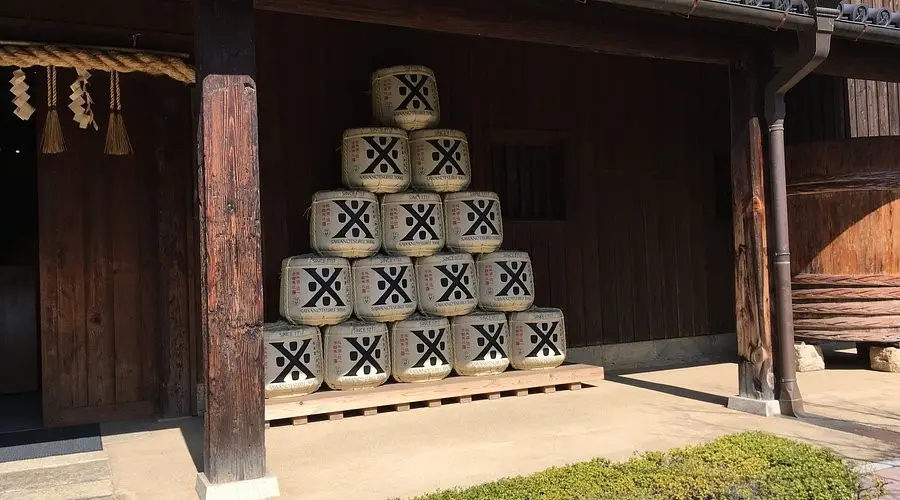
- Drinks: sake and sweeter amazake from fermented rice bases.
- Sweets: mochi and other wagashi made with glutinous rice.
That range keeps rice farming in cultural view, even when the grain’s share of diets and farm income shifts over decades. Understanding Japan means seeing the paddy as both production and a kind of daily grammar.
Closing
Japanese rice fields braid technique, landscape, and ritual. From flat tanbo to the stairs of tanada, they show how a steep, rainy country organized food and identity together — and still does, even as farms age and acreage shrinks.
If you travel in Japan, look past the city edges: to Hokkaido’s plains as much as to mountain terraces. The fields photograph well, but they live on water, season, and the people who still tend them.



Community
Comments
0 comments
There are no published comments in this language yet.
Send comment