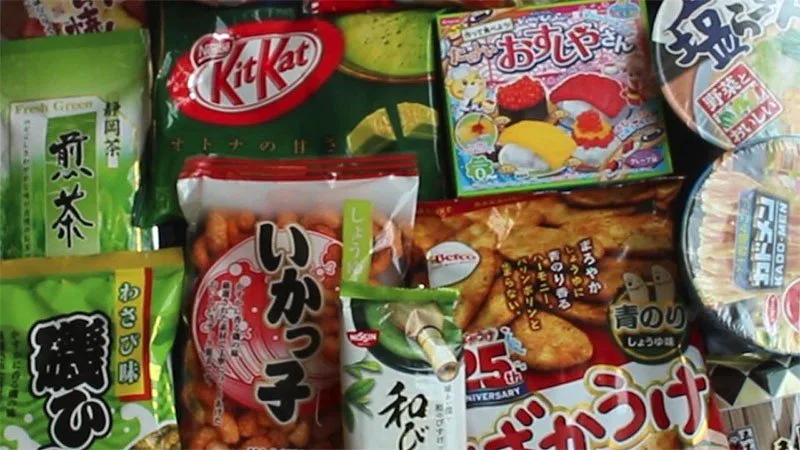
When living or traveling in Japan, the ability to understand Japanese labels is essential for making informed choices, especially regarding food and products. From identifying ingredients to checking nutritional information, understanding terms in Japanese can enhance your experience. This article provides a practical guide, highlighting essential vocabulary and concepts to decipher labels.
If you are just starting, know that Japanese labels follow a strict and detailed pattern. Mastering keywords like “ingredients” or “expiration date” will be enough to get started. Throughout this article, we will explore the most common terms and how they appear on products, as well as tips to avoid frequent confusions.
1. Product Name and Classification
Right at the beginning, the label presents the product name and its classification. These elements are important to know exactly what you are buying.
These terms appear prominently and facilitate the identification of the item in the context of different brands and versions.
2. Ingredients and Preparation Method
The ingredients section appears under the term 原材料名 (Genzairyoumei) and lists all the components of the product. Often, it includes information about preparation methods and whether the item should be consumed raw or cooked.
原材料名 (Genzairyoumei) – Ingredients
加熱用 (Kanetsuyou) – For cooking before consumption
刺身用 (Sashimiyou) – For sashimi
生食用 (Namashokuyou) – For raw consumption
Be cautious with products that mention 解凍 (Kaitou), indicating that they have been thawed.
3. Expiration Date and Storage
Another important section on labels is the one that informs the product’s expiration and storage instructions.
賞味期限 (Shoumikigen) – Best before (expiration)
消費期限 (Shouhikigen) – Consumption deadline
保存方法 (Hozon Houhou) – Storage method
Typically, this information appears in bold or near the top of the packaging.
4. Product Origin
For fresh products, such as fruits, meats, and seafood, the origin is crucial information. Labels also indicate whether the item is imported or locally produced.
産地 (Sanchi) – Place of origin
原産国名 (Gensankokumei) – Country of origin
国産 (Kokusan) – Domestic product
5. Nutritional Information
The nutritional information table usually appears on the back or side of the product. Here is the essential vocabulary:
エネルギー (Enerugii) – Calories
たんぱく質 (Tanpakushitsu) – Proteins
炭水化物 (Tansuikabutsu) – Carbohydrates
脂質 (Shishitsu) – Fat
食物繊維 (Shokumotsu Sen’i) – Fiber
糖類 (Tourui) – Sugars
In processed foods, you may find detailed information about vitamins and minerals.
Additional Vocabulary for Labels
Here are more useful terms for understanding Japanese labels:
Product Categories
冷凍 (Reitou) – Frozen
無添加 (Mutenka) – No additives
有機 (Yuuki) – Organic
低脂肪 (Teishibou) – Low fat
Weight and Volume Indicators
内容量 (Naiyouryou) – Quantity
パック (Pakku) – Package
本 (Hon) – Unit (for long objects)
Allergen Labels
卵 (Tamago) – Egg
乳 (Nyuu) – Dairy
そば (Soba) – Buckwheat
落花生 (Rakkasei) – Peanut
Conclusion
With this guide, you have the tools necessary to confidently decipher Japanese labels. Daily practice, combined with the use of resources such as dictionaries or translation apps, can make this task increasingly simple. Now, you will be better prepared to navigate the world of Japanese products, from fresh foods to processed items.
If you need more vocabulary or have questions about specific terms, feel free to ask!
If you are passionate about learning Japanese, you have probably explored traditional methods like textbooks, language apps, and even in-person classes. But have you ever wished for a more dynamic and engaging way to study? Imagine transforming your favorite shows, YouTube videos, and online articles into a personalized learning experience. That’s exactly what Migaku offers — a revolutionary platform that redefines your way of studying.
Immersion: The Secret to Fluency
Immersion in the language is often cited as the best way to learn Japanese. With Migaku, you don’t need to move to Tokyo to achieve this. The platform seamlessly integrates with popular streaming services like Netflix and YouTube, allowing you to turn any content in Japanese into a learning opportunity.
Watching anime or Japanese dramas? Migaku lets you interact with the subtitles, offering instant translations and pronunciation guides. You can even create custom study cards with words or phrases you encounter, storing them for review in a Spaced Repetition System (SRS) that optimizes retention.
Simplified Flashcard Creation
If you have ever used tools like Anki to study, you know that creating flashcards can be a laborious task. Migaku simplifies this process. While watching or reading content, just click on a word or phrase to instantly convert it into a multimedia flashcard. These cards are enriched with audio, images, and context, making your study sessions more effective and enjoyable.
Track Your Progress
One of the challenges of learning Japanese is knowing if you are truly making progress. Migaku’s vocabulary tracking feature addresses this issue by showing how many words you have mastered and estimating your comprehension level for new materials. This ensures that you are always studying content appropriate to your level — challenging enough to stimulate progress, but not so difficult as to cause frustration.
Ideal for Mastering Kanji
For many learners, kanji is the most intimidating part of Japanese. Migaku helps demystify kanji by providing contextual learning. Whether you are a beginner with hiragana and katakana or already tackling advanced kanji compounds, the platform’s customizable tools support your journey.
Start Your Japanese Journey Today
Whether you are a complete beginner or an advanced learner, Migaku is a transformative tool for anyone serious about learning Japanese. By integrating immersive learning, simplified flashcard creation, and vocabulary tracking, it provides everything you need to succeed.
Ready to dive into Japanese? Try Migaku and discover the best way to learn Japanese. Your language learning adventure is waiting for you!
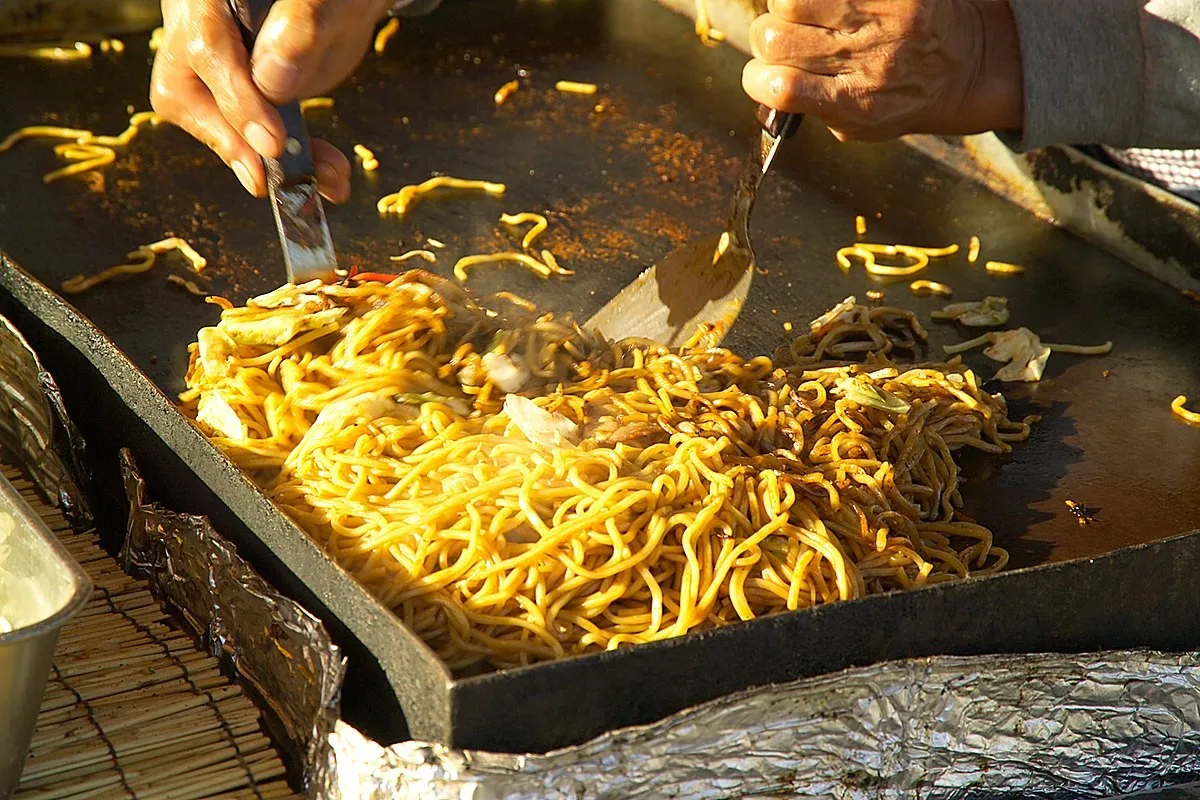
The yakisoba is a traditional dish of Japanese cuisine, widely appreciated around the world for its combination of strong flavors and varied ingredients. Although many people associate the dish with a quick preparation or even less nutritious options, the truth is that yakisoba can be healthy, depending on how it is prepared and the ingredients used.
Next, we will explore the benefits of this delicacy and how it can be part of a balanced diet.
What is Yakisoba?
Yakisoba, which literally means “fried noodles,” consists of stir-fried noodles with a mix of vegetables and proteins (such as beef, chicken, shrimp, or tofu), seasoned with typical sauces, such as soy sauce. This dish is versatile and can be adapted to individual dietary preferences and nutritional needs.
Benefits of Yakisoba
Source of Essential Nutrients
The ingredients of yakisoba typically include vegetables such as carrots, cabbage, broccoli, and bell peppers, which are rich in vitamins (A, C, and K), fiber, and antioxidants. These nutrients help strengthen the immune system, improve digestion, and combat free radicals.
Rich in Proteins
By including protein sources such as chicken, beef, shrimp, or tofu, yakisoba becomes a nutritionally complete option. Protein is essential for muscle building, tissue repair, and enzyme production.
Low in Fats, if Prepared Correctly
When prepared with healthy oils, such as sesame oil or olive oil, yakisoba can be a meal low in saturated fat. Excessive use of oils or processed sauces can be avoided to make it lighter and healthier.
Adaptable to Dietary Restrictions
Yakisoba can be easily adapted for vegetarian, vegan, or even gluten-free diets by replacing traditional noodles with options made from rice or spiralized vegetables, and choosing plant-based proteins.
Promotes Satiety
Thanks to the combination of carbohydrates, proteins, and fibers, yakisoba provides satiety, preventing excessive calorie consumption in other meals.
Versatility in Ingredients
The ability to vary the ingredients allows for the incorporation of different food groups and avoids monotony in the diet. Additionally, the dish can be adjusted to reduce sodium or calories by choosing homemade and less processed sauces.
Encourages Vegetable Consumption
For those who have difficulty consuming vegetables regularly, yakisoba is a tasty and practical way to introduce them into the diet, due to the balance between the flavors of vegetables, proteins, and seasonings.
Can Yakisoba Be an Unhealthy Option?
Despite the benefits, it is important to be careful with some common practices in the preparation of yakisoba that can make it less healthy:
Excess oil: The excessive use of oils in frying can raise the caloric content of the meal.
Industrial sauces: Many ready-made sauces have high sodium content and preservatives. Prefer homemade versions or those with less sodium.
Instant noodles: Although convenient, they may contain trans fats and additives. Opting for fresh or whole grain noodles is more advisable.
How to Make Yakisoba Healthier?
Choose whole grain or rice-based noodles to increase fiber content.
Reduce salt by using natural seasonings like ginger, garlic, and herbs.
Include a variety of vegetables to ensure a wide range of nutrients.
Opt for lean proteins, such as chicken breast, tofu, or seafood.
Avoid frying by steaming or sautéing the ingredients with little oil.
Conclusion
The yakisoba can be a healthy and balanced meal, as long as it is prepared with attention to the quality of the ingredients and the method of preparation. Its versatility allows it to adapt to different lifestyles and dietary preferences, making it an excellent option for practical and nutritious meals.
FAQ
Does yakisoba make you gain weight? Yakisoba is not, by itself, a food that makes you gain weight. It all depends on the amount consumed, the ingredients used, and the method of preparation. Versions with less oil and more vegetables are lighter and healthier.
Can yakisoba be consumed in weight loss diets? Yes, especially if the dish is adapted to contain more vegetables, lean proteins, and whole grain noodles, in addition to avoiding processed sauces.
Is it possible to make vegan yakisoba? Absolutely! Replace animal proteins with tofu, tempeh, or mushrooms and use egg-free noodles.
How many calories are in a plate of yakisoba? Calories vary depending on the ingredients and portions, but an average plate of homemade yakisoba can contain between 300 to 500 calories.Is yakisoba suitable for children? Yes, especially as it is a practical way to include vegetables in children’s diets. Adjust the seasonings to make it lighter and more pleasant to children’s palates.
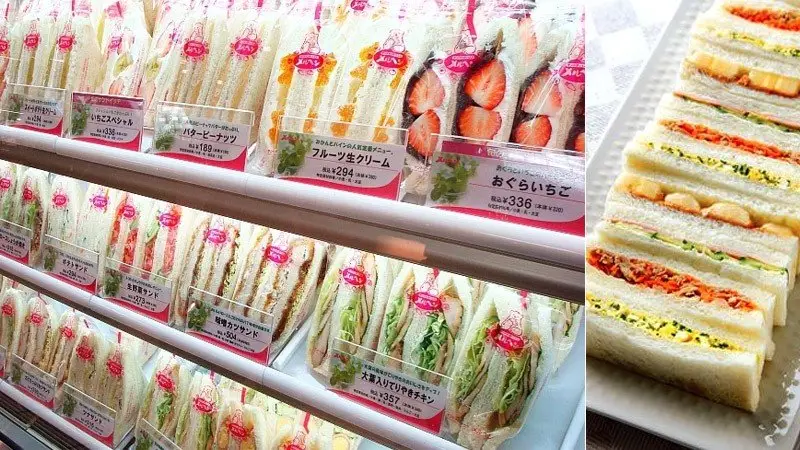
The sandwiches, known in Japan as sando (サンド), are more than just a simple adaptation of a Western dish. In Japan, they have transformed into a true culinary art, where the balance between texture, flavor, and presentation is taken seriously. From savory versions to sweet and unusual creations, Japanese sandwiches reflect the creativity and appreciation for the country’s typical gastronomy.
A striking feature of the Japanese sando is the use of extremely soft, white bread that is often crustless. This type of bread, known as shokupan, is the perfect support for fillings that range from the simplest to the most sophisticated. These sandwiches can be found in restaurants, konbini (convenience stores), and even in food trucks, delighting locals and tourists with their diversity.
Savory Sandwiches: Variety and Flavor
Savory sandwiches are a true celebration of flavors and textures, combining traditional Japanese ingredients with Western influences. Below, we explore some popular options:
Katsu Sando: A Masterpiece of Breaded Meat
The Katsu Sando is one of the most iconic sandwiches in Japan. Made with a succulent breaded pork cutlet, tonkatsu sauce, and soft bread, it is often served in elegant boxes, reflecting its popularity in sophisticated restaurants. Premium versions may include meats like wagyu, elevating the price and the dining experience.
Yakisoba Pan: The Combination of Noodles and Bread
Mixing fried Japanese noodles (yakisoba) with bread, this sandwich is a favorite among students and workers. It can be found in konbinis, usually cold, but is best enjoyed hot and fresh. The unique texture of the noodles contrasts perfectly with the softness of the bread.
Ebi Furai Sando: Crunch and Flavor of the Sea
For seafood lovers, the Ebi Furai Sando is an excellent choice. It features panko-breaded shrimp, with a layer of tartar or tonkatsu sauce, creating an explosion of flavor in every bite.
Other Japanese Sandwiches
Soseji Pan – A sandwich with sausage quite popular in Japan. The bread and sausage are baked together but it is consumed cold.
Kobe beef – Sandwich made with Tajima breed wagyu beef. A very juicy and famous meat with a hefty price tag.
Spaghetti Sandwich – Sandwich with a Neapolitan sauce, cheese, and pasta.
Mentaiko Sando – Mentaiko is a popular filling made from raw Pollock or cod roe marinated in a cold sauce that has an incredibly strong flavor.
Korokke – This sandwich is made from a Japanese dish inspired by French croquettes. Korokke is made by mixing chopped cooked meat, seafood, or vegetables with mashed potatoes or white sauce.
Ebi Furai Sando – Ebi Furai are panko-breaded and fried shrimp.
Sweet Sandwiches: Japanese Creativity in Fillings
Sweet sandwiches are a unique specialty of Japan, transforming simple ingredients into irresistible delights.
Ichigo Sando: Strawberries and Cream
This iconic sandwich combines fresh slices of strawberry with whipped cream and soft bread, being especially popular during the strawberry season. Its colorful appearance and delicate flavor make it a favorite among dessert lovers.
Dorayaki: A Pancake Sandwich
Although not technically a sandwich in the Western style, dorayaki features two pancake discs filled with anko (red bean paste). Modern varieties include fillings like Nutella, vanilla cream, and even fresh fruits.
Kit Kat Sandwich: Dessert Innovation
In a creative twist, Japanese fast-food chains have launched a sandwich that includes a Kit Kat bar between slices of bread, accompanied by crystallized fruit pieces like orange. This concept reflects Japan’s bold approach to reinventing classic flavors.
Other Japanese Sweet Sandwiches
Peanut cream – Unlike peanut butter, which is very famous in America, peanut cream resembles more of a whipped cream and is quite a different experience.
Fruit Sandwich – Not very popular but they exist. A sandwich made with assorted fruits and sweet cream.
Teri-Vani – A curious combination of teriyaki sauce and vanilla cream, representing the fusion of savory and sweet elements.
Where to Find and How to Enjoy
Japanese sandwiches can be found in various places, from konbini to specialized cafes. If you visit Japan, try different types and appreciate the attention to detail in each of them. For those who wish to recreate this experience at home, using high-quality bread and fresh ingredients is essential.
Sandwiches in Japan are not just fast food; they represent a part of Japanese culture that values innovation, flavor, and aesthetics. Whether you are a fan of savory or sweet flavors, there will always be a sando to delight your palate.
In Japan, the learning of kanji begins early, already in the first year of elementary school. Students dive into the universe of these complex and fascinating characters, starting with 80 essential kanji. These symbols, which represent ideas and sounds, are the foundation for mastering the Japanese language and play a crucial role in the culture and daily life of Japan.
The introduction to the study of kanji includes cultural and practical elements, as these characters are used in signs, books, and even in cartoons. Learning the kanji of the first year is more than a school obligation; it is a rite of passage that connects children to the history and future of Japan. Let’s explore what these kanji are, their meanings, and how they are taught.
What are the 80 kanji of the first year?
In Japan, the Ministry of Education defines a list of 80 kanji that children must learn in the first school year. These characters are carefully selected to introduce basic concepts of reading and writing. They include words related to nature, numbers, days of the week, and fundamental elements of daily life.
Examples of basic kanji:
一 (Ichi): Means “one” and is one of the first kanji learned.
山 (Yama): Represents “mountain,” connecting students to the geography of Japan.
月 (Tsuki): Symbolizes “moon” or “month,” being a frequent concept in calendars.
These kanji not only teach children to read but also to understand the ideas and images associated with them. This approach helps to create an emotional connection with learning.
Teaching methods in Japanese schools:
Ordered strokes: Teachers teach the correct order and direction of the strokes.
Flashcards: Use of visual cards to reinforce recognition.
Practical exercises: Children write the characters repeatedly to memorize them.
By the end of the first year, students can read simple words and sentences, which is an important milestone in their educational journey.
The cultural importance of initial kanji
The 80 basic kanji have a relevance that goes beyond the classroom. They reflect Japan’s connection to its history and culture, offering children an understanding of their national identity. Many of these characters are linked to nature and the cycles of time, concepts deeply rooted in Japanese life.
Kanji and the connection to nature:
川 (Kawa): “River” – symbolizes the relationship with water, essential for Japan.
雨 (Ame): “Rain” – a recurring and vital phenomenon in the archipelago.
木 (Ki): “Tree” – represents the vast woods and forests of Japan.
Historical facts:
The kanji were introduced to Japan from China, but they gained their own meanings and uses over the centuries. Many kanji taught in the first year reflect this adaptation, showing how Japan personalized this writing system to meet its cultural needs.
Learning these kanji early on is not just an educational requirement but a way to pass on values and traditions to the next generation.
How to continue learning kanji?
For those who wish to learn kanji like a Japanese student, it is essential to follow structured methods and persist with daily practices. The kanji of the first year are just the beginning of a path that involves about 2,136 characters necessary for complete literacy.
Practical tips for beginners:
Focus on strokes: Memorizing the correct order of strokes facilitates learning.
Use apps: Platforms like Anki or Quizlet help with memorization.
Practice reading: Read Japanese children’s stories to recognize basic kanji.
Learning resources:
Japanese textbooks: Many are available with illustrations and interactive exercises.
Educational videos: YouTube channels teach the meaning and writing of kanji.
Study groups: Joining online communities can help maintain motivation.
With dedication and the use of modern resources, it is possible to learn the 80 basic kanji and take the first steps on the path to fluency in Japanese.
The First 80 Kanji
See below the list of all the first Kanji and their meanings:
一 (ichi) – One
九 (kyū) – Nine
七 (nana) – Seven
二 (ni) – Two
人 (hito) – People
入 (nyū) – Entry
八 (hachi) – Eight
力 (chikara) – Power, strength
十 (jū) – Ten
下 (shita) – Below
三 (san) – Three
千 (sen) – Thousand
上 (ue) – Top
口 (kuchi) – Mouth
土 (do) – Soil
夕 (yū) – Evening
大 (dai) – Big
女 (onna) – Woman
子 (ko) – Child
小 (shō) – Small
山 (yama) – Mountain
川 (kawa) – River
五 (go) – Five
天 (ten) – Sky
中 (naka) – Middle
六 (roku) – Six
円 (en) – Yen
手 (te) – Hand
文 (bun) – Sentence
日 (nichi) – Day
月 (tsuki) – Month
木 (ki) – Tree
水 (mizu) – Water
火 (hi) – Fire
犬 (inu) – Dog
王 (ō) – King
正 (tadashi) – Correct
出 (izuru) – Out
本 (hon) – Book, origin
右 (migi) – Right
四 (yon) – Four
左 (hidari) – Left
玉 (tama) – Ball
生 (nama) – Raw
田 (ta) – Rice field
白 (shiro) – White
目 (me) – Eye
石 (ishi) – Stone
立 (tatsu) – Stand
百 (hyaku) – Hundred
年 (toshi) – Year
休 (kyū) – Holiday
先 (saki) – Previous
名 (na) – Name
字 (ji) – Character
早 (haya) – Early
気 (ki) – Care
竹 (take) – Bamboo
糸 (ito) – Thread
耳 (mimi) – Ear
虫 (mushi) – Insect
村 (mura) – Village
男 (otoko) – Man
町 (machi) – City
花 (hana) – Flower
見 (mi) – See
貝 (kai) – Shellfish
赤 (aka) – Red
足 (ashi) – Foot
車 (kuruma) – Car
学 (manabu) – Learn
林 (hayashi) – Forest
空 (sora) – Sky
金 (kimu) – Gold
雨 (ame) – Rain
青 (ao) – Blue
草 (kusa) – Grass
音 (oto) – Sound
校 (kō) – School
森 (mori) – Forest
The video below shows in detail how to write each kanji found in this article.
Japan, with its mountainous landscapes and diverse climate, offers a unique experience for snow lovers. Each region of the country presents distinct characteristics, from harsh winters with intense snowfalls to milder climates with sporadic snow. Understanding the snow calendar in each region not only helps tourists plan their trips but also reveals the cultural richness associated with this natural phenomenon. In this article, we will explore the Japanese regions where snow is most prominent and the period in which it occurs, highlighting the most famous destinations and related activities.
In addition to providing an incredible visual spectacle, snow in Japan has a significant impact on tourism, especially in winter. From the ski slopes in Hokkaido to the onsens surrounded by snow in Nagano, the snow season is eagerly awaited by locals and visitors alike. Discover below when and where the magic of snow happens in Japan.
How do you say Snow in Japanese?
In the Japanese language, the word for snow is yuki (雪). This snow, when it falls gently like powder, is valued for its lightness and softness, characteristics that make it one of the most delicate in the world. For ice, the term used is koori (氷).
Additionally, there are other expressions to describe phenomena related to snow. For example, kousetsu (降雪) specifically refers to snowfall, while the English word “snow” is also used in Japanese, written as スノー.
If we want to talk about a snowstorm or blizzard, we use the term fubuki (吹雪). For fresh or newly fallen snow, the appropriate word is shinsetsu (新雪), which captures the purity and renewal brought by the newly formed white blanket.
Snow in Japan generally occurs between late November and early March, depending on the region. The country has a varied climate, with notable differences between the north, where winter is harsher, and the south, where snow is rare. Below, we detail the main regions where this phenomenon can be appreciated:
Hokkaido: The snow capital of Japan
Hokkaido, the northernmost island of Japan, is known for its harsh and long winters, with snow starting as early as late October and extending until early April. Cities like Sapporo and Niseko are world-renowned for their ski resorts and winter events.
Snow calendar:
October: First flakes in mountainous areas.
November to February: Abundant snow, ideal for winter sports.
March: Snow begins to melt, but conditions for skiing still exist.
Main attractions:
Sapporo Snow Festival: Held in February, featuring impressive ice sculptures.
Skiing in Niseko: Considered one of the best skiing areas in the world.
Tohoku Region: Tradition and nature under the snow
Located north of the main island of Honshu, Tohoku is another region where snow is predominant. Here, winter begins in December and intensifies in January and February. The Zao mountains and outdoor onsens, such as Nyuto Onsen, offer unforgettable experiences.
Snow calendar:
December: Start of the season, with progressive accumulation.
January to February: Peak snow, with very low temperatures.
March: Snow declining, but still visible in mountainous areas.
Main attractions:
Snow monsters in Zao: Trees covered in snow that create unique shapes.
Winter festivals: Such as the Kamakura Festival in Akita, with illuminated snow houses.
Chubu Region: Where the mountains dominate
In central Japan, Chubu is famous for its imposing mountains and snowy landscapes. The areas of Nagano and Takayama stand out, with winter starting in December and extending until March.
Snow calendar:
December: Moderate snow in elevated areas.
January and February: Ideal conditions for winter sports and tourism.
March: End of the season, but with persistent snow in the mountains.
Main attractions:
Shirakawa-go village: Known for its traditional houses covered in snow.
Hakuba ski resorts: One of the most popular locations for international skiers.
Where does it not snow in Japan?
Although Japan is widely associated with snowy landscapes during winter, there are regions where snow is extremely rare or nonexistent. These areas are located in the southernmost part of the country, where the subtropical climate prevails. Among the main examples are:
Okinawa: Known for its paradise beaches and tropical climate, Okinawa practically does not record snow. During winter, temperatures rarely drop below 15°C, making the region a destination for those looking to escape the cold.
Kyushu (coastal areas): Although some mountainous regions of Kyushu may see light snow, coastal areas like Fukuoka and Kagoshima have mild winters, with little or no snow.
Shikoku (low areas): Similar to Kyushu, the low parts of Shikoku experience milder winters, and snow is a rare event.
Smaller islands: Small islands south of Kyushu and Shikoku, such as Amami Oshima, share Okinawa’s mild climate and almost never receive snow.
Although southern Japan, including Kyushu and Shikoku, receives little snow, there are exceptions in mountainous areas. Mount Aso in Kyushu may have light snow in January and February, but it is not common to find large accumulations. In these regions, winter is milder, and snow, when it occurs, is a cause for celebration.
Kyushu and Shikoku:
Late start, usually in January.
Light and fleeting snow.
Amazing landscapes when there is snow, especially in contrast to the tropical areas of the south.
What is the best month to see snow in Japan?
The snow in Japan is a magical time of year. From December to February, the country is covered by winter. For those who have never experienced the beauty of snow in Japan, it is an experience they will not soon forget.
When it comes to snowing in Japan, the most popular months are December, January, and February. During these months, snowfall is most common, although snow can still occur during the other winter months.
Overall, snowfall is most abundant in Hokkaido, the northernmost prefecture of Japan, located in the north of the country.
No matter where you are in Japan, the best time to see snow is generally in January or February. This is when the snowfall is most consistent and the snow accumulates the most.
What to do in the Snow of Japan?
When it comes to snow, Japan has a wide range of activities to enjoy. Skiing, snowboarding, and snowshoeing are some of the most popular activities, but there are also many other activities that are popular in the winter months. Some of these activities include snow tubing, sledding, ice skating, and snowmobiling.
If you are looking for a romantic winter getaway or just want to experience the beauty of snow in Japan, these months are the perfect time to visit. With the cold temperatures and beautiful snow, you are sure to make some unforgettable memories.
The cold temperature is perfect for frequently visiting onsens and bathhouses. Another thing to enjoy in Japan’s winter is the year-end illumination.
The snow season in Japan is a fascinating experience, varying widely according to the region. While Hokkaido and Tohoku are ideal destinations for winter sports lovers and snowy festivals, other areas like Chubu offer unique combinations of culture and landscapes. Plan your trip according to the calendar of each region and make the most of what the Japanese winter has to offer. Whether to ski, relax in an onsen, or explore snow-covered villages, Japan is an unforgettable destination in winter.
The Edo Period, also known as the Tokugawa Era (1603–1868), was a crucial moment in Japan’s history, marked by political stability, cultural growth, and economic expansion. During this time, the country organized itself into structured networks of roads and routes that connected cities, towns, and rural areas. These routes played an essential role in transporting people, goods, and culture, profoundly shaping Japanese society.
Among the most significant contributions of this period are the so-called Five Routes of the Edo Period (五街道, Gokaidō). They served as the main arteries of Japan, linking the capital Edo (modern Tokyo) to the rest of the country. Let’s explore each of them, their characteristics, functions, and historical importance.
Tōkaidō: The Busiest Route
The Tōkaidō, which literally means “Eastern Sea Road,” was the most important and busiest route of the Edo Period. Stretching about 500 km, it connected Edo to Kyoto, passing through 53 rest stations known as shukuba. These stops were essential for travelers, providing accommodations, food, and horse services.
Characteristics and Functions
Trade and Administration: The Tōkaidō was used for transporting commercial goods, official messages, and travel for the Tokugawa shogunate.
Art and Culture: It inspired various works of art, such as the prints “The 53 Stations of the Tōkaidō” by Hiroshige, which depict scenes of daily life along the road.
Religious Travel: Many pilgrims used this route to visit temples and shrines, such as the famous Ise Shrine.
Today, part of the old Tōkaidō has been transformed into the route of the famous Tōkaidō Shinkansen bullet train, a symbol of Japan’s modernization.
Nakasendō: The Mountain Route
The Nakasendō, or “Central Mountain Path,” was an alternative to the Tōkaidō for those who preferred to avoid coastal regions. With about 69 rest stations, this route traversed mountains and stunning landscapes, offering a different experience to travelers.
Highlights of the Route
Natural Scenery: The Nakasendō is known for its mountain, river, and forest landscapes, being popular among poets and artists of the time.
Safety: Being far from the coast, it offered greater protection against pirate attacks and adverse weather conditions.
Historical Preservation: Some villages along the Nakasendō, such as Magome and Tsumago, maintain their original charm to this day, attracting tourists interested in history.
The restored paths of the Nakasendō are perfect for modern hiking, providing a glimpse into ancient Japan.
Kōshū Kaidō: The Route of Wine and Silk
The Kōshū Kaidō connected Edo to the Kai region (modern Yamanashi). This route played a crucial role in transporting regional products, especially silk and wine, which were essential for the local economy.
The Influence of the Kōshū Kaidō
Regional Trade: It facilitated the export of agricultural and artisanal products, connecting rural economies to Edo.
Religion and Culture: Pilgrims and monks often used this road to access temples in the mountainous regions.
Rich Landscapes: The Kōshū Kaidō passed through vineyards and rice fields, offering unique views that can still be appreciated today.
The popularity of this route remains alive, especially due to the development of wineries in Yamanashi.
Ōshū Kaidō: The Gateway to the North
The Ōshū Kaidō was the main link between Edo and northern Japan. Although it was less busy than the Tōkaidō, it played a strategic role, connecting areas rich in natural resources and important for the defense of the shogunate.
Strategic Role
Natural Resources: It was used to transport timber, fish, and other resources from the north.
Cultural Connections: The road facilitated cultural exchange between Edo and remote regions.
Militarism: It served as a route for troops and supplies in times of conflict.
Today, parts of this route are still preserved, providing a rich historical experience.
Nikko Kaidō: The Spiritual Path
The Nikko Kaidō was built primarily to facilitate access to the Toshogu Shrine, dedicated to Tokugawa Ieyasu, the founder of the Tokugawa shogunate. Although it is the shortest of the Five Routes, its spiritual importance set it apart.
Unique Elements
Ceremonial Path: It was often used in religious processions and commemorative events.
Natural Beauty: The route passed through areas of dense forest, creating a serene atmosphere.
Toshogu Shrine: As the main destination, this shrine remains an architectural and historical landmark.
The Nikko Kaidō is perfect for those who wish to combine spiritual and historical tourism in a single trip.
Juku: The Rest Stops on the Edo Routes
Along the Five Routes of the Edo Period, the juku (宿) played an essential role as rest and support points for travelers. These locations were strategically positioned villages between the main stations of the routes, offering basic infrastructure to meet the needs of those traveling long distances.
What Were the Juku?
The juku functioned as stops equipped with inns, restaurants, and stables for horses. They were fundamental for logistics and safety on the roads, providing a place where travelers could rest, eat, and prepare to continue their journey. Some juku villages, such as Hakone-juku on the Tōkaidō, became famous for their landscapes or regional products.
The Structure of the Juku
Accommodation: Accommodations ranged from simple inns to luxurious lodges, depending on the importance of the route and the region.
Local Trade: Merchants took advantage of the juku to sell regional goods, such as crafts and food, to travelers.
Horse Services: Many stops included stables for changing and feeding horses, essential for messengers and merchants.
Cultural Relevance
In addition to their practical function, the juku also became centers of cultural exchange. People from different regions interacted at these points, exchanging stories, information, and ideas. This contributed to the strengthening of Japan’s cultural identity during the Edo Period.
Today, some of the ancient juku are preserved as tourist attractions, allowing visitors to experience the atmosphere of historical Japan.
Each route had a specific number of stops, known as shukuba-machi (宿場町). Below are some of the most notable on each of the routes:
Tōkaidō (53 Stations)
Nihonbashi (starting point in Edo, now Tokyo)
Kanagawa (near modern Yokohama)
Hakone (famous for its hot springs and mountainous landscapes)
Shizuoka (an important commercial center)
Kyoto (final point of the route)
Nakasendō (69 Stations)
Nihonbashi (shared with the Tōkaidō as the starting point)
Magome (preserved to this day as a tourist destination)
Tsumago (another iconic example of a restored historical village)
Karuizawa (now a popular mountain resort)
Kyoto (also shared as the final point with the Tōkaidō)
Kōshū Kaidō (44 Stations)
Nihonbashi (common starting point for the main routes)
Hachiōji (an important commercial and transportation center)
Enzan (in the vineyard region of Yamanashi)
Kofu (capital of the former Kai province)
Shimosuwa (connected to the Nakasendō)
Ōshū Kaidō (27 Stations)
Nihonbashi (again the starting point in Edo)
Senju (first stop outside of Edo)
Utsunomiya (a regional center still relevant today)
Shirakawa (entry point to northern Japan)
Matsushima (famous for its stunning coastal views)
Nikkō Kaidō (21 Stations)
Nihonbashi (as the starting point)
Kawagoe (called “Little Edo” for its architecture)
Urawa (now Saitama, an important suburb)
Imaichi (last station before the Toshogu shrine)
Nikkō (the final destination, with the grand Toshogu Shrine)
These stops were fundamental not only as rest locations but also as points of social and commercial interaction along the routes. Many of them are now preserved as historical landmarks, allowing visitors to explore a Japan that still echoes the past.
Conclusion
The Five Routes of the Edo Period were much more than mere roads. They connected Japan on economic, cultural, and spiritual levels, shaping the national identity in a lasting way. Today, they remain as witnesses of the past, attracting historians, tourists, and enthusiasts for their rich stories and stunning landscapes. Exploring these routes is to dive into a Japan that unites tradition and modernity.
The Japanese immigration around the world has left a rich cultural and social legacy, and along with it, terms emerged to describe the generations of Japanese descendants outside of Japan. Terms like Issei, Nissei, Sansei, Yonsei and Nikkei have origins in the Japanese language and are widely used to identify these generations. These concepts go beyond simple genealogical definitions, revealing stories of adaptation, cultural preservation, and identity evolution.
In this article, we will explore the meaning of nissei, sansei, and each similar term and their relevance in the historical and cultural context of Japanese communities around the world.
Issei (一世) refers to the first generation of Japanese immigrants. Literally, “Issei” means “first generation,” composed of the characters 一 (one) and 世 (generation). These individuals were born in Japan and emigrated to other countries, such as Brazil, the United States, Canada, and Peru, especially between the late 19th and early 20th centuries.
Characteristics of Issei
Language and culture: The Issei generally maintain a strong connection to Japanese traditions, including language, religion, and customs.
Initial challenges: They faced significant difficulties in adapting to new countries, such as language barriers, prejudices, and often harsh working conditions.
Legacy: They were fundamental in establishing Japanese communities around the world.
In Brazil, the first Issei arrived in 1908 aboard the ship Kasato Maru, initiating one of the largest Japanese diasporas outside of Japan.
Who are the Nissei?
The Nissei (二世), or “second generation,” are the children of the Issei. The term is formed by the characters 二 (two) and 世 (generation). Having been born outside of Japan, the Nissei generally grew up in a cultural duality, balancing the values inherited from their parents with the influences of the country where they lived.
Challenges and Achievements
Bilingualism: Many Nissei grew up speaking Japanese at home and the local language outside, although some lost fluency in Japanese.
Education: The Nissei often had greater access to education compared to their parents, allowing them to advance socially and economically.
Cultural integration: While they preserved Japanese traditions, they also helped shape Japanese identity in the societies where they lived.
The Identity of Sansei
The Sansei (三世), or “third generation,” are the grandchildren of the Issei. The term combines 三 (three) with 世 (generation). Born in foreign countries and often distanced from Japan, the Sansei frequently face a greater disconnection from Japanese culture.
Main Aspects
Cultural assimilation: Most Sansei strongly identify with the country where they were born, being less directly influenced by Japanese culture.
Renewed interest: Despite a possible cultural distance, many Sansei develop an interest in rediscovering their Japanese roots and traditions.
Active participation: This generation often promotes initiatives to preserve the cultural legacy, whether through festivals, studies of the Japanese language, or trips to Japan.
Yonsei: The Fourth Generation
Yonsei (四世) refers to the fourth generation of Japanese descendants. The term is formed by the characters 四 (four) and 世 (generation). This generation, generally born in widely globalized contexts, tends to be even more distant from Japanese traditions.
Characteristics of Yonsei
Hybrid identity: Many Yonsei have a multicultural identity, influenced by different backgrounds and social contexts.
New perspective: Although often distanced from Japanese culture, there is a growing interest in learning about family history and reconnecting cultural ties.
Family diversity: It is common for Yonsei families to be multicultural due to the increase in interethnic marriages.
What does Nikkei mean?
Nikkei (日系) is a broad term that refers to all people of Japanese descent living outside of Japan, regardless of generation. The word is composed of the characters 日 (sun or Japan) and 系 (lineage). While it includes Issei, Nissei, Sansei, and Yonsei, the term also encompasses mixed Japanese communities or people who identify with their Japanese heritage, even if distant.
Current Use of the Nikkei Term
Global unity: The term is used to unite Japanese communities around the world, such as the Brazilian Nikkei and the American Nikkei.
Cultural recognition: It helps preserve the identity and contributions of Japanese communities in various countries.
Internal diversity: It reflects the variety of experiences and degrees of connection to Japan.
Conclusion
The terms Issei, Nissei, Sansei, Yonsei and Nikkei not only describe generations but also encapsulate stories of struggle, adaptation, and cultural preservation. Each generation has faced unique challenges, contributing to the rich tapestry of Japanese communities around the world. These terms continue to be a symbol of heritage, uniting Japanese descendants in different parts of the globe in a shared sense of identity and belonging.
Japan, with its rich cultural tradition and dedication to excellence, also seeks prominence in world football. However, has the country ever won the biggest football tournament on the planet? Let’s explore the history of the Japanese national team in World Cups, both men’s and women’s, as well as highlight other important achievements of Japan in the sports scene.
To this day, Japan has never won the men’s World Cup. The Japanese national team, known as Samurai Blue, began competing regularly in the World Cups only from 1998. Although it has not won the title, Japan has shown significant progress, reaching the round of 16 in several editions and demonstrating great potential for the future.
Timeline of Men’s Participation:
1930 and 1934: Did not enter the tournament.
1938: Withdrew from participation.
1950: Banned by FIFA due to the consequences of World War II.
1954: Failed to qualify.
1958: Did not enter.
1962 and 1966: Failed to qualify.
1970 to 1994: Also did not qualify for any edition.
The first effective participation of Japan was in 1998, in France. Since then, the national team has competed in all editions, alternating between promising performances and frustrating eliminations.
Performance in Each World Cup:
1998 (France): Eliminated in the group stage without earning any points.
2002 (South Korea/Japan): First time as host, reached the round of 16, being eliminated by Turkey.
2006 (Germany): Again eliminated in the group stage.
2010 (South Africa): Reached the round of 16, but was eliminated on penalties by Paraguay.
2014 (Brazil): Eliminated in the group stage.
2018 (Russia): Advanced to the round of 16, but lost to Belgium in an exciting match 3-2.
2022 (Qatar): Defeated powers like Germany and Spain in the group stage, but was eliminated by Croatia on penalties in the round of 16.
Although Japan has not yet won the Cup, its evolution over the years is remarkable, reflecting the growth of football in the country. Unfortunately, the Japanese men’s team has never reached the finals of the cup.
automatic draft
Has Japan Ever Won the Women’s World Cup?
Yes, Japan has won a Women’s World Cup! The women’s national team, known as Nadeshiko Japan, won the title in 2011, becoming a historic milestone not only for Japan but also for Asian football.
Details of the Victory:
Year: 2011.
Location: Germany.
Final: Japan defeated the United States on penalties after a 2-2 draw.
Impact: It was the first Asian team to win the title, inspiring the growth of women’s football in the region.
Additionally, Japan was a finalist in 2015, losing to the United States 5-2 in the final. These results solidified the Japanese women’s national team as one of the powers in the sport.
Other Achievements of Japan in Football
In addition to its participation in World Cups, Japan has accumulated other achievements and notable performances in the football scene.
Asian Cups
Japan is one of the most successful countries in the Asian Cup, with four titles: 1992, 2000, 2004, and 2011.
These titles reinforce Japan’s position as a dominant force on the Asian continent.
Junior World Cup
In 1997, Japan won the Junior World Cup, showing that the country has a tradition of developing talent from the grassroots level.
Host of the 2002 World Cup
In 2002, Japan co-hosted the World Cup with South Korea, marking the first time the tournament was held in Asia. During this edition, Japan reached the round of 16, consolidating its presence in international football.
How is Japan known in the cup even without a title?
Despite not having won the men’s World Cup, Japan is respected on the global stage for its discipline, organization, and constant progress. Its success in women’s football and youth categories, along with its sports infrastructure, serve as examples for other countries.
Highlight Factors:
Development of the J-League: Since its founding in 1993, the Japanese league has been essential for the growth of the sport.
Investment in Youth: Training young players has been a priority.
Rising Stars: Names like Keisuke Honda, Shinji Kagawa, and Takefusa Kubo have raised Japan’s recognition.
Conclusion
Japan has not yet won a men’s World Cup, but it has made history in women’s football by winning in 2011. Furthermore, its progress on the global stage reflects a continuous investment in the sport, from grassroots to the main national teams. With the current pace of growth, it is possible that we will see Japan reach new heights in future editions of the tournament.
In Japan, the act of matching clothes with friends, partners, or family is much more than a matter of style. This practice, called Osoroi (お揃い), is an expression of unity, intimacy, and group harmony. Unlike in the West, where wearing matching outfits can be considered embarrassing, in Japan it is seen as a demonstration of closeness and even fun.
The word Osoroi derives from the verb sorou (そろう), which means “to become complete” or “to equalize.” In practice, the Osoroi code goes beyond fashion: it is a cultural representation of how the Japanese value the collective and belonging. This article explores the origins, meanings, and popularity of this fascinating trend.
The Origin and Meaning of Osoroi
The Osoroi is more than just a simple fashion style; it is a practice that reflects deep cultural values. In Japan, collectivity and harmony are fundamental virtues. From school days, Japanese children learn to wear uniforms, which symbolize equality and belonging. Thus, the idea of dressing similarly or identically to someone fits perfectly into this context.
Cultural Influence
The book The Japanese Mind, by Osamu Ikeno and Roger J. Davies, discusses how Japanese society prioritizes group harmony over individuality. This “group consciousness” manifests in practices like Osoroi, where dressing similarly expresses the emotional connection between people. In the context of couples, friends, and even families, the Osoroi is a visual gesture that symbolizes loyalty, solidarity, and closeness.
Adaptation to Social Media
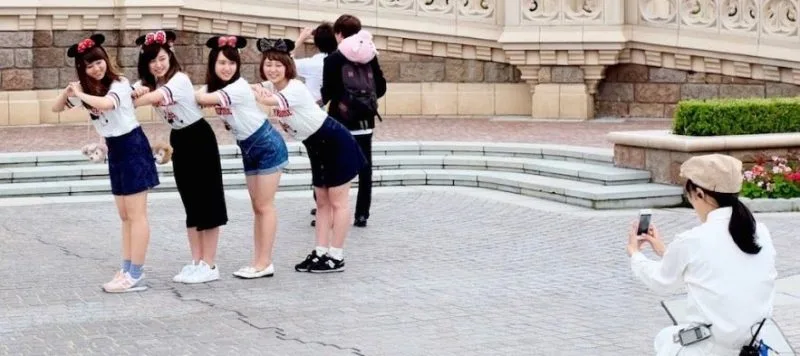
In addition to its cultural basis, the practice has gained popularity in the digital environment. Young and adult Japanese people embrace Osoroi to take harmonious and attractive photos, especially in tourist spots like the Tokyo Disneyland or DisneySea. These colorful and synchronized images stand out on social media, strengthening the trend.
How Osoroi Is Practiced
The Osoroi does not require special events to be adopted. Many practitioners incorporate the practice into everyday activities, such as going to the mall or beach outings. The flexibility in style is a strong point: combinations can range from identical clothing to pieces with similar patterns or colors.
Fashion Among Youth
The Osoroi is especially popular among young people, with greater adherence among girls. The practice is seen as a form of fun, in addition to expressing emotional connection. Many couples also use Osoroi as a way to demonstrate love and affinity, making it a modern alternative to Western romantic traditions.
Groups and Family
Entire families also participate in the trend, especially on special occasions or trips. This reinforces the idea of unity and creates visual memories that are often immortalized in album photos.
Japanese Fashion and the Collective
In Japan, the concept of dressing as a group dates back to the tradition of school uniforms. The uniformity of clothing has always been linked to the idea of creating group identity, and Osoroi continues this tradition in a creative and modern way.
Osoroi in Comparison to the West
While in Japan the Osoroi is a celebrated practice, in the West reactions can be mixed. Many people find it embarrassing to wear matching clothes with others, especially adults. However, events like themed parties or family games are exceptions.
In Japan, familiarity with school uniforms may explain the receptiveness to the idea of coordinated clothing. This practice transcends the simple act of dressing, becoming a form of visual communication.
Would You Wear Osoroi?
The Osoroi challenges the cultural norms of the West, encouraging a lighter and more fun approach to fashion. Participating in this practice can be a unique experience, especially when visiting Japan.
Japan is known for its traditions, discipline, and respect for the elderly. However, amidst a society that values the collective and self-control, a painful phenomenon has gained prominence: kodokushi (孤独死), or “lonely death.” This term describes the passing of individuals who spend their last moments alone, without family or friends noticing their absence. It is a growing social problem, especially among the elderly, but it also threatens other age groups.
This phenomenon symbolizes social disconnection in a nation facing the accelerated aging of its population and drastic changes in family ties. Despite government actions and community initiatives, kodokushi continues to expose the vulnerabilities of a country that, ironically, is also known for its devotion to collectivism.
The Causes of Kodokushi: A Modern Dilemma
Kodokushi is the result of a combination of cultural, economic, and demographic factors.
1. The Culture of “Gaman”
“Gaman” (我慢) is a principle deeply rooted in Japanese society. It advocates for stoic endurance of hardships without showing weakness or seeking help. Many elderly individuals, in particular, avoid bothering their relatives or neighbors, even in extreme need. This attitude, while admirable, often contributes to social isolation.
2. Impacts of the Economic Bubble
In the 1990s, Japan faced the collapse of the economic bubble, which resulted in high unemployment rates and early retirements. Many middle-aged workers were unable to reintegrate into the job market, and this financial instability made it difficult to maintain family or social relationships. Additionally, the increase in the number of single or divorced individuals further complicated mutual support in critical times.
3. Demographic Changes
Japan has one of the highest life expectancies but also one of the lowest birth rates. The aging population, combined with the decreasing number of children, has resulted in households consisting of only one person, particularly in urban areas. Without family support networks, many elderly individuals become vulnerable to loneliness and lonely death.
Efforts to Combat Kodokushi
Despite the seriousness of the problem, Japan has implemented measures to minimize kodokushi.
1. Community Initiatives
Local organizations and NGOs have promoted actions to check the well-being of elderly individuals living alone. In some neighborhoods, postal workers and service delivery personnel are encouraged to report any signs of prolonged absence or neglect in homes.
2. Technology as an Ally
Monitoring systems for the elderly are becoming increasingly common. Sensors installed in homes monitor daily activities, alerting family members or authorities in case of prolonged inactivity. These technologies, while useful, still do not replace the warmth of human interactions.
3. Awareness Campaigns
The government and private entities have invested in campaigns to encourage reconnection between generations and to motivate people to ask for help when needed. However, these campaigns face the challenge of overcoming decades of cultural norms and social stigmas.
Although kodokushi is more common among the elderly, young Japanese individuals are also vulnerable, especially hikikomoris — individuals who live reclusively for years. The trend towards isolation, combined with the decline in the number of marriages and birth rates, suggests that kodokushi could become an even broader problem in the coming decades.
To combat this phenomenon, it will be necessary not only to rethink public policies but also to revive the importance of community and family ties. Small gestures, such as visiting an elderly neighbor or maintaining frequent contact with relatives, can make a huge difference.
What lessons can we learn from kodokushi? And how can we ensure that no one around us faces a lonely death? These are reflections that transcend cultural boundaries and should lead us to act with empathy and solidarity.
Japan is a country full of stunning landscapes that combine lush nature with cutting-edge infrastructure. For adrenaline lovers, bungee jumping has become an unforgettable experience, offering incredible views while challenging personal limits. In this article, we explore the 10 best places for bungee jumping in Japan, highlighting their unique features and why they attract adventurers from around the world.
The History of Bungee Jumping in Japan
Although bungee jumping has its roots in ancient rituals of tribes in the Pacific, the modern practice arrived in Japan in the 1990s. Since then, the country has developed advanced safety infrastructure, becoming one of the preferred destinations for this activity. With mountain scenery, crystal-clear rivers, and even large cities, Japan offers options for all profiles of adventurers.
The locations vary from high bridges in tranquil valleys to urban platforms, always with a strict focus on safety. Each jump represents a unique combination of adrenaline and connection with nature.
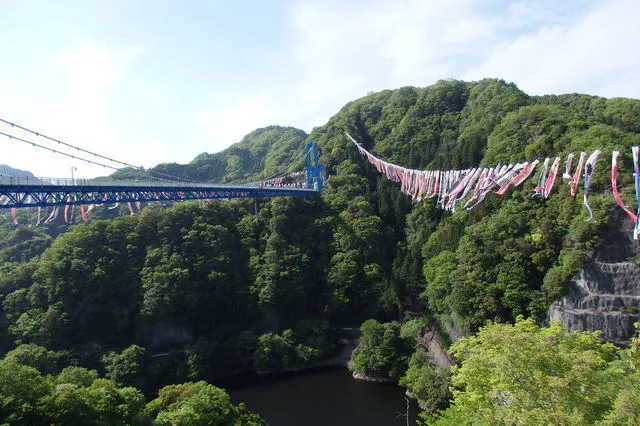
1. Ryujin Bridge, Ibaraki
Located in Ibaraki Prefecture, the Ryujin Bridge is one of the most famous places for bungee jumping in Japan. With an impressive height of 100 meters, it is perfect for those seeking an unforgettable experience.
Height: 100 meters.
Unique features: Panoramic view of Lake Ryujin and the surrounding mountains.
Differentials: Operated by one of Japan’s leading bungee companies, ensuring maximum safety.
The location is especially popular during autumn when the leaves of the trees tint the valley with vibrant shades of red and orange.
2. Minakami, Gunma
The city of Minakami, in Gunma Prefecture, is famous for both bungee jumping and hot springs (onsen). The jump takes place from a bridge 42 meters above a crystal-clear river.
Height: 42 meters.
Unique features: The view of the Tone River, one of the largest in Japan.
Differentials: Ideal for beginners due to the moderate height.
In addition to the jump, visitors can enjoy trails and relax in nearby onsens, making Minakami a complete destination for adventurers.
3. Sarugakyo, Gunma
Still in Gunma, Sarugakyo is a lesser-known but equally impressive location. The jump bridge is situated in a remote area, providing a more tranquil experience connected to nature.
Height: 62 meters.
Unique features: Absolute silence and uninterrupted views of dense forests.
Differentials: Ideal environment for those seeking isolation and adventure.
Local operators offer special packages that include photos and videos to capture the experience.
4. Itsuki Village, Kumamoto
The Itsuki Village, located in Kumamoto, is famous for its bungee jumping from the Kyusui stone bridge. This location offers a calm and natural environment, ideal for those seeking adrenaline surrounded by beautiful landscapes.
Height: 66 meters.
Unique features: Mountainous scenery and dense vegetation that create an immersive experience.
Differentials: Local operators are known for their attention to detail, ensuring maximum safety.
Additionally, the proximity of rivers and trails in the region makes the visit even more interesting for those wanting to explore nature before or after the jump.
5. Fuji, Shizuoka
In the city of Fuji, Fuji Bungy offers an unforgettable jump over the Suzu valley. This is the perfect location for those seeking adrenaline amidst Japan’s iconic landscapes.
Height: 54 meters.
Unique features: View of the lush green valley and nearby waterfalls.
Differentials: Well-organized operation and a team prepared to assist beginners and veterans.
Fuji Bungy is an excellent choice to include in an itinerary in Shizuoka Prefecture, especially due to its proximity to Mount Fuji. It is one of the most sought-after locations during the summer when the pleasant weather complements the adventure.
6. Kaiun, Nara
The Kaiun Bungy, located in the historic region of Nara, is a unique bungee jumping experience that combines adrenaline and culture. Situated near the Chougosonshiji Temple, this is the only bridge jump in the Kansai region.
Height: 30 meters.
Unique features: View of Mount Shigi and proximity to the temple founded by Prince Shotoku during the Asuka Period (592-710).
Differentials: The temple entrance is marked by Fukutora, the largest paper-mâché tiger in the world, offering a unique cultural setting.
The Kaiun Bungy is ideal for beginners who wish to experience bungee jumping in a safe and fascinating environment, surrounded by history and spirituality.
7. Yamba, Gunma
The Yamba Bungy, in Gunma Prefecture, provides an exciting jump from one of the most impressive bridges in the region. The jump platform offers a panoramic view of the river and the Yamba Dam reservoir, a marvel of engineering.
Height: 45 meters.
Unique features: Located on a bridge that symbolizes the construction of the Yamba Dam, with a total length of 494 meters.
Differentials: The experience includes the rental of a GoPro, allowing you to capture every moment of the adventure.
In addition to the jump, visitors can explore the area around the dam, known for its magnificent views and imposing structure.
8. Shintabisoko, Gifu
The Gifu Bungy is the largest bungee jump in Japan, located on the Shintabisoko bridge in the Tabisoko Gawa Valley. This colossal bridge is one of the largest in Japan, with a total length of 462 meters, and offers an impressive view of the V-shaped mountains.
Height: 215 meters.
Unique features: Exciting jump amidst majestic nature, with the river flowing hundreds of meters below.
Differentials: All participants wear a wing suit to enhance the flying sensation, and the rental of a GoPro is included in the price.
This jump is a unique experience for more experienced adventurers looking to challenge their limits in a breathtaking setting.
Japan is one of the most fascinating countries in the world, with a rich and complex history that shaped its unique culture. Among the many historical events that marked the trajectory of the archipelago, the unification of Japan and its relationship with the concept of colonization are intriguing and relevant themes to understand how the country became the cultural and political power we know today.
Despite its strategic location and numerous external influences, Japan was never colonized in the traditional sense, maintaining its sovereignty throughout the centuries. However, the process of unification of the archipelago was a long journey, marked by internal wars and the leadership of visionary historical figures. Let’s explore these crucial moments in Japanese history.
Was Japan colonized?
Unlike many countries in Asia and the world, Japan was never formally colonized by foreign powers. Although it was strongly influenced by neighboring civilizations, such as China and Korea, these cultural exchanges occurred organically and not through military imposition or territorial occupation.
A significant attempt at invasion was made by the Mongols in the 13th century, under the command of Kublai Khan. The Mongol forces attempted to invade Japan in 1274 and 1281, but both expeditions failed, mainly due to the storms known as “kamikaze” (divine wind), which destroyed much of the invading fleets.
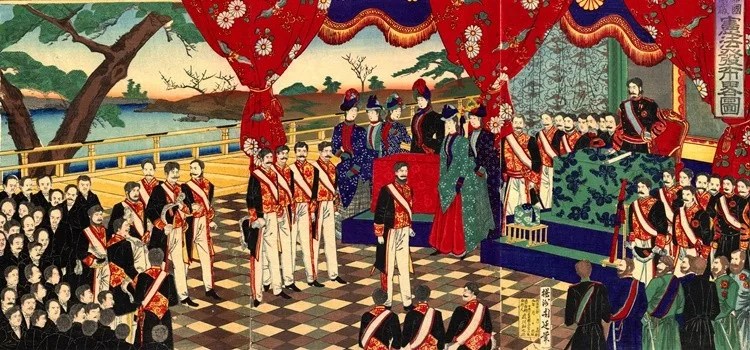
During the 19th century, Japan faced the pressure of Western imperialism, but instead of being colonized, it opted to modernize rapidly during the Meiji Period (1868-1912), adopting Western industrial and military practices to preserve its sovereignty.
External influences and cultural resistance
Although Japan avoided direct colonization, its history is marked by significant cultural exchange. The Japanese writing system, for example, is based on Chinese characters, and practices such as Buddhism also arrived in Japan through Korea and China. Nevertheless, the Japanese have always adapted these influences in a unique way, shaping them to their culture.
Furthermore, Japan maintained a policy of extreme isolation during the Edo Period (1603-1868), known as sakoku, severely restricting trade and contact with the outside world. This strategy was crucial in avoiding the fate of many other Asian countries that fell under colonial rule.
When was Japan unified?
The unification of Japan occurred in the late 16th century, during the tumultuous Sengoku Period (1467-1615). This period was marked by incessant wars among the daimyo, feudal lords competing for control of the lands and resources of the archipelago. Three historical figures played key roles in this unification process:
Oda Nobunaga: the beginning of unification
Oda Nobunaga was the first leader to initiate the unification of Japan. He employed innovative strategies on the battlefield and introduced firearms, which arrived in Japan through Portuguese traders. Nobunaga conquered large parts of central Japan and significantly weakened the power of militarized Buddhist temples, which represented an obstacle to his hegemony.
Toyotomi Hideyoshi: the consolidated strategist
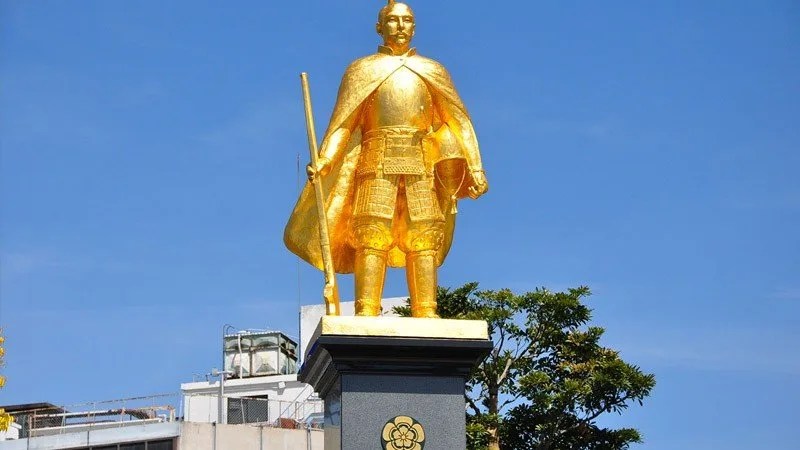
After Nobunaga’s death, Toyotomi Hideyoshi took over leadership and consolidated most of the Japanese territory under a single government. Hideyoshi implemented economic and administrative reforms that strengthened his authority, as well as establishing a rigid caste system that limited social mobility and ensured regime stability.
Tokugawa Ieyasu: the shogunate and lasting peace
The final step in unification came with Tokugawa Ieyasu, who won the decisive Battle of Sekigahara in 1600. In 1603, Ieyasu was appointed shogun, inaugurating the Tokugawa Shogunate, which ruled Japan for over 250 years. This period, known as the Edo Period, was marked by peace, stability, and isolation from the outside world.
The impact of Japan’s unification
The unification brought not only political stability but also significant cultural transformations. During the Edo Period, Japan developed a rich artistic tradition, including kabuki theater, ceramics, and haiku poetry. Furthermore, isolation allowed the country to preserve its cultural identity, preparing it to face the challenges of the 19th century as a strong and cohesive nation.
Historical legacy
The unification of Japan is a milestone that shaped the identity of the country as we know it today. This achievement, combined with resistance against colonization, made Japan an example of how a nation can maintain its sovereignty and cultural identity amidst external influences.
Conclusion
The history of Japan is a testament to its capacity for adaptation and resilience. Despite external pressures and internal challenges, the country was never colonized and managed to unify under strong and visionary leadership. These historical events not only ensured Japan’s independence but also laid the groundwork for its rise as a global power in the 20th century.
Rice is one of the pillars of Japanese culture, playing an essential role in the country’s diet and customs. From the breakfast to more elaborate dishes like sushi and mochi, the grain is indispensable on the Japanese table. Despite the gradual reduction of cultivated areas due to the aging agricultural population, rice production remains one of the most significant activities in Japan, with an annual harvest of approximately 10 million tons.
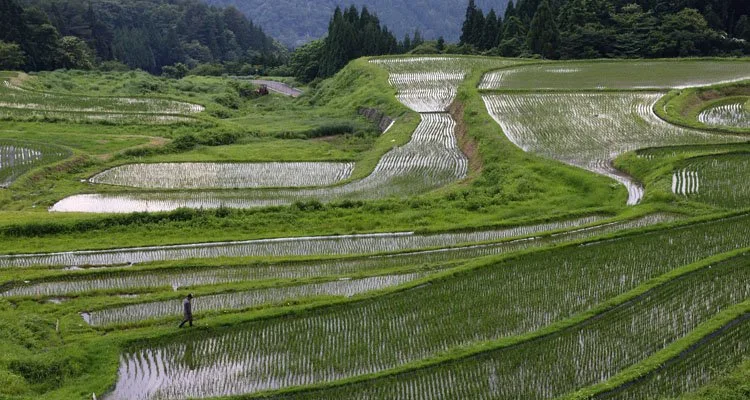
The rice fields, known as “terraced rice fields”, are spread throughout Japan, from alluvial plains to mountainous slopes. These fields are not only places of cultivation but also symbols of a tradition that dates back over 3,000 years and has profoundly shaped the landscape and identity of the country.
The History of Rice Cultivation in Japan
Rice production began in Japan about 3,000 years ago, introduced during the Jomon period. In the Edo period (1603-1868), rice was so important that its production was used as a measure of wealth, determining the economic status of feudal lords.
Currently, Japan has about 1.8 million families dedicated to rice cultivation, with the Hokkaido region leading national production. Despite economic and social transformations, rice remains a symbol of prosperity and fertility, reflecting its historical and spiritual importance.
How is Rice Cultivated in Japan?
Rice cultivation in Japan requires specific techniques and great attention to climatic and soil conditions. The country uses highly efficient methods to ensure the quality and productivity of the crop:
Terraced Fields and Flooded Areas
Rice is planted in flooded fields, known as “tanada,” which help maintain the proper temperature and humidity. These fields, often terraced, are a visual and functional spectacle, utilizing mountainous terrain.
Abundant Irrigation
Water is essential for rice growth. Well-developed irrigation systems ensure a constant flow of water, while modern techniques assist in the sustainable management of resources.
Harvesting and Drying
When the grains mature, acquiring a golden hue, the water from the fields is drained to facilitate harvesting. After harvesting, the rice is dried and processed before being packaged and distributed.
Rice Fields and Their Cultural Relevance
The rice fields are not just places of cultivation; they hold great cultural and spiritual significance in Japan. There are traditional beliefs, especially in the southern part of the country, that consider the fields as homes for spirits. According to traditions, loud noises could scare away these spirits, harming the fertility of the land.
Moreover, rice plays a role in ceremonies and celebrations. Throwing rice at weddings, for example, is a symbol of vows of abundance and happiness, a practice that has even influenced Western customs.
The rice fields, with their perfectly organized lines and reflections in the water, are also a visual attraction. They create stunning landscapes that enchant both locals and visitors, especially during the planting and harvesting seasons.
Rice in Japanese Daily Life
Rice is more than just food; it is a central element of Japanese cuisine and culture. Among the most common uses of the grain are:
Traditional Dishes: Onigiri, sushi, and donburi.
Beverage Production: Such as sake and amazake.
Sweets and Desserts: Mochi and other typical delicacies.
The versatility of rice reflects its importance in daily life and special events, ensuring that its cultural and economic relevance endures for generations.
Conclusion
Rice production in Japan goes beyond agriculture; it is a practice that connects the past to the present, tradition to innovation. Despite the challenges faced by Japanese agriculture, rice fields continue to be a living symbol of national identity, providing food and shaping landscapes that fascinate both locals and tourists.
If you have the opportunity to visit Japan, be sure to explore the rice fields, especially those in Hokkaido or the “tanadas” in mountainous regions, where the balance between man and nature is perfectly represented.
The fields are beautiful and add a certain charm to the city and the countryside. Our friend Santana’s video shows a bit of rice production and the beautiful fields, from the beginning to the harvest:
Japan, famous for its organization and efficiency, has a unique parking system adapted to the reality of the country, where space is scarce and the volume of vehicles is high. Whether in large cities or rural areas, drivers find options to park safely and conveniently.
In this article, you will learn about the different types of parking available, how to use them, and important tips to avoid unpleasant surprises.
Types of Parking in Japan
Japan offers a variety of parking options, adapted to the needs of each region and the available space. Here are the main types found:
1. Automated Parking (Tower Parking)
Automated parking, known as “Tower Parking,” is common in densely populated urban areas. These vertical systems allow multiple cars to be parked in reduced spaces. It works like this:
The driver positions the car on a platform.
The automatic system stores the vehicle in an empty compartment.
To retrieve the car, just use the ticket at the control machine.
These parking lots are ideal for those seeking convenience in regions like Tokyo and Osaka.
2. Coin Parking
Coin parking, or “coin parking”, is widely used for its simplicity. Here, drivers:
Park in a marked space.
Take a ticket or have the car locked by a bar on the ground.
Pay upon exit according to the duration of stay.
They are practical and are found in both urban areas and suburbs.
3. Surface and Underground Parking
Supermarkets, shopping malls, and train stations often offer underground or surface parking. Generally, the system is more traditional, with a ticket that must be validated before exiting.
These parking lots often offer free time for customers, especially in commercial locations.
How to Use a Parking Lot in Japan
Using a parking lot in Japan may seem complicated at first glance, but the system is quite intuitive. Here’s the step-by-step:
Locate the correct entrance: In large cities, entrances are marked with signs indicating availability of spaces and prices.
Park correctly: Make sure to position the car within the markings. In coin parkings, the wheel locking may occur automatically.
Take the ticket: In parking lots with machines, a ticket will be issued at the entrance. Keep it safe.
Upon exit:
Insert the ticket into an automatic machine.
Pay the indicated amount (coins, cards, and in some cases, apps like Suica are accepted).
How to Pay
Payment in parking lots varies according to the type. In automated systems, you typically:
Insert the ticket into a machine.
Make the payment with coins, bills, or prepaid cards.
Some machines also accept digital methods, such as apps or QR Codes.
Make sure to have change or transportation cards, like Suica, for greater convenience.
Tips for Parking in Japan
Avoid Fines: Never park on public roads without authorization. Enforcement is strict, and fines can be high.
Compare Prices: Prices vary by region. In central areas, parking can cost up to 500 yen for 15 minutes.
Keep an Eye on Time: Some parking lots have time limits or increase the rate after a certain period.
Validate the Ticket: In places like shopping malls, validate your ticket to get discounts or free time.
Plan Ahead: Use apps like Navitime to locate nearby parking and check availability.
Japanese Vocabulary about Parking
Here is a useful list of Japanese terms related to parking. This vocabulary can help you communicate and understand signs and instructions while driving in Japan.
Japan is home to a multitude of historic temples, each with its own beauty and cultural significance. These sites are popular destinations for those seeking to learn more about Japanese traditions and spirituality. Let’s explore 20 of the most famous temples, highlighting the essentials about each one.
How Many Temples and Shrines Are There in Japan?
Japan is a country filled with Buddhist temples and Shinto shrines, and the total number of these structures is impressive. It is estimated that there are more than 77,000 Buddhist temples and about 81,000 Shinto shrines spread across the country, totaling over 150,000 sacred sites.
The high quantity reflects Japan’s deep connection to its religious traditions. Buddhism, which arrived in Japan in the 6th century, and Shintoism, the native religion, coexist harmoniously. It is common for people to visit Shinto shrines for celebrations such as weddings or New Year and Buddhist temples for funerals and tributes to ancestors, which are often found in the same location.
Kinkaku-ji: The Golden Pavilion
The Kinkaku-ji, in Kyoto, is known for its exterior covered in gold leaf that shines brightly in the sunlight. Built in the late 14th century, it was originally a luxury residence before becoming a Zen temple. Surrounded by a lake and carefully designed gardens, the reflection of the pavilion in the water creates one of the most photographed scenes in Japan.
Senso-ji: The Ancient Temple of Tokyo
Located in Asakusa, the Senso-ji is the oldest Buddhist temple in Tokyo, dating back to the year 645. The iconic red lantern at the Kaminarimon gate is one of the city’s most recognized symbols. Nakamise Street, which leads to the temple, is ideal for exploring traditional shops and tasting local foods while walking to this historic landmark.
Fushimi Inari Taisha: The Temple of Red Gateways
Famous for its thousands of red torii gates that form tunnels through the mountains, Fushimi Inari Taisha, in Kyoto, is an important Shinto shrine dedicated to the goddess of rice and prosperity. Visitors can walk the trails leading to the mountain’s summit, passing by small shrines and stunning views.
Todai-ji: The Great Buddha of Nara
Todai-ji, in Nara, is famous for housing one of the largest bronze Buddha statues in the world. Built in the 8th century, the temple reflects the grandeur of Japan’s ancient capital. Its Nandaimon gate, protected by imposing guardian statues, is another must-see highlight.
Ryoan-ji: The Art of the Zen Garden
Also in Kyoto, Ryoan-ji is known for its zen garden, considered a masterpiece of minimalism. Composed only of stones and sand, the garden invites meditation and reflection. It is a place that exemplifies the simplicity and serenity of Japanese aesthetics.
Itsukushima: The Temple in the Water
On the island of Miyajima, the Itsukushima shrine is famous for its iconic floating torii gate, which appears to emerge from the sea during high tide. This Shinto temple, dating back to the 12th century, symbolizes the harmony between man and nature and is a UNESCO World Heritage Site.
Kiyomizu-dera: The Temple of Kyoto with Stunning Views
Located in Kyoto, Kiyomizu-dera is famous for its wooden balcony that juts out over a cliff, offering panoramic views of the city and surrounding mountains. Originally built in 778, the temple is dedicated to the goddess Kannon and is surrounded by cherry and maple trees, making it especially beautiful during spring and autumn.
Byodo-in: A Buddhist Refuge in Uji
Situated in Uji, near Kyoto, Byodo-in is known for the Phoenix Hall, a building that appears on the 10 yen coins. This 11th-century temple is a classic example of Heian Buddhist architecture and is surrounded by a mirror pond that reflects its timeless beauty.
Rinnō-ji: The Historic Temple of Nikko
Located in Nikko, Rinnō-ji is famous for its three large golden Buddhas and its importance as a Buddhist center in the region. Founded in the 8th century, it is one of the most visited temples in Nikko National Park, amidst stunning mountains and waterfalls.
Sanjusangendo: The Hall of a Thousand Statues
Another highlight in Kyoto, Sanjusangendo houses 1,001 statues of the goddess Kannon, each carved from wood with incredible detail. This 13th-century temple impresses not only with the number of statues but also with the spiritual impact of the site.
Ginkaku-ji: The Silver Pavilion
Also in Kyoto, Ginkaku-ji, or the Silver Pavilion, was inspired by Kinkaku-ji but with a more modest focus. Although the building was never covered in silver, the temple stands out for its zen gardens and landscaping that reflect the simplicity of wabi-sabi aesthetics.
Daigo-ji: A Historical Treasure
This Buddhist temple in Kyoto is famous for its five-story pagoda, the oldest in the city, and for its lush cherry blossoms during spring. Founded in 874, Daigo-ji is a UNESCO World Heritage Site and offers an experience of tranquility and connection with nature.
Enryaku-ji: A Complex in the Mountains
Located on Mount Hiei, near Kyoto, Enryaku-ji is one of the most important monasteries in Japanese Buddhism. Founded in the 8th century, it offers spectacular views and a serene atmosphere, ideal for meditation and spiritual exploration.
Horyu-ji: The Oldest Temple in Japan
Located in Nara, Horyu-ji is considered the oldest wooden temple in the world, dating back to the early 7th century. It is a UNESCO World Heritage Site and an architectural gem that offers a fascinating glimpse into ancient Japan, with its five-story pagoda and impressive historical collection.
Eikando Zenrin-ji: The Temple of Momiji
This temple in Kyoto is especially famous for its stunning display of red maple leaves in autumn. In addition to its seasonal beauty, Eikando features a unique statue of Amida Buddha looking back, a rare characteristic in Buddhist temples.
Kotoku-in: The Great Buddha of Kamakura
Located in Kamakura, Kotoku-in is known for its imposing bronze statue of Amida Buddha, which stands 13.35 meters tall. Built in the 13th century, the outdoor statue has withstood earthquakes and typhoons, symbolizing resilience and serenity.
Chion-in: The Temple of Jodo Buddhism
Home to the Jodo School of Buddhism, Chion-in, in Kyoto, features one of the largest wooden gates in Japan and a gigantic bell that is struck 108 times on New Year’s Eve. It is a grand location that reflects the importance of spiritual devotion in Japanese culture.
Zuigan-ji: Treasure of the North
Located in Matsushima, in Miyagi Prefecture, Zuigan-ji is famous for its meditation caves carved into the rock and its serene beauty by the sea. This 9th-century temple combines magnificent architecture with stunning scenery.
Tofuku-ji: The Bridge to Meditation
Another highlight in Kyoto, Tofuku-ji is known for its Tsutenkyo bridge, which offers spectacular views of the maple trees surrounding the temple. This site is ideal for meditation and relaxation, especially in autumn when the leaves transform into a colorful spectacle.
Kokedera: The Moss Temple
Also known as Saiho-ji, Kokedera in Kyoto is famous for its garden covered with over 120 species of moss. To visit, it is necessary to make a reservation and participate in a meditation session, making the experience even more special and introspective.
Tsurugaoka Hachiman-gu: The Center of Kamakura
This Shinto shrine in Kamakura is dedicated to the god of war, Hachiman, and is the heart of the city. Its iconic staircase and strategic location make it a vibrant cultural and spiritual meeting point.
Shokoji Temple – 聖光寺
This temple is located north of Lake Tateshina (蓼 科) and has about 300 Somei Yoshino cherry trees. The cherry trees of Shokoji temple bloom late because it is situated 1,200 meters above sea level where the temperature is lower than any other points in Honshu.
Joukouji Temple – 常光寺
The Joukouji temple is located in the city of Shiojiri in Nagano Prefecture. The population of the city is over 66,000 people.
Shitenno-ji: The First Temple in Japan
Located in Osaka, Shitenno-ji is considered the oldest Buddhist temple in Japan, founded in the 6th century by Prince Shotoku. Its structure follows a classic style with a five-story pagoda and a beautiful garden that symbolizes the Buddhist paradise. It is a historical landmark that represents the introduction of Buddhism to the country.
Ninna-ji: The Temple of Cherry Blossoms
Situated in Kyoto, Ninna-ji is famous for its late-blooming cherry trees, known as Omuro Zakura, which bloom later in spring. Founded in the 9th century, the temple is a UNESCO World Heritage Site and combines imperial architecture with zen gardens, creating an atmosphere of serenity.
Kennin-ji: The Temple of the Dragon
Located in Kyoto, Kennin-ji is the oldest zen temple in the city, founded in 1202. It is famous for its “Twin Dragon” painting on the ceiling of the main hall, as well as its beautiful zen gardens. This temple is ideal for those seeking a quiet place for meditation and artistic appreciation.
Chokoji Temple – 長興寺
The temple is located in the city of Shiojiri in Nagano Prefecture. The Buddhist temple belongs to the Soto sect and was founded in 1527. In the temple, you will find a beautiful garden and the blue pine mountain. Every month, the monks hold lectures on flowers, tea ceremonies, and the history of the site.
These temples and shrines represent the diversity and richness of Japanese heritage, each offering something unique, whether through architecture, landscape, or history. They are living witnesses to the spirituality and art that have shaped Japan over the centuries.
Japan is famous not only for its railway efficiency but also for its unique creations when it comes to themed trains. These true works of art on tracks offer delightful experiences that blend culture, entertainment, and stunning landscapes. Below, we present a list of 14 incredible themed trains that can only be found in Japan.
The Kotatsu Train – こたつ電車
The kotatsu train is found in Iwate, and as the name and the image at the beginning of the article already show, it is a train with a Kotatsu (a table with an electric cover). This way, passengers feel comfortable while traveling in winter.
The video below shows a bit of this beautiful train, along with an event that took place, where people dress up with the mask of the Lunar New Year devil.
The Tama Train – たま電車
The Tama train is found in Wakayama. As you can see, cats are the theme of this train. On this line, you find a stationmaster who is a cat. The video below shows a bit of this train.
Omeshi Ressha – お召列車
Omeshi ressha is the Emperor’s train and the Japanese royal family. Unfortunately, the train is rarely used, as the emperor usually travels more by plane and car.
Car Train
In Hokkaido, due to the lack of passengers in rural towns, the railway company decided to make a car train to avoid costs. The train not only looks like a car, but it can change in a few seconds and run like a car.
The Dog and the Cat
On the Ikoma Kintetsu line in Nara, people ride on a train that looks like a dog and a cat. These trains connect the Ikoma station with the Hozan-ji temple. The trains are known as Bull (dog) and Mike (cat). These are not the only unusual trains present in this city; there is also a train called “Do-Re-Mi” and another called “Sweet” that runs on the Sanjō line.
Pokémon With You Train
This train is a celebration for fans of all ages of the Pokémon franchise. Decorated with Pikachu and other characters, both inside and outside, it operates in the Tohoku region, an area famous for its natural beauty. With seats, windows, and even a themed game car, the journey is an immersive experience for Pokémon lovers.
Hello Kitty Shinkansen
This bullet train, entirely decorated with the Hello Kitty theme, operates on the route between Osaka and Fukuoka. From customized seats to spaces dedicated to photo sessions, it is a paradise for fans of the iconic kitten. The cute decoration and charming details make the journey unforgettable.
Ghibli Train – My Neighbor Totoro
Inspired by the world of Studio Ghibli, this themed train recreates the magical world of films like My Neighbor Totoro. Operating in areas near the Ghibli Museum, the train offers interiors decorated with iconic characters and soundtracks that transport passengers to a fantasy world.
One Piece Train
For anime fans, the One Piece train is a spectacle. It crosses the Kyushu region, honoring the famous pirate Monkey D. Luffy and his crew. Each car has a different theme related to the series, with opportunities for photos and exclusive souvenirs.
Naruto and Boruto Train
This themed train is a special collaboration with the world of Naruto and its successor Boruto. It operates in selected regions and displays art of the characters, iconic scenes, and even narrations recorded by the original voice actors of the series, providing an amazing experience for fans.
Thomas and Friends Train
Targeted at children, this train operates on the Oigawa line and offers a magical ride themed around Thomas and Friends. In addition to a design entirely inspired by the cartoon, the route passes through stunning rural landscapes, making it a perfect ride for families.
Seven Stars Banquet Train
Although it is not an exclusively themed train, the Seven Stars in Kyushu is a masterpiece of luxury and Japanese design. It offers high-level dining experiences and luxurious accommodations, allowing passengers to explore Kyushu in style.
Evangelion Shinkansen
This train is a true tribute to the iconic anime Neon Genesis Evangelion. Decorated with the design of the EVAs, it offers an immersive experience with customized cabins, exhibitions, and even a piloting simulation area.
Mickey Mouse Train
Perfect for Disney fans, this train operates on several lines near Tokyo Disneyland. With interiors decorated with Mickey Mouse and other characters, it is an extension of the park’s magic for those who visit.
The term stalker, of English origin, is widely used to describe people who develop an obsession with someone, leading them to persistently and often intimidatingly pursue their victims. Although this practice is not exclusive to Japan, the country faces cultural and social particularities that make the topic especially relevant. This article analyzes the impact of stalkers in Japan, the legal efforts to combat this behavior, and how society deals with this growing problem.
Stalking is a traumatic experience that primarily affects women, but men can also be victims. The phenomenon is exacerbated by the development of technology and social networks, which expand the possibilities for monitoring. In Japan, issues such as the sense of privacy, social expectations, and cultural barriers contribute to the complexity of this problem.
Who are the stalkers and what are their motivations?
In Japan, stalkers can be individuals known to the victim, such as ex-partners, coworkers, friends, or even family members. In other cases, they are complete strangers who develop a fixation based solely on a brief interaction or impression. The motivations for this behavior vary:
End of relationships: Many stalkers have difficulty accepting the end of a dating or marriage relationship.
Romantic rejection: Unrequited love is a common reason, especially when the stalker idealizes the victim.
Desire for control: Some people stalk to reaffirm emotional or physical dominance over the victim.
Psychological disorders: Disorders such as obsessive-compulsive disorder or psychopathy often drive this behavior.
The obsession of stalkers can manifest in various ways, from silent observations to explicit threats and violent acts. It is essential to understand that this practice is not just a matter of invasion of privacy, but can evolve into dangerous situations.
Stalkers and Japanese legislation
Japan has faced a significant increase in the number of stalking reports, resulting in advancements in public policies and legislation. The first specific law against stalkers was introduced in 2000, after high-profile cases exposed gaps in victim protection.
Current legal measures
Japanese legislation allows victims to report to local authorities, who can issue warnings or, in more serious cases, restraining orders against the stalker. A specialized group, composed of over 80 professionals, investigates and assesses the severity of each case. Depending on the evidence, the stalker can be arrested.
In 2013, a significant milestone was the tightening of laws, also covering online stalking. This change was motivated by the rise in cyberstalking cases, which allow stalkers to monitor their victims without direct physical contact.
Alarming statistics
According to the National Police Agency of Japan, nearly 20,000 stalking cases were reported in 2013. The numbers have been increasing annually, reflecting both a real rise in the problem and greater awareness among victims. It is concerning to note that, even with stricter laws, some cases result in serious violence, including homicides.
The types of stalkers and how to recognize them
Understanding the different profiles of stalkers helps identify problematic behaviors before they escalate. Although each case has its particularities, some patterns stand out:
Observer Stalker
Silently follows the victim, observing from a distance.
Marks times and places frequented by the victim.
Generally avoids direct contact but may evolve into other forms of stalking.
Intimidating Stalker
In addition to following, uses threats or violence to scare the victim.
Damages personal property or invades the victim’s space.
Intimidation may include aggressive messages or physical confrontations.
Psychopathic Stalker
Exhibits extreme behaviors, combining stalking and intimidation.
Often aims to cause physical harm or even death.
Usually someone close to the victim, such as an ex-partner.
Obsessive Stalker
Motivated by an obsessive love, often unrequited.
Although less dangerous compared to other types, can cause deep emotional suffering.
These profiles are not definitive but help raise awareness about the diversity of behaviors associated with stalking.
The Danger of Stalking in the Idol World
In Japan, the world of idols is characterized by a close and idealized relationship between the artists and their fans. This proximity, promoted by events such as photo sessions and greetings, creates a vulnerable environment for the emergence of stalkers. Many pursuers develop a sick obsession, believing they have a special connection with the idol. This illusion can lead to dangerous behaviors, such as constant monitoring, sending threatening messages, and even violent acts.
One of the factors that exacerbate this situation is the extensive use of social media by the idols. Although it is an essential tool for keeping in touch with fans, it also facilitates tracking their routines. High-profile cases, such as that of Mayu Tomita, who was attacked by a fan after rejecting a gift, show how the lack of barriers can have serious consequences. To protect the artists, agencies have implemented measures such as increased security at events and restrictions on what is shared online, but the problem persists as a constant risk.
In addition to the responsibility of the agencies, society needs to confront the obsessive behavior that turns fandom into something dangerous. Invasive behaviors should not be normalized, and ongoing efforts are necessary to protect the idols, ensuring they can pursue their careers without fear or risk to their safety.
Young Students and Vulnerability to Stalking
Students, especially high schoolers, are among the most vulnerable groups to stalking in Japan. The local culture, which often idealizes youth and school uniforms, contributes to this vulnerability. Older individuals, known as chikan or other stalkers, often follow girls on school routes, train stations, and even near their homes.
Stalking in schools is not limited to the external environment. Cases involving classmates or even teachers are not uncommon. Victims may face social pressure not to report, fearing retaliation or judgment. This creates a cycle of silence that favors the stalkers. School campaigns have sought to educate young people about the signs of stalking and the importance of reporting any suspicious behavior, but cultural change is slow.
Protecting students requires a joint effort from families, schools, and authorities. In addition to education on digital and physical safety, the installation of cameras and patrols in at-risk areas are fundamental measures.
Awareness and prevention
In Japan, awareness campaigns have been launched to inform the population about the signs of stalking and the legal measures available. Local organizations and NGOs also provide psychological and legal support for victims.
Simple measures can help prevent or deal with stalkers:
Avoid sharing personal information online.
Report suspicious behaviors immediately to the authorities.
Seek psychological support to deal with emotional impact.
Strengthening support networks, combined with stricter and more effective laws, is essential to combat stalking in Japan and anywhere in the world.
Stalking is a global problem that challenges laws and society. In Japan, cultural nuances and the legal structure play fundamental roles in how the country addresses this issue. Despite advancements, there is still much to be done to protect victims and efficiently punish offenders. More than a legal issue, stalking is a violation of human rights that requires constant attention and joint efforts.
The Japanese language is fascinating, and one of its most interesting aspects is the way emotions are expressed in a rich and varied manner. Today, we will explore some Japanese expressions that correspond to feelings such as surprise, compliments, and doubt. Often, these expressions have unique nuances that reflect Japanese culture, ranging from simple words to informal slang. Check out our detailed analysis!
How to Express Surprise
In Japanese, surprise can be communicated in various ways, depending on the context and level of formality. Here are some of the main expressions:
“Really?” or “Is that so?”
These questions, common in Portuguese, have interesting equivalents in Japanese. Some options include:
本当? (Hontou?) – “Is it true?”
本当に?(Hontouni?) – “Really?”
本気?(Honki?) – “Are you serious?”
まじで?(Majide?) – Slang for “Really?” used in informal contexts.
そうなんですか?(Sōna ndesu ka?) – “Oh, is that so?” with a more polite tone.
These expressions show how surprise can be demonstrated at different levels of formality, reflecting the relationship between the speakers.
To describe something truly impressive, see these options:
素晴らしい!(Subarashī!) – “Wonderful!”
お見事!(O migoto!) – “Well done!” used to congratulate specific efforts.
よくやった!(Yoku yatta!) – “Good job!” or “Well done!”
These expressions are widely used to recognize achievements or something impressive, both at work and in everyday situations.
Doubts and Agreements: Expressions for Social Contexts
Demonstrating doubt or agreement in Japanese is also a culturally significant aspect, especially in formal interactions.
“Exactly!” or “Certainly”
To show agreement, these expressions are quite useful:
その通り!(Sonotōri!) – “Exactly!” or “I completely agree!”
もちろん!(Mochiron!) – “Of course!” or “Certainly!”
もちろんだよ!(Mochironda yo!) – “Of course!” with a more informal tone.
“Interesting”
A common word to express interest is:
面白い。(Omoshiroi.) – “Interesting.” or “Funny.” depending on the context.
“Perfect!”
When something is flawless, one can say:
完璧だ!(Kanpekida!) – “Perfect!”
バッチリ!(Batchiri!) – Slang for “Exactly!” or “Perfect!” used casually.
The Importance of Cultural Context
It is important to remember that Japanese is a language full of nuances, and the choice of the right expression depends on the social context and the relationship between the speakers. In formal situations, avoid slang like まじで?(Majide?) and prefer something more polite like 本当ですか。(Hontou desu ka?). On the other hand, in casual conversations among friends, more informal expressions bring a touch of closeness and relaxation.
Did you enjoy these expressions? They are just a sample of the many ways to convey emotions in Japanese. If you know more interesting expressions, share them in the comments!
The Ice Sculpture Festival at Matsumoto Castle is one of the most impressive events in Japan. Held annually in winter, the festival combines the natural beauty of the season with Japanese cultural tradition, attracting visitors from all over the world. Situated at the famous Matsumoto Castle, also known as the “Crow Castle” due to its dark walls, the event offers a magical setting, especially when the ice sculptures are illuminated at night.
In addition to the artistic display, the festival celebrates the mastery of sculptors, who transform huge blocks of ice into true works of art. It is an unmissable experience, where the historical architecture of the castle and the crystalline glow of the ice create a unique visual harmony.
The history of the Festival
The festival began in the 1980s as a way to promote local tourism during the colder months. The choice of Matsumoto Castle as the venue for the event was strategic, given its historical significance and prime location in the Japanese Alps. Over the years, the festival has grown, becoming a landmark in Matsumoto’s cultural calendar.
During the event, teams of ice sculptors, both professional and amateur, compete to create sculptures inspired by Japanese culture, nature, and even modern themes. The festival not only promotes local talent but also attracts international participants, enriching artistic diversity.
Matsumoto Castle, with its rich history dating back to the 16th century, serves as the ideal backdrop. The wintry atmosphere, with snow covering the surrounding scenery, further enhances the experience for visitors.
Attractions and activities of the festival
Ice sculptures and competition
The heart of the festival is the ice sculpture competition. Participants start working before sunrise, carving detailed shapes ranging from mythical figures to architectural replicas. The sculptures, some over two meters tall, are judged based on creativity, technical precision, and visual impact.
At night, the works come to life with special lighting, creating a stunning spectacle that attracts photographers and art admirers.
Cultural and culinary experience
The festival offers more than sculptures; it is a celebration of Japanese culture. Visitors can participate in sculpture workshops, where they learn basic techniques and create their own mini ice sculptures. Additionally, food stalls offer typical winter dishes, such as nabe (hot pot) and hot sake, perfect for combating the cold.
Fun for the whole family
For those traveling with children, there are areas dedicated to interactive activities, such as ice slides and sculptures that can be touched. These attractions make the event accessible and fun for people of all ages.
How to plan your visit to the festival
When does it take place?
The Ice Sculpture Festival usually takes place in January, when temperatures in Matsumoto are lower, ensuring that the sculptures remain intact. The official schedule is announced in advance, allowing visitors to plan their trip.
How to get there?
Matsumoto is accessible by train from Tokyo, with a journey of approximately 2.5 hours on the JR Azusa line. The city is also well connected to other parts of Japan, such as Nagano and Takayama. Matsumoto Castle is a short walk from the central station.
Tips to make the most of it
Dress appropriately for winter; temperatures can drop below zero.
Visit the festival both during the day and at night to appreciate the sculptures from different perspectives.
Book accommodation in advance, as the city receives many tourists during this time.
The Ice Sculpture Festival at Matsumoto Castle is a magical experience that combines art, history, and culture. Whether to admire the sculptures, learn more about Japanese traditions, or simply enjoy the unique atmosphere, the event promises to enchant all visitors.
The video from our friend Santana shows a little more about this Beautiful Festival:
Learning Japanese can be a challenging task, but also extremely rewarding. One of the most effective and fun ways to practice reading and become familiar with the language is through manga. With its informal language, full of slang and dialects, and the visual support of illustrations, manga makes learning lighter and more engaging. Many of them also include furigana — small characters above the kanji that indicate their reading —, making it easier for beginners to understand.
In addition to being great study tools, manga also offers a unique cultural immersion. They reflect important aspects of daily life, traditions, and values of Japan. This is essential, as understanding Japanese culture is a key piece to mastering the language.
Below, check out a selection of manga that will not only enrich your vocabulary but also open a window to the fascinating Japanese cultural universe.
Why is reading manga so effective for learning Japanese?
In addition to providing entertainment, manga are valuable tools for several reasons. First, they offer contextualized language, allowing you to see how words and expressions are used in real situations. Second, the presence of images helps to understand the context even when some words are unknown.
More importantly, manga allows you to absorb Japanese culture while studying the language. Cultural terms, festivals, traditions, and even forms of etiquette are present in almost every story, making learning more complete and meaningful.
With a captivating narrative and a touch of mystery, Detective Conan is a fantastic choice for those who want to learn Japanese while having fun. The story follows Shinichi Kudo, a young detective who, after being poisoned, is transformed into a child. Under the pseudonym Conan Edogawa, he continues solving cases while keeping his identity a secret.
The manga is known for its diverse setting, exploring different regions and cultures of Japan. The variety of characters brings with it a rich repertoire of expressions and even regional dialects, such as the kansai-ben of Hattori Heiji, from Osaka. Furthermore, the language is clear and objective, making it accessible for those who are still getting used to the language. The furigana present in the texts further facilitates reading.
Yotsubato! (よつばと!)
Yotsubato! is the perfect choice for those looking for a light, fun manga with simple language. It follows Yotsuba, an adorable 5-year-old girl who lives everyday adventures with her father in a quiet Japanese town.
The plot is a celebration of the small joys of life, from learning about the seasons to exploring the world around her. The simplicity of the story is reflected in the vocabulary, which is ideal for beginners. Additionally, the rural setting offers a charming glimpse into the Japanese countryside, allowing the reader to discover less explored aspects of the country’s culture.
Works like Yotsubato! are ideal for those who are starting, as they combine learning new kanji with an engaging and visually rich approach.
Nihonjin no Shiranai Nihongo (日本人の知らない日本語)
For intermediate students who want to go further, Nihonjin no Shiranai Nihongo is an essential manga. It narrates the experience of a young Japanese teacher who teaches the language to foreigners but ends up discovering peculiarities of the language that even she didn’t know.
The work is rich in curiosities about the Japanese language, addressing everything from the origin of certain terms to idiomatic expressions and common mistakes made by foreigners. The dialogues are filled with cultural and linguistic nuances, offering a unique opportunity to deepen your knowledge of the language.
With only four volumes, the manga is short but packed with useful content for those who want to better understand the complexities of Japanese and how it is used by natives and foreigners.
Shirokuma Cafe (しろくまカフェ)
This manga is perfect for beginners. The story follows the daily life of a café run by a polar bear and frequented by other animals and humans. With simple dialogues and everyday situations, Shirokuma Cafe presents easy and fun vocabulary, ideal for those who are starting to study Japanese. The furigana facilitates reading, and the light tone keeps the reader engaged.
Chibi Maruko-chan (ちびまる子ちゃん)
A classic of Japanese pop culture, Chibi Maruko-chan depicts the daily life of a young student named Maruko and her family. With simple language and lots of furigana, this manga is a great choice for learning common expressions and slang used by children and Japanese families. It also brings cultural aspects from the 70s and 80s, helping the reader understand everyday life in Japan in a historical and fun way.
One Piece (ワンピース)
Although it is a longer manga with varied vocabulary, One Piece is an excellent choice for intermediate and advanced students. The epic story of Luffy and his crew explores various settings and characters, introducing a rich variety of dialects, speech styles, and slang. The themes addressed — such as friendship, dreams, and adventure — make the reading engaging, and the furigana present helps in understanding the more complex kanji.
Bakuman (バクマン。)
Written by the same authors of Death Note, Bakuman is a story about two young men who aspire to become mangaka (manga authors). This manga is especially interesting for advanced students who want to learn more about the manga industry and the technical vocabulary related to the publishing world. Additionally, it features realistic dialogues, ideal for those who want to improve their fluency.
Doraemon (ドラえもん)
One of the most iconic mangas in Japan, Doraemon is perfect for beginners. The story follows Nobita, an unlucky boy, and Doraemon, a robot from the future who helps him with technological inventions. The simplicity of the vocabulary, the constant use of furigana and the family themes make the reading educational and fun.
Japan is known for social phenomena that spark curiosity and controversy. One such phenomenon is Enjo-kōsai (援助交際), translated as “assisted relationship.” This practice generally involves girls between the ages of 13 and 17 or married women who accept money or luxury gifts in exchange for companionship with older men. Although it often does not include sexual activity, Enjo-kōsai is the subject of intense debates about morality, materialism, and female independence.
What is Enjo-kōsai?
The term Enjo-kōsai, often abbreviated as enkō, refers to an arrangement in which girls or women offer their companionship in exchange for material benefits. Common activities include dinners, trips to karaoke, outings to the cinema, or even simple walks holding hands. Although sex is not mandatory or expected in many cases, the line between companionship and prostitution is thin, leading to confusion and stigmas associated with the practice.
Different forms of participation
Pure companionship: Girls or women simply accompany clients in social activities, without intimate physical contact.
Limited exchange: Some engage in light affectionate interactions, such as holding hands or flirting.
Extreme cases: Although rare, there are situations where sexual favors are exchanged, leading to debate about the relationship between Enjo-kōsai and child prostitution.
A study conducted by the Asian Women’s Fund in 1998 revealed that less than 10% of the girls interviewed had participated in Enjo-kōsai. However, 90% of them expressed discomfort with the idea of engaging in material exchanges for sexual favors.
Social and cultural factors behind Enjo-kōsai
Materialism and the pursuit of status
Japan is a highly consumerist society, where luxury brands symbolize status and social acceptance. Many young women, influenced by social pressure, seek expensive products such as designer bags, cutting-edge smartphones, or exclusive makeup. To achieve this, they turn to Enjo-kōsai as a means of support, especially if they do not have access to their own income.
Female independence or loss of values?
Although critics argue that Enjo-kōsai reflects moral degradation and an excessive focus on materialism, some girls see the practice as a form of empowerment. For them, deciding on the use of their bodies and earning money without relying on family or traditional employment is an act of independence.
On the other hand, traditional Japanese society values qualities such as modesty and submission in women. The practice of Enjo-kōsai is seen as a deviation from these virtues, raising concerns about its impact on the upbringing of future wives and mothers in Japan.
Enjo-kōsai in the media: Representations and controversies
The Japanese media portrays Enjo-kōsai predominantly negatively. Dramas, novels, and TV shows often depict young women desperate for money who engage in the practice, only to face severe emotional or social consequences.
Stigmas and dangers explored in fiction
Redemption stories: Some narratives show girls abandoning Enjo-kōsai after interventions from friends or family.
Exposure of risks: Others emphasize the dangers, such as abuse, blackmail, or loss of reputation.
Veiled prostitution: Films and reports often associate Enjo-kōsai with child prostitution, increasing the stigma surrounding participants.
Although these representations are based on real cases, experts argue that they reinforce stereotypes and do not capture the complexity of the practice.
Legislation and legal limits
Prostitution has been illegal in Japan since the 1950s, but the legal definition is limited to explicit sexual contact between genitalia. Therefore, Enjo-kōsai escapes legislation when it does not involve direct sex.
Protection of minors
In the 1990s, special laws were created to combat the exploitation of minors, but Enjo-kōsai still operates in a gray area. The age of consent in Japan varies from 13 to 17 years, depending on the province, making it difficult to legally prosecute those involved.
Legal risks for clients
If a client explicitly pays for sex with a minor, he may be charged with child exploitation. However, the indirect format of the transactions makes it difficult to prove criminal intent, complicating law enforcement.
Social impacts and final reflections
Enjo-kōsai reflects the tensions between traditional values and modern pressures in Japan. For many, it is a symptom of a materialistic society that prioritizes material goods over genuine human connections. For others, it is a form of adaptation to the financial and social demands of a constantly changing world.
The practice continues to divide opinions, but it is undeniable that it exposes the inequalities and challenges faced by young women in Japan. Awareness initiatives, support programs, and cultural changes are essential to address the underlying causes of Enjo-kōsai, helping these young women find safer and more sustainable alternatives to achieve their independence.
Japan is divided into 47 provinces or prefectures, each composed of cities, towns, and villages. Interestingly, all these provinces have their own flags, reflecting cultural, historical, or natural elements of the area. Just like the Japanese national flag, the flags of the provinces are marked by simplicity and symbolism.
Each of them combines colors, shapes, and stylized symbols — such as kanjis (ideograms), hiraganas, and katakanas — that carry unique meanings. Let’s explore the design of some of these fascinating flags and what they represent.
Simple Design and Deep Meaning
The flags of the Japanese provinces follow a minimalist pattern, generally featuring:
Solid background colors: Often associated with the identity of the province.
Stylized symbols: Based on elements like letters of the Japanese alphabet, natural shapes, or historical references.
These elements are carefully chosen to reflect cultural aspects, such as nature, geography, and history of each region.
Flags with Hiragana
Some flags use stylized hiraganas, which gives a unique and representative touch to their provinces:
Aichi: Features the three hiraganas of its name (あいち) in a stylized form, symbolizing harmony and unity.
Fukuoka and Fukushima: The first hiragana of their names is transformed into symbols that capture the identity of the region.
Kōchi: Its flag features the hiragana とさ (Tosa), the ancient name of the province, connecting past and present.
Flags with Katakana
Other provinces opt for katakanas, another Japanese writing system, to create modern and distinct symbols:
Hiroshima and Akita: Use the first katakana of their names as the basis for the design.
Chiba and Fukui: Stylize the full name in katakana, highlighting the unique identity of the province.
Shimane: Uses the katakana マ (ma) four times, forming a visually interesting design.
Kanji on the Flags
Some provinces use stylized kanjis, representing specific aspects of their history or geography:
Kyoto and Okayama: Choose to use only the first kanji, representing their essence in a simplified form.
Tochigi: The flag combines the kanjis 栃 (Tochi) and 木 (Gi), reflecting the full name of the province.
Yamaguchi and Ishikawa: Incorporate their stylized kanjis into minimalist designs, highlighting important local elements.
Natural and Historical Symbols
Other flags represent specific natural or historical elements of the region:
Yamagata: Features three stylized mountains, symbolizing the local geography, as well as the Mogami River, which flows through the province. The blue of the flag represents peace, while the white symbolizes snow and purity.
Tokyo: Displays a sun symbol, representing development, on a traditional purple background. Tokyo also has a second symbol, a green ginkgo leaf, which forms the letter “T”.
Shizuoka: Uses a stylized Mount Fuji, highlighting the iconic landscape of the province.
Osaka: Represents a gourd, the symbol of Toyotomi Hideyoshi, and circles that form the letter “S”.
These elements reinforce the bond between the provinces and their unique geographical and historical characteristics.
Symbolism and Modernity
In addition to their simple forms, some flags have more abstract meanings:
Saitama: Sixteen magatamas (ornamental spheres) form a circle representing the sun, development, and strength.
Aichi: The minimalist design reflects harmony, a characteristic of the province.
Tokyo: The use of purple connects to the ancient Edo, while the ginkgo leaf represents modernity and prosperity.
In 1912, the tragedy of the Titanic profoundly marked the history of humanity. More than 1,500 people lost their lives on the fateful journey, while a few hundred survived to tell their stories. Among the survivors was Masabumi Hosono, the only Japanese on board, who faced not only the trauma of the shipwreck but also the cruel judgment of his society.
The story of Masabumi is not just about survival, but also about how cultural and social values can shape personal narratives. He survived the disaster with the simple desire to return to his family, but ended up being called a coward in his homeland. Why did his decision to live generate so much hatred? Let’s explore his journey, the criticisms he faced, and the impact this had on his life and the history of Japan.
Who was Masabumi Hosono?
Masabumi Hosono was born in 1870 and, before the Titanic, led an ordinary life as a public servant in Japan. Working for the Ministry of Transport, he was sent to Russia and England to study railway systems. Upon completing his mission, he decided to return to Japan by boarding the most famous ship of the time: the RMS Titanic.
As a second-class passenger, Masabumi was on board the ship when it collided with the iceberg on April 14, 1912. Amid the chaos that took over the deck, he saw an opportunity to get into lifeboat number 13, which still had space. Motivated by the desire to see his wife and children again, he made the decision that would save his life but also mark his reputation forever.
The Weight of Survival
Criticism in Japan
Although he survived the shipwreck, the reception of his story in Japan was anything but welcoming. At that time, samurai virtues — such as courage, sacrifice, and honor — were still highly admired. Many believed that Masabumi should have sacrificed himself to save other lives, such as women and children.
The inevitable comparison was with figures like Benjamin Guggenheim, an American businessman who supposedly accepted his death with dignity, giving up his place for others in the lifeboats. For Japanese critics, Hosono’s survival was seen as a betrayal of the ethics of sacrifice.
Consequences in His Life
The repercussions were severe. Hosono was called a coward by the media, lost his job in public service, and faced years of social ostracism. His family also suffered, being the target of public shame for decades. This psychological pressure had a lasting impact, but he managed to rebuild part of his life by finding work in the Japanese railway network.
Only after his death in 1939, and with the release of the film Titanic in 1997, did his story begin to be reevaluated. The Japanese government, at that time, offered an official apology to his family, acknowledging the unfair treatment given to Hosono.
Why Was He So Criticized?
The Historical Context
In the early 20th century, Japan was heavily influenced by nationalist values. Japanese culture idolized sacrifice and selflessness, concepts inherited from the samurai code of honor, bushido. Furthermore, the recent memory of acts such as seppuku — the ritual suicide of samurai — and the kamikazes in World War II reinforced this expectation of placing honor above survival.
Hosono, however, acted instinctively as any human would. He did not violate any universal ethical rule, but his actions were judged by the cultural standards of his time.
A Matter of Perspective
If we stop to reflect, how would we react in a life-or-death situation like that of the Titanic? Hosono did what many would do: he seized the opportunity to live. The criticisms against him reveal more about the values of Japanese society at that time than about his personal morality.
The Legacy of Masabumi Hosono
Today, the story of Masabumi Hosono is a powerful reminder of how cultural contexts can influence judgments and narratives. His case serves as a reflection on the complexity of morality and the weight of social expectations.
Hosono was not just a victim of the shipwreck, but also of his time. His survival, instead of being celebrated as a triumph of life, was used to illustrate values that punished those who simply chose to live. Fortunately, decades later, his story began to be reinterpreted, bringing relief and justice to the memory of his family.
A Silent Survivor
Despite the criticism and difficulties, Masabumi Hosono kept a detailed diary of his experience on the Titanic. In it, he recorded his thoughts and feelings, leaving a valuable testimony about that tragic event. His diary is now a historical document that helps to understand not only the shipwreck but also the challenges he faced after returning to Japan.
If you were in Hosono’s place, would you have made the same decision? Or would you sacrifice yourself to save another? The story of Masabumi reminds us that, in extreme situations, there are no easy answers, only human choices.