
On Japanese streets, parking can feel like its own mini system: almost no free curb, tiny coin lots, towers that swallow cars, and signs you need to read before you stop. Pull over unprepared and the stress is real — enforcement is noticeable.
Here is how the main parking types work, the flow from entry to payment, and the Japanese words that show up on signs and machines. If you are driving a kei car or a rental, this is the logic behind 駐車場 (Chūshajō).
Contents 14
Types of parking in Japan
Japan’s parking options are shaped by tight city space and heavy traffic. The forms you will meet most often:
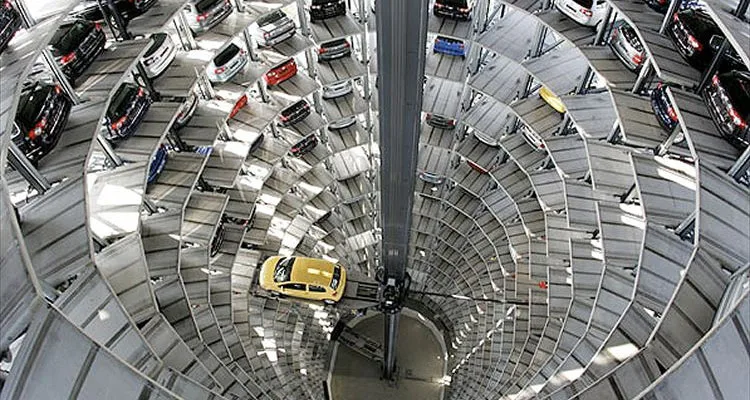
1. Automated parking (Tower Parking)
Automated garages, often called Tower Parking, are common in dense neighborhoods. Vertical systems store several cars on a small footprint. Typical flow:
- You place the car on a platform.
- The system stores the vehicle in an empty slot.
- To retrieve it, you usually use the ticket or the control machine.
You see these a lot in big cities such as Tokyo and Osaka. Fold the side mirrors and follow the on-site instructions — the machinery has little tolerance for cars parked at an angle.
2. Coin parking
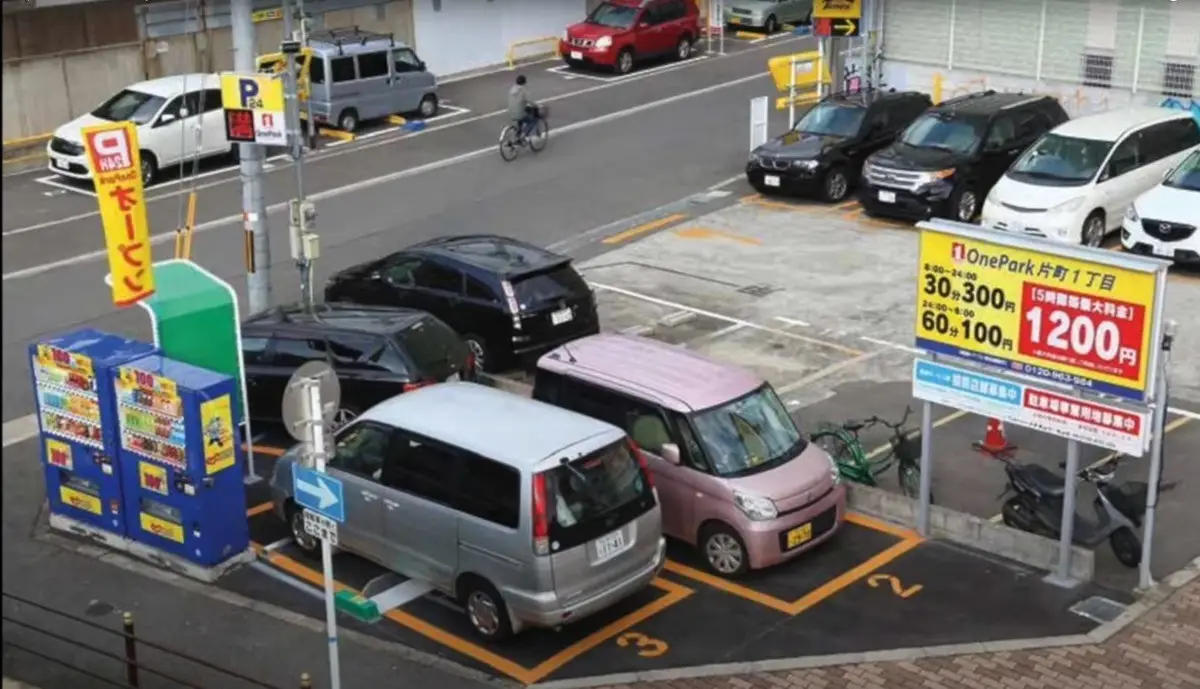
Coin lots — コインパーキング (Koin Pākingu) — are everywhere and often run around the clock. A common flow:
- Drive into a marked empty bay (sign 空車 / Kūsha = vacant).
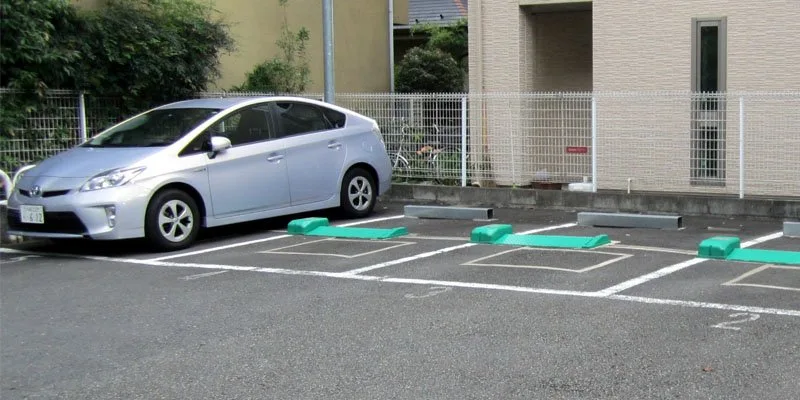
- After a short wait, a ground plate (ロック板) may rise and block the wheels.
- Before leaving, pay at the machine — often with the bay number — then wait until the plate lowers.
There are also barrier-gate versions and prepaid setups where you leave a ticket on the dashboard. Always read the rate board at the entrance: intervals of 15, 30, or 60 minutes are common.
3. Surface and underground parking
Supermarkets, shopping centers, and stations often use classic garages with an entry ticket. Many shops give free time or a discount after a purchase — validate or stamp the ticket at the counter before you head to the exit.
How to use a parking lot in Japan
The routine feels foreign at first, but the steps are fixed:
- Entrance and availability: Large sites often show prices and free spaces. Watch traffic signs and height limits too.
- Park correctly: Stay inside the lines. At coin parking, a wheel or ground plate may secure the car.
- Ticket / bay number: Keep the ticket or note (or photograph) the space number.
- Pay before exit:
- Insert the ticket or enter the bay number at the automatic machine.
- Pay the amount (coins, bills; sometimes card, Suica/Pasmo, or app).
- If there is a lock plate, wait until it is down — then leave promptly before it rises again.
How to pay
Payment depends on the system. Typical options:
- Insert the ticket or select the bay number.
- Cash with coins and bills — change and 1,000-yen notes are handy.
- At some machines, card or electronic money (電子マネー) such as Suica and Pasmo.
Not every machine takes cards; cash as a backup saves time.
Tips for parking in Japan
- Avoid the curb: On public roads, parking is usually forbidden unless signs clearly allow it. Enforcement is strict; fines can be high.
- Do not take monthly spots: Bays marked 月極 (Tsukigime) are rented — not free for visitors.
- Compare prices: In central areas, fees can run hundreds of yen per short interval; a daily maximum can help on longer stays.
- Watch time limits: Some lots get more expensive after a set period or have maximum stays.
- Validate the ticket: At malls, get the stamp or digital discount before you pay.
- Plan ahead: Apps and maps (including major chains such as Times/Park24 and navigation apps) help find nearby free bays.
Anyone driving longer in Japan also benefits from the right driver’s license setup and from traffic and vehicle vocabulary.
Japanese vocabulary about parking
Useful words for signs, machines, and everyday driving:
Basic words
- 駐車場 (Chūshajō): Parking lot
- 駐車 (Chūsha): To park / parking
- 車 (Kuruma): Car
- 料金 (Ryōkin): Fee, price
Types of parking
- コインパーキング (Koin Pākingu): Coin parking
- 立体駐車場 (Rittai Chūshajō): Multi-story / tower parking
- 地下駐車場 (Chika Chūshajō): Underground parking
- 路上駐車 (Rojō Chūsha): Street parking
Common phrases and terms
- 空車 (Kūsha): Vacant / space available
- 満車 (Mansha): Full
- 時間貸し (Jikan Gashi): Hourly rental
- 月極駐車場 (Tsukigime Chūshajō): Monthly parking
- 駐車禁止 (Chūsha Kinshi): No parking
- 駐車券 (Chūsha Ken): Parking ticket
Equipment and facilities
- 精算機 (Seisanki): Payment machine
- バー (Bā): Barrier / lock bar
- 出入口 (Deiriguchi): Entrance and exit
- 予約駐車場 (Yoyaku Chūshajō): Reserved parking
Payment methods
- 現金 (Genkin): Cash
- カード (Kādo): Card
- 電子マネー (Denshi Manē): Electronic money (Suica, Pasmo, and similar)
Signs and instructions
- 一方通行 (Ippō Tsūkō): One way
- 駐車料金 (Chūsha Ryōkin): Parking fee
- 車両制限 (Sharyō Seigen): Vehicle restrictions (height, weight, and so on)
- 時間内駐車 (Jikannai Chūsha): Parking within the allowed time
With these words, rate boards, machines, and no-parking signs get easier to decode — and the next free 駐車場 feels less like a guessing game.



Community
Comments
0 comments
There are no published comments in this language yet.
Send comment