
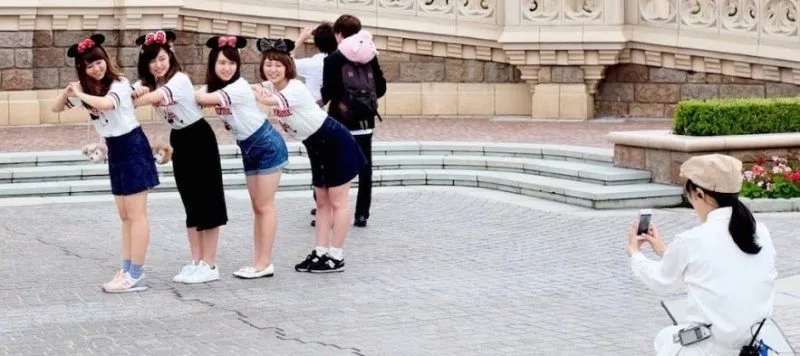
In Japan, the act of matching clothes with friends, partners, or family is much more than a matter of style. This practice, called Osoroi (お揃い), is an expression of unity, intimacy, and group harmony. Unlike in the West, where wearing matching outfits can be considered embarrassing, in Japan it is seen as a demonstration of closeness and even fun.
The word Osoroi joins the polite prefix お to 揃い (soroi), the noun form of the verb sorou (そろう), which means to become complete, to match, or to form a set. In daily life it covers matching T-shirts, paired rings, souvenirs bought together, and even a polite greeting to people who arrived as a group. Coordinated outfits, in Japanese お揃いコーデ (osoroi kōde), are the most visible fashion use of the word.

Contents 9
The Origin and Meaning of Osoroi
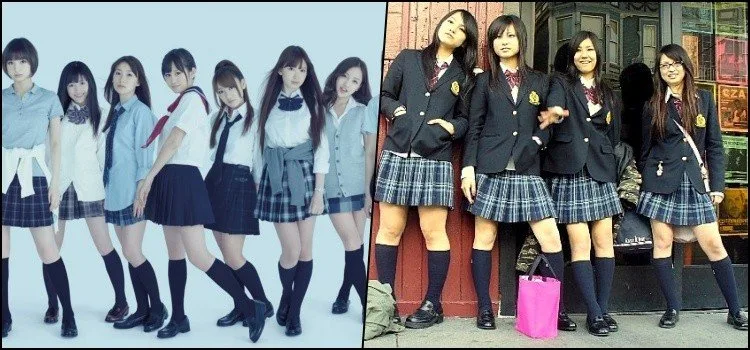
Osoroi grows out of habits that Japanese school life already makes familiar. From school days, Japanese children wear uniforms that symbolize equality and belonging. Dressing similarly or identically to someone close fits that same context, this time as a choice.
Cultural Influence
The book The Japanese Mind, by Osamu Ikeno and Roger J. Davies, discusses how Japanese society prioritizes group harmony over individuality. This "group consciousness" manifests in practices like Osoroi, where dressing similarly expresses the emotional connection between people. In the context of couples, friends, and even families, the Osoroi is a visual gesture that symbolizes loyalty, solidarity, and closeness.
Adaptation to Social Media
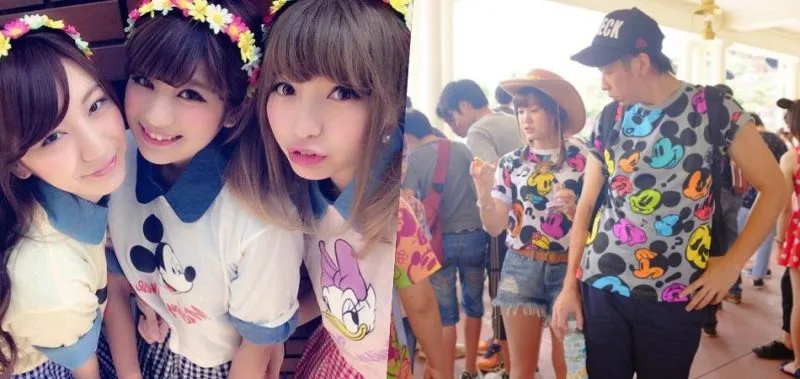
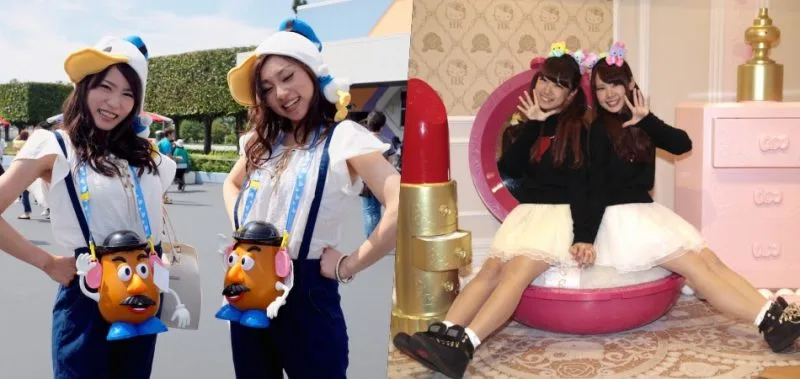
In addition to its cultural basis, the practice has gained popularity in the digital environment. Young and adult Japanese people embrace Osoroi to take harmonious and attractive photos, especially in tourist spots like the Tokyo Disneyland or DisneySea. These colorful and synchronized images stand out on social media, and the nickname おそろ (osoro) shows up constantly in captions.
How Osoroi Is Practiced
The Osoroi does not require special events to be adopted. Many practitioners incorporate the practice into everyday activities, such as going to the mall or beach outings. The flexibility in style is a strong point: combinations can range from identical clothing to pieces with similar patterns or colors.
Fashion Among Youth
The Osoroi is especially popular among young people, and more common among girls. The practice is seen as a form of fun, in addition to expressing emotional connection. Many couples also use Osoroi as a way to demonstrate love and affinity, alongside other customs of dating in Japan.
Groups and Family
Entire families also participate in the trend, especially on special occasions or trips. This reinforces the idea of unity and creates visual memories that are often kept in photo albums, on phones, and on social media.
Pair look, link coordination, and twin outfits
When osoroi belongs to a couple, Japanese speakers often call it ペアルック (pea rukku, pair look), a Japanese-made English term. Close friends who go out in fully matching clothes talk about 双子コーデ (futago kōde, twin coordination). If only a color, a print, or an accessory repeats, that is リンクコーデ (link kōde): the looks relate without being identical. On the streets of Harajuku and in theme parks, osoroi shows up as both full matching looks and these partial links.
Osoroi in Comparison to the West
While in Japan the Osoroi is a celebrated practice, in the West reactions can be mixed. Many people find it embarrassing to wear matching clothes with others, especially adults. Themed parties and family games are the usual exceptions. Couple T-shirts and social-media twinning exist, but the everyday positive gesture is less automatic.
In Japan, familiarity with school uniforms may explain the receptiveness to coordinated clothing. Matching on purpose tells the room, without a speech, that this group is together by choice.
Matching on purpose, or by accident?
Running into a stranger in the same T-shirt, on a train or in a line, can be かぶる: the accidental overlap that many people find awkward. Osoroi starts from the opposite move. Someone chose the same look with the right person, for the outing, the photo, or the souvenir from a trip. The practical question is with whom it would make sense to match, and how far to go, from a ring to a full outfit.



Community
Comments
0 comments
There are no published comments in this language yet.
Send comment