
In Japan, a “small” bridge jump can still mean thirty meters over a forested gorge — and the tallest permanent bridge bungy free-fall stretches past two hundred meters. The same country of quiet temples and hot-spring towns also keeps commercial platforms hanging under suspension bridges, with rivers, dams, and mountain valleys waiting below.
What changes from site to site is not only the height. One drop faces a reservoir, another sits minutes from a temple landmark, and a few sit in Gunma where you can finish the day in an onsen. The eight places below are the ones travelers most often compare when they look for bungee jumping in Japan.
Contents 11
Heights at a glance
Commercial bridge bungy in Japan is built around fixed platforms rather than temporary carnival towers. A practical way to choose is free-fall height plus region — especially if you are planning a day trip from Tokyo, Nagoya, or Osaka, or folding the jump into a wider Japan trip checklist.
| Site | Prefecture | Height | Best for |
|---|---|---|---|
| Kaiun | Nara | 30 m | First jump, Kansai day trip |
| Minakami | Gunma | 42 m | Beginners + onsen town |
| Yamba | Gunma | 45 m | Dam scenery (seasonal check) |
| Fuji | Shizuoka | 54 m | Mount Fuji area itinerary |
| Sarugakyo | Gunma | 62 m | Quieter forest setting |
| Itsuki | Kumamoto | 66 m | Kyushu mountain scenery |
| Ryujin | Ibaraki | 100 m | High free fall near Tokyo |
| Gifu (Shintabisoko) | Gifu | 215 m | Japan’s highest bridge bungy |
Heights above match the figures published by the main commercial operator network that runs these bridges. Schedules, weight limits, and prices can change by season, so treat the table as a planning map, not a booking screen.
1. Ryujin Bridge, Ibaraki
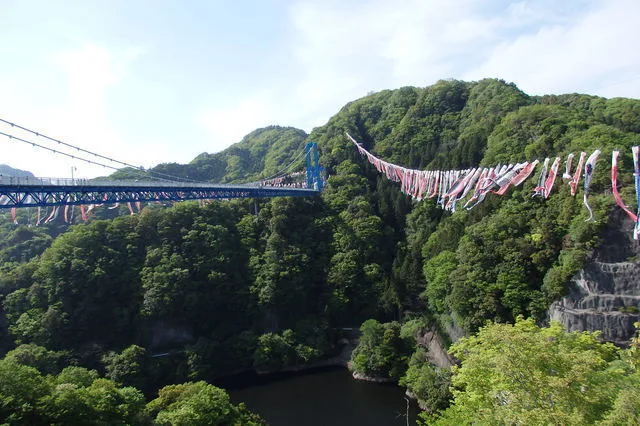
Located in Hitachiota, Ibaraki Prefecture, the Ryujin Bridge is one of the most famous places for bungee jumping in Japan. With a free-fall height of 100 meters, it is often described as Japan’s second-highest permanent bridge bungy after Gifu.
- Height: 100 meters
- Setting: Panoramic view of Ryujin Gorge and the surrounding mountains from a long pedestrian suspension bridge
- Why people book it: Serious height without leaving the greater Tokyo day-trip range; autumn foliage is a popular backdrop
The bridge itself is a sightseeing draw even for non-jumpers. Operators typically run year-round when weather allows, with age and weight limits that usually start around 15 years old and roughly 40 kg minimum — always confirm the day’s rules when you book.
2. Minakami, Gunma
The town of Minakami, in Gunma Prefecture, is famous for both outdoor sports and hot springs. The bungee jump takes place from a bridge about 42 meters above a clear river, which makes it a common first-choice height for travelers who want adrenaline without the 100-meter class.
- Height: 42 meters
- Setting: Views toward the Tone River basin and mountain scenery
- Why people book it: Moderate height, outdoor-town atmosphere, easy pairing with trails and onsen
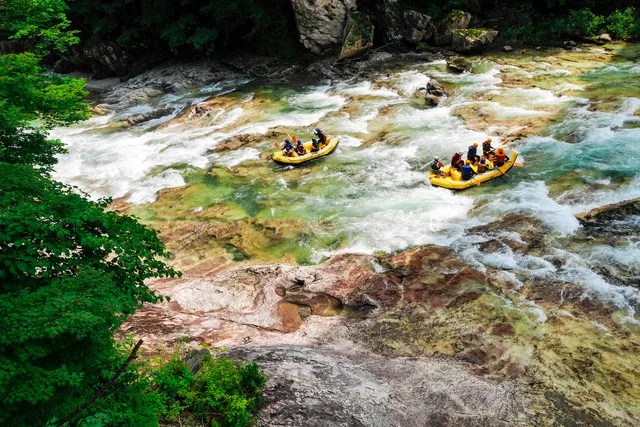
In addition to the jump, visitors often stay overnight for rafting, hiking, and soaking after the free fall — a useful combo if your trip budget already includes travel days in Gunma.
3. Sarugakyo, Gunma
Still in Gunma, Sarugakyo is a lesser-known but equally scenic location. The jump bridge sits in a more remote pocket of the prefecture, so the day often feels quieter than the big-name bridges.
- Height: 62 meters
- Setting: Dense forest views and a calmer approach than urban day-trip crowds
- Why people book it: Mid-height free fall with a nature-first atmosphere
Local operators commonly package photos and videos with the jump, which matters if you want proof of the moment without juggling your own camera harness.
4. Itsuki Village, Kumamoto
Itsuki Village, in Kumamoto Prefecture, is known for bridge bungy over mountain terrain in Kyushu. The free-fall height is about 66 meters, sitting in the mid-to-high range for most first-time visitors from outside Japan.
- Height: 66 meters
- Setting: Mountain scenery and dense vegetation rather than city skyline
- Why people book it: Kyushu itinerary travelers who want one high outdoor thrill away from the main tourist circuits
Rivers and trails nearby make it easy to turn the jump into a half-day outdoors stop rather than a pure “drive, jump, leave” errand.
5. Fuji, Shizuoka
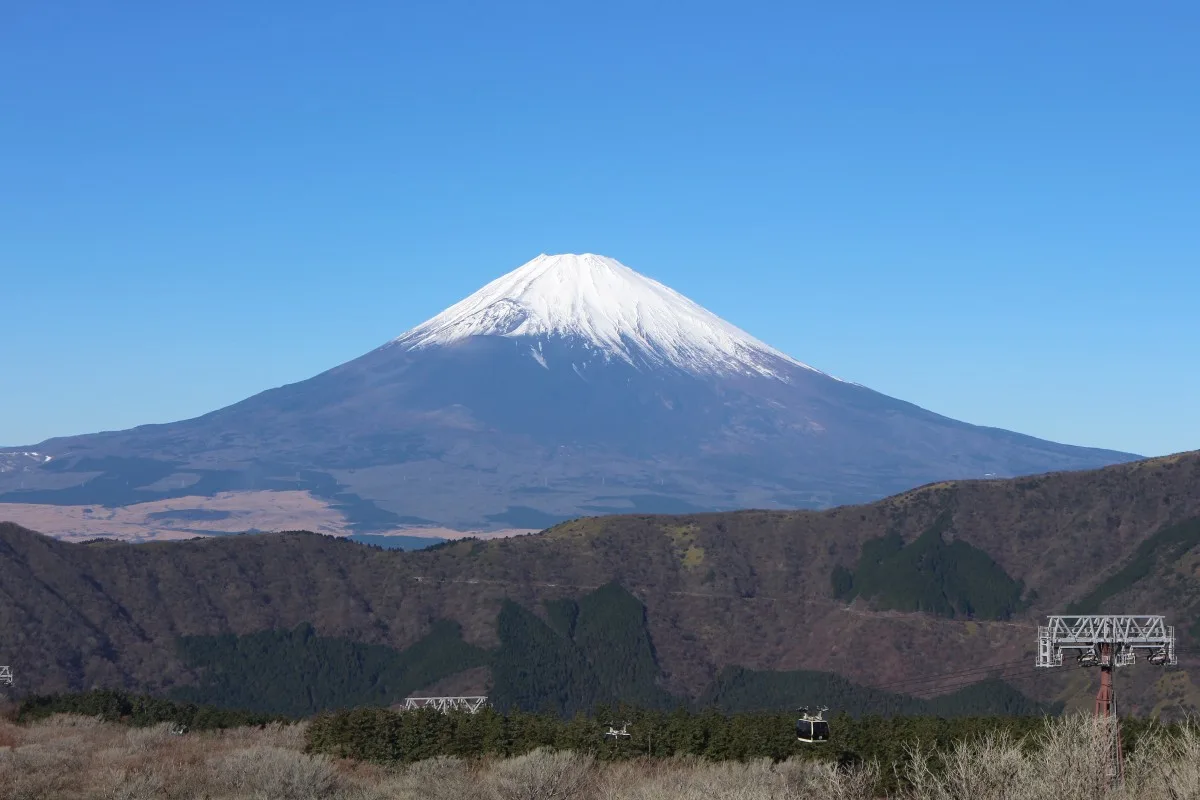
In Fuji City, Shizuoka, Fuji Bungy offers a jump of about 54 meters over the Suzu valley. It is a natural fit if Mount Fuji and the surrounding prefecture are already on your route.
- Height: 54 meters
- Setting: Green valley scenery and nearby waterfall country
- Why people book it: Mid height, organized commercial operation, convenient for Shizuoka itineraries
It works especially well in warmer months when outdoor day trips around Fuji and Shizuoka are already on the calendar. Pair it with slower travel days if you are still figuring out how much a Japan trip costs beyond the jump fee itself.
6. Kaiun, Nara
Kaiun Bungy, in Nara Prefecture, is a lower bridge jump that mixes adrenaline with a strongly cultural setting. The platform is near Chougosonshiji Temple at the base of Mount Shigi and is often marketed as the Kansai region’s bridge bungy option.
- Height: 30 meters
- Setting: Views of Mount Shigi and temple-country atmosphere
- Why people book it: Beginners, Kansai travelers, and anyone who wants a first jump without the highest free falls
The temple approach is marked by a famous oversized paper-mâché tiger (Fukutora), so the day can feel more like a cultural outing that happens to end with a harness. For many visitors, 30 meters is still plenty of adrenaline.
7. Yamba, Gunma
Yamba Bungy, also in Gunma, jumps from a bridge with views over the river and the Yamba Dam reservoir. The free-fall height is about 45 meters.
- Height: 45 meters
- Setting: Dam and reservoir panorama from a long bridge structure
- Why people book it: Engineering scenery plus a moderate height
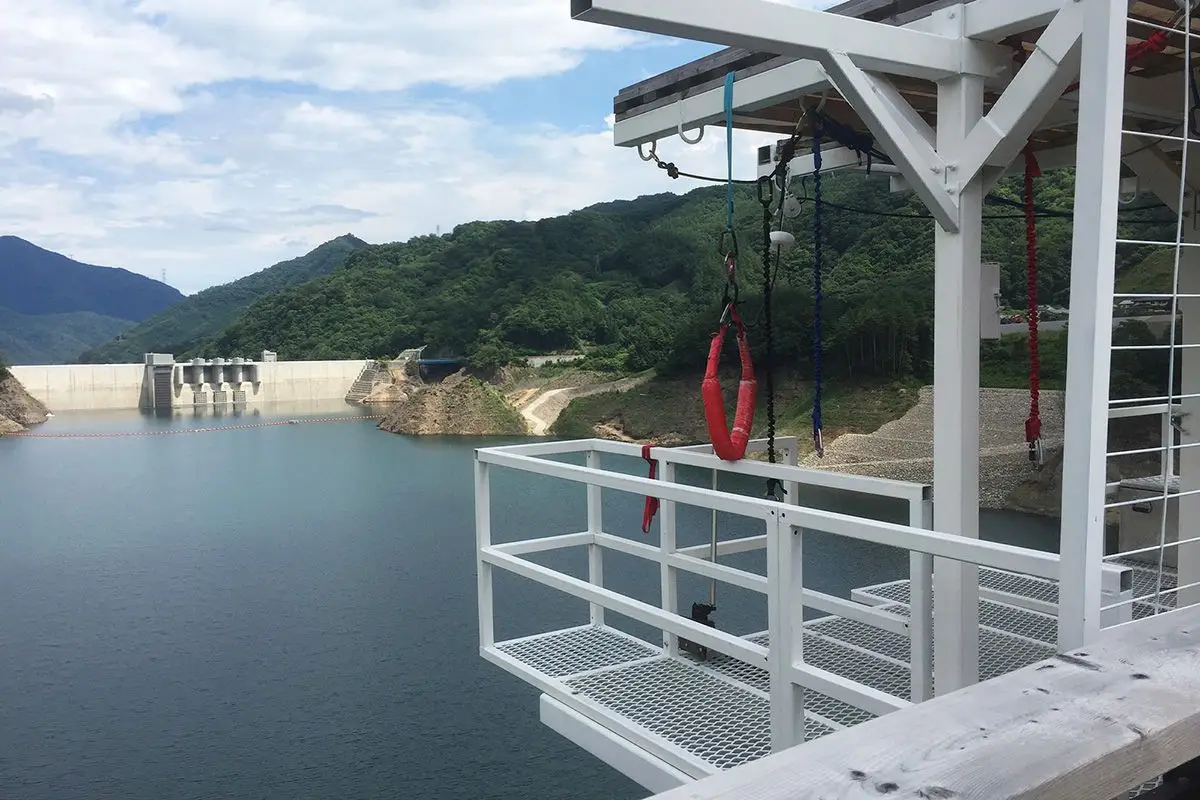
Operations here can be more seasonal than the year-round bridges. Before you plan a special trip only for Yamba, confirm the current season and booking calendar with the operator — summer windows are the ones most commonly advertised.
8. Shintabisoko, Gifu
Gifu Bungy on the Shintabisoko Bridge is the largest commercial bridge bungy jump in Japan. The free fall is 215 meters into the Tabisoko valley, with the bridge spanning roughly 462 meters across a V-shaped gorge.
- Height: 215 meters
- Setting: Deep mountain canyon and river far below
- Why people book it: Record height, wingsuit-style free fall, and a full-day adventure mindset
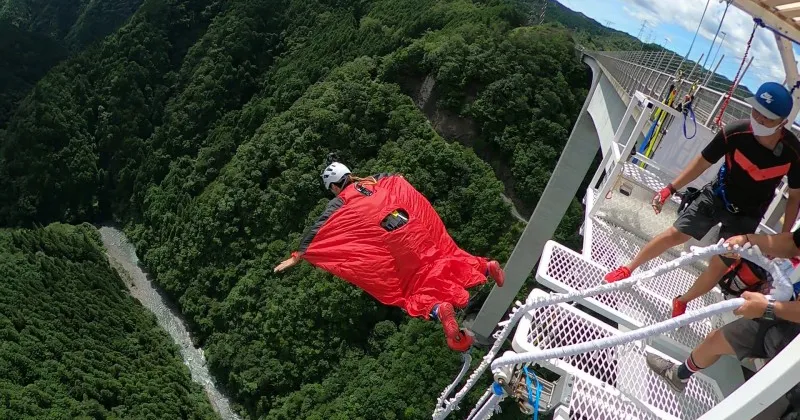
Jumpers wear a wing suit on this site, and video packages are typically part of the commercial experience. Expect stricter weight ranges than some lower bridges and plan transport carefully — parking and the walk to reception are part of the day, not an afterthought.
What to know before you jump
Most of these sites share a similar safety culture even when the scenery changes:
- Age: Commercial bridge bungy commonly requires participants to be at least 15 years old; under-18 jumpers usually need a parent or guardian waiver.
- Weight: Typical ranges sit around 40–100 kg or 40–105 kg depending on the bridge. Gifu’s published range is often a little tighter at the top end than Ryujin’s.
- Health and alcohol: Medical conditions should be declared in advance. Alcohol on the day of the jump is not allowed.
- Booking: Reservations matter on weekends and holidays. Walk-ins can mean long waits when the platform is busy.
- Payment: Some sites still emphasize cash on site even when online booking is available — bring yen and recheck the operator’s current payment note.
- Price examples: Published first-jump prices have recently sat near ¥19,000 at Ryujin and ¥28,000 at Gifu, with second-jump discounts on the same day. Treat any number as a snapshot and confirm before you travel.
Weather can stop operations even after you arrive, especially with lightning, typhoon risk, or unsafe river levels. Build a flexible day around the jump rather than stacking same-day flights or non-refundable long transfers.
Choosing the right spot for your trip
If you want the highest free fall in the country, Gifu is the clear answer. If you want height without that extreme, Ryujin in Ibaraki is the usual 100-meter pick from the Tokyo side. First-time jumpers who prefer a softer entry often look at Kaiun (30 m), Minakami (42 m), or Fuji (54 m). Kyushu travelers can aim for Itsuki; Kansai travelers can keep Kaiun on a Nara or Osaka-area loop.
Bridge bungy in Japan is less about finding a secret platform and more about matching height, region, and season to the rest of your itinerary. Book the bridge that fits the day you actually have — then let the free fall do the rest.

Community
Comments
0 comments
There are no published comments in this language yet.
Send comment