
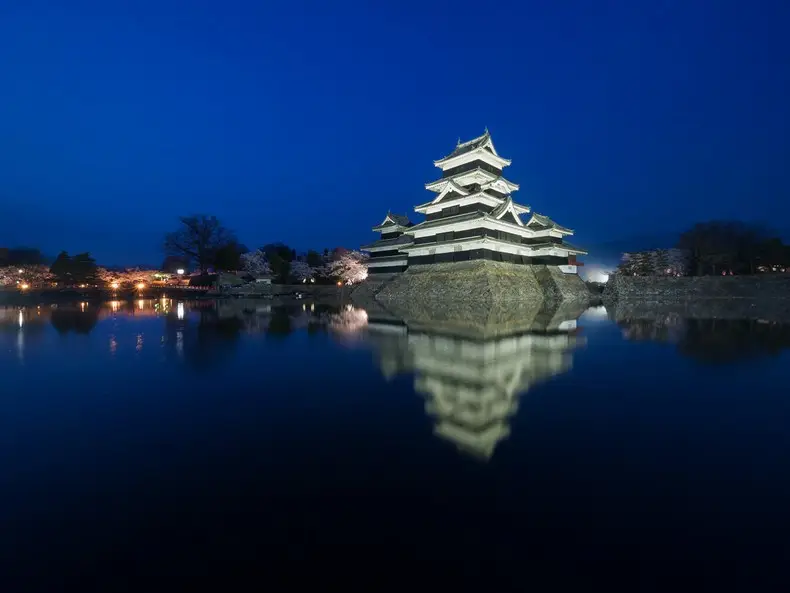
When night falls over the black walls of Matsumoto Castle — the “Crow Castle” that still stands as a National Treasure in Nagano — the grounds stop looking only like a history postcard. Blocks of ice, cut and polished through the cold hours, catch colored light and throw it back at the keep. That contrast is the whole point of the Matsumoto Castle Ice Sculpture Festival (国宝松本城氷彫フェスティバル): a short winter gathering where carving skill, cold air, and one of Japan’s most photogenic castles share the same stage.
It is not a year-round attraction and it is not a quiet museum walk. For a few days each winter, carvers work in public, families line up for ice slides, and food stalls steam in the dark. If you care about Japanese castles, winter festivals, or simply want a night scene that feels different from cherry-blossom Matsumoto, this is the weekend that rewires the usual sightseeing loop.
Contents 7
What the festival is
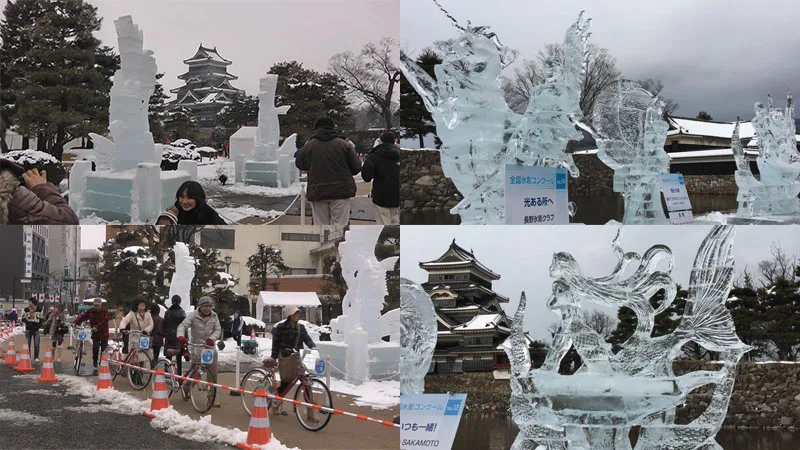
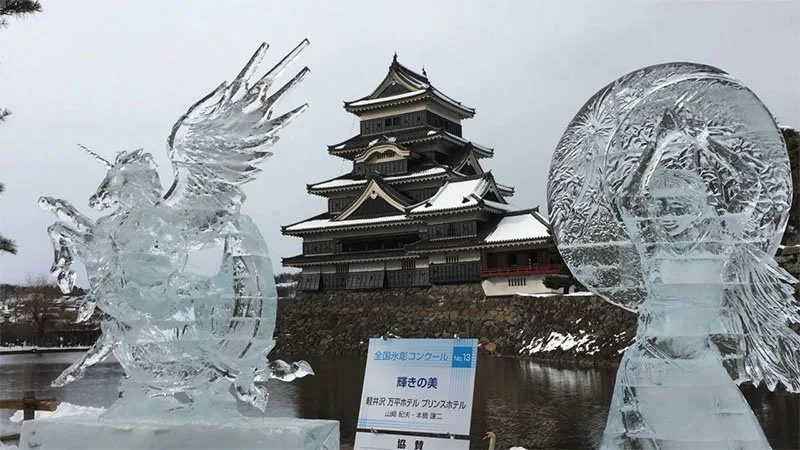
Officially tied to the National Treasure castle and the city’s winter calendar, the event centers on ice sculpture displays and a national ice-carving competition held in and around Matsumoto Castle’s park — a National Treasure often grouped among the best Japanese castles to visit. Sculptors from across Japan turn large ice blocks into figures, animals, fantasy scenes, and bold modern forms. Some pieces stand well over two meters. By day they read as crisp white craft; after dark, lighting turns them into a different show entirely.
The festival also spills beyond the moat. In recent editions, finished works and related displays have appeared at spots such as Matsumoto Station, the city art museum area, and streets in the old town — so even if you arrive by train after sunset, the ice often greets you before you reach the keep.
How the festival grew
The celebration took shape in the 1980s as a way to pull visitors into Matsumoto during the colder months, when the Japanese Alps already own the skyline but the streets can feel quieter than in cherry blossom season. Placing ice art against a 16th-century fortress was more than decoration: the castle’s dark plaster and timber, nicknamed Karasu-jō (“Crow Castle”), make pale ice look almost unreal under floodlights.
Over more than three decades it has become a fixed line on the regional winter map — less a one-off photo stop and more a short festival with a real competition core. Teams work through the night; judges score creativity, technique, and overall impact; and the winning pieces stay on display while the rest of the city keeps its usual winter rhythm of lanterns, cold air, and early sunsets.
Sculptures, competition, and night lighting
The main draw is the carving itself. Visitors can often watch work in progress from late afternoon into the night, then return the next morning when the finished pieces stand in front of the castle and the Northern Alps. Themes range from Japanese myth and nature to playful modern designs. What matters for the traveler is the setting: few winter events in central Japan put national-level ice work this close to an original castle keep that is still open as a museum on other days of the year.
After dark, dedicated lighting is not optional scenery — it is half the experience. The ice refracts color; the castle walls stay dark; and the park fills with people walking slowly with cameras, not racing through a checklist. Dress for standing still outdoors. January nights in Matsumoto regularly drop below freezing.
Family activities, food, and the wider winter scene
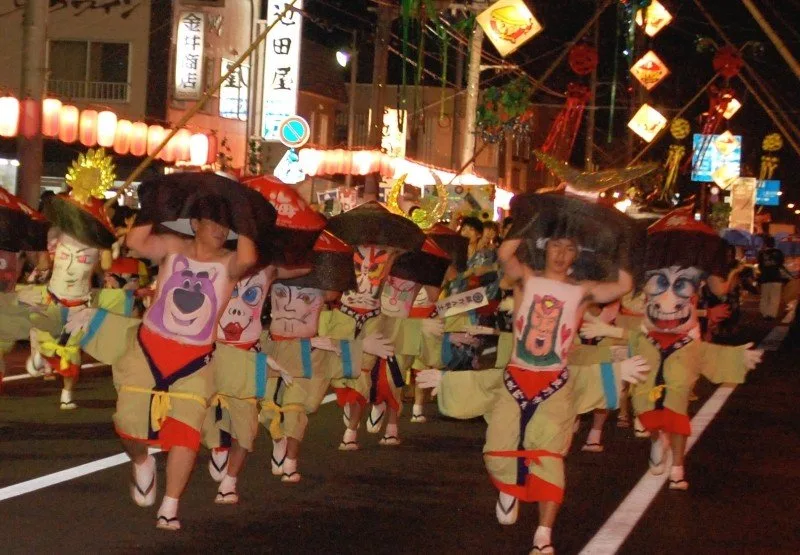
Beyond the competition, the festival is built for mixed crowds. A long ice slide (in recent years a jumbo slide built from many ice columns) is the predictable kid magnet. Stage programs such as taiko drumming and other outdoor shows appear on some editions. Food stalls lean into cold-weather comfort: hot nabe, grilled snacks, and warm sake from the Shinshu region make more sense here than a long sit-down meal if you want to stay near the sculptures.
Pair the festival with other winter Matsumoto habits if you have a full day: a walk along Nawate-dori and Nakamachi-dori between the station and the castle, a look at the illuminated approach to the park, or a daytime visit inside the castle itself on a non-festival schedule. The ice weekend is the peak, but the city stays photogenic under snow even when carvers have packed up.
When it happens and practical details
Timing is short and specific. The Ice Sculpture Festival is usually held over about three days in late January (sometimes stretching toward early February depending on the year’s calendar). Exact dates shift slightly each season, so treat “late January weekend” as the planning window and confirm the current year’s schedule before booking trains or hotels.
Admission to the outdoor sculpture areas and related festival grounds is typically free. Budget for food, drinks, and any paid side attractions. Bring cash for stalls, layers you can add after sunset, and shoes with grip — castle park paths can be icy. Photographers will want both a daytime pass (for white ice against the keep) and an evening return (for lights).
- Season: late January, roughly a three-day window; check the year’s official dates.
- Core venue: Matsumoto Castle Park and nearby city spots.
- Cost: outdoor festival viewing is generally free; food and extras are paid.
- Best visit pattern: watch carving or daylight displays, then come back after dark for lighting.
How to get to Matsumoto Castle
From Tokyo, the usual route is the limited express Azusa (JR Chūō Line) to Matsumoto Station — roughly two and a half to three hours depending on the train. From the station, the castle is about a 15-minute walk through the city center, or a short city bus ride toward the castle / city hall area. Kita-Matsumoto Station on the Ōito Line is even closer for some approaches. Drivers will find paid parking near the park, but festival evenings get crowded; trains plus walking are often simpler.
If you are already touring Nagano — skiing in Hakuba, onsens in the mountains, or a castle loop with Nagoya Castle or other Japanese castles — Matsumoto is a natural inland stop. Just remember the ice festival is a brief spike on the calendar, not a permanent installation you can “catch next week” indefinitely.
Tips to enjoy the cold without fighting it
- Layer for sub-zero standing time; gloves that still let you use a phone camera help.
- See the sculptures twice if you can: pale ice by day, illuminated ice by night.
- Book lodging early for the festival weekend; Matsumoto fills up when the ice and winter lights overlap.
- Keep plans flexible around wind and snow — outdoor stages and some activities can adjust with weather.
- Combine the park with a short town walk so the cold trip feels like a full evening, not only a photo stop.
The Matsumoto Castle Ice Sculpture Festival works because it refuses to separate craft from place. Ice that would look ordinary in a convention hall becomes memorable against a National Treasure keep and Alpine air. If your Japan winter itinerary has room for one castle weekend that is not only about climbing wooden stairs, put late January in Matsumoto on the shortlist — and check the year’s dates before the ice starts to melt.


Community
Comments
0 comments
There are no published comments in this language yet.
Send comment