
"Kamikaze" is a word that carries a deep historical and cultural meaning, often associated with Japanese suicide pilots during World War II. However, the term goes far beyond this connotation. In this article, we will study in depth the meaning of "Kamikaze." Ready? In this article, we will explore the true origin and meaning of the word "kamikaze," its usage throughout history, and how the term has evolved into what we know today.
Contents 9
What does Kamikaze mean?
The word "Kamikaze" is composed of two Japanese ideograms: 神風. Let's analyze the meaning of each one:
- 神 (Kami): This ideogram means "god" or "deity." In the context of "kamikaze," it refers to something divine or celestial, often interpreted as "divine" or "sacred."
- 風 (Kaze): This ideogram means "wind." It is a common word in Japanese to describe the wind in general.
Therefore, "Kamikaze" can be literally translated as "Divine Wind" or "Wind of the Gods."
The meaning of "Kamikaze" carries a symbolic depth, representing something beyond the simple literal translation. It suggests a supernatural intervention or an inevitable fate, a force that cannot be controlled by humans. In the modern context, "Kamikaze" has come to be associated with acts of extreme sacrifice, where the idea of giving one's life for a greater purpose, often in desperate situations, has become central.
This word can also evoke a sense of honor and duty, especially in the Japanese context, where the culture of personal sacrifice for the greater good is deeply valued. However, the term is also laden with tragedy, as it represents actions that, despite being heroic to some, result in devastating losses.
What is the origin of Kamikaze?
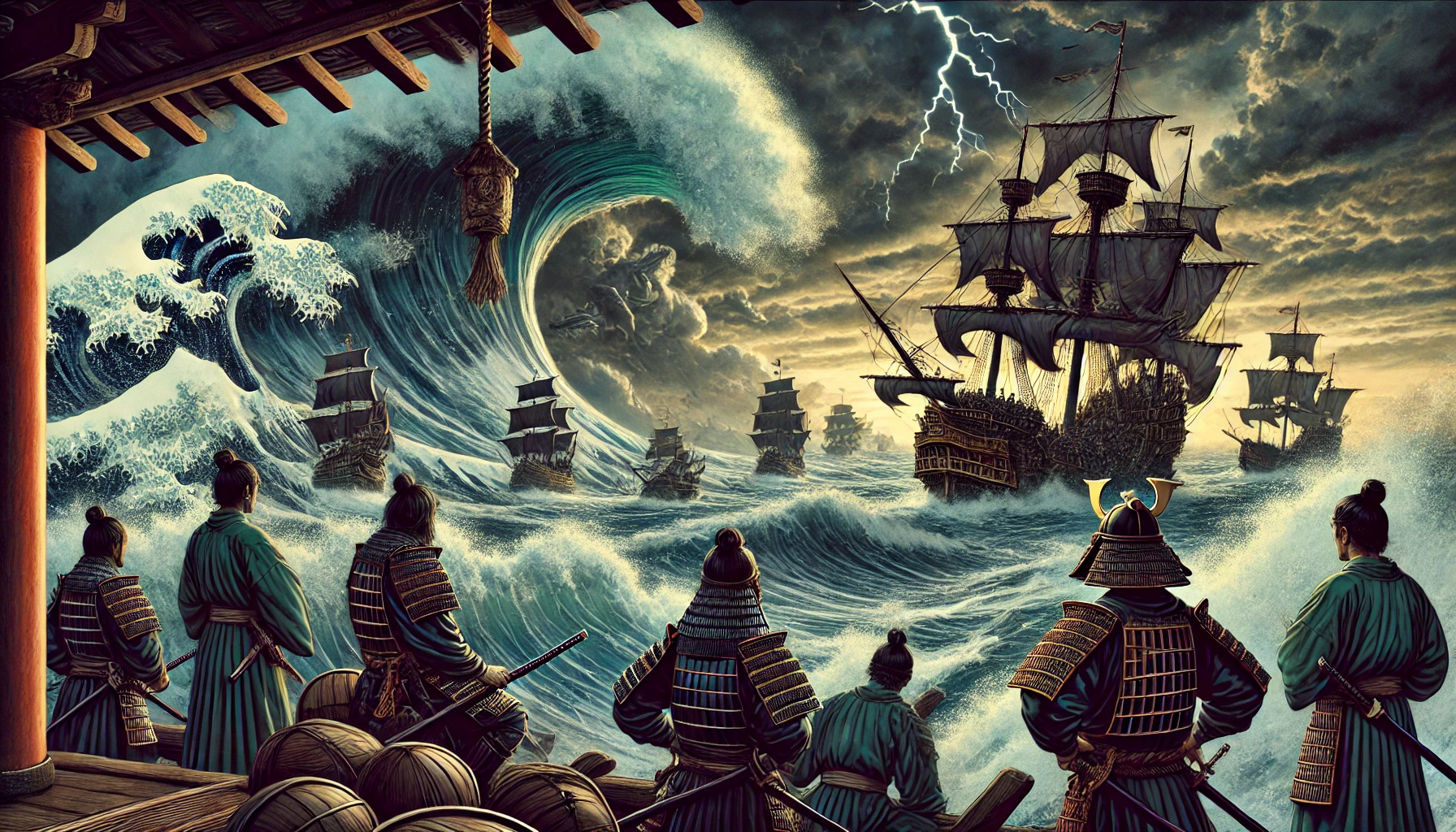
The origin of the term "Kamikaze" dates back to the 13th century, during the period of attempted invasions of Japan by the Mongol Empire under the command of Kublai Khan. In 1274 and 1281, Japan was the target of two major Mongol military expeditions. During both invasions, enormous fleets were sent to conquer the Japanese archipelago.
However, on both occasions, Japan was saved by powerful typhoons that unexpectedly arose and destroyed much of the invading Mongol fleet. These typhoons were seen by the Japanese as a divine intervention, an act of the gods to protect Japan. In recognition of this celestial protection, the winds that drove away the invaders came to be called "Kamikaze" or "Divine Wind."
These events became an important part of Japanese folklore and history, symbolizing the divine protection that the country received in times of crisis. The idea that Japan was protected by supernatural forces reinforced the sense of identity and the notion that the nation was special and destined for a unique role in the world.
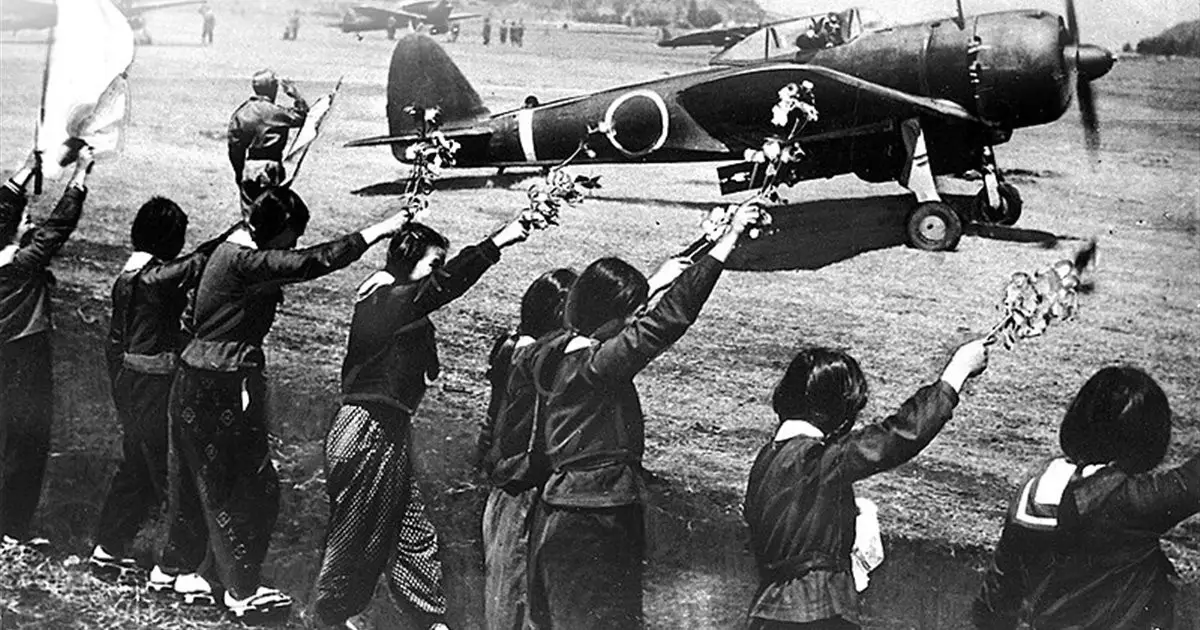
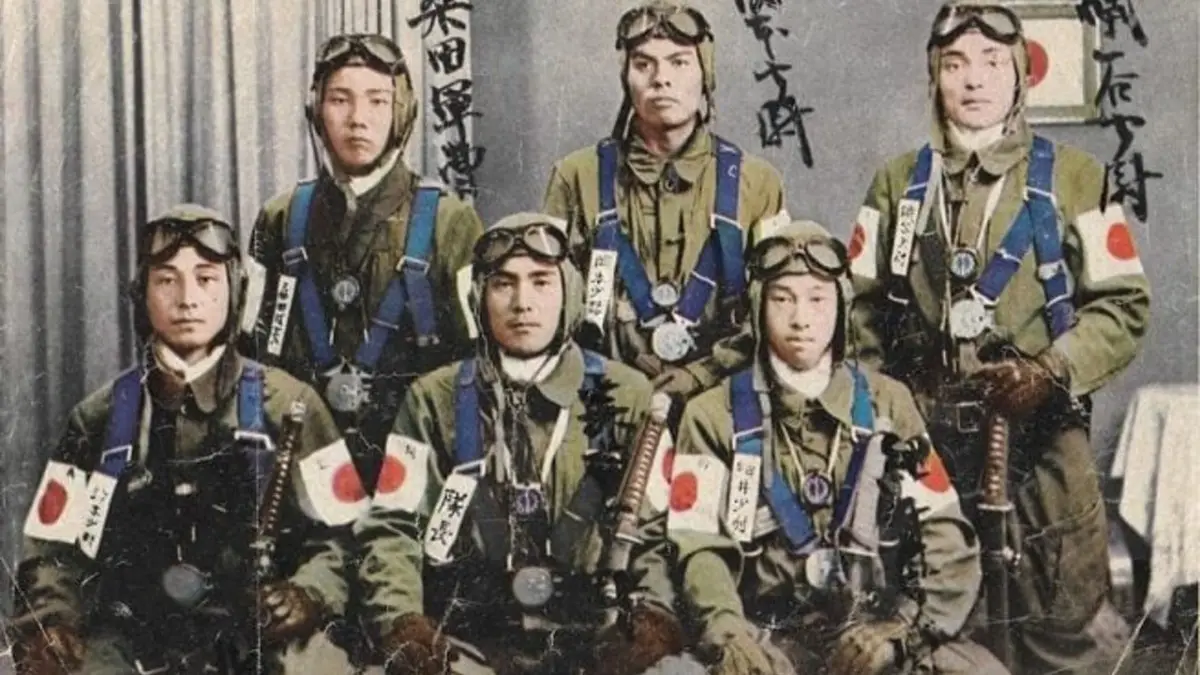
The term "Kamikaze" gained new life during World War II, when it was used to describe the Japanese suicide pilots who carried out air attacks against Allied forces. These pilots were seen as carrying out a divine mission, sacrificing themselves to protect their homeland in a time of extreme need. This reinterpretation of the term forever associated it with the idea of heroic sacrifice in defense of the nation.
Were there any Kamikaze who survived?
Yes, although rare, there are records of kamikaze pilots who survived their missions during World War II. These cases occurred for various reasons, such as mechanical failures, difficulties in finding the target, or the intervention of enemy forces before impact. Some pilots were shot down before they could complete their mission, while others, due to technical problems, were unable to even take off.
Additionally, there were pilots who, realizing they would not be able to hit their target, decided to abort the mission and return to base, something that was extremely difficult, both psychologically and in terms of social pressure. The military culture of the time promoted the success of the mission at any cost, and returning alive was often seen as a disgrace.
After the war, some of these survivors faced feelings of shame and guilt for not having completed their missions. Many chose to live in relative anonymity, while others eventually shared their stories, revealing the human and tragic aspects behind the kamikaze missions.
What is Kamikaze as a Metaphor?
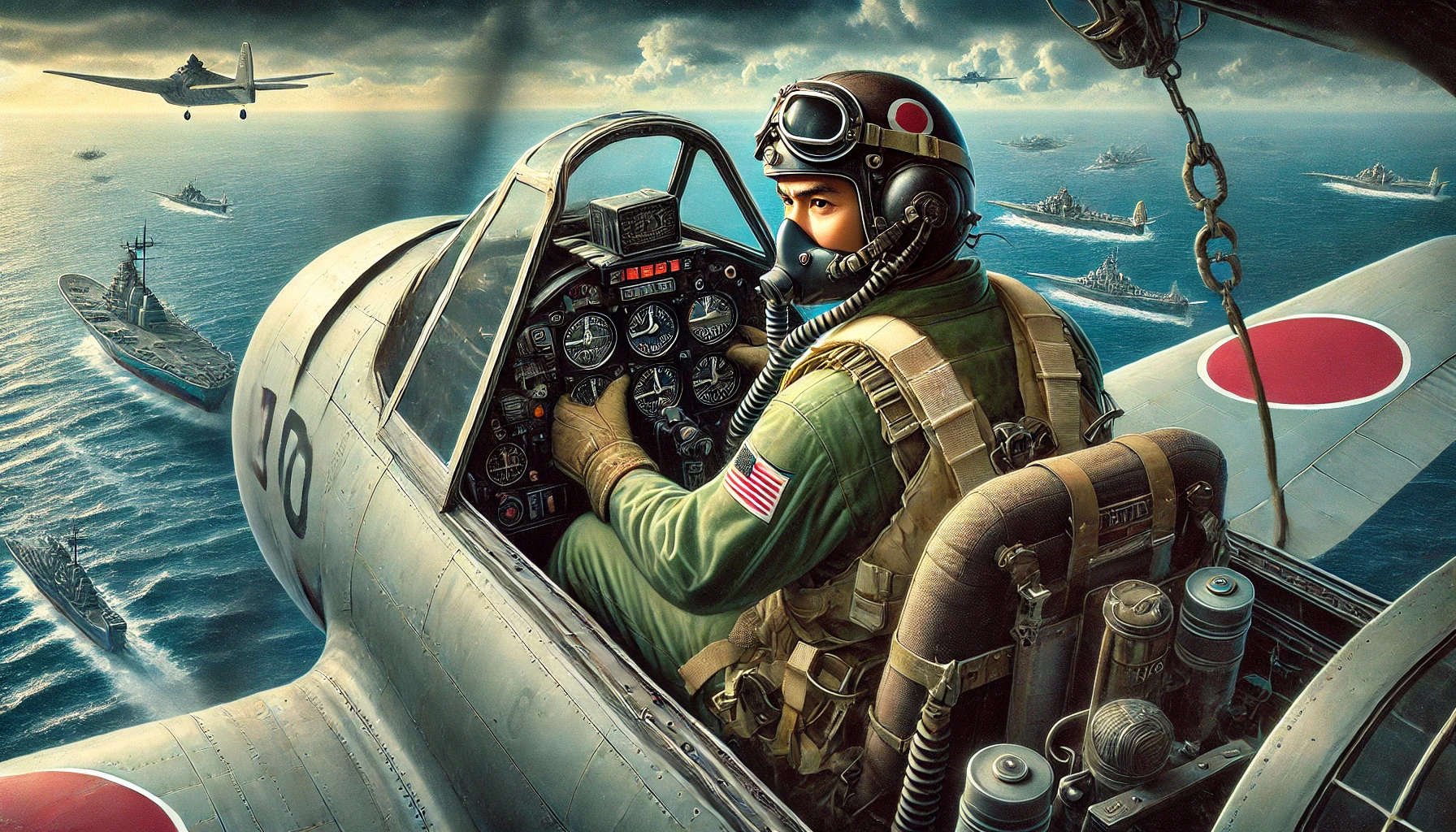
"Kamikaze" as a metaphor is used to describe an action or behavior that is extremely bold, risky, and potentially self-destructive. When someone is described as "kamikaze" in a metaphorical context, it usually means that this person is throwing themselves into a task or situation without caring about the consequences, often taking great risks that could result in personal harm or complete failure.
For example, in a work environment, an employee who takes on an impossible project, sacrificing their well-being and health, may be called "kamikaze." Similarly, a decision or strategy that seems desperate or completely ignores the chances of success, focusing only on a final goal, can be described as a "kamikaze strategy."
Records of Kamikaze Missions
There are detailed historical records of kamikaze missions carried out during World War II, especially those conducted by Japan against Allied forces in the Pacific. These lists include information such as the names of the pilots, the date of the mission, the intended target, and, in many cases, the outcome of the mission.
Examples of Kamikaze Missions
- Attack on the USS St. Lo (October 25, 1944)
- Pilot: Yukio Seki
- Location: Battle of Leyte Gulf, Philippines
- Outcome: The USS St. Lo, an escort carrier of the US, was sunk after being hit by a kamikaze plane. This was one of the first and most notable kamikaze missions.
- Attack on the USS Bunker Hill (May 11, 1945)
- Pilot: Kiyoshi Ogawa
- Location: Okinawa, Japan
- Outcome: The USS Bunker Hill, a large aircraft carrier of the US Navy, was severely damaged, with 389 dead and over 260 wounded.
- Attack on the USS Franklin (March 19, 1945)
- Pilot: Shoichi Ogawa
- Location: Near the coast of Japan
- Outcome: The USS Franklin, one of the most damaged US warships, survived the attack, but with heavy loss of life.
Where to Find More Information
For a complete and more detailed list, you can consult:
- Military Archives: Many records are available in the national archives of Japan, as well as in military libraries and museums dedicated to World War II.
- Yūshūkan Museum: The museum in Tokyo, dedicated to Japanese military history, has an extensive collection of information about kamikaze missions.
- History Books: Books like "The Divine Wind" by Rikihei Inoguchi and "Kamikaze: Japan's Suicide Gods" by Albert Axell provide detailed accounts and lists of missions.
What was the Kamikaze War in 1876?
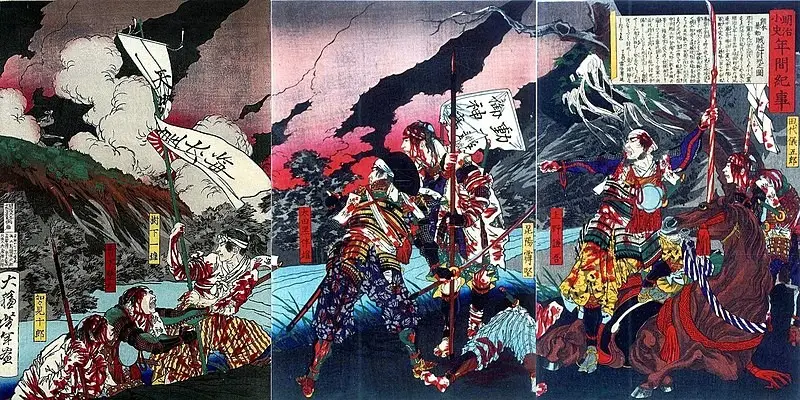
The "Kamikaze War," better known as the Shinpuren Incident, was a rebellion that occurred in 1876 (Meiji 9) in the Kumamoto region, Japan. This conflict was led by members of the shi clan, who opposed the modernization and westernization policies implemented by the Meiji government. The rebels, who were part of an organization called Kampu Ren, advocated a restorationist and nationalist ideology, deeply rooted in Shintoism, and resisted foreign influences that were transforming Japanese society.
The term "Ren" refers to the organization of the village party in Kumamoto, and the members of Kamifuren (also called the Kyojin Party) were known for their ultraconservative and xenophobic stance, rejecting the reforms that were dismantling Japan's feudal order in favor of a centralized and modernized state.
The rebellion culminated in a violent confrontation against government forces, which eventually suppressed the insurrection. Despite its military failure, the Shinpuren Incident left a lasting mark on Japan's history as an example of resistance to the forced modernization process.
The rebellion also influenced Japanese literature, being the central theme of the second volume of Yukio Mishima's tetralogy "The Sea of Fertility," titled "Running Horse." Mishima used the incident as a backdrop to explore themes such as the conflict between tradition and modernity, religious faith, and nationalism, themes that resonate deeply in Japanese culture.
What is Kamikaze in Funk and in Brazil?
In the context of Brazilian funk, "Kamikaze" is a term that has been gaining popularity and, just like in the historical and Western context, carries a connotation of boldness and bravery. In funk, "Kamikaze" is used to describe someone who acts fearlessly, taking extreme risks without caring about the consequences. This can refer to a daring attitude, whether in personal life, on the streets, or even on stage during a performance.
The word can also be used to express the idea of a "warrior" or someone who is willing to face any challenge head-on, regardless of the dangers involved. Within funk lyrics, "Kamikaze" may be associated with themes such as loyalty, courage, and a lifestyle where risk is a constant.



Community
Comments
0 comments
There are no published comments in this language yet.
Send comment