Karaoke is popular and highly regarded as a form of entertainment for the Japanese. In this article, we will discuss the origin of karaoke, why the Japanese enjoy karaoke so much, and many other curiosities.
It's funny to think that here in the West, karaoke is not very popular. Only a small percentage of people think of this type of entertainment, even though Brazilians enjoy singing.
The alternatives and cultural differences make traditional karaoke from Japan practically nonexistent in the West. What are these cultural differences? In this article, we will see some curiosities about karaoke in Japan and the West.
The word karaoke [カラオケ or 空オケ] originated in Japan and has no accent. Its meaning comes from the ideogram [空] which means empty and ookesutoru [オーケストラ] which means orchestra. It literally means empty orchestra!
Contents5
How Karaoke Originated - Origin
There are several rumors about how this entertainment equipment originated. It is said to have been discovered about thirty years ago in the city of Kobe. However, others claim it was already known a long time ago, in the fifties and sixties.
Everything is said to have started with an American television show. Television viewers followed a bouncing ball over the part of the song lyrics that should be sung on their TV screen.
After its appearance on American television, the Japanese would have invented the karaoke as we know it today. For the first twenty years, the device existed only in Japan and after that period it spread all over the world.
However, it is also said that the first karaoke machine, the Juke-8, was built by a Japanese musician and inventor, Daisuke Inoue, in 1971. But it was a Filipino inventor, Roberto del Rosario, who held the patent. He developed the Karaoke sing along system in 1975.
How Did the Karaoke Box Come About?
After the emergence of the Karaoke equipment for homes, many sales problems began to appear. At that time, most Japanese houses were built of wood, so when people sang at home at night, they disturbed the neighbors a lot.
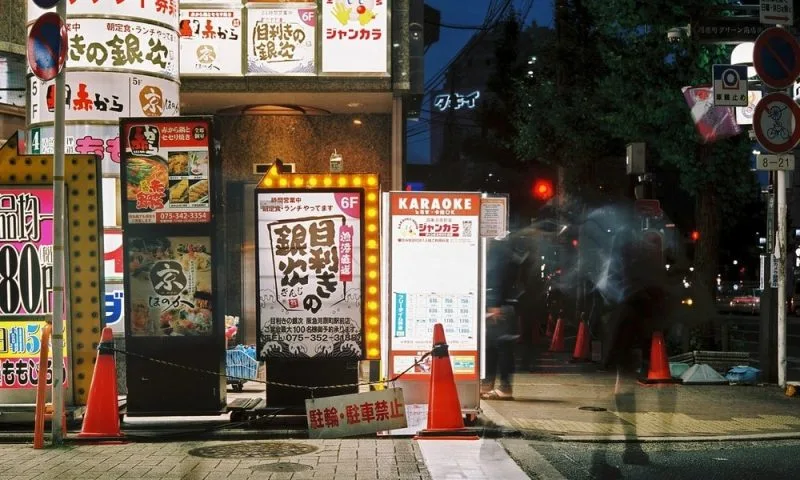
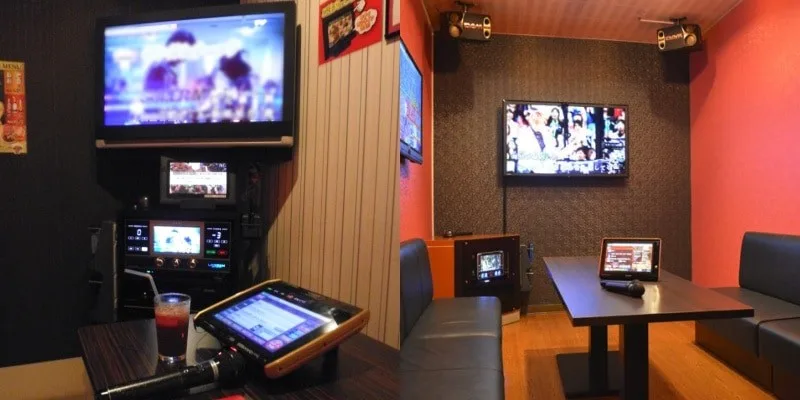
This is the reason for the creation of “Karaoke boxes,” acoustically isolated rooms closed with a door. They were usually located along roads, where people could sing freely without disturbing anyone.
The first “karaoke box” was built in 1984 in a rice field in Okayama, in the eastern region of Kansai. Over time, they became more common even near cities. Nowadays, you can find a building full of rooms for people to sing karaoke anywhere.
Why do the Japanese like Karaoke Boxes so much? The explanation for this phenomenon spreading so much in Japan can be summed up in two words: “Privacy and convenience.”
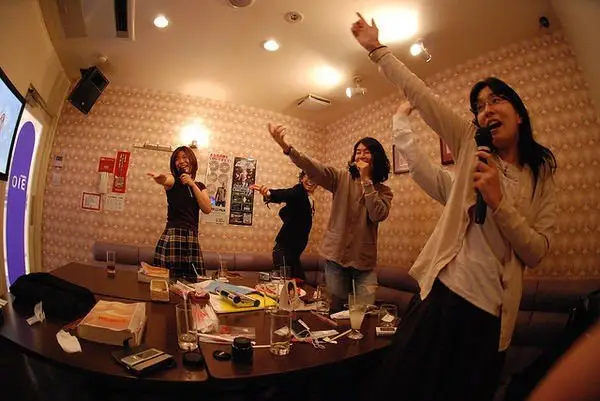
What does this mean? You may be a musical talent or a shower singer, but no one outside will hear you. Thus, you can sing poorly, well, rap, rock, jazz, loudly, softly, etc. Only you and those accompanying you will hear.
And normally, it’s just your friends, family, or something similar. People with whom you have no inhibitions. This explains the part about “privacy.”
Briefly explaining about convenience, we can mention the wall phone with a direct line to the kitchen. Normally, and generally, there are these phones or similar devices. These serve so you can order all the food and drinks you need. This without even having to get up from your seat.
These are some of the reasons why Karaoke Boxes are so popular!
Karaoke in the West
As we know, globalization is not exactly a transporter and diffuser of culture. Often it acts as a modifier and regulator of culture. To explain better, it can very well change and adjust some aspects of a culture to fit into another.
With karaoke, it played the role of modifier. Thus, when this entertainment was spread in the West, it underwent changes. As we mentioned, in Japan, from the beginning there were reserved rooms called karaoke boxes.
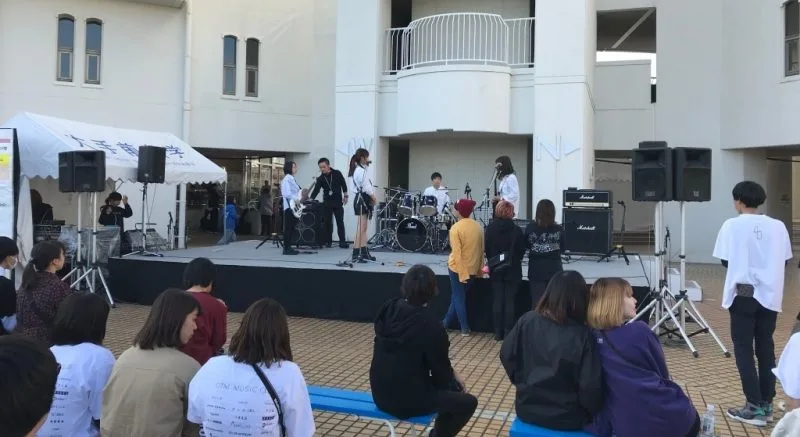
In the West, people tend to be exhibitionists, so most of the time karaoke is in a public place or club. In Japan, there are both karaoke at home and karaoke bars, but the Japanese prefer to go out in a small group and rent a karaoke box.
Thus, in the West, karaoke machines came out of reserved places and were placed in a public location. The Japanese, on the other hand, prefer to stay in a reserved space, which generates the great success of karaoke boxes.
Note from Kevin - I agree from experience, I felt much more comfortable singing with friends in a karaoke box than in a karaoke bar full of strangers. If I felt embarrassed, imagine the Japanese?

Another thing that differentiates the popularity of karaoke in Japan and the West is its cost. It is not very viable for a business owner to create several rooms with soundproofing if they would make much more profit by placing a karaoke machine in a bar.

Not to mention that a microphone and a stage are a paradise for those intoxicated who lose their shame. However, this truth only applies to drunk people who are already a bit uninhibited. That is why most karaoke both in Japan and in the West offer drinks.

What are the benefits of singing karaoke?

Singing releases endorphins, which are responsible for the feeling of well-being and happiness, making it a natural antidepressant. This also helps improve your mood.

Another factor is that when singing, the muscles in the body relax and release tension. This reduces levels of the stress hormone, called cortisol, in the bloodstream. This significantly reduces that feeling of stress.

In addition to the physiological benefits, increased blood circulation allows for greater oxygenation of the brain. This action increases attention, concentration, and memory. It has even been established that the act of singing helps people with dementia and Alzheimer’s maintain their memories.

Singing karaoke with your friends can improve your social life. The bonds involved among everyone can be deepened by the degree of intimacy involved in singing in front of others. Not to mention that the act of singing in public strengthens your confidence. At first, amateurs feel scared and nervous.

But as your performance improves, your relatives and friends recognizing you as a good singer strengthens that confidence. When you need to make important work or academic presentations, you will do so with more skill and confidence.

Do you like karaoke?

Many Brazilians would say they don't like karaoke because they don't want to be embarrassed or because it's for show-offs. The truth is that everyone likes to sing, but they don't admit it; proof of this is the success of apps like Smule.

Not to mention that most Brazilians sing the songs without looking at the lyrics accompanied by a sung version. I think most Brazilians prefer to sing by ear to a song than to sing the lyrics accompanied by an instrumental version.


What is your opinion, do you like to show off and showcase your musical talent? Or would you prefer a more reserved, oriental-style karaoke? Leave your comment. If you have any questions, suggestions, or anything like that, also leave a comment.
Kevin Henrique has written about the Japanese language, culture, anime, games, and travel since founding Suki Desu in 2014. He first visited Japan in 2016.
Community
Comments
0 comments
There are no published comments in this language yet.



Community
Comments
0 comments
There are no published comments in this language yet.
Send comment