
Surviving the Titanic should have been a second chance at life. For Masabumi Hosono, the only Japanese passenger on board, it became a lifelong trial: he made it into a lifeboat, returned home, and found newspapers and officials treating his survival as a moral failure.
His story is not only about ice and panic on the North Atlantic. It is about what a society expects of a man when “women and children first” collides with the desire to see one’s family again—and how a private decision can be rewritten as national shame.
Contents 10
Who was Masabumi Hosono?
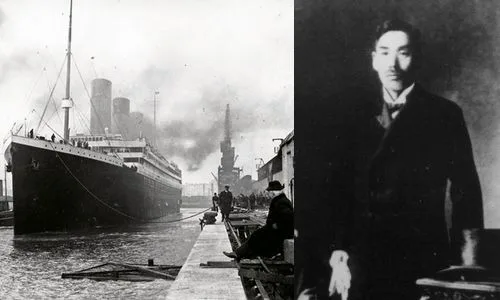
Masabumi Hosono (細野 正文) was born in 1870 in Hokura, in what is now Niigata Prefecture. He built a career as a civil servant around Japan’s expanding railways, studied Russian, and by 1910 was sent to research the Russian state railway system for the Japanese Ministry of Transport. On the way home he stopped in London, then boarded the RMS Titanic at Southampton on 10 April 1912 as a second-class passenger—the only Japanese traveler on the maiden voyage.
He was not a celebrity or a first-class name. He was a middle-aged official with a wife and children waiting in Japan, returning from a technical mission on what was then the most famous ship in the world.
The night the ship went down
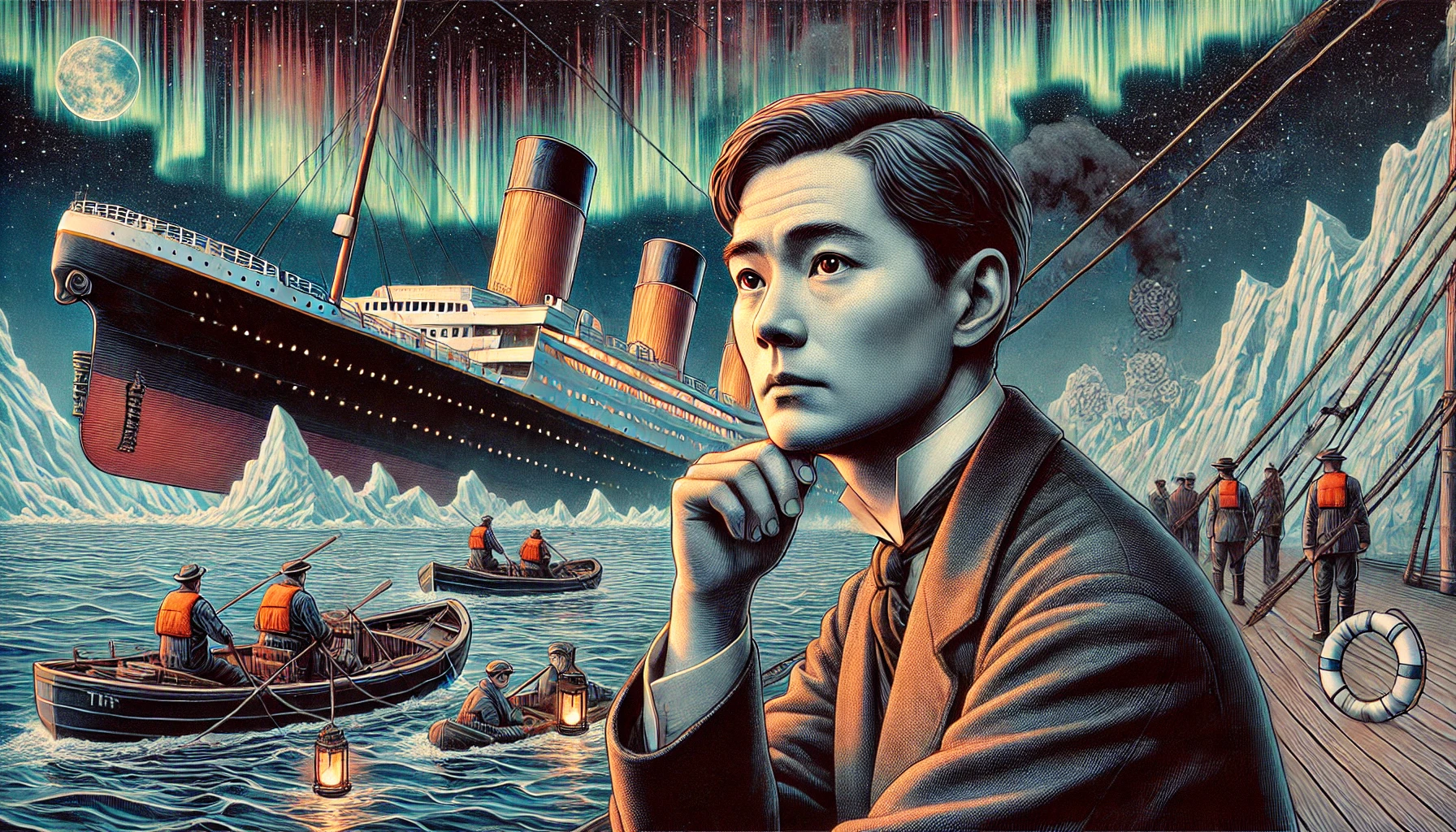
On the night of 14–15 April 1912, a steward woke Hosono in his cabin. As a foreigner, he was pushed toward the lower decks and kept away from the boat deck while lifeboats were already being loaded. Flares lit the sky; he later wrote of “hideous blue flashes” and a fear he could not shake.
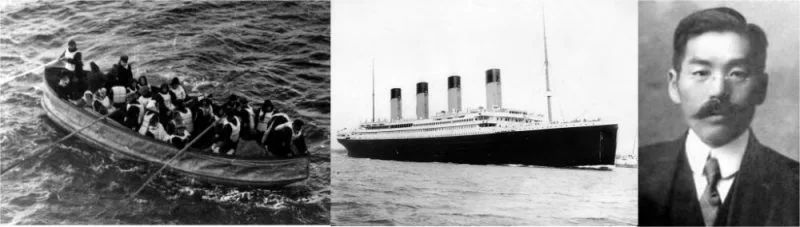
He watched boats leave and prepared himself for death, thinking of his wife and children. Still, he kept looking for a chance to live. When an officer loading a lifeboat called that there was room for two more, another man jumped in first. Hosono followed. Titanic historians place him in lifeboat 10—not a glamorous escape, but a narrow seat after women and children had already been ordered in.
Around 8 a.m. on 15 April, the boat’s passengers were taken aboard the RMS Carpathia. On the voyage to New York, Hosono used Titanic-headed stationery he still had in his coat to write a detailed Japanese account of the night—today one of the rare survivor narratives written on the ship’s own paper.
The weight of survival
Criticism in Japan
At first his return drew curiosity more than fury. Then the tone hardened. In an era that prized self-sacrifice and public face, many Japanese readers heard his survival as a betrayal of expected male courage—the same cultural vocabulary that idealizes courage under pressure, duty, and honor. Commentators framed the disaster through ethics of selflessness closer to the samurai ideal of bushido than to the messy reality of a sinking ship.
He was branded a coward in the press, lost his government post for a time, and lived under a social stigma that also touched his family. The humiliation was real even when later researchers argued that some textbook tales about him were exaggerated for the 1997 film era. What matters for the human story is simpler: surviving was treated as something to apologize for.
Accusations from the West
Japan was not the only source of poison. In English-language accounts, Archibald Gracie called him a “stowaway” on the lifeboat, and a crewman later told a U.S. Senate inquiry that Asian men had disguised themselves as women to board—claims that do not match Hosono’s own account of an officer calling for two more seats. A man who had already lived through the wreck spent the rest of his life under rumors that questioned not only his honor, but the facts of how he left the ship.
Work, silence, and a long shadow
Hosono was eventually taken back into railway work—his skill was hard to replace—but he rarely spoke of the Titanic. At home, the subject became almost forbidden. He died in Tokyo in 1939. The shame narrative outlived him by decades.
Why was he judged so harshly?
Historical context
Early twentieth-century Japan was racing to prove itself among the great powers. National dignity was public currency. Male survivors of Western disasters were easy targets for lectures about honor, especially when “women and children first” had entered Japanese debate as a modern, internationally admired rule. Ritual extremes such as seppuku belonged to older warrior culture, but the broader demand—put the group and its image above the individual—still colored how people read Hosono’s choice.
Hosono did not break a maritime law by taking an empty seat after an officer called for two more men. He broke an expectation: that a Japanese man should prefer a noble death to a contested life.
A matter of perspective
Put yourself on that deck, with flares in the sky and the last boats leaving. Most people would seize the same chance. The anger aimed at Hosono says as much about collective ideals of sacrifice as it does about one civil servant in a freezing boat. His case also sits next to other male survivors—Western and Japanese alike—who were mocked simply for living when so many women and children died. The double standard was not uniquely Japanese; the intensity of the local shaming was.
What Hosono left behind
The most powerful counterargument to the “coward” label is his own handwriting. The letter and diary pages describe fear, duty, the cries after the ship sank, and the women and children weeping for husbands and fathers still in the water. They show a man who expected to die with dignity as a Japanese subject—and who still could not stop hoping to see his family again.
For years the papers stayed largely private. Around the 1997 release of James Cameron’s Titanic, Hosono’s family shared his writings more widely. Researchers used them to push back against mistaken stories that had blurred him with other Asian men accused of “ignoble” behavior. Public sympathy grew; his grandson, musician Haruomi Hosono, spoke of a family honor finally eased. That is not a Hollywood redemption montage. It is a late, partial correction of a narrative that had been cruelly simple.
Today Masabumi Hosono is remembered less as a villain of honor than as a warning: cultures invent scripts for how people should die, then punish those who refuse the role. His survival was ordinary human will. The condemnation was the extraordinary part.
If you had been in his place—officer shouting for two more, one seat left—would you have stayed on deck to satisfy a newspaper you would never read? Hosono’s answer was life. History spent a long time arguing with it.


Community
Comments
0 comments
There are no published comments in this language yet.
Send comment