
The Edo Period, also known as the Tokugawa Era (1603–1868), was a crucial moment in Japan's history, marked by political stability, cultural growth, and economic expansion. During this time, the country organized itself into structured networks of roads and routes that connected cities, towns, and rural areas. These routes played an essential role in transporting people, goods, and culture, profoundly shaping Japanese society.
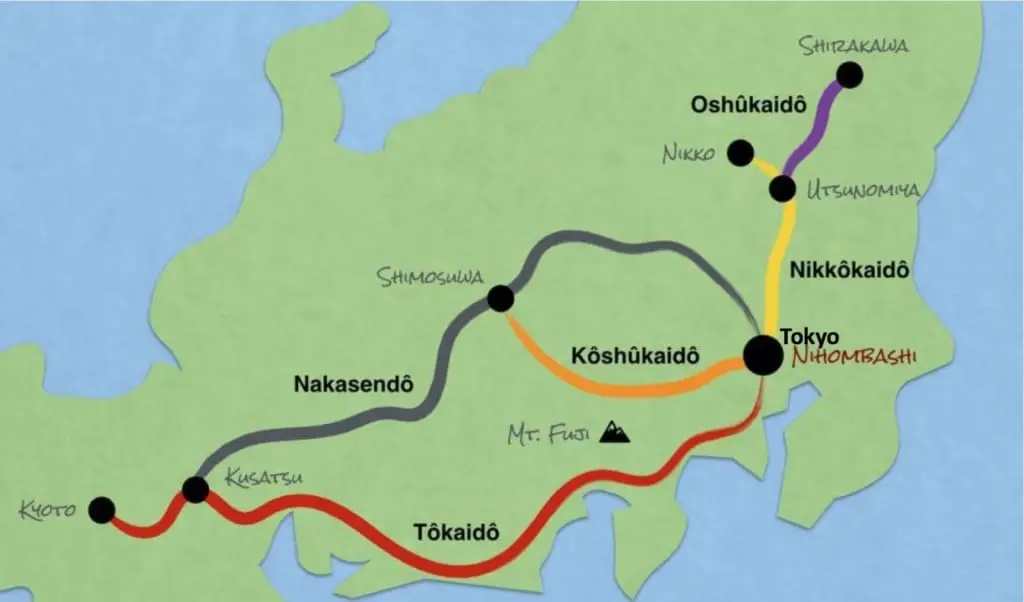
Among the most significant contributions of this period are the so-called Five Routes of the Edo Period (五街道, Gokaidō). They served as the main arteries of Japan, linking the capital Edo (modern Tokyo) to the rest of the country. Let's explore each of them, their characteristics, functions, and historical importance.
Contents 20
Tōkaidō: The Busiest Route
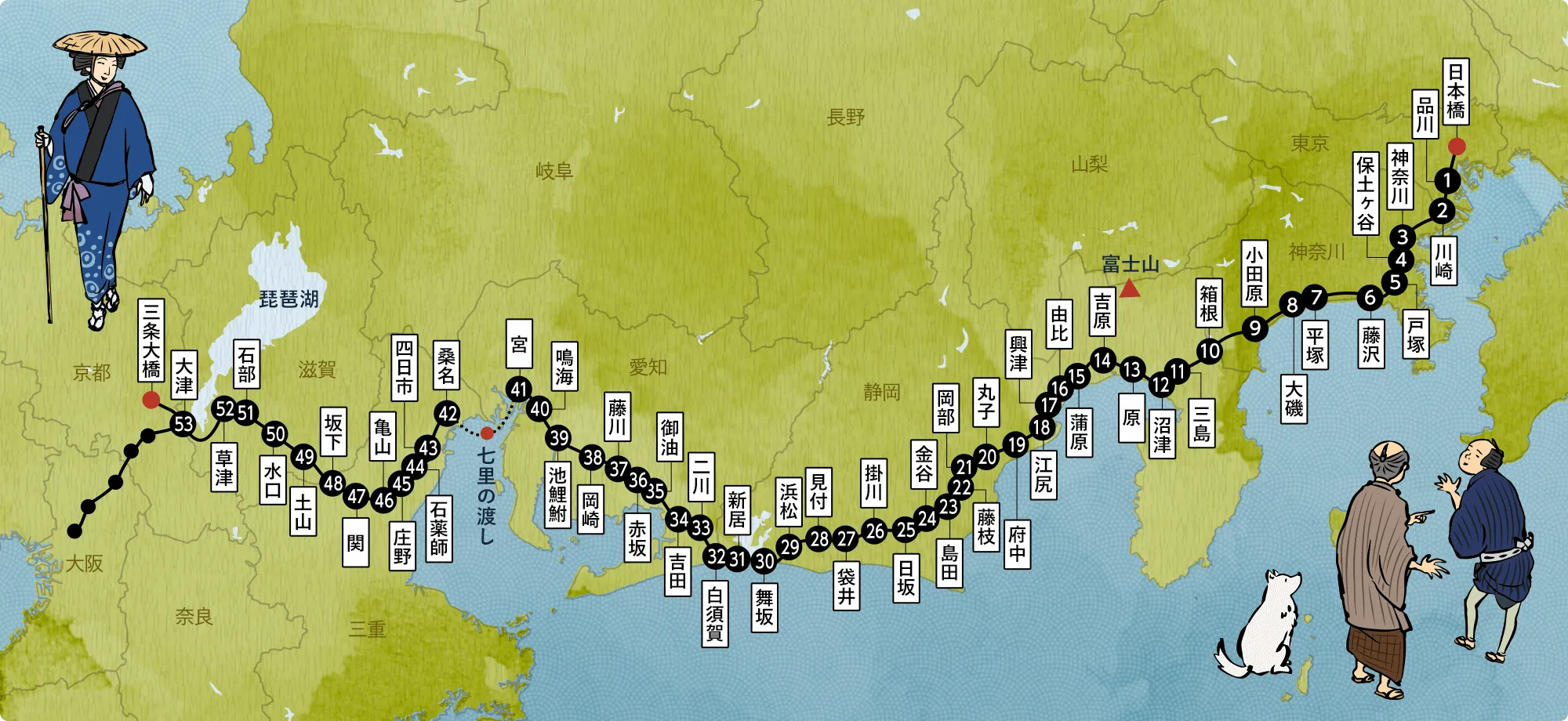
The Tōkaidō, which literally means "Eastern Sea Road," was the most important and busiest route of the Edo Period. Stretching about 500 km, it connected Edo to Kyoto, passing through 53 rest stations known as shukuba. These stops were essential for travelers, providing accommodations, food, and horse services.
Characteristics and Functions
- Trade and Administration: The Tōkaidō was used for transporting commercial goods, official messages, and travel for the Tokugawa shogunate.
- Art and Culture: It inspired various works of art, such as the prints "The 53 Stations of the Tōkaidō" by Hiroshige, which depict scenes of daily life along the road.
- Religious Travel: Many pilgrims used this route to visit temples and shrines, such as the famous Ise Shrine.
Today, part of the old Tōkaidō has been transformed into the route of the famous Tōkaidō Shinkansen bullet train, a symbol of Japan's modernization.
Nakasendō: The Mountain Route
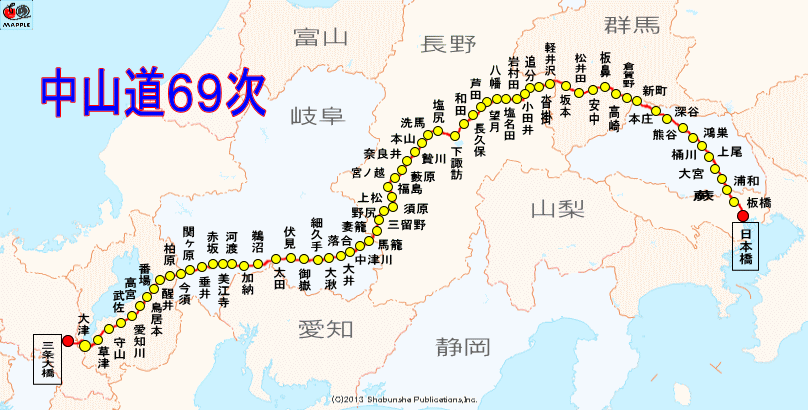
The Nakasendō, or "Central Mountain Path," was an alternative to the Tōkaidō for those who preferred to avoid coastal regions. With about 69 rest stations, this route traversed mountains and stunning landscapes, offering a different experience to travelers.
Highlights of the Route
- Natural Scenery: The Nakasendō is known for its mountain, river, and forest landscapes, being popular among poets and artists of the time.
- Safety: Being far from the coast, it offered greater protection against pirate attacks and adverse weather conditions.
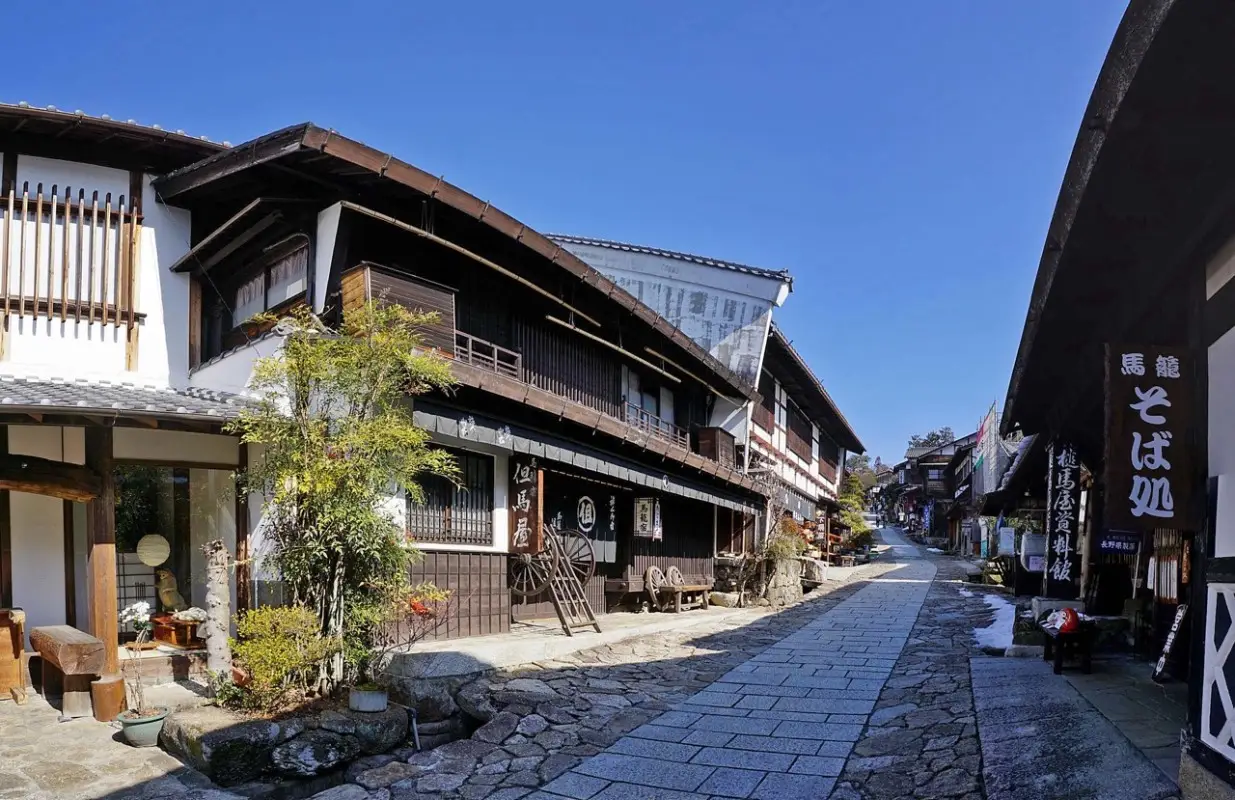
- Historical Preservation: Some villages along the Nakasendō, such as Magome and Tsumago, maintain their original charm to this day, attracting tourists interested in history.
The restored paths of the Nakasendō are perfect for modern hiking, providing a glimpse into ancient Japan.
Kōshū Kaidō: The Route of Wine and Silk
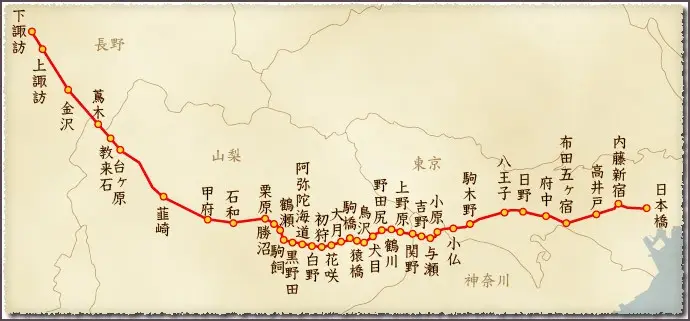
The Kōshū Kaidō connected Edo to the Kai region (modern Yamanashi). This route played a crucial role in transporting regional products, especially silk and wine, which were essential for the local economy.
The Influence of the Kōshū Kaidō
- Regional Trade: It facilitated the export of agricultural and artisanal products, connecting rural economies to Edo.
- Religion and Culture: Pilgrims and monks often used this road to access temples in the mountainous regions.
- Rich Landscapes: The Kōshū Kaidō passed through vineyards and rice fields, offering unique views that can still be appreciated today.
The popularity of this route remains alive, especially due to the development of wineries in Yamanashi.
Ōshū Kaidō: The Gateway to the North
The Ōshū Kaidō was the main link between Edo and northern Japan. Although it was less busy than the Tōkaidō, it played a strategic role, connecting areas rich in natural resources and important for the defense of the shogunate.
Strategic Role
- Natural Resources: It was used to transport timber, fish, and other resources from the north.
- Cultural Connections: The road facilitated cultural exchange between Edo and remote regions.
- Militarism: It served as a route for troops and supplies in times of conflict.
Today, parts of this route are still preserved, providing a rich historical experience.
Nikko Kaidō: The Spiritual Path
The Nikko Kaidō was built primarily to facilitate access to the Toshogu Shrine, dedicated to Tokugawa Ieyasu, the founder of the Tokugawa shogunate. Although it is the shortest of the Five Routes, its spiritual importance set it apart.
Unique Elements
- Ceremonial Path: It was often used in religious processions and commemorative events.
- Natural Beauty: The route passed through areas of dense forest, creating a serene atmosphere.
- Toshogu Shrine: As the main destination, this shrine remains an architectural and historical landmark.
The Nikko Kaidō is perfect for those who wish to combine spiritual and historical tourism in a single trip.
Juku: The Rest Stops on the Edo Routes
Along the Five Routes of the Edo Period, the juku (宿) played an essential role as rest and support points for travelers. These locations were strategically positioned villages between the main stations of the routes, offering basic infrastructure to meet the needs of those traveling long distances.
What Were the Juku?
The juku functioned as stops equipped with inns, restaurants, and stables for horses. They were fundamental for logistics and safety on the roads, providing a place where travelers could rest, eat, and prepare to continue their journey. Some juku villages, such as Hakone-juku on the Tōkaidō, became famous for their landscapes or regional products.
The Structure of the Juku
- Accommodation: Accommodations ranged from simple inns to luxurious lodges, depending on the importance of the route and the region.
- Local Trade: Merchants took advantage of the juku to sell regional goods, such as crafts and food, to travelers.
- Horse Services: Many stops included stables for changing and feeding horses, essential for messengers and merchants.
Cultural Relevance
In addition to their practical function, the juku also became centers of cultural exchange. People from different regions interacted at these points, exchanging stories, information, and ideas. This contributed to the strengthening of Japan's cultural identity during the Edo Period.
Today, some of the ancient juku are preserved as tourist attractions, allowing visitors to experience the atmosphere of historical Japan.
Each route had a specific number of stops, known as shukuba-machi (宿場町). Below are some of the most notable on each of the routes:
Tōkaidō (53 Stations)
- Nihonbashi (starting point in Edo, now Tokyo)
- Kanagawa (near modern Yokohama)
- Hakone (famous for its hot springs and mountainous landscapes)
- Shizuoka (an important commercial center)
- Kyoto (final point of the route)
Nakasendō (69 Stations)
- Nihonbashi (shared with the Tōkaidō as the starting point)
- Magome (preserved to this day as a tourist destination)
- Tsumago (another iconic example of a restored historical village)
- Karuizawa (now a popular mountain resort)
- Kyoto (also shared as the final point with the Tōkaidō)
Kōshū Kaidō (44 Stations)
- Nihonbashi (common starting point for the main routes)
- Hachiōji (an important commercial and transportation center)
- Enzan (in the vineyard region of Yamanashi)
- Kofu (capital of the former Kai province)
- Shimosuwa (connected to the Nakasendō)
Ōshū Kaidō (27 Stations)
- Nihonbashi (again the starting point in Edo)
- Senju (first stop outside of Edo)
- Utsunomiya (a regional center still relevant today)
- Shirakawa (entry point to northern Japan)
- Matsushima (famous for its stunning coastal views)
Nikkō Kaidō (21 Stations)
- Nihonbashi (as the starting point)
- Kawagoe (called "Little Edo" for its architecture)
- Urawa (now Saitama, an important suburb)
- Imaichi (last station before the Toshogu shrine)
- Nikkō (the final destination, with the grand Toshogu Shrine)
These stops were fundamental not only as rest locations but also as points of social and commercial interaction along the routes. Many of them are now preserved as historical landmarks, allowing visitors to explore a Japan that still echoes the past.
Conclusion
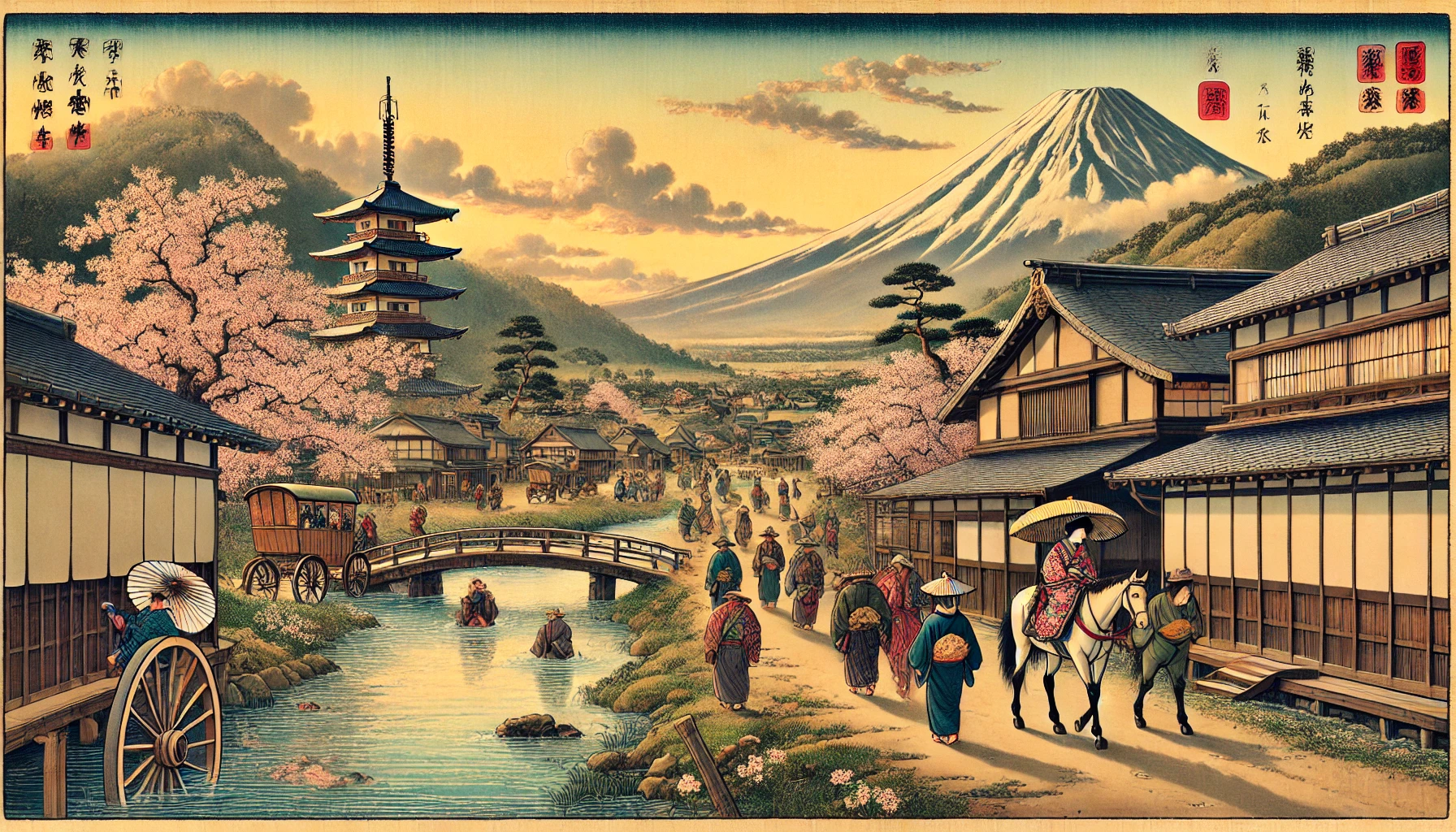
The Five Routes of the Edo Period were much more than mere roads. They connected Japan on economic, cultural, and spiritual levels, shaping the national identity in a lasting way. Today, they remain as witnesses of the past, attracting historians, tourists, and enthusiasts for their rich stories and stunning landscapes. Exploring these routes is to dive into a Japan that unites tradition and modernity.


Community
Comments
0 comments
There are no published comments in this language yet.
Send comment