Today, with the range of animes created, we see that there are anime of various types. In this article, we will address a specific case, animes with concepts of physics and chemistry. We will talk about three specific animes: Fullmetal Alchemist, Aldnoah Zero, and Boku no Hero Academia.
This article was submitted through our form by someone nicknamed Naruto Olavo. Thank you very much to the author of the article; we reviewed and added some extra information for the reader. I hope everyone enjoys it.
1
Synopsis: A very famous anime with 2 versions, the most recent and complete with 64 episodes that tells the story of 2 brothers who lose their mother and try to resurrect her with alchemy; everything goes wrong, and one loses an arm and a leg while the younger one loses his body. The two embark on a long journey in search of the Philosopher’s Stone to recover their bodies while a gigantic conspiracy unfolds in the country. If you haven’t watched this masterpiece yet, watch it!
The first one is an anime that has alchemy as its backdrop; this was a predecessor of modern chemistry, but it encompassed other sciences as a whole, where it was the union between the scientific and the religious. There are reports that this science emerged in the ancient civilizations of Mesopotamia.
Its goal was to transform any metal into gold, the elixir of long life; they would achieve this with the Philosopher’s Stone, which was one of the reasons for so much study, the creation of humans artificially. This way of practicing science soon crumbled, as it was hermetic and esoteric; it was not like chemistry and the sciences today, where knowledge is available to anyone.
In the alchemist world of Fullmetal, there is a law that governs all alchemy: if you want to obtain something, you must pay an equivalent price. This law is very similar to a statement by Antoine de Lavoisier that became a phrase everyone knows, “in nature, nothing is lost, nothing is created, everything is transformed.” This implies that you cannot create something from nothing; you need something that gives rise to it or serves as a base, nor can you completely destroy something.
1
Synopsis: An apparently cliché superhero anime but with a great story and among the most popular shounen today.
Many of the powers present in this anime are explained by their holders in a scientific way, as in the case of Bakugou explaining his explosions due to a substance he produces and controls its ignition and explodes. Or in the case of Shouto, where his individuality allows him to create ice on one side and flames on the other; this can be explained as his ability to extract heat from one side and thus become cold, he will steal the heat from the moisture in the air, thus condensing the water on his body and at the same time solidifying it. With this absorbed heat, he can release this energy on his other side.
In a battle between Shouto and Midoriya, in their final clash, Shouto decides to use his other half, the hot side, along with his cold side; in this, they engage in combat and finish the battle with an explosion. Professor Aizawa explains that the air that had been cooled was heated all at once, causing this explosion. An explosion is basically a production of gas in a short space of time; the air expands, causing an explosion.
1
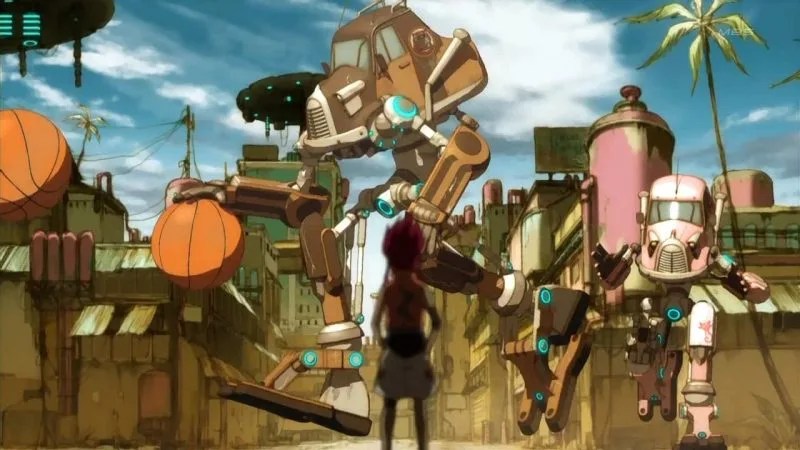
Synopsis: It shows the political and war tensions between humans living on Earth and others living in space. The anime is great and has one of the best soundtracks I have ever heard in my life composed by the myth Hiroyuki Sawano.
Inaho in this anime stands out for being an intelligent and strategic character; in most of his battles with mechas, his mecha presents inferior technology. He wins by being smart. In one of several episodes, he uses logic.
He is fighting against a Martian Kataphrakt in which he uses electricity to defend and attack others; he reaches his terrestrial Kataphrakt, and his opponent tries to use electricity, and he says, “electricity flows from higher potential to lower; your bolts will not hit something with the same electric potential as you.” He uses scientific knowledge to gain an advantage over his enemy, according to which, for there to be a flow of electric current, there must be a difference in potential.
Other animes that use scientific concepts
In the three animes discussed, we can see that there are many other scientific concepts to be studied. Not only in these three animes but in many others. To conclude, let’s provide a list of animes that use science as a basis:
Have you ever wondered what Gundam is? What is the correct order to watch the numerous Gundam anime that exist? How did the Gundam franchise come about? How has the popularity of these robots affected the entire world? What is the timeline of the Mobile Suit Gundam universe? In this article, we will see a complete guide to this popular mecha robot franchise in Japan and around the world.
When you were a child, did you ever see those toys that were in the shape of mecha robots? If I left that too vague, I will rephrase the question. In any child’s childhood, they will certainly receive some type of toy, whether cars, puzzles, board games, dolls, etc. So, among these toys, there are those in the shape of robots. Yes, those that most of the time had humanoid shapes full of weapons, details in the armor, well designed, etc. So, have you ever played with or had experiences with these Robots?
I believe most answers will be “yes,” unless you are an older person. In this post, we will talk about these Robots, more specifically what gave rise to the popularity that robots have in Japan today. Just emphasizing that these Robots are of international brand and are successful in Japan and worldwide. At least the ones that are official, that is, manufactured by the Registered brand.
Origins of Mobile Suit Gundam
Mobile Suit Gundam (MSG), or simply Gundam, is an anime franchise. Being part of the mecha genre, its plot revolves around robots that are used as military weapons. It is clear that in this regard, MSG was the first anime to use giant robots, the main part of the mecha genre, as weapons. Well, the interesting thing would be the type of wars and combats in which they would be put. But with advanced technological robots, would space wars be a surprise?
With a world that is extremely more technologically advanced, this would be possible. And with the robots in this science fiction world, placed in space battles, there was no way it could go wrong, and this is proven by the success it made and continues to make to this day. And of course, the industry would not miss the opportunity to make money.
The name Gundam would be an abbreviation of Gun and Freedom (in Japanese pronunciation, furidamu). In Japanese, Gundam is written as gandamu (ガンダム).
The Mobile Suit Gundam Franchise
Created by Yoshiyuki Tomino and Hajime Yatate at Sunrise studio in 1979. Gundam had a difficult start. But its success began in the 80s and as mentioned before, it endures to this day, and over time it has accumulated everything from anime to video games. Sunrise is known for creating anime franchises with mecha robots like the famous Code Geass.
To be more precise, Gundam is also a franchise. And its brand produces various products on this topic, such as anime, movies, OVAs, manga, novels, video games, and even parodies of the anime. This franchise was so successful that a giant statue was created in the neighborhood of Odaiba Tokyo.
This franchise is under the name of the multinational Bandai Namco, and it is the most profitable for the company. It contains the patent for the products of the entire series. However, while audiovisual products like anime and movies are the main revenue generators, the plastic models of the robots are another major generator, they are called Gunpla (Gundam Plastic models).
History of the Gundam Franchise
Gundam is a highly well-crafted anime, its science fiction genre revolutionized the market with its theme of an advanced universe and its war tactics that included robots and space battles. Its stories were also meticulously crafted to avoid conflicts in the plot, both in the main storyline and in the plots of the anime series that would later diverge from the main story.
In 1994, Sunrise, the original producer, was bought by Bandai. And at that time, Bandai invested in this anime, increasing the presence of Gundam in all types of media. It also hired different creative teams for the series. This is because Gundam had room for more stories due to its alternate universes, that is, different stories but in the same MSG universe (another tactic to expand the franchise used by Bandai).
Bandai’s focus was not on the story; companies prioritize generating revenue instead of a plot. And as Bandai wanted to expand market opportunities through various potential stories, it decided to invest in several stories of alternate universes without caring whether or not to continue the main series. For this reason, the anime series of Gundam seem a bit incomplete, and it is also the reason why there are several different Gundam series.
The Main Gundam Anime
Since there are several Animes in this series, it would be counterproductive to explain, or rather, to try to explain all of them here in this article. I don’t want that, and I’m sure you don’t want that either. For this reason, I will only comment on the main anime, which would be the first to be released and from which the thematic universe was taken as the basis for all other alternate universes.
The name is not new, Mobile Suit Gundam, also known as Gundam 0079, aired in 1979 and was released with 43 episodes. With the mecha genre, it was written and directed by Yoshiyuki Tomino. The series was later re-edited and reduced to be transformed into 3 movies for theaters.
Mobile Suit Gundam I: released on March 14, 1981;
Mobile Suit Gundam II: Soldiers of Sorrow: released on July 11, 1981;
Mobile Suit Gundam III: Encounters in Space: released on March 13, 1982;
Synopsis of Mobile Suit Gundam
In the anime, Earth is suffering from overpopulation and pollution. In this situation, the solution was to colonize space. For this, countless space colonies were created around Earth, these colonies were called Sides. This resulted in the beginning of a new era, the space era, and was named UC 0001 (Universal Century).
After 58 years of peace, humanity grew to a population of 11 billion inhabitants. In UC 0058, the colony named Side 3, the farthest from Earth, declared its independence from Earth. Don’t ask me what the logic behind that is. But under the command of a certain Zeon Zum Daikum, the Republic of Zeon was created, also called Zion. However, despite the independence, the two sides still maintained good relations, but in UC 0068, Zion was killed, and the Republic fell under the control of a family of tyrants, known as Zabi. And with that, the Republic of Zeon declared war against Earth in UC 0079. This war became known as the One Year War.
About 3 billion people died due to the destructive power of the nuclear and biological weapons used in the war. An agreement made between the sides definitively prohibited the use of these armaments. After that, 8 months of peace passed.
During this time, Zion built war robots, which were named Zaku. With a height of 18 meters and piloted by a human. In contrast, Earth created the Gundam RX-78-2 (they could have given it an easier name).
Earth began mass production of the Gundam after its success. And with this, a final attack was launched against Zion and its commander, the antagonist of the series, Char Aznable.
Although it seems like a simple story, Gundam has a “complicated” timeline and is frequently modified at the creators’ whim, who are responsible for the existence of so many alternate universes. These may or may not modify the main timeline.
But in any case, what I will present next is just the timeline of the main story. And based on it, the other stories will develop. Therefore, I advise those who wish to start watching or even those who already watch and want to understand the anime better to pay close attention to this chronological line.
Sometimes we will write GUN-DAM or abbreviate it as GM or MSG for aesthetic mobile reasons and to not negatively affect the SEO of the article. I hope you don’t mind!
Universal Century
The Universal Century (UC) is the English name for the original timeline of MSG. In Japanese, it is called “Uchuu Seiki,” which means “The Era of Space.” The Universal Century is the most developed timeline in this franchise, with a significant advantage over the others. It includes four TV series, four OVA series, fifteen theatrical releases, and several specials.
UC 0068: MOBILE SUIT GUN-DAM I Blue-Eyed Casval (2015);
UC 0071: MOBILE SUIT GUN-DAM A ORIGEM II Artesia’s Sorrow (2015);
UC 0078: MOBILE SUIT GUN-DAM A ORIGEM III Dawn of the Rebellion (2016);
MOBILE SUIT GUN-DAM A ORIGEM IV Eve of Destiny (2016);
UC 0079-0080: MOBILE SUIT GUN-DAM (1979-1980);
MOBILE SUIT GM: Team 08 MS (1996 – 1999);
MOBILE SUIT GM MS IGLOO (2004 – 2009);
MOBILE SUIT GM 0080: War in the Pocket (1989);
MOBILE SUIT GM Thunderbolt (2015-2017);
UC 0083: MSG 0083: Stardust Memory (1991 – 1992);
UC 0087-0088: MOBILE SUIT ZETA GM (1985 – 1986);
ZETA GUNDAM: A New Translation (2005 – 2006);
UC 0088-0089: MOBILE SUIT GM ZZ (1986 – 1987);
UC 0093: MOBILE SUIT GM: Char’s Counterattack (1988);
UC 0096: MOBILE SUIT GM UNICORN (2010 – 2014);
UC 0123: MOBILE SUIT GM F91 (1991);
UC 0133: MOBILE SUIT GM (1994 – 1997);
UC 0153: MOBILE SUIT VICTORY GM (1993 – 1994);
UC 0203: GAIA GEAR (1987);
UC 0223: G-salvador (2001);
Future Century
Future Century is the timeline of another anime television series, based on the MSG universe, which was named Mobile Fighter G Gundam, and also includes its related projects. I will abbreviate it as FC, to avoid repetition.
FC 60: MOBILE FIGHTER G GUNDAM (1994 – 1995)
After Colony / Mars Century
After Colony is the timeline of the MOBILE SUIT GUNDAM WING series, another series of the franchise, and is often abbreviated as “AC.” The AC timeline develops the struggle of the space colonies for freedom from the Earth-based organization (such as the United Earth Sphere Alliance and Zodiac Organization), in these struggles, the Gundams were built as a way to defend the suffering of the colonies to escape this oppression.
The Mars Century, abbreviated as “MC,” continues the AC timeline and takes place on Mars. The story occurs within the Mars Sphere and is interrupted by flashbacks from the post-colony era. AC has the third most developed timeline, with a TV series, an OVA series, and a compilation film. The MC consists of a novel.
AC 195: NEW MOBILE REPORT GM (1995 – 1996)
AC196: NEW MOBILE REPORT: GM WING: Endless Waltz (1997)
MC 0022: NEW MOBILE REPORT GM WING: Frozen Teardrop (2010-2015)
After War
After War is the timeline set after a post-apocalyptic war world and has many similarities with the UC. After War is the only timeline, besides UC, to feature Newtypes as an important element. We will abbreviate it as AW.
AW 15: AFTER WAR GUNDAM X (1996)
Correct Century
The Correct Century is the timeline used in ∀ GUNDAM. Its Japanese name, ‘Seireki,’ is a play on words about the Japanese term for the Common Era (CE) calendar system (暦 暦; also pronounced Seireki). Its kanji literally means “Correct Calendar.” And we will abbreviate it as CC.
CC 2343-2345: ∀ GUNDAM (1999 – 2000)
Cosmic Era
Cosmic Era (abbreviated as “CE”) is the timeline of the SEED Gundam series. It is the second timeline developed by several TV series. It is also the second most developed, with two TV series, one ONA, and two compilation films.
CE 71: MOBILE SUIT GUNDAM SEED (2003) – MOBILE SUIT GUNDAM SEED Astray (2003)
CE 73: MOBILE SUIT GUNDAM SEED Destiny (2005) – MOBILE SUIT GUNDAM CE SEED 73: STARGAZER (2006)
Anno Domini
Anno Domini is a timeline where the events of Gundam 00 occur (which uses the Gregorian calendar, the calendar used in the West). So we will use AD as an abbreviation for Anno Domini.
2307-2308 AD: MOBILE SUIT GUNDAM 00 (Season 1) (2008)
2312 AD: MOBILE SUIT GUNDAM 00 (Season 2) (2009)
2314 AD: MOBILE SUIT GUNDAM 00 The Movie – A wakening of the Trailblazer – (2010)
Advanced Generation
The Advanced Generation (abbreviated as “AG” or “A.G.”) is the timeline of the Gundam Era. The age is set several hundred years after humanity migrated to space and lived within space colonies. The wars on Earth ended a long time ago, and the world seems to be in a peaceful era.
AG 115 – 164: MOBILE SUIT GUNDAM AGE (2012)
AG 141 – 164: MOBILE SUIT GUNDAM AGE: Memory of Eden (2013)
Regild Century
The Regild Century is the setting of Gundam Reconguista in G. It is chronologically defined about a thousand years after the end of UC and about 500 years after CC.
Regild Century 1014: GUNDAM RECONGUISTA in G (2015)
Post Disaster
The Post Disaster era is a timeline set 300 years after a devastating war known as the “Calamity War.” We will have PD as an abbreviation.
PD 323: MOBILE SUIT GUNDAM Iron-Blooded Orphans (Season 1) (2015)
PD 325: MOBILE SUIT GUNDAM Iron-Blooded Orphans (Season 2) (2016)
For more information about the MSG timeline or how the mangas and other MSG works fit into this timeline, we recommend visiting the Gundam Wiki.
Gundam as a Hobby
Well, for those who don’t know, collecting MSG figures has become a very popular hobby, especially in Japan. Companies profit greatly from sales. This hobby is also aimed at real robots inspired by the series. Companies invest heavily in these products because the market is favorable.
I researched and saw people of various ages, Gundam fans, with their giant collections of plastic robots. To give you a sense of the price of one of these figures, I will provide the address of a website that sells this type of product.
Unfortunately, I don’t have a basis for comparison just with numbers, but I will try to give a value, clarifying that the economies of the two countries are completely different, so market values and things like cost of living and taxes are also different. So I don’t know if they can be considered expensive or cheap.
Well, I personally really like this genre, after all, it is very successful and has many fans around the world. There is even a term for those who are addicted to Mecha. But the important thing is that with this article you became more informed and perhaps even cleared up some doubts you had. In my opinion, robots are interesting, and I like it when it involves fantasy. A good example is the anime Knight’s and Magic.
I hope this article has helped satisfy your curiosity. Other than that, I can only ask that for any doubts, suggestions, criticisms, or other similar things, you can share by commenting below. This article ends here, and thank you, dear reader, for reading this article up to here. Until the next article.
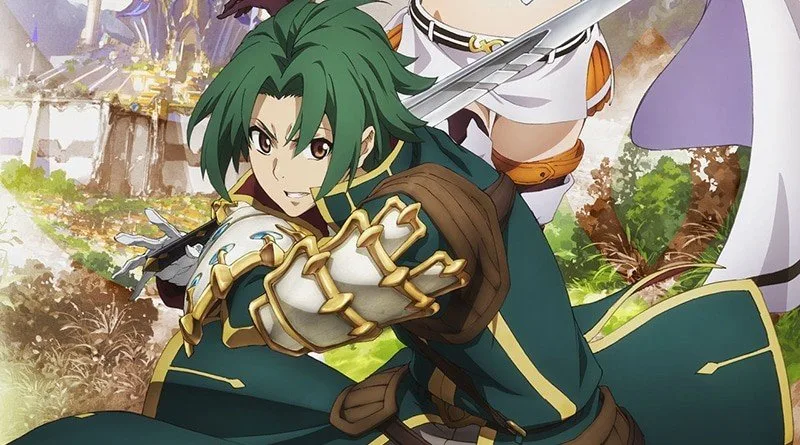
Have you had the chance to watch the anime Grancrest Senki? Did it finish? In this post, we will see some information, curiosities, videos, and images of Grancrest Senki. And the likelihood of a new season or continuation. Additionally, we will look at mangas, novels, and other original and extra materials from the work.
Depending on the situation of Grancrest Senki, we will update this post in the future with curiosities, spoilers, and tips.
Will a new season of the anime Grancrest Senki be released? You want to know if that will happen! To find out, we need to check the popularity and profit that Grancrest Senki had in Japan.
First, let’s look at some curiosities and information about the anime and the original work of Grancrest Senki. We even created a menu to make it easier for you to navigate the article:
Curiosities and Information about Grancrest Senki
Story: In a continent governed by chaos, the Lords have the power of a sacred seal that can calm the chaos and protect the people. However, before anyone realizes this, the rulers have set aside their creed of purifying chaos and instead began to fight each other for each other’s sacred seals to conquer each other’s dominion. Shiruuka, an isolated mage who despises the Lords for abandoning their creeds, and a wandering knight named Theo, who is on a journey to train to free his hometown, make an eternal vow to work together to reform this continent dominated by wars and chaos.
Details about the work: – Gurankuresuto Senki (in Japanese) is a Light Novel written by Ryo Mizuno and illustrated by Miyu published since 2013 with a total of 10 volumes. The anime had a total of 24 episodes and was produced by A-1 Pictures studios.
The Suki Desu website conducted an online search about the continuation of the anime Grancrest Senki and here is what we found about it:
The possibilities of a Continuation or New Season of the anime Grancrest Senki are:
The expected release date is January 19, 2019, to adapt the rest of the Light Novel. If this does not happen, the chances of a new season may drop drastically.
The idea of creating 2 seasons of Grancrest Senki emerged in 2016;
In May 2017, the first season was announced;
Original Material of the anime Grancrest Senki
You can see the continuation of Grancrest Senki by reading its original material, novels, and mangas:
You may have seen someone doing Pen Spinning, and if you haven’t, then I believe at some point in your life you tried to juggle with a pen, those times in school or even at work while thinking about something.
Anyway, Pen Spinning is that, juggling with a pen. Of course, just trying doesn’t mean you succeeded, after all, there are people with absurd skills to do such a thing. Now let me tell you more about this very popular pastime in the world and especially in the East.
What is Pen Spinning
Pen spinning, loosely translated, can mean spinning the pen, which can be classified as a type of juggling, hobby, and sport. That’s right, it’s not just a game or pastime to distract yourself; Pen Spinning is also serious business.
This juggling consists of spinning a pen in one or both hands in a synchronized and fast manner, skillfully using fine motor coordination, meaning the movements need to be almost perfect, as fine coordination is mainly used for delicate and sensitive tasks, where mistakes have disastrous consequences.
Not always common pens are used for pen spinning. There are special pens called Mods (modified pens), where parts of pens are taken and a mod is made; the well-known ones are: Buster, Menowa, Mx, KT, KIRER, etc.
The hobby is popular in Asian countries, where there are courses and equipment for teaching it; this information gives us an idea of how much they enjoy and take Pen Spinning seriously.
How did Pen Spinning originate?
This practice has been quite common since the late 1970s, and it’s not uncommon to see people unconsciously spinning pens and pencils while their attention is elsewhere. Thus, we can say that this art originated from people’s unconscious, and then it became more elaborate to the point we have today.
It is not clear where pen spinning originated. Through the internet, the hobby was popularized in the first half of the 2000s, through videos and specialized websites on the subject. People have always spun pens at school; sooner or later, this would become a sport.
In Japan, as well as in several other countries around the world, there are in-person and online championships, and like any championship in any sport, there are prizes for the most qualified, as Pen Spinning is also a sport. Thus, in 2008, a 16-year-old named Ryuki Omura became the first Japanese champion of the modality. The practitioner of pen spinning is also known as a pen spinner.
Characteristics of Pen Spinning
Well, since we talked a bit about the theoretical part of this art, let’s now move on to the practical part, where we will learn the basics of Pen Spinning.
Before picking up the pen, we need to know a few things to help us with the practice. To start, there is a specific notation in pen spinning, where the fingers and the openings between them are numbered, to facilitate learning and explaining the techniques of maneuvers, that is, to help in the description of the maneuvers and also the step-by-step of how to do them.
Let’s go, we will start numbering the fingers:
Finger T is the thumb (from English thumb);
Finger 1 is the index;
Finger 2 is the middle;
Finger 3 is the ring;
Finger 4 is the pinky;
Next, the spaces between the fingers:
Opening T1 is when the pen is situated between finger 1 and T;
Opening 12 is when the pen is situated between finger 1 and 2;
Opening 23 is when the pen is situated between finger 2 and 3;
Opening 34 is when the pen is situated between finger 3 and 4;
Okay, with the preparations done, now it’s just a matter of getting to work. Every beginner in Pen Spinning needs to know four basic movements; they are fundamental to help stabilize and improve fine motor coordination, in addition to being the basis for several other movements and higher-level combos.
These movements do not depend on special/modified pens (MODS). Since all maneuvers go (normal suffix) and come back (reverse suffix), this means that the maneuvers can be executed in two directions; this detail will be better understood after practice. Conventionally, all movements have names in the English language, as it is the most spoken and used language in the world.
Basic movements of Pen Spinning
1 – ThumbAround Normal: it is a movement in which the pen is propelled by any finger, commonly the 2, passing around the T spinning 360° on top of it. At the end of the maneuver, the pen should be held in the opening T1.
2 – Fingerpass Normal: it is the simplest movement to understand, execute, and also the most well-known. In it, the pen literally spins between the fingers, more specifically passing from one opening to another sequentially. The movement consists of giving only half a turn of the pen between the openings of the fingers (12, 23, and 34). The direction the pen travels is on the palm side and down, then it goes up on the other side of the hand.
3 – The Sonic Normal is known as the technique that quickly changes the pen from one finger position to another. In the movement, the pen spins conically behind the fingers, without involving the thumb, between the openings 23 and 12. Short for supersonic, due to the great speed at which it is executed, it is the most difficult to perform among the basic movements.
4 – Charge Normal – A technique that only requires two fingers to be performed and has no finger swapping. Basically, the pen spins conically in one position and clockwise in the right hand or counterclockwise in the left hand. It can be done in any of the openings but is commonly done in the opening 12. It is similar to what drummers do with the drumsticks, spinning them.
Ready for Pen Spinning?
For beginners, these are fundamental movements; they need to be fully mastered before attempting to perform other maneuvers. For now, that’s all I can offer you, my dear reader. If you want more posts about Pen Spinning, just comment.
But then, did you know that Pen Spinning is considered a sport? Do you practice or know someone who does? Or if you want to give any suggestions, just comment, don’t forget to turn on notifications and stay tuned here on the site, we always have new content. Thank you for reading so far, I hope you enjoyed it. To finish, let’s leave some amazing videos:
Do you know what kokoro [心] means? It is a very simple word in the Japanese language that literally means heart. What few people know is that this ideogram [心] and the word heart in Japanese is much deeper than one might imagine. In this article, we will try to understand all the meanings and uses of the word kokoro.
The ideogram for kokoro [心] does not only mean heart, but it also means mind and spirit. It also serves as an enigma and meaning, in addition to being a radical for many other Japanese ideograms. There is also a variant of the kanji for heart, which is [忄].
The deep meaning of kokoro
The ideogram that originated from Chinese [心] depicted the actual organ of the heart in China. The ideogram gained this series of meanings (mind, soul, spirit) because the Chinese believed that psychological functions, feelings, and intentions came from the heart. For this reason, kokoro refers to all human activities that affect the external world through intention, emotion, and intellect.
For the Japanese, heart, mind, spirit, and soul are indivisible elements from one another. The big problem in trying to translate the word kokoro into Portuguese is that we make divisions that simply do not exist in Japanese. Try to keep in mind that these meanings are just one in the Japanese language.
Kokoro is often discussed in various fields by writers, artists, fighters, mystics, scientists, programmers, financiers, and in all other academic areas in Japan. A kendo sensei stated that it is an obligation for every kendo fighter to know the meaning and essence of kokoro, which is also linked to mental, emotional, and physical strength.
Of course, there are other Japanese words to refer to mind, spirit, and soul. However, kokoro can be used to express these meanings according to the situation. Someone who says their kokoro is dirty means that their mind is polluted, or that they are a selfish person. When your heart dances, you are excited; when your heart changes, you are changing your thoughts; this is the idea of kokoro.
The heart, mind, and spirit of kokoro [心]
The Chinese reading of the ideogram [心] is usually shin and can be found in various other words related to heart, mind, and spirit. There is also another Japanese word that has the same three meanings (mind, spirit, heart), which is the well-known ki [気], which conveys the idea of an energetic word.
We use ki [気] to ask how a person is, if they are feeling well, to talk about feelings, and even things related to physical and spiritual energy. The ideogram ki [気] is more commonly used in words that involve nature, disposition, mood, intentions, motivation, and environment.
Meanwhile, the ideogram for kokoro [心] is present in words like mentality, psychology, state of mind, mental state, diseases involving the heart, anxiety, and many others. In addition to numerous ideograms that use the radical for heart and have meanings that slightly resemble kokoro.
Below we will see some alternative words and synonyms that can mean mind, soul, and spirit:
Responsive Table: Scroll the table sideways with your finger >>
Since kokoro can refer to both emotions and logic and reason, it is difficult to understand Western expressions like follow your heart. Such an encompassing word shows how the Japanese think and differentiate their feelings from their mind.
It all makes sense, since the literal heart has no relation to our feelings and desires, the Japanese manage to maintain the balance of these things; they do not differentiate the heart from the mind, allowing them to be rational and sentimental at the same time.
The word kokoro helps the Japanese understand both the heart and the mind, spirit, soul, psyche, and consciousness. There is even a Japanese expression that explores this doubt between their thoughts. They often ask themselves:
心の準備はできていますか?
Kokoro no jubi wa dekiteimasu ka?
Is your heart prepared?
Are you mentally ready?
Words that use the radical of kokoro [心]
If you still do not know what a radical is, to summarize, it is simply a piece of a Japanese ideogram. More complex ideograms often contain various other ideograms within them. If you want to know more, read our article on radicals. Notice below how ideograms with the radical of [心] have similar readings:
Note: Be careful not to think that these kanji mean all of this; sometimes it is just a representation of other complete words that use this ideogram.
Responsive Table: Scroll the table sideways with your finger >>
The word kokoro is often more figurative. There are other ways to refer to the literal heart as well as the figurative heart, as well as the mind, spirit, and soul. Let’s leave a list of related words below:
Responsive Table: Scroll the table sideways with your finger >>
Note the word chest in Japanese; it is often used to refer to feelings related to the heart. Just like when we say that our chest hurts referring to the heart. Although we have different languages and cultures, some things never change. I hope you enjoyed the article; if you did, share it and leave your comments.
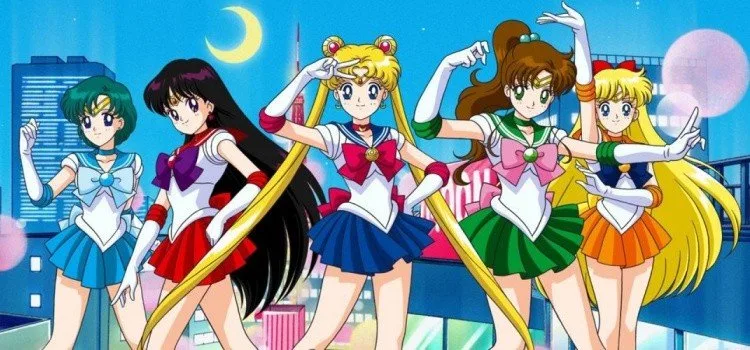
Have you watched the anime Sailor Moon? Did it finish? In this post, we will see some information, curiosities, videos, and images of Sailor Moon. And the probability of a new season or continuation. Additionally, we will look at novels, mangas, and other original and extra materials from the work.
Depending on the situation of Sailor Moon, we want to update this article in the future with curiosities, spoilers, and tips.
Can there be a continuation of the Sailor Moon anime? You want to know if it can happen! To find this out, we need to analyze the popularity and profit that Sailor Moon has had in the land of the rising sun.
First, let’s look at some curiosities and information about the original work of Sailor Moon. We even generated a menu to facilitate your navigation in the article:
Information and Curiosities about Sailor Moon
Summary: Sailor Moon tells the story of Usagi Tsukino, a normal and innocent 14-year-old girl — at least, that’s what she thinks — who one day meets Luna, a talking cat who reveals Usagi’s identity as “Sailor Moon,” a magical warrior destined to save the Earth from the forces of evil. Luna then gives her tasks, such as finding the Princess of the Moon and protecting the Earth from various antagonists.
Work Information: – The work is based on a manga by Naoko Takeuchi published by Kodansha from 1992 to 1997. The work received several anime adaptations from 1992 to 1996 and got a remake in 2016/2017.
Continuation or New Season of Sailor Moon
My team and I searched the internet about the continuation of the anime Sailor Moon and look what we found out about it:
The chances of a New season or continuation of the Sailor Moon anime are:
Difficult to explain, since it is a work that defined the Mahou Shoujo genre and is still very successful worldwide. Large companies can see profit in this work and may want to create spin-offs, continuations, live actions, and other related works, so we cannot say it is the end. We already have many anime adaptations of Sailor Moon, so I think it is completely unnecessary.
Original Material of the Sailor Moon Anime
You can read Sailor Moon by purchasing its original manga below:
Have you ever wondered why in Japan the country is called Nihon and Nippon? Or have you ever wondered why Westerners call the country Japan? Where did these terms come from? Are there other alternatives to refer to the land of the rising sun?
In this article, we will understand why Japan has several names like Nihon and Nippon. We will see how these names originated, some curiosities, and how to say Japan in various languages. Below is a summary of the article:
How do you say Japan in Japanese?
As the title of the article and its introduction suggest, Japan in Japanese is nihon or nippon [日本] both written the same way. Throughout the article, you will understand a little better about the meaning and origin of this name.
If you want to call Japan Japan in Japanese, you can say jyapan [ジャポン] equivalent to the English Japan. Japan officially uses this English version in documents displayed internationally and also in passports.
There are other ways to transcribe Japan from different languages into Japanese using katakana. The closest to the Portuguese and Spanish language we have is japon [ジャポン] although it is rarely known by the Japanese.
Meaning and origin of the name Japan
Japan in the Japanese language is written [日本] where [日] means sun and [本] means origin. For this reason, Japan is known as the land of the rising sun and has a simple flag that represents the sun. The ideograms in the Japanese language have various readings allowing for the pronunciation nihon and nippon for the country’s name [日本].
The phonemes in the Japanese language are called hiragana and katakana where each character represents a sound. Using these alphabets we can write nihon [日本] as follows: [にほん] or [ニホン]. Now notice the small difference in the word nippon written in hiragana and katakana: [にっぽん] [ニッポン].
The hiragana or katakana letters used are practically the same, the difference is that nippon uses a diacritic to transform an H into P and a small tsu [っ] to elongate the pronunciation of P. There is basically no different reading of the ideograms [日本] to pronounce the name of Japan, just phonetic details.
Why is Japan the land of the rising sun? This is because according to the Chinese, the country is located to the east of China, where apparently the sun rises. It is also believed in the influence of the Sun Goddess, Amaterasu. We can also notice this in the time zone, where Japan is 12 hours ahead of us.
What is the ancient name of Japan?
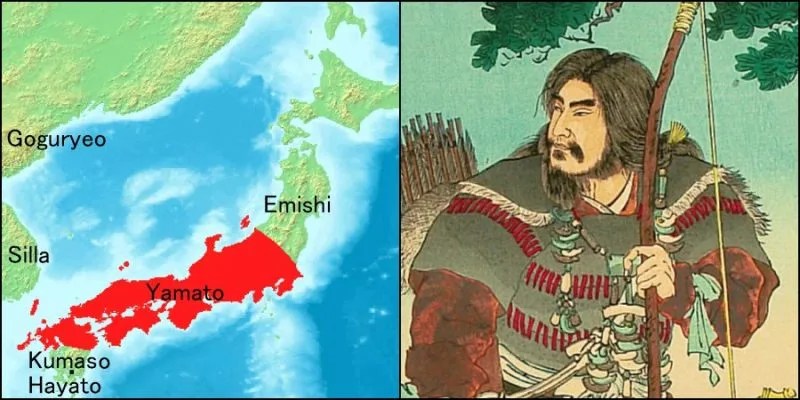
The Chinese called Japan before it became an official country wa [倭] becoming what we know in Japanese as wakoku [倭国] which probably has a difference in pronunciation from that time.
However, [倭] was not a good ideogram, so it was changed to [和] which means “harmony.” Later the name was established as wamato and then yamato which means something like behind the mountain.
For Westerners, Japan has always been called by some variant of the word japan, we will talk about this throughout the article.
Why call it Japan in the West?
Have you ever wondered why the West or the rest of the world calls the land of the rising sun Japan and not Nihon or Nippon? This happened because the person who introduced Japan to the world, the famous Marco Polo, only knew Japan through the Chinese by some dialect in southern China that pronounced the ideograms [日本] as Zipangu.
In Traditional Chinese, the ideograms for Nihon or Nippon [日本] are usually pronounced as Rìběn. Marco Polo ended up taking Zipangu and transforming it into Jipen which later in English became Japan and in Brazil became Japão. In Japanese, we can write Japan using katakana [ジャパン].
Even the Japanese themselves do not usually question this decision of the world, since the ideogram [日] also has the Chinese pronunciation jitsu. So it would not be uncommon for someone to say jitsupon or jitsuhon which slightly resembles Zipangu or Japan, especially in the English pronunciation.
Japan has undergone several phonological changes throughout its history. Possibly Nifon and Jippon were some of them. This explains quite a bit why the country is called Japan in English and has pronunciations starting with J in many languages.
When to use Nihon and Nippon?
The first pronunciation used for the ideograms [日本] was Nippon. This term began to be used around 640 and makes perfect sense for the use of P in relation to the word Japan or Japão. It is believed that the term Nihon emerged in the Edo period in the Kanto region. In fact, the commercial district of Tokyo is called Nihonbashi, while the commercial district of Osaka near Kyoto (the ancient capital) is called Niponbashi.
Throughout the history of Nihon, people discuss which is the best way or the official way to pronounce [日本], is it Nihon or Nippon? Currently, Nihon has become more popular than the original Nippon, used by more than 60% of the population. Note also that no one refers to the Japanese language as nippongo, only as nihongo [日本語].
Even the government did not accept the proposal to officialize the pronunciation of the land of the rising sun as Nippon in 1934. It is more common to pronounce Nippon when the word is isolated and alone. If the word is combined with another ideogram presenting some concept or idea of the country, it is more normal to use the reading Nihon…
Other ways to refer to Japan
Basically, the name of Japan is composed of 2 ideograms that can be pronounced however the person wants. Was it always like this? Before 640 how was Nihon called? Are there alternatives to the words Japan, Nihon, and Nippon?
Before Nihon and Nippon [日本], the land of the rising sun was called Yamato [倭] or simply Wa, or better, wakoku [倭国]. This name was given by the Chinese who first encountered the Japanese in southern China. At that time, the country was divided into several ancient provinces. Yamato was the main one, responsible for founding an imperial court in Nara.
Over the years, the ideogram [倭] was simplified to [和] which means harmony and peace. This ideogram is still widely used in the Japanese language in various words related to the Japanese people such as traditional Japanese food washoku [和食]. The kanji wa [我] also has some connection and concept about Japan.
Throughout the history of Nihon or Nippon, it has gained other names and nicknames such as:
Ōyashima [大八洲] Great country of 8 (many) islands;
Yashima [八島] Eight (many) islands;
Hinomoto [日の本];
Akitsukuni [秋津国];
Shikishima [敷島];
Mizuho [瑞穂];
Fusō [扶桑];
How do you say Japan in other languages?
To conclude the article, we will leave a list of how the land of the rising sun is called in various languages. I hope you enjoy it, thank you for sharing, commenting, and reading our article.
As many know, Japan is among the leaders in the world when it comes to science and technology. They are always developing research and innovating various branches of technology. Multinational companies like Sony, Panasonic, Honda, and Mitsubishi are some of the many that have their main headquarters in Japan, meaning they are Japanese companies.
However, Japan is also limited and focuses on some main branches that are of greater importance to them. This also happens because of capitalism; after all, what drives research is the income it can generate, which is why they receive financial support. In other words, the more money the research results will generate, the greater the investment in the research. That’s why we don’t see as many efforts to find cures for diseases; they prefer to research palliative methods. Of course, this does not apply to the general case, as there are several instances where this comment does not prove valid.
Anyway, returning to the main topic, which is science and technology in Japan. We can affirm that they are mainly focused and prominent in some research branches. And it is from them that we will learn in this article.
Consumer Electronics in Japan
I believe this topic is no surprise, after all, this is a sector that generates an absurd amount of money. A practical example is the number of cell phones in the world. We have more cell phones than people in the world; this number has grown in recent years.
To demonstrate this assertion in numbers, let’s take the number of people (7 billion); I decided to use just one number for simplicity. If we take the prices of cell phones and smartphones, we will have an average (these are not official data, just numbers from my opinion based on what I read and see on the internet) of 500 R$ per device, resulting in a market of 3.5 trillion reais, and still growing. This is greater than the GDP of most countries in the world. To give you an idea, Japan’s GDP is around 4.5 to 5 trillion dollars. With this, we can see why there are so many companies and research focused exclusively on this scientific field.
But it’s not just because of cell phones that this sector is gigantic. To understand better, I will provide the definition of this field.
Consumer electronics are electronic devices (analog or digital) designed for daily use, typically in private residences. In other words, it encompasses devices used for entertainment (flat-screen TVs, DVD players, video games, drones, remote-controlled toys, etc.), communications (phones, cell phones, smartphones, iPhones, iPads, etc.), and home-office devices (for example, desktop computers, printers, paper shredders, etc.).
This sector is ideal for capitalist companies to invest in, as the return is guaranteed in most cases, and in some specific instances, the return is gigantic, as is the case with the success of smartphones.
Robotics in Japan
Robotics is an interdisciplinary branch of engineering and science that includes mechanical engineering, electronic engineering, computer science, and others. Robotics deals with the design, construction, operation, and use of robots, as well as computer systems for their control, sensory feedback, and information processing.
These technologies are used to develop machines that can replace humans and replicate human actions. Robots can be used in any situation and for any purpose, but today many are used in dangerous environments (including bomb detection and deactivation), manufacturing processes, or where humans cannot survive. Robots can take any form, but some are designed to look human in appearance. This is said to help in the acceptance of a robot in certain replicative behaviors usually performed by people.
These robots attempt to replicate walking, lifting, speaking, and basically anything a human can do. Many of today’s robots are inspired by nature, contributing to the field of biomimetic robotics. This is a well-discussed topic in society; we have several movies talking about machines with AI (artificial intelligence) dominating the world or controlling people for the destruction of society. All discussions come with the question, “how far can we trust machines?”
The concept of creating machines that can operate autonomously dates back to classical times; in other words, there were already ideas of this kind many years ago. But research on the functionality and potential uses of robots did not grow substantially until the 20th century, as many people believed these were crazy and fanciful ideas. This type of thinking is not limited to this topic; since the beginning of time, this type of thought has existed. We have examples with Albert Einstein, Charles Darwin, Nikola Tesla, Santos Dumont, Thomas Edison, Ludwig van Beethoven, Henry Ford, Graham Bell, and many others who were considered crazy because of their ideas, which later became extremely fundamental pillars for the society we know today.
Throughout history, it has often been assumed that robots will one day be able to imitate human behavior and manage tasks in a human-like manner. Today, robotics is a rapidly growing field as technological advances continue; researching, designing, and building new robots serve various practical purposes, whether nationally, commercially, or militarily. Many robots are built to perform tasks that are dangerous for people, such as disarming bombs, finding survivors in unstable ruins, and exploring mines and shipwrecks. Robotics is also used in STEM (science, technology, engineering, and mathematics) as a teaching aid.
Science fiction author Isaac Asimov is often credited with being the first person to use the term robotics in a short story written in the 1940s. In the story, Asimov proposed three principles to guide the behavior of robots and intelligent machines. Asimov’s three laws of robotics, as they are called, have survived to the present:
Robots must never harm humans.
Robots must follow human instructions without violating rule 1.
Robots must protect themselves without violating the other rules.
In short, this field is one of the most observed, especially in Japan; they research as much as possible the development of autonomous machines, after all, the world is always looking for this type of product. Especially in the area of AI, Japan is one of the biggest references in the field. However, if we think from another angle, we will see that the more robots are working, the fewer humans there will be, meaning reducing jobs even further and requiring people to be even more qualified for the jobs. But this discussion is not relevant to this article.
Automotive Industry in Japan
The term automotive was created from the Greek automobiles (self) and the Latin motivus (of movement) to represent any form of self-powered vehicle. This term was proposed by Elmer Sperry (Elmer Ambrose Sperry was an American inventor and entrepreneur.)
I don’t even need to comment on the size of this sector and the income it generates. Just look at the street; depending on the city, you might count dozens or even hundreds in a single day. But this technology sector does not only belong to cars; it also includes motorcycles, boats, agricultural and road machinery, etc. However, we will focus only on cars, as it is the most relevant to the article.
The automotive industry in Japan is one of the largest industries in the world. Japan has been among the top three countries in car production since the 1960s, surpassing Germany, which is one of the major references in this sector. The automotive industry in Japan grew rapidly from the 1970s to the 1990s (when it targeted both the domestic market and exports). After the entry of Chinese manufacturers in the 2000s and the economic fluctuations in the United States, Japan ranked as the third-largest automotive producer in the world with an annual production of 9.9 million vehicles in 2012.
Japanese investments have helped develop the industry in many countries over the past decades. In the 1970s, Japan was a pioneer in robotic vehicle manufacturing. The country is home to a large number of companies that produce cars, construction vehicles, motorcycles, and bikes. Among them, we can mention Honda, Nissan, Suzuki, Mitsubishi, Yamaha, and Mazda, and several others, most of which are large multinational companies extremely popular in Brazil.
Cars designed in Japan have won the Car of the Year, International Car of the Year, and World Car of the Year awards many times.
The automotive industry involves a wide range of companies and organizations involved in the design, development, manufacturing, marketing, and sales of motor vehicles. This is one of the most important economic sectors in Japan and the world in terms of revenue. The automotive industry does not include industries dedicated to the maintenance of automobiles after delivery to the end user, such as auto repair shops and fuel stations, which means that this sector can generate even more income indirectly in the economies of countries.
Sometimes I come across some indirect comments asking if I lived in Japan, as if it were an obligation to live in the country to write about it. So I decided to write exactly about the following theme: Is it necessary to live in Japan to know it?
We have already written an article about this, but it specifically talks about the steps we can take to gain knowledge about a certain country. You can read that article by clicking here.
Apparently, some people who live or have lived in Japan feel superior to others and want to know more than everyone else. The big truth is that living in Japan does not mean that a person has any knowledge about the country. I myself have written about the superiority complex of some descendants.
When I was on my first trip to Japan, I met several Japanese people and asked various questions related to the topics I have written about over the years. With these questions, I came to the conclusion that even the Japanese do not know their own country. Probably because most live in their comfort zone and only know what suits them.
Why is it not necessary to live in Japan to know it?
Have history teachers lived through history to teach history? Do you have any idea that one of the most famous books about wealth was written by a poor person? Exactly, Napoleon Hill wrote the best-selling book “Think and Grow Rich“, and until the release of this book, he was poor.
It was after watching the video by Bruno Avila that I kept mulling over these motivational thoughts to tell everyone that you do not need to live in Japan to know more than a Japanese person or someone who has lived there! Shall we look at another example that Bruno provided?
You want to buy an apartment; normally, you wouldn’t ask for help from someone who has never bought an apartment. You turn to a good guide on real estate investments; what would you think if you discovered that the author of this guide has never bought a property in their life? And what if this author has interviewed the 20 most popular real estate investors in the world?
A person may have attended various colleges, worked in different places, and experienced a lot in Japan and the world. This does not mean at any moment that they have more knowledge than you. They may even have more knowledge, but there is a 100% chance that you know many things they do not. Knowledge is infinite!
Is it impossible to know everything?
I think everyone knows that it is not necessary to experience something to have knowledge about it. Unfortunately, some hastily claim that there are certain things that can only be known by experiencing them. I see this a lot in some articles where I try to highlight some cultural or everyday aspect of foreigners in Japan.
The big problem with these people is that they cannot see beyond their own thoughts. Everyone has different experiences wherever they are; some feel things that others have not, while some have different thoughts and ideas about the same subject.
Sometimes I write my opinion on a certain topic, but because it is different from the person’s experience, they start to criticize and say that I do not know anything for not having lived in Japan. These people need to understand that just because I said something, it does not mean that it is my absolute thought on the subject; I fully understand the relativity and different realities of each person.
People want to impose their opinions and realities as the correct and only ones, without accepting diverse opinions. I have written several articles criticizing this attitude and always talk about the relativity and different realities of each person. The life of a factory worker is very different from that of a graduate working in an office (this is just one of the examples).
An example of this is found in various articles that contrast with each other. I have written an article praising Japan, and some people came to disagree and criticize Japan. I wrote another article discussing the negative side of Japan, and again people came to disagree and praise Japan. It is always like this; people never reach a middle ground or neutrality.
No one knows more than anyone else
Someone who works researching and writing about Japanese culture has a much greater and diverse understanding of any subject related to the area they research. Not because they are smarter or have more experience, but simply because they research and result in various different opinions on a certain subject.
A wise person listens to advice, regardless of the age or position of the other person. A smart person does not humiliate, is not selfish, and tolerates many things. The common man speaks, the wise man listens, the fool argues. If you want to correct someone, no problem, but at no moment should you try to know more than the other person or belittle their different knowledge.
No student knows more than the teacher about the history or geography of a country just because they have lived there. Of course, a person may have lived in Japan and truly understand much more about it than I or others do, but the fact is that anyone can have knowledge about a certain subject; you just have to pursue it! And it is not even necessary to graduate or get a doctorate in the subject.
You may have heard the word gozaimasu [ございます] in expressions like ohayou, omedetou, and arigatou gozaimasu. So what the hell does the expression gozaimasu mean? Many claim it means “very” as in thank you very much (arigatou gozaimashita), but does it really mean that?
The word go-za-i-ma-su (御座います) is composed of the ideograms honorable [御] and position [御] and is usually written only in hiragana. The main meaning of the word is to be,to exist, or to have. This word is mainly used in keigo, instead of arimasu [あります] or desu [です].
Its appearance in expressions like thank you very much or congratulations gives a strong impression, but in reality, it expresses humility and politeness. Using these expressions without gozaimasu is common when we are among friends or close people where we do not need to use formality.
To understand the true meaning of gozaimasu (ございます), we must first understand its origin. The word gozaimasu is nothing more than a formal version of the verb gozaru [御座る], which is the verb to be (in English, the famous verb to be). If you have watched anime or samurai movies, you must have heard phrases ending in gozaru repeatedly.
In the past, gozaru was literally the polite form of aru;iru [ある;いる], but it was used for both people and inanimate objects. Currently, gozaru is only used in Japanese in the forms gozaimasu, gozaimashita, gozaimashitara, and the famous desu, which is a contraction of degozaru (でござる).
Sometimes when we talk about the verb to be in Japanese, some have misconceptions. To try to simplify the being of the verb gozaru and its derivatives, we can compare it to the sign of [=] in sentences where we are saying things like [My name = Kevin]. I think I don’t even need to mention that gozaimashita is the past form of gozaru in the masu form.
You won’t hear the verb gozaimasu only when saying good morning, thank you, or congratulations. If you go to a restaurant, the employees there will probably use keigo and say gozaimasu instead of aru. To conclude the article, we will leave some example sentences for you to understand more about this subject:
Responsive Table: Scroll the table sideways with your finger >>
While browsing the site MAL (My Anime List), it is common to find several acronyms after the names of the animes. Among them, we can mention the famous OVAs, and we also have the acronym TV. The latter is easy to deduce; however, there are some others that are less known, among which we can mention ONA and OAD. Few people know what they mean or have a rough idea of what they are.
Anyway, in this article, we will provide explanations and some other information about these acronyms that accompany the lives of otakus. Or at least those who are more interested in these details. If you haven’t seen these acronyms yet, I advise you to visit the My Anime List website.
But before we start, everyone needs to know that these acronyms are not popular and do not change anything, knowing or not knowing their meanings. We are providing this information merely as a means of information and curiosities about this great anime industry. The summary below will help you navigate:
When an anime has the acronym TV
This, despite being obvious, will still have its meaning explained here. After all, nowadays, there is no one who does not know what the acronym TV means; that’s right, TELEVISION. It is common to find this acronym in animes that are broadcast on TV. This already explains why this acronym is found.
When an anime is made to be shown on TV, it gets such an acronym. An interesting example is the anime Black Clover, which is currently being released; it is made for TV. If you watch animes on streaming sites with subscriptions or fansubs, you will not notice any difference between these and other animes. This happens because they get this acronym back in Japan. The broadcasters buy the rights to these animes to be able to show them.
This scheme is similar to movies here in Brazil. Here, broadcasters buy the rights to a movie to be able to show it in their programming. This guarantees the right to show such a movie, and as compensation, they gain the audience, which may or may not be subscription-based (Subscription channels).
When a video has the acronym PV
English acronym for “Promotional video,” or in Portuguese “Vídeos Promocionais.” It refers to some short videos with some elements of the anime (characters, scenarios, or some other genre element), often accompanied by a background narration, with the aim of promoting.
The videos that fall under this acronym are disseminated in the media in general to promote an anime, movie, OVA, ONA, or others of the genre. Generally, these videos are released to promote the premiere of animes and movies also related to animes, but they may also be released during or at the end of the series to encourage the purchase of related products.
We may not refer to them by their correct name, as PVs are often confused with Trailers. If you are wondering, “Is there a difference?” we will explain what a trailer is. A trailer is a short video with parts of the movie, series, or soap opera combined with the aim of announcing the work before its release. In other words, it is a video advertisement, while PVs are videos to promote. The difference lies in the freedom that both have. Anyway, whether you agree or disagree is up to each person.
Meaning of the acronym OVA – Original Video Animation
Following the logic from the most known to the least known, we have the acronym OVA. This acronym refers to the term in English “Original Video Animation,” which means in Portuguese “Original Anime Video” [OAV] that is also used as an acronym in some countries. This acronym refers to animes or episodes of animes exclusive to video media such as Blu-ray and DVD.
They are released suddenly, without any kind of warning, as is normally done for animes and anime movies (the famous trailers or previews). There are exceptions, but they are rare cases; most people only know when it has already been released. Despite being released without prior notice, OVAs have much more time for their development, which often surpasses the quality of the main product.
Despite these characteristics, OVAs are just stories that complement a story or follow a different route from the original work, which are the main animes. In other words, this acronym usually accompanies episodes of animes that often do not matter to the anime.
Animes with this acronym do not contain any type of cuts or censorship; this is an implicit rule that is of great importance to the industry. Animes and episodes of animes made in OVAs have a single volume of DVD or other media of the genre for each episode produced. This is one of the ways how animes generate income.
Animes of the genre Hentai (with pornographic content) are usually released in the OVA format.
Meaning of the acronym ONA – Original Net Animation
Less known than the previous two, the acronym ONA is also an English acronym that refers to the expression “Original Net Animation,” which means in free translation to Portuguese “Anime Original Net” or “Anime Original from the Net.” This acronym refers to productions that were made originally for the internet or Net, as you prefer.
The mode of production to which this acronym refers is relatively new. This is when distribution via the Net is compared with distribution through video media. With the advent of the internet, information and content spread rapidly. To keep up with this evolution, the anime market had to create a method of production and distribution specifically for the internet.
This market is growing more and more each day. However, the main source of income is by far the products in video media. This may change over time, but the industry carries the main motto “if it ain’t broke, don’t fix it,” and tends to invest little in this area.
Understanding the acronym OAD – Original Animation DVD
To explain this acronym, I must inform you that it is of total uselessness for otakus who only watch animes. But if you are an otaku who likes to buy mangas, animes on Blu-ray and DVD, you will identify with it. The term comes from the expression in English “Original Animation DVD,” which in free translation means in Portuguese “Original Animation DVD” or “Original Anime from DVD.”
For general explanation, this acronym refers to an OVA on DVD, with some additional details compared to the OVAs already mentioned. The difference between the latter and the OADs is that when you buy this product, you will also receive the original product of the work, that is, a manga. Basically, it is not relevant at all, and if we reflect on this, we will see that it does not affect those otakus who only watch the animes.
As Blu-rays are more popular nowadays, will they adapt the name to Original Animation Disc or will they invent the OAB? (笑).
The acronym OST – Original Sound Track
Acronym for the expression “Original Sound Track” or in Portuguese “faixa de músicas originais,” it refers to the songs that are included in the anime, whether they are opening themes, closing themes, background music, etc. Basically, all the songs that are in the anime.
This is another known method for the industry to generate income. Because the OST is often sold as a distinct part of the anime. I believe that not only in animes but also in almost all types of media of this genre, such as movies, soap operas, series, etc.
MC stands for “Main Character” or in Portuguese “Personagem Principal.” It is what we know as the protagonist, the character who plays the main role in the anime. And he is always surrounded by looks and clichés around him. The cliché of “the protagonist never dies” is a cliché that few animes have broken. There is always a miracle that saves the MC when he needs it the most.
I personally have only watched one anime that broke this cliché, Akame Ga Kill, and its popularity was formed from both praise and criticism. To this day, this anime is a topic of discussion, and it is always mentioned when the subject is breaking clichés.
Extra acronym – OP
It can refer to two terms. The first is “OverPower” or in free translation to Portuguese “Dominar,” this term refers to some character in the anime who is extremely powerful in various senses, meaning they can be extremely intelligent, strong, skilled, etc.
To summarize, some ability capable of dominating others in terms of power. It is not a rule for the protagonist to be OP; this term can be used for any character in the anime that fits the standards. I think it is unnecessary to mention END for endings (ending), which is the same thing but at the end.
The other term is “Opening” or its translation to Portuguese “Abrindo,” which refers to the openings of the animes. Normally, the opening contains certain series of images that may or may not include the main characters, spoilers, and hints about the plot, etc. Always accompanied by a theme song that may or may not be sung.
What do I think about the acronyms?
Well, I believe that the misinformation about these acronyms will not significantly affect the lives of otakus. But just as the spirit of a curious person is always to snoop, that of an otaku is always to learn more about this universe of animes. And speaking personally, information and knowledge are always good to have accumulated.
There are certainly more acronyms; if you know some or want to clarify doubts about any, just comment. Just to clarify, this article is exclusive to acronyms. For information about things like clichés and terms used in animes, we have other articles right here on the site.
This is all we have for this article. Thank you, dear reader, for reading this far, and for suggestions, doubts, criticisms, or additional information, just comment. We will be looking and responding to everyone.
There are many Japanese fruits that you may not know, such as Yuzu, Kinkan, Daidai, Sudachi, and others. In this article, we will talk about these unknown citrus fruits cultivated in Japan.
Citrus fruits are my favorites. In Japan, you can easily find lemon, orange, and tangerine, often of Japanese varieties that can vary in size and flavor. Sometimes sweet or sometimes more sour.
Yuzu – Japanese Lemon
Yuzu [柚] is a bitter Japanese citrus fruit, being the most well-known Japanese fruit in the West. Yuzu is rarely consumed because it is very bitter, but it is widely used in Japanese cuisine, juices, and beverages.
Its origin is Chinese, but it ended up being labeled as a Japanese fruit. Besides its strong flavor, it is also a strong flavoring agent, used to perfume dishes either whole or grated. It is not very acidic and resembles a mix of lemon and tangerine.
It is worth mentioning other fruits like Kabosu and Shikwasa, which are quite similar to Yuzu. There are also other sour fruits like “ume” and plums.
Mikan [みかん] is the most common type of Japanese tangerine, usually known as kan (other varieties are Iyokan and Ponkan). Mikan peels easily and has no seeds and is widely popular as a dessert or snack when in season in early winter.
The Mikan was introduced to Japan about 400 years ago, where in the West it is known as tangerine. This is one of the few Japanese fruits exported outside the country. There are differences in its flavor compared to other tangerines found in Brazil.
Kinkan – The Mini Japanese Orange
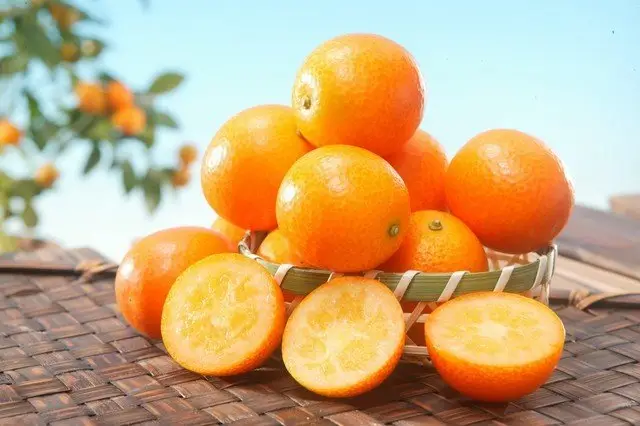
Kinkan [金柑] is a fruit similar to an orange, but very small, a bit larger than an olive. Its scientific name is Citrus japonica. It can also be known by the names Xinxim, Kumquat, or Fortunella.
In Japan, Kinkan cultivation is mainly located on the island of Kyushu, its fruit grows on a shrub that can reach up to 3 meters, and the fruit-bearing plant is also highly appreciated for ornamental purposes. Kinkan can be consumed whole, its skin is sweet, and inside it is somewhat sour.
The Kinkan orange is good for helping in wound healing and strengthening the body’s immunity. It also has regenerative properties such as lutein, zeaxanthin, carotenoids, and tannins. Kinkan is also rich in minerals, helps in weight loss diets, and combats symptoms of flu and throat issues.
Daidai – Symbol of Longevity
Daidai [橙] is a quite curious fruit; it is a Japanese citrus fruit considered a symbol of longevity in Japan. Its fruit remains on the tree for many years without being consumed; in winter it turns orange, and in summer it goes back to green.
The word Daidai means several generations, and this influenced even the old orange color that was called Daidaiiro [橙色]. The fruit of Daidai is extremely bitter and is rarely consumed. Sometimes it is used in cooking, and its skin is often used for medicine.
The Daidai originated in the Himalayas. It spread through the Yangtze River valley region in China and later became popular in Japan. It is also used as an expectorant and digestive tonic.
Sudachi – Lemon or Orange?
Sudachi [酢橘] are small Japanese citrus fruits, resembling a simple lemon, but are slightly compared to oranges, despite being sour and small. Sudachi is the symbol of Tokushima province, where a large part of the fruit’s production is concentrated.
They are cultivated on Shikoku Island, but are rarely consumed as fruit; they are used in Japanese cuisine, in sushi, soba, desserts, and as decoration. There is also a vinegar made from sudachi.
A slice of this fruit is served with many traditional Japanese dishes, including dishes like fish, soba, udon, nabemono, and even alcoholic beverages. Sudachi, along with yuzu and kabosu, forms the base for Ponzu sauce.
These were some citrus fruits from Japan. Do you know others? We hope to hear your comments and thank you for sharing. Thank you for reading this short article, see you next time!
One of the most annoying things about learning Japanese is the Chinese ideograms called Kanji. The situation only worsens when you encounter very similar characters that can completely confuse you about the word. In this article, we will talk especially about kanji that look alike.
There are many kanji that change only a small stroke or curve, and it can confuse you when reading or writing, just like the katakana シツ and ソン. Besides having similar appearances, you will sometimes come across ideograms with similar readings and meanings.
Despite having identical characters, the meanings can be completely different. Or sometimes they may have a very similar meaning, or even a similar pronunciation. That’s why it’s important to know the radicals of the ideograms.
The most confused similar kanji
Below we will share some popular ideograms that are often confused by students who are just starting to learn Japanese. We will also explain each of the ideograms and their differences in detail.
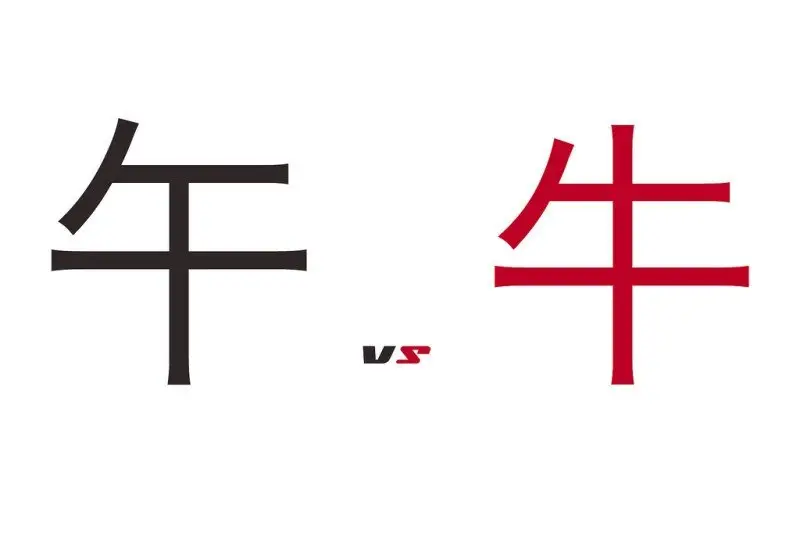
Kanji 入 and 人
On the left side of the image, we have 入 (iri) which means “to enter” and on the right side we have 人 (hito) which means “person”.
On the computer, the characters are hard to identify due to the rendering of the character; however, in calligraphy, it is easier to differentiate one from the other due to the position of the strokes. The smaller stroke on the left supporting the larger stroke on the right is the iri. The smaller stroke on the right supporting the larger stroke on the left is the hito.
Ideograms 土 and 士
These are more difficult, as the difference is quite subtle. The one on the left is 土 (tsuchi) which means “earth” or “soil”. The one on the right is 士 (shi) which means “warrior”. The difference is the length of the strokes. In tsuchi, the bottom stroke is longer than the top stroke. In shi, the opposite applies.
Kanji 本 and 木
The difference between these two is also not very big. The one on the left is 本 (hon) which means “book”. The one on the right is 木 (moku) which means “wood”. The difference from hon to moku is the small stroke in hon that moku does not have.
Ideograms 日 and 曰
These are really difficult to differentiate and require a lot of attention to know which is which. The one on the left is 日 (hi) which means “day” and the one on the right is 曰 (etsu) whose closest meaning would be “to say”.
The difference is that in hi, the stroke is complete and divides the character in half. In etsu, the stroke is incomplete, leaving an opening as shown in the image above. For your happiness, the character etsu is only found in very sophisticated texts and is accompanied by the hiragana く (ku), thus forming a verb.
Kanji 力 and 刀
The characters 力 (chikara), which means “power” and 刀 (katana), meaning “sword” also contain a slight difference. The one on the left (chikara) has a stroke coming out from the top horizontal, while the one on the right (katana) does not have this stroke.
Ideograms 氷 and 水
The character on the left 氷 (kōri) means “ice” and the one on the right 水 (mizu) means “water”. The ideogram is practically the same, with the difference of one extra stroke in kōri.
Kanji 大 and 犬
It’s the same case as the previous one. Two characters that are the same ideogram with the difference that the dog ideogram 犬 (inu) has one extra stroke compared to the large ideogram 大 (dai).
Ideograms 知 and 和
On the left side, the character 知 (chi) which means “wisdom”. On the right side, the character 和 (wa) which means “harmony”. The difference lies in the radicals as described in the image.
猫を描く – Draw a cat
The above sentence means “draw a cat” see how the kanji “Cat- 猫” and “draw- 描” are quite similar.
Analyzing the differences OF SIMILAR KANJI
The truth is that there are thousands of similar kanji, many kanji have the same radical, making them look alike. Others are visibly identical, but have a different form and order of strokes that turn them into completely different things.
Unfortunately, it is difficult to learn the differences in similar kanji that you may not know; over time you will practice and be able to differentiate them instantly. That’s why it’s important to learn the order of the strokes and the writing of ideograms.
Below we will leave an image with 10 pairs of similar kanji, and we ask that you try to see and understand the difference on your own. If I simply tell you, it won’t be very effective. You should look and notice the small differences that range from the order and size of the strokes to different radicals.
Other SIMILAR IDEOGRAMS
Besides the image above, there are many other similar ideograms. I will leave a few more below:
従 – 徒
験 – 検
感 – 惑
識 – 織
待 – 持
嫌 – 婕
録 – 緑
石 – 右
Other difficulties in learning Kanji
Learning kanji can be a great challenge; they may seem beautiful, and they have their positive points in the Japanese language. Besides there being many similar ideograms, there are other reasons that can confuse Japanese students and hinder their learning:
There are many unnecessary kanji;
They are unnecessary in conversation;
They are very difficult to write;
They have multiple pronunciations;
They have multiple meanings;
It may seem challenging to have to pay attention not only to the details of the strokes but also to remember countless readings and still have to write them can be overwhelming.
Despite all this, by learning their small differences and memorizing their functions, knowing kanji will change the way you visualize the world. It will expand your brain and make you increasingly smarter.
I hope you enjoyed the article; if you liked it, share and leave your comments…
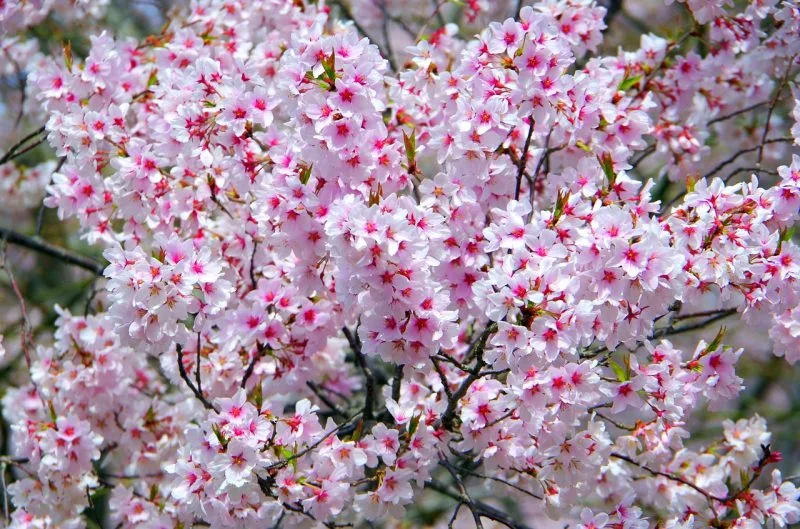
Among many Japanese legends and tales, that of the old Hanasaka Jiisan stands out for a long time. This tale features the main character, the old Hanasaka jiji, or old man of spring. This story has been passed down through generations. Many books mention the tale of the man who could make dead trees bloom. This old man has a loyal companion, a little dog named Shiro.
This story is told as an example of kindness that overcomes greed and cruelty. In Japan, there is even an expression related to this tale. When someone is sad or lacking energy, looking like a dry or dead tree, they often say that it is necessary to “call the old man who makes trees bloom”. So let’s get to know this beautiful story.
Once upon a time, long ago, on a remote mountainous island in Japan, there lived an old man and his wife. This elderly couple made a living by working hard on their land. They had a little dog that looked very much like a wolf with snow-white fur named Shiro. Without any children, the couple gave all their love and affection to this dog.
Shiro accompanied the couple’s work in the field every day. But one day, Shiro started barking non-stop. The dog ran to his owner, grabbed his clothes, and pulled him to a certain place. Upon arriving at this location, the dog began to dig rapidly. Seeing this, the old man took his hoe and started to help the dog. To their great surprise, while digging, they found large pieces of gold. Very happy, they returned home to share the news. The generous couple decided to share the gold with the entire village.
The power of greed
However, there was a couple of neighbors who were very stingy and greedy and did not like the kind couple. When they heard about this story, they quickly knocked on the couple’s door. They asked if they could take Shiro for just one day, intending to find more gold. Being generous, the old man and his wife allowed Shiro to go with them.
As they distanced themselves from the house, the wicked old man tied up the dog, took his hoe, and set off, forcing him to search for gold. After much mistreatment, Shiro stopped near a tree and began to get agitated. Thinking that the dog had found gold, the old man pushed the dog and soon began to dig. After much work, he found only trash.
In great anger, the old man took his hoe and struck Shiro, killing him. He returned home without telling anyone anything. The kind elderly couple was anxious for Shiro’s return. So they decided to go to their neighbors and ask what had happened. Surprisingly, upon arriving there, the wicked old man confessed to what he had done. This left the elderly couple devastated. Then the good old man, very sad, went to the place where his faithful companion had died, picked him up by the arm, and took him back home to bury him.
Every day, the good couple cried over the dog’s grave. In the spot where he was buried, a small sprout emerged. The next day, the sprout became a strong and large tree. As days passed, it grew more and more until they could no longer see its branches. But one day, a very strong storm knocked down the tree.
They then decided to build a mortar from the wood of this tree. This mortar would be used to prepare the dough for mochi, a rice cake that Shiro loved very much. After building the mortar, they went to prepare the dough for the cake. When the old man began to pound the dough, he noticed that it started to turn into gold. As he pounded, more and more gold appeared. And once again, he shared all this gold with the village.
Kindness is rewarded
Again, the greedy old neighbors decided they wanted that dough. And once again, the good old couple allowed them to use the mortar. But when they used it, the dough turned into a dark sludge. Furious, they destroyed the mortar and set it on fire. When the good old man arrived and saw what had happened, he collected the ashes that remained, placed them in a small basket, and took them home.
Upon arriving, a wind blew some of the ashes from the basket, which spread through the air and reached a dead tree. This dead tree immediately began to bloom. Soon, beautiful cherry blossoms began to appear on its branches. As the ashes spread, tree after tree bloomed.
Soon the news spread, and the court summoned the old man to their kingdom. Upon arriving at the castle, the old man threw the ashes into the air, and immediately the nearby trees bloomed. The feudal lord, Daimyo, was enchanted by all of this and gifted him with rich objects. He also requested that the old man be called Hana-Saka-Jijii, or the old man who made trees bloom.
Upon hearing this news, the greedy old man gathered the remaining ashes from the burned mortar. He then went to the kingdom claiming to be the true bearer of the ashes. Upon arriving before the Daimyo, he threw the ashes into the air, and nothing bloomed. But the ashes got into the eyes and mouth of the Daimyo, choking him and leaving him blind. It was then ordered that this greedy old man be arrested.
The good old man then shared everything he had gained with his village. Even so, there was enough left to live in peace and happiness for the rest of his life. To conclude the article, let’s leave a video of the legend in Japanese:
Have you ever seen in any anime or heard people talking about hikikomori or NEET? Have you ever wondered what these words mean? In this article, we will try to explain in detail what a Neet and a Hikikomori are, what the differences are, and how these terms originated. First, let’s start by talking about the Japanese word hikikomori.
Hikikomori (引き篭り) is a term that literally means isolated at home; it is used to refer to people who experience severe levels of isolation, usually young people between the ages of 13 and 39 who are often supported by their parents or work online. NEET is basically the same thing but has its differences.
The problems of a Hikikomori or Neet
It is estimated that there are more than 1 million hikikomori or Neet scattered throughout Japan. This number cannot be counted exactly because they do not participate in anything in Japanese society, being true ghosts like the Johatsu who disappear without a trace.
These Japanese who live isolated in their rooms are already a serious public health issue. Thousands of young people find themselves in this situation due to the high degree of perfection demanded by Japanese society. Many people end up being pressured to the point of developing psychological problems.
Most of the time, Hikikomori or Neet tend to have low self-esteem, fear of people, fear of leaving their rooms, and in some cases even sociopathic tendencies. There are cases of 40-year-olds who are dependent on their parents and live isolated in their rooms, living on social media and in anonymity.
Often, young Hikikomoris socially exclude themselves even from their families, where mothers leave snacks at the door of their rooms for them to pick up. They interact with manga, anime, games, and the infinite choices they can have with the world of otaku.
What makes someone a Hikikomori?
People tend to become a Hikikomori for the following reasons:
The high standard of perfection demanded by society;
Low self-esteem;
Many isolate themselves because they prefer fantasy over reality;
Many have suffered bullying or traumatic experiences at work or school, causing these people to become disillusioned with society as a whole, leading to a withdrawal from social interaction with everyone around them. At least some of the problems listed above are reasons for someone to be a hikikomori or Neet.
What is the difference between Hikikomori and Neet?
The word NEET (nitto;ニート) originated in the United Kingdom and has been used in other countries like Japan. This acronym literally means “Not currently engaged in Employment, Education or Training” which translates to “Currently without employment, education (not studying), and vocational training.
Basically, they are two words with different definitions. Hikikomori is used to refer to people who live isolated at home and never go out, while NEET refers to people who are idle, not studying or working, who consequently stay at home, but most of the time go out into the street without fear of other people.
The word NEET is very broad and is often used not only for idle people but for those who work from home or are looking for a job. Basically, NEETs are people who do not contribute to society, most of the time hikikomori.
Hikikomori Treatment Program
In 2007, the Japanese government implemented an assistance program for hikikomoris, where social workers establish contact with them through letters, phone calls, and then invite them to go out to the movies, parks, malls, encouraging social contact and consequently reducing the state of isolation.
These social workers are called “Super Sisters,” as they are female and manage to uplift many young males in this situation. A great example can be seen by watching the anime NHK ni Youkoso! In England, support groups for those suffering from the same problem have proven to be quite effective.
The treatment is done by encouraging the young person to engage in social, cultural, and sports activities. The first step is to be a trustworthy person and show that the patient can trust them, as hikikomoris are extremely sensitive to human interactions and became this way precisely because they do not trust people.
Animes that experience the life of Hikikomoris
Besides the mentioned NHK ni Youkoso that we highly recommend, there are other interesting animes that show the life and personality of a Hikikomori. Here are some below:
No Game No Life – The siblings Sora and Shiro are inseparable, both in the real world and in the gaming world. Their combined individual skills make them an unbeatable team: Sora, with his remarkable intuition and knowledge; and Shiro, with her intelligence that goes beyond that of a genius prodigy. In the real world, they are hikikomori, reclusive and anti-social, but in the gaming world, the two are part of the 『 』 (Kuuhaku (空白?lit. “blank space”)), a mysterious group of online players who win all games with an incredible score. The names of the players’ accounts are always left blank, so they are known as “blank.”
One day, after defeating a mysterious opponent in an online chess game, the siblings receive an offer from their opponent to be reborn in their world, Disboard – a fantasy world where everything is determined through games. When they accept the proposal, Sora and Shiro are summoned to Disboard by the God of that world, Tet, and begin to meet their adversaries. Together, the siblings embark on their journey to rescue the weak human race of Imanity and conquer the world to then challenge Tet for the title of God.
Kamisama no Memochou – This anime tells an investigative story where detective Alice and student Fujishima Narumi unravel mysterious urban cases with the help of various NEETs.
List of Hikikomori or Neet Animes
Anime Name
Year
KonoSuba – God’s blessing on this wonderful world! Movie: Legend of Crimson
2019
No Game No Life
2014
Re:ZERO -Starting Life in Another World-
2016
KonoSuba – God’s blessing on this wonderful world! 2
2017
Welcome to the NHK!
2006
ReLIFE
2016
KonoSuba – God’s blessing on this wonderful world! 2 OVA
2017
KonoSuba – God’s blessing on this wonderful world!
2016
Eden of the East
2009
Recovery of an MMO Junkie
2017
KonoSuba – God’s blessing on this wonderful world! OVA
2016
Osomatsu-san The Movie
2019
Mr. Osomatsu
2015
Mr. Osomatsu 2nd Season
2017
Recovery of an MMO Junkie Special
2017
Heaven’s Memo Pad
2011
Btooom!
2012
Neeko ga VTuber Debut Shite Mita
2018
Mr. Osomatsu 3rd Season
2020
Some isolated anime characters from our friend Thunderbout:
There are many other animes that have at least one character and show their life as hikikomori, some famous ones are:
Denpa Kyoushi;
Rozen Maiden;
Sasami-san@Ganbaranai;
ReLIFE;
Chaos;Head;
Danna ga Nani wo Itteiru ka Wakaranai Ken;
Btooom;
Satou Tatsuhiro (absolute favorite) – Welcome to the NHK
Kaoru Yamazaki – NHK ni Youkoso!
Kuroki Tomoko – NHK ni Youkoso!
Jintan – Ano Hana
Oreki Houtarou – Hyouka
Lain – Serial Experiments Lain
Ryuunosuke Akasaka – Sakurasou no Pet na Kanojo
What do you think about Neet or Hikikomori? Do you know anyone? Do you know any anime or drama that portrays this situation? Comment and share with friends.
Hi everyone, how are you? Do you know what a funko is? Today we will talk about these action figures that are adorable and their role in pop culture. We can see many of these little dolls out there, all with different styles. But there is a company called Funko that stands out in the market because of its various patents for producing toys and also for various other items based on pop culture, including animes, mangas, and games.
In this technological age, almost nothing stays isolated in just one place; things spread around the world and often become so widespread and popular that they are hard to forget. Fads, songs, movies, action figures, electronic items, and everything else that can be made in one part of the planet has the potential to spread all over it, like a fire that spreads wherever it can burn.
Throughout the article, we will leave some Funko products for you to look at on Amazon Brazil.
Funko is a global culture
For those who don’t know, I will try to explain what pop culture is. I don’t know if it will be the best explanation, but it will serve for this article. Basically, pop culture, or popular culture, is the set of practices, beliefs, and objects that are dominant in a society at a given time. It is strongly influenced by mass media and permeates the lives of people in societies.
For example, our beloved action figures are popular both in Brazil and in Japan. They are everywhere in the world, and most people know what they are or have seen one. Pop culture is that, a custom that is dominantly present in a society. In the case of action figures, they are a global pop culture, if that is the correct term.
Getting to know the Funko company
Funko is an American company that produces licensed pop culture collectibles. Funko is renowned for manufacturing licensed vinyl figures and bobbleheads, as well as licensed electronic items and plush toys.
Founded in 1998, the company started as a small project to create various low-tech toys with nostalgic themes. Sold in 2005, the company expanded the catalog of several of its toy lines and also made licensing agreements with companies such as Netflix, Ubisoft, Paramount Pictures, Cartoon Network, Pokémon Company, among others.
Its brand specialized in pop culture has global reach, and consequently, its products are found all over the world. Below, I will list some genres of toys related to the products it produces.
Designer toys
Designer toys are innovative and collectible toys made by independent artists. Usually produced in limited editions, they are made from materials such as vinyl, metal, latex, and resin. The first designer toys emerged in the 1990s.
This type of toy makes a significant contribution to pop culture; after all, what would we do without our cute and lovely action figures? And in the case of animes, they are even more successful, and these artists, however, are not licensed but still part of the industry.
Urban vinyl
Urban vinyl is a type of designer toy, particularly action figures, that are usually made of vinyl. As we know, vinyl is a type of synthetic plastic made from polymer; to put it in simpler terms, it is PVC, the kind of material that the water pipes used in most houses here in Brazil are made of.
To specify this type of toy, these are toys that feature original designs, a small production number, and are marketed to collectors, who are usually adults.
Resin toys
Resin toys are another subcategory of designer toys. And as the name suggests, they are made of resin. They are created by melting the resin and making adjustments to it after it has been melted. For finishing, they are painted using automotive spray paint and occasionally receive a layer of varnish over the paint.
This process is more labor-intensive and time-consuming than with vinyl. Unlike vinyl toys, these are sculpted, molded, and painted by a single artist. This is because vinyl toys are practical for industrial production.
Plush toys
Plush toys, another subcategory of designer toys, are soft, stuffed dolls created in limited quantities by artists and designers. Common designs include animals or human-like shapes; the designers often present entirely unique character designs. These toys usually receive names and personalities, with their distinct personalities described on their tags or in booklets included in their packaging.
Bobblehead
Also known as nodder or wobbler, this is a type of collectible doll. But it is already a different category from designer toys. Its head is often large compared to its body. And instead of its connection being stable, the head is connected to the body only by a spring or hook, so that any shake will make the head wobble.
This, despite being part of pop culture today, is not entirely new in its creation. For this, we will present a bit of the history of this specific type of figure. It is not exactly necessary to know this history, but it may be interesting to learn more about it.
A bit of Funko’s history
Religious figures and Buddha were produced in the 17th century in Asia. It is believed that the oldest reference to these dolls is in the 1842 tale by Nikolai Gogol, “The Overcoat.” During the 19th century, bobbleheads made of bisque were being produced in small quantities for the U.S. market.
During the 1920s and 1930s, many of these dolls consumed in the U.S. were produced in Germany. By the 1950s, there was a substantial increase in popularity with items made of plastic or bisque.
Increase in popularity
Approximately in the 1960s, Major League Baseball, a major baseball league in the U.S., entered this culture and produced a series of paper mache bobblehead dolls, and each team in the league received one. In the next decade, these were made of ceramic, and within a few years, this theme was copied by other sports.
The next increase occurred in the late 1990s. Although they were sought after, these dolls had almost no innovation. What finally motivated their innovation were cheaper manufacturing processes. Thus, instead of ceramic, they began to be made of plastic. This made it possible to produce these items in sufficient numbers to be collectible.
Funko Collectibles
Like other types of dolls and toys, bobbleheads have an impact on pop culture. These objects are targets of admiration and obsessive searches, especially the rarer ones, just like anything else that people like to collect. The difference here is their reach and level of influence, as millions of people collect these items.
Speaking based on my research, I can say that collecting these little dolls or the others already mentioned is not cheap at all. But as I once heard, “it’s not that things are expensive, it’s that your monetary capacity is low for such things.” Sad, but it is the pure reality.
Funko product line
Funko has created over 13,000 different products across dozens of toy lines. The first line was Wacky Wobblers, which is a line of bobbleheads representing various characters, mainly from pop culture.
In March 2018, the company announced its cereal brand, which includes mini-pop characters inside the box. This cereal was set to be launched in June of the same year. Other current production lines include Hikari, Legacy Collection, Fabrikations Mopeez, and Rock Candy.
In 2015, Funko announced a brand called Vinyl Sugar. But there are also other older lines, including Spastik Plastik, Blox, FunkoVision, Funko Force, and others.
Funko Pop!
Funko Pop! is a line of vinyl figures modeled in the super-deformed Japanese style. Typically, this line represents licensed characters from franchises like Marvel, Disney, Star Wars, Harry Potter, DC Comics, and others.
Several other products have been released using the Pop! brand and its style, such as plush toys, t-shirts, keychains (miniature versions of the original versions), and ceramic mugs.
And within this theme, there is Funko Rides, which features the figure in a vehicle. Additionally, Funko produces Pop! Deluxes, where a character is found sitting on external pieces like a throne and less frequently in a vehicle or some type of creature.
Another relevant content is the production of the Movie and Moment lines, which feature Pop! figures interacting with each other and displaying scenes that reproduce moments from movies, comic books, or other genres.
Conclusion
I personally do not own any of these products, which is unfortunate. But that doesn’t mean I don’t enjoy admiring them. They are lovely and pleasing to the eye; however, they come with prices that match their virtues.
Plush toys, vinyl, resin, or bobbleheads are all collectible items; they are not meant to be sold like water. This is the main reason for their prices, of course, there is the influence of their licenses and manufacturing costs, among others. But I can say that despite these dolls being popular, the hobby of collecting these toys is not for everyone.
This article has come to an end. But if you have any questions, suggestions, criticisms, or anything of the sort, just comment. And just to satisfy my curiosity, if anyone has a collection of these products, comment below. Thank you, dear reader, for reading this article up to here. And until next time.
As we know, Japan is an archipelago with thousands of islands, and like all islands, it has beaches. But some places are more popular than others, so thinking about this, we will make a guide on the best beaches in Japan.
If you think that beach episode clichés are boring, I have to warn you that they fit perfectly with Japanese customs. They love the beach (or in the case of men, girls in bikinis) and it counts as good fanservice, but they usually don’t spend the whole year at the beaches.
Well, it’s not just because of the cold there; there are other factors that influence this enjoyment of the Japanese, and at the end of the post, I will comment more on this. In other words, why the Japanese only go to the beach in the summer.
Basic information about beaches in Japan
Being an island, it is surrounded by the ocean on all sides, resulting in an extensive coastline, so the amount of sandy beach is equally extensive. But there is the fact that it is a long archipelago, which results in different climates in the regions; for example, the winter in the north is colder than in the south, but the differences are small.
And as it should be, the beaches provide several basic facilities such as restrooms and showers, and the dangers are also normal, such as strong currents and marine life like jellyfish. In addition, there are strict rules about beach cleanliness, where bathers must dispose of trash in the appropriate place or take it with them.
Moreover, nudity is generally not allowed on public beaches, which is no surprise since they like to value modesty. Something ironic since there are onsens, and even mixed onsens in some hidden parts of Japan.
Anyway, these warnings must be followed to the letter. And it is always good to have travel insurance when traveling. I recommend visiting travel insurance for Japan, which is a good site for that.
The Best Beaches in Japan
If you are thinking about traveling to Japan or taking a vacation there, you can mark these beaches on your agenda, but remember not to go exactly in winter, or better yet, go in winter, because winter here is at the same time as summer there, so you have to go when it is winter here in Brazil (June-September).
I hope you understood, so let’s continue, remembering that as I said at the beginning, the best beaches and the best climates for beaches can be found further south in the country. And even in the south of the country, the opinion is unanimous when it comes to the best, as everyone will say the same thing, Okinawa.
We can say that it is like a Copacabana, but that doesn’t mean they are the only ones. So don’t worry, I won’t just talk about Okinawa and other similar ones; however, I also won’t comment on all the beaches in the archipelago. But let’s take it step by step, starting with the cliché beaches.
The Beaches of Okinawa
Famous for its white sandy beaches, turquoise waters, and warm climate, but with temperatures dropping below 15 degrees in winter. Its beaches are open all year round, but the best time for swimming is between late May and October, that is, their summer.
Main Island
The main island has many white sandy beaches, some of which are owned by the large resort hotels located by the beach. Resort beaches are open to everyone, although some charge for beach access. However, the beaches are a spectacle in themselves, and for a good beach lover, this is just an irrelevant tribute to be paid.
Kerama Islands
The Kerama Islands are located 40 kilometers west of the main island of Okinawa, ironically but it is the plain truth, and offer white sandy beaches and crystal blue waters, ideal for sunbathing, swimming, snorkeling, and diving. In other words, everything you can do at the beach and a little more.
Moreover, their natural beauty is also a spectacle in itself, as corals and reef fish can be seen close to the coast, and sea turtles can even be seen near some beaches, so don’t forget to take a small excursion in the water, as the beaches also offer services like these.
Kerama and Kume Beaches
Kume Island
There are three main beaches on Kume Island that offer swimming and diving opportunities. Not far away is a seven-kilometer stretch of white sandy sea known as Hatenohama Beach, which can only be accessed by boat tours.
I particularly like beaches of this type; after all, they have a touch of refuge and give a sense of security. But that’s my opinion; you may not like it and prefer something more accessible.
Miyako Island
Miyako Island is the fourth largest island in Okinawa Prefecture and is known for having some of the best beaches in Japan and being a great destination for snorkeling and diving. There are picturesque sandy beaches for swimming and sunbathing and coral reefs for diving.
In other words, it cannot be left off your travel list under any circumstances; just for the coral reefs, it would already be worth a visit, but bathers are very happy because it is one of the most beautiful beaches in the country.
Miyako and Ishigaki Islands
Ishigaki Island
This island offers several pleasant beaches and diving in the coral reefs that surround almost all the beaches of the island. Kabira Bay, considered the most picturesque view of Ishigaki Island, does not allow swimming or diving, but there are glass-bottom boat tours available for those who wish to explore the bay.
And this closes the list corresponding to the islands of Okinawa Prefecture, so we will talk about other prefectures and their coasts, which can certainly be a good attraction for those who are not willing to go to the south of the country.
Kagoshima Prefecture
Bordering Okinawa Prefecture, this prefecture is just north of Okinawa and has over 2000 km of coastline, including 28 islands in its archipelago. The province also houses a chain of volcanoes, including the famous Sakurajima.
Kagoshima and Oshima Beaches
Amami Oshima
Amami Oshima offers many large and beautiful white sand beaches along its coast. Some offer good diving opportunities. The beaches of Amami tend to be less crowded than those of Okinawa. Particularly, there isn’t much difference in the beaches, but it can be a good destination for those who don’t follow the trend.
The Beaches of Tokyo
Yes, even the largest metropolis in the world has its beaches. For although the image of Tokyo is that of a bustling metropolis, there are beaches not far from the city. In summer, the beaches along the Shonan coast and the Miura Peninsula in Kanagawa Prefecture are very popular.
The Izu Peninsula is often considered to have the best beaches and diving near Tokyo, while the Boso Peninsula is particularly popular among surfers. The Izu Island chain, south of Tokyo, including Izu Oshima, offers more options.
The official swimming season around Tokyo usually lasts from mid-July to August, but air and water temperatures are often warm enough before July and September.
Odaiba
Odaiba has an 800-meter long artificial beach near the Decks shopping center, with public facilities such as showers and restrooms. Swimming is not allowed on the beach, and most people go there to enjoy the sun and sand, as well as participate in activities like beach volleyball.
I would say it is only for those who want to get a tan and admire the scenery. In addition to practicing some beach sports like volleyball. And to complement, the Rainbow Bridge and the skyscrapers of Tokyo can be seen from the beach, and the place is also recommended for watching the sunset.
Kamakura
The beaches of Kamakura are about a 20-minute walk from Kamakura Station. Even though the sand is not white, the beaches are still very popular during the summer months and are crowded with locals and visitors. This proves the Japanese taste for sand, sea, and sun.
Rental shops and temporary beach huts open for business during the swimming season, and public facilities include showers and restrooms. In other words, it is a great place to spend a weekend or to find some summer work, which is a cliché in anime.
Kamakura and Enoshima Beach
Enoshima
The beaches cover the entire east and west coast of Enoshima, and right next to them are two popular swimming beaches that are patrolled by lifeguards and are crowded with restaurants and temporary beach huts that play popular music and rent sun loungers and umbrellas to bathers during the summer holidays.
Remember that it is not just one or two beaches, so it is good to choose one that certainly meets your needs; for this, you use criteria such as your accommodation, distance, and travel costs, all to make the most of it.
Boso Peninsula
The beaches line the coast of the Boso Peninsula and are a popular and relatively easy day trip from Tokyo. The eastern coast faces the Pacific Ocean, making it popular for surfing and bodyboarding, while the western coast offers calmer waters and views of Mount Fuji when visibility is very good.
Boso and Ogasawara Beaches
Ogasawara Islands
The Ogasawara Islands are a chain of volcanic islands in the Pacific Ocean. The subtropical islands are about 1000 kilometers south of Tokyo, practically in the middle of nowhere, and are only accessible by a ferry from Tokyo.
But the isolation is a blessing for those seeking to escape, and the islands offer many secluded beaches with opportunities for snorkeling and swimming. Similar to Okinawa, the best time to swim here is from around June to October, when temperatures consistently top 25 degrees.
Izu Peninsula
Shirahama Beach is the most famous of the many beaches on the Izu Peninsula – many of which are near the southern tip of the peninsula. The white sandy beach is about 800 meters long with facilities such as showers, changing rooms, and restrooms, and shops nearby. The beach is also known for relatively good surfing conditions.
Other Popular Beaches in Japan
Seto Inland Sea
The Seto Inland Sea lies between the main Japanese islands of Honshu, Shikoku, and Kyushu. The islands of the Seto Inland Sea have a mild climate and some offer beautiful resorts with beaches and other attractions. The swimming season usually lasts from July to September.
Shirahama Beach
Shirahama Beach is a 500-meter long sandy beach in Shirahama, a well-developed hot spring resort in Wakayama Prefecture. This popular beach sees many visitors during the summer, and beach equipment rental shops open during the swimming season. Public facilities include showers, changing rooms, and restrooms.
Shirahama Beach and Kikugahama Beach
Kikugahama Beach
The beach is located near the Ruins of Hagi Castle in Yamaguchi Prefecture and offers a view of Mount Shizuki in the surroundings. It is a popular beach for swimming and sunbathing, and public facilities include showers, changing rooms, and restrooms.
Jodogahama Beach
Jodogahama Beach is one of the most famous tourist spots along the Sanriku coast and features interesting rock formations. Popular in summer, the beach is also ranked as one of the top one hundred beaches in Japan, with its clear entrance sheltered from the open ocean. Public beach facilities are available.
Jodogahama and Miho
Miho Beach
Miho Beach is best known for its views of Mount Fuji and the pine trees. The beach has stones instead of sand, and swimming areas can be found on the opposite side of the peninsula. Paid facilities on the beach include showers, restrooms, and changing rooms.
Tottori Sand Dunes
The sand dunes in Tottori are situated along the Sea of Japan and create one of the largest beaches in Japan. The area is popular among families and groups who come to enjoy the sun and the sea.
Beach huts open during the summer, and public facilities consist of showers, changing rooms, and toilets, while other outdoor attractions in the dunes include camel rides, paragliding, and sandboarding (Read our article about Tottori).
Momochihama Beach
This is an artificial beach along Hakata Bay, at the foot of the Fukuoka Tower. There is an artificial island in the center of the beach, with restaurants, shops, and a ferry port with connections to Hakata Bay. The beach is a popular spot for sports like volleyball and soccer, as well as swimming and sunbathing.
The Use of Beaches in Japan
An intriguing phenomenon in Japan is the desertification of beaches after summer; don’t worry, it’s nothing like the beach disappearing or becoming inhospitable. The fact is that practically no one visits the beaches after the end of the season. It’s not something I’m exaggerating; the beaches really do become empty, even if the temperature is relatively high.
For example, above 25 degrees, in many countries, the coastlines would be crowded regardless of the season. But this does not happen in Japan; even if the temperature is good, the beaches remain deserted if it is not summer.
Well, it’s not because they don’t like the beach; on the contrary, they love the beach, and if you visit Japan in July or August, you will see thousands of people leaving their comfort every day and heading to the beaches in the heat of the season.
Why does this happen? Well, we can blame the indoctrination of the Japanese regarding rules. What does this mean? Basically, the Japanese are trained from a young age to respect rules and various other customs regarding authorities. It may seem like a kind of reprimand to freedom, but it works very well.
And with this introduction, we arrive at the cause of the phenomenon. The government is extremely strict regarding beaches, and because of Japanese culture, they tend to interfere in this activity as much as possible so that it is not carried out out of season.
To do this, they do things like removing lifeguards from the beaches and closing all facilities like bars and restaurants, all of which are prohibited from operating by law. And even the citizens themselves are so submissive to the authorities that they would never think of challenging them.
What did you think of the beaches in Japan?
Anyway, I hope you enjoyed it, and remember to always respect the rules when visiting Japan, as you saw, they are extremely concerned with rules, and perhaps that is why Westerners have poor impressions of this country, since we usually don’t think in “mass,” we only care about ourselves.
So be careful; you might be warned by some Japanese and think it was just because they found you ugly; here’s a tip to avoid an argument. If you have any questions, criticism, suggestions, or anything of the sort, just leave your comment below.
And don’t forget to share the page on social media; I also ask you to rate it to let us know if you liked the content. And thank you for reading the article up to here, and until next time, goodbye.
Hello, how are you? In this article, we will provide you with a list of the best fighting animes. Just to note that fighting is not exactly a genre but rather a subgenre, meaning a genre within another genre. In the case of fights or combat, it is included in genres like action, martial arts, and samurai, etc.
Some popular animes involving martial arts fights are Naruto, Katanagatari, Yuu Yuu Hakusho, Dragon Ball, Freezing, Ben-to, Maken-Ki, and others. We don’t want to limit ourselves only to fighting animes that use martial arts, but we intend to mention animes that involve other types of fights, whether with mecha or with powers.
Fighting Animes for a Purpose
To start, only the animes where everyone fights in tournaments, street fights, etc., to achieve some prize, reward, or title and similar things. Of course, fights are not regulated by any type of rule in all animes, so don’t cling to the idea that there can only be one objective or reward by participating in a regulated tournament.
Tiger & Bunny
In Stern Bild City, those with special abilities are called “NEXT” and can use their powers for good or for evil. A unique organized group of NEXT appears regularly on Hero TV, where they chase down wrongdoers to attract the attention of their sponsors and earn Hero Points in the hope of becoming the next “King of Heroes.”
Kotetsu T. Kaburagi, known as “Wild Tiger,” is a veteran hero whose performance has been declining lately, partly due to his inability to cooperate with other heroes. After a disappointing season, he is paired with a new hero who identifies with his real name – Barnaby Brooks Jr.
Tiger and Bunny
Comments: I couldn’t have a better synopsis. Although it lacks some points, it’s nothing that makes a big difference. And I won’t comment much on this anime since it’s been a while since I watched it. But I had great moments watching it. So much so that I gave it a 9, so there’s no way I didn’t like it.
Puella Magi Madoka Magica
Madoka Kaname and Sayaka Miki are regular high school girls with regular lives, but all of that changes when they meet Kyuubey, a magical familiar, and Homura Akemi, the new transfer student.
Kyuubey offers them a proposal: he will grant any one of their wishes and, in return, each of them will become a magical girl, gaining enough power to fulfill their dreams. However, Homura Akemi, a magical girl, urges them not to accept the offer, stating that everything is not what it seems.
Madoka Magica
Comments: As one of my favorite animes, I couldn’t leave it out here, and I must mention that it is one of the animes with a rating above 8. This may not seem like much, but don’t be fooled, this is a very good rating.
Kill la Kill
After the murder of her father, Ryuuko Matoi has been wandering the land in search of her killer. Following her only clue – the missing half of her invention, the Scissor Blade – she arrives at the prestigious Honnouji Academy, a high school unlike any other.
The academy is governed by the imposing and cold student council president, Satsuki Kiryuuin, alongside her powerful subordinates, the Elite Four. In the brutally competitive hierarchy of the school, Satsuki grants those at the top special outfits called “Goku Uniforms,” which grant the user unique superhuman abilities.
Comments: I have nothing to comment, I honestly have something against female protagonists. It’s not sexism, because I’m not in any way a sexist. The problem is that we tend to put ourselves in the place of the main character to watch, at least I do this.
Fate/stay night: Unlimited Blade Works
The Holy Grail War is a battle between seven mages who serve as Masters. Masters, through the use of command seals given when they enter the war, command Heroic Spirits known as Servants to fight for them in battle.
In the fifth Holy Grail War, Rin Toosaka is among the mages entering the competition. With her servant, Archer, she hopes to obtain the ultimate prize – the Holy Grail, a magical artifact capable of granting its bearer any wish.
Comments: And to not flatter the beautiful graphics and photography of this anime, I will mention the child editors who did not include the best scenes from the original work here in the anime. I’m talking about the romance/love/finally scenes, etc., anyway, the sex scene that everyone was waiting for. They cut it without any need.
Fate/Zero
With the promise of granting any wish, the omnipotent Holy Grail has unleashed three wars in the past, each one very cruel and fierce to leave a winner. Despite this, the wealthy Einzbern family is confident that the Fourth Holy Grail War will be different; that is, with a Holy Grail vessel now within their reach.
Only for this reason, the hated “mage killer” Kiritsugu Emiya is hired by the Einzberns, with the marriage of their only daughter Irisviel as a mandatory contract. Kiritsugu is now at the center of a fierce survival game, facing six other participants, each armed with an ancient familiar and fueled by unique desires and ideals.
Comments: One of the best animes in this franchise is definitely Zero, not because it is extremely engaging with its various characters and their many different stories, nor because of its incredible graphics and beautiful visuals, nothing of that is good enough to compare to its tendency towards the dark side of things as it does.
Fighting Animes – Enhancement Techniques
Well, these are basically animes that make use of some resources to increase their combat power. It can be Mechas, genetic alteration, or the occurrence of some relevant event that gave powers to some humans. These are simpler than they seem.
Parasyte -the maxim
Suddenly, they arrived: parasitic aliens that descended upon Earth and quickly infiltrated humanity, burying themselves in the brains of vulnerable targets. These insatiable beings gain total control of their host and can transform into a variety of forms in order to feed on unsuspecting prey.
Shinichi Izumi, a sixteen-year-old high school student, falls victim to one of these parasites, but it fails to take over his brain, ending up in his right hand. Unable to move, the parasite, now called Migi, has no choice but to rely on Shinichi to stay alive.
Comments: Although it may seem strange, it is a great anime and its plot is at least interesting. Besides being one of the few where the protagonist gets to the end with a girl, and that is a big detail. I still wonder how it is that the aliens arrived here.
One Punch Man
The seemingly ordinary and expressionless Saitama has a rather unique hobby: being a hero. In order to pursue his childhood dream, he trained relentlessly for three years – and lost all his hair in the process. Now, Saitama is incredibly powerful, so much so that no enemy is able to defeat him in battle.
In fact, all it takes to defeat wrongdoers with just one punch has led to an unexpected problem – he can no longer enjoy the thrill of fighting and has become quite bored.
Comments: His fame precedes him, and many people have already watched it, and so many others have heard of it. And how can we not talk about the most famous parody of recent times, where the protagonist is so powerful that he destroys everything and everyone with just one punch.
Darker than Black
It has been 10 years since the Gate of Heaven appeared in South America and the Gate of Hell appeared in Japan, veiling the once-familiar night sky with an oppressive skyscape. Their unknown objectives, these portals are spaces where the very laws of physics are ignored.
With the appearance of the gates came contractors who, in exchange for their humanity, are endowed with supernatural abilities. In the Japanese city surrounding the Gate of Hell, Section 4, Chief Misaki Kirihara finds herself at odds with the infamous Contractor codenamed Hei.
Comments: I don’t even need to comment on this, I just need to say that the protagonist is not a flower to be smelled and to top it off, he is extremely powerful, cold, calculating, and manipulative. Besides this, he also has a very good romance to watch and his drama is at the same level. I recommend it for those who like protagonists like that.
Eureka Seven
In the remaining city of Bellforest lives a 14-year-old boy named Renton Thurston. He wishes to leave his home behind and join the mercenary group known as Gekkostate, hoping to find some adventure to brighten his mundane life.
However, caught between his grandfather’s insistence on becoming a mechanic like him and the pressure of his deceased father’s legacy, the only excitement Renton finds is in his hobby of riding the Trapar wave particles that are scattered through the air, an activity similar to surfing.
Comments: It won awards including “Best Script,” “Best Television Series,” and “Best Character Design” at the 5th Tokyo Anime Awards, an award in the “Domestic Digital Content Category” at the 20th Grand Digital Content Prize, and “Best Female Character” and “Best Television Series” during the Anime Expo SPJA Awards of 2006 in the USA.
Tengen toppa Gurren Lagann
Simon and Kamina were born and raised in a deep underground village, hidden from the legendary surface. Kamina is a loose cannon free spirit determined to make a name for himself, while Simon is a shy young man with no real aspirations.
One day, while digging in the earth, Simon comes across a mysterious object that turns out to be the ignition key of an ancient war artifact, which the duo calls Lagann. Using their new weapon, Simon and Kamina defend themselves from a surprise attack from the surface with the help of Yoko Littner, a redhead wielding a huge weapon who roams the world above.
Comments: The boy who became a hero. Every time I watch this anime, I get excited. Well, it’s kind of cliché that the mecha genre is mainly associated with fights. But still, it wouldn’t be fun if giant robots didn’t fight against something.
Fighting Animes – Romance Always Gives More Strength
It’s a huge cliché, but I can’t deny that when someone falls in love, they always remember that person in times of distress, and somehow this thought unlocks something and Boom, an extra dose of adrenaline appears and out of nowhere the fight is decided. I don’t know how this works, but here are some animes that contain romance.
Katanagatari
In a lush Edo period Japan with a variety of sword fighting styles, Shichika Yasuri practices the most original: Kyotouryuu, a technique in which the user’s own body is wielded as a blade.
The enigmatic seventh head of the Kyotouryuu school, Shichika lives quietly in exile with his sister Nanami until one day – the uncontrollably ambitious strategist Togame invades their lives.
Comments: This is that typical anime that is bad but also good. I can’t explain this, as there is no explanation, it’s an anime that you can explicitly see is bad, with no wonderful graphics, no charismatic protagonists, and various other flaws but at the same time you find it good because it is like that and somehow you end up finding it very good.
KenIchi the Mightiest Disciple
“Weak Legs” Kenichi Shirahama prefers to spend his time reading self-improvement books rather than fighting. However, when he finally gathers the courage to become strong and join his school’s karate club, he is coerced into fighting an aggressive senior who wants to kick him out of the club.
He is about to give up everything until he falls in love with his mysterious new classmate, Miu Furinji. To face this challenge, he undergoes rigorous training at the dojo where he lives, Ryouzanpaku.
Comments:How good it is to have talent. And don’t come with that talk that with a lot of effort a failure can surpass a genius, that only exists if the genius were an ignorant who didn’t care about any of his potential or was negligent enough to think that no one would ever take his place and that he is untouchable.
Boy and The Beast
Bakemono no Ko is the story of a boy and a beast: both lonely, stubborn, and strong. For 9-year-old Ren, things couldn’t be much worse. His mother died in a car accident, his father is nowhere to be found, and his family is cold and distant. Desperate, Ren runs away to the streets of Shibuya to try to survive on his own.
In the beast kingdom of Shibuten, the fierce warrior Kumatetsu is certainly feared but not appreciated or respected. When the Lord decides to retire, Kumatetsu would be a natural candidate to replace him. But Kumatetsu is so anti-social that he has never managed to hold onto a disciple. And until he proves he can, he will never be a serious candidate.
When Ren gets lost in a maze of alleys and finds himself in the strange land of Shibuten, fate brings these two stubborn and fiercely strong souls together.
Comments: I would say that this anime is the sum of several clichés in a single film that worked out. Let’s agree that the protagonist losing his parents is a cliché, another world is also a cliché, him finding someone who takes him in is also a cliché, him becoming very close and helping the person who took him in is yet another cliché, and it goes on until the end of the movie.
Angel Beats!
Otonashi awakens only to find that he is dead. A rifle-wielding girl named Yuri explains that they are in the afterlife, and Otonashi realizes that the only thing he can remember about himself is his name.
Yuri tells him that she leads the Shinda Sekai Sensen (Afterlife War) and wages war against a girl named Tenshi. Unable to believe Yuri’s claims that Tenshi is evil, Otonashi tries to talk to her, but the encounter does not go as he intended.
Comments: Yes, yes, yes. My beloved Angel Beats is on the list, I don’t even need to comment much about the plot. But for those who haven’t watched it yet, I advise you to hydrate a lot because there’s a risk of becoming dehydrated after watching this anime, that is, drink plenty of water before binge-watching this, then comment below if the advice was useful.
Rurouni Kenshin
In the final years of the Bakumatsu era lived a legendary assassin known as Hitokiri Battousai. Feared as a ruthless killer, he was unmatched throughout the country but mysteriously disappeared at the height of the Japanese Revolution.
It has been ten peaceful years since then, but the very mention of Battousai still strikes terror in the hearts of war veterans. Unknown to them, Battousai abandoned his blood-stained lifestyle in an effort to atone for his sins, now living as a wandering swordsman with a cheerful attitude and a strong will.
Comments: I haven’t watched this anime yet, so I can’t comment much. But there are plenty of animes with the historical genre. So I’m sure it won’t be long before I start, and if you’ve already watched it, leave your comment about what you thought and give it your rating.
Other Animes Involving Fights
And here is a list of the best animes to watch that contain fights. From the most varied themes and genres and not just those I mentioned above. All and a little more, and always the best for you to choose, good luck with your marathons and no becoming hikikomori, unless it’s inevitable.
Hello everyone, how are you? From now on, I will assume that you like basketball or anime that involves this sport of giants. Well, the biggest reference in anime we have so far is Kuroko no Basket, but did you know that this is not the only anime with this sport? Now I will give you a list of basketball anime.
That’s right, basketball anime. However, they are not as popular as Kuroko, but that doesn’t mean they aren’t good too. I know several good anime that didn’t become popular, but that’s not the point. I will pass the list, and it’s up to you whether or not to watch it.
If you have already watched any of these on the list, leave your comment saying which one it was; also, share the article to help us. Now let’s stop the small talk and go straight to the list.
Slam Dunk – A classic of basketball anime
To start off on the right foot, let’s go with a classic. Slam Dunk tells the story of Hanamichi Sakuragi, who is famous for his temper, tall stature, and red hair. He enrolls in Shohoku High, hoping to get a girlfriend or break his record of being rejected 50 times in a row in high school.
His notoriety precedes him, however, causing him to be avoided by most students. After some events, Hanamichi is left with two unwavering thoughts: “I hate basketball” and “I desperately need a girlfriend.”
But one day, a girl named Haruko Akagi approaches him without any knowledge of his issues and asks if he likes basketball. Hanamichi immediately falls in love with her, letting slip a heated statement. Soon he finds himself in the school gym where the girl asks him if he can show her a Slam Dunk.
In an attempt to impress Haruko, he jumps but overshoots, hitting his head on the blackboard. When Haruko tells the captain of the basketball team about Hanamichi’s almost superhuman physical abilities, he slowly finds himself drawn into the camaraderie and competition of the sport he had already developed a grudge against.
Comments on Slam Dunk
This is a basketball classic; I personally didn’t know there were other basketball anime. But I was terribly mistaken; of course, there aren’t many, but there are a few, and among these, Slam Dunk is the most popular. I watched only 3 episodes and already liked it; it’s no wonder it’s opening the list.
Besides, there is still romance in the story, which can be very interesting if developed more deeply and not just left stagnant. In my opinion, everything gets better when there is a well-crafted romance; it’s a pity that not all have it, but hope is the last to die. Anyway, watch this anime and give me spoilers.
Ro-kyu-bu! – Basketball Anime with Moe Lolis
Hasegawa Subaru joined the basketball club at Nanashiba High, only to have his hopes dashed when the team is suspended after the captain is suspected of having inappropriate feelings for the coach’s underage daughter. Just to note, the daughter was still a child (that could lead to jail).
Frustrated and blocked by bad luck, Subaru unexpectedly finds an opening for his talent with hoops when his aunt, who happens to look like a child, asks him to take on the task of coaching a girls’ basketball club (in the sense of being children) — a Ro-Kyu-Bu!
She asks him this favor because he managed to take his elementary school team, which was extremely weak, to the semifinals of the student championship. But can an aspiring superstar find true satisfaction playing the sixth man on a team of five girls?
Comments on Ro-kyu-bu!
If you are one of those who love to see cute lolis in anime, this is the perfect anime because it mixes these cute little girls and basketball. A combination that makes the nose bleed. Lolitas and lolis galore, and to make it better, they also have their personal challenges to overcome and goals to achieve.
Don’t worry because I don’t have that kind of tendency; I just like cute things, just like Madara from Natsume Yuujinchou (only those who have watched this anime will know what I’m talking about). Anyway, the plot is very well explained in the synopsis, but it doesn’t mention the challenges he faces to train these girls, and I won’t give that spoiler either.
Basquash – A basketball anime with robots?
On the planet Earthdash, its inhabitants gaze at their moon and the technologically advanced lunar city of Mooneyes with admiration. Dan JD, a boy who lives in Rollingtown on the surface of Earthdash, gets caught up in Bigfoot Basketball – a fast-paced sport played with giant Bigfoot robots.
Comments on Basquash
I’ve seen robots fighting, flying, shooting, throwing punches, using weapons, and many other things, which is no surprise to anyone since this is quite common, but robots playing basketball is the first and only time I’ve seen this phenomenon.
BUT, as strange as the plot is, it is also good, and it gets even better as you watch the episodes. However, just one episode is enough to not want to stop watching and binge the more than 20 episodes it has. I have watched it all and am thinking of repeating it because it is very good.
Ecchi, a bit of romance, charismatic characters, a great plot behind it, some drama points, moments of euphoria, and everything an anime needs to be good. And as they say in the anime, “THIS IS BASKETBALL.”
Buzzer Beater – Basketball anime with aliens?
Hideyoshi is a homeless boy living in New York in the near future, who survives by hustling other kids in basketball games. But now he has been called up to a professional team – a professional team with a unique goal. There was a time when humans dominated the game of basketball.
But times have changed, and now physically superior aliens have taken over the game, and there are almost no human players left. But Hideyoshi’s team – the first fully human team to compete in the Space League – intends to change all that and bring the championship back to Earth.
Comments on Buzzer Beater
This is that typical character who plays the role of a self-confident idiot who thinks he is the best at what he does. I won’t say he is bad at basketball; on the contrary, he is a genius, but he lacks the humility to admit that he needs to improve. However, this is both a poison and a remedy at the same time.
After so long without humanity having chances against the aliens, it’s always good to have someone who isn’t afraid to face them. The anime has old graphics, but it’s not horrible quality; what bothered me a bit was the character design.
Anyway, I advise anyone who wants to watch this anime to use the three-episode rule, that is, watch three episodes and then judge whether to continue or not, but I don’t advise giving up because the plot gets better over time. I haven’t finished it yet, but I don’t intend to give up.
I’ll/CKBC – A basketball anime with drama
Akane Tachibana and Hitonari Hiiragi are two high school basketball stars and great rivals on the court. In the past, the only thing blocking each other’s success was the other. But when Hiiragi transfers to Kouzu High School, they become teammates.
Will the two masters of the court resolve their differences in time for the big game against Kokutai, or will Hiiragi switch teams to challenge his opponent face to face?
Comments on I’ll/CKBC
The greater the rivalry, the greater the synergy. I always say that you can only truly hate or love someone when you know them deeply. Otherwise, you are just a hypocrite judging people based on superficial opinions and without a foundation of knowledge about the other person.
But that doesn’t matter at the moment. Unfortunately, it’s an anime divided into 2 OVAs, but it gets the job done because the story is compact and direct. Besides, there is the issue of its drama being well developed. It’s worth watching, and I don’t know why it is so little popular; I’ve seen bad anime that are more popular than this one, which is acceptable.
Ahiru no Sora
A strong, weak, but highly passionate Sora Kurumatani enters Kuzuryuu High School with the hope of fulfilling his mother’s wish to dominate his first high school tournament. However, the basketball club – turned into a den for delinquents – does anything but play basketball!
Its club members, Momoharu Hanazono, a skilled blocker who can make power jumps but is terrible at shooting, and his twin brother Chiaki, a talented point guard, have also lost interest in the sport.
With just one game overloaded with adrenaline and emotion, and pure love from Sora for the game, the young burning spirit for basketball is reignited.
List of Basketball Anime
To finish, let’s mention Dear Boys and Dash Kappei, which I also recommend. Additionally, let’s leave below a huge list of all the anime, OVAs, and Japanese animated films about basketball. The other basketball anime are:
Responsive Table: Scroll the table sideways with your finger >>
Basketball Anime
Year
Kuroko’s Basketball 3
2015
Kuroko’s Basketball 2
2013
Kuroko’s Basketball
2012
Kuroko’s Basketball: Last Game
2017
Kuroko’s Basketball: The Greatest Present
2015
Slam Dunk
1993
Kuroko’s Basketball: Tip Off
2013
Kuroko’s Basketball Movie 3: Winter Cup Highlights -Crossing the Door-
2016
Kuroko’s Basketball: Let’s Do That Again
2014
Kuroko’s Basketball Movie 2: Winter Cup Highlights -Beyond the Tears-
2016
Kuroko’s Basketball OVA
2013
Kuroko’s Basketball Movie 1: Winter Cup Highlights -Shadow and Light-
2016
Kuroko’s Basketball: NG-shuu
2012
Ahiru no Sora
2019
Slam Dunk Movie 4
1995
Slam Dunk Movie 3
1995
Slam Dunk Movie 2
1994
Kuroko’s Basketball 2: NG-shuu
2014
Kuroko’s Basketball: Oshaberi Shiyou ka
2017
Kuroko’s Basketball 3: NG-shuu
2015
Slam Dunk Movie 1
1994
Kuroko’s Basketball: Oshaberi Shiyokka
2012
Kuroko’s Basketball: Oshaberi Demo Shimasen ka
2014
Basquash!
2009
Dash! Kappei
1981
Ro-Kyu-Bu! SS
2013
Ro-Kyu-Bu! Tomoka no Ichigo Sunday
2013
Buzzer Beater 2nd Season
2007
Ro-Kyu-Bu ~ Fast Break!
2011
Dear Boys
2003
Buzzer Beater
2005
I’ll/CKBC
2002
Breakers
2020
Honey x Honey Drops
2006
Barangay 143
2018
Hiyoko no Basket Movie: Last Game 0401
2017
Ninjas: Soccer
2017
Onagawa Chuu Baske Bu: 5-nin no Natsu
2017
This is all this article can offer to basketball and anime lovers. If you liked any of those mentioned in this list, share with us and give your opinion about it. Also, don’t forget to share the site.
Remember that these are just basketball anime besides Kuroko no Basket, so it is not listed in this list. And if you have any questions, suggestions, criticism, or anything of the sort, just leave your comment. Thank you, dear reader, for reading this article up to here, and see you next time.
Something that is widely discussed among foreigners living in Japan is the famous slang gaijin [外人], which is nothing more than an abbreviation of the word gaikokujin [外国人], which literally means foreigner, or someone who comes from outside the country. In this article, I want to examine this word in depth, its meaning, and how the Japanese usually use it.
The ideogram [外] means outside or exterior, while the ideogram [国] means country, region, and state, and the ideogram [人] refers to people. The combination of these 3 ideograms creates the word gaikokujin [外国人], which means foreigner.
Some people feel easily offended when they hear the word gaijin. Many believe that the abbreviation of the word gaikokujin sounds quite racist, but in my opinion, this is a very childish view. Is the word gaijin really that bad? Are the Japanese aware of this?
Why does the word gaijin cause so much discussion?
If we examine the meanings of the word gaikokujin [外国人] on sites like jisho, it will provide the meanings foreigner, foreign citizen, person from outside the country, and even alien. How is that alien? In reality, the word alien in English does not only refer to extraterrestrials. And literally, extraterrestrials are from outside the country, from outside the earth, from outside the galaxy.
The Japanese language, while having many synonyms for the same thing, has several words with various meanings. Just today I got confused when a Japanese person used the word vacation yasumi [休み], which can also refer to just a day off or a night of sleep.
Thus, the abbreviation gaijin [外人] that the Japanese use carries a meaning beyond foreigner. If we use jisho.org, the word gaijin will also point to the English word outsider. This English word means strange, outsider, intruder, layman, and even profane. However, the dictionary itself states that this is an archaic meaning of the word (old, not currently in use).
How can the simple removal of the ideogram for country [国] cause so much conflict? There are various expressions and Japanese words used in formal conversations, magazines, television, and media that use the abbreviation gaijin [外人]. Even when talking about foreign athletes, they use gaijinsenshu [外人選手].
Disappointed descendants for not being Japanese
Another major reason the word gaijin causes so much conflict and hatred lies within the community of Japanese descendants living in Japan. The Japanese often call even those who were born in Japan and are children of gaikokujin or gaijin descendants. Even if they look Japanese, they are still called gaijin.
Even if the person using these words has xenophobic intentions, in my opinion, unfortunately, it is something normal. In Brazil, people call all descendants who have never had any connection with Japan, Asians, Japanese, and sometimes even confuse them with Chinese and Koreans. Both in Brazil and Japan, this will happen with mixed-race people.
It is worth noting that mixed-race people are called ha-fu [ハーフ], which comes from the English half (half, middle). There is also a pun with the word gaijin using the ideograms [害人], where the ideogram [害] means victim, harm, influence of evil, and damage.
It is worth remembering that there are not only ethnic issues in the word gaijin [外人]. This Japanese word refers to someone from outside; even a Japanese person without any ancestry who is born and raised abroad without the molds of Japanese culture can be called gaijin. Similarly, a non-Japanese person can avoid being called gaijin if they are fully immersed in Japanese culture and language.
Before the Meiji era, the term for foreigner was Ihojin, ikokujin, and ijin. These terms are indeed offensive because ikokujin [異国人] is written with the ideogram [異], which means strange, different, curious, unusual, and odd. The funniest thing is that in Japan there is a foreigner card [gaikokujin torokusho] that is often translated as Alien Card.
The ideogram [胡], which literally means barbarian, also means foreigner. This ideogram is often used in words like suspicious, shady, and questionable. But it is also an innocent kanji used in words like pepper and cucumber. Its origin is related to ethnic groups in China.
Even the word kedoujin [毛唐人] has been used to refer to barbarians and foreign Chinese and Europeans. The big problem with this word lies in the kanji [毛], which means hair. The Japanese literally called foreigners hairy, probably because of the beards of Europeans.
Below we will leave a list of words related to the word gaikokujin:
The innocence of the Japanese with the word gaijin
The majority of Japanese people, especially young people, have no idea about the origins of their words or history. For about 98% of Japanese people, the word gaijin is nothing more than an abbreviation of the word gaikokujin. Abbreviating words is very common in Japan; some examples are in the words pokemon (poketto monsutaa) and kokuren (kokusai rengou).
Just as the Japanese call foreign cars gai-sha [外車], the Japanese will call foreigners gaijin; this is something automatic and normal. Unfortunately, many do not understand this and it ends up being taken personally. It does not matter if the word is positive, negative, or neutral; everything will depend on the intention of the person speaking.
We are not saying here that the Japanese do not use this word offensively because this happens in all countries. Especially in Japan, where xenophobia and racism occur in a hidden manner, as the Japanese do not usually express what they think. We just want to make it clear that the word gaijin, in itself, is absolutely nothing wrong.
I believe that just as foreigners do not get upset with Americans (the most racist country in the world) because of the word foreign, which also means: exotic, alien, outsider, barbarian, we should not get upset for hearing the word gaijin unless it is accompanied by baka or in an offensive tone.
Tokyo, the vibrant capital of Japan, is a city that blends technological modernity with millennia-old traditions. Since 1869, the city has been the heart of Japan, housing the government headquarters, the emperor, and the country’s financial center. With its gigantic economy of 2.5 trillion US dollars and over 39 million inhabitants in the metropolitan area, Tokyo is a global phenomenon. This article explores the historical, cultural, and tourist aspects of this fascinating metropolis.
Let’s dive into Tokyo’s rich history, discover its tourist attractions, and understand why it remains a coveted destination for tourists and pop culture lovers.
The Origin of Tokyo
Tokyo, formerly called Edo, began as a small fishing village. Its transformation into the great metropolis it is today is fascinating and deeply linked to Japan’s history. In the late 12th century, the Edo region was fortified by the Edo clan, and in 1457, Ota Dokan built Edo Castle, which would become the heart of the city.
The rise of Edo was driven by Tokugawa Ieyasu, who made the city the center of his government when he became shogun in 1603. During the Edo period, the city flourished and became one of the largest in the world, with a population of one million inhabitants in the 18th century. When Emperor Meiji moved the capital from Kyoto to Edo in 1869, the city was renamed Tokyo, or “Capital of the East,” reflecting its new status as the center of imperial power.
The transition to Tokyo symbolized an era of rapid modernization. The old Edo Castle became the Imperial Palace, and the city continued to grow, blending its cultural roots with Western influences. This period was essential in transforming Tokyo into the political and cultural center it is today.
Education and Culture in Tokyo
Tokyo is also a hub of education and culture, home to some of Japan’s most prestigious academic institutions. The University of Tokyo, for example, is internationally renowned, as are other esteemed institutions like Waseda University and the Tokyo Institute of Technology. Public and private education is highly valued, and thousands of students from across the country migrate to the city in search of excellent education.
Ueno Park is one of Tokyo’s most important cultural centers. There, you can find the Tokyo National Museum, which houses a vast collection of traditional Japanese art, the National Museum of Western Art, and Ueno Zoo. Other important museums include the Edo-Tokyo Museum, which details the city’s transformation over the centuries, and the National Museum of Emerging Science and Innovation in Odaiba, which fascinates visitors of all ages.
The culture in Tokyo is also shaped by seasonal events and festivals. For example, Hanami, the traditional celebration of cherry blossom blooming, transforms the city into a visual spectacle every spring. It is this blend of tradition and modernity that makes Tokyo a unique meeting point between the past and the future.
Tokyo Cuisine: An Unforgettable Experience
Tokyo is a gastronomic paradise, globally recognized for the excellence of its cuisine. The city has more Michelin stars than anywhere else in the world, surpassing Paris with an impressive 227 stars distributed among its restaurants. From refined establishments like Sukiyabashi Jiro to small izakayas (Japanese bars), there are options for every taste.
If you love sushi, the Toyosu Fish Market is a must-visit. Replacing the famous Tsukiji Market, Toyosu is now the site of the world’s most famous tuna auction. Visitors can observe the auction and then enjoy fresh sushi at local restaurants. The streets of Tokyo are also filled with street food vendors offering dishes like takoyaki, ramen, and yakitori.
Another interesting aspect of Tokyo’s cuisine is the fusion with international cuisine. The city hosts a wide variety of restaurants offering everything from authentic Italian dishes to Korean and Chinese delights. The dining experience in Tokyo is an adventure that captivates both sophisticated palates and those seeking more accessible and authentic experiences.
Tourism in Tokyo: Must-See Destinations
Tokyo offers a myriad of tourist attractions, from its iconic skyscrapers to areas rich in traditions. Shinjuku is one of the main entertainment, business, and shopping districts, with its famous Shinjuku Station, the busiest in the world. To the west, you find the skyscraper district and the Tokyo Metropolitan Government Building, which offers free panoramic views of the city.
In contrast, Asakusa is the district where Tokyo’s history comes to life. Sensoji Temple, the oldest in the city, is a must-visit destination. Nakamise Street, filled with souvenir shops and traditional foods, leads to the temple and provides a dive into traditional culture. Sumida Park, along the Sumida River, is a lovely spot to observe cherry blossoms during spring.
Shibuya, with its famous crossing, is another vibrant tourist spot. The statue of Hachiko, the faithful dog, is an iconic landmark. Additionally, Shibuya is known for being the epicenter of fashion trends and youth culture in Japan, with its streets packed with shops, cafés, and restaurants. For pop culture and technology enthusiasts, Akihabara is the ideal destination, filled with electronics stores, themed cafés, and otaku items.
Pop Culture and Media in Tokyo
Tokyo is a global center of pop culture and a place where imagination comes to life. From animes and mangas to movies and video games, the city exerts a tremendous influence on global media. The Akihabara area, known as “Otaku Mecca,” is filled with stores specializing in electronics, games, collectibles, and themed cafés. Many pop culture fans travel from all over the world to explore these streets, where they can find everything from rare action figures to retro arcade games.
The city is also a frequently used backdrop by international directors. Films like Lost in Translation and The Fast and the Furious: Tokyo Drift captured the city’s unique charm, its vibrant lights, and the frenetic energy of its streets. For enthusiasts of Japanese cinema, the works of directors like Akira Kurosawa and recent hits by Makoto Shinkai, such as Your Name, showcase Tokyo in ways that fascinate both locals and visitors.
Another fascinating element of Tokyo’s pop culture is the intersection between the traditional and the futuristic. The Studio Ghibli Museum in Mitaka offers a magical experience, celebrating the masterpieces of Hayao Miyazaki. On the other side of the city, TeamLab Borderless in Odaiba is an interactive digital museum that seems to have come out of a dream, immersed in lights, colors, and installations that would challenge even the most fertile imagination.
Tourism in Tokyo: Alternative Destinations
While areas like Shibuya and Shinjuku are must-sees, Tokyo also offers many lesser-known spots that provide unique experiences. For example, Shimokitazawa is a neighborhood known for its alternative scene, filled with vintage clothing stores, charming cafés, and small theaters that host live shows and comedy performances.
Kichijoji is another lovely spot that combines modern urban style with a natural touch. Inokashira Park is the highlight, especially during spring when the cherry blossoms are in full bloom. In the park, visitors can paddle boat on the lake or explore the zoo and the nearby Ghibli Museum. It is a perfect place to relax and disconnect from the hustle and bustle of other districts.
Similarly, Yanaka is one of the few neighborhoods in Tokyo that still retains the atmosphere of the Shitamachi era, a traditional area dating back to the Edo Period. Walking through Yanaka is like stepping back in time, with its streets filled with temples, craft shops, and cafés run by local families. It is a less touristy part, ideal for those who wish to explore a quieter and more nostalgic side of the capital.
Technology and Innovation
Tokyo is also a global example of technological innovation. The city is at the forefront of many technological revolutions, such as robotics, artificial intelligence, and high-speed transportation. The famous bullet train, or Shinkansen, connects Tokyo to other major cities in Japan and is a testament to the precision and efficiency of Japanese engineers.
Additionally, Tokyo is home to a large number of startups and tech giants. In areas like Roppongi Hills and Odaiba, innovation centers like Mori Tower showcase some of the world’s most advanced inventions. Robotics is a great local passion, and visitors can see the impressive life-sized Gundam robot on the artificial island of Odaiba.
The city is also a playground for gadget and electronics enthusiasts. Stores like Yodobashi Camera and Bic Camera offer a plethora of cutting-edge products, from cameras to emerging augmented reality technologies. Tokyo, therefore, is not just a modern metropolis; it is a glimpse into the future.
Final Considerations
Tokyo is a destination that offers something for everyone. Whether you are a technology lover, a pop culture enthusiast, a history buff, or a traveler seeking top-notch gastronomy, Japan’s capital promises unforgettable experiences. From the vibrant lights of Shibuya to the serenity of Yanaka, Tokyo is a city where the past and the future coexist in harmony.
The dynamism of this metropolis is hard to find anywhere else in the world. Tokyo represents the best of culture, innovation, and tradition, making it a must-visit stop for any adventurer. If you have the opportunity, take some time to explore the best city in the world.
Hello everyone, how are you? While watching anime, I often see some vulgar words and insults used mainly in moments of anger and other various occasions. Thinking about that, in this article we will learn more about these words. We will learn some slang, swear words, insults, and vulgarities present in anime.
Swear words in Japanese are one of the most searched things on the internet, so much so that we already have an article about insults and swear words in Japanese. This time, however, we will go into detail about these swear words, being more specific, we will talk about the most heard ones in anime. To help navigate the article, we will leave a summary below:
Kuso – 糞 – Shit
Kuso means crap or shit. This is one of the most versatile words in the language and can be used in various situations. This word is informal and is an insult, but it fits in situations like when you hit your pinky toe on the corner of the sofa or when you spill juice on your new shirt; who knows where you will use it.
The ideogram [糞] of the word kuso literally means nonsense, shit, damned, feces, excrement, dung, damn, stupid, bastard, and things like that. There are several variations of words that can slightly change the meaning of the expression. It is one of the most heard insults in anime.
Uzai – ウザイ – Annoying
Uzai literally means annoying or noisy in Japanese. I see this word being used a lot when female characters are angry with someone and throw a tantrum. It is common but not the only way to use it.
If we take a look at the word, we will see that it has several ways to be used, either as an insult or not. And not just this one, but many others also follow this path. This is what is interesting about some insults; they derive from common words.
Note: You can also use “uzai” as “shut up.” It is likely that this expression is derived from the word urusai, which we often hear in anime, and which also means shut up or noisy.
Damare – Another word that means shut up. We can classify it as an aggressive word due to its nature. But it does not apply to all cases.
Chikushou – 畜生 – Damn, animal
Chikushou literally means a despicable person. But the daily usage is quite different. When used as a sudden interjection, it is similar to kuso! So, you can use it in the same way as “damn” or “crap.” This is an example of an ambiguous insult.
The word is written with the ideograms [畜] which means livestock, domestic animal, and [生] which means life. In other words, we are literally saying that the person leads an animal’s life, a despicable life. Variations of this word can give the sense of son of a bitch, incest, unforgivable action, and things like that.
Baka – バカ- Idiot, fool
Baka is a very common Japanese word. If you use it on a person, you can use it to say stupid, foolish, or idiot. I believe it is the most well-known as I have yet to watch an anime where this word is not mentioned at least 5 times.
After hearing this insult in Japanese so much, I even use it daily without realizing it; I only notice after the fact. It is simple, quick, easy, and very utilitarian; how can you not use it?
Bakayarou – There is not much difference when superficially analyzed, but there is a significant difference between Bakayarou and Baka. When using Bakayarou, it does not just mean idiot, but a complete idiot.
To explain better, we can say that this is an upgrade of Baka. Or rather, something far beyond a “normal” idiot. I don’t think there is a better explanation for this, and I ended up remembering that easy things are the hardest to explain.
Well, the Japanese language definitely has many ways to call someone stupid. Aho means idiot, senile, simpleton, or mentally slow. Aho is similar to Baka, although it uses different ideograms. The main difference is that aho is usually used in the Kansai region while baka is used in other central and northern regions like Tokyo.
It is not one of the best ways to be insulted. I believe no one likes to be compared to a senile person. But no one likes to be insulted, and that is why it is called an insult. Divergences always occur, and it is good to always be prepared for those times.
Yatsu – 奴 – Guy
The Japanese language has many secrets and mysteries, and some of them form in subtle things like this insult. Yatsu means just “guy,” but carries a lot of negative air. So, while you are not insulting them, you are placing them at levels below you, referring to them as that (Yatsu can also be used to refer to things).
To explain better, we can make an analogy to “muleque” here in Brazil; if we research it, it means just boy, but it is also a way to belittle other people. For this reason, it is good to be careful with translations that are made; they can lead to a big misunderstanding.
Fuzakeru na – ふざけるな – Don’t joke!
Fuzakeru means to joke, and the particle na is used to negate the word. In other words, don’t joke with me! When used aggressively, it used to alert, intimidate, warn, or threaten other people.
It may not be an explicit insult, but the reference is implicit in the meaning and the way it was used. For this reason, I like to classify it as an aggressive word. How can it not be an aggressive word when someone intimidates you in this way?
The word fuzakeru [巫山戯る] literally means to joke in the sense of deceiving, mocking, laughing at something, making a joke with someone. It is composed of the ideograms [巫] which means wizard, [山] which means mountain, and [戯] which means to play and joke.
Shinee – 死ねえ – Die!
Literally die! It doesn’t need much explanation for this one, as the word itself says it all. I usually see it being used right after the cliché of the protagonist seeing the girls’ panties or entering the room when they are naked. But not just in those situations.
This word literally means fat or chubby, which can or cannot be an insult. Other ways to say fat in Japanese are futoi [太い]; marumaru [丸々] which gives the idea of round, chubby; and chuubutori [中太り] which literally means overweight.
It fits perfectly to describe the protagonist of Accel World, being the most well-known Debu in anime, and also the luckiest Debu of all since he achieved what many dreamed of achieving. Here’s a tip to watch; it is also worth reading the light novel since there is no forecast for a second season.
Hentai – 変態 – Perverted
Speaking of classic words, this means sexually perverted. Its usage is quite common, and here’s a tip not to confuse it with the adult genre of anime. You have to pay attention to the context. To delve deeper into the subject, we wrote an article below explaining why in the West Hentai is used to refer to adult content in anime.
What the hell? I would classify it as an aggressive question, if such a designation exists. But it is also common to see this question in anime; I believe it is used more than more formal words. It is also accompanied by others to add more emphasis to sentences or even to formulate other questions.
An example is “Nanda yo omae-wa?” which means “Who the hell do you think you are?” But there are also other forms.
To bring back the discussion of words to be careful when translating, this is an example of them, and here’s a warning for anyone who thinks it’s nothing serious. Literally, it can just mean “you,” but in practice, it’s a different story. This “you” is used as an insult, but I can’t recall an analogy I can make to explain it better.
The word temee is written with the ideograms [手前] which means hand and front, thus indicating the person who is in front of me. It is mainly used by men and carries a very vulgar and aggressive tone.
Other slang and swear words in anime?
That’s all for this article. There are many other insults, aggressive words, and others of the kind that are not on this list. I tried to include only the most popular and well-known ones; for this, I used my experience with anime to remember all the ones I had heard before, and with that, I made the selection I presented.
I believe this topic has its controversies, but not everything in life is roses, and every language has its bad words just as a garden has its weeds. But if you have any suggestions, questions, criticisms, or others of the kind, just leave your comment. Otherwise, thank you, dear reader, for reading this article up to here. See you next time!
In this article, we will share a complete list of Korean names and their meanings. I hope you enjoy the list of Korean names that I have set aside to share with all of you. The focus of the site is Japan, but nothing prevents us from sharing other topics related to Asia.
Have you heard of the word hikari [光]? It is often used frequently in people’s names, brands, and even the name of a city due to its great meaning, which is LIGHT. In this article, we will investigate the word hikari in depth and see some meanings and synonyms.
The word hikari is just a Japanese reading of the ideogram [光], which can also be hikaru or in the Chinese reading kou. The word hikari [光] literally means light, illumination, ray, beam, and brightness. It can also be used to refer to happiness, hope, influence, power, and vision.
Apparently, hikari has no deep meaning beyond being a representation of literal light when we examine its pictographic origin. It is likely to be used in spiritual words like eikou [栄光], which means glory.
Japanese names derived from hikari and hikaru
The names Hikari and Hikaru are quite commonly used in Japan. Hikari is often used for females, employing different ideograms instead of the traditional [光]. This way, a person can have different meanings in their name. Even with the love ideogram [愛], it is possible to write the name hikari. Below we will provide some suggestions:
玄 – mysterious, hidden, black, deep (which contrasts);
明 – Akari is another popular name that also means light;
晃 (Hikaru) – Bright, dazzling, light, clear;
We recommend conducting thorough research using jisho.org to discover other ways to write the names Hikari and Hikaru in Japanese and their respective meanings. It is worth noting that there are infinite ways to incorporate the ideogram for Light in Japanese. Thousands of Japanese names can have the meaning of light.
Another popular example of names that mean light is the main character from the anime Death Note, named Raito, a Japanese adaptation of the English word Light, which means light. People with the name Kou (Chinese reading) also tend to have some ideogram with the meaning of light in their names.
In the anime Boku no Hero, there is a character named Uraraka [麗], where the ideogram also means bright, beautiful, glorious, lovely, graceful, and resplendent.
Synonyms for the word Hikari [光]
There is the ideogram [明], which is quite popular and is often used in adjectives like akarui, which means well-lit and bright. This ideogram is also present in words like tomorrow (明日) and can mean clarity, insight, and purity.
Another similar ideogram is [灯], which has the readings akari and tomoshibi that also mean light, but since it has the radical of fire, it is used to refer to lamps and torches. The noun akari, although written as 明かり, has its origins related to [灯].
To conclude the article, we will leave some words related to hikari and some synonyms for light.