Sony is one of the largest and most well-known electronics companies in the world. Founded in Japan, it grew from humble beginnings to a gigantic multinational. It goes far beyond radios and TVs: movies, music, games, even financial services sit under the same roof.
The part most people skip is that the company did not start as Sony — and the cooker everyone cites as the first product never really cooked. The name, the radios, and the Walkman came later, in that order, and none of them looked obvious from a rented room in Nihonbashi.
Contents3
Tokyo Tsushin Kogyo and 190,000 yen
Sony was founded after the end of World War II, on 7 May 1946, under the name Tokyo Tsushin Kogyo (東京通信工業, Tokyo Telecommunications Engineering Corporation), by Masaru Ibuka and Akio Morita. The new company opened inside the Shirokiya department store in Nihonbashi, Tokyo, with 190,000 yen in capital and a little over twenty people.
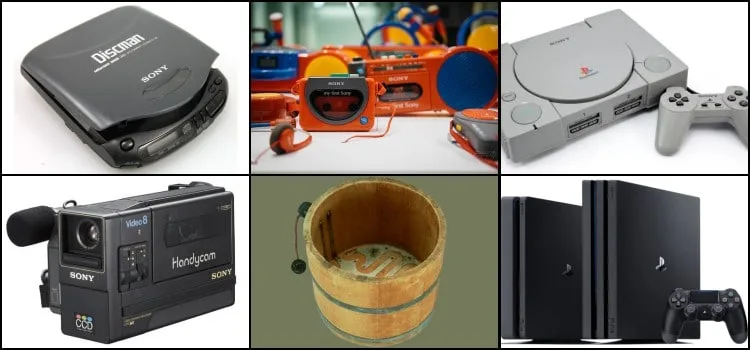
The popular shortcut says its first product was an electric rice cooker at the end of the 1940s. That wooden pot with aluminum electrodes was real — and it cooked rice unevenly. Ibuka treated it as a failed prototype from the months before Tokyo Tsushin Kogyo even existed. What actually paid the bills were radio repairs and measuring instruments, then Japan's first magnetic tape recorder, the G-Type, in 1950.
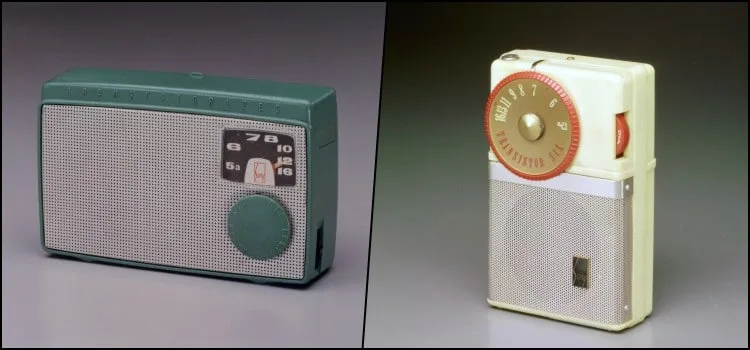
Early products did not all sell well. The 1950 tape recorder missed the performance people expected. In 1955 they launched the Sony TR-55, Japan's first transistor radio and the first product to carry the Sony brand. When those radios started heading toward the United States, a short name in Roman letters mattered: Japanese goods still carried a cheap reputation, and "Tokyo Tsushin Kogyo" was a mouthful.
The success of Sony
The word Sony mixes the Latin sonus (sound) with sonny, 1950s American slang for a young boy. In Japan, "sonny boys" also meant sharp, presentable young men — a self-portrait Ibuka and Morita liked. The brand went on the TR-55 in 1955; the company only changed its legal name to Sony Corporation in January 1958.
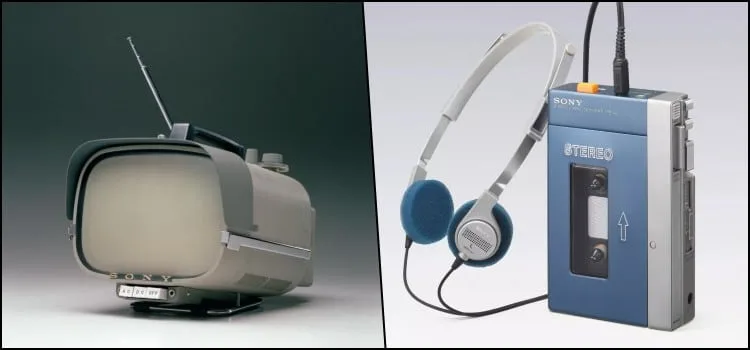
With the TR-55 behind them, they pushed radios smaller. In 1957 the Sony TR-63 arrived: cheap enough, and small enough to sell as a pocket set, it pulled in shoppers who had never owned a portable radio. Those sets built the brand abroad. In 1960 Sony Corporation of America opened in New York, and the same year the compact transistor TV TV8-301 went on sale.
Many other products did well later, including the Handycam camcorder line — the passport-sized CCD-TR55 arrived in 1989, not in the radio years — but nothing quite matched the Walkman.
The first Walkman, model TPS-L2, went on sale in Japan on 1 July 1979: a blue-and-silver cassette player with two headphone jacks. Inside the company, plenty of people thought a tape machine that could not record would flop. It did not. Even though it was met with skepticism at first, it became a best-seller and an international sensation. The Walkman family that followed sold on a scale that still sits in every smartphone pocket.
In 1984 Sony introduced the D-50, the company's first portable CD player, later sold as the Discman. Tapes and CDs eventually lost ground to digital files; the habit those machines taught — music that walks with you — did not.
Sony and its many arms
Sony does not live on electronic products alone. In 1988 the company bought CBS Records, then one of the largest music labels in the world, and the following year acquired the filmmaker Columbia Pictures Entertainment, along with the rights to its film catalog, making Sony Pictures Entertainment an immediate force in the industry.
Both Nintendo and Sega were already succeeding with consoles. Seeing that growth, Sony Computer Entertainment was founded in November 1993 to take a seat at the same table. On 3 December 1994 the original PlayStation launched in Japan and quickly became more than a side project.
Its line of PlayStation consoles, and the portables that followed, still make money for the company. The PlayStation 2 remains the best-selling home console, with more than 160 million units shipped worldwide. The PS4 carried that living-room habit into high definition; the PlayStation 5 arrived in 2020 and is the current generation — not a footnote after "the famous PS4."
If you want the wider map of how Japan built that industry, start with the history of video games in Japan. And if you walk Tokyo looking for the hardware itself, Akihabara is still the neighborhood where radios, Walkmans, and PlayStations share the same sidewalk.
That is the short version of a long company: a rented room in Nihonbashi, a name built for sound, and a handful of objects — radio, Walkman, PlayStation — that people actually carried. What Sony product do you have at home, or did you grow up with? Who still remembers the click of a Walkman cassette?
Kevin Henrique has written about the Japanese language, culture, anime, games, and travel since founding Suki Desu in 2014. He first visited Japan in 2016.
Community
Comments
0 comments
There are no published comments in this language yet.


 In 1984 Sony introduced the D-50, the company's first portable CD player, later sold as the Discman. Tapes and CDs eventually lost ground to digital files; the habit those machines taught — music that walks with you — did not.
 That is the short version of a long company: a rented room in Nihonbashi, a name built for sound, and a handful of objects — radio, Walkman, PlayStation — that people actually carried. What Sony product do you have at home, or did you grow up with? Who still remembers the click of a Walkman cassette?





Community
Comments
0 comments
There are no published comments in this language yet.
Send comment