
As many know, Japan is among the leaders in the world when it comes to science and technology. They are always developing research and innovating various branches of technology. Multinational companies like Sony, Panasonic, Honda, and Mitsubishi are some of the many that have their main headquarters in Japan, meaning they are Japanese companies.
However, Japan is also limited and focuses on some main branches that are of greater importance to them. This also happens because of capitalism; after all, what drives research is the income it can generate, which is why they receive financial support. In other words, the more money the research results will generate, the greater the investment in the research. That's why we don't see as many efforts to find cures for diseases; they prefer to research palliative methods. Of course, this does not apply to the general case, as there are several instances where this comment does not prove valid.
Anyway, returning to the main topic, which is science and technology in Japan. We can affirm that they are mainly focused and prominent in some research branches. And it is from them that we will learn in this article.

Contents 3
Consumer Electronics in Japan
I believe this topic is no surprise, after all, this is a sector that generates an absurd amount of money. A practical example is the number of cell phones in the world. We have more cell phones than people in the world; this number has grown in recent years.
To demonstrate this assertion in numbers, let's take the number of people (7 billion); I decided to use just one number for simplicity. If we take the prices of cell phones and smartphones, we will have an average (these are not official data, just numbers from my opinion based on what I read and see on the internet) of 500 R$ per device, resulting in a market of 3.5 trillion reais, and still growing. This is greater than the GDP of most countries in the world. To give you an idea, Japan's GDP is around 4.5 to 5 trillion dollars. With this, we can see why there are so many companies and research focused exclusively on this scientific field.
But it's not just because of cell phones that this sector is gigantic. To understand better, I will provide the definition of this field.
Consumer electronics are electronic devices (analog or digital) designed for daily use, typically in private residences. In other words, it encompasses devices used for entertainment (flat-screen TVs, DVD players, video games, drones, remote-controlled toys, etc.), communications (phones, cell phones, smartphones, iPhones, iPads, etc.), and home-office devices (for example, desktop computers, printers, paper shredders, etc.).
This sector is ideal for capitalist companies to invest in, as the return is guaranteed in most cases, and in some specific instances, the return is gigantic, as is the case with the success of smartphones.

Robotics in Japan
Robotics is an interdisciplinary branch of engineering and science that includes mechanical engineering, electronic engineering, computer science, and others. Robotics deals with the design, construction, operation, and use of robots, as well as computer systems for their control, sensory feedback, and information processing.
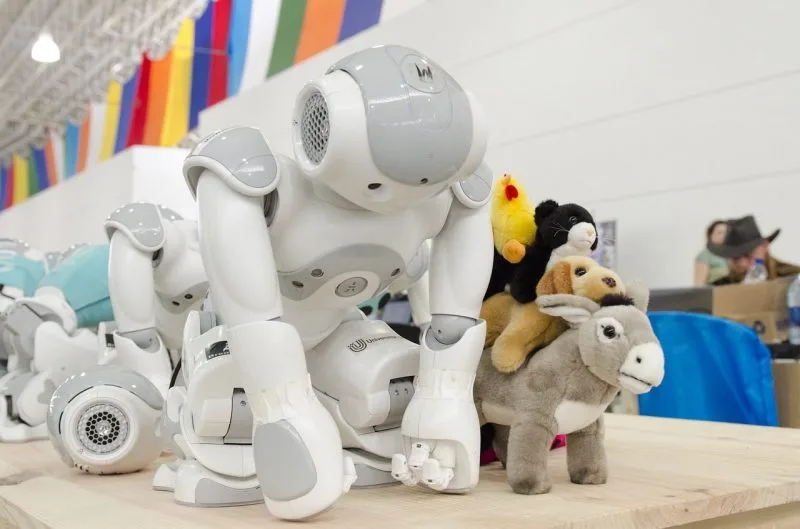
These technologies are used to develop machines that can replace humans and replicate human actions. Robots can be used in any situation and for any purpose, but today many are used in dangerous environments (including bomb detection and deactivation), manufacturing processes, or where humans cannot survive. Robots can take any form, but some are designed to look human in appearance. This is said to help in the acceptance of a robot in certain replicative behaviors usually performed by people.
These robots attempt to replicate walking, lifting, speaking, and basically anything a human can do. Many of today's robots are inspired by nature, contributing to the field of biomimetic robotics. This is a well-discussed topic in society; we have several movies talking about machines with AI (artificial intelligence) dominating the world or controlling people for the destruction of society. All discussions come with the question, “how far can we trust machines?”

The concept of creating machines that can operate autonomously dates back to classical times; in other words, there were already ideas of this kind many years ago. But research on the functionality and potential uses of robots did not grow substantially until the 20th century, as many people believed these were crazy and fanciful ideas. This type of thinking is not limited to this topic; since the beginning of time, this type of thought has existed. We have examples with Albert Einstein, Charles Darwin, Nikola Tesla, Santos Dumont, Thomas Edison, Ludwig van Beethoven, Henry Ford, Graham Bell, and many others who were considered crazy because of their ideas, which later became extremely fundamental pillars for the society we know today.
Throughout history, it has often been assumed that robots will one day be able to imitate human behavior and manage tasks in a human-like manner. Today, robotics is a rapidly growing field as technological advances continue; researching, designing, and building new robots serve various practical purposes, whether nationally, commercially, or militarily. Many robots are built to perform tasks that are dangerous for people, such as disarming bombs, finding survivors in unstable ruins, and exploring mines and shipwrecks. Robotics is also used in STEM (science, technology, engineering, and mathematics) as a teaching aid.
Science fiction author Isaac Asimov is often credited with being the first person to use the term robotics in a short story written in the 1940s. In the story, Asimov proposed three principles to guide the behavior of robots and intelligent machines. Asimov's three laws of robotics, as they are called, have survived to the present:
- Robots must never harm humans.
- Robots must follow human instructions without violating rule 1.
- Robots must protect themselves without violating the other rules.
In short, this field is one of the most observed, especially in Japan; they research as much as possible the development of autonomous machines, after all, the world is always looking for this type of product. Especially in the area of AI, Japan is one of the biggest references in the field. However, if we think from another angle, we will see that the more robots are working, the fewer humans there will be, meaning reducing jobs even further and requiring people to be even more qualified for the jobs. But this discussion is not relevant to this article.
Automotive Industry in Japan
The term automotive was created from the Greek automobiles (self) and the Latin motivus (of movement) to represent any form of self-powered vehicle. This term was proposed by Elmer Sperry (Elmer Ambrose Sperry was an American inventor and entrepreneur.)
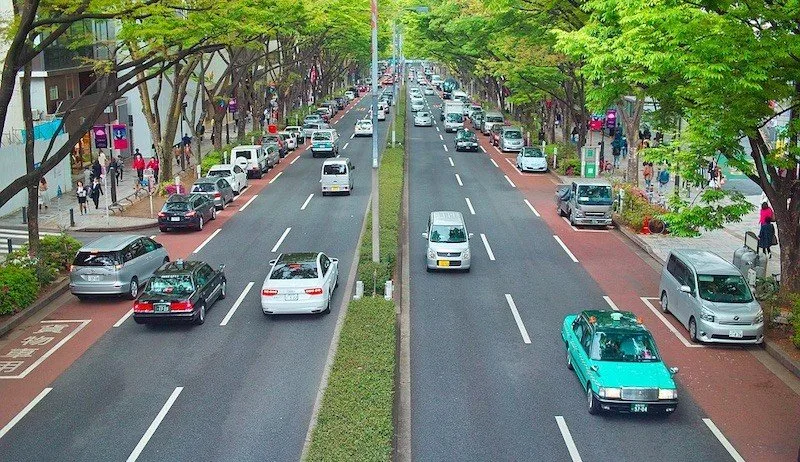
I don't even need to comment on the size of this sector and the income it generates. Just look at the street; depending on the city, you might count dozens or even hundreds in a single day. But this technology sector does not only belong to cars; it also includes motorcycles, boats, agricultural and road machinery, etc. However, we will focus only on cars, as it is the most relevant to the article.
The automotive industry in Japan is one of the largest industries in the world. Japan has been among the top three countries in car production since the 1960s, surpassing Germany, which is one of the major references in this sector. The automotive industry in Japan grew rapidly from the 1970s to the 1990s (when it targeted both the domestic market and exports). After the entry of Chinese manufacturers in the 2000s and the economic fluctuations in the United States, Japan ranked as the third-largest automotive producer in the world with an annual production of 9.9 million vehicles in 2012.

Japanese investments have helped develop the industry in many countries over the past decades. In the 1970s, Japan was a pioneer in robotic vehicle manufacturing. The country is home to a large number of companies that produce cars, construction vehicles, motorcycles, and bikes. Among them, we can mention Honda, Nissan, Suzuki, Mitsubishi, Yamaha, and Mazda, and several others, most of which are large multinational companies extremely popular in Brazil.
Cars designed in Japan have won the Car of the Year, International Car of the Year, and World Car of the Year awards many times.
The automotive industry involves a wide range of companies and organizations involved in the design, development, manufacturing, marketing, and sales of motor vehicles. This is one of the most important economic sectors in Japan and the world in terms of revenue. The automotive industry does not include industries dedicated to the maintenance of automobiles after delivery to the end user, such as auto repair shops and fuel stations, which means that this sector can generate even more income indirectly in the economies of countries.




Community
Comments
0 comments
There are no published comments in this language yet.
Send comment