
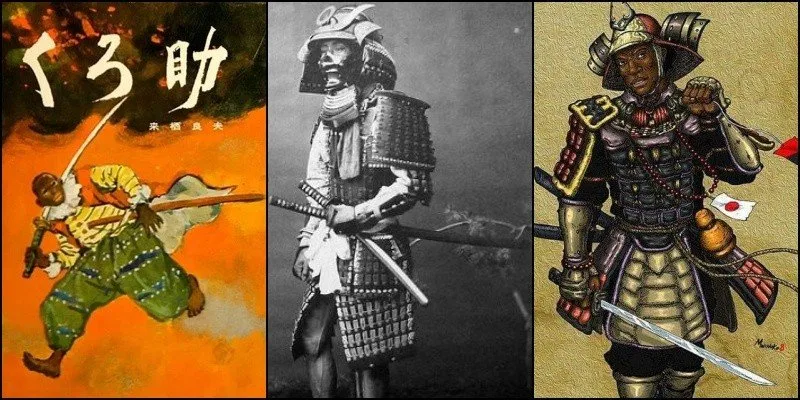
Yasuke was a samurai of African origin who served the daimyo Oda Nobunaga during the final years of the Azuchi-Momoyama Period. In this article, we will talk a little about this samurai and his importance in Japanese history.
Yasuke [弥助, 弥介, 彌助 or 彌介] was an African samurai who served Oda Nobunaga between 1581 and 1582. He was considered the first foreigner to serve as a samurai in Japan. Check out the story of this samurai below:
Contents 3
Origin, true name of Yasuke and arrival in Japan
According to historical accounts, Yasuke was from Mozambique. However, these accounts were written years after his death. Also, there is no other source to corroborate this theory. Probably, the theory is basically an assumption.
His true name is also unknown. Legend has it that his name in Japan is based on the African name Yasufe or Issufo. However, there is nothing to corroborate this either.
Yasuke arrived in Japan in 1579. He was in the service of the Italian Jesuit Alessandro Valignano. Valignano had been appointed inspector of the Jesuit missions in the Indies (East Africa, South and East Asia).
He accompanied Valignano when he arrived in the Japanese capital in March 1581, and his appearance caused much interest among the local population.
In the service of Oda Nobunaga
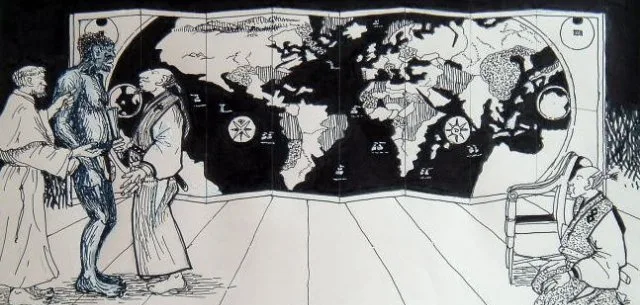
When Yasuke was introduced to Nobunaga, the daimyo suspected that his skin was colored with black ink. Nobunaga made him strip from the waist up and made him rub his skin.
When he realized that his skin was not colored and was indeed black, Nobunaga became interested in him. At some point, although it is unclear, the African entered the service of Nobunaga.
He likely spoke considerable Japanese. This may be due to Valignano's efforts to ensure that his missionaries adapted better to the local culture.
Yasuke was mentioned by Sonkeikaku Bunko (尊経閣文庫) in the archives of the Maeda Clan. According to Bunko, the African received his own residence and a small ceremony from Nobunaga. Nobunaga also assigned him the duty of a weapon bearer.

After the Battle of Tenmokuzan, Nobunaga led his force, including Yasuke, and inspected the former territory of the Takeda clan. On the way back, the black man met Tokugawa Ieyasu.
In June 1582, Nobunaga was attacked and forced to commit seppuku at Honnō-ji, Kyoto by the army of Akechi Mitsuhide. Yasuke was there and fought against Akechi's forces.
Shortly after Nobunaga's death, the African went to join Nobunaga's heir, Oda Nobutada, who was trying to gather the Oda forces at Nijō Castle. He fought alongside Nobutada's forces but ended up being captured.
When he was presented to Akechi, he said that the black man was a worthless animal, therefore he should not even be killed, but taken to the nanban-ji. After that, he disappeared from Japanese history.

Other foreign samurais
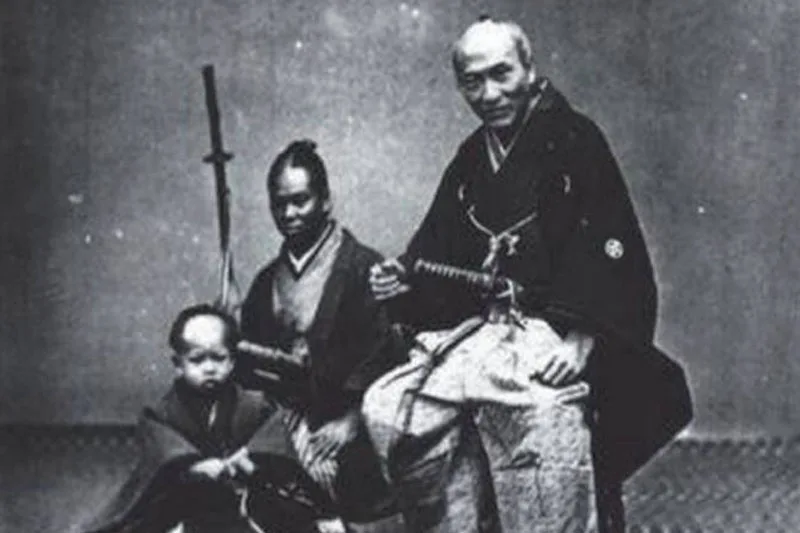
Subsequently, after Yasuke's death, other foreigners served as samurais in Japan. Below is a list of foreigners who served under daimyos:
- Wakita Naokata (born as Kim Yeo-cheol), Korean samurai who served under the Maeda clan during the Tokugawa Shogunate;
- Akizuki Tanenobu (true name unknown), Korean samurai who served under the Chosokabe clan;
- Soga Seikan (true name unknown), Korean samurai who served under the Nakagawa clan;
- Rinoie Motohiro (true name unknown), Korean samurai who served under the Mōri clan;
- Yagyū Shume (true name unknown), Korean samurai who served under the Yagyū clan;
- Yayōsu (born as Jan Joosten), Dutch samurai who served under the Tokugawa clan during the Tokugawa Shogunate;
- Hiramatsu Buhei (born as John Henry Schnell), German samurai who served under the Matsudaira clan during the final years of the Tokugawa Shogunate;
- Eugène Collache, French samurai who fought for the Republic of Ezo;







Community
Comments
0 comments
There are no published comments in this language yet.
Send comment