
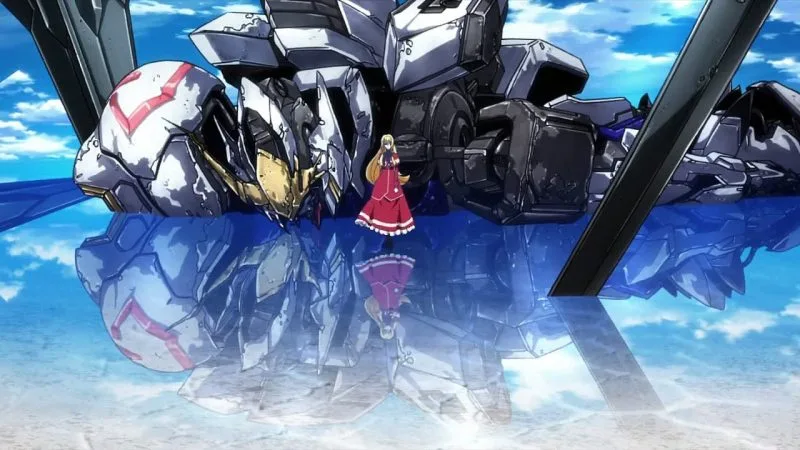
Fighting works as a mode rather than a genre: it runs through action, martial arts, mecha and fantasy anime, which is why lists of "fighting anime" tend to mix very different shows. This guide groups a selection of strong titles by the kind of conflict they build: tournament rankings, power systems, magic wars, mecha escalation and personal stakes. Every entry includes a short summary, the year it aired and why it is worth your time.

Contents 10
What counts as a fighting anime
Most anime fans come to the category through long-running shonen series such as Dragon Ball, Naruto, Yu Yu Hakusho or One Piece, where fights are the main engine of the plot. Those shows are a fine entry point, but they are not the whole map. A fighting anime can be a sports story with superpowers, a magical-girl tragedy, a mecha war drama or a romance in which the final duel decides everything.
The titles below were chosen because the fights carry meaning: they reveal character, change the balance of power or express an idea. That is a more useful criterion than counting punches per episode.
Tournament and ranking stories
Tiger & Bunny (2011) is set in Stern Bild City, where people with special abilities are called NEXT. A group of them appears on the show Hero TV, competing for points and sponsors in the hope of becoming the next King of Heroes. Kotetsu T. Kaburagi, the veteran hero Wild Tiger, is paired with the young Barnaby Brooks Jr., and their mismatched partnership drives both the comedy and the action.
KenIchi the Mightiest Disciple (2006) follows Kenichi Shirahama, a timid student who reads self-improvement books instead of fighting. After a humiliating challenge, he starts training at the Ryozanpaku dojo under a group of eccentric masters. The series is a classic tournament-and-training story: each arc builds toward a fight that tests what Kenichi has learned.
Power systems and transformations
Parasyte -the maxim- (2014) begins when alien parasites take over human hosts. One of them fails to reach the brain of high school student Shinichi Izumi and ends up in his right hand, becoming a partner called Migi. The fights are tense because the parasite has to cooperate with a host who is still learning how far he will go to survive.
Darker than Black (2007) imagines a world changed by two mysterious gates that warp the laws of physics. Contractors, people who gain supernatural powers at a human cost, work in the shadows. Hei, the protagonist, is a cold and calculating operative, and the action scenes are built around deception as much as strength.
One Punch Man (2015) takes the opposite approach. Saitama trains until he can defeat any enemy with a single punch, and then discovers that absolute power is boring. The show is a parody of the genre that still delivers excellent fight animation, and it works as a gateway to the tropes the other series take seriously.
Magic, fate and high-stakes wars
Puella Magi Madoka Magica (2011) looks like a magical-girl story and slowly turns into a tragedy about sacrifice, hope and the cost of a wish. The fights serve the story rather than standing alone, and they are the visible part of a much darker system, and the series rewards viewers who pay attention to what the characters are not saying.
Fate/stay night: Unlimited Blade Works (2014) adapts the Holy Grail War, a battle between seven mages and their summoned Servants. Rin Tohsaka and her Archer enter the fifth war hoping to win an artifact that grants any wish. Fate/Zero (2011) is the prequel, a colder and more political story about the fourth war, and many viewers consider it the strongest entry in the franchise.
Mecha and escalation
Eureka Seven (2005) follows Renton Thurston, a bored teenager who dreams of joining the mercenary group Gekkostate. His hobby of riding Trapar waves leads him into a conflict between the military and the rebels, with mecha combat tied to his family history. The series won several animation awards and remains a strong recommendation for viewers who want adventure with emotional weight.
Tengen Toppa Gurren Lagann (2007) starts underground and ends in space. Simon and Kamina find a small mecha called Lagann and use it to fight their way to the surface, and the show keeps escalating in scale and conviction. It is one of the most energetic examples of mecha used as a platform for character growth.
Kill la Kill (2013) is set in Honnouji Academy, where the student council president Satsuki Kiryuuin rules a brutal hierarchy and grants loyal students uniforms with superhuman abilities. Ryuko Matoi arrives looking for her father's killer, and the school becomes a battlefield. The series is loud, stylish and deliberately over the top.
Romance and personal stakes
Katanagatari (2010) follows Shichika Yasuri, the seventh head of a swordless martial art that treats the body as a blade. He travels with Togame, a strategist collecting twelve legendary swords. The fights are tied to the relationship between the two leads, and the ending depends on what they are willing to give up for each other.
Angel Beats! (2010) takes place in an afterlife school where students fight against an angel. Otonashi wakes up with no memories and joins the Shinda Sekai Sensen, a group rebelling against the system. The show mixes comedy, action and a final act built on loss, which is why it is often remembered for its emotional ending.
The Boy and the Beast (2015) is a film by Mamoru Hosoda about Ren, a nine-year-old boy who runs away to Shibuya and ends up in the beast kingdom of Shibuten. There he becomes the disciple of Kumatetsu, a powerful but antisocial warrior. The final battle is as much about identity and belonging as about strength.
Classics and historical fights
Rurouni Kenshin (1996) is set in the early Meiji era. Kenshin Himura was once the legendary assassin Hitokiri Battousai, but he now wanders the country with a sword that cannot kill. The series blends history, swordplay and atonement, and its best arcs remain a benchmark for sword-fighting anime.
Other fighting series worth knowing
Several long-running series are part of the conversation even if they are not covered in detail here. Dragon Ball set the template for power escalation, Naruto turned rivalry into a narrative engine, Yu Yu Hakusho balanced team battles with character drama, and One Piece built its world around islands, crews and confrontation. Fairy Tail and Slayers are lighter options with strong ensemble casts, while Cowboy Bebop and Samurai Champloo show how fight choreography can carry a whole style.
Where to start
If you want a compact entry point, start with One Punch Man or Tiger & Bunny: both are accessible, funny and well animated. For a serious war story, go with Fate/Zero. For mecha, try Eureka Seven or Gurren Lagann. For a film, The Boy and the Beast needs no prior knowledge.
For more on the genre, read the guide to the longest fights in anime, the comparison between anime and manga, and the article on how Japanese culture shapes anime stories.
Conclusion
Fighting anime is a broad field that rewards curiosity. The best titles use combat to say something about their characters, and the category below offers a route through tournaments, power systems, magical wars, mecha and personal dramas. Pick the entry that matches your taste and let the fights do the rest.




Community
Comments
0 comments
There are no published comments in this language yet.
Send comment