
Toyota is the world's largest carmaker: in 2024 the group sold 10.82 million vehicles and held the top spot for the fifth year in a row. Yet the company did not start with a car at all. It started with a wooden loom.
This article follows the road from Sakichi Toyoda's workshop to a global corporation, explains why the Toyota Production System changed the industry, shows how Toyota arrived in Brazil and looks at the models that shaped the brand. The 2024 figures also reveal the less comfortable side of a record year.

Contents 5
From looms to the first car
Sakichi Toyoda was born in 1867 in a rural area outside Nagoya. He learned carpentry from his father and from 1894 built manual looms that were simpler and cheaper than existing models. He later developed an automatic loom that stopped the moment a thread broke. That idea, letting a machine detect its own failure, became known as jidōka and shaped Japanese manufacturing.
In 1929 his son Kiichiro Toyoda travelled to Britain and sold the patent rights for the loom to Platt Brothers for 100,000 pounds. The money funded a new automobile division: a Type A engine followed in 1934, the A1 prototype and G1 truck in 1935, and production of the AA began in 1936. On 28 August 1937 Kiichiro Toyoda and his cousin Eiji founded Toyota Motor Corporation. The name is a deliberate variation of the family name: written in katakana, トヨタ has eight strokes, and eight is a lucky number in Japan. The headquarters stood in Koromo, which was renamed Toyota City in 1959.

During the Second World War Toyota built trucks for the Japanese military. Civilian production restarted in 1947 with the SA model. Toyota entered the United States in 1958 with the Toyopet Crown, and in 1989 it launched Lexus, its premium brand, which became the best-selling luxury marque in the United States.
The Toyota Production System
Toyota's reputation rests less on spectacular cars than on the way the company works. From 1950 Taiichi Ōno developed the Toyota Production System with building blocks such as kanban, kaizen, TQM, TPM and poka-yoke. The goal was to remove waste, make defects visible immediately and keep quality stable. The approach was later copied by almost every major manufacturer and is still taught in business schools.
Toyota and its affiliates operate 32 plants in Japan and production sites in dozens of countries, and the group includes Daihatsu, Hino and Lexus along with many suppliers and service companies. By September 2023 the company had produced 300 million vehicles in total, and in 2012 it became the first automaker to build more than 10 million vehicles in a single year.
Toyota in Brazil
Brazil is one of Toyota's oldest markets outside Japan. On 23 January 1958 the company opened its first office in São Paulo and soon began assembling imported Land Cruiser kits. Full local production of the model, renamed Bandeirante, started in 1962 at a plant in São Bernardo do Campo, Toyota's first industrial unit outside Japan.
The Bandeirante received a Mercedes-Benz diesel engine when it was nationalised and stayed in production until November 2001, with 103,750 units built. Toyota's first locally made passenger car came only in June 2002, when Corolla production began at the new Indaiatuba plant. A second passenger-car plant opened in Sorocaba in 2012, followed by an engine plant in Porto Feliz in 2016. In 2017 Toyota sold roughly 190,000 vehicles in Brazil, including about 66,200 Corollas.
Toyota today: record and setback
In 2024 the Toyota group, including Daihatsu and Hino, sold 10.82 million vehicles, 3.7 percent fewer than the year before, yet it remained number one for the fifth consecutive year. Volkswagen delivered 9.03 million vehicles and Hyundai around 7.23 million. The Toyota brand alone sold 10.16 million cars. Hybrids were the main driver: 4.14 million units, up 21.1 percent. Battery-electric sales rose 34.5 percent to 139,892 units but remain a small part of the business. Group production fell 7.8 percent to 10.62 million vehicles.
The year was not only a record. A certification scandal in Japan forced Toyota to pause production of some models, including the Yaris Cross, and domestic sales dropped 13.8 percent to 1.44 million. Sales rose 4.3 percent to 2.73 million in North America and 3.6 percent to 1.17 million in Europe, while China fell 6.9 percent to 1.78 million. The episode shows that even a global giant depends on testing procedures and public trust.
The most important models
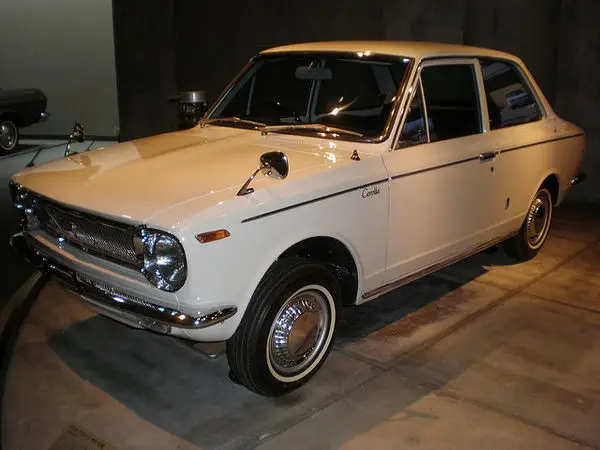
The Corolla has been the backbone of the brand since 1966. Toyota reached 50 million Corollas sold in 2021 and had sold more than 54 million by early 2026, making it the best-selling car nameplate of all time. In Brazil the Corolla has been built since 2002 and is still one of the country's best-known sedans.
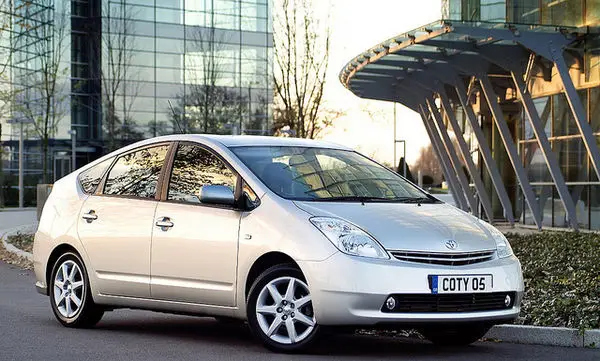
The Prius, launched in Japan in 1997, was the first mass-produced hybrid car and gave Toyota a head start in efficient powertrains. The line-up also includes off-roaders such as the Land Cruiser and Hilux, SUVs such as the RAV4 and C-HR, compact cars such as the Yaris and the kei cars built by Daihatsu. Sports models such as the Supra, Celica and MR2, the Lexus range and JDM classics such as the Altezza, Aristo and Century show the breadth of the brand. Readers who want the wider picture can explore the guide to 25 Japanese car brands and the list of 10 Japanese cars that were successful.
Toyota's success cannot be reduced to a single product. It grew out of patience, a clear idea of quality and the willingness to treat mistakes as lessons. That is why the Toyota story is also a story about how Japanese industry set standards worldwide, and why the brand has been part of Brazilian life for more than half a century.





Community
Comments
0 comments
There are no published comments in this language yet.
Send comment