
While watching anime, I keep catching the same bursts of anger — kuso, baka, temee — and then the English track turns them into something that would empty a family restaurant. A lot of that heat is not a four-letter word at all. It is a rude “you,” a dropped honorific, a line thrown like a punch.
The words themselves are real Japanese. The volume is cartoon. Stub your pinky on the sofa and kuso can be as small as spilling juice on a new shirt. When a villain snarls temee, a dub may write “bastard” because English has no everyday pronoun that already sounds like a threat.
Contents 15
Kuso - 糞 - Shit
Kuso means crap or shit. It is one of the most versatile words in the language and can be used in all kinds of situations. Informal, a little dirty, and still the outburst people reach for when the day goes sideways: the sofa corner, the stained shirt, the missed train. Who knows where you will use it.
The kanji 糞 is feces, dung, crap. As a shout it behaves like English “shit” or “damn.” Stuck in front of another word, it makes that word uglier — a kuso-gaki is a shitty brat, not a poetic child. That prefix is why you hear kuso so often in anime: it is both a stubbed-toe reflex and a way to load a sentence.
Uzai - ウザイ - Annoying
Uzai literally means annoying or noisy. I hear it a lot when a female character is done with someone and snaps. That is common, but it is not the only way to use it. Like several other “insults” on this page, it started as an ordinary complaint and only becomes a slap depending on tone.
Note: You can also throw uzai as a “shut up.” It likely comes from urusai, which anime fans already know as noisy / be quiet. There is a cousin form, uzendayo, that fans sometimes over-translate into English swearing it does not actually carry.
Damare — another way to say shut up. It is a command from damaru (to be silent), so the aggression is in the grammar, not in a hidden dirty meaning. It does not apply to every quiet-down. Urusai is closer to “you’re loud.” Damare is closer to “shut your mouth.”
Chikushou - 畜生 - Damn, animal
Chikushou as a sudden interjection works a lot like kuso: damn, crap, for crying out loud. In daily use it is usually an outburst at the situation, not a label you pin on someone’s forehead. Anime teeth-clenching close-ups love it because it sounds heavier than it often is.
The word is written 畜 (livestock, domestic animal) and 生 (life). The image is a beast’s life, a life treated as livestock. That old weight is why older dictionaries still gloss it as brute or beast. What it is not: a secret stand-in for incest or a ready-made “son of a bitch.” Keep the kanji in mind, use the outburst as “damn it,” and do not upgrade the translation just because the character is punching a wall.
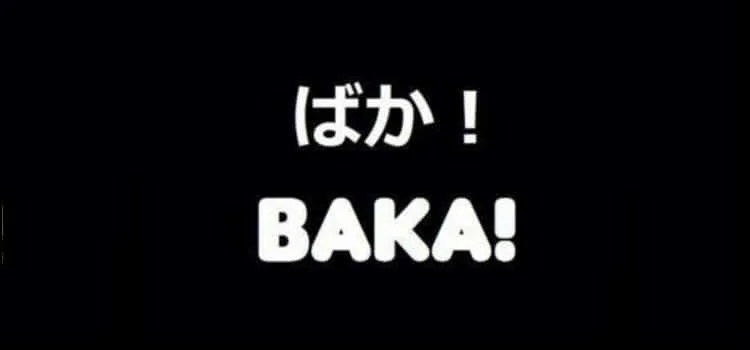
Baka - バカ - Idiot, fool
Baka is the Japanese word everyone thinks they already know. Aimed at a person, it can be stupid, foolish, or idiot. I have yet to watch an anime where it does not show up at least five times, and after hearing it that often I even use it daily without noticing — I only catch myself after the fact. It is short, quick, and weirdly handy. How can you not use it?
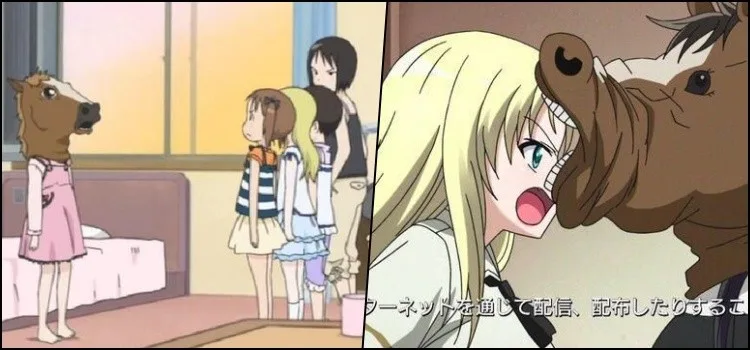
The usual kanji is 馬鹿: horse plus deer. That pairing is a visual joke sitting under the most common insult in the medium, which is why the fawn-and-horse picture below is not random decoration.
Bakayarou — on the surface it looks like the same insult with extra syllables. It is not. Bakayarou does not just mean idiot; it means a complete idiot, an upgrade, something past a “normal” fool. Easy words are the hardest to explain, and this is one of those cases: the extra yarou (guy, fellow, and in this tone a jerk) is the volume knob.

Aho - 阿呆 - Idiot
Japanese has many ways to call someone stupid. Aho means idiot, senile, simpleton, or slow. It sits next to baka, with different characters. The main difference is geography: aho is the everyday word in Kansai, especially Osaka, while baka is the default in Kanto and points north, Tokyo included.
Swap the regions and the sting flips. In Osaka, baka can sound colder than aho. In Tokyo, aho can feel harsher than a casual baka. Nobody enjoys being compared to a senile person, but that is the point of an insult. The useful part is not collecting synonyms. It is hearing which city the character is supposed to come from.
Yatsu - 奴 - Guy
Yatsu looks harmless. It means “guy,” and it can also point at a thing. The insult is in the air around it. You are not always cursing the person; you are putting them a step below you, talking about “that one” as if they were an object on the table.
English does something similar with “that guy” said through the teeth, or with “kid” aimed at an adult you want to shrink. Subtitles that flatten yatsu into a clean “he” miss the sneer. That is why translations of this kind of word go wrong: the dictionary is polite, the mouth is not.
Fuzakeru na - ふざけるな - Don't joke!
Fuzakeru means to joke around, and the particle na turns it into a ban: don’t. Said aggressively, it is an alert, a shove, a “don’t mess with me.” It may not look like an explicit insult, but the threat sits in the way it is thrown. How is it not aggressive when someone uses it to back you off?
Written 巫山戯る, fuzakeru is to kid, to mock, to make a fool of someone. The characters are 巫 (shrine medium), 山 (mountain) and 戯 (to play). Anime often shortens the whole snap to fuzakenna, which is the same command with the syllables smashed together.

Shinee - 死ねえ - Die!
Literally: die. It does not need a long etymology. I usually see it right after the cliché of the protagonist catching a glimpse of underwear or walking in on someone changing — and also in actual fight scenes, where it is not a gag. Because the word shows up so often on screen, fans start treating it as seasoning. In a real argument it is still telling someone to drop dead.
Debu - デブ - Fat
Debu literally means fat or chubby, and it may or may not be an insult depending on who says it and how. Other ways to talk about size include futoi [太い]; marumaru [丸々], which gives the idea of round and plump; and chuubutori [中太り], overweight in a more clinical register.
It fits the protagonist of Accel World perfectly — the most famous Debu in anime, and also the luckiest, since he got the power fantasy a lot of viewers were quietly hoping for. Watch the series if you have not. The light novel is worth it too; a proper second TV season still has not shown up to finish the job.

Hentai - 変態 - Perverted
A classic. It means sexually perverted, a weirdo in that specific way. The word is common in dialogue, and here is the trap: do not confuse the insult with the Western label for pornographic anime. In Japanese the genre word and the accusation are not the same job. Context decides which one you just heard.
Nanda - なんだ - What the hell?
Nanda is 何だ: “what is that?” I would call it an aggressive question, if such a designation exists. It is not a swear word sitting in a dictionary of filth. It becomes rough because of the rest of the sentence and the way it is barked. Anime uses it more than the polite versions, often stacked with other pieces for extra shove.
One pattern is “Nanda yo omae-wa?” — roughly “Who the hell do you think you are?” The heat is omae plus the tone, not nanda alone. There are calmer forms too, which is why a glossary that lists nanda next to kuso needs this caveat.
Temee - 手前 - You!
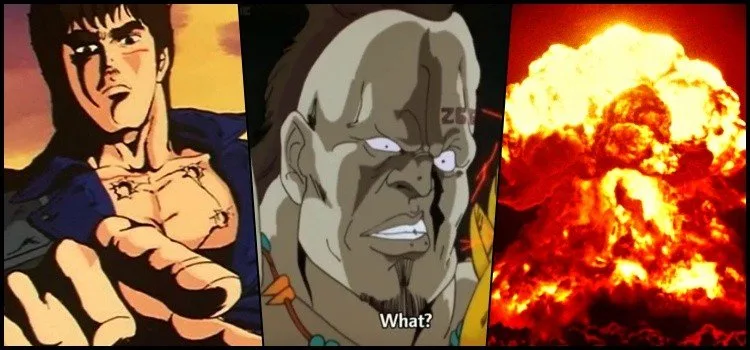
This is the translation trap people underestimate. Literally it can just mean “you,” and then the room changes. Temee is a hostile you, mostly in men’s mouths, with a vulgar, aggressive tone. I still do not have a perfect English twin, because English you does not carry rank the way Japanese pronouns do. “You bastard” is a common dub solution. The Japanese line did not always say bastard. It said you, and made the you itself the insult.
The spelling 手前 is hand plus front: the person standing in front of me. Omae is also a blunt you, common in shounen, and still ruder than using someone’s name. Temee sits below that — the version you reach for when the fight has already started. In real life it is rare unless someone is genuinely losing it. On screen it is everywhere, because anime speech is a caricature of street Japanese, not a recording of it.
Kisama - 貴様 - You (hostile)
Kisama is the other you that villains love and office workers almost never touch. Written 貴 (noble, precious) and 様 (the honorific sama), it started life as respectful address. The respect curdled. Today it is a confrontational you, the kind of word a rival spits when they want the listener small.
If temee sounds like a street snarl, kisama often sounds like a formal curse: old-fashioned, sharp, a little theatrical. That is exactly why it thrives in anime and withers in a supermarket queue. Copying it because a dark-haired swordsman said it is how people get a reputation they did not mean to earn. For the broader map of Japanese insults outside the screen, there is already a companion piece on swear words and insults in Japanese.
When the anime line is not how people talk
English localization has a job Japanese does not: it has to make rudeness audible in a language where you is just you. So a dropped pronoun becomes “hey,” omae becomes “you,” temee becomes “bastard,” chikushou becomes “damn it” or something stronger, and suddenly the episode sounds like an American action movie. The original might only have taken one step down the politeness ladder.
That is the gap worth keeping in your ear. Anime teaches recognition — rhythm, emotion, which character is supposed to be rough. It does not teach you the register of a train, a shop, or a first meeting. Baka among friends can be a poke. Temee at a stranger is a different night. Shine as a gag in an ecchi episode is still a wish of death if you say it with a straight face. The list above is for watching. Using it as a phrasebook for Japan is how the joke stops being funny.
Other slang and swear words in anime?
There are plenty of other insults and aggressive lines that did not make this list. I tried to keep the ones you actually hear, the ones that stuck after years of watching, instead of padding the page with dictionary leftovers. Every language has its weeds. Japanese just hides a lot of them inside ordinary words and pronouns.
If a line still feels off in a subtitle, check the pronoun first, then the command form, then the obvious dirty word. More often than not, the “swear” was never a swear. It was someone refusing to be polite.


Community
Comments
0 comments
There are no published comments in this language yet.
Send comment