
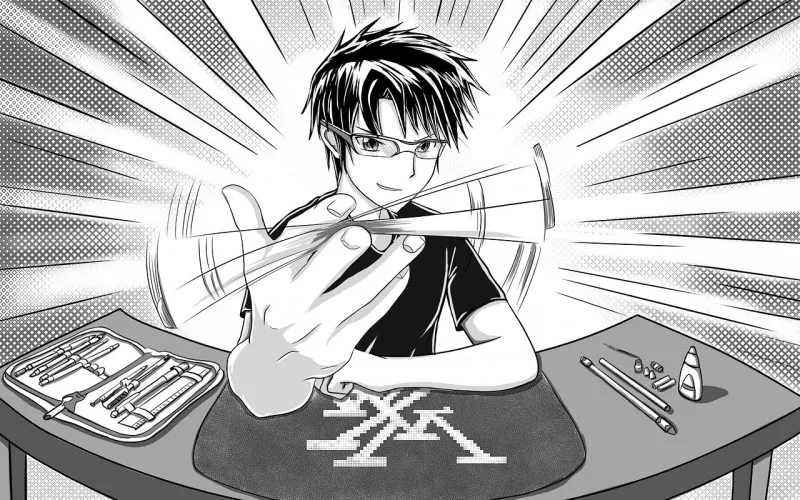
You may have seen someone doing Pen Spinning, and if you haven't, then I believe at some point in your life you tried to juggle with a pen, those times in school or even at work while thinking about something.
Anyway, Pen Spinning is that, juggling with a pen. Of course, just trying doesn't mean you succeeded, after all, there are people with absurd skills to do such a thing. Now let me tell you more about this very popular pastime in the world and especially in the East.
Contents 5
What is Pen Spinning
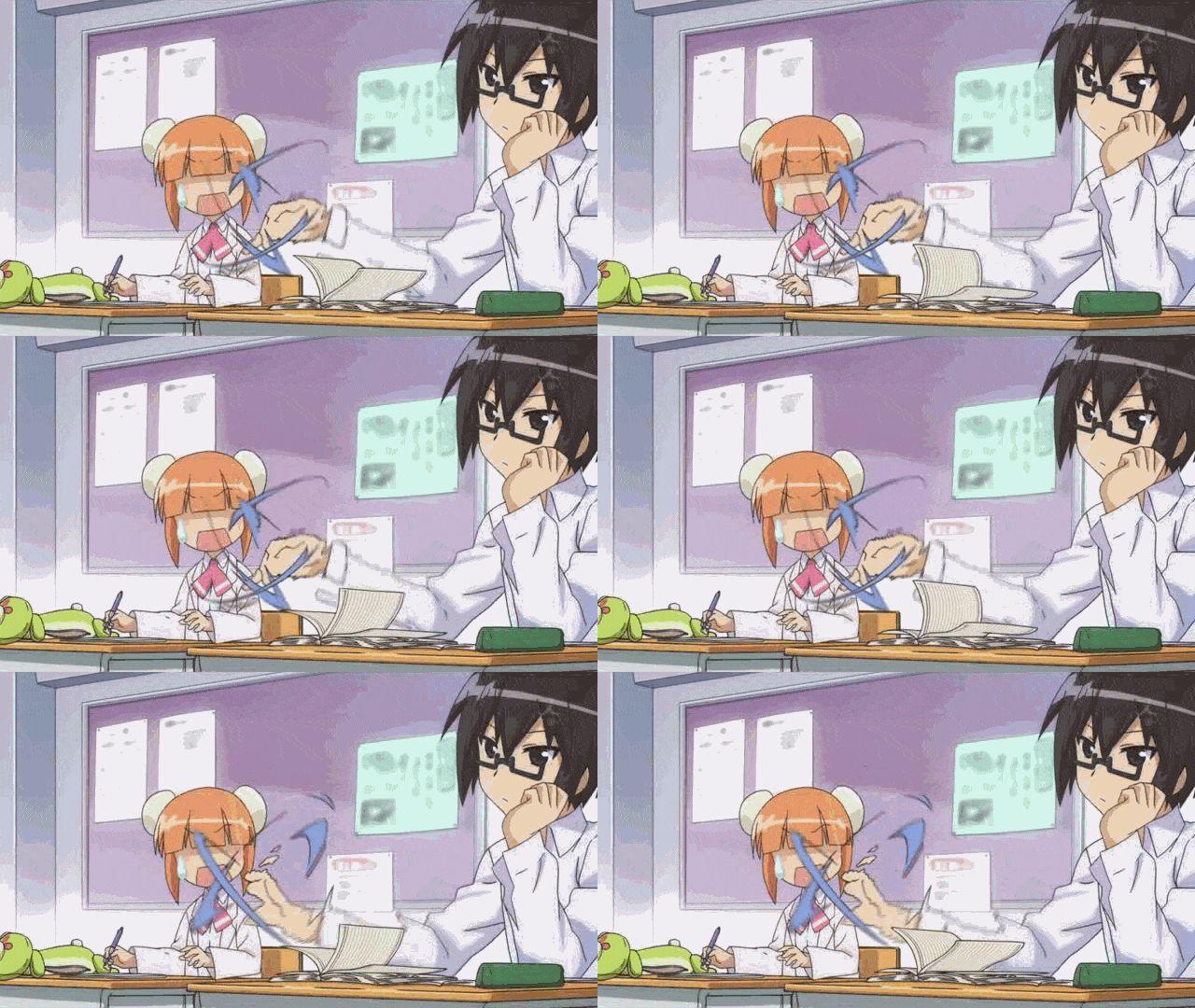
Pen spinning, loosely translated, can mean spinning the pen, which can be classified as a type of juggling, hobby, and sport. That's right, it's not just a game or pastime to distract yourself; Pen Spinning is also serious business.
This juggling consists of spinning a pen in one or both hands in a synchronized and fast manner, skillfully using fine motor coordination, meaning the movements need to be almost perfect, as fine coordination is mainly used for delicate and sensitive tasks, where mistakes have disastrous consequences.
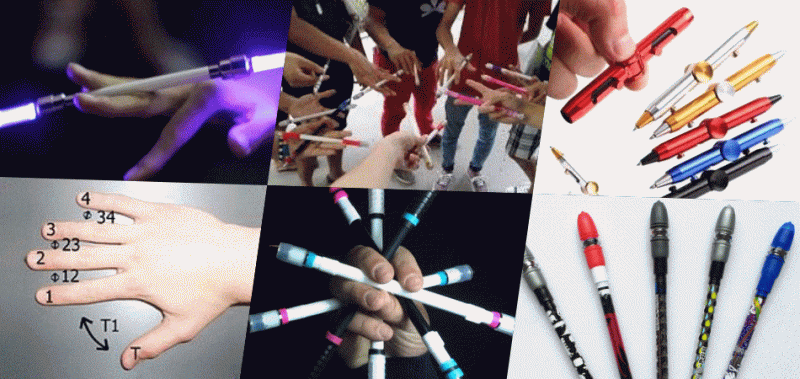
Not always common pens are used for pen spinning. There are special pens called Mods (modified pens), where parts of pens are taken and a mod is made; the well-known ones are: Buster, Menowa, Mx, KT, KIRER, etc.
The hobby is popular in Asian countries, where there are courses and equipment for teaching it; this information gives us an idea of how much they enjoy and take Pen Spinning seriously.
How did Pen Spinning originate?
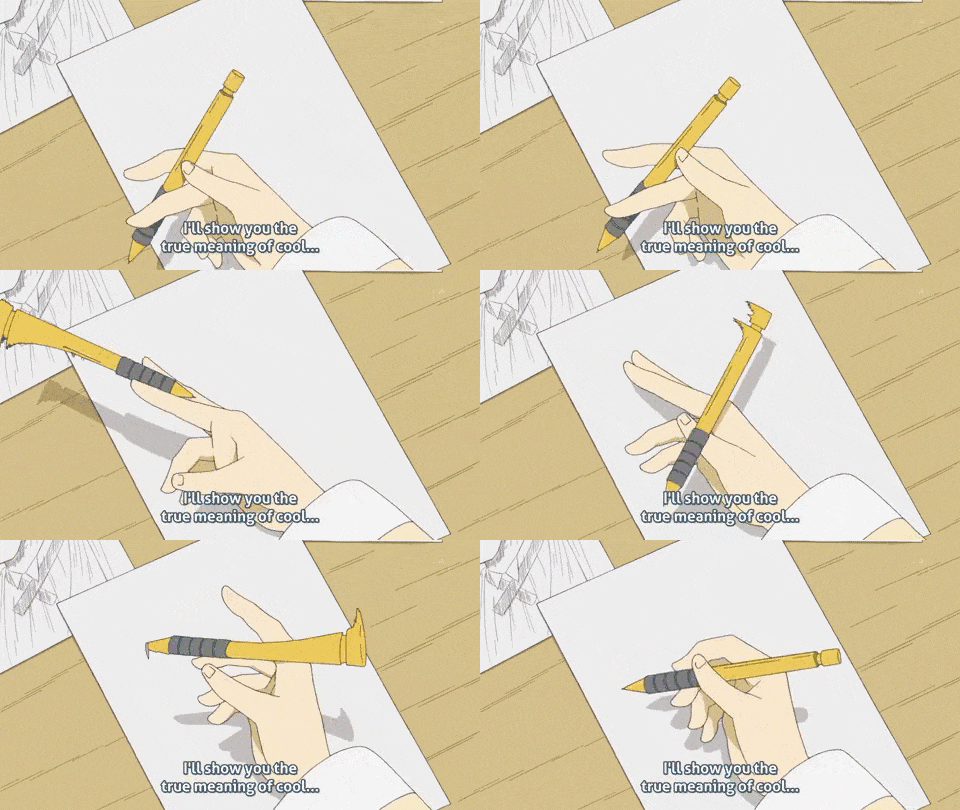
This practice has been quite common since the late 1970s, and it's not uncommon to see people unconsciously spinning pens and pencils while their attention is elsewhere. Thus, we can say that this art originated from people's unconscious, and then it became more elaborate to the point we have today.
It is not clear where pen spinning originated. Through the internet, the hobby was popularized in the first half of the 2000s, through videos and specialized websites on the subject. People have always spun pens at school; sooner or later, this would become a sport.
In Japan, as well as in several other countries around the world, there are in-person and online championships, and like any championship in any sport, there are prizes for the most qualified, as Pen Spinning is also a sport. Thus, in 2008, a 16-year-old named Ryuki Omura became the first Japanese champion of the modality. The practitioner of pen spinning is also known as a pen spinner.
Characteristics of Pen Spinning
Well, since we talked a bit about the theoretical part of this art, let's now move on to the practical part, where we will learn the basics of Pen Spinning.
Before picking up the pen, we need to know a few things to help us with the practice. To start, there is a specific notation in pen spinning, where the fingers and the openings between them are numbered, to facilitate learning and explaining the techniques of maneuvers, that is, to help in the description of the maneuvers and also the step-by-step of how to do them.
Let's go, we will start numbering the fingers:
- Finger T is the thumb (from English thumb);
- Finger 1 is the index;
- Finger 2 is the middle;
- Finger 3 is the ring;
- Finger 4 is the pinky;
- Next, the spaces between the fingers:
- Opening T1 is when the pen is situated between finger 1 and T;
- Opening 12 is when the pen is situated between finger 1 and 2;
- Opening 23 is when the pen is situated between finger 2 and 3;
- Opening 34 is when the pen is situated between finger 3 and 4;
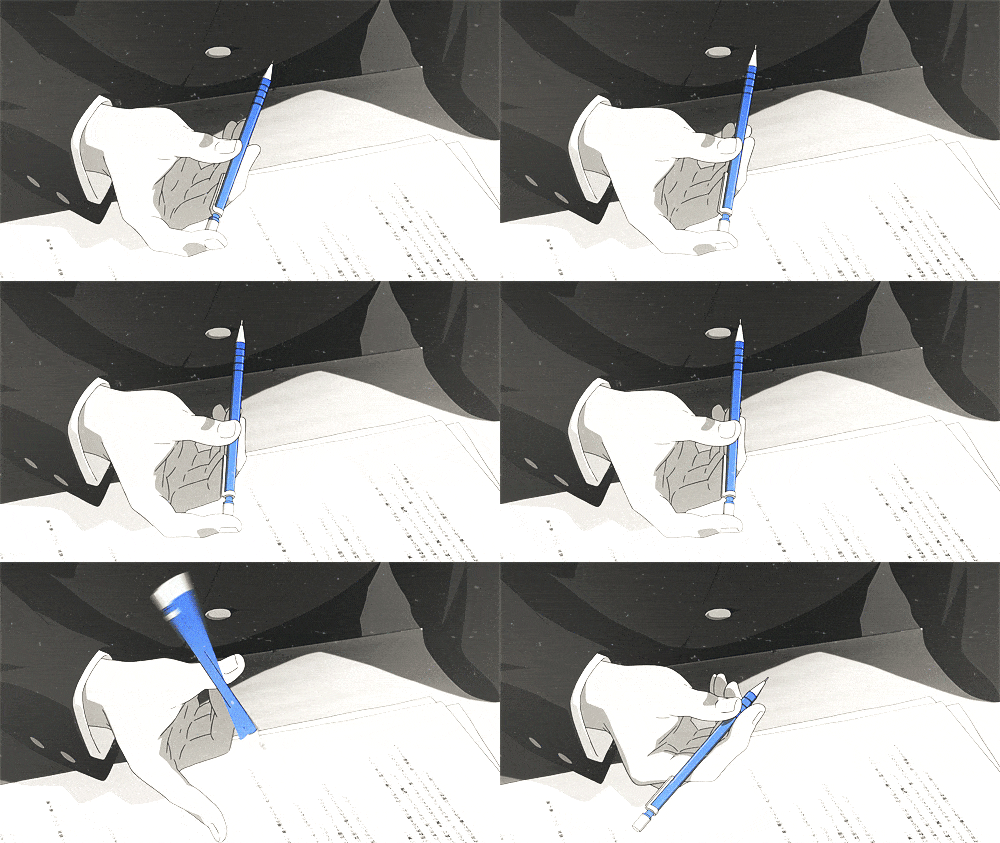
Okay, with the preparations done, now it's just a matter of getting to work. Every beginner in Pen Spinning needs to know four basic movements; they are fundamental to help stabilize and improve fine motor coordination, in addition to being the basis for several other movements and higher-level combos.
These movements do not depend on special/modified pens (MODS). Since all maneuvers go (normal suffix) and come back (reverse suffix), this means that the maneuvers can be executed in two directions; this detail will be better understood after practice. Conventionally, all movements have names in the English language, as it is the most spoken and used language in the world.
Basic movements of Pen Spinning
1 - ThumbAround Normal: it is a movement in which the pen is propelled by any finger, commonly the 2, passing around the T spinning 360° on top of it. At the end of the maneuver, the pen should be held in the opening T1.
2 - Fingerpass Normal: it is the simplest movement to understand, execute, and also the most well-known. In it, the pen literally spins between the fingers, more specifically passing from one opening to another sequentially. The movement consists of giving only half a turn of the pen between the openings of the fingers (12, 23, and 34). The direction the pen travels is on the palm side and down, then it goes up on the other side of the hand.
3 - The Sonic Normal is known as the technique that quickly changes the pen from one finger position to another. In the movement, the pen spins conically behind the fingers, without involving the thumb, between the openings 23 and 12. Short for supersonic, due to the great speed at which it is executed, it is the most difficult to perform among the basic movements.

4 - Charge Normal - A technique that only requires two fingers to be performed and has no finger swapping. Basically, the pen spins conically in one position and clockwise in the right hand or counterclockwise in the left hand. It can be done in any of the openings but is commonly done in the opening 12. It is similar to what drummers do with the drumsticks, spinning them.
Ready for Pen Spinning?
For beginners, these are fundamental movements; they need to be fully mastered before attempting to perform other maneuvers. For now, that's all I can offer you, my dear reader. If you want more posts about Pen Spinning, just comment.
But then, did you know that Pen Spinning is considered a sport? Do you practice or know someone who does? Or if you want to give any suggestions, just comment, don't forget to turn on notifications and stay tuned here on the site, we always have new content. Thank you for reading so far, I hope you enjoyed it. To finish, let's leave some amazing videos:




Community
Comments
0 comments
There are no published comments in this language yet.
Send comment