Have you ever seen the word まま (mama) in a Japanese song and wondered what it really means? No, we’re not talking about “mom”! Although it has the same reading, in this case まま is a grammatical structure full of nuances — and super useful in everyday life.
In this article, we will explore the true role of まま in Japanese, with practical examples, common expressions, and tips so you never confuse this powerful little word again.
What does まま (mama) mean in Japanese?
Simply put, まま expresses the idea of something that remains as it is, without change. It’s like freezing a situation in time — whether it’s a feeling, a position, a physical state, or even a thought.
Think of sentences like:
「このままでいいですか?」– “Can it be as it is?”
「座ったまま話してた」– “I was talking while sitting”
The beauty of まま is that it is versatile. It is used to describe continuous actions, unchanged situations, or even unmodified desires and feelings. But be careful: context changes everything.
まま (mama) is a suffix that you add when you want to say:
As it is, while, remains, being, still, keep, continue
Just, the way it is, you are, just like that
Do like, as
Some condition, state, situation that does not change
Continue doing something, to keep some condition as it is
Remains in a certain condition or state
Stays in a certain condition or state
As someone likes, as someone wants
When doing something, etc.;
Well, these many meanings and literal translations of the suffix まま only leave us more confused. To simplify, まま is a grammatical word to express the lack of change in something. To help you better understand its use, we will show many examples.
A very common example is when you enter a konbini, buy a small product, and take it to the cashier, she will say:
このままでよろしいですか?
Kono mama de yoroshīdesu ka?
She is saying: “Can it be as it is?”. The word 宜しい (yoroshi) is a more polite version of いい which means: Right? Is it okay? Is it good?
How to use まま with nouns – のまま
When you connect a noun with まま, you usually use the particle の:
昔のまま (mukashi no mama) – “As in the old days”, “like the past”
学生のまま (gakusei no mama) – “Still as a student”
今のまま (ima no mama) – “As it is now”, “without changing”
有りのまま (ari no mama) – “As it really is”, “without filters” (yes, like Elsa’s song…)
Using with adjectives – いまま and なまま
You can also combine まま with adjectives, both い and な types:
若いまま (wakai mama) – “Remaining young”
綺麗なまま (kirei na mama) – “Still beautiful”, “keeping the beauty”
不便なまま (fuben na mama) – “Remaining inconvenient”
悲しいまま (kanashii mama) – “Remaining sad”
Here, まま reinforces the idea that the characteristic has not changed.
Expressions with demonstratives – このまま, あのまま…
These expressions are super common and convey the idea of “as it is”:
このまま – “Just like this”, “this way”
あのまま – “That way”, “as it was”
そのまま – “Like this”, “exactly like this”
You know when someone says “keep it like this”? That’s pure このまま.
Connecting with verbs – actions that continue
Here, まま shines. Usually used after the verb in the past form, it shows that the action was done and remained that way:
開けたまま (aketa mama) – “Left open”
座ったまま (suwatta mama) – “Stayed seated”
食べてないまま (tabenai mama) – “Continued without eating”
言うまま (iu mama) – “Say as you wish”, “let it be said”
Depending on the verb, it can have poetic, everyday, or even dramatic tones. It depends on the context.
Emphasizing with が – がまま
When we add が before まま, we have a more emphatic, almost philosophical expression:
思うがまま – “As you wish”, “as you want”
あるがまま – “As things are”, “accepting reality as it is”
This style appears a lot in songs, poems, and more introspective expressions.
Example Sentences
To finish, let’s leave some example sentences for you to examine and understand deeply the meaning of the word まま.
すべて私がそこを去った時のままでした。
Subete watashi ga soko o satta toki no mamadeshita.
Everything was as it was when I left there.
この家はこのままにしておきたい。
Kono-ka wa kono mama ni shite okitai.
I like this house as it is.
エアコンをつけたまま出かけた。
Eakon o tsuketa mama dekaketa.
I left without turning off the air conditioning.
テレビをつけたまま寝てしまいました。
Terebi o tsuketa mama nete shimaimashita.
I fell asleep with the TV on.
このまままっすぐ進んでください。
Kono mama massugu susunde kudasai.
(Please) continue straight ahead.
私達は友達のままだった。
Watashitachi wa tomodachi no mamadatta.
We remained friends.
相手に言われるままの値段を払った
Aite ni iwa reru mama no nedan o haratta
I paid the price that was told to pay.
彼は名声を欲しいがままに手に入れた。
Kare wa meisei o hoshīga mama ni teniireta.
He gained the fame he desired.
彼女に別れを言わないまま日本に来てしまった。
Kanojo ni wakare o iwanai mama Nihon ni kite shimatta.
I came to Japan without saying goodbye to my girlfriend.
It’s worth remembering that there is another suffix that means “leave things as they are” which is “っぱなし” that can be used with some verbs. But we will leave that for another article.
Have you heard of the Midori Browser? The name may sound exotic to some, but it carries a special meaning. “Midori” means “green” in Japanese, a choice that already conveys much of what the browser aims to be: light, efficient, fresh, and with a touch of environmental awareness. But the story of Midori goes beyond the name and reveals a project that has always sought to offer something different for those who want to browse without weight, without traces, and with plenty of personality.
Who created Midori and how did it all start?
Midori was born back in 2007, created by Christian Dywan, a developer with a strong connection to the philosophy of Xfce — a graphical environment known for being fast and lightweight. From the beginning, the idea was to build an agile browser that would run well on any computer, even the oldest or most modest ones. No bloat, no unnecessary features stealing your memory or your time. Simplicity and lightness have been key words since the first line of code.
Over the years, Midori went through different phases and gained contributors from all over the world. In 2019, the browser was adopted by an organization called Astian Foundation, which decided to renew the program’s base, making it even more modern and aligned with security and privacy trends.
What makes Midori different?
Here, there is no avalanche of useless features that only serve to complicate your life. The focus is on the essentials: opening pages quickly, consuming little memory, and protecting your browsing from curious eyes. And there’s more: Midori’s visual is clean, easy to use, and at the same time, offers a touch of customization for those who like to make everything their own.
Another differentiator is the real commitment to privacy. Midori does not collect your data, blocks trackers, and includes an ad blocker right in the standard installation. You feel the difference within the first few minutes, browsing without that feeling that everything you do is being watched.
Evolution and adaptations over time
You may have heard that Midori has changed quite a bit. And it really has. In the beginning, it was based on technologies like WebKit, then adopted components from Chromium, until, in 2023, it started using the Gecko engine, the same as Firefox. This evolution has always been motivated by the goal of offering more performance, compatibility, and stability, without losing the light soul that has always been the trademark of the project.
With each change, the Midori team sought to balance performance and features, listening to suggestions from users and developers around the world. This openness reflects the very spirit of the browser: open, collaborative, always ready to adapt to what really matters.
The practical advantages of using Midori Browser
Light performance: Ideal for those with older machines or simply do not want a browser that devours all the computer’s resources.
Above-average privacy: Blocking trackers, ads, and protection against data collection from the start, without needing extra plugins.
Clean and intuitive visual: Easy to understand, straightforward, and with space for customization if you want to make the interface more your own.
Wide compatibility: Available for Windows, Linux, macOS, and even Android, which makes it much easier for those who use more than one system.
Active community: The project is open source, with developers and users from around the world contributing to constant improvements.
Is it worth trying?
If you’re tired of heavy browsers, full of invasive plugins and privacy concerns, Midori offers a breath of fresh air. It doesn’t promise to be the “miraculous” browser that solves everything, but it delivers exactly what it proposes: fast, clean, and protected browsing, without complication and without excessive memory consumption.
Moreover, there is a certain charm in using something that carries meaning in its name and essence, right? Midori is about being green, light, and efficient, and it may be just what you need to make your browsing more fluid — and even fun.
My tip? Install it, test it for a few days, and draw your own conclusions. Sometimes, all we need is a new experience to rediscover the pleasure of simply browsing the internet.
Is it possible to work in Japan for a company abroad? Understand how the Employer of Record (EOR) makes this possible
Working for a foreign company while living in Japan seemed, until recently, too complicated to be worth the effort. After all, we are talking about a country famous for its bureaucracy, right? But there is a way to make this possible without having to open a branch in Japan: the so-called Employer of Record (EOR).
If you have wondered “can I work in Japan for a company that is in the United States or Europe?”, you can celebrate. Yes, it is perfectly feasible – and many people are taking advantage of this solution. Shall we understand once and for all how this works in practice?
Employer of Record: How does it work in Japan?
Imagine that you work for a startup in the United States. Your boss loves your work and you love the idea of living in Japan. But opening a Japanese branch is expensive, complicated, and takes time. That’s where the EOR comes in.
The process generally follows these steps:
Your foreign company chooses you as an employee, but instead of opening an office in Japan, it hires an EOR provider.
The EOR becomes your formal employer in Japan, taking care of all legal and financial bureaucracy.
The company pays the EOR, and the EOR passes on your salary already adjusted to Japanese local standards, including taxes, social security, and mandatory benefits.
The EOR allows you to work legally in Japan without compromising your employment relationship with the foreign company. This option also serves as a “bridge,” allowing you to obtain a visa, even without needing to enter the traditional Japanese job market.
Why is Japan adopting the Employer of Record so much?
The Japanese usually take a long time to change their traditional business practices. So why have they embraced this trend so quickly?
The answer lies in a real problem that Japan faces today: lack of skilled labor. The country has fewer and fewer young people to work, especially in technology and technical areas. Therefore, Japanese companies have started to realize that hiring global talent through EOR can quickly solve this problem without having to face the traditional complications of international hiring.
Additionally, Japanese companies are also using the EOR to offer flexibility to their own employees. Imagine the following real situation that I saw happen recently: a Japanese company allowed a developer to live in Germany for two years, working via EOR. When he returned to Japan, the employee was still perfectly integrated, productive, and very satisfied.
The risks that almost no one mentions about EOR in Japan
Of course, the EOR is an amazing solution, but it is also not perfect. Here are some important details that you rarely see mentioned:
Emotional connection issues with the company: When you work through a third-party company, it is normal to feel a bit distant from the original organizational culture. To overcome this, it is essential to maintain constant contact with your parent company, even from afar.
Potential tax risk: If you live in Japan and perform strategic functions or activities that generate revenue directly, there is a risk that Japanese authorities will understand that your company has a “permanent establishment.” This could mean more taxes for your foreign company. You don’t need to panic, but it’s worth discussing this specific point clearly with your EOR.
How much does it cost to hire via Employer of Record in Japan?
Typically, the cost for the foreign company to use an EOR includes your gross salary, legal contributions (social security, health, and local taxes), and a monthly service fee that usually ranges from 8% to 15%.
In practice, your foreign company will pay a little more than it would pay you directly in the original country. However, if you compare it with the costs of opening an entity in Japan, using an EOR is infinitely cheaper, especially if it is just for one or two employees.
Reverse EOR
Japan is also starting to use the EOR in reverse: Japanese companies are retaining talent that wants to live outside the country, especially in areas like technology, digital marketing, and engineering. Recently, a Japanese fintech managed to retain two experienced engineers who wanted to live in Canada, using EOR to continue employing them remotely. They are happy, and the Japanese company is too.
This practice is starting to gain popularity because it allows for strategic retention of valuable employees, something still little explored by common articles that talk about EOR.
How long does the process take?
In practice, from start to finish, you are looking at a period of 2 to 4 weeks in most cases. This time covers everything: setting up your employment contract properly, registering in the Japanese government systems (which have their procedures), and gathering the necessary paperwork to apply for your visa. An important detail: if you already have your personal documents in order – diploma, professional history, those things – the process can move much faster. Believe me, having this organized makes a difference!
Who offers this EOR service in Japan?
There are several solid companies operating there, each with its own way. The ones I see being mentioned the most and with a good reputation are:
Deel: Famous worldwide, their platform is super intuitive for those who want practicality.
Globalization Partners: Besides having a strong presence in Japan, their great asset is knowing local bureaucracy like no one else.
Remote.com: Very well regarded, especially by international startups that want to enter the Japanese market without headaches.
Velocity Global: Specialists in international hiring, which includes mastering the peculiarities of Japan.
Papaya Global: A robust and transparent option, often the choice of larger companies.
The crucial point is that all of them already have a foothold in Japan: physical structure and deep knowledge of local laws and customs. This is what ensures that the process runs smoothly and without unpleasant surprises.
How do I contact an Employer of Record?
It’s simpler than it seems:
Choose your company: Do some research, compare prices, read some reviews, see which one offers the support you need (including cultural). Don’t rush here.
Request a quote: Just access the website of the company you chose and fill out the contact form or request a proposal. They respond quickly.
Gather your documents: Valid passport, diplomas (translated/notarized, if necessary), updated resume, and any other paperwork they request. Keep digital copies handy!
Sign the contract and start: After all the paperwork is sorted and the contract is signed… done! You will be formally employed in Japan through the EOR.
By following these steps, you can resolve the bureaucratic part and focus on what matters: your remote work for the company abroad, straight from Japan! It’s a well-established path nowadays.
Kishotenketsu. At first glance, the name may seem like just a Japanese linguistic curiosity, but in fact, it hides one of the most fascinating secrets of storytelling worldwide. For those looking to innovate in scripts, texts, videos, or even advertising campaigns, understanding this concept is almost like gaining a new palette of colors to paint stories — without falling into the same clichés.
The interesting thing is that, outside of Japan, few people have truly absorbed the power of Kishotenketsu. And it’s not for lack of examples: just watch an anime, flip through a manga, or even analyze some Japanese commercials to notice something different. The tension does not arise from the confrontation between heroes and villains, but from small surprises and an almost poetic feeling that everything can change with a detail. It seems subtle, but it changes everything.
Unraveling the Four Pillars of Kishotenketsu
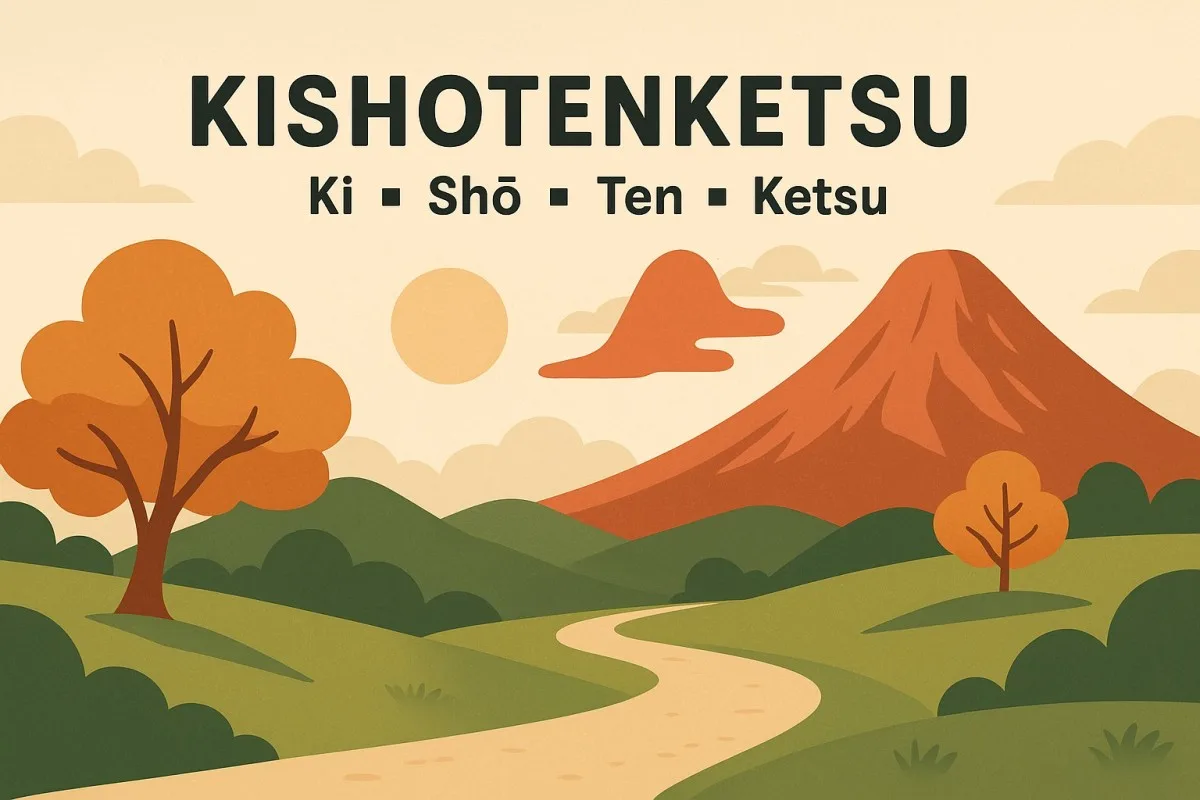
The Kishotenketsu structure (起承転結) is simple on the surface, but deep when you delve into it. It is divided into four parts:
Ki (起): The beginning. Here, you introduce characters, setting, atmosphere. No rush. It’s like opening a window and letting the reader or viewer calmly enter that world.
Sho (承): The development. The plot expands, but without major turbulence. Small pieces of information are woven together, the routine gains color. You know that episode of a series that seems “stopped” but makes you dive into the details? That’s it.
Ten (転): The turning point. And this is where Kishotenketsu shows its true strength. Instead of an explosion of conflict, a surprise emerges — something that reorganizes the perception of everything that came before. It can be a revelation, a found object, an unexpected gesture.
Ketsu (結): The conclusion. The loose threads connect, now under a new light. Don’t expect miraculous endings: usually, the beauty lies in the simplicity of the new meaning.
Want a practical example?
Imagine: A girl learns to cook with her grandmother (Ki), prepares simple recipes while sharing family stories (Sho). One day, while rummaging through an old drawer, she finds love letters from her grandfather to her grandmother, all talking about food (Ten). In the end, she realizes that each dish was a disguised declaration of love (Ketsu). There’s no fight, no forced drama — just a surprise that redefines the entire experience.
Why Kishotenketsu Charms (And Is So Lacking in the West)?
The West loves a good conflict. Hollywood has built empires with the logic of the hero facing the villain, from the rise to the climax and victory. Kishotenketsu, on the other hand, invites us to slow down. It reminds us that real life is rarely made of epic clashes, but rather of encounters, small discoveries, and moments when everything gains a new meaning, without anyone needing to “win.”
Have you ever had a day that seemed absolutely ordinary until someone told you a secret, showed you an old photo, or said an unexpected phrase? Suddenly, everything felt different, without the need for conflict. It’s this feeling that Kishotenketsu captures — and, let’s face it, it’s sorely missed in a world saturated with ready-made formulas.
Those seeking more contemplative, deep, or even philosophical narratives find in this model a rare creative freedom. It is perfect for content that wants to evoke emotions without manipulating, teach without dramatizing, and transform without shouting.
Kishotenketsu in Practice: Much More Than Mangas
The secret of Kishotenketsu is not limited to fiction. It can transform the way we create:
Marketing: Think of a campaign where urban youth help seniors use technology (Ki), exchange experiences over several weeks (Sho). The unexpected? They discover that one of the grandparents is a former programmer who created the country’s first software (Ten). The closing is an intergenerational workshop, full of laughter and genuine exchange (Ketsu).
Social Media: How about a post that starts by asking why leaves change color (Ki), explains the natural process (Sho), reveals a local superstition about luck (Ten), and ends by encouraging the reader to look at the trees in their neighborhood with new eyes (Ketsu)?
Education: Teachers can present a topic, develop it with examples, bring a curious fact that changes the entire perspective of the students, and only then tie up the learning. Less “final exam,” more progressive discoveries.
Japanese Pop Culture: The Living Laboratory of Kishotenketsu
Hayao Miyazaki’s films, such as “My Neighbor Totoro,” are true lessons in this type of narrative. Notice: instead of villains or disputes, we see children discovering small wonders of everyday life, and a seemingly trivial moment — like waiting for the bus — turns into pure magic with the silent arrival of Totoro. The unexpected is not a shock, but an invitation to contemplation.
Mangakas like Osamu Tezuka have turned this way of storytelling into a signature. You may not notice it immediately, but when you start looking for it, you see Kishotenketsu in thousands of scenes, dialogues, and even in the “dead times” of episodes that are, in fact, full of meaning.
Cultural Curiosities and Boldnesses Outside Japan
Kishotenketsu has not been confined to the Japanese archipelago. Similar structures exist in China (qǐ chéng zhuǎn hé) and Korea, each adapting to its own cultural rhythm. And it doesn’t stop there: screenwriters and artists from all over the world have been testing the format to escape the mandatory conflict and create gentler narratives, or even advertising pieces and viral videos where what matters is not the shock, but the silent “click” of surprise.
By the way, many Japanese games also play with this pattern. Those who have played titles like Animal Crossing or Journey understand well: the pleasure lies in small discoveries and the feeling that routine can suddenly gain a different flavor.
If you’re curious, here’s an invitation. The next time you tell a story — whether for a post, a video, a conversation, or even a campaign — try to follow the four steps of Kishotenketsu. Don’t force conflict. Prefer a detail, a revelation, a meeting, a phrase that reorganizes everything. Then, observe: your audience will notice the difference. Often, it’s this lightness that truly captivates.
Ultimately, Kishotenketsu invites us to see the beauty in the unexpected, the strength of silent surprise, and the power to reorganize meanings without the need for struggles. In times of excessive noise, perhaps this is what we need most: narratives capable of touching without shouting.
Have you ever tried to experiment with Kishotenketsu in your work or life? Share your experience — the best stories are those that transform both the storyteller and the listener.
Sake manufacturers in Japan are not just traditional companies or mere distilleries. Each of them is a guardian of unique stories, regional traditions, and centuries-old methods passed down from generation to generation. When you choose to visit these places, you are not just getting to know a product; you are connecting with an essential part of Japanese culture.
Sake transcends the simple pleasure of drinking: it is ritual, celebration, and cultural heritage. By personally visiting these breweries, you actively participate in the tradition, hearing fascinating stories, seeing ancient processes up close, and, of course, tasting a drink with a unique and unforgettable flavor.
Hakutsuru (Nada, Hyōgo)
Hakutsuru is a national and international reference in the world of sake, with a history that began in 1743 in the Nada district, famous for its excellent local water and high-quality rice. Here, visitors have the opportunity to tour the brewery museum, where the complete production process is explained in detail in carefully preserved historical settings. You not only hear how sake is produced, but you also see the rice being washed, fermented, and bottled before your eyes.
The experience doesn’t end there. The best comes at the end, with a tasting of various sakes, which can be done leisurely without the need for prior reservation. It is a great starting point, especially due to the ease of access and the rich experience offered even for those who do not understand much about the drink.
Gekkeikan Okura (Fushimi, Kyoto)
Gekkeikan Okura, located in the historic Fushimi region, has a long tradition since 1637, being one of the most respected and internationally known manufacturers. Upon entering the museum, you dive into centuries of history, observing ancient equipment and discovering how the process has changed over time. It’s practically a trip back in time!
But, of course, the cherry on top is the tasting. Here you taste exclusive varieties and understand how small details make all the difference in the final flavor. The brewery’s location also allows easy exploration of other nearby distilleries, making your visit richer and more complete.
Sawanotsuru (Nada, Kobe)
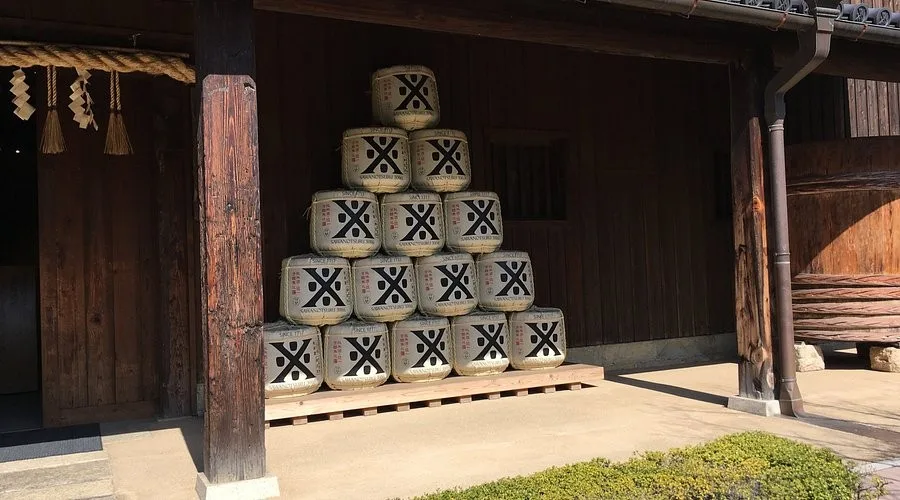
Sawanotsuru is another heavyweight name among sake manufacturers in Japan, founded in 1717. Recognized for its superior quality and innovation, this brewery transformed part of its facilities into an impressive museum after the Kobe earthquake in 1995. The site, recognized as a Tangible Cultural Heritage, shares historical details about the community’s resilience and the importance of sake as a cultural identity.
In addition to a fascinating guided tour, the tasting is a true spectacle. Sawanotsuru offers dozens of types of sake, from the most traditional to award-winning varieties. There is no better way to understand the complexity and beauty of the drink than by tasting it directly at the place of its creation.
Sakuramasamune (Nada, Kobe)
Sakuramasamune has existed since 1625 and stands out for its perfect combination of tradition and modernity. In addition to the traditional distillery, it has a complete complex called Sakura-en, with a restaurant, café, and specialty store. Here you can taste not only pure sake but also traditional dishes specially harmonized with different varieties.
It is the type of place that perfectly combines history, gastronomy, and culture. When visiting Sakura-en, you realize that sake is much more than a drink: it is a bond that connects the past and present in a tasty and memorable way.
Sudo Honke (Kasama, Ibaraki)
If you want to know the oldest manufacturer in Japan, Sudo Honke, founded in 1141, is a must-visit. Controlled for 55 generations by the same family, this brewery maintains carefully preserved ancestral methods. Visits are rare, making the place even more special and exclusive.
Upon entering here, you immediately feel the weight of tradition and history. It’s like having access to a carefully guarded secret, where each sip of sake carries centuries of refinement, care, and respect for the drink.
Hakushika (Nishinomiya, Kobe)
Hakushika is a historic brewery from 1662 that combines tradition with modern techniques and a deep respect for nature. Using crystal-clear water from Mount Rokko and exceptional quality rice, this factory has a memorial that offers educational exhibitions, making the production process understandable and fascinating even for novice visitors.
The tasting here is more than a sensory pleasure; it is a hands-on lesson on how each detail influences the final product. You leave not only enchanted by the flavor but with a deep understanding of what makes sake so special.
Makino Sake Brewery (Fujinomiya, Shizuoka)
With over 280 years, Makino offers a unique experience using the legendary water from Mount Fuji, something that already makes the visit unforgettable. During the tour, you not only observe the complete artisanal process but can also participate in a meal specially crafted to accompany different types of sake produced in-house.
This gastronomic experience goes far beyond the drink. You learn about perfect pairings, better understand the differences between sakes, and enjoy a high-quality meal, elevating the tour to a gourmet level.
Otokoyama (Hokkaidō)
Located in northern Japan in Hokkaido, Otokoyama is a brewery with over 300 years of history. Its internal museum displays ancient engravings of Japan, called ukiyo-e, creating a rich and unique cultural experience. While visiting the factory, you understand how the cold climate of the region directly influences the lighter and more refreshing flavor of its sakes.
The tasting, accompanied by local stories, becomes a sensory and educational journey. It is impossible to leave Otokoyama without feeling that you have learned something deeply connected to Japanese culture.
Miho Imada / Imada Shuzō (Hiroshima)
Imada Shuzō, under the leadership of the famous sake master Miho Imada, is small but recognized worldwide. With a production focused on exceptional quality, the visitation here is personalized and intimate, usually guided by family members or staff who deeply understand the artisanal process.
Tasting the sake from Imada Shuzō is not just about drinking; it’s about knowing an inspiring story of innovation and respect for local traditions. It is an experience that deeply connects with the essence of Japanese sake.
Fuji Shuzo & Saka Shrine (Izumo, Shimane)
Fuji Shuzo, located in Izumo, considered the spiritual birthplace of sake, is closely linked to ancient legends and spiritual practices. Here, in addition to visiting the traditional factory, you can also visit the Saka Shrine, a temple dedicated to the deity linked to the mythical origin of the drink.
In addition to the rich history, the visitation includes tastings in an environment that blends spirituality and tradition, offering a unique perspective on the cultural significance of sake in Japanese life.
Sources consulted: Japan Sake and Shochu Makers, Association JNTO, Sake Today, and Local Tourist Guides.
Japan has a unique way of transforming even the most intimate desires into something that borders on art. It’s not just about technology or ancient tradition — Japanese culture is also a master at taking common fetishes and elevating them to another level, giving them names, aesthetics, and even their own rituals. While in the rest of the world certain fantasies remain in the realm of improvisation, over there they become almost a genre, with rules, codes, and even global influence.
And the most curious part? Many of these typically Japanese obsessions haven’t been confined to the archipelago. Thanks to anime, manga, erotic films, and of course, the internet, these fetishes have crossed oceans and are now known (and practiced) worldwide. Some are bizarre, others unexpectedly common, but all say a lot about how Japan perceives pleasure, fantasy, and the boundaries between the sensual and the surreal.
Shibari (Kinbaku): The art of tying
Here’s a Japanese practice that has become a living art! Shibari (or kinbaku) didn’t come out of nowhere: it is a direct descendant of the techniques for tying prisoners in feudal Japan, hojōjutsu. But hold on – what was once a method of control has turned into something almost poetic.
Today, it is an intimate dance between ropes and body. It’s not just about immobilization: each knot, each crossing of lines, draws patterns that transform the skin into a canvas. The ropes follow curves, accentuate shapes… and of course, touch those hot spots that only the right tension reveals.
Beyond the visual, there’s the physicality – that pressure that alternates discomfort and pleasure –, the surrender of vulnerability, and, above all, the absurd connection that is created between the one who ties and the one who is tied. It’s no wonder it has become a global craze: workshops are popping up everywhere, showing that shibari is both a fetish and an artistic expression. Who would have thought that ropes could carry so much history and emotion?
Tentacle Erotica
If you’ve ever explored adult anime or manga, you’ve probably come across scenes of tentacled creatures in… intense situations. This is tentacle erotica — a typically Japanese fusion of science fiction, fantasy, and eroticism, almost always taken to surreal extremes. Yes, it was born in Japan, but today it has global variations.
What is the origin? It all dates back to the shunga prints of the 19th century. The seminal work is “The Dream of the Fisherman’s Wife” by Hokusai, featuring its octopus in an intimate scene. Over time, the idea migrated to modern hentai, even serving as a subterfuge to avoid graphic censorship. Today, it represents more than a fetish: it is a portal where the human body and the impossible collide, without the brakes of reality.
Omorashi: Pleasure on the edge of limits
Omorashi may seem strange to those who have never heard of it, but in Japan it is a well-established fetish and even categorized into subgenres. In short, it relates to the pleasure associated with the sensation of holding in urine until the limit — and, in many cases, the act of involuntarily wetting oneself. It’s the type of fantasy that plays with the psychological, awakening vulnerability, tension, and relief.
There are variations like “omutsu omorashi,” which involves the use of adult diapers, or “yagai omorashi,” where the situation occurs in public or outdoors, adding a dose of adrenaline and consented embarrassment. Although this fetish is little talked about in the West, in Japan it appears in manga, videos, and specialized forums, showing that desire can arise from the most unusual places.
Wakamezake and Nyotaimori
The Japanese also know how to unite two of humanity’s great passions: food and eroticism. Wakamezake is one of those unique examples. Imagine someone lying down, usually a woman, with her legs slightly open, and a cup of sake being poured between her thighs or breasts, to be drunk directly from there. It’s a scene that mixes sensuality, provocation, and, of course, a lot of symbolism.
Another famous example is nyotaimori, the so-called “human sushi.” In this fetish, pieces of sushi or sashimi are served on the naked body of a woman — or a man, in the case of nantaimori. More than just exotic, this practice carries the visual refinement typical of Japanese culture, where the body literally becomes an aesthetic and sensual platter.
Zentai: The rediscovery of the faceless body
The fetish for zentai, those skin-tight suits that cover from head to toe, creates an experience where identity and appearance disappear. No face, no expressions, no obvious distinctions of gender or physical characteristics. Just the touch of lycra or spandex enveloping the skin.
For many people, zentai represents anonymity, submission, or, on the contrary, absolute freedom to explore the body without judgment. At fetish conventions and meetings in Japan — and in other countries as well — enthusiasts parade in zentai, exchange experiences, and show that eroticism can arise precisely from what is hidden.
Burusera – the coldness of used uniforms
The fetish for used underwear and school uniforms, known as burusera, is one of the most curious — and controversial — that originated in Japan. In the 90s, it was not difficult to find specialized stores selling panties, stockings, and other items supposedly worn by students. These clothes carried not only the scent but an entire imaginary of youth, innocence, and transgression, which fueled the desire of those who bought them.
Over time, burusera became the target of stricter laws, especially to curb the exploitation of minors. But the fetish itself did not disappear. Today, it manifests more discreetly, in websites, private clubs, or in products that mimic the schoolgirl look, but without a direct connection to real students.
Oculolinctus: the myth of licking eyes
The fetish for licking eyes, known as oculolinctus, went viral as a supposed trend among Japanese teenagers, although many people today believe it was all just media exaggeration. Even so, the concept became famous and sparked debates about the limits of erotic curiosity. After all, the eyes are one of the most sensitive parts of the human body and, in a way, also carry a strong symbolic appeal.
The idea of licking eyes, although rarely practiced in reality, represents the bizarre and experimental side that some fetishes can reach in Japan. In a place where body details become obsession, it’s not so surprising that something as unusual as this has entered the radar of sexual imagination. Even if the actual practice is rare, the concept itself has become synonymous with extreme fetish.
Mizu Shōbō: the sensuality of water splashes
Water has a hypnotic power when used in the right context, and the Mizu Shōbō fetish explores exactly that. Imagine white clothes soaked, streams of water running down the body, or a simple scene of someone unexpectedly wet. The visual of water clinging to the skin and the play of light on the wet body create an irresistible combination.
This fetish appears frequently in photo sessions, sensual clips, and Japanese adult films. But the appeal is not just in the visual — water awakens physical sensations like cold, heat, shivers, and vulnerability, making the moment even more stimulating. It is both a visual and tactile fetish at the same time, transforming something simple like water into fuel for desire.
Lolicon and Bakunyū
Not all fetishes coming from Japan are accepted unanimously. Lolicon, for example, is the attraction to characters that appear very young, usually pre-adolescents. Although it involves fictional characters, the theme generates heated debates about ethics, censorship, and artistic freedom.
On the other hand, bakunyū — literally “giant breasts” — explores the exaggeration in the drawing and representation of the female body, something very common in hentai and Japanese pornography. They are examples of how Japanese fetishes can both entertain and raise questions about cultural and social limits.
The little otaku fetishes
If there’s one thing Japan does like no other, it’s turning details into objects of desire. In the otaku universe, there are expressions like “megane-fechi” (attraction to people with glasses), “oshiri-fechi” (fetish for buttocks), “ashi-fechi” (fetish for feet), and so on. The suffix “-fechi” has become a fun and direct way to acknowledge small obsessions that make the heart race.
These fetishes are so popular that they appear in anime, manga, and even collectible products. Characters with glasses gain dedicated fans, artists draw feet or hands with intentional exaggeration, and details considered trivial become the main focus of fantasy. It’s a perfect portrait of the Japanese attentive gaze toward what many would not even notice.
Have you ever felt so in love that you wanted to say “I love you” in another language? Japanese is a language full of subtleties and beautiful ways to express feelings — and that includes love, of course. If you are looking for something more poetic, sweeter, or simply want to expand your affectionate vocabulary, you’ve come to the right place.
In this article, you will find romantic phrases and expressions of love in Japanese, organized by themes, with translations and pronunciation for you to fall even more in love. Some are delicate and shy. Others, intense and deep. Choose the one that best fits your moment.
Direct love phrases
These are clear declarations, ideal for those who want to be direct without losing sweetness:
わたしは、あなたを愛しています
Watashi wa, anata o aishiteimasu
I love you.
あなたが好きです
Anata ga suki desu
I like you.
大好きだよ
Daisuki da yo
I really like you.
あなたのことが好きでたまらない
Anata no koto ga suki de tamaranai
I can’t help but love you.
愛してる
Aishiteru
I love you. (intimate and intense form)
Poetic expressions about love
Japan loves metaphors. These phrases are perfect for deeper romantic messages:
愛は風のよう、あなたはそれを見ることはできませんが、それを感じることができます。
Ai wa kaze no yō, anata wa sore o miru koto wa dekimasen ga, sore o kanjiru koto ga dekimasu.
Love is like the wind, you cannot see it, but you can feel it.
「愛」はただ単に「愛」である。説明なんてできない。
“Ai” wa tada tan ni “ai” de aru. Setsumei nante dekinai.
Love is just love, it can never be explained.
月がきれいですね
Tsuki ga kirei desu ne
The moon is beautiful, isn’t it? (poetic way to say “I love you“)
Phrases for romantic everyday moments
Want something more casual to use on a date, or to send in a chat?
あそびにいこう!
Asobini ikou!
Let’s go out together!
キスしたい
Kisu shitai
I want to kiss you.
キスしよう
Kisu shiyou
Let’s kiss.
ハグしよう
Hagu shiyou
Let’s hug.
手をつなごうよ
Te o tsunagou yo
Let’s hold hands.
デートに行こう!
Deeto ni ikou!
Let’s go out on a date!
Phrases about longing and affection
For when distance weighs heavy, or when you want to express care:
あなたがいないと寂しい
Anata ga inai to sabishii
I feel lonely without you.
あなたが恋しいです
Anata ga koishii desu
I miss you.
守りたい
Mamoritai
I want to protect you.
大事にしたい
Daiji ni shitai
I value you a lot.
Phrases about being together and commitment
These are ideal for when the relationship is getting more serious:
ずっと一緒にいたい
Zutto issho ni itai
I want to be with you always.
一緒にいると楽しい!
Issho ni iru to tanoshii!
I have fun when I’m with you.
カップルです
Kappuru desu
We are a couple.
私と付き合ってください
Watashi to tsukiatte kudasai
Go out with me.
結婚しよう
Kekkon shiyou
Marry me.
If you’ve made it this far, you now have an arsenal of romantic phrases in Japanese to use with anyone you want — whether in a special conversation, a letter, or even in a favorite anime.
And if you want to delve even deeper, we also recommend our complementary article: Flirtatious and romantic phrases in Japanese. Who knows, you might find the perfect phrase for that unexpected moment?
Not everyone admits it, but the truth is that naughty animes always spark curiosity. Whether it’s due to the exaggerated comedy, the spicy scenes, or the tension in the air, this type of anime ends up being a fun pastime — especially for those who enjoy that perverted touch, but without losing the good humor (or the plot).
And no, we are not talking about anything explicit. There are many animes that play with eroticism, explore fanservice or spicy situations, but still have a minimally decent story — or at least funny enough for you to keep watching without guilt.
If you consider yourself a bit “perverted” (in a good way) and are looking for something naughty, provocative, and fun, this list was made just for you. It’s worth noting that we will focus on animes that address sensitive themes, and not just those that are filled with fanservice.
Prison School
If you enjoy humor without limits and situations so absurd that they border on ridiculous, Prison School is a must-watch. Imagine a super strict all-girls school that decides to accept five male students. Now, imagine these guys being imprisoned inside the school and subjected to bizarre punishments by the student council leaders.
The scenes are blatantly perverted, full of fetishes, innuendos, and sexual tension — but always with a sarcastic and exaggerated humor that turns the anime into a true acid comedy.
Warning: Prison School is not for the faint-hearted or for those who get easily bothered. But if you want something naughty and hilarious at the same time, you can’t go wrong.
To Love-Ru
To Love-Ru is that type of anime that mixes romance, comedy, and, of course, naughty scenes in practically every episode. The premise is simple: Rito Yuuki is an ordinary teenager who dreams of confessing his love, but ends up crossing paths with Lala, an alien princess who appears naked in his bathtub.
From there on, the anime just accumulates embarrassing situations, ripped clothes, “accidental” falls, and a collection of increasingly bold female characters. If you enjoy harem and don’t mind the plot being somewhat of a pretext for fanservice, To Love-Ru delivers exactly what it promises.
Shimoneta
This one is genius. Shimoneta: A Boring World Where the Concept of Dirty Jokes Doesn’t Exist imagines a Japan where all kinds of obscene content is prohibited. Swear words, spicy jokes, any sexual innuendo: all banned. The result? A group of rebels decides to fight against this puritanical system using precisely… pornography and dirty humor.
The anime is naughty, no doubt, but it also makes a hilarious social critique. Get ready for absurd dialogues, innuendos, and situations that are as provocative as they are ridiculous. If you like something that is naughty but with an intelligent and satirical touch, this is a sure choice.
Oreimo
Oreimo is perfect for those who enjoy animes that play with perverted themes in a provocative way. The story follows Kyousuke and his sister Kirino, who hides an unusual addiction: she is obsessed with erotic animes and games, especially those involving sibling relationships.
This anime has charismatic characters, a lot of comedy and drama, and is actually one of my favorite animes, with a good soundtrack and story. Despite the theme, it is a quite light anime without fanservice.
Kiss x Sis
Controversial? Yes. Naughty? Definitely. Kiss x Sis is that anime that plays with the limits of comedy and incest (calm down, they are half-sisters), placing the protagonist Keita in the middle of two sisters who spare no effort to win his attention — and, of course, the anime doesn’t skimp on provocative scenes.
Despite the controversial theme, the anime doesn’t take itself 100% seriously and bets on exaggeration and absurd comedy to turn everything into something light and ridiculously funny. If you don’t mind politically incorrect plots, it’s worth checking out.
HenSuki
The title itself gives it away: the protagonist Keiki discovers that someone left a love letter and a pair of panties for him — and now he needs to find out which of the girls around him is the mysterious “pervert”. The fun of the anime is that all of them have unusual fetishes, and the plot openly plays with desires, fetishes, and the bizarre side of teenage love.
It’s funny, provokes discomfort at times, but it’s precisely this boldness that makes the anime so unique within the genre.
Yosuga no Sora
Here the atmosphere is much more controversial. Yosuga no Sora not only addresses perverted themes but also delves into taboo areas, such as incest. The anime follows Haruka and his sister Sora, who, after losing their parents, move to the countryside. The story develops several romantic and sexual arcs, including the relationship between the siblings.
Despite being controversial and causing divisions of opinion, the anime doesn’t pretend to be just “spicy comedy” — it truly dives into issues of desire, morality, and limits.
Boku wa Tomodachi ga Sukunai
Although not 100% focused on “perversion,” this anime naturally and directly addresses the difficulties of socially awkward youths, including sexual awakening, fantasies, and typical perverted thoughts of adolescence.
The characters constantly provoke each other, openly discuss sexual themes, and the protagonist experiences embarrassing situations revolving around sexuality and desire.
School Days
School Days is an anime that starts as a typical school romance but soon reveals its dark and disturbing side. The story follows Makoto Itou, a student who becomes involved in a complicated love triangle, where desire and betrayal go hand in hand.
Unlike animes that use the perverted side lightly or comically, here the eroticism is directly linked to manipulation, jealousy, and heavy emotional consequences. The protagonist’s actions show how misdirected desire can turn everything into chaos.
Those with small children know how delicate it is to choose what they watch. Especially in children’s cartoons, where there is an endless variety of styles, colors, sounds, and stories — some wonderful, others a bit exaggerated. But what if what you’re looking for are calm Japanese children’s animes with few stimuli? Those that are more tranquil, with a calm pace, soft colors, and simple narratives? Don’t worry, they exist, and today I’m going to show you.
This type of anime is ideal for small children or for moments when we want to reduce the excess of visual and auditory information. And let’s be honest: sometimes, even adults appreciate this breather. So, if you’re looking for something relaxing, educational, and at the same time enchanting, keep reading.
Why choose low-stimulation animes for children?
More is not always better. Children, especially those under 5 years old, are still forming their brain connections. At this stage, an overload of bright colors, sharp sounds, fast movements, and very hectic stories can generate irritation, anxiety, or simply confusion.
Japanese children’s animes with few stimuli bring a healthy balance. They usually present:
Softer colors;
Calm soundtrack;
Simple and positive stories;
Slower pace;
Engaging characters, but without exaggeration.
It is the type of content that invites the child to observe, pay attention to details, and even calm down.
Low-stimulation animes for children aged 1 to 3
Inai Inai Baa! (いないいないばあっ!)
“Inai Inai Baa!” is a series produced by NHK and aimed especially at babies and very young children. The name refers to the famous “peek-a-boo” game that adults play with babies, something universal and widely used in the show. The songs, sounds, and images are extremely simple, with soft colors and friendly characters.
The program does not focus on complex narratives but rather on exploring sounds, simple words, and movements. Ideal for introducing little ones to the Japanese language in a light way, it also works on basic perception stimuli, always being very careful not to overwhelm the child.
Shimajirō no Wow! (しまじろうのわお!)
Shimajirō is a friendly tiger who stars in one of Japan’s most well-known children’s programs. “Shimajirō no Wow!” combines short stories with educational songs and lessons about daily life, such as washing hands, saying “thank you,” and getting along with friends. All in a very visual way, without overwhelming sounds or fast stimuli.
In addition to the regular episodes, there are also songs and interactive segments. It is a great option for children who are beginning to understand the world around them and need calm, educational content with a moderate pace.
Chi’s Sweet Home
Chi is a curious and cute kitten who stars in this anime aimed at children. Each episode is a few minutes long and shows everyday situations in the life of a kitten, always with light humor and extremely pleasant visuals.
The colors are soft, the animation style is simple, and the scripts are easy to understand. Even very young children can follow what happens and have fun, without the anime presenting exaggerated stimuli or very hectic scenes.
Animes for children aged 4 to 6
Rilakkuma and Kaoru
Rilakkuma is one of the most well-known characters in Japan, famous for his calm and lazy personality. In “Rilakkuma and Kaoru,” we follow the bear and his friends living everyday situations alongside Kaoru, a young adult facing the common difficulties of life.
The difference of this series is the stop-motion visual, which gives a special charm and a much slower pace to the scenes. The soundtrack is soft, and the episodes address friendship, coexistence, and respect in a subtle and pleasant way, without visual or auditory exaggerations.
Sumikko Gurashi
The characters of “Sumikko Gurashi” are loved by those who enjoy calm and cute stories. Each of them represents some aspect of shyness or the desire to stay in the corner, creating a welcoming atmosphere for more introspective children.
The film presents these characters in a light adventure, without exaggerated action scenes or intense noises. It is content that conveys values such as acceptance and friendship, always with a calm pace and soft visuals, ideal for children in this age group.
Anpanman (それいけ!アンパンマン)
The Anpanman is a true icon in Japan when it comes to children’s content. He is a superhero made of bread filled with anko (sweet bean paste), who helps those in need and faces not-so-scary villains, always with good humor.
Despite the superhero theme, the stories are extremely simple, focusing on teaching positive values such as generosity and teamwork. The colors are bright but not exaggerated, and the episodes follow a comfortable pace for small children.
Animes for children aged 7 to 10
Tonari no Totoro
“My Neighbour Totoro,” from the Studio Ghibli, is one of the most beloved and recommended films for children in this age group. The story follows two sisters who move to the countryside of Japan and discover magical beings, like the iconic Totoro, amidst nature.
The film is a celebration of childhood and imagination, but with a calm narrative, tranquil landscapes, and a soft soundtrack. There are no scary villains or fast-paced scenes, just a sweet story that speaks about family, friendship, and the beauty of small things.
Neko no Ongaeshi (The Cat Returns)
This film tells the story of Haru, a girl who saves a cat and ends up being invited to the Cat Kingdom, where unusual things happen. Despite the touch of fantasy, the pace of the film is light, with contemplative moments and a very pleasant aesthetic.
Children can easily follow Haru’s journey without encountering excessively fast or scary scenes. The visuals are characteristic of Studio Ghibli: colorful but balanced, ideal for children who already appreciate slightly more elaborate stories.
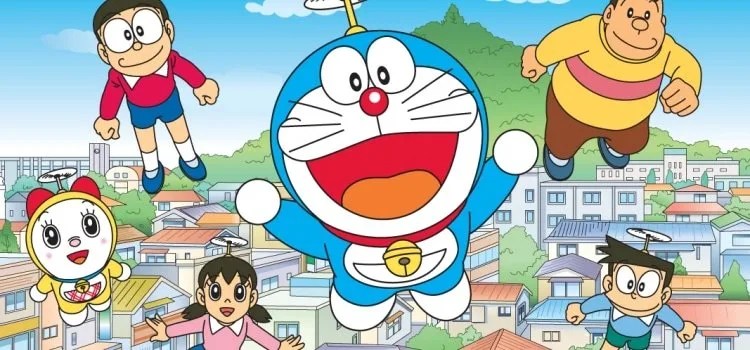
Doraemon
The classic Doraemon is a robot cat from the future who helps Nobita, a boy facing small difficulties in his school and family life. With the help of futuristic gadgets, they get involved in funny and educational situations.
The series has been famous in Japan for decades precisely because it manages to entertain without resorting to excessive stimuli. The stories are easy to understand, have a touch of light humor, and always leave a lesson about friendship, honesty, or responsibility.
Benefits of these animes for child development
In addition to being relaxing, these animes offer other important benefits for children:
Stimulate observation and patience;
Promote empathy through kind characters;
Convey positive values such as friendship and respect;
Create a clean and comfortable visual environment;
There is a word in the Japanese language that carries a philosophical and almost mystical weight, difficult to translate into other languages, but when understood, can change the way we see our lives. This word is 必然 (Hitsuzen).
Perhaps you have already come across it while watching anime or delving into Japanese culture. But what does this concept really mean? Is it just fate? Coincidence? Or is there something deeper hidden?
What does 必然 (Hitsuzen) mean?
Generally, 必然 (Hitsuzen) is translated as inevitable or inevitability, but this translation does not do justice to the complete concept. In Japanese, the kanjis that make up the word are:
必 (Hitsu) – Necessary, inevitable, certain;
然 (Zen) – State of being, as it is.
We are talking about something that happens not just because it was “destined,” but because it needed to happen, because all the conditions, choices, and circumstances led to this result.
Hitsuzen carries the idea that events occur not by chance, but because, given the conditions, they were the inevitable consequence. It’s not that the universe conspired; it’s that everything that happened before led exactly to this point.
Hitsuzen in daily life
Even if you have never used the word hitsuzen, that feeling of “it couldn’t have been different” has surely appeared in your life. It can be simple things like:
The job you lost, but which resulted in something better.
That friendship that ended, but made way for a new one.
A random coincidence that, deep down, was the consequence of several choices.
In Japanese culture, the term is used to reinforce that things are not simply random — they have a sequence, a logical chain, even when we do not perceive it.
Hitsuzen in pop culture
If you enjoy anime, manga, or Japanese works, you have likely encountered this concept without even realizing it. One of the most famous examples comes from CLAMP, the famous group of Japanese manga artists, especially from the work xxxHOLiC.
In the anime/manga, the mysterious Yūko frequently talks about hitsuzen. According to her, nothing is by chance — everything has a reason and happens because it had to happen, based on previous decisions and events.
Another example is in the film Your Name (Kimi no Na wa), where the intertwining of time, memories, and encounters carries this same feeling: events unfold inevitably.
The subtle difference of words
Japanese tends to differentiate its words very well; an example is in the terms “chance,” “inevitable,” and “fate.”
偶然 (Guzen): Coincidence, chance, something that could have happened or not.
必然 (Hitsuzen): Something that had to happen, due to circumstances, it was inevitable.
運命 (Unmei): Indicates that things happen because they are predestined.
The beauty lies exactly there. Not everything that happens is chance or fate. Sometimes, it’s just life following its natural flow, like domino pieces falling one after the other, pushed by the previous one.
Example Sentences
See below some example sentences that explain the concept of Hitsuzen:
すべての出来事には必然がある。
Subete no dekigoto ni wa hitsuzen ga aru.
Every event has an inevitable reason for being.
出会いは偶然ではなく、必然なのだ。
Deai wa guuzen de wa naku, hitsuzen na no da.
Encounters are not by chance, but rather inevitable.
過去の選択が今の必然を作り出す。
Kako no sentaku ga ima no hitsuzen o tsukuridasu.
The choices of the past create the inevitability of the present.
あの失敗も、今の自分に必要な必然だった。
Ano shippai mo, ima no jibun ni hitsuyou na hitsuzen datta.
That failure was also a necessary inevitability for who I am today.
Why hitsuzen makes so much sense
Accepting the concept of hitsuzen can be comforting, but it also gives that chill in the stomach. Because it means that, in a way, everything you do today — is shaping the inevitable of tomorrow.
Is it possible to escape this? Perhaps not. But you can act with more awareness, knowing that every decision is an important piece in the puzzle of your life.
The hitsuzen does not take away our free will, but leads to the outcome. You make choices, the world reacts, and the inevitable happens. We spend so much time trying to control the future… But maybe you should just accept the process!
Japan has hundreds of lakes, but few really stand out for size, depth, or influence on people’s lives. Understanding which are the largest lakes in Japan is useful for those interested in tourism, natural resources, history, and regional development.
In this article, you will find the 20 largest lakes in Japan, with official data on area, depth, name in kanji, and practical or historical information for those interested in geography, travel, economy, or Japanese nature.
How many lakes are there in Japan?
According to the Ministry of the Environment of Japan, the country has about 6,222 lakes with more than 1 hectare of area. Most are small mountain lakes, but about 20 have national prominence for area, depth, historical or ecological importance. This abundance is a result of volcanic geography, humid climate, and the numerous natural depressions that have retained water for millennia.
Among these, lakes like Biwa, Kasumigaura, and Saroma are true landmarks. Many lakes are essential sources of drinking water, irrigation, fishing, tourism, and flood protection. Others, like the lakes of Mount Fuji, are world-famous for their landscapes and their connection to Japanese culture.
The Five Lakes of Mount Fuji (富士五湖)
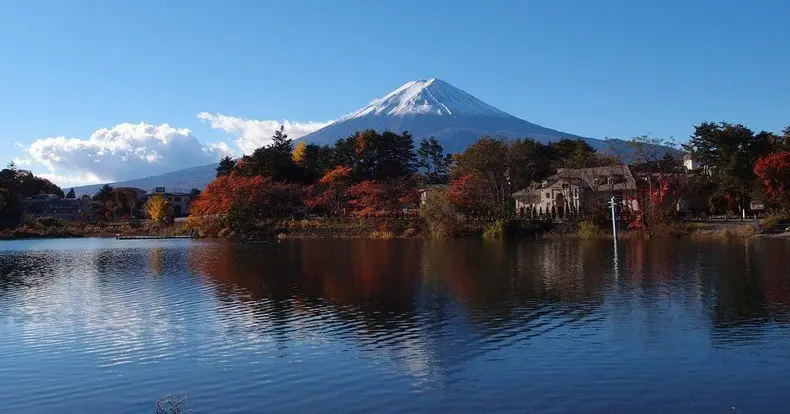
Located in Yamanashi Prefecture, the Five Lakes of Mount Fuji — Yamanakako (山中湖), Kawaguchiko (河口湖), Saiko (西湖), Shojiko (精進湖), and Motosuko (本栖湖) — were formed by ancient volcanic eruptions of Fuji itself. They offer some of the most classic and photographed views of Japan, especially in the months when the top of Fuji is covered in snow.
This region is one of the most visited tourist hubs in the country. In addition to natural landscapes, it offers camping, hiking, water sports, resorts, onsen, and, of course, cycling and cherry blossom viewing routes in early spring. Each lake has its own profile and audience, but all ensure excellent infrastructure for those seeking direct contact with Fuji.
1. Lake Biwa (琵琶湖)
The Lake Biwa (琵琶湖) is the largest and oldest in Japan, with an area of 670.3 km² and a maximum depth of 104 meters. Located in Shiga, it supplies about 15 million people, including major cities like Kyoto and Osaka. Its biodiversity is impressive, with over 1,000 aquatic species, including 46 endemic fish.
The surrounding area of the lake is densely populated and offers tourist infrastructure, trails, bike paths, and museums. Biwa has been a Ramsar Site since 1993 and is a recurring theme in Japanese poems and art. Archaeologists find traces of human settlements along its shores dating back up to 10,000 years.
2. Lake Kasumigaura (霞ヶ浦)
The Kasumigaura (霞ヶ浦), in Ibaraki, is the second largest lake in the country, with 167.6 km² and only 7 meters of maximum depth. It is vital for rice irrigation, shellfish and shrimp fishing, and supplying nearby cities.
Despite its beauty, it faces eutrophication due to agricultural activity around it, with ongoing environmental recovery programs since the 1980s. The lake is surrounded by one of the most extensive cycling routes in Japan, very popular among athletes.
3. Lake Saroma (サロマ湖)
The Saroma-ko (サロマ湖) is in Hokkaido, with 151.9 km² and a maximum depth of 19.6 meters. It is a brackish coastal lake connected to the Sea of Okhotsk, making it famous for oyster and scallop production.
During winter, part of the lake freezes and is used for ice fishing. The region is less touristy but attracts visitors seeking untouched nature, small fishing villages, and authentic Hokkaido experiences.
4. Lake Inawashiro (猪苗代湖)
The Inawashiro-ko (猪苗代湖), in Fukushima, has an area of 103.3 km² and reaches a depth of 94.6 meters. Its water is known for its blue color and purity, which is why it is called “mirror of the sky.”
In addition to supplying water, the lake attracts many tourists for water sports and hiking. It is also a stopover for thousands of migratory swans in winter, becoming a birdwatching spot.
5. Lake Nakaumi (中海)
The Nakaumi (中海) is located between Shimane and Tottori, with 86.2 km² and a maximum depth of 17.1 m. Its brackish waters result from its connection to the Sea of Japan, creating an ecosystem rich in eels, shellfish, and waterfowl.
The lake is crossed by modern bridges, connecting cities like Matsue and Sakaiminato. The islands of Daikon and Eshima, within Nakaumi, are points of historical interest, with shrines and archaeological remains.
6. Lake Kussharo (屈斜路湖)
The Kussharo-ko (屈斜路湖), in Hokkaido, has 79.3 km² and a maximum depth of 117.5 meters. It is a caldera lake, surrounded by mountains, with natural hot springs by the water’s edge.
In winter, hundreds of swans seek refuge on the warm shores. Kussharo is ideal for those looking for outdoor hot springs and underexplored nature tourism.
7. Lake Shinji (宍道湖)
The Shinji-ko (宍道湖), in Shimane, covers 79.1 km² and has only 6 meters of maximum depth. Its slightly brackish waters favor the fishing of shrimp, eels, and shellfish, the basis of the local cuisine.
The lake is famous for its sunsets and hosts seasonal festivals that celebrate riverside culture. Its shoreline features parks and recreational areas used by residents and tourists.
8. Lake Shikotsu (支笏湖)
The Shikotsu-ko (支笏湖), in Hokkaido, is a volcanic lake with crystal clear waters, covering 78.4 km² and an impressive depth of 363 meters. It is known for its transparency: visibility can exceed 20 meters.
The site is part of a national park, hosts winter festivals, and is popular for diving, kayaking, and hiking. Despite the harsh winter, the lake rarely freezes due to its depth.
9. Lake Tōya (洞爺湖)
The Tōya-ko (洞爺湖), in Hokkaido, has 70.7 km² and up to 179.9 meters of depth. Formed in a volcanic caldera, it has a central island (Nakajima) and is surrounded by geothermal areas and hot spring resorts.
It is a destination for hiking and boat tours, famous for its annual fireworks festival throughout the summer. Tōya hosted the G8 summit in 2008.
10. Lake Hamana (浜名湖)
The Hamana-ko (浜名湖), in Shizuoka, has 65 km² and a maximum depth of 13.1 m. Its waters became brackish after an earthquake in the 15th century, connecting it to the Pacific.
The lake is a reference for eel and shellfish production, the basis of the local economy. It is very popular for water sports, fishing, beaches, and urban leisure.
11. Lake Ogawara (小川原湖)
The Ogawara-ko (小川原湖), in Aomori, covers 63.2 km², with a maximum depth of 25 meters. Its waters are used for irrigation, supply, and fishing for sea bass, mullet, and shrimp.
There are ecological trails and birdwatching, as well as proximity to air bases that monitor the environmental quality of the lake.
12. Lake Towada (十和田湖)
The Towada-ko (十和田湖) is located between Aomori and Akita, with 61.1 km² and an impressive depth of 327 meters. It is a caldera lake, surrounded by steep slopes and forests that change color with each season.
Boat tours depart from the village of Yasumiya, and the autumn landscape attracts tourists from all over Japan. It is also the setting for legends, such as that of the princess turned into a dragon.
13. Lake Notoro (能取湖)
The Notoro-ko (能取湖), in Hokkaido, covers 58 km² and has a maximum depth of 7 meters. The highlight is the shores that turn red at the end of summer due to the “glasswort” vegetation.
It is an area for shellfish fishing and a resting place for migratory birds, with small communities of fishermen living off the sustainable collection of seafood.
14. Lake Tazawa (田沢湖)
The Tazawa-ko (田沢湖), in Akita, is the deepest lake in Japan, with 423.4 meters, despite its relatively small area (25.9 km²). Its cold, clear waters are home to trout and salmon.
On the shores, there are trails, diving spots, and the famous golden statue of Princess Tatsuko, a symbol of a local legend about eternal youth.
15. Lake Suwa (諏訪湖)
The Suwa-ko (諏訪湖), in Nagano, covers 13.3 km² and reaches a maximum depth of 7.2 meters. The lake is famous for the Omiwatari phenomenon, when the ice cracks forming lines, considered a sign of divine passage.
During summer, it is a stage for water sports and festivals. In winter, ice skating and ice fishing boost local tourism. The surrounding city is also famous for its hot springs.
16. Lake Yamanaka (山中湖)
The Yamanaka-ko (山中湖), in Yamanashi, is the largest of the Five Lakes of Fuji, with 6.6 km². Its shallow waters and open shores favor fishing, windsurfing, canoeing, and cycling tourism.
The view of Mount Fuji is a special attraction. During summer, fireworks festivals take place, and in winter there are ice skating and waterfowl watching activities.
17. Lake Kawaguchi (河口湖)
The Kawaguchi-ko (河口湖), in Yamanashi, has 5.7 km² and a maximum depth of 14.6 meters. It is known for its privileged view of Mount Fuji and its tourist infrastructure, with hotels, cafés, and museums around.
Boat tours are common, and the region is a starting point for trails leading to Fuji. In autumn, the red leaves make the scenery even more sought after.
18. Lake Motosu (本栖湖)
The Motosu-ko (本栖湖), also in Yamanashi, has 4.7 km² and a maximum depth of 121.6 meters. Its blue-green water is a highlight, and the landscape of Mount Fuji reflected in the lake is illustrated on the 1,000 yen note.
It is the deepest lake in the Fuji group, ideal for diving, camping, and water sports, and one of the most preserved in the region.
19. Lake Sai (西湖)
The Sai-ko (西湖), in Yamanashi, covers 2.1 km², with a maximum depth of 71.1 meters. It is the quietest of the Fuji lakes, with the least tourist flow.
Sport fishing and camping are common. The forests around offer great hiking trails, especially in autumn.
20. Lake Shoji (精進湖)
The Shoji-ko (精進湖), also in Yamanashi, is the smallest of the Five Lakes of Fuji, with an area of 0.5 km² and a maximum depth of 15.2 meters. Despite its small size, it is famous for being one of the best spots to photograph Mount Fuji reflected in the water.
The lake is surrounded by small family inns and picnic areas, offering a sense of isolation and tranquility for those seeking direct contact with nature.
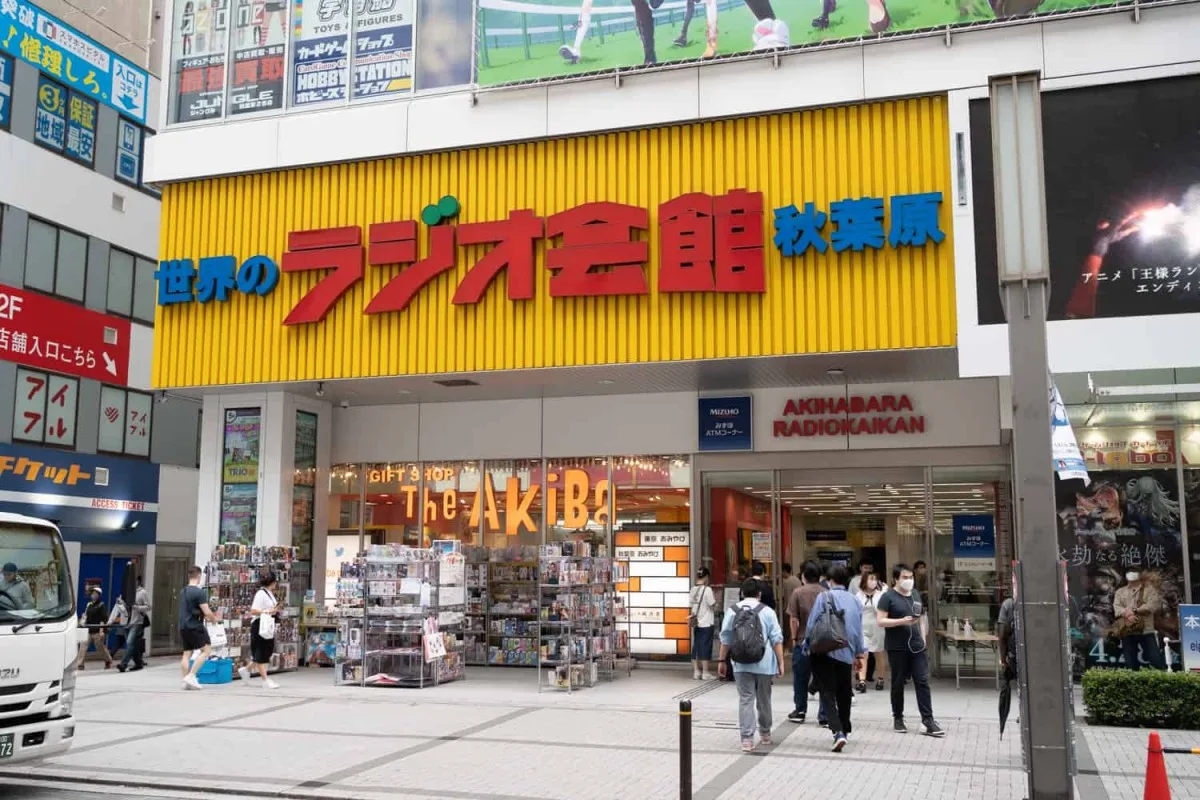
If you’ve ever been to Akihabara, you know how much everything there pulses with pop culture. But nothing represents this electric and vibrant soul as well as Radio Kaikan. It’s not an exaggeration to say that this 10-story building is almost a living museum of the otaku universe — except here, everything is for sale.
Located right in front of the JR Akihabara station, it is impossible to ignore. Modernized in 2014, with panoramic elevators and eye-catching displays, this tower has become a must-visit for fans of figures, cards, retro electronics, idols, dōjinshi, and collectibles you didn’t even know existed. But those who think they can explore everything in a quick pass are mistaken. Each floor of Radio Kaikan is its own universe. Shall we break it down together?
Remember that the stores may change over the years, but generally follow the same scheme! Any significant modifications will be updated in the article. Ready to visit the building where Steins;Gate took place?
The History of Radio Kaikan
Radio Kaikan emerged shortly after World War II, in the 1950s, at a time when Akihabara was transforming into an electronics hub in Japan. Originally, the building was a place where independent vendors sold electronic components and radios, reflecting the neighborhood’s initial vocation as an “electric town.”
For decades, Radio Kaikan was an essential center for technicians, engineers, and electronics enthusiasts. However, over time, especially from the 1990s onwards, the building began to attract more and more stores aimed at the otaku audience — selling figures, games, anime, TCG, and collectibles.
With the old structure aging, the original building was demolished in 2011. In its place, the new Radio Kaikan was built, reopening in 2014 with a modern design, earthquake-resistant, and ready to serve the contemporary audience of Akihabara. Today, the building symbolizes the fusion of tradition and Japanese pop culture, being a must-visit for fans and curious visitors from all over the world.
Before Visiting Radio Kaikan
Many stores inside Radio Kaikan do not allow customers to take photos of the products or the interior of the displays. Usually, there are signs indicating “no photo,” but even when there aren’t, it’s polite to ask first.
Regarding payment methods, most stores accept credit cards, cash, and even QR Code payments, such as PayPay or LINE Pay. If you’re a tourist, don’t forget to bring your passport, as some stores offer tax exemption (tax free) on purchases above a certain amount.
The building generally operates from 10 AM to 8 PM, but this schedule may vary slightly between stores. On weekends and holidays, the place tends to get quite crowded, especially in the afternoon.
1st Floor – Entrance, Lotteries, TCG, and Convenience
As soon as you enter the building, you are greeted by a mix of specialized stores. This is where the kuji lottery, collectible cards, a modern optical store and even a FamilyMart convenience store are located, all mixed with the movement of fans circulating throughout the day.
2nd Floor – Cards, Electronics, and Collector Displays
This floor is perfect for those looking for collectible cards, rare toys or even electronic components. There is also a “showcase rental” store, where anyone can rent a display case and sell their products, creating a dynamic and ever-changing market.
Stores on the 2nd floor:
Card Shop Kaizoku-Oh
Tomoka Denki – Pro electronics store
Habikoro Toys – Collectible toys
Hobby Station – Card-focused store (station branch)
Astop – Rental showcases
3rd Floor – Manga, Doujinshi, and Men’s Products
This floor is dominated by K-BOOKS, focusing on products aimed at a male audience, including doujinshi, rare manga, magazines, CDs, and much more. It’s a great place to find that old volume or limited edition.
Stores on the 3rd floor:
K-BOOKS Akihabara (main store and men’s store)
4th Floor – Figures and Anime Items
Here is one of the most well-known stores among figure fans: the AmiAmi, specializing in anime, game, and pop culture products. The variety of figures, nendoroids, and action figures is enormous, always updated with the latest releases.
Store on the 4th floor:
AmiAmi Akihabara Radio Kaikan
5th Floor – Otaku Culture, Figures, and Electronics
This floor brings together several interesting stores, focusing on used products, figures, doll accessories, and even electronic components. It is one of the most diverse floors in the building.
Stores on the 5th floor:
Lashinbang – Used store for otakus
Magi – TCG buying and selling platform
Akiba no X – Various otaku products
Uchuusen – Figures and toys
Kaiyodo Hobby Lobby – Figures from the famous Kaiyodo brand
Dollyteria – Doll accessories store
Wakamatsu Tsusho – Electronics store
6th Floor – Hobbies, TCG, and Miniatures
The big highlight here is the Yellow Submarine, a reference in Japan when it comes to board games, miniatures, card games, and modeling. The environment tends to attract both beginners and veterans of tabletop hobbies.
Store on the 6th floor:
Yellow Submarine Akihabara (Main store)
7th Floor – Dolls, Figures, and TCG
This floor nicely combines the universe of customizable dolls with that of collectible cards. The stores here offer niche products, with premium finishes aimed at a more demanding audience.
Stores on the 7th floor:
Azone Label Shop Akihabara – Azone dolls
Jungle Akihabara (second store)
Toreka Park AKIBA – TCG store
DOLK – Ball-jointed dolls (BJDs)
8th Floor – Modeling and Luxury Dollfies
This floor is almost a showroom for fans of Volks, one of the most famous brands in Japan for modeling and high-quality dolls. If you’re looking for something more sophisticated and focused on customization, this is the right place.
Stores on the 8th floor:
Volks Doll Point Akihabara
Volks Hobby Square Akihabara
9th Floor – Cards, Duels, and Player Space
If you are a card player, this floor is a must. It brings together three of the largest TCG stores in Japan, with rare decks, accessories, and dedicated space for tournaments and casual matches.
Stores on the 9th floor:
Card Labo – Main store
BIG MAGIC
FullComp
10th Floor – Event Space
On the top floor, the space is reserved for temporary exhibitions, launches, and special promotions. The schedule changes constantly, so it’s always worth stopping by to see what’s going on.
Space on the 10th floor:
Event area (イベントスペース)
Vending machines;
It is exactly on the top floor that we have that meeting room where the lecture for the anime Steins;Gate takes place. Those who are fans of this grand work get excited when visiting the building where the entire anime and game happened.
Want to upgrade your avatar’s look in Brookhaven? Using clothing IDs is a simple and creative way to personalize your style without relying on builds. With the right codes, you can create casual, formal, themed looks, and even outfits inspired by bands or characters.
In this article, we will explore real IDs, organized by category, combine them with practical tips, and show how to apply each one in the game. This way, you feel in control when putting together a unique look — whether for everyday wear or special events.
There’s no point in having all these codes if you don’t know how to apply them, right? The good news is that the process for using IDs in Brookhaven is quite simple and has no secrets. You just need to follow a few quick steps within the game itself. Here’s how to do it:
First, log into Brookhaven normally and wait for your avatar to appear on the map. Once the game loads, look for the avatar icon (usually located in one of the corners of the screen) and click on it to open the customization menu. This is the space where you can edit your character’s clothing, accessories, and even hair.
Now comes the important part: within the menu, locate the field to enter the code/ID. On some devices or versions of the game, it appears as “Add ID” or something similar. That’s where you will paste or type the number of the clothing, accessory, or music you found on the list.
As soon as you enter the code, confirm the selection. Done: your avatar now appears with the new piece or accessory. If you want to try out various combinations, you can repeat the process with as many IDs as you want, with no limit — the avatar changes instantly, so you can see which look suits you best.
Oh, a tip: after putting together the perfect look, don’t forget to save your avatar so you don’t lose the changes the next time you log into the game. This function usually appears as a “Save” button or similar in the customization menu.
Popular Clothing IDs and Codes in Brookhaven
1. Basic White T-Shirt – ID: 991057250 – Simple, but never boring. This piece is the one that saves any avatar look: it goes well with jeans, hoodies, skirts, or whatever you want. The type of clothing that matches even with radical style changes, always bringing lightness.
2. Black Leather Jacket – ID: 1091232098 – If the idea is to make a strong impression, this is the perfect item. The black leather jacket transforms even the simplest combination and gives everything an urban, somewhat rebellious vibe. It works well from casual outings to more relaxed parties.
3. Elegant Blue Dress – ID: 805404010 – You know that look that grabs attention effortlessly? The elegant blue dress is perfect for parties, dates, or just to stand out. It has a subtle charm, the kind that changes the avatar’s mood with just a touch.
4. Band T-Shirt – ID: 670698255 – An essential item for those who want to show musical personality in the game. The band t-shirt brings that concert vibe and laid-back attitude, whether to create a rocker look or add an alternative touch to your style.
5. Full Suit – ID: 398365973 – Nothing conveys more seriousness than a good suit. This outfit makes the avatar look ready for a meeting, a secret mission, or simply to flaunt elegance when the moment calls for it.
Female Clothing IDs
Black V-neck Blouse: 4784594959
Elegant Black Dress: 5845362173
Short and Cropped Set: 7157431624
Short Black Crop Top: 5748563757
Short Denim Shorts: 7012513733
Black Wings: 55507134103
Elegant Women’s Top: 10925181654
Spider-Man Tank Top: 6714866082
Crop Top: 10359375107
Hello Kitty Tank Top: 8778587874
Radiohead Crop Top: 10867441342
Striped Green Shirt: 7620198865
White Long Sleeve Shirt: 5466812862
Shirt with Jacket: 10254167209
Mandrake Female Clothing IDs
Mandrake Blouse: 9156965891
Mandrake Shorts: 9226276981
Mandrake Hat: 6190182957
Mandrake Accessory: 5727837413
Mandrake Hair: 5858859974
Male Clothing IDs
Team Shirt: 11651848905
Corinthians Team Shirt: 12245608945
Shorts: 12686606961
Shorts 2: 11689764849
Shark Slippers: 11720434193
Denim Jacket with White Hoodie: 398633584
Adidas Galatic Hoodie: 706742802
Mandrake Male Clothing IDs
Lacoste Shirt: 11741827525
Lacoste Shorts: 12348056822
Mandrake Hat: 6594933074
Mandrake Hair: 6413069453
Accessory (Weapon): 6703871350
Mandrake Glasses: 4904615061
Pants, Shorts, and Skirts IDs
Khaki Pants: 7620209470
Light Blue Jeans: 6511776649
Straight Black Pants: 7189083561
Loose Cargo Pants: 10759109807
Spider-Man Pants: 10795462115
Faded Blue Jeans: 6889793144
Khaki Cargo Pants: 8152273125
Olive Green Pants: 10867413088
Accessory IDs
Women’s Earrings: 6651726243
Women’s Bracelet: 2510159311
Eyelashes: 10714354376
Elegant Black Women’s Bag: 5644807135
White Women’s Bag: 5104122288
Black Prada Bag: 5731040733
Black Women’s Mask: 5700137935
Elegant White Glasses: 5410272482
Men’s Backpack: 5099961368
Men’s Glasses: 4143016822
Piercing: 4963346943
Hair IDs
Women’s Hair 1: 6410758571
Women’s Hair 2: 6005389734
Blonde Women’s Hair 3: 6239390928
Long Blonde Women’s Hair 4: 6532517913
Blonde Men’s Hair: 7149241246
Black Men’s Hair: 12432342407
Music and Sounds
Clair de Lune: 1846051682
When U Coming Back?: 1837871067
Horror Kit Hits 19: 1841093403
Sports Highlights: 1847570597
Irish Flute 30: 1836448915
Windows XP Shutdown Sound: 784747919
Apple Touch by Hatsune Miku: 8247775255
Chill Jazz: 926493242
Esketit: 1212786666
Money, Money, Money: 1000123073
iCarly freestyle: 7020008209
Harlem Shake: 131154740
Paradise Falls: 1837879082
Nightcore (Titanium): 398159550
RUNNING IN THE OOFS: 1051512943
Elevator Music: 130768299
I Like Trains: 131072261
Revenge (Minecraft Music): 3807239428
Old Town Road: 2862170886
Dubstep Remix: 130762736
Sad Violin: 135308045
BTS Fire: 591276362
Nightcore – Light ‘Em Up x Girl On Fire: 587156015
Caillou Trap Remix: 212675193
Chikatto: Chika Chika: 5937000690
Uptown: 1845554017
Wii Music: 1305251774
Elevator Music 2: 9119119619
Jujutsu Kaisen OP – Eve: 5776344796
Oofing in the 90s: 915288747
Mako Beam (Proximity): 165065112
Banana song: 169360242
Midnight Carnival Alternate: 9045389581
Parry Gripp – Raining Tacos: 142376088
The Will to Fight A: 1845793864
Whatcha Say – Jason Derulo: 168208965
Crab Rave: 5410086218
Everybody do the flop: 130778839
2Pac, Life Goes On: 186317099
2Pac ft. Dr. Dre, California Love: 5925841720
A Roblox Rap: 1259050178
Baby Bash, Suga Suga: 225150067
Bad Bunny, Yonaguni: 6957372976
Believer: 1845016505
Billie Eilish, Ocean Eyes: 1321038120
BTS, Butter: 6843558868
BTS, Fake Love: 1894066752
Clairo, Sofia: 5760198930
Doja Cat, Kiss Me More: 6657083880
Doja Cat, Say So: 521116871
Glass Animals, Heat Wave: 6432181830
Illijiah, On My Way: 249672730
Jingle Oof: 1243143051
Justin Bieber, Yummy: 4591688095
Kali Uchis, Telepatia: 6403599974
Kim Dracula, Paparazzi: 6177409271
Lil Nas X, Call Me By Your Name: 6620108916
Lil Nas X, Panini: 3340674075
Mii Channel Music: 143666548
Olivia Rodrigo, Good 4 U: 6833920398
Baby Shark: 614018503
PinkPantheress, Pain: 6447077697
Pokémon Sword and Shield Gym Theme: 3400778682
Polo G, RAPSTAR: 6678031214
Rauw Alejandro, Todo De Ti: 6887728970
Royal & the Serpent, Overwhelmed: 5595658625
Silk Sonic, Leave The Door Open: 6760592191
Ski Mask The Slump God, Nuketown: 2623209752
Snoop Dogg, Drop It Like It’s Hot: 292861322
Syko, Brooklyn Blood Pop: 6794553622
Taylor Swift, You Belong With Me: 6159978466
Tesher, Jalebi Baby: 6463211475
The Kid LAROI ft. Justin Bieber, Stay: 6815150969
The Weeknd, Blinding Lights: 4982789390
The Weeknd, Save Your Tears: 5619169255
The Kitty Cat Dance: 224845627
Tina Turner, What’s Love Got to Do with It: 5145539495
If you like to vary your avatar’s look and always want to have new options, it’s essential to know where to find updated codes for clothing, accessories, and music for Brookhaven. There are several practical ways to discover new IDs that actually work.
One of the best ways is to explore specialized Roblox websites, such as RobloxDen. There you will find a huge selection of codes for Brookhaven, all organized by categories and updated frequently. The cool thing about this site is that you can filter by item types and quickly find that specific clothing or accessory you are looking for, in addition to various other exclusive lists for other Roblox games.
Additionally, gaming community groups and forums are also a great source. Many players share newly discovered codes on social media, Discord, YouTube videos, and even TikTok profiles, always showcasing new items or creative combinations.
If you prefer to search directly in the Roblox catalog, just access the clothing section, copy the ID of the desired item, and test it in Brookhaven. Just remember to always check if the code is active and allowed in the game.
Imagine being in a huge gym in Japan, surrounded by hundreds of excited spectators. Suddenly, pillows start flying everywhere, teams run amidst the chaos, and laughter echoes non-stop. This is not just a children’s game: it is Makura Nage [枕投げ], the Japanese pillow fighting championship, which mixes fun, tradition, and competition in a completely unusual way.
If you thought you knew everything about Japanese peculiarities, wait until you understand what happens in this championship. Let’s dive into the curious universe of Makura Nage, discovering how it originated, its curious rules, and why it has become so popular in Japan – and increasingly in other countries.
What is Makura Nage and how did it originate?
Makura Nage, literally “pillow throw,” started exactly where you imagine: in Japanese school dormitories. It was common for students on school trips to turn their nights into fun pillow fights. Over time, this game gained fame and became an official event in several regions of Japan.
Currently, the most well-known Makura Nage championship takes place in the city of Ito, in Shizuoka Prefecture, attracting participants from all over the country. But don’t be fooled: what started as a simple fun activity has gained rules, strategies, and a competitive atmosphere worthy of any traditional sport.
How does an official competition work?
Makura Nage is organized in teams of five players, and the main objective is to eliminate the opposing captain by hitting them with a pillow. The rules are more complex than you might imagine: each match has a limited time, usually five minutes, and players must carefully plan their moves.
Each team has members with specific roles, such as attackers who throw pillows, defenders who protect the captain with futon blankets, and the captain themselves, who is strategically positioned to avoid being hit. It seems easy, but the adrenaline and confusion are inevitable. After all, you have to stay calm while pillows fly towards you non-stop.
Curious rules of Makura Nage:
You can only throw pillows with your hands (using feet or any other body part is prohibited).
Blankets are allowed for defense, but only to block and protect, never to attack.
The eliminated captain determines the immediate defeat of the entire team.
Why do Japanese people love Makura Nage?
Besides the obvious fun, Makura Nage is an interesting cultural expression. It reflects the relaxed and playful side of the Japanese people, who value both hard work and moments of relaxation and lightness. The competition also reinforces values such as teamwork, strategy, and discipline, even in an apparently chaotic context.
Another reason why Makura Nage is so popular is the nostalgia factor. Many Japanese adults participated in these pillow fights during their childhood and adolescence, becoming nostalgic fans of the sport. Events like these allow them to relive fun memories from school days and reconnect with long-time friends.
Is Makura Nage taking over the world?
Believe it or not, the popularity of this championship is not limited to Japan. Gradually, countries like Canada, the United States, and even some European countries have started hosting their own versions of the competition. As a result, Makura Nage has become a global phenomenon, adapted to the cultural peculiarities of each place.
The internet has played a crucial role in this, with viral videos showcasing the hilarious Japanese battles, sparking interest from international audiences. Additionally, it is a fun way to practice physical exercises and relieve everyday stress, attracting people of all ages.
Would you participate in a pillow fight?
After learning more about Makura Nage, you are probably wondering: “Could I participate in this fun craziness?”. After all, not every competition offers the chance to hit your friends with pillows, guilt-free!
But don’t be fooled: although it is fun, the championship requires preparation, strategy, and teamwork. If you have the opportunity, don’t hesitate to participate or at least watch a tournament live. Guaranteed laughs, fun, and great stories to tell!
Who would have thought that something as simple as a pillow fight could become an international craze, right?
From the outside, one might hesitate: a completely dark building, with gothic windows and a lit cross right on the facade. But no, that is not an abandoned church — it is one of the boldest and most viral nightclubs in Tokyo. We are talking about The Church Bar, a themed bar that has become a sensation on TikTok for mixing religious symbols, electronic beats, and a good dose of irreverence.
Yes, it is controversial. Yes, it generates discussion. And yes, it is packed practically every night. But what could be behind this concept? Is it just a visual provocation or is there something deeper there?
The Church Bar: a “church” that became a rave
The Church Bar is located in Dogenzaka, Shibuya, one of the most vibrant (and chaotic) neighborhoods of the Japanese nightlife. From the outside, you can already feel that the place is different. But it is when you enter that the immersion truly begins.
The ambiance resembles a European gothic cathedral, with wooden benches styled like church seats, hanging chandeliers, scattered crosses, and even an “altar” where DJs command the night. However, instead of Gregorian chants, what you hear are heavy EDM, house, and techno beats. And the most unexpected: the staff dresses as nuns — but with provocative clothing, heavy makeup, and a dance floor attitude.
How did the idea come about?
Although there is not much official information about the creators of The Church Bar, it is speculated that the project was inspired by themed parties in Europe and the United States (like the Church Nightclub in Denver). But the difference here lies in Japanese theatricality: the space is not just thematic, it is totally performative.
The venue previously existed as another type of bar, but the “transformation into a church” was recent — and gained momentum after TikTok exploded with videos showing the contrast between the sacred environment and the insane party vibe.
Controversies and reactions: art or disrespect?
As expected, The Church Bar has not gone unnoticed. Many social media users, especially outside Japan, criticized the space for disrespecting religious symbols. Some people compared the experience to an “instagrammable sacrilege,” while others saw it merely as an aesthetic satire without offensive intentions.
What few people know is that, in Japan, the majority of the population is not Christian — and religious symbols are often seen more decoratively than spiritually. Crucifixes, for example, appear in fashion, anime, architecture… without the same symbolic weight they have in Western countries.
This cultural difference helps to understand why The Church Bar caused less uproar locally than outside the country. For many Japanese, the place is just another visual eccentricity in the middle of Shibuya — like a maid café or a samurai bar.
Is this nightclub a blasphemy?
Now expressing my personal opinion, I do not consider a supposed religious temple being a nightclub as blasphemy in any way. I was shocked by the hateful racist comments from some Christians, making me question their Christian love. That hate is worse than any blasphemy!
In my opinion, blasphemy is using religious symbols like the cross, when Jesus himself said to avoid the use of idols, especially a cross considered a symbol of curse (Galatians 3:13) and an instrument of torture. So it all depends on the point of view.
Just as I find paganism and the use of symbols like crosses and images in worship unacceptable, I will not be squirming at seeing others use it, especially since they do not share the same beliefs. The worst is the one who has knowledge and does not apply it!
As mentioned in the article, there are similar nightclubs in various countries, especially in the US, the country with the highest number of Christians. So if you come with racist or hateful ideas, you better disappear from this world!
What happens inside?
If you are thinking of visiting, here is a summary of what to expect:
Cinematic environment: everything is set design, from the benches to the altar. The lighting alternates between fake candles and strobe lights.
Themed drinks: with names like “Holy Spirit” or “Blessed Shot,” the menu is 100% aligned with the theme.
Vibrant dance floor: local and international DJs play intense sets, with music ranging from techno, EDM, and alternative pop.
Special “Confessional”: there are reports that the bathroom mimics a confessional — total dark humor.
Performative staff: the “nuns” and “priests” of the house help create a theatrical provocative atmosphere, but all with a certain comedic tone.
And, of course, one cannot ignore the aesthetic appeal: the place is highly “instagrammable.” No wonder many go there more for the photos than for the music.
Other similar places in Japan
Japan loves to transform common experiences into something unique. Themed bars are practically an institution there. The Church Bar is just one example among dozens of spaces that play with the concept of extreme ambiance. Here are some others that deserve highlighting:
Christon Cafe (Shinjuku)
Even before the Church Bar became popular, Christon Cafe was already known as “the restaurant that looks like a church.” With decoration inspired by medieval cathedrals, this space mixed dining with partying in a low-light environment, featuring angel sculptures and gothic arches. It closed during the pandemic but is still remembered as the spiritual “father” of this trend.
Vampire Café (Ginza)
On the more elegant side of Tokyo, Vampire Café offers a gothic experience inspired by Dracula’s castles. Red lights, waiters dressed as vampire counts, and dishes with names like “Zombie Meat” complete the spectacle. Ideal for those wanting a more theatrical and mysterious dinner.
Jesus Café
According to blog reports, there used to be a Jesus Café in Shinjuku — a kind of mix between Christon Café and a gothic bar, with typically Christian decoration.
Why does Japan love this type of experience?
The answer may lie in the cultural relationship with escapism. In urban Japan, especially in metropolises like Tokyo, everyday life is intense and regulated. These bars offer a break from boredom — a space where everything is allowed, where excess is the norm.
Moreover, there is a strong culture of performance and aesthetics: everything needs to be visually striking, immersive, and photogenic. And The Church Bar, with its religious boldness, ends up being the pinnacle of this trend.
If there is one thing that doesn’t escape in Japan — just like anywhere else in the world — it is tax. But unlike other countries, Japanese taxes are applied with almost surgical precision. They come from all sides: from your income, your spending, your car, even from the refrigerator you decide to throw away.
In this article, we will go through all the main taxes that a Japanese citizen needs to pay. No beating around the bush: each type of tax, how it works, how much it costs, and why it exists.
Income Tax — 所得税 (Shotokuzei)
The income tax in Japan is progressive and ranges from 5% to 45%, depending on the annual income received. It is deducted directly from the salary of most workers and considers deductions such as dependents or medical expenses, making the calculation a little less painful for families or those with significant expenses.
Foreign residents also need to pay, even if they have other sources of income. And those who do freelance work or receive rent need to declare separately to avoid fines. It is not uncommon for income tax to represent the largest share of taxes for those with high salaries.
Municipal/Provincial Tax — 住民税 (Jūminzei)
This tax corresponds to about 10% of the annual income, calculated based on the amount received in the previous year, and is used to finance schools, garbage collection, and local services. Payment is usually not automatic: the government sends bills, generally divided throughout the year.
Those who move to a different city or have a salary increase feel the difference in their pockets, as the amount can vary significantly from one province to another. Ignoring or delaying payment is not a good idea, as the municipality tends to be quite strict in collection.
Health Insurance — 健康保険 (Kenkō Hoken)
The health insurance in Japan is mandatory and represents about 7% to 10% of the monthly salary, divided between the worker and the company. The great advantage is that it covers, on average, 70% of all hospital costs and consultations, leaving 30% as the patient’s co-payment — a rule that applies to consultations, exams, and medications.
Even those who are unemployed or self-employed need to contribute to access the system. In other words, it is a fixed expense, but it guarantees quick, efficient care at much more affordable prices than in fully private systems.
Pension Insurance — 年金保険 (Nenkin Hoken)
Also mandatory, the pension insurance is around 18% of the salary, again divided between the company and the worker. Self-employed individuals pay a fixed monthly fee (around ¥16,000), and the payment guarantees access to retirement, disability pension, and benefits for dependents.
Foreigners can redeem part of this amount if they leave the country, as long as they meet the minimum contribution period. It is an unavoidable monthly expense, but it supports the famous Japanese social security.
Consumption Tax — 消費税 (Shōhizei)
The consumption tax is 10% on most purchases and services, with the exception of basic food and non-alcoholic beverages, which pay 8%. This tax is the one that weighs the most on the final price of products and even imports, as it adds to other taxes.
A good part of establishments shows the price without tax, so only at the time of payment is it possible to see the actual amount. It is responsible for a large part of national revenue and is present in almost all everyday purchases.
Inheritance Tax — 相続税 (Sōzokuzei)
Inheritance in Japan is taxed at rates ranging from 10% to 55%, depending on the value transferred. There are deductions for direct relatives, but generally, any estate above ¥30 million already incurs considerable taxes.
It is common for heirs to need to sell part of the received assets to pay the tax, especially when it involves high-value properties in large cities.
Gift Tax — 贈与税 (Zōyozei)
High-value gifts, especially in cash or goods, are taxed between 10% and 55%. Small annual amounts between relatives may be exempt, but larger transfers are strictly controlled.
The goal is to prevent fortunes from being passed on without fiscal control, making the donation of large amounts something that requires prior planning.
Property Tax — 固定資産税 (Kotei Shisanzei)
Charged annually, this tax is 1.4% of the assessed value of properties and land. The amount can change according to the region and type of property, affecting both residences and commercial buildings.
The tax is one of the main costs of maintaining a home in Japan, and the bills are sent directly by the municipality, with no chance of escaping.
Real Estate Acquisition Tax — 不動産取得税 (Fudōsan Shutokuzei)
This tax is paid upon the purchase of properties or land, with a rate of 3% for residences and land, and up to 4% for commercial properties. It is calculated based on the assessed value, which does not always correspond to the actual transaction value.
It is a considerable extra cost that needs to be factored in by those thinking of investing or living permanently in Japan.
Vehicle Tax — 自動車税 (Jidōsha-zei)
If you have a car, you will pay the 自動車税 (jidōsha-zei) every year. The amount depends on the type of vehicle and engine displacement, ranging from ¥10,000 to ¥50,000. Cars with larger or older engines pay more.
This tax usually arrives in May and must be paid in full. Electric or hybrid vehicles may have total or partial exemptions, which has encouraged fleet changes.
This tax is charged at the time of purchasing a car. The 自動車取得税 (jidōsha shutokuzei) takes into account the value of the car and its energy efficiency. Polluting models pay more, while hybrids and electric vehicles may be exempt.
It has been restructured in recent years and now functions more as an environmental fee. Even so, it remains a relevant cost when buying a new vehicle.
Capital Gains — 譲渡所得税 (Jōto Shotokuzei)
Sales of properties, stocks, and other assets are taxed at 20.315% on the profit obtained. For residential properties, there are deductions that can reduce the tax, especially for those who have lived in the property for many years.
Investors and those who sell frequently need to pay attention to the rules, as rates vary according to the type and duration of ownership.
Interest and Dividends — 配当所得税 (Haitō Shotokuzei)
Interest, dividends, and financial earnings are taxed at 20.315%, an amount withheld directly by the financial institution. This tax applies to almost all types of investments, including for foreign residents.
Those receiving higher amounts must declare in the annual income tax return, avoiding future problems.
Alcoholic Beverages and Tobacco — 酒税・たばこ税 (Shuzei / Tabakozei)
Alcoholic beverages and cigarettes have high taxes, which vary according to the product. The goal is both to collect revenue and to discourage excessive consumption.
The prices of these products in Japan are high precisely because of these taxes, and new rates are frequently discussed to reinforce public health policies.
Recycling and Disposal — リサイクル料金 (Risaikuru Ryōkin)
Disposing of electronics and large appliances requires the payment of a recycling fee, which varies according to the type of item. The amount must be paid before disposal, with scheduling at the municipality or store.
This measure helps keep disposal organized and encourages recycling, a topic taken seriously in Japan.
Import Taxes — 関税 (Kanzei)
The import tax is low, ranging from 0% to 5% for most products. What really increases the cost of international purchases is the consumption tax, which adds 10% to the total amount, in addition to possible administrative fees.
Specific products, such as cars or beverages, may have special rates, but generally, the greater impact comes from the Shōhizei.
How much does a Japanese person pay in taxes per year?
In total, a Japanese worker pays between 25% and 40% of their annual income in taxes and mandatory fees. In monetary terms, this can range from ¥1,000,000 to ¥2,000,000 per year for those with an average income and urban life. This amount includes income taxes, municipal taxes, health insurance, pension, consumption taxes, and smaller fees, varying significantly according to lifestyle, city, and wealth.
In the end, living in Japan requires attention to financial planning. Understanding each tax is the secret to avoiding surprises and taking advantage of the efficient structure that the country offers.
In the first 100 meters, the grandeur of the Grand Ring of Japan is already revealed. Located on the artificial island of Yumeshima in Osaka, this gigantic wooden ring is not just a structure: it is the landmark of a new era for sustainable architecture.
Designed as the central symbol of Expo 2025, the Grand Ring combines tradition and innovation. With over 60,000 square meters of built area, it has earned a Guinness title: the largest architectural wooden structure in the world.
The grandeur of the project
The Grand Ring has about 2 km in circumference, with an internal diameter of approximately 615 meters and a width of 30 meters. Inside, the height reaches 12 meters, and externally it can reach 20 meters. Yes, it is immense — but what really impresses is the attention to detail.
More than 70% of the wood used comes from Japanese cedar and cypress, while the rest is Scottish pine. The construction technique respects traditional methods, with “nuki” type joints, quite common in millennia-old temples, combined with metal reinforcements to ensure resistance to earthquakes and typhoons.
The circular structure serves as a cover for the exhibition pavilions and also as an elevated walkway, known as Skywalk. Visitors can access it via escalators and elevators strategically placed along its length.
Sustainability and purpose
This is not just an architectural feat. The Grand Ring was conceived as a symbol of the conscious use of natural resources, especially wood. Architect Sou Fujimoto, responsible for the project, argues that the construction represents the sustainable architecture of the future. And this is not just talk.
By prioritizing local wood and reducing the use of concrete and steel, the project reinforces the commitment to bioeconomy, reforestation, and the appreciation of low-impact construction practices. Wood breathes, transmits warmth, connects with the landscape and with people.
During the months of the Expo, the ring serves as a space for coexistence, shade, transition, and contemplation — a kind of architectural embrace around the diversity of the participating countries.
Symbolic meaning and cultural impact
The circular shape was not chosen by chance. It represents unity, continuity, and the meeting of different cultures in a common space. A ring has no beginning or end — and this directly dialogues with the central concept of Expo 2025: “Designing Future Society for Our Lives.”
According to Fujimoto himself, the Grand Ring is a “device to record in the collective memory the desire to build the future together.” It is not a building, it is an idea. And like any good idea, it continues to resonate even after the visit ends.
Post-Expo and legacy
Although initially planned to be dismantled after the Expo ends, the Grand Ring may — and probably will — continue to exist. Local governments, companies, and NGOs are discussing keeping part of the structure as an urban park, open-air museum, or cultural space.
There are proposals to preserve between 200 and 600 meters of the ring. The idea is to transform it into a permanent landmark of innovation and sustainability. A living symbol of human capacity to dream big without forgetting the roots.
In summary
Record size: 61,035 m², the largest wooden construction ever made.
Hybrid architecture: Japanese tradition with modern techniques.
Real sustainability: local wood, low impact, and high environmental value.
Symbolic concept: circle as an expression of unity and continuity.
Promising legacy: possible preservation as a cultural landmark after the Expo.
If you are planning a trip to Japan in 2025, include Osaka in your itinerary. Walking through the Grand Ring is more than an architectural experience — it is an invitation to reflect on the world we want to build.
Few people notice, but chopsticks — those little sticks used to eat oriental food — have more history and variations than one might imagine. They are not all the same, nor do they serve exactly the same purposes. In fact, chopsticks carry deep cultural traits from each country where they are used, from the shape to the material.
And if you think all chopsticks are the same, get ready to change your mind. We will travel through China, Japan, Korea, and Southeast Asia understanding the details that make all the difference — and even discover why some are shorter, others longer, or made of metal, bamboo, or plastic.
Japanese chopsticks (箸)
The Japanese chopsticks are perhaps the most well-known in the Western world, but those who think there is only one type are mistaken. The Japanese have specific sticks even for different types of food, occasions, and even seasons of the year.
These chopsticks tend to be shorter than those from other countries, usually with very fine tips — which helps to pick up raw fish with precision, as in sushi and sashimi. There are models for men, women, and children, with variations in length (between 18 and 24 cm). In addition, many Japanese chopsticks are made of lacquered wood or bamboo, decorated with traditional patterns that refer to the local culture.
Saibashi (菜箸): the kitchen chopsticks
Little known outside of Japan, the saibashi are long chopsticks, about 30 cm or more, used exclusively for cooking. They allow you to stir ingredients in hot oil or boiling broths safely. In some models, one of the tips is coated with silicone to prevent slipping. They are practical, functional, and essential in any traditional Japanese kitchen.
Chinese chopsticks (筷子, kuàizi)
The kuàizi chopsticks from China are notably longer, usually about 25 cm or more. This is not by chance: in Chinese cuisine, it is common to eat from large shared dishes in the center of the table. The length helps to reach the food without having to get up from the chair or invade someone else’s space.
Another detail is the shape: instead of fine tips, Chinese chopsticks are thicker and have a square or rounded tip. They are designed to pick up larger pieces of food, such as meats, noodles, or cooked vegetables.
Zhú kuàizi (竹筷子): the traditional bamboo model
Among the many types of kuàizi, the zhú kuàizi — made of bamboo — is the oldest and still widely used. Light, biodegradable, and with a texture that prevents slipping, these chopsticks are a constant presence in both homes and traditional restaurants. At festivals or banquets, it is common to see lacquered versions with hand-carved designs.
Korean chopsticks (젓가락, jeotgarak)
If you have ever tried using a metal chopstick and found it difficult, you were probably using a Korean model. They are shorter, have a flat shape — as if they have been slightly crushed — and require more precise control from the fingers. But don’t worry, Koreans grow up with this and handle it well.
The big difference here is the material: metal. This comes from an ancient tradition of the Korean royalty, who used silver chopsticks to detect poison in food. Over time, the use became popular. Today, it is common to see chopsticks made of stainless steel, usually accompanied by a metal spoon (for soups and rice).
Sujeot (수젓): the official set of the Korean table
At the Korean table, you rarely see chopsticks alone. The sujeot is the pair consisting of a spoon (sutgarak) and chopsticks (jeotgarak), almost always served together. The spoon is used for liquids, rice, and stews, while the chopsticks are reserved for meats, side dishes, and dry dishes. There is even specific etiquette about when to use each one — and yes, crossing the two over the plate is a sign of carelessness.
Southeast Asian chopsticks
In countries like Vietnam, Thailand, and Malaysia, chopsticks follow a mix of Chinese, Japanese, and local influences. In Vietnam, for example, chopsticks tend to be longer and made of wood or bamboo, but with finer tips, resembling a bit of the Japanese style.
In Thai restaurants, chopsticks may even appear, but they are mainly used for Chinese-inspired dishes. In daily life, the fork and spoon dominate. In Malaysia and Indonesia, the use of chopsticks varies according to ethnicity or type of food.
Đũa (Vietnamese chopsticks)
In Vietnam, chopsticks are called đũa, and are often made of dark, polished wood, with a discreet finish. They are longer, straight, and have rounded edges, used both in daily life and in formal celebrations. At weddings, it is common to gift the couple a pair of đũa as a symbol of unity and balance.
Materials of chopsticks
The material of the chopsticks is not just aesthetic — it influences weight, grip, hygiene, and even cultural significance. Below is a practical overview of the main types:
Bamboo (take, 竹)
Light, cheap, and biodegradable. It is the most used in daily life, especially in China, Vietnam, and Japan. Good grip, ideal for simple meals. It also appears in decorated versions for festivals.
Lacquered wood (nuribashi, 塗り箸)
Made from noble wood, with lacquer and traditional designs. They are more elegant and used in formal dinners, commemorative dates, and even as gifts. Refined appearance, soft touch.
Plastic (resin or melamine)
Light and durable, but slippery. Widely used in schools, fast-foods, and by children. Some children’s models come with a support to help with learning.
Metal (stainless steel, silver)
Classic in Korea. Durable, hygienic, and great for hot or oily foods. The Korean models (jeotgarak) are flat and require more control in grip.
Ceramic or porcelain
Rarer, heavier, and slippery. Used on special occasions or as decorative pieces. Sophisticated appearance, but fragile for daily use.
Disposable (waribashi, 割り箸)
Made of lightweight wood, pre-cut. Very common in delivery and quick meals. In Japan, there is etiquette even for how to separate them correctly.
Conclusion
Behind two simple sticks, there is a rich history of etiquette, identity, and tradition. Using the “correct” chopsticks in each country can be seen as a sign of respect, but it is also a way to dive deeper into the local culture.
Whether long or short, metal or bamboo, a good chopstick goes beyond practical function. It carries the gesture of sharing, patience, and even aesthetics. And those who start to notice these details will never see chopsticks the same way again.
The blue rose has always been a symbol of the impossible — an icon of mystery and desire. But does it really exist? And if it does, how was it created? The answer involves a good dose of science, persistence, and a touch of creativity.
For centuries, florists and botanists have tried to obtain a true blue rose. But the genetics of the rose simply did not help. All they could achieve were lavender, lilac, or grayish tones, resulting from crossbreeding and mutations that reduced the red pigment in the petals. Most of these “blue roses” ended up looking more like a faded light pink than an actual blue. Until the Japanese decided to go further.
Genetics behind the first blue rose
The real breakthrough came in 2004, when Japanese scientists from Suntory, in partnership with Australian researchers, achieved something unprecedented: inserting a gene responsible for the production of delphinidin, the blue pigment found naturally in flowers like petunias and violets, into roses.
But it wasn’t enough to just add the gene. They also needed to silence other genetic pathways that produced red and yellow pigments, which would neutralize the blue tone. It was a fine-tuning job, involving RNAi (RNA interference) and years of experimentation. The result was the variety called Applause, launched in Japan in 2009: a rose with a blue-violet hue never before seen in nature.
Applause – official launch in Japan
The launch of the Applause rose was treated as a milestone in Japanese biotechnology. Officially presented during Culture Day, it was sold at prices well above average: between 2,000 and 3,000 yen per stem (about $20 to $30). The flower, with delicate petals and a soft bluish tone, quickly gained international attention.
But it’s important to be honest: it is not a pure blue, like that of paint or a summer sky. The color varies between lavender and grayish blue, depending on the lighting and the pH of the flower. Still, it was the closest science has come to a real, stable, and living blue rose.
How to make a blue rose with dye
Not everyone has access to genetic engineering, but there is a simple trick to create your own blue rose at home — with water and food coloring. Of course, the blue will only be absorbed by the plant, not produced by it. Still, the effect is beautiful and eye-catching.
You will need:
1 freshly cut white rose (the fresher, the better)
1 glass of water
Blue food coloring (liquid or gel)
Step by step:
Fill a glass with water and add 10 to 15 drops of blue dye.
Cut the stem of the rose diagonally, under running water (this improves absorption).
Place the rose in the glass with blue water.
Wait for 24 to 48 hours.
Over time, you will see the petals start to change color. The plant pulls the colored water through the stem’s vessels, and the blue gradually spreads through the petals. The result is an artificially dyed rose, but with a quite convincing appearance.
Those who watched the anime “Diary of an Apothecary” may have remembered the episode where Maomao changes the color of plants using a type of dye. It is an ancient trick, but quite interesting.
In this article, we will talk about Pokémon Wonder, an immersive experience that surprised visitors in Japan and gave rise to the project that promises to be one of the largest theme parks of the franchise: PokéPark Kanto. What started as a temporary attraction, hidden within a real forest, became direct inspiration for a complete park that is being developed in the outskirts of Tokyo.
No simulators or electronic rides, Pokémon Wonder uses sensory exploration in nature, where visitors undertake the mission of finding Pokémon camouflaged with elements of nature, such as: leaves, stones, wood.
The Pokémon Wonder Experience
Installed within Yomiuriland park, Pokémon Wonder occupied an area of 4,500 m² of preserved forest. The proposal was clear: for 90 minutes, groups of up to 6 people would walk natural trails following clues to find more than 50 “hidden” Pokémon in the environment.
Each creature was built with organic materials, integrated into the scenery so subtly that many passed by without noticing. A stone-carved Omanyte, a Rowlet formed by branches, a Metapod folded in dry leaves. Finding one of them required attention to the smallest details — and that was exactly what made the experience work.
It was not an attraction aimed only at children. Adults left there impressed, many saying they “rediscovered the pleasure of looking at the ground and paying attention.” In a world of screens and excessive stimuli, the proposal of Pokémon Wonder was a breath of fresh air. And it worked better than any marketing campaign.
The Transition to PokéPark Kanto
The success of Pokémon Wonder did not go unnoticed. The response from the public — both local and international — was so positive that it led to the creation of the new project: PokéPark Kanto, currently under development in the same complex as Yomiuriland. The idea is to expand the concept, now with a larger structure, designed to welcome visitors permanently and with even more complete experiences.
PokéPark Kanto will maintain part of the original spirit — immersion, nature, interactivity — but with new themed areas inspired by the classic region of the games. The expectation is that it will combine sensory activities with visual and technological attractions, creating a hybrid park, closer to what fans have always imagined, but without losing the artistic and creative touch that gave rise to everything.
Yomiuriland: The Space That Brought Pokémon to Life
Yomiuriland is an amusement park located in the outskirts of Tokyo on the slopes of the Tama hills and has a very different profile from giants like Tokyo Disneyland. It is known for its varied programming throughout the year, with seasonal attractions ranging from flower festivals and Halloween events to one of the largest nighttime illumination shows in Japan during winter.
Among the fixed attractions, the park features roller coasters, a Ferris wheel, a water park in summer, and even experiences aimed at younger audiences, with characters from popular anime. But what really sets Yomiuriland apart is its ability to adapt. It frequently hosts themed collaborations and temporary projects, which paved the way for the creation of Pokémon Wonder — and now, PokéPark Kanto.
By offering flexible infrastructure and space for creative initiatives, Yomiuriland has become the ideal place to bring Pokémon to life. Even though the Pokémon experience is not yet available, it is definitely worth including Yomiuriland in your itinerary.
PokéPark in Nagoya
Before the current PokéPark Kanto project, the Pokémon franchise had already attempted something similar in the past. In 2005, the first PokéPark was inaugurated in Nagoya as part of Expo 2005 in Japan. It was a kind of amusement park aimed at children, with rides, interactive spaces, and costumed mascots.
The park had a short life: it operated only from March 2005 to September 2006, with an international edition also held in Taiwan the same year.
Ready to Visit?
Pokémon is one of the most valuable franchises in the world. But instead of betting only on the traditional, Japan tested a bold proposal with Pokémon Wonder: little structure, lots of nature, and an invitation to observation.
Now, with PokéPark Kanto under construction, the country shows that it has learned the formula. It’s not about seeing 3D Pokémon figures, but about feeling that you are inside the Pokémon world, even if you need to expend your energy in the middle of the forest.
Pokémon Wonder operated between 2021 and 2024 within Yomiuriland, with a separate ticket and limited slots.
The experience is no longer active, but part of the structure will be utilized in the new PokéPark.
PokéPark Kanto does not yet have a confirmed opening date, but it is in development and promises to be a new milestone in geek tourism in Japan.
The location is in the outskirts of Tokyo, with easy access by train and great infrastructure for foreign visitors.
If you are a Pokémon fan or simply looking for a different type of entertainment, it is worth keeping a close eye on this new chapter. Japan is about to deliver something that goes far beyond nostalgia — and that could redefine what we expect from a theme park.
When you watch an anime and hear Anya Forger from Spy x Family say “waku waku,” it’s hard not to feel a smile coming automatically, right? There’s something magnetic about this Japanese expression, simple yet full of energy, that has won the hearts of many people around the world. And if you landed here because you were curious about what “waku waku” means, where it came from, how to use it, and why it’s so present in animes, you can relax: this article will tell you all that in a practical way, with direct examples and that touch of Japanese pop culture that makes any conversation more interesting.
What does Waku Waku mean?
“Waku waku” (ワクワク) is a Japanese onomatopoeia used to express excitement or anticipation. It always appears in contexts where there is an excited wait for something, whether it’s an event, a meeting, an outing, or any novelty. It is mainly used to demonstrate inner excitement, that internal vibration we feel before a special moment.
In the case of Anya Forger, for example, every time she expects something fun to happen, or when she is about to get involved in an adventure, the “waku waku” comes out naturally. It’s an expression of spontaneity, purity, and at the same time, an onomatopoeia. In Japanese, many emotions and sounds are expressed this way – the so-called giongo and gitaigo, which are nothing more than words that reproduce sounds or feelings.
Common situations where Waku Waku is used
Want an example? Think of a child seeing the presents under the Christmas tree. Or someone who just received the news that they are going to travel to their dream place. It’s the kind of emotion that “waku waku” represents.
Children waiting for their birthday or Christmas.
Before opening a surprise gift.
Before traveling to a new place.
Anticipation to meet someone important.
On the eve of a special event, like a concert or festival.
Before trying a different food for the first time.
It has no relation to fear, worry, or negative anxiety. It always involves good emotion and positive energy, linked to desire and hope.
Origin and cultural context of Waku Waku
Curiosity: “waku waku” has been present in the Japanese language since the early 20th century. At first, it described more of a feeling of restlessness, but soon it came to mean this happy excitement. The term is so natural for the Japanese that it is present in daily conversations, advertising campaigns, music, and, of course, in animes.
To understand the depth of “waku waku,” it’s worth thinking about how the Japanese value self-control and discretion. Open demonstrations of emotion tend to be more subtle in Japan, so an expression like “waku waku” serves as a release valve: it shows enthusiasm without exaggeration, in a cute and socially acceptable way. It’s different from our “can’t wait!”, because it involves more of the internal feeling than urgency.
By the way, “waku waku” has even become the name of events, toys, stores, and tourist attractions in Japan. You can find the term printed on packaging and advertisements, always suggesting animated experiences or novelties.
Waku Waku in animes
It’s no coincidence that anime writers love to put “waku waku” in the mouths of charismatic or Kawaii characters. In Japanese, sound repetitions usually make the word more endearing or fun. That’s why “waku waku” sounds so natural and light, while in other languages the equivalent might seem forced.
If you are an anime fan, try to remember other classic moments: that school festival, an unexpected meeting, the discovery of a secret… The “waku waku” emerges as the summary of the energy of that moment.
Practical examples in animes
Spy x Family: Anya always says “waku waku” before an unexpected or funny situation.
Pokémon: Kids (and even adults!) let out a “waku waku” before catching a rare Pokémon.
My Hero Academia: Students feel “waku waku” before a new challenge.
Example Sentences
ワクワクしています。
Waku waku shiteimasu.
I am excited. / I am looking forward to it (in a positive sense).
明日の旅行がワクワクする。
Ashita no ryokō ga waku waku suru.
I am excited about tomorrow’s trip.
クリスマスが来るのがワクワク!
Kurisumasu ga kuru no ga waku waku!
I can’t wait for Christmas!
プレゼントを開けるのがワクワク。
Purezento o akeru no ga waku waku.
I am excited to open the gift.
新しいゲームが発売されてワクワクしてる。
Atarashii gēmu ga hatsubai sarete waku waku shiteru.
From an early age, the spider lilies (genus Lycoris) impose themselves with their exotic appearance: petals arched like legs, intense colors, leafless stems that literally resemble spider legs. The most famous, Lycoris radiata (higanbana), blooms in the autumn, usually around cemeteries and rice fields — common places in Japan — which has given the flower a dark and profound symbolism involving elements like life and death.
Throughout this article, we will learn about the different names and nicknames of higanbana or red spider lily, its variations, meanings, and appearances in works such as anime and Japanese tales.
What does Higanbana mean?
The name “彼岸花” (higanbana) literally translates to “flower of the autumn equinox.” And this detail is not just poetic: these flowers really explode in color between September and early October, coinciding with the Buddhist holiday O-higan (お彼岸). During this time, families visit the graves of their ancestors, leaving flowers and mementos, in a symbolic bridge between worlds.
The various names (and fears) of the spider lily
No flower in Japan has more names and legends than higanbana. There are over a thousand variations! Just to mention a few of the most well-known:
Manjushage (曼珠沙華): traditional in temples, refers to the celestial flower of Buddhism.
Shibito Bana (死人花): flower of the dead, seen in cemeteries.
Yūrei Bana (幽霊花): ghost flower, linked to the wandering spirit.
Shibire Bana (シビレバナ): flower of numbness, referencing the poison of the bulbs.
Oya Koroshi (オヤコロシ): translated as “parricide,” that is, the flower that ‘kills the parents.’
Jigoku Bana (地獄花): hell flower, due to the direct association with death.
Some names are internal puns among Japanese people, such as “kajibana” (火事花, fire flower), since the petals resemble flames and there are legends that bringing the flower home brings bad luck and can even cause fires.
The Red Spider Lily
As poetic as it may seem, the reason for so many dark legends is not just visual. The spider lily suddenly sprouts, almost out of nowhere, and always in places of passage: edges of cemeteries, rural trails, riverbanks, and rice fields. The red color, resembling blood, reinforces the atmosphere of mourning and mystery.
The most curious detail? Its leaves and flowers never coexist. First come the leaves, then they disappear, and only then, when no one expects it, the flowers appear isolated, as if sprouting from emptiness. This has become a symbol of disconnections, cycles of loss and rebirth. No wonder many see it as a farewell flower – both in the real world and in anime scripts.
For those studying Japanese: the saying 「葉は花を見ず、花は葉を見ず」 (“the leaves do not see the flowers, the flowers do not see the leaves”) nicely summarizes the strange cycle of the red spider lily – the plant never displays leaves and flowers at the same time.
Cemeteries and Poison
The beauty of higanbana hides a real danger: the plant’s bulbs are highly poisonous, containing substances like lycorine. For this reason, for centuries, farmers have planted higanbanas at the edges of rice fields and cemeteries to ward off rats, wild boars, and other animals that could destroy crops or unearth graves.
However, in times of extreme hunger (such as during wars), the poison was neutralized by repeated boiling, and the bulbs became survival flour – yet another example of the cycle of death and life of this flower.
In the medicinal field, one of the substances from the bulb, galantamine, is used in Alzheimer’s treatments, showing that even death can hide a cure.
Omen and death in anime
Popular animes such as Demon Slayer (Kimetsu no Yaiba), Hell Girl (Jigoku Shoujo), Dororo, or xxxHolic are just a few of the many that feature the red spider lily or variations like the blue spider lily.
Red higanbana has even appeared in Tokyo Ghoul and Jujutsu Kaisen to indicate that characters are about to die. The visual effect is powerful: omen, pain, and acceptance intertwined.
In the world of anime, the legend of the “blue higanbana” (or Blue Spider Lily) became famous mainly due to Kimetsu no Yaiba. In the anime, it is portrayed as a mystical flower, capable of granting powers and immortality – but always at a high price, such as tragedy or curse.
In real life, there is no naturally blue higanbana. The closest is Lycoris sprengeri, which displays pinkish petals with bluish tips, but never a pure or vibrant blue tone. The myth of blue has become a pop icon: it symbolizes the impossible, the unattainable, or a dangerous desire.
Other varieties and meanings
Although the red higanbana is the most famous, the genus Lycoris includes other species that also appear in festivals and rituals:
Lycoris aurea: golden, seen as a symbol of luck and abundance.
Lycoris albiflora: white, associated with purity, mourning, and peaceful transition.
Lycoris squamigera: soft pink, called “naked lady” in the West, blooms without leaves and represents surprise and renewal.
Each color and species carries its own tone of mystery, but all share this connection with cycles of end and beginning.
Did you know that many of the emojis we use daily on WhatsApp, Facebook, and other apps originated in Japan? Japanese culture is largely responsible for both the famous kaomoji (emoticons made only with text, such as (^▽^)) and the first modern emojis we see on cell phones.
In this article, you will discover the real origin of Japanese emojis, curiosities about their creation, and what each one really means in Japan.
What does Emoji mean?
Emojis are ideograms and smileys (the faces with reactions and emotions, etc.) used in electronic messages and web pages. They come in various genres, including facial expressions, common objects, places, types of weather, and animals.
The word Emoji originally meant pictogram. It is the combination of the ideogram “e” [絵] meaning picture, with “moji” [文字] meaning character. Yes, the word is Japanese, and the similarity with the English words emotion and emoticon is mere coincidence.
Before the colorful and cute emojis of cell phones, Japanese people already used kaomoji, those “faces” made only with punctuation marks and letters. Over time, the word “emoji” became synonymous with any digital sticker, but originally referred only to these pictograms invented in Japan.
Who created Emojis?
The development of emojis was preceded by text emoticons (kaomoji) and other graphic forms, both in Japan and outside it. The first Japanese cell phone to include emojis was launched by J-Phone on November 1, 1997, bringing a set of 90 symbols, many of which were later incorporated into the Unicode standard. Because it was expensive, the device did not popularize the use of emojis immediately.
In 1999, Shigetaka Kurita created the first widely used set of emojis, inspired by weather symbols, Chinese characters, street signs, and manga — where actions and emotions are often represented by drawings like light bulbs for inspiration. Kurita’s set had 176 emojis in 12×12 pixels, designed to facilitate electronic communication and differentiate the service from other competitors.
Kurita based many of these emojis on expressions and situations he saw on the streets. His creation was pioneering and visionary. In July 2017, the official Unicode list already had 2,666 emojis, a result of the growing demand from users for more symbol options.
Faces, Descriptions, and Japanese Expressions in Emoji
Generally, the most used emojis or emoticons in messages are faces and characters. Faces that mean a certain expression or emotion. There are many faces of Japanese origin or that represent something from Japan. Shall we see their meanings?
Meaning of the Poop Emoji 💩
Yes, this emoji originated in Japan, the only country with a true obsession with poop, to the point of having a museum dedicated to poop. For some, the pile of poop can bring luck because of its pronunciation un.
The smiling poop emoji (💩), ubiquitous and enigmatic, emerged in 2014 and is affectionately called by the Japanese unchi. This emoji has no direct relation to “lucky poop,” being used more for its fun side, something typical of Japanese humor.
Surgical Mask 😷
Contrary to what some may think, the surgical mask emoji (😷) was released by Unicode in 2010, long before the coronavirus. In Japan, wearing masks is traditional for any reason: cold, allergy, or to avoid spreading germs.
Meaning of the Crossed Arms Emoji 🙅♀️🙅
The crossed arms emojis (🙅♀️🙅) mean “dame desu!” — that is, “no,” “no way,” “forbidden.” In Japan, crossing the arms in front of the body is a clear gesture of denial.
Meaning of the Bowing Emoji 🙇♀️🙇♂️
This type of bowing is called dogeza (🙇♀️🙇♂️). It is not just a greeting: it is the most formal gesture, when a person kneels and touches their forehead to the ground, with their hands in front. Used only in deep apologies or great supplications.
Other Japanese Expression Emojis
🙆♀️🙆♂️🙆 – Means Ok! or Alright
👺 – Tengu — A long-nosed creature from Japanese folklore
👹 – Oni — Ogres or demons popular in Setsubun
💁♀️💁♂️💁 – Information desk person, a common gesture in Japan
🙏 – Prayer
👾 – Traditional Space Invaders game
🐕 – Akita Inu dog
Emoticons and Japanese Food Emojis
Many emojis found on our cell phones and computers are of traditional Japanese foods and dishes. Let’s briefly list them below; if you want to know more about the food, we will attach articles. See:
🍡 – Dango: Japanese sweet on a stick made of mochi
🍢 – Oden: Foods cooked in dashi on a stick
🍥 – Naruto: Common ingredient in ramen, the one with a pink spiral
🍙 – Onigiri: Rice ball wrapped in seaweed
🍘 – Senbei: Traditional Japanese rice cracker
🍛 – Kare-raisu: Japanese curry with rice
🍣 – Nigiri sushi: Raw fish on rice (more classic type)
🍰 – Strawberry cake: A very popular cake style in Japan
🍧 – Kakigori: Japanese shaved ice
🍵 – Green tea
🍚 – Gohan: Traditional white rice in a bowl
🍱 – Bento: Japanese lunch box
🥟 – Gyoza: Chinese dumpling very popular in Japan
🍤 – Ebifurai: Breaded shrimp
🍲 – Nabe: Japanese hot pot dish
🍠 – Yaki-imo: Roasted sweet potato
🍈 – Japanese melon (widely consumed and a symbol of gift)
🍜 – Ramen: Traditional Japanese noodles
🍶 – Sake: Rice alcoholic beverage (sake)
🍮 – Purin: Japanese pudding
All the foods mentioned here are popular and widely consumed in Japan, even though there are similar ones in the West. I believe that all included in mobile devices were due to the influence of the Japanese.
Traditional Japanese Objects in Emoticons
Now let’s see some traditional Japanese objects that are among the emojis on any device along with their meanings.
⛩️ – Torii: Traditional entrance gate of a Shinto shrine
🎍 – Kadomatsu: Japanese New Year decoration
👘 – Kimono: Traditional Japanese clothing
🥋 – Martial arts kimono (Judogi/Karategi)
🎋 – Tanabata (Tanzaku): Tanabata festival decoration
🎒 – Randoseru: Typical backpack for elementary school students
💴 – Yen: Japanese money (yen note)
🎎 – Hina Matsuri: Traditional dolls from the girls’ festival
🎏 – Koinobori: Carp flags for Children’s Day
🧧 – Red gift envelope
🏮 – Chōchin: Traditional Japanese lantern
🧮 – Abacus: Traditional calculating tool
🎐 – Fūrin: Japanese wind bell
🏧 – ATM (Automated Teller Machine)
🚄 – Modern Shinkansen: Bullet train
🚅 – Old Shinkansen: Classic version of the bullet train
🚝 – Japanese monorail
💽 – MiniDisc: Sony invention, media icon
🎊 – Japanese celebration ball (Kusudama)
🀄 – Mahjong tile: The Red Dragon
🉐 – Hanamaru: Symbol of good note
🌸 – Sakura and Hanami: Cherry blossom
🔖 – Badge (for kindergarten)
Japanese Location Emojis
Now let’s see the meanings of Japanese location emojis:
🏣 – Post office in Japan
🏩 – Love Hotel: Japanese motels known for their flashy design
🏪 – Konbini: Convenience stores open 24 hours
🗻 – Mount Fuji: The highest mountain and volcano in Japan
🗼 – Tokyo Tower: Famous tower and postcard of Tokyo
🏯 – Traditional Japanese castles
♨️ – Onsen: Japanese hot springs, symbol of thermal waters
As you can see, other emojis we have seen are commonly used to refer to activities and locations themselves. For example, the emoji ⛩ can specifically refer to the Shinto shrine or even Buddhist temples that are usually together.
The sakura flower 🌸 is often used to refer to the Hanami festival.
The train emojis 🚃🚋🚄 can be used to talk about a station. I read on Gaijin Pot that a Japanese person used this 🚃 to refer to Shibuya station (lol).
The lanterns 🏮 are often used to refer to Izakaya bars. When it comes to locations, any emoji can indicate a location, whether Japanese or not. So look at the stickers as if they meant multiple things.
Ideograms and Signs in Japanese Emojis
💹 – Stock market or yen exchange rate (chart icon with yen symbol)
🔰 – Indicates that someone is a novice in traffic (shoshinsha mark, mandatory for new drivers)
🈁 – Means “here” (kanji for “here,” used on maps and signs)
🆓 – Used to indicate free things (free)
🈳 – Indicates that something is vacant or empty
🈯 – Means that something is reserved (shi, from “shitei,” reservation/booked)
🈚 – Means does not exist or not available (mu, from “absent”/”without”)
🈸 – Means request (shin, from “shinsei,” request, application)
🈑 – Means available (accept/application)
🈺 – Means open (eigyou-chuu, “open for business”)
🚫 – Means prohibited (no entry sign)
🉑 – Means approved (kakunin, “acceptable,” “OK”)
🈵 – Means full (man, from “full,” e.g., full parking)
🈹 – Means discount (kanji for discount/hanbai)
– Means accept or acceptable (accept/allowed; rarely used)
㊗️ – Means celebration, congratulations (“shuku” or “iwa-u”)
㊙️ – Means secret or secrecy
🉐 – Means advantage or benefit (toku, “advantage,” “special offer”)
🚸 – Children’s crossing sign (common on school signs in Japan)
💱 – Currency exchange (conversion/exchange icon)
🎌 – Crossed Japanese flags
Meaning of Monkey Emojis
Monkeys are popular in Japan; there are mountains full of monkeys, some even bathe in the onsen of natural hot springs along with humans. These 3 monkey emojis represent a bit of Japan’s religion.
The first is Mizaru (🙈), the monkey that does not see. The second is Iwazaru (🙊), the monkey that does not speak. The third is Kikazaru (🙉), the monkey that does not hear. All can be found at the Toshogu Shrine in Nikko.
They are known as the three wise monkeys or Sanzaru [三猿]. Their origin is based on a Japanese proverb that says that if we do not look, do not hear, and do not speak of others’ evil, we would have peaceful communities with peace and harmony.
Washing the car in Japan involves much more than just water and soap. There are local rules, social etiquette, cultural differences, and a variety of services that can confuse even those who have lived there for years. If you intend to keep your car clean and well-maintained without making blunders or breaking any norms — this guide gets straight to the point.
We gathered everything: types of car washes, where you can wash your car on your own, the best detailing services, and even money-saving tips that no one talks about. Ready?
Can You Wash Your Car at Home in Japan?
Washing the car at home, especially in urban areas or condominiums, is something rare and often discouraged. This does not mean it is illegal, but local norms and the collective sense of coexistence make this practice almost unfeasible.
In many neighborhoods, there are explicit rules about the use of water in public areas or without adequate drainage systems. In condominiums (the famous manshons), it is common to find notices on bulletin boards prohibiting the washing of vehicles in garages or common areas. The reason? Besides the issue of waste, there are concerns about the disposal of chemicals, noise, and even splashes on neighboring cars. And, since in Japan the concept of not causing inconvenience (meiwaku) is taken seriously, the community itself may pressure those who disrespect these norms.
Now, if you live in a ground-floor house with a yard and proper drainage system, you can wash your car on your own. But still, many prefer to use professional services for practicality, water conservation, and, of course, for knowing they won’t disturb anyone.
Types of Car Washes in Japan
You will find everything from fully automatic washes to professional detailing services. Each has its audience, its proposal, and its price. Below, I detail the main types, with an H3 for each, as you requested.
Automatic Car Wash (全自動洗車機 – zenshidō senshaki)
This is the most practical and common. Available at most gas stations, such as ENEOS, Cosmo, and Idemitsu, the automatic system allows you to drive in with your car, choose the type of wash on a panel (usually with icons), pay with cash or IC card, and wait.
The process takes 5 to 10 minutes. Options range from just water (水洗い – mizu arai) to wax washing (ワックス – wakkusu). Some machines even offer automatic drying with air jets.
It is a good choice for quick cleanings. But a word of caution: the brush rollers can cause micro-scratches on sensitive paints, especially on dark cars.
Self-Service Car Wash (コイン洗車場 – koin senshajō)
These spaces are the preferred choice for those who like to take care of their car personally. In coin-wash, you find individual booths with high-pressure guns, foam, vacuums, and drying areas. Each function is activated with coins — usually ¥100 for 5 minutes.
You can wash the entire car on your own, as long as you bring your own cloths, brushes, or products. The ideal order? Wheels first, foam on the body, complete rinse, manual drying, and only then, if you want, internal cleaning.
These places are quiet and respectful. No one disturbs anyone. Just pay attention to the implicit rules: do not monopolize the space, clean up any dirt remnants, and avoid washing the car outside of permitted hours — some coin-wash operate 24h, but others close at night.
Hand Wash (手洗い洗車 – tearai sensha)
This is the ideal option for those who want more care, but without investing in a premium service. The hand wash is done by trained staff, usually at gas stations or auto parts chains like Yellow Hat or Autobacs.
The difference here is the human touch: microfiber cloths, dense foam, attention to delicate areas. Some packages also include internal cleaning, with vacuuming and finishing on the panels. Prices range from ¥1,500 to ¥3,000, depending on the region and level of service.
It is a balanced choice for those who want a clean car inside and out, but without going to the extreme of car detailing.
Detailing and Coating
Here we are talking about another level. Companies specialized in detailing offer everything from meticulous washes to vitrification services (ガラスコーティング – garasu kōtingu), technical polishing (研磨 – kenma), and ceramic protection.
The KeePer LABO network is a reference in Japan. They apply coatings that protect the paint for months, with a water and dirt-repellent effect. It is a more expensive service, but ideal for new cars or for those who want to enhance a used vehicle before resale.
Other companies offer similar packages, with names like Crystal Coating or Diamond Coating, always with a guarantee of durability and easy maintenance.
Mobile and Waterless Wash (出張洗車 – shucchō sensha)
Yes, there are companies that wash your car in the parking lot of your home, workplace, or even the supermarket. The concept of shucchō sensha has been growing, especially in large cities where time is short and restrictions are many.
Some of these services use eco-friendly and waterless products, ideal for avoiding dirt on the ground or in drains. They apply a solution with lubricating action and clean with special cloths. It does not replace a deep wash, but it is a practical and safe solution.
Scheduling is done via app or phone, and prices vary according to the region and the size of the car.
How Much Does Vehicle Detailing Cost in Japan?
Prices for automotive detailing in Japan can vary greatly depending on the type of service, the size of the vehicle, and the chosen company. Here are some examples:
Detailed Hand Wash
This is the most basic service among detailings. It includes manual external washing with a microfiber glove, neutral foam, and careful drying.
Average price: ¥1,500 to ¥3,500
Estimated time: 30 to 60 minutes
Optional extra services: wheel cleaning, windows, and simple interior
It is a good option to maintain aesthetics without heavy investment.
Crystallization and Vitrification (ガラスコーティング – garasu kōtingu)
The vitreous coating creates a protective layer over the paint, with a water-repellent effect and intense shine. Durability ranges from 6 months to 5 years, depending on the product and maintenance.
KeePer Crystal Coating (1 year): ¥16,000 to ¥25,000 (small to large cars)
KeePer Diamond Coating (3 years): ¥50,000 to ¥80,000
EX KeePer (5 years – top of the line): above ¥100,000
These values are practiced by KeePer LABO, one of the most respected franchises in the country. Other networks, like Yellow Hat and Autobacs, have similar packages, sometimes with different names, but with prices in the same range.
Some centers also include glass vitrification (窓ガラス撥水コート – mado garasu hassui kōto) and wheel treatment, with additional costs between ¥3,000 and ¥8,000.
Technical Polishing (研磨 – kenma)
Professional polishing is offered as preparation for coating or as an independent service. It removes light scratches, water marks, oxidation, and restores the original shine of the paint.
Light polishing (1 stage): ¥20,000 to ¥40,000
Complete polishing (2 or 3 stages): ¥50,000 to ¥100,000+
For luxury cars, the price can be even higher, especially if it involves special touch-ups or pearlescent paint (パール塗装 – pāru tosō).
Deep Internal Cleaning (車内クリーニング – shanai kurīningu)
The interior of the car can also undergo complete detailing. This includes vacuuming, sanitizing seats, carpets, ceiling, dashboard, and air conditioning.
Basic internal cleaning: ¥5,000 to ¥12,000
Total interior detailing: ¥15,000 to ¥30,000
Deodorization and air sanitization: ¥3,000 to ¥6,000
If there are tough stains or accumulated dirt, some companies charge based on assessment, especially for cars that transport animals or small children.
Vehicle Washing Vocabulary in Japanese
[language-exclude lang=”ja”]
When washing your car in Japan, it is good to delve into the vocabulary of terms and phrases in Japanese:
Types of washing and services
洗車 – sensha → Car wash
手洗い洗車 – tearai sensha → Hand wash
全自動洗車機 – zenshidō senshaki → Automatic car wash
コイン洗車場 – koin senshajō → Self-service car wash (with coins)