
Makura nage (枕投げ) looks like a pillow fight at first glance, but the organised version has teams, roles, a timed format and a national tournament in Itō, Shizuoka. The name is literal: makura means pillow and nage means throwing. What makes the event memorable is not the softness of the equipment; it is the serious planning that happens around an idea most people associate with a school trip.
In Itō, that familiar image became a local competition in 2013. Players enter a tatami-style field in yukata, protect a captain and try to put opponents “to sleep” with a well-placed pillow. The language is deliberately playful, while the match itself asks for awareness, movement and teamwork.
Contents 10
What is makura nage?
Makura nage is a Japanese pillow-throwing game adapted into a team sport. The All-Japan Makura Nage Tournament in Itō is its best-known event. Itō’s tourism association describes the tournament as an annual national competition and traces the idea to a local effort to bring younger visitors to the city.
That origin matters. This is not an old martial art or a formal school custom carried unchanged through history. The organised rules were developed for an event, drawing on the shared image of pillow fights during school excursions and turning it into a game people could watch and play safely in a defined space.
How a match works
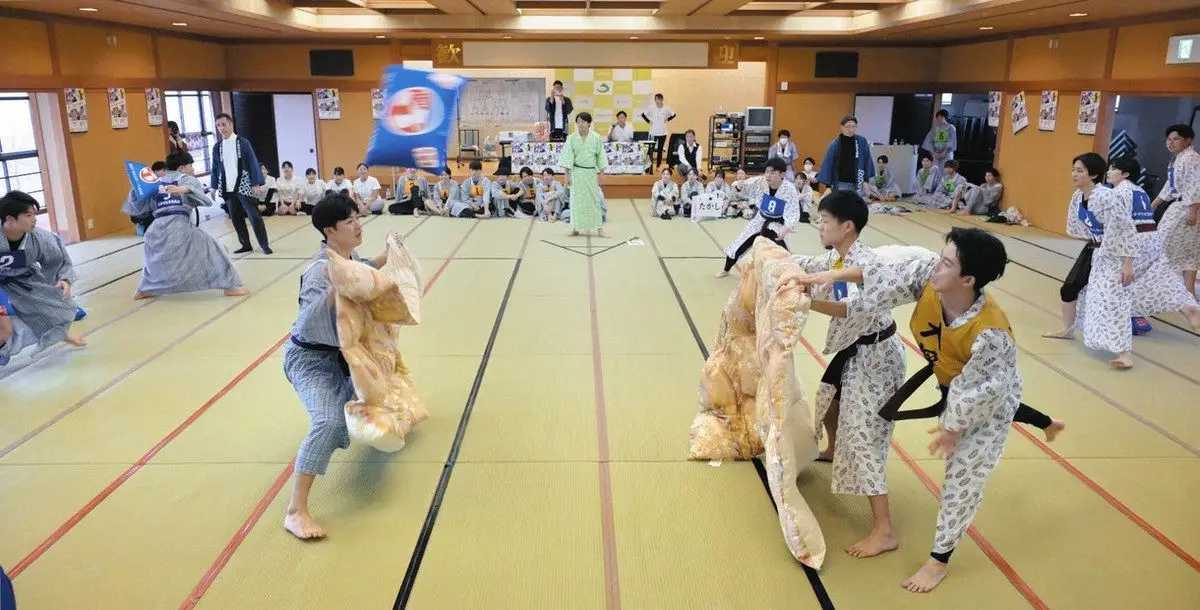
The organiser’s rules describe teams of eight on a 40-tatami field. A standard match is played as three two-minute sets. Instead of treating every throw as random, teams decide where to send pillows, who should gather them and when to shield the player whose defeat can end the round.
There are two ways to build an advantage: hit more opposing players within the time limit, or hit the opposing captain. A captain being put “to sleep” gives the other team an immediate win, so the role is both a target and the centre of the team’s defensive plan.
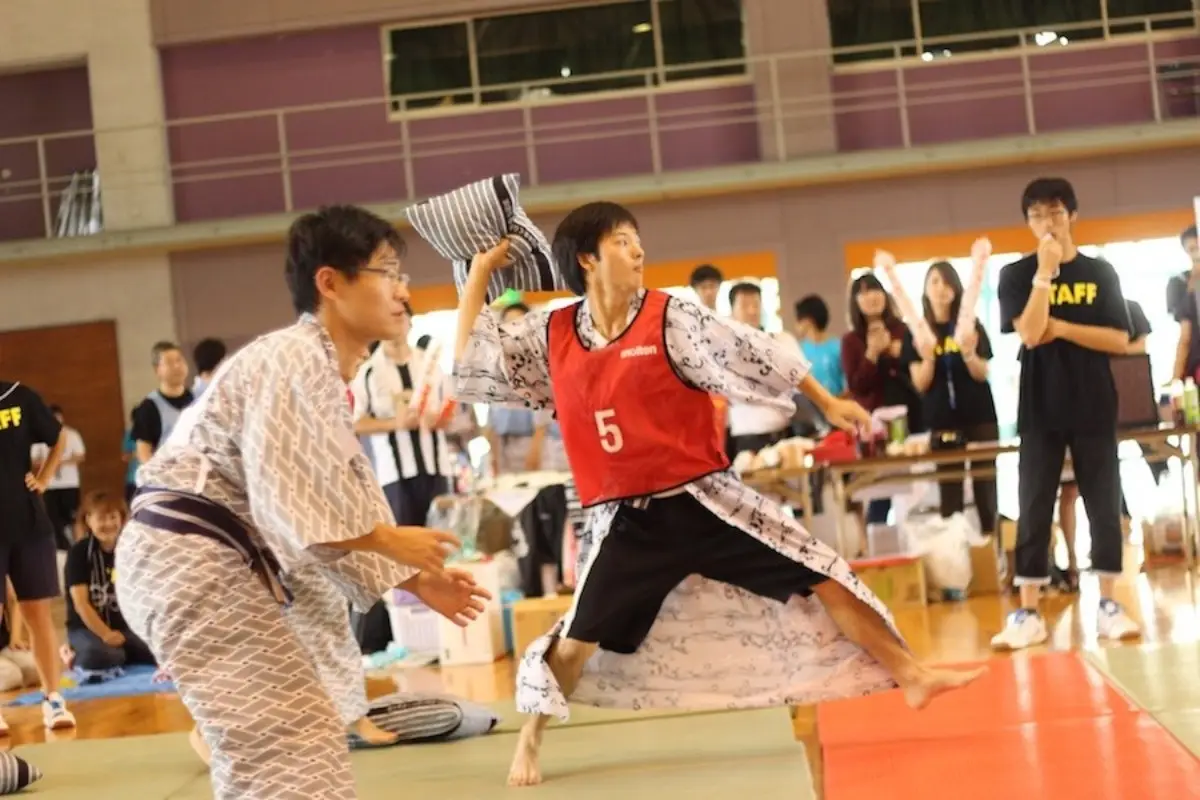
Four roles on the field
- Captain (taishō): team leader and the player opponents want to hit.
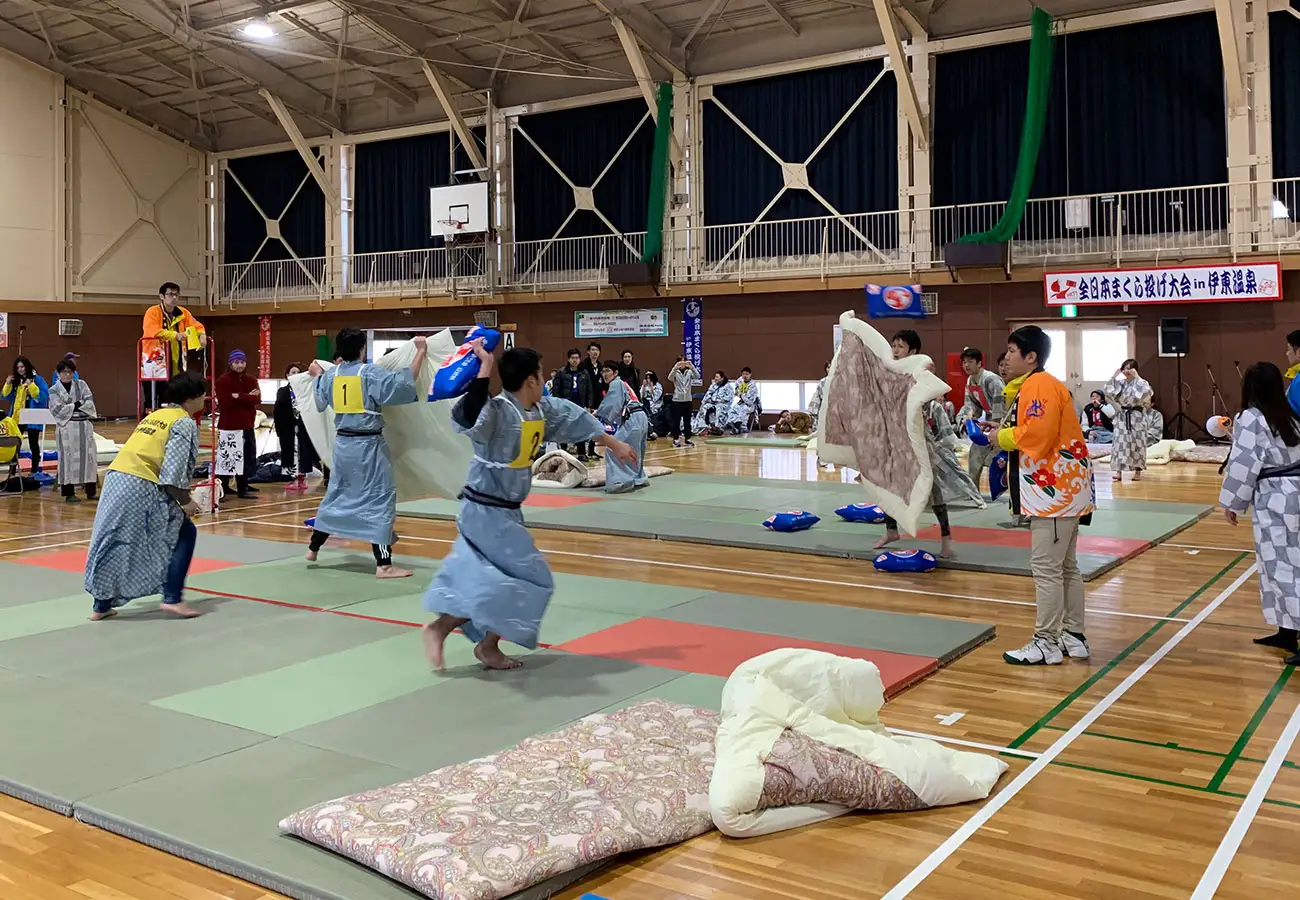
- Libero: guards the captain with a futon-style blanket.
- Attacker: throws pillows to pressure the other side.
- Supporter: brings pillows back into the team’s area so attackers are not left empty-handed.
The division makes the game easier to follow than a casual pillow fight. A team can lose momentum if its attackers run out of pillows, and a good libero can make a captain far harder to reach. The rules also include a theatrical “teacher is coming” call, which can change where pillows are collected and give a trailing side a chance to reset.
Why Itō became its home
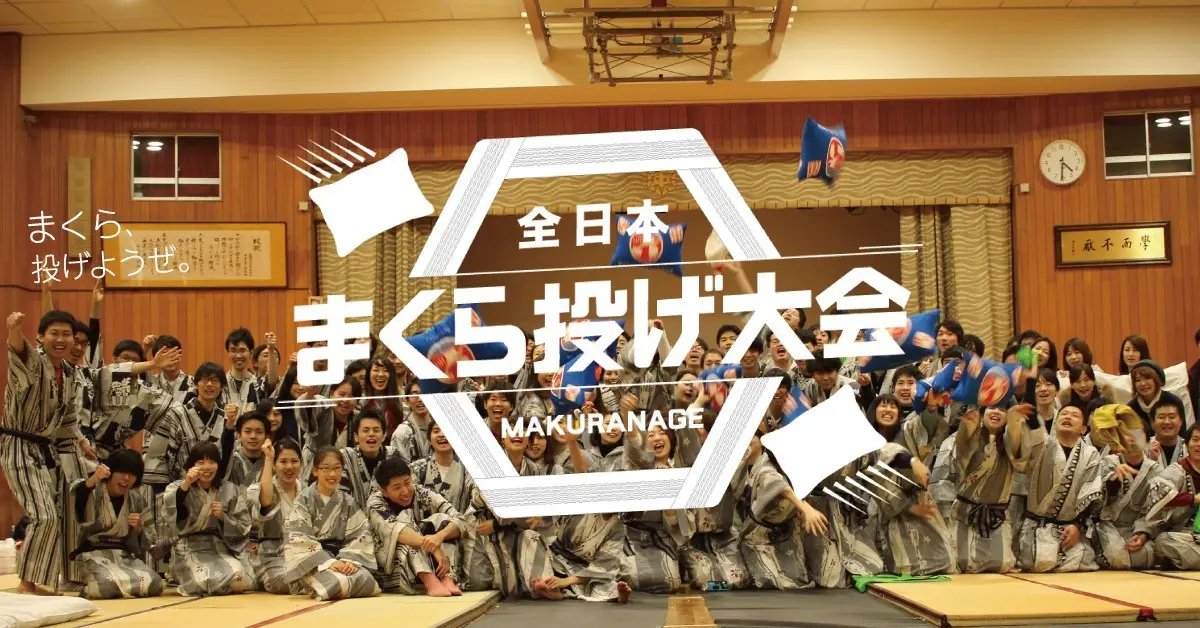
The first tournament was held at Itō Onsen in February 2013. According to the event organiser, students from Itō High School’s Jōgasaki branch proposed the idea as part of a project aimed at attracting young people to the area. The city and tourism association then helped shape positions, rules and the game format.
That local beginning explains details that might otherwise seem decorative. Yukata are part of the visual identity, and the field evokes a large room with tatami rather than a conventional court. The setting gives the tournament a specific connection to a hot-spring town instead of presenting it as a generic novelty attraction.
Since then, the organisers have run national events in Itō as well as regional and student tournaments. Dates, entry requirements and categories change, so anyone planning to join or watch should check the current notice from the tournament organiser or Itō tourism association rather than relying on an old schedule.
Makura nage versus an ordinary pillow fight
An ordinary pillow fight has no fixed positions, score or protected captain. Makura nage gives each player a job and creates a clear win condition. That structure is why a team can practise: attackers can coordinate throws, supporters can keep supplies moving, and the libero can concentrate on one defensive task.
It also changes the atmosphere for spectators. The fun comes from the contrast between soft pillows and careful tactics. A sudden hit on the captain can finish a contest immediately, while a well-timed defence can keep a team alive through the final seconds of a set.
Common questions about makura nage
Is makura nage a traditional Japanese sport?
The organised competition is modern. It began as a local Itō event in 2013, although its playful premise draws on the familiar idea of pillow fights during school trips.
How many people play on one team?
The organiser describes eight players per team, with captain, libero, attacker and supporter roles.
Where is the national tournament held?
The All-Japan Makura Nage Tournament is held in Itō, Shizuoka Prefecture. Its official information is the best place to confirm the next event.
A game built for teamwork
Makura nage works because it does not pretend to be more solemn than it is. It takes a familiar burst of mischief, gives it a field, a clock and a set of jobs, then lets teams discover that pillows can require real coordination. For visitors curious about unusual Japanese events, it is a small but very local example of how a city can turn a playful idea into a reason to gather.



Community
Comments
0 comments
There are no published comments in this language yet.
Send comment