
Did you know that the Japanese have a certain obsession with toilets? Yes, we can see animes with poop, the god of toilets, golden poops standing out in a building in Tokyo and much more. In this article, we will delve into the culture of poop in Japan [unko].
Poop, feces, or excrement in Japanese is called unko [うんこ], which can also be used to refer to some crap, junk, or trash. A literal word to refer to solid feces, which appears in an unimaginable way somewhere in Japanese culture.
Contents 6
Unko – Poop in Japan
Japanese poop got the name unko because un is the sound of force when pooping. The ko [子] is used as a diminutive. Another word used for feces is daiben [大便] which also means excrement and crap.
In English, we tend to use words like "crap" or "junk" to dismiss something worthless. In Japanese, the equivalent filler term is kuso [糞], but it is almost never used literally to mean poop in everyday speech. The verb "to poop" is kusomaru [糞放る].
Feces in Japan are often depicted in a spiral shape, and there is a good reason for that: it is very common to find squat toilets (the kind with a hole in the ground where you squat), so the expected shape of Japanese feces really is a little swirl.
There is a company called UNCO that manufactures quality clothing, but after a while, it started making products related to poop. We can find items like t-shirts, socks, sneakers with poop marks and poop characters.
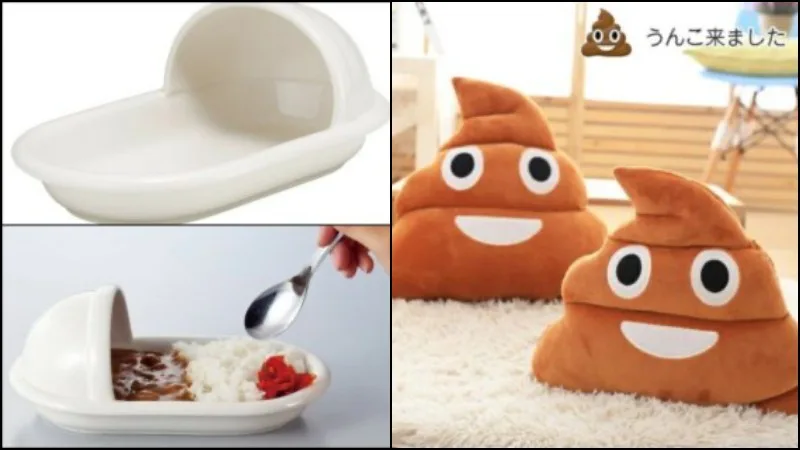
What do you think of plush toys of the poop emoji? Or better yet, what do you think of eating curry on a plate that looks like a toilet? These are some of the unusual things we only find in Japan.
Kin no Unko – The golden poop of good luck
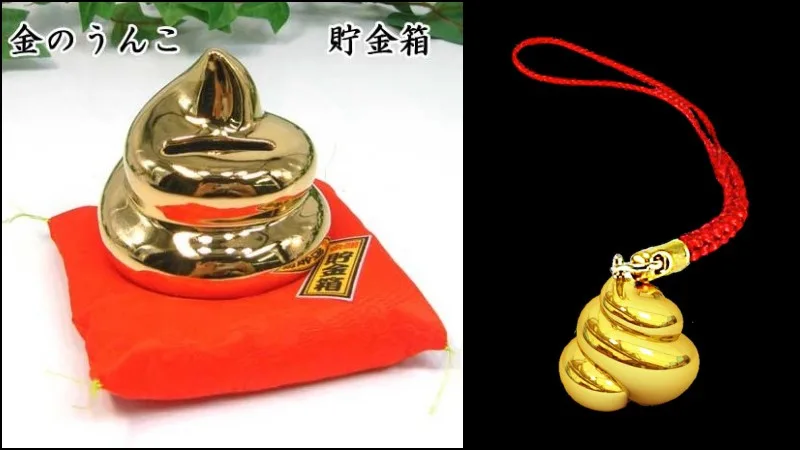
In Japan, there is the "good luck" poop known as kin no unko [金のうんこ]. This golden poop has become a local icon simply because its opening sound 'un' matches the sound 'un' in the Japanese word for luck or good fortune [運].
This golden poop became so popular that in 2006, about 2.7 million keychains resembling golden poop were sold. One of the main companies behind the golden poop is Ryukodo, a souvenir maker based in Kyoto.
Koji Fujii, president of the company, had the idea of manufacturing poops at the end of 1999. Due to Japan's economic recession and the depressed national mood, Koji wanted to offer a cheap product that would make people smile. So he got the idea from the toilet.
Some of the kin no unko are made of real porcelain and coated with 24-karat gold. A mini poop keychain can cost from 105 yen, while a giant poop on a red, silky cloth costs at least 2,100 yen.
The products went viral around 2000, when high school girls on school trips started buying them as souvenirs. The kids kicked off a nationwide boom of successful products that was covered by media across the country for weeks.
In the game The Legend of Zelda: Breath of the Wild, there is an item called Hestu's Gift that looks a lot like a kin no unko. Whether this is an intentional easter egg is unknown, but to obtain it you do have to collect every single korok seed first.
Some argue, with fairly convincing reasoning, that this is where the ubiquitous smiling poop emoji [💩], introduced around 2014 and affectionately nicknamed unchi in Japanese, actually came from. The design is part of the Unicode standard, so the connection to kin no unko is most likely a happy coincidence rather than a confirmed origin story.
Asahi Beer Hall – The poop building
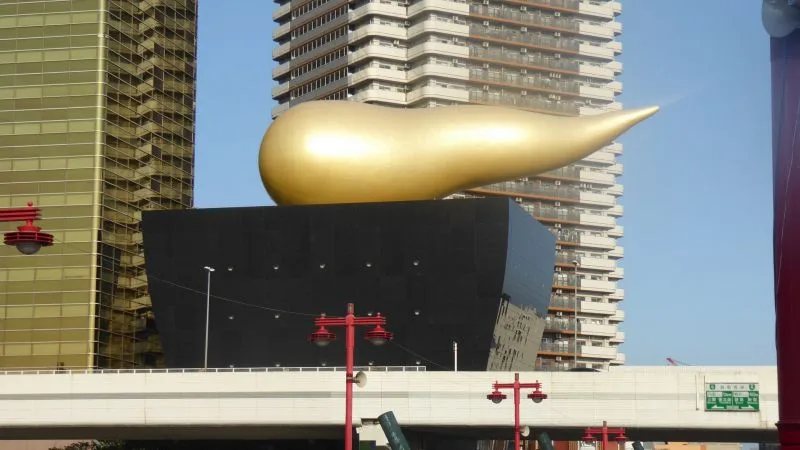
In Sumida, Tokyo, there is a prominent building called Asahi Beer Hall, but also nicknamed Kin no Unko for its resemblance to poop. Sometimes the construction is also called unko-biru which means poop building.
Of course, this was not the original purpose of the building, as Asahi is one of the most popular beer companies in Japan. The design was done by a French designer named Philippe Starck and was completed in 1989.
The shape of the building is like a beer glass, designed to complement the neighboring building in the shape of a golden beer mug that houses the offices of Asahi Breweries. It is considered one of the most recognized modern structures in Tokyo.
The golden structure on top of the Asahi building represents the burning heart of Asahi beer, and a frothy head. The golden flame weighs 360 tons and was built using ships and underwater construction techniques.
The god of toilets
There are more gods in Shinto religion than can be counted, and they reside almost everywhere. Feces are not left out. There are some Japanese gods that have strong connections to the toilet.
Until relatively recently, it was common to worship deities collectively known as benjo-gami (toilet gods), placing small religious figures inside or under the toilet. Others buried divine figures under the bathroom itself.
In more traditional times, Japanese farms used to collect human waste to use as fertilizer. From this daily occurrence, the local belief in the toilet god, also known as kawaya kami [厠神], arose.
Because of its agricultural properties, the kawaya kami also played a significant role in promoting fertilization. Every New Year, rituals were performed asking the kawaya kami for a good harvest in the year to come.
In the ritual, rice was eaten, symbolizing something great that the god had left behind (could it be poop?). Often, a toilet was decorated and kept as clean as possible. Perhaps this god is the reason Japanese toilets are so clean to this day.
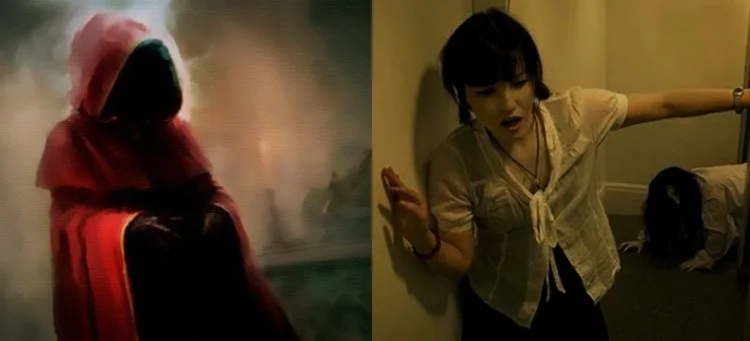
There are also bathroom ghosts like Hanako-san and Aka-Manto. Stories similar to the Western "Bloody Mary", where you need to perform a ritual repeating certain words three times. When will the bizarre stop? Probably never.
Unko for kids
Learning kanji is difficult for anyone, especially for small children. To try to alleviate the monotony of studying more than 1,000 kanji characters, Japan created the best friend teacher for kids, Teacher Unko.
This spotted mustache character, drawn in a cheerful poop-emoji style, has been such a huge success that his books have sold over 1.83 million copies so far. Who would have thought that a poop book would lead children to learn Japanese?
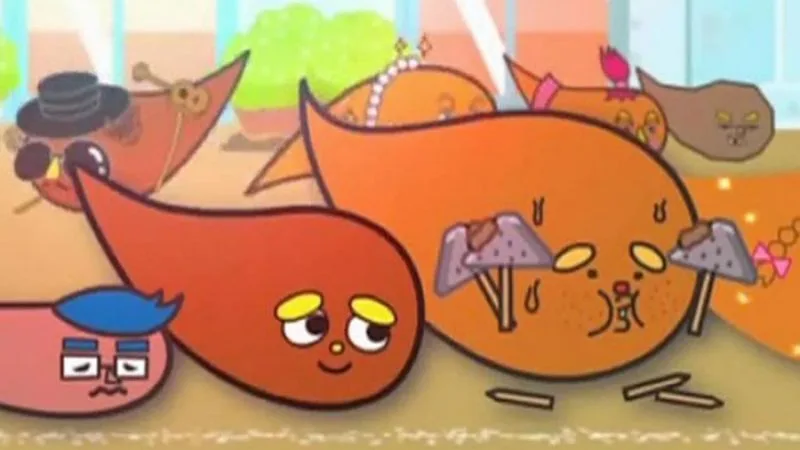
To make matters worse, there is an anime called Unko-san released in 2009. The anime tells the story of a fairy that can bring good luck. Only this fairy is a poop, all the characters are poop, and even the island is shaped like poop.
Poop museums in Japan
We are not talking about bad things, but literally about poop. There is a Japanese section about feces inside the Himeji Literature Museum. Among other exhibitions, you can find "Excretory Literature," books about poop and related subjects.
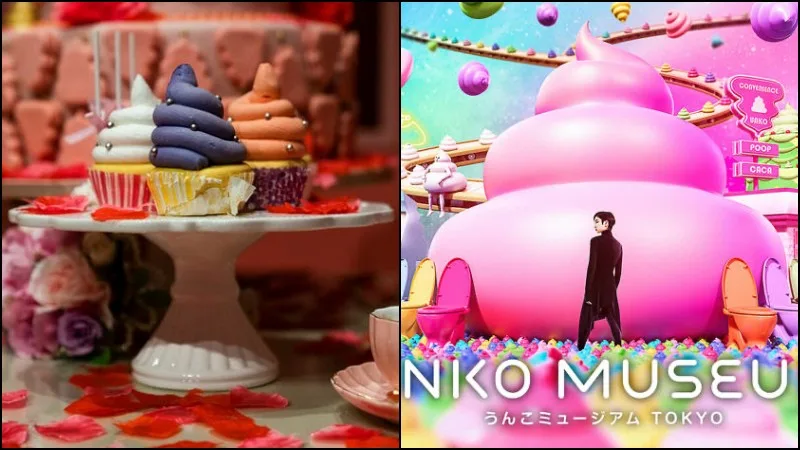
Or better yet, there is a permanent, full-blown poop museum in Tokyo and Yokohama. The museum was originally meant to be a temporary exhibition, but it ended up becoming a permanent attraction in Odaiba. A colorful place full of poop that receives around 100,000 visitors per month.
In this museum, everything is shaped like poop or a toilet. Balloons, foods, toilets with poop inside, and many colorful and fun things for you to visit. Don't miss the chance to visit the poop museum in Japan.
Those were some of the highlights of Japan's unko culture. Out of all the things mentioned above, which one would you actually like to see in person: the golden keychain, the Asahi "poop building" from a Sumida beer garden, the Unko Museum in Odaiba, or maybe just the next kanji book that secretly teaches you Japanese through poop? Tell us in the comments.

Community
Comments
0 comments
There are no published comments in this language yet.
Send comment