
Few people notice, but chopsticks — those little sticks used to eat oriental food — have more history and variations than one might imagine. They are not all the same, nor do they serve exactly the same purposes. In fact, chopsticks carry deep cultural traits from each country where they are used, from the shape to the material.
And if you think all chopsticks are the same, get ready to change your mind. We will travel through China, Japan, Korea, and Southeast Asia understanding the details that make all the difference — and even discover why some are shorter, others longer, or made of metal, bamboo, or plastic. If you want to go deeper into proper usage, you can also read our article about 15 rules for eating with chopsticks.
Contents 16
Japanese chopsticks (箸)
The Japanese chopsticks are perhaps the most well-known in the Western world, but those who think there is only one type are mistaken. The Japanese have specific sticks even for different types of food, occasions, and even seasons of the year.
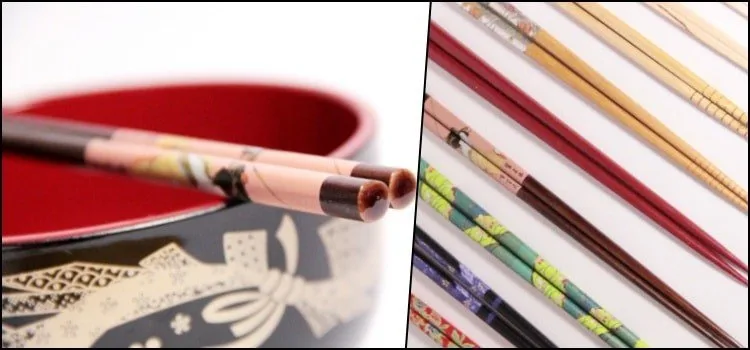
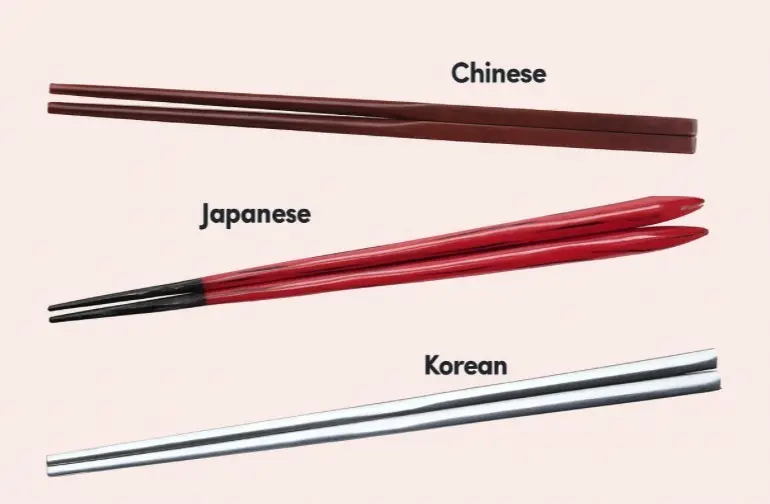
These chopsticks tend to be shorter than those from other countries, usually with very fine tips — which helps to pick up raw fish with precision, as in sushi and sashimi. There are models for men, women, and children, with variations in length (between 18 and 24 cm). In addition, many Japanese chopsticks are made of lacquered wood or bamboo, decorated with traditional patterns that refer to the local culture. If you are curious about the taboos around them, take a look at social taboos in Japan: chopsticks in food.
Saibashi (菜箸): the kitchen chopsticks
Little known outside of Japan, the saibashi are long chopsticks, about 30 cm or more, used exclusively for cooking. They allow you to stir ingredients in hot oil or boiling broths safely. In some models, one of the tips is coated with silicone to prevent slipping. They are practical, functional, and essential in any traditional Japanese kitchen.
Chinese chopsticks (筷子, kuàizi)
The kuàizi chopsticks from China are notably longer, usually about 25 cm or more. This is not by chance: in Chinese cuisine, it is common to eat from large shared dishes in the center of the table. The length helps to reach the food without having to get up from the chair or invade someone else's space.
Another detail is the shape: instead of fine tips, Chinese chopsticks are thicker and have a square or rounded tip. They are designed to pick up larger pieces of food, such as meats, noodles, or cooked vegetables.
Zhú kuàizi (竹筷子): the traditional bamboo model
Among the many types of kuàizi, the zhú kuàizi — made of bamboo — is the oldest and still widely used. Light, biodegradable, and with a texture that prevents slipping, these chopsticks are a constant presence in both homes and traditional restaurants. At festivals or banquets, it is common to see lacquered versions with hand-carved designs.
Korean chopsticks (젓가락, jeotgarak)
If you have ever tried using a metal chopstick and found it difficult, you were probably using a Korean model. They are shorter, have a flat shape — as if they have been slightly crushed — and require more precise control from the fingers. But don't worry, Koreans grow up with this and handle it well.
The big difference here is the material: metal. This comes from an ancient tradition of the Korean royalty, who used silver chopsticks to detect poison in food. Over time, the use became popular. Today, it is common to see chopsticks made of stainless steel, usually accompanied by a metal spoon (for soups and rice).
Sujeot (수젓): the official set of the Korean table
At the Korean table, you rarely see chopsticks alone. The sujeot is the pair consisting of a spoon (sutgarak) and chopsticks (jeotgarak), almost always served together. The spoon is used for liquids, rice, and stews, while the chopsticks are reserved for meats, side dishes, and dry dishes. There is even specific etiquette about when to use each one — and yes, crossing the two over the plate is a sign of carelessness.
Southeast Asian chopsticks
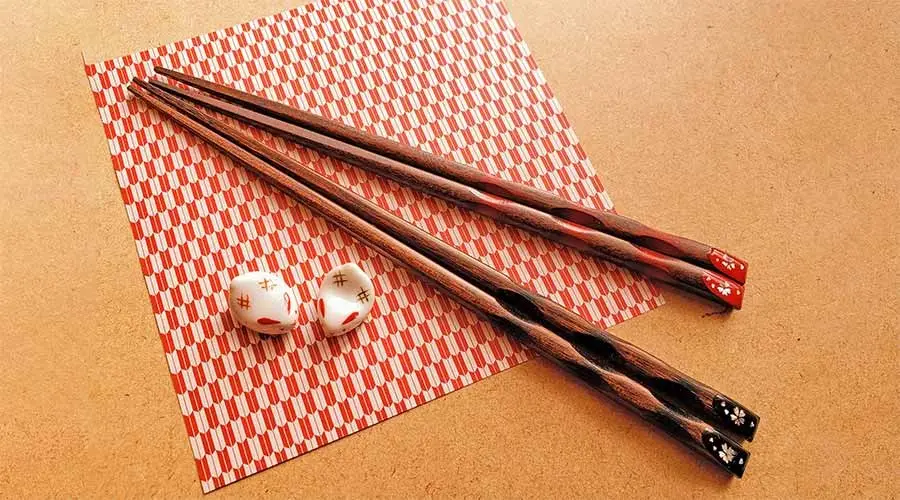
In countries like Vietnam, Thailand, and Malaysia, chopsticks follow a mix of Chinese, Japanese, and local influences. In Vietnam, for example, chopsticks tend to be longer and made of wood or bamboo, but with finer tips, resembling a bit of the Japanese style.
In Thai restaurants, chopsticks may even appear, but they are mainly used for Chinese-inspired dishes. In daily life, the fork and spoon dominate. In Malaysia and Indonesia, the use of chopsticks varies according to ethnicity or type of food.
Đũa (Vietnamese chopsticks)
In Vietnam, chopsticks are called đũa, and are often made of dark, polished wood, with a discreet finish. They are longer, straight, and have rounded edges, used both in daily life and in formal celebrations. At weddings, it is common to gift the couple a pair of đũa as a symbol of unity and balance.
Materials of chopsticks
The material of the chopsticks is not just aesthetic — it influences weight, grip, hygiene, and even cultural significance. Below is a practical overview of the main types:
Bamboo (take, 竹)
Light, cheap, and biodegradable. It is the most used in daily life, especially in China, Vietnam, and Japan. Good grip, ideal for simple meals. It also appears in decorated versions for festivals.
Lacquered wood (nuribashi, 塗り箸)
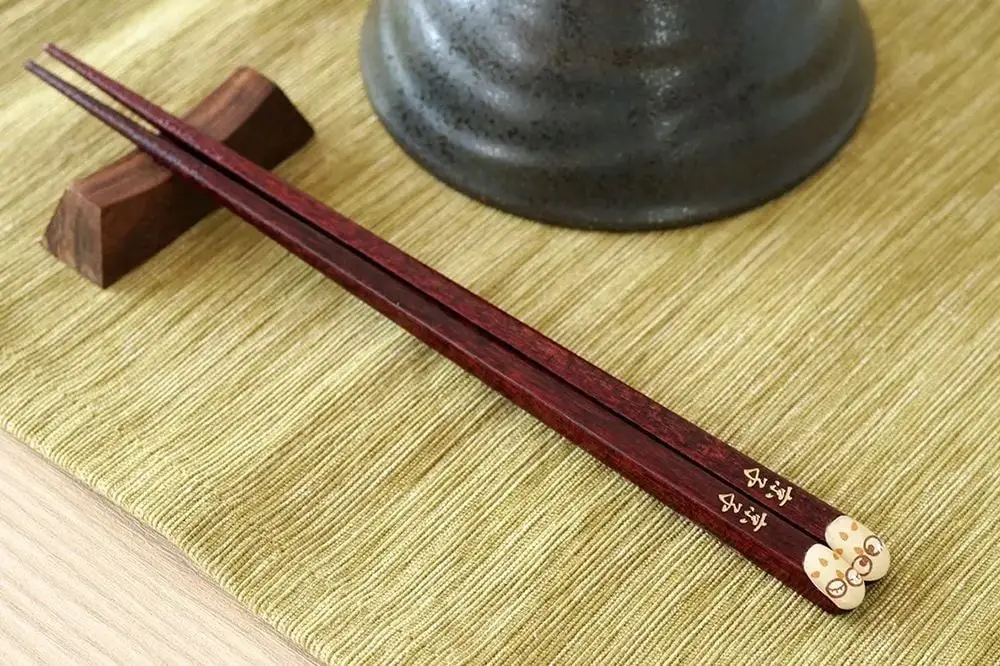
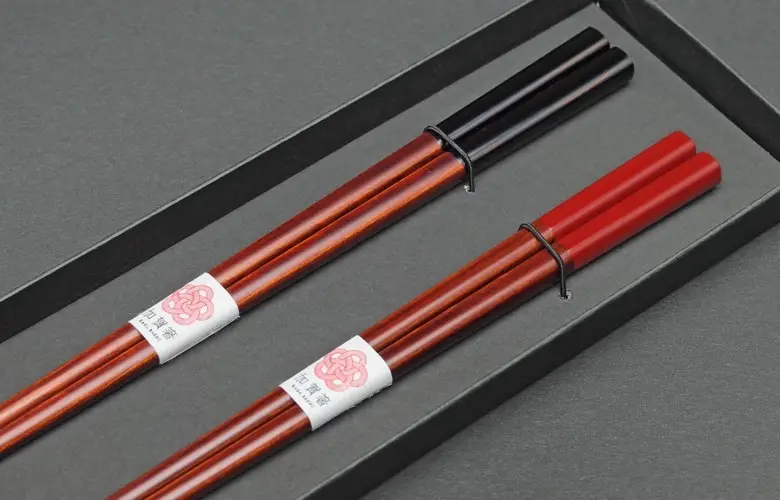
Made from noble wood, with lacquer and traditional designs. They are more elegant and used in formal dinners, commemorative dates, and even as gifts. Refined appearance, soft touch.
Plastic (resin or melamine)
Light and durable, but slippery. Widely used in schools, fast-foods, and by children. Some children's models come with a support to help with learning.
Metal (stainless steel, silver)
Classic in Korea. Durable, hygienic, and great for hot or oily foods. The Korean models (jeotgarak) are flat and require more control in grip.
Ceramic or porcelain
Rarer, heavier, and slippery. Used on special occasions or as decorative pieces. Sophisticated appearance, but fragile for daily use.
Disposable (waribashi, 割り箸)
Made of lightweight wood, pre-cut. Very common in delivery and quick meals. In Japan, there is etiquette even for how to separate them correctly.
Conclusion
Behind two simple sticks, there is a rich history of etiquette, identity, and tradition. Using the “correct” chopsticks in each country can be seen as a sign of respect, but it is also a way to dive deeper into the local culture.
Whether long or short, metal or bamboo, a good chopstick goes beyond practical function. It carries the gesture of sharing, patience, and even aesthetics. And those who start to notice these details will never see chopsticks the same way again.

Community
Comments
0 comments
There are no published comments in this language yet.
Send comment